Mexico chase another slice of history as England return to Azteca
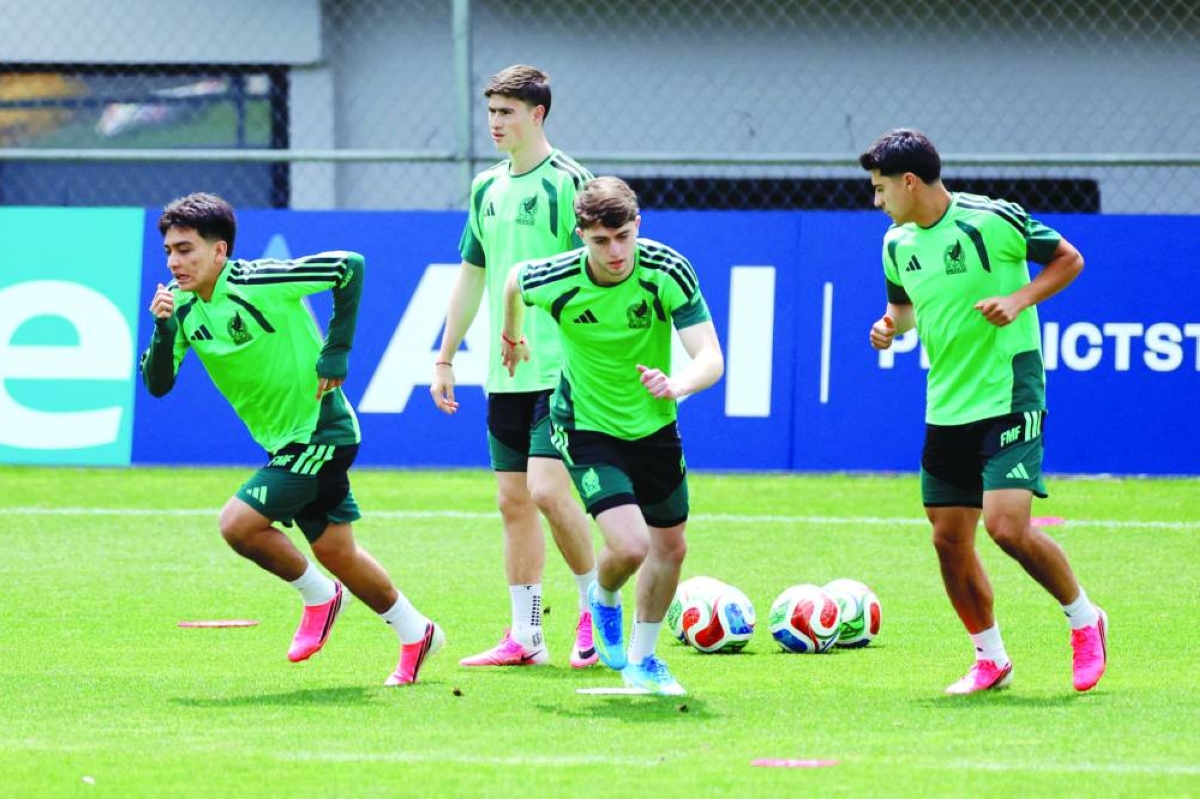
Mexico’s Gilberto Mora and Brian Gutierrez take part in a training session at the Centro de Alto Rendimiento in Mexico City on July 4, 2026, on the eve of the World Cup round of 16
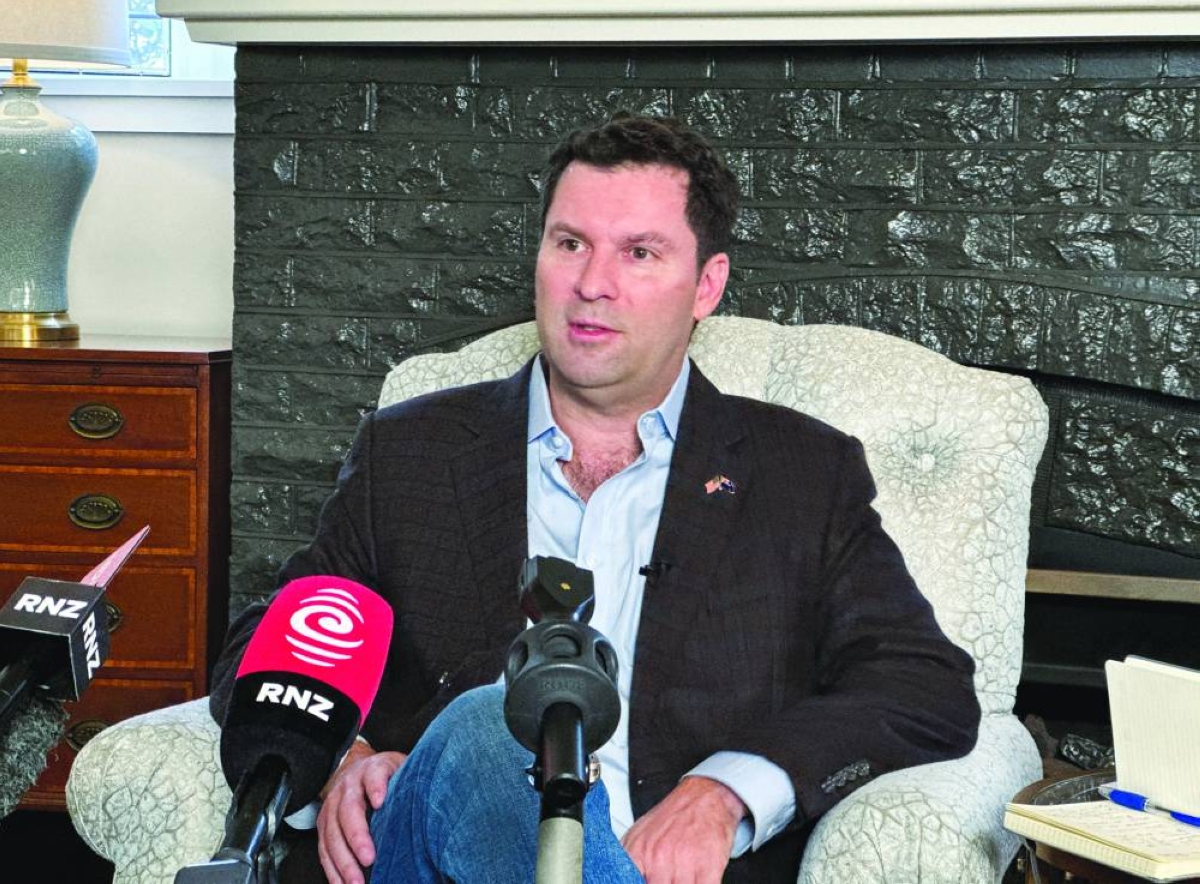
The new US ambassador to New Zealand and several Pacific island nations said on Friday that securing Cook Islands seabed minerals was a top priority, and that China's push for influence in the Pacific carried risks for small island states.Jared Novelly, US ambassador to New Zealand, the Cook Islands, Niue and Samoa, said in a press conference that critical minerals had moved rapidly up his agenda over the last year.'When I was getting briefings in October, November last year, the critical minerals thing was kind of a lesser item,' Novelly said. 'Fast forward to February, March of this year, critical minerals, and particularly in the Cooks, is either 1A or 1B of my priorities.' Washington has made securing critical minerals a strategic priority as it seeks to reduce its reliance on China-dominated supply chains and support defence and clean-energy industries. The Cook Islands' waters contain deposits of polymetallic nodules, sought for batteries and other technologies, and the government has allowed exploration, but not commercial extraction. In February, the Cook Islands and the US signed a non-binding framework on critical minerals research and supply-chain security, including deep-sea minerals in Cook Islands waters. It has also signed an exploration and research agreement with China.Novelly, a Missouri businessman and sports team owner who is the inaugural US ambassador to the Cook Islands, said he planned to spend time in the country and would look to introduce US companies that could help with the minerals' extraction. The Cook Islands government did not immediately respond to a request for comment.He said he also believed he needed to warn Pacific countries to be cautious in dealings with Beijing.'China has made no bones about they want a base in the Pacific, they want an expanded presence there,' he said, adding that island nations needed to understand 'what a debt trap is' and that 'there can be strings attached'. China in recent years has become a major player in the region, in development finance, ports, airports and telecommunications, and has sought a greater role in the military, policing, digital connectivity and media. Beijing says its relationships in the region are based on mutual respect and delivering benefits to the Pacific people.Novelly said he was also exploring ways to support Pacific economies beyond aid, including by reducing the cost of remittances.US FACES MORE SCEPTICAL KIWISNovelly arrived in New Zealand earlier this week and presented his credentials to the governor general on Wednesday before hosting the embassy's annual July 4 party.Novelly said Washington respected New Zealand's role in the South Pacific, including defence cooperation, but said partners needed to spend more on security. 'It's important that you care as much about your defence as we care about your defence,' he said, echoing US policy towards partners and allies around the globe. Novelly arrives as New Zealanders' views of the US have fallen. A June survey by the Asia New Zealand Foundation found that, for the first time in a decade, they viewed Washington as more of a threat than China.But Novelly said it was not something he had experienced on his visits to the country and 'there seems to be a very friendly camaraderie that occurs between folks from the US and Kiwis.'On New Zealand's nuclear-free policy, which restricts visits by nuclear-powered or nuclear-armed vessels, Novelly said any change was a decision for Wellington but that he would like to see a US aircraft carrier visit in Auckland harbour.'I would really like the opportunity to work with New Zealand on that,' he said.
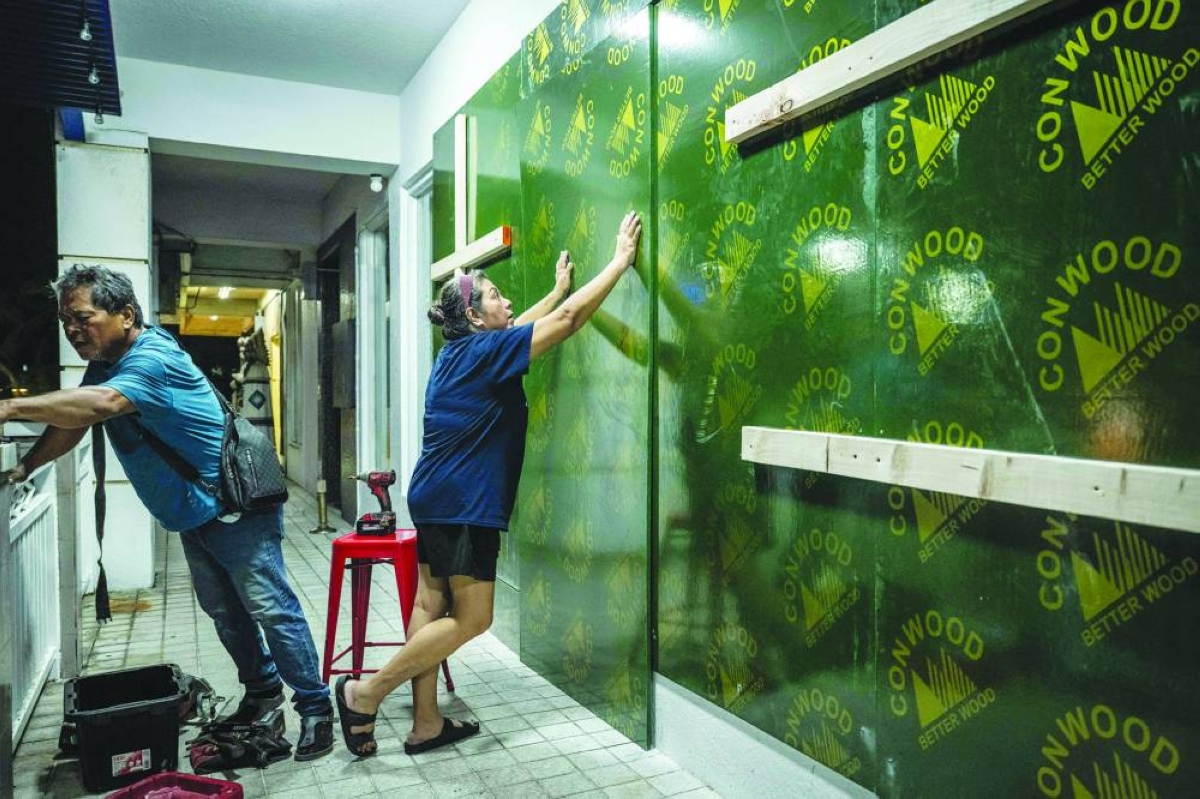
People in Guam and the Northern Marianas readied themselves Saturday as the second "super typhoon" since April drew closer to the US territories, bringing the equivalent of category-5 hurricane winds.Bavi was moving westward with sustained winds of 269 kilometres per hour (167 miles per hour) and gusts of 324kph (201mph), the Joint Typhoon Warning Center (JTWC) said in an update at 7:00pm local time (0900 GMT).The eye of the storm was expected to pass Monday very close to the small island of Rota between Guam and Saipan, the main island of the Northern Marianas, with winds set to strengthen to 278kph, the JTWC forecast."My girls were saying to me it's scary. But it will be okay. My house is concrete so the worst that can happen is a window could blow in," local Arabella Paulino, 48, told AFP on a Guam beach as the sky darkened and rain fell intermittently."Typhoon Sinkalu in April wasn't as bad as Mawar in 2023. That brought my whole house down," said her friend Derma Soaladaob, 51. "I stay up north, but I'm going to a hotel. I have a concrete house but with the noise and the wind, it's scary."Guam was set to go into "Condition of Readiness 2" — meaning a typhoon was expected in 24 hours — from 10:00pm, with emergency shelters due to open Sunday from 7:00am, the governor's office said.Residents were told to bring to the shelters "enough food and water to last seven days for each family member" as well as medicines, bedding and personal hygiene products. Pets were not allowed.Any plans for celebrating the United States's 250th anniversary on Saturday — also Liberation Day for Saipan — have been quickly overtaken by storm preparations, with both Guam and the Northern Marianas declaring a state of emergency.Many of the islands' roughly 200,000 inhabitants have queued at petrol stations in recent days and thronged hardware stores to buy plywood to board up their windows while also stocking up on food, water and other essentials.Jeff Garcia, 48, who lives in Kagman Village in the Northern Marianas, told AFP that safety was the top priority, adding that they had "weathered super typhoons before.""We bought basic needs like water, candles, batteries, and canned goods... As a community, our greatest defence is our unity, our preparation and our discipline," he said.Still recoveringThe Northern Marianas archipelago is home to around 40,000 people, and nearby Guam — a separate US territory — around 170,000. Major battles were fought in the area in World War II.Super Typhoon Sinlaku, which hit in mid-April, knocked out power for tens of thousands of people, uprooted trees, overturned cars and ripped metal roofs off buildings.A cargo ship, the MV Mariana, suffered engine failure and overturned in the storm. The body of one crew member was recovered and five others were missing, presumed dead.The American Red Cross warned that some locals were still in temporary shelters or under makeshift roofs, even as it deployed disaster teams and supplies ahead of Bavi's arrival.Em Marilla, 42, who lives in As Lito village on Saipan, told AFP the thought of "going through it all again without electricity and water is really sad.""Furthermore, the application process for assistance takes far too long, and having to keep spending out of pocket for our daily needs is truly draining," she said.Lherie Galvan, 50, an accountant in San Antonio village, said: "I'm tired of preparing, planning and fixing our roof.""It's another anxiety to recover from. We need more psychiatrists on the island and financial assistance."Children already have trauma but at a young age they know how to prepare — pack their things for emergencies."Warming oceans The world's oceans experienced their hottest June on record and could set fresh highs in the months ahead, the European Union's Copernicus Marine Service said on Wednesday.Warmer oceans help tropical storms to intensify and add more moisture, which can fall as heavy rain.The World Meteorological Organisation warned on Friday that El Nino, which typically occurs every two to seven years and lasts nine to 12 months, has already begun in the tropical Pacific and is likely to be strong.The natural climate phenomenon warms surface temperatures in the central and eastern equatorial Pacific Ocean, bringing worldwide changes in winds, pressure and rainfall patterns. Related Story
A late-night deal agreed by Chancellor Friedrich Merz’s ruling coalition on a long-awaited package of reforms has the potential to give Germany’s anaemic economy a shot in the arm if implemented fully and quickly, economists and business leaders said. The measures to cut red tape, offer tax relief to working families, allow more flexible job contracts and boost investment in housing come on top of last week’s proposals to add a capital element to the state pension and gradually push back the retirement age. The latest moves come 15 months after a landmark agreement on a €500bn special fund for infrastructure and plans to largely remove defence investment from borrowing caps, paving the way for a spending surge that has nonetheless taken longer to materialise than many had expected. “If implemented, Germany can become a better place to invest and create jobs again,” said Holger Schmieding, chief economist at Berenberg of the new package combining both left-leaning and pro-business elements. He estimated the reforms could almost double Germany’s trend growth rate from a dismal 0.4% to 0.7% per year, offering a much needed boost to an economy that has struggled to gain momentum. Deutsche Bank’s CEO Christian Sewing called the package “a very successful opening move”, adding: “This is exactly the momentum we need to make Germany fit for the future.” The individual measures agreed in the package are expected to be passed by parliament by the end of the year. “Admittedly... it is not a package that will morph a stagnating economy into a booming economy overnight,” said Carsten Brzeski, global head of macro at ING. Failure to deliver on economic pledges could deepen public frustration and feed perceptions of government ineffectiveness, creating fertile ground for the far-right AfD party, which tops national polls. “The reform package shows that both coalition partners were willing to compromise,” said Marion Muehlberger from Deutsche Bank Research. “The German government agreed on one of its biggest reform packages in decades.” Once the engine of European growth, the continent’s largest economy has stalled as competition from China and higher energy prices have challenged its export-driven foundations and the reform package aims at boosting competitiveness, economists said. The package includes €10 billion ($11 billion) in annual tax relief for lower-income earners, more flexible labour laws, changes to the pension system and cutting red tape. Merz said an average family will get tax relief of €600. That will be funded mainly by raising the top tax rate to 47% from 45% for the highest earners, defined as those with annual income of €280,000 or more. The package includes cuts to red tape, including faster approval procedures for infrastructure projects and the abolition of some reporting and documentation requirements. “The planned measures to reduce bureaucracy, in particular, show great promise because they could give German businesses more leeway,” said Commerzbank’s senior economist Ralph Solveen, who like others added the caveat that it all depended on effective implementation. The long list of measures also includes an action plan against benefit fraud, a target to cut staffing in federal ministries by 8% through digitisation and an end to workers’ ability to obtain permission for sick leave by phone. The proposals were criticised by the services union Verdi, which said they exemplified a “culture of mistrust” against workers. Germany’s Association of General Practitioners also said the requirement for workers to obtain written confirmation of illness would be “absolutely disastrous” for already overburdened medical practices.
North Atlantic Treaty Organisation (Nato) leaders gathering for a summit in Ankara on July 7-8 will discuss a host of challenges facing the alliance, from Europe taking on more responsibility for the continent’s security to boosting defence industrial production. Some officials worry the Iran war could overshadow the gathering, but hope leaders will remain focused on the alliance’s core business: defence and deterrence. Nato officials say one of their primary goals is to maintain unity and keep the US committed to the alliance’s Article 5 clause, which specifies that an attack on one of its members is an attack on all. The alliance faced two crises this year which have fueled tension in the transatlantic relationship: US President Donald Trump’s demands for ownership of Greenland, an autonomous territory of Nato member Denmark, and his anger at Nato allies over their response to the Iran war. The US president has branded the alliance a “paper tiger” and said he was considering quitting Nato. The alliance’s secretary-general, Mark Rutte, has sought to smooth over tensions, using a mix of flattery and data to persuade Trump that European Nato members are fulfilling their promises. The Trump administration has pushed European governments to take on primary responsibility for the conventional defence of Europe as Washington seeks to dedicate more resources to the Indo-Pacific. Some changes are already under way: Washington has decided to shrink the pool of US military capabilities available to Nato in a crisis, and European Nato members have filled almost all the gaps. US Defence Secretary Pete Hegseth has also announced a new review of America’s troop deployments in Europe and threatened to withhold some US dues to Nato if “free-riding” allies did not meet their defence spending commitments. European officials say they are working to step up on defence. European Nato members and Canada are under significant pressure to boost defence investment both to improve deterrence and defence against Russia and to demonstrate to Trump that they are taking his demands for burden-shifting seriously. At a summit in the Hague last year, Nato leaders backed the big increase in defence spending that Trump demanded, pledging to spend 5% of GDP on defence and defence-related measures within a decade. Countries pledged to spend 3.5% of GDP on core defence – such as troops and weapons – and 1.5% on broader defence-related measures. Nato’s European allies and Canada increased defence spending by 20% in 2025 compared with the previous year in real terms, according to alliance data. With European Nato countries boosting defence investment, a major challenge for the alliance is how to turn money into new military capabilities in a short timeframe. In Ankara, Nato members are expected to announce tens of billions of dollars in new contracts. However, some officials have expressed frustration that production has not increased at the pace they had hoped. Nato’s leadership has called on industry to work together, open new production lines and deliver more quickly. While alliance officials say Russia is grappling with significant economic problems and Ukraine has strengthened its position, Rutte has cautioned that nearly half of Russia’s state budget is now dedicated to defence and that the alliance cannot be naive about Moscow. European Nato members are continuing to send aid to Kyiv, more than four years since Russia’s invasion. While most European leaders say they are committed to continuing to support Kyiv, sustaining a high level of funding remains a challenge amid other demands on national budgets and concern in some capitals that some governments are contributing more than others. — Reuters
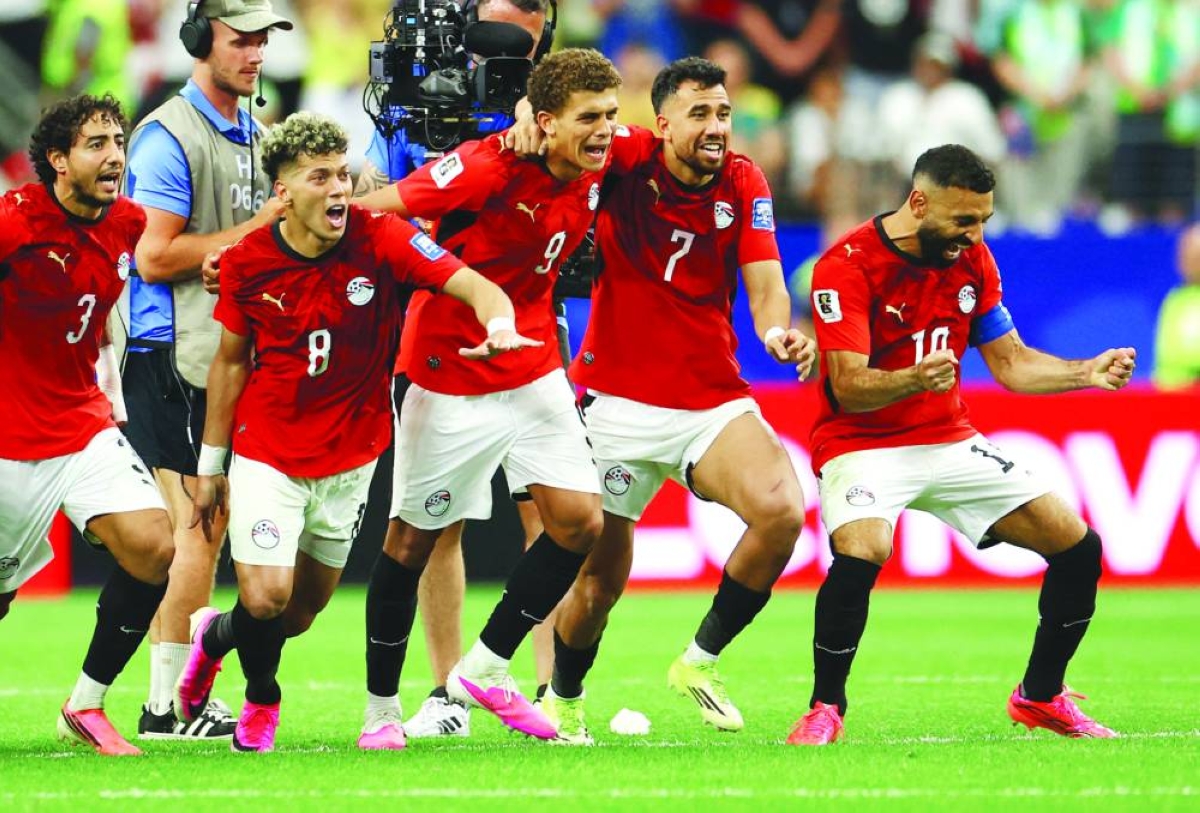
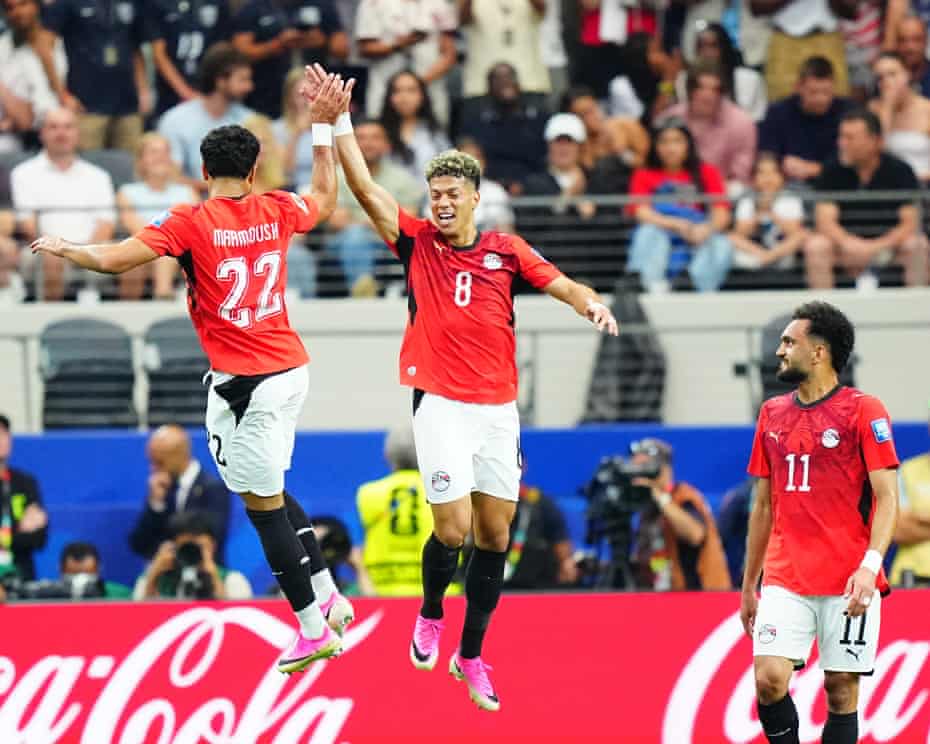
Egypt's Mohamed Salah and teammates celebrate after Hossam Abdelmaguid scores the penalty past Australia's Mathew Ryan to win the shootout at Dallas Stadium in Arlington,Texas, yesterday. (Reuters) Hossam Abdelmaguid scored the winning penalty as Egypt made history by beating a dogged Australia 4-2 on penalties to reach the World Cup last 16 on Friday.A tense affair in which Egypt and their off-colour captain Mohamed Salah wasted the better chances had ended 1-1 after 120 minutes in Texas.Lionel Messi's Argentina loom next for Egypt, as long as the reigning champions avoid a massive upset against tournament debutants Cape Verde in their last-32 encounter.The Pharaohs will celebrate anyway having reached this stage of a World Cup for the first time ever.Australia coach Tony Popovic threw on experienced goalkeeper Mathew Ryan for the penalty shootout in a last-gasp gamble.Shooting towards the Egypt fans and whistles raining down, defender Harry Souttar blazed the first penalty over to put the Socceroos on the immediate backfoot.They next five players all scored, including Salah with the coolest of penalties, before 18-year-old Australia defender Lucas Herrington hit the bar.Abdelmaguid kept his nerve to send Egypt through to leave Salah in tears of joy and break Australia hearts.Emam Ashour had given seven-time African champions Egypt the lead from a header after 13 minutes at the air-conditioned home of the Dallas Cowboys.The early goal put the onus on a shot-shy Australia who scored only twice in the group phase to attack in front of a crowd of 70,000.With Salah mostly ineffective following injury in Egypt's last game, the Socceroos equalised 10 minutes after half-time when Mohamed Hany headed into his own net.Both sides sensed history, neither having won a knockout game before at a men's World Cup, and they went to extra time after some late Egypt pressure.With nothing to divide them they went to penalties. Popovic's side had nearly taken the lead with less than five minutes gone as Cristian Volpato - who switched to Australia from Italy on the eve of the World Cup - rattled the top of the crossbar.Egypt, who won a World Cup match for the first time in the group phase when they beat New Zealand 3-1, looked nervy at the back.Slightly against the run of play Hossam Hassan's men took the lead.Australia forward Nestory Irankunda failed to pick up Ashour, who headed home at the back post from a cross by Karim Hafez for his second goal of the tournament.The Socceroos had their first shot on target 10 minutes before the break when full-back Aziz Behich fired tamely at goalkeeper Mostafa Shoubir.His father, Ahmed, played in goal for Egypt at the 1990 World Cup.The 34-year-old talisman Salah, who came into the match after a hamstring strain, made little impact in an attritional first 45 minutes.The half ended with Jordan Bos, one of the fastest players at the tournament, in a heap after a robust flying challenge from Rabia.The wing-back had to be helped from the pitch and was replaced at half-time by Kai Trewin in a blow to Australian hopes.Seconds after the restart it should have been 2-0 when Egypt's Manchester City attacker Omar Marmoush slid the ball off-target from close range.Egypt's coach had said he was wary of Australia's physical approach, and so it proved as Hany headed under pressure into his own net from an in-swinging Socceroos free-kick.It was Hany's second own goal of the tournament.Former Liverpool superstar Salah remained a peripheral figure but was involved in the build-up as Australian stopper Patrick Beach saved athletically deep in added time to keep out Ramy and force another 30 minutes.Egypt finished normal time the stronger and Salah fired well over early in extra time on his weaker right foot, with penalties looking increasingly inevitable.Salah though was to prove more reliable in the shootout as Egypt triumphed. Related Story
The June heatwave that broke a series of temperature records in Europe has focused minds on the urgency of adapting to global warming in a continent once complacent about its relatively gentle climate and its ambitious goals on reducing emissions. The European Union has sought to be a leader in addressing climate change, and was one of the first major economies to set a legally binding target to reach net-zero emissions by 2050. However, a June heatwave that peaked at above 40° Celsius (104° Fahrenheit) in parts of Europe has revealed how its businesses, amenities and critical infrastructure are not prepared for the consequences of climate change in the here and now. “We’ve not been good enough on adaptation,” Poland’s Deputy Climate Minister Krzysztof Bolesta told Reuters after some power supplies across the region were disrupted, outdoor work was banned in places, trains cancelled in Germany and in Sweden a cargo train derailed as extreme temperatures buckled metal rails. Among the countries worst affected, Spain reported 1,000 excess deaths that it linked to the record heat. Adapting buildings and public spaces to cope with extreme heat is typically the responsibility of national or regional authorities, rather than the EU, which says individual countries are best placed to understand their particular needs. “There’s no point in trying to say from Brussels how the Greeks or the Spaniards need to battle wildfires,” EU Climate Commissioner Wopke Hoekstra, who later this year will set out an EU-wide “climate resilience plan”, told journalists. “They know that much better than we do as the Dutch know much better how to build dikes,” he said, adding the EU plan would focus on common scenarios and best practice. Still, the EU’s own spending on adapting remains small, even as global warming is heating Europe at a faster rate than any other continent. Between 2021 and 2025, 72% of the climate-related spending from the EU’s joint budget went to mitigation, or limiting the greenhouse gases that cause warming, while just 18% went to adaptation, and 9% touched both issues, official figures show. The EU and its member governments have a suite of financial incentives in place to reduce emissions, including subsidies to build renewable energy, and the EU’s Emissions Trading System, which caps the emissions companies produce and lets greener firms trade at a profit their spare permits to pollute. Poland’s Bolesta said that for businesses there was no equivalent encouragement to invest in adaptation measures. “It’s easier to see the business case for mitigation, because you have the cap-and-trade system, you have carbon credits, you have renewables companies,” he said. “Adaptation, it’s mostly regarded as a cost with very long-term benefits, so delayed gratification, but also sometimes just an insurance policy – it might or it might not kick in.” Climate change-fuelled extremes like heatwaves, drought and floods cost the near-stagnant European economy 0.3% points in output last year, Dutch bank ING said in a note this week. “The uncomfortable truth is that heatwaves have quietly graduated from ‘weather event’ to ‘macro variable’,” ING said. “The thermometer, it turns out, has become a leading indicator.” The cost to economies ranges from threats to tourism or farming revenues in southern countries, to the difficulty of working in offices that are not adapted to hot weather. Despite an official estimate that one day of heat above 30C (86F) costs the German economy €430mn ($465mn) due to productivity losses, only half of German offices are air-conditioned, according to the Federal Environment Agency versus 90-95% in southern Europe. “For decades, we (Germany) built against cold and not against heat and that’s an adaptation gap,” said Geraldine Dany-Knedlik from the German Institute for Economic Research DIW. Irene Seemann, who heads efforts to help businesses with climate adaptation in the large German state of North Rhine-Westphalia, said there were signs of mindset change. “To use a football analogy, Germany has been one-nil down because heat has not been much of an issue,” Seemann said. “Now companies see that it has a direct impact on their operations.” Some adaptation fixes are simple and relatively cheap. Forbidden by heritage laws from structurally altering its historic, glass-domed headquarters in Cologne, German flooring firm Project Floors applied reflective film to its windows and managed to lower indoor temperatures by 10C. “It was simple, effective, and required no power,” said Project Floors managing director Bernd Greve. Others require more fundamental changes to workplaces and labour organisation, for example by rearranging work shifts to cooler times of the day, right through to reinventing public transport networks and urban spaces.There has been progress compared with a deadly heatwave in 2003, when peer-reviewed studies have found around 70,000 excess deaths occurred over the summer in Europe. The World Health Organisation (WHO) released a statement this week estimating that heat-related deaths in Europe, more than two decades later, would havebeen around 80% higher without the adaptation measures now in place. They include heat-health action plans, early warnings, cooling spaces and outreach to vulnerable people. “They are saving lives right now,” said the WHO’s regional director for Europe, Hans Henri P Kluge. “We need more of them, across all of the European region.”

Egypt reached the Round of 16 at the 2026 FIFA World Cup for the first time in their history after beating Australia 4-2 on penalties following a dramatic 1-1 draw after extra time at Dallas
Houston Man Arrested After Filming Water Gun Attacks on Homeless People Published July 3, 2026 1:32 PM PDT A Houston man allegedly thought soaking strangers would make good content ... now cops say it's evidence.
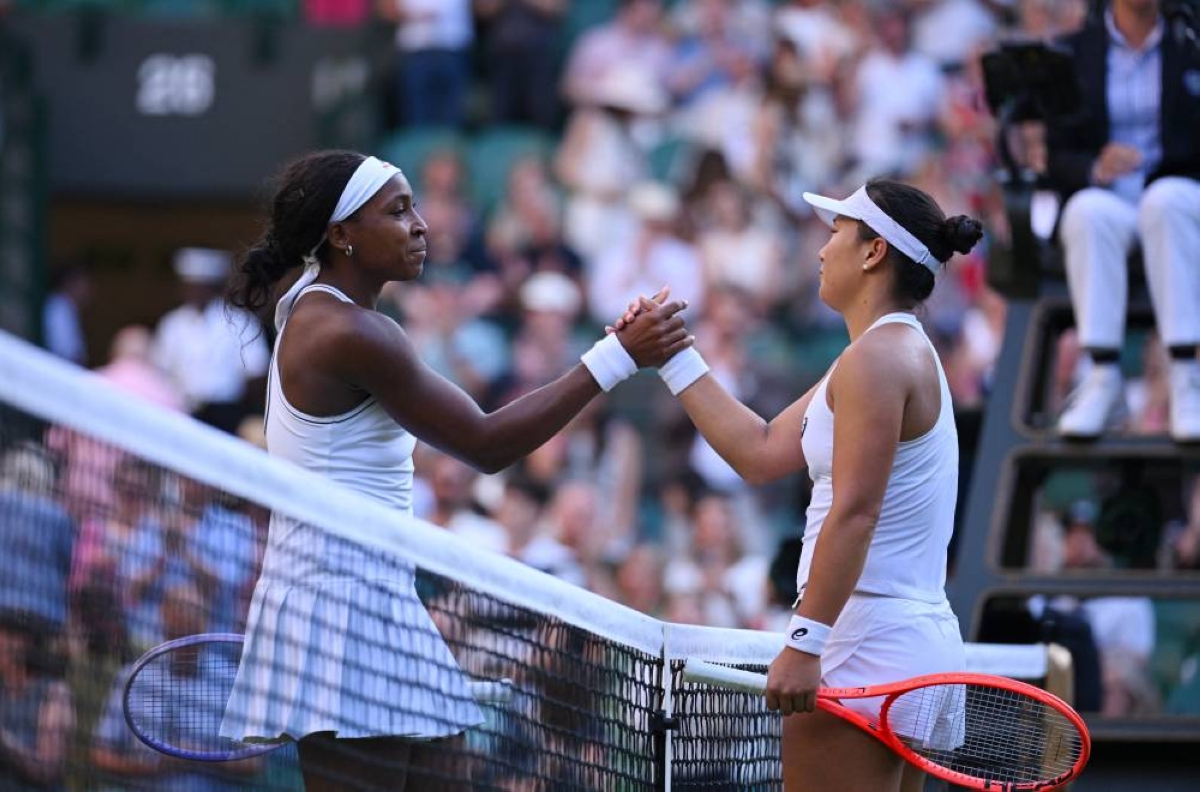
Coco Gauff of the U.S. shakes hands with Claire Liu of the U.S. after winning her third-round match at Wimbledon on Friday. (Reuters) * American overcomes compatriot Liu in decider* Gauff returns to the fourth round of Wimbledon* She faces Swiss Bencic for place in quarters Seventh seed Coco Gauff reached the fourth round and matched her best Wimbledon display with a 6-3 6-7(5) 6-2 victory over fellow American Claire Liu on Thursday to keep her bid for a third Grand Slam title alive.The 22-year-old former U.S. Open and French Open champion, who crashed in her opener at the All England Club 12 months ago, arrived under pressure to improve her modest grasscourt record and appeared to be in cruise control early on against Liu.She eased through the opening set with minimum fuss and was on course for a routine victory when world number 146 Liu sprang to life and saved three match points in the second set, before forcing a tiebreak as the evening shadows engulfed Court One."I think I'm not playing my best tennis," Gauff admitted in her on-court interview, though she said there were positives."I think today I served well as I did in my last match, I held when I needed to. I definitely feel more confident."Gauff's passive approach in the tiebreak allowed qualifier Liu to take control and level the contest at one set apiece, but she quickly regained her rhythm in the decider and broke in the opening game by forcing an error with a deep backhand.GAUFF GLAD MISSED CHANCES DID NOT DERAIL HER"Yeah, I'm just happy to get through," Gauff added."I had some opportunities to close it out in the second set, but I'm glad I didn't let that derail me and was able to come out with a win today."I felt better today. I think Claire stepped up her level and I definitely had my opportunities with some of those match points, but it's only experiences that you can learn from."The double major champion's serve came under pressure from Liu in the games that followed, but there was no looking back when she built a 5-2 lead, as she earned a fourth-round clash with Swiss 11th seed Belinda Bencic."The opponents I've played have been high level players and good grasscourt players. Belinda will be the same," she said."It'll be a tough one." Related Story