Sports
Cape Verde stand tall as Uruguay’s pedigree wilts

Cape Verde stand tall as Uruguay’s pedigree wilts

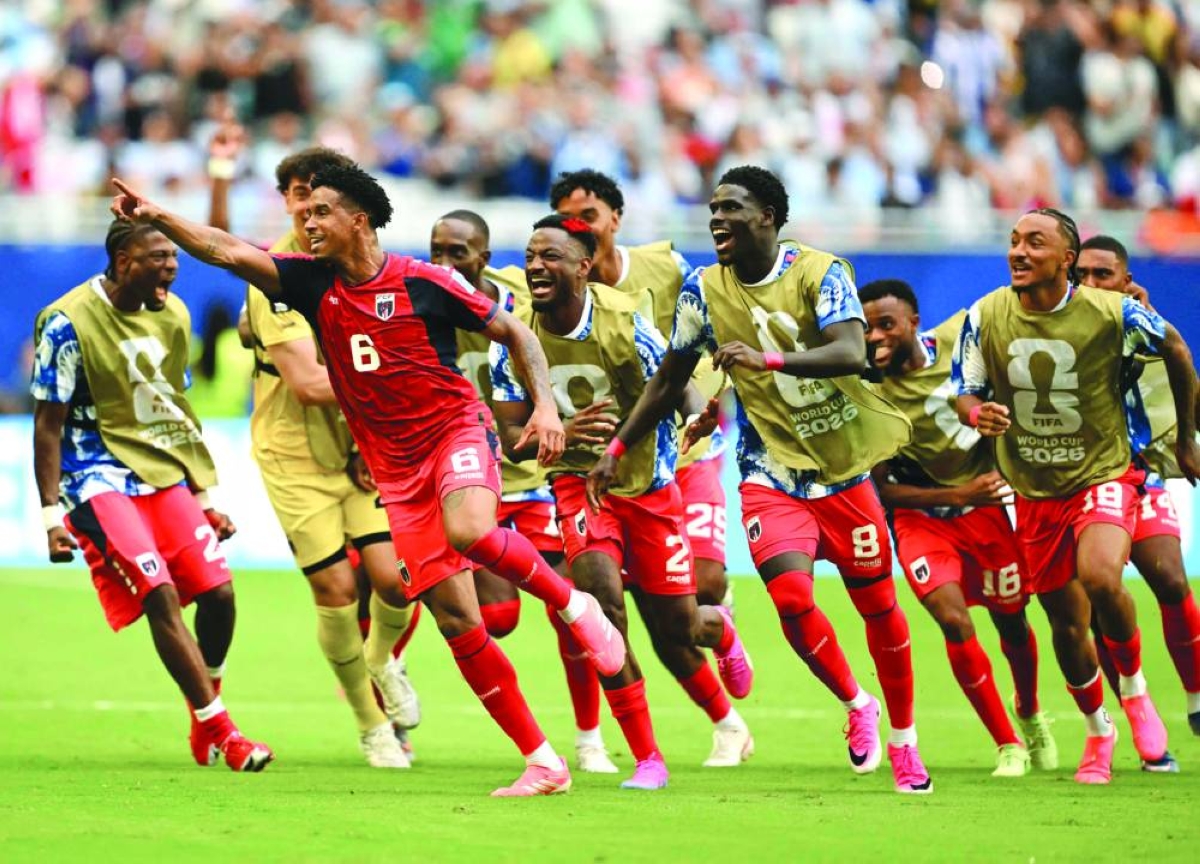
Cape Verde’s Kevin Pina celebrates with team-mates after scoring against Uruguay in Miami Gardens. (AFP) As Cape Verde celebrated one more precious World Cup point against yet another former champion, the shock was not that they scored twice against Uruguay in a pulsating 2-2 draw but that they never looked surprised themselves. This was only Cape ‌Verde’s second World Cup match, a fixture that on paper pitted newcomers against one ​of the traditional powers, with 51 ‌rungs separating the two sides in the rankings. Yet from the opening minutes, it ‌was difficult to identify which team carried the ‌weight of history and which players were ‌simply enjoying the moment as Cape Verde approached Uruguay without deference or fear. “This is something we owe to other smaller national teams, teams that struggle to qualify for a World Cup,” Cape Verde coach Bubista told reporters. “A country may be small, may struggle financially, but if they’re resilient, if they can endure struggle, if they work in an organised manner, they can also stand shoulder to shoulder with other major teams.” Marcelo Bielsa had packed Uruguay’s midfield, probably in the expectation that Cape Verde could sit back as they did against Spain, but that backfired quickly. Cape Verde’s ​confidence was visible in moments, when Garry Rodrigues spun away from Guillermo Varela with a turn that drew a roar from the crowd or when Telmo Arcanjo made a driving run from deep into Uruguay territory. Rodrigo Bentancur ‌could do little more than bring him down and accept ​a booking as Uruguay appeared unsettled and unsure where the next challenge would come ​from. Cape Verde’s opening goal reflected that boldness as Kevin Pina’s ambitious strike from over 30 metres out squeezed through the wall and beyond the desperate dive of veteran keeper Fernando Muslera. The celebrations carried the emotion of a country witnessing history and were so exuberant that the referee eventually had to usher players back towards the centre circle for the restart. Rather than retreat after taking the lead, Cape Verde became even more adventurous, attempting the improbable with a corner aimed directly at goal, while there was also an audacious shot from their own half when Muslera was off his line. Uruguay, also known as La Celeste, took Cape Verde’s showboating as an insult and the ‌lead disappeared with Maxi Araujo’s poacher ‌finish for the equaliser before setting up Agustin Canobbio for the second as they turned the match completely on its head. But Cape Verde remained unbowed and soon produced perhaps their defining moment of the tournament. Helio Varela came on as a substitute and his eyes lit up when Mathias Olivera’s loose back pass ended up in no man’s land, accepting the gift gratefully as he skilfully sent the ball into an empty net with Muslera off his line. As Olivera sank to his knees in despair, Varela struck a pose to show off his chiselled biceps as he was lifted into the ​air by his teammates, some of whom could not hold back tears. Cape Verde’s performance was built on more than just technical quality. Every lost ball triggered a sprint back towards their own box while they threw their bodies into challenges with no regard for their own safety. They also threatened on several counter-attacks, the Uruguay defence working overtime with almost no support as the men in red easily cut through a midfield that had lost complete control. When the final whistle blew, it was abundantly clear which side enjoyed the result more. As Uruguay’s squad walked down the tunnel with ‌their heads bowed, Cape ​Verde’s players stayed on the pitch, their heads held high as they basked in the love of their grateful fans.  Related Story
Entertainment
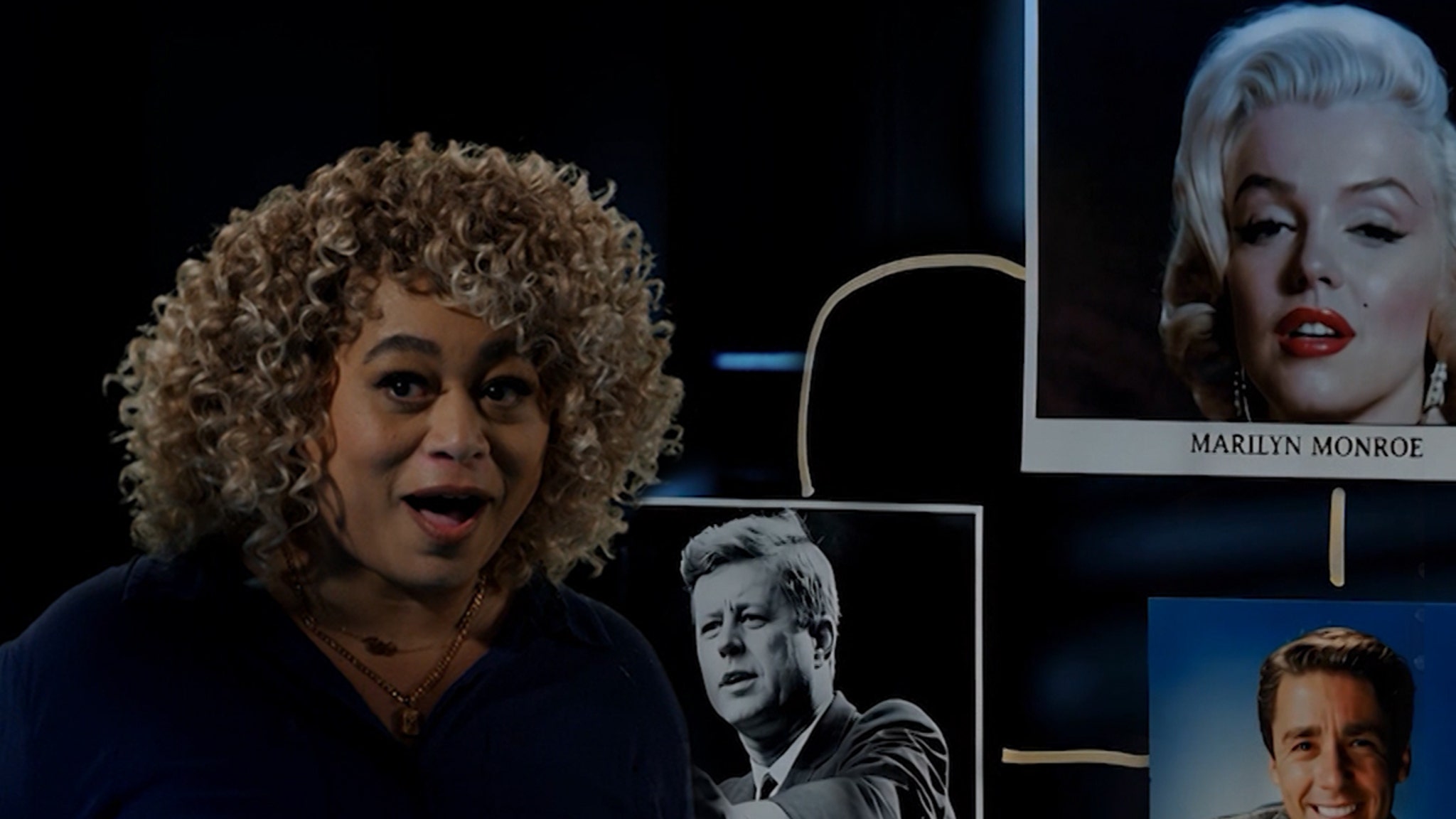
Marilyn Monroe’s Affairs with JFK and RFK May Have Led to Murder

Marilyn Monroe’s Affairs with JFK and RFK May Have Led to Murder

Play video content Marilyn Monroe's death may not have been suicide at all ... it may have been a far more sinister murder plot that revolves around the Kennedys. TMZ has produced a new show

Sports
Timeless Messi eyes World Cup record as Argentina face Austria

Timeless Messi eyes World Cup record as Argentina face Austria

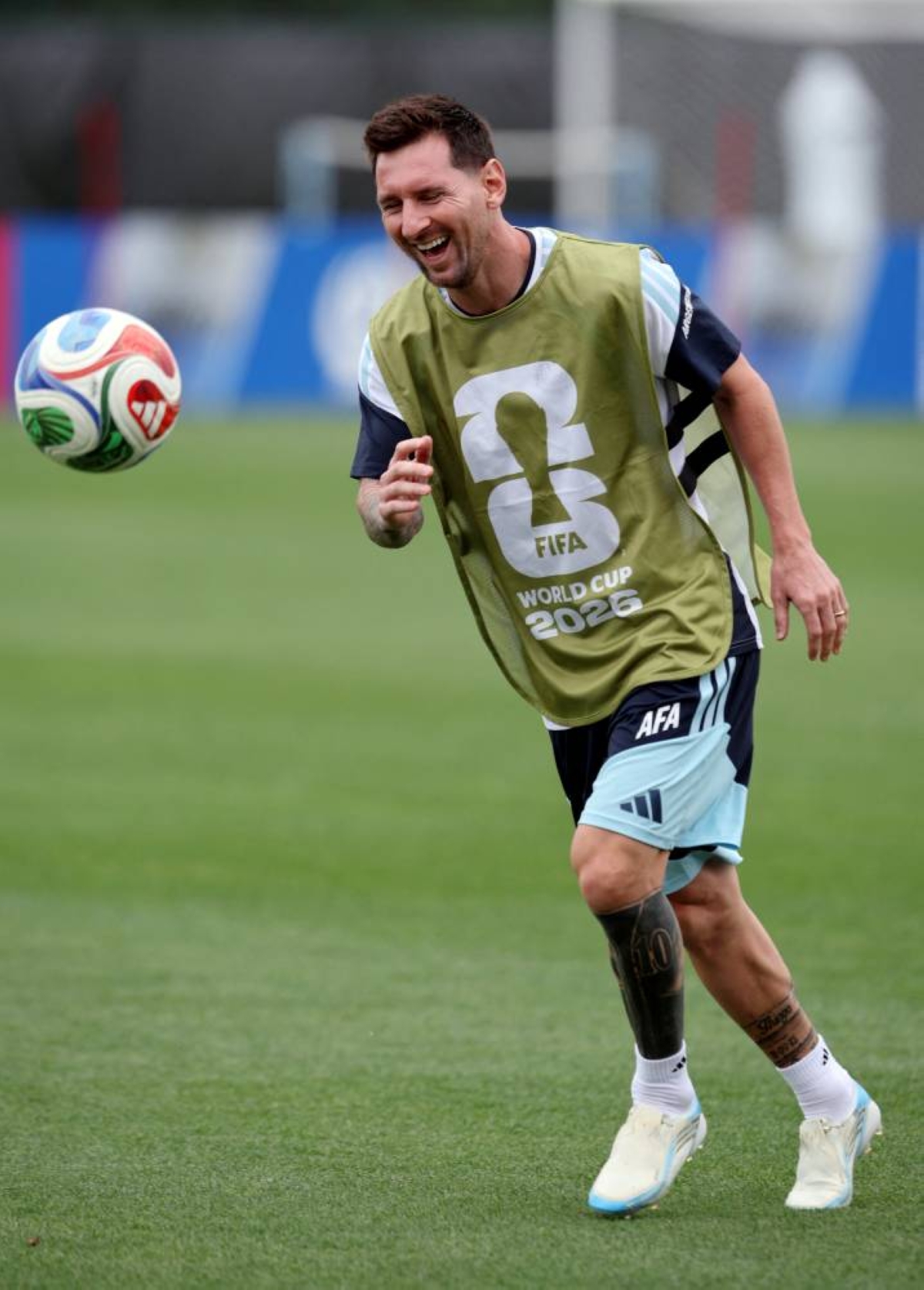
Argentina's Lionel Messi, who turns 39 on Wednesday, scored a hat-trick in a 3-0 win over Algeria to pull level with Miroslav Klose's all-time World Cup record of 16 goals. (Reuters) The Lionel Messi show rolls into Dallas with the Argentine maestro on the cusp of more footballing history when the World Cup holders face Austria on Monday.Messi, who turns 39 on Wednesday, scored a hat-trick in a 3-0 win over Algeria to pull level with Miroslav Klose's all-time World Cup record of 16 goals. The skipper broke down in tears after his first goal, and it later emerged that his father is recovering from an unspecified "health issue".Inter Miami attacker Messi had not even committed to playing the tournament in North America until the last moment. But nobody realistically expected him to be absent from spearheading Argentina's attempt to become the first team since Brazil in 1962 to win back-to-back World Cup crowns.The former Barcelona and Paris Saint-Germain wizard dragged his country to World Cup glory four years ago, and the lure of representing his nation once again on the biggest stage proved irresistible. The impressive air-conditioned home of the Dallas Cowboys for Argentina's second group game against Austria would be the perfect stage for Messi to break Klose's record."In the end, it's just a statistic and nothing more," Messi, widely regarded as the greatest footballer of all time, said. Victory over Austria would put Lionel Scaloni's side on the cusp of the last 32 as Group L winners with a game to go, giving Messi the chance to recharge for the knockout rounds.Austria, managed by the admired Ralf Rangnick, will not roll over. They too are closing in on the next stage after beating debutants Jordan 3-1. After the euphoria of four years ago, it is easy to forget that Messi was not always given god-like status by Argentina fans.There were feelings previously that he had not shown the some brilliance for his country that he did for more than 15 dazzling years at Barcelona.Fast forward to now, and even approaching middle age, Messi's mere presence inspires his team-mates on and off the pitch. "If anyone thought this group was better off without Leo, today it became clear that Leo is the most important of them all," midfielder Alexis Mac Allister said after the Algeria show.He may not have the legs of yesteryear and he now plays more in fits and starts, but the rest of the Argentina side are more than happy to do the dirty work and let him turn it on when he wants. Scaloni, Messi's team-mate at the superstar's first World Cup in 2006, has built an ecosystem around their captain."He's playing with a group of friends, with people that are going to play with their heart for him," said the Argentina boss. "Whenever they need to have a conversation with him they can just approach him and it's really hard to explain whatever he conveys. I could stay here with you for over an hour trying to explain exactly what he does, but you need to be there to really understand. You need to understand the atmosphere, the ambience."Unlike at Portugal, where an ageing Cristiano Ronaldo has become a problem for coach Roberto Martinez, the Argentina players have made plain that they will do whatever it takes to help Messi wreak his finest havoc on opposition defences."He's been my idol since I was a kid. Naturally, you want to repay that," his fellow forward Julian Alvarez said. Rodrigo De Paul, who also plays with Messi at Inter Miami, put it more bluntly: "He makes you want to go to war if he asks you to." Related Story

Sports
Belgium held by Iran as Ngoy sent off

Belgium held by Iran as Ngoy sent off

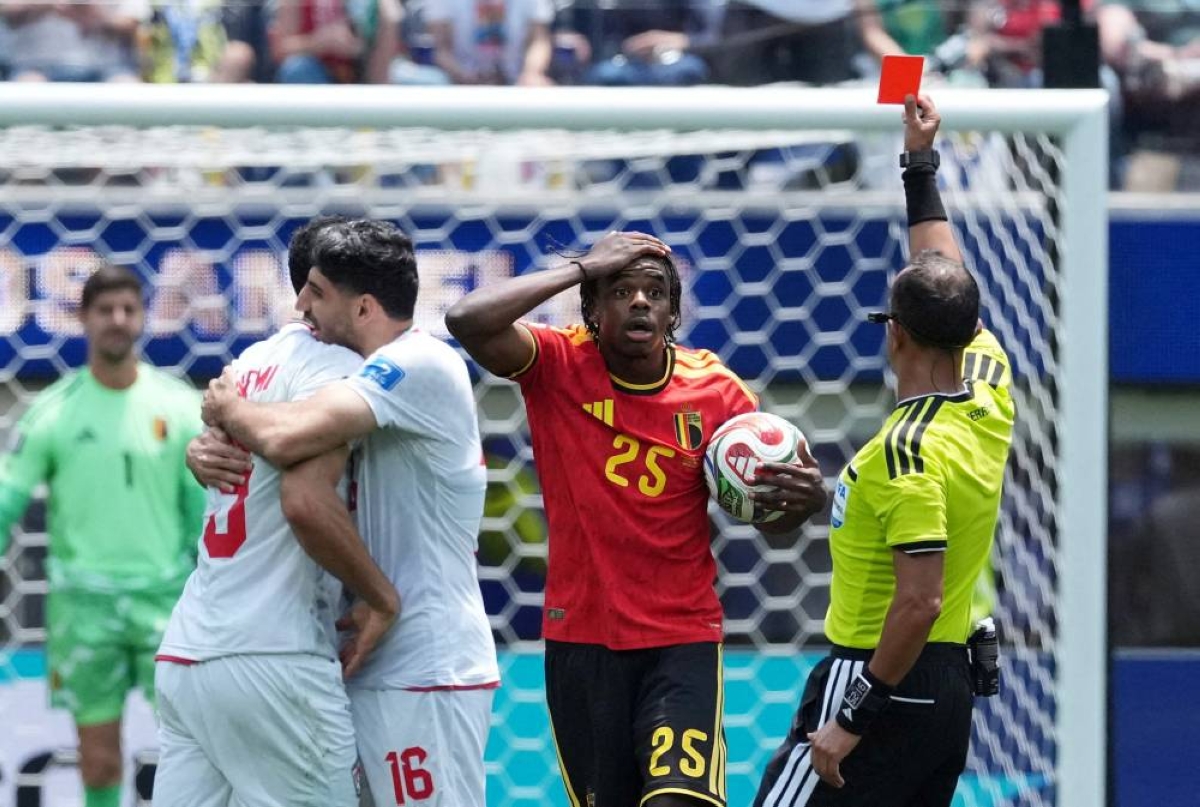
Belgium's Nathan Ngoy is shown a red card by referee Dario Herrera in Los Angeles. (Reuters) Belgium were held to a scoreless draw by Iran in a frustrating encounter Sunday that saw the Red Devils reduced to 10 men and facing the possibility of group-stage elimination for a second straight World Cup.A star-studded though ageing lineup including Kevin De Bruyne and Romelu Lukaku was if anything fortunate to leave Los Angeles with a point, controlling possession yet ceding the game's best chances to a resolute Iran team.Iran's Mehdi Taremi had the ball in the net from a well-worked first-half free kick that was overturned for offside by VAR, while Nathan Ngoy was sent off after the break for hauling down the striker after a badly mis-hit backpass.The result means all three games so far in Group G have ended in draws. Stuck on two points, Belgium at least have the comfort of playing the tournament's lowest-ranked team, New Zealand, in their final group game.Iran will also need at least a point against Egypt next Friday. Having been frustrated by visa issues as they travel from their base camp in Mexico to games in the US, Team Melli will hope to focus on the football as travel restrictions are reportedly eased for their crucial trip to Seattle.For the second Iran game running, protesters from Los Angeles' large Persian exile community gathered at the stadium to chant against the country's hardline regime.Inside the stadium, Iran's anthem again drew a chorus of boos and whistles – a reception at odds with the response to the players themselves, who were loudly cheered.Having switched to a back five, Iran sat deep in the first half, allowing Belgium to dominate possession and to play hundreds of passes around their penalty area without creating any clear-cut opportunities.Target man Lukaku, back in the starting lineup after making an impact from the bench in Belgium's 1-1 draw with Egpyt, managed a solitary headed effort in the 36th minute, which sailed over the bar.Iran had the first half's two best chances, entirely against the run of play. Hossein Kanani's low shot after a long throw was well saved by an outstretched Thibaut Courtois.And Iran's star striker Taremi had the ball in the net midway through the half after a cleverly worked free kick, but it was ruled offside.The former Inter Milan man span away from Belgium's wall, swiveled and buried the ball, before VAR overruled the effort, to the dismay of a vocally pro-Iran crowd.After the break, Belgium continued to huff and puff while Taremi again nearly scored at the other end. Courtois did well to save after Kanani had flicked on a long throw to the Iran forward.Belgium coach Rudi Garcia made a triple substitution around the hour mark and his side immediately came close, Maxim De Cuyper's point-blank effort from De Bruyne's cut-back well saved.Substitute Hans Vanaken blasted a shot from a rebound well over the bar moments later, as the Red Devils finally began to knock on Iran's door in earnest.But disaster struck for Belgium as Ngoy was sent off. The center-back had badly underhit a pass back to Courtois, and raised his arm into Taremi as the striker raced through on goal.The game settled into a nervous, scrappy stalemate, though De Cuyper again came close with a low effort from just outside the box. Related Story

Opinion
Reading between the lines… and the space between words and deeds

Reading between the lines… and the space between words and deeds

The Jewish People Policy Institute (JPPI) has just measured, with some precision, how far European opinion has turned.Analysing nearly 900 EU statements dealing directly with Israel, its researchers found that negative rhetoric rose from 29% before October 7 to almost 46% afterward – a jump of nearly 60% – while positive statements collapsed from a fifth to under a tenth.Only Iran now draws harsher language from Brussels.The study presents this as a problem of European tone.Read against the record of European behaviour, it is something stranger: proof of a system in which words and deeds point in opposite directions, and a study of how a state can refuse to hear what either is telling it.Begin with the deeds, because they are the part the rhetoric conceals.Through every month of the war, the European Union remained Israel’s largest trading partner.Two-way goods trade reached €43bn in 2025; in 2024, the first full year of the Gaza campaign, that trade actually grew by roughly €1bn, pushed up by increased European exports.EU member states hold some €72bn in direct investment in Israel, nearly double the American figure.When the bloc’s own review concluded in mid-2025 that Israel had breached the human-rights clause that is the “essential element” of the Association Agreement, the finding produced no consequence.A suspension proposal, already narrowed to a fraction of Israeli exports, came before the Foreign Affairs Council in April 2026 and failed – Germany, Italy, Hungary, the Czech Republic and Austria declining to back it.Europe assembled the legal case against itself for inaction, then declined to act on it.The arms record follows the same grammar.Germany, source of roughly a third of Israel’s imported weaponry, approved more than €485mn in military exports in the first 19 months of the war; its later “freeze” covered only the 2% of trade formally classed as weapons of war, which analysts in Berlin called largely symbolic.Italy’s embargo honoured every contract signed before October 2023.British munitions reached Israel at near-record monthly volumes even after London suspended a tenth of its export licences.The pattern is uniform: ban the trivial category, keep the load-bearing one, and announce the ban.The diplomacy of recognition belongs to the same theatre.At the 2025 General Assembly, France, Britain, Canada, Australia, Belgium and others recognised a Palestinian state, lifting global recognition past 150 members and crossing the G7 line for the first time.Recognition is the cheapest instrument in the box – declaratory, costless, binding on no budget and no contract.France made the point explicit, confirming it would not arrest an International Criminal Court (ICC)-indicted Israeli prime minister on its soil.The individual gesture is loud; the collective machinery that controls trade and money, requiring consensus, stays silent.Europe is rhetorically unified around a two-state endgame it will spend no leverage to reach.So the contrast is not hypocrisy in the ordinary sense. It is a division of labour: condemnation absorbs the moral pressure that would otherwise force a change in conduct, leaving the conduct – the trade, the investment, the weapons – intact.And Israel has read this arrangement correctly.It has understood that European words are free, and behaved accordingly.This is where the JPPI study becomes inadvertently revealing, and where the deeper charge lies.By scoring European “tone”, the study treats the souring as a fact about Europe – a fever to be measured – rather than as a signal generated by Israeli conduct.The instrument points outward. It contains no variable for the possibility that rising criticism is information about the war rather than information about the critics.This is the posture in miniature: external condemnation is read as others’ bias, never as feedback.Israeli Prime Minister Benjamin Netanyahu calls recognition of Palestine “a prize for Hamas”; his office calls a German arms pause “rewarding terrorism”; Israel attributes Gaza’s hunger to the UN and to Hamas.Every external judgement is metabolised as an attack to be repelled, never as a mirror to be consulted.There is a word for this, and a New Yorker would supply it: chutzpah.Leo Rosten’s classic illustration is the man who murders his parents and then throws himself on the court’s mercy as an orphan.The operative move is not mere nerve; it is the severing of the act from its consequence – the demand to be judged only by one’s grievance and never by one’s deeds.It is the reflex that experiences accountability itself as a hostile act.Here the comparison to Syria’s Bashar al-Assad earns its place – not on regime type, weapon of choice, or the contested question of genocidal intent, where the analogy collapses and should be abandoned.Israel is a democracy with courts, elections, and a protest movement; al-Assad ran a hereditary terror-state that gassed its own citizens.The analogy holds on one axis only, and it is the axis that matters here: the treatment of a catastrophe as a purely internal affair whose costs are then exported to everyone else.Al-Assad’s war was, in Europe’s lived memory, the textbook case – an “internal matter” that arrived on the continent as 1mn refugees in a single year, reshaping its politics, hardening its borders, and lifting the fortunes of its far-right.The lesson European chancelleries learned was that no neighbour’s catastrophe stays internal; the displacement is always externalised, and the bill is always passed along.That is the unspoken thread beneath Europe’s hardened tone.When Israeli ministers speak of the “voluntary emigration” of Gaza’s population, and an American president of “cleaning out” the Strip, European interior ministries hear the opening bars of a familiar score.Egypt and Jordan have refused with rare unanimity precisely because displacement propagates – it does not respect the first ring of host states.The refugee fear is the one cost Israeli policy can impose on Europe against Europe’s will, and the one variable that could eventually break the equilibrium between European words and European deeds.However, that reckoning, if it comes, will be Europe’s to make.Israel’s distinctive contribution is the prior refusal: to read the souring of the world as nothing but the world’s malice, to treat the immensity of its own response as a fact about its enemies, to keep the act and its consequence in separate sealed rooms.The chutzpah is not that Israel acts.It is that, having acted, it presents the bill to everyone else and pleads its own innocence – as the orphan it has made.l Jamil K Mroue is Lebanese writer and previous editor of Al Hayat newspaper in London and The Daily Star in Beirut 

Sports
Defender Miguel urges Qatar to show true character against Bosnia

Defender Miguel urges Qatar to show true character against Bosnia

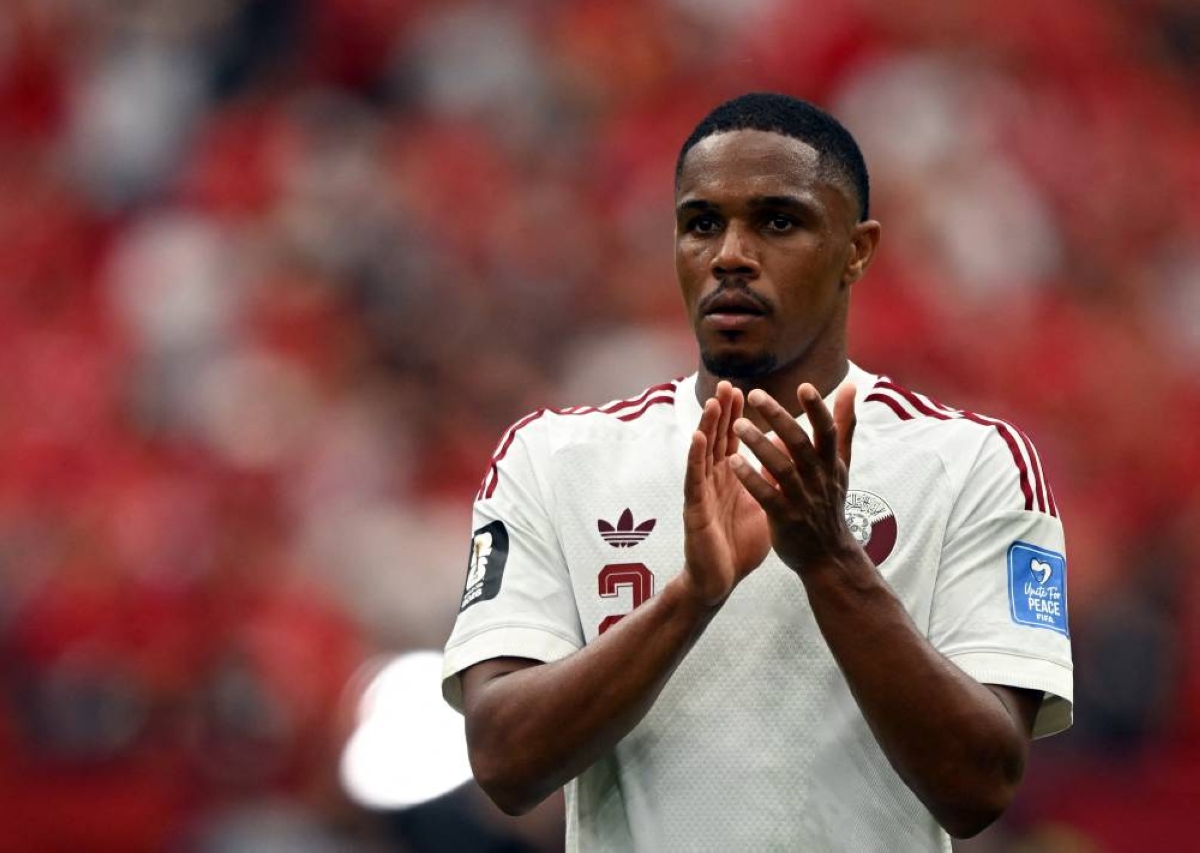
Qatar's Pedro Miguel looks dejected after the loss to Canada on Thursday. (Reuters) Qatar defender Pedro Miguel has called on his team-mates to respond with resilience and determination when they face Bosnia and Herzegovina in their final FIFA World Cup Group B match on Wednesday, insisting the team's crushing defeat to Canada will not define their campaign.Qatar suffered a damaging 6-0 loss to co-hosts Canada in Vancouver, a result that left Julen Lopetegui's side bottom of the group with one point and facing a must-win encounter in Seattle to keep their hopes of reaching the knockout stages alive.The defeat was made even more painful by the dismissals of Homam al-Amin and Assim Madibo, as Canada capitalised on their numerical advantage to record the biggest win in their World Cup history. Jonathan David struck a hat-trick, while Cyle Larin, Nathan-Dylan Saliba and an own goal completed a miserable evening for Qatar.Despite the setback, Miguel said the players remain determined to finish the group stage strongly. "The Qatar team still has a strong motivation to finish the tournament on a high note, and we still have a very important match ahead of us," Miguel said. "We will fight to win and to make our fans happy. We cannot allow this loss to undo all the work we have done over the past period."The experienced defender began by apologising to the travelling supporters who made the long journey to Vancouver. "First, I would like to apologise to the Qatari fans who travelled thousands of kilometres to support us. We know how saddened they are by this result, and we players feel even more pain because we know the value of the jersey we represent and the responsibility placed upon us."Miguel attributed the defeat to a poor start and the red card that shifted momentum firmly in Canada's favour. "I think the start of the match wasn't ideal for us. We conceded an early goal that gave the Canadian team a significant psychological advantage, and then the red card made things even more difficult. When you play against a strong team on their home ground, in front of their fans, and you're down to ten men, things become extremely challenging."He admitted Qatar were punished for mistakes as they attempted to recover from the setback. "The team tried to regroup after the first red card, but small details played a significant role in widening the gap. In such international tournaments, any mistake is immediately punished. We tried to get back into the game and maintain our organisation, but we faced an opponent who capitalised on almost every opportunity, and as time went on, the match became increasingly difficult for us."Miguel accepted collective responsibility for the heavy defeat and said the players had no intention of making excuses. "All the players feel fully responsible for the result, and we are not shirking responsibility or making excuses. When you lose by this margin, you have to be brave enough to admit that the performance wasn't up to par. We are all responsible, from the first player to the last on the pitch."The defender stressed that the result should not overshadow Qatar's encouraging opening performance against Switzerland, where they earned a historic first World Cup point. "Just a few days ago, we played a strong match against a well-organised Swiss team and managed to come away with a positive result. Therefore, I believe that what happened does not represent the true nature of this team or the quality of its players."Miguel described the atmosphere in the dressing room after the final whistle as one of disappointment and sadness. "The players' morale in the locker room after the match was honestly very low. The sadness was palpable. I didn't see a single player who wasn't affected by the result. Everyone was feeling down and disappointed. We're a very close-knit group, and we know the value of representing Qatar in the World Cup, so the atmosphere was incredibly tense after the final whistle." However, he said the squad had already begun focusing on the challenge ahead.With Bosnia also sitting on one point after two matches, the final group fixture carries enormous significance for both sides. Miguel believes Qatar's immediate task is to recover mentally before thinking about anything else.  Related Story

Opinion
Trump finding things far easier said than done

Trump finding things far easier said than done

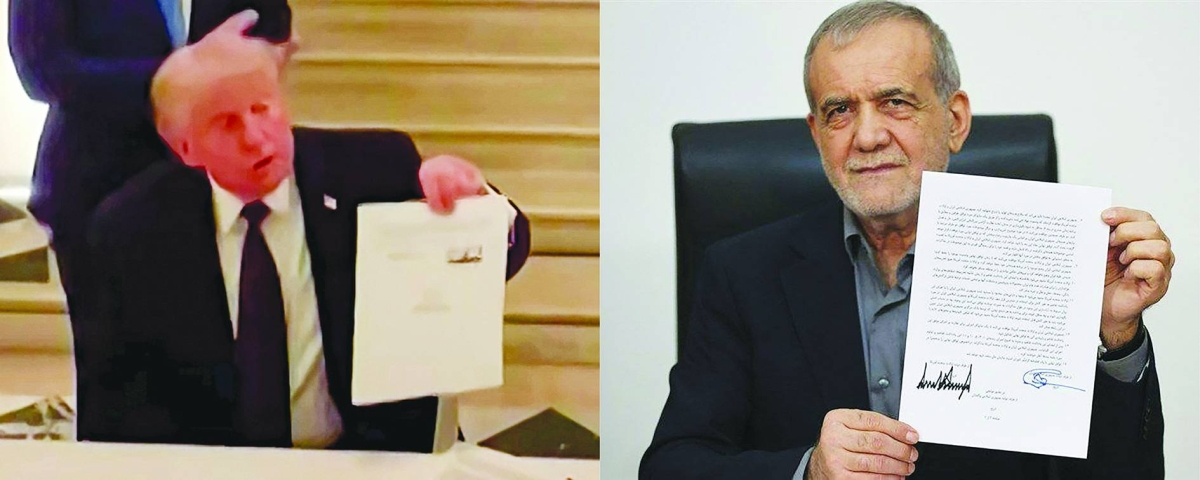
Throughout history, leaders have found that it is easier to start wars than to end them.Kaiser Wilhelm II is reputed to have muttered that Hitler’s decision to invade Poland in 1939 would end badly, just as his own decision in 1914 to send German forces into France and Russia had done for the ex-emperor who spent his last two decades living in exile in the Netherlands.While President Donald Trump faces no such threat of political banishment, he is also finding out the hard way that there are limits to what he can achieve through force or threat.For the first time in his decade-long career in politics, Trump seems to be encountering pushback he cannot control that imposes real constraints on his ability to act.Back in January 2016, when he was about to embark on his first presidential run, Trump famously said that “I could stand in the middle of Fifth Avenue and shoot somebody, and I wouldn’t lose any voters” and added that “It’s like, incredible”.Over the intervening decade, the 45th and later the 47th president has indeed defied the laws of political gravity as he has weathered challenges that would likely have sunk any other politician seeking office.These included the Access Hollywood tapes which were released in the runup to the 2016 election as well as the January 6, 2021 riot on Capitol Hill which led to Trump’s second impeachment.True to form, Trump re-entered the Oval Office in January 2025 firing on all cylinders, unleashing a “shock-and-awe” approach to reshaping the federal government and acting with scant regard for the separation of powers.Prices did not come down “on Day One”, affordability remained a key concern for voters that propelled Democrats to victories in the off-year elections in November 2025, and judges across the country began to issue rulings which undid some of the administration’s signature policies, especially on immigration.The president’s approval ratings also began to slide, to the extent that by the Spring of 2026 they had dipped below the levels seen during Trump’s first term from 2017 to 2021.And yet, the foreign policy success of the administration’s daring intervention in Venezuela in early-January, which led to the capture of president Nicolas Maduro and the installation of an interim leader willing to work with the US, evidently fostered a belief in the White House that the same outcome could be replicated in Iran.Advocates of US intervention may have played up the prospect that Trump could achieve a historic breakthrough that had eluded his seven most recent predecessors, going back to Jimmy Carter in 1979, by ridding the US of the clerical regime in Tehran.Such arguments could also have appealed to the flattery around the president and his conviction that his efforts deserve a Nobel Peace Prize.The US and Israeli war against Iran which commenced on February 28 has, from an operational standpoint, certainly achieved notable outcomes, albeit at the cost of horrific errors, such as the missile strikes which destroyed an elementary school in Minab on the opening day of the war, killing 120 schoolchildren.Near-total control of the airspace over Iran enabled the Americans and Israelis to strike at will against military and civilian targets, inflicting severe damage on Iranian infrastructure and eliminating senior leaders, including Supreme Leader Ayatollah Ali Khamenei on the opening day of the war.However, the military campaign did not lead to the political change desired by US and particularly Israeli officials, as the regime survived the onslaught and demonstrated the ability to hit back hard.Iran’s attacks on the Gulf States and its de facto blockage of the Strait of Hormuz externalised the cost of the war onto critical US partners in the region and the global economy.Trump has, at times, seemed indifferent to the costs being borne by others even as supply chain disruptions generated the biggest energy shock since the 1970s.On June 17, Trump belatedly appeared to realise that shortages of oil products and a drawdown on reserves risked creating “bedlam” in four weeks if a deal with Iran was not reached.This notwithstanding, the memorandum of understanding (MoU) that US and Iranian officials signed, following painstaking Qatari and Pakistani mediation, on June 14, has raised more questions than it has provided answers, and has exposed the White House to jeopardy going forward.Details about the MoU were vague at first, and when they were released by the White House on June 17 it became apparent that the list of concessions on offer from the US exceeded those made by the Obama administration in the negotiations that produced the Joint Comprehensive Plan of Action (JCPOA) in 2015.This could become a problem for Trump, because he spent years lambasting Barack Obama for what he saw as a deeply-flawed deal from which Trump withdrew the US two years into his first term, in 2018.For a president who has built a reputation around the “art of the deal”, the terms of the 14-paragraph MoU were described by many in the US (and in Israel) as a “capitulation” to Iran.The suspension of the US-Iran talks planned to begin in Switzerland on June 19, triggering the 60-day timeline set out in the MoU for a final deal, indicate the scale of the challenge that lies ahead.Already, the vague provisions in the MoU have spurred competing interpretations of details and commitments, which risk adding to the lack of trust each party has in the other.If the negotiations fall apart, it will be instructive to see how Trump responds and who he blames, especially as he associated himself with the process when he signed the MoU in Versailles on June 17.Will Trump blame Vice-President JD Vance, thereby affecting the Republican campaign for the next presidential nominee, Israel, or Iran, and if the latter, will this be the prelude to a new round of war?l The writer is a leading scholar specialising in Gulf politics and international political economy, and a fellow at the Baker Institute and co-director of the Middle East Energy Roundtable. 

Sports
Yamal scores on injury return as Spain thrash Saudi Arabia

Yamal scores on injury return as Spain thrash Saudi Arabia

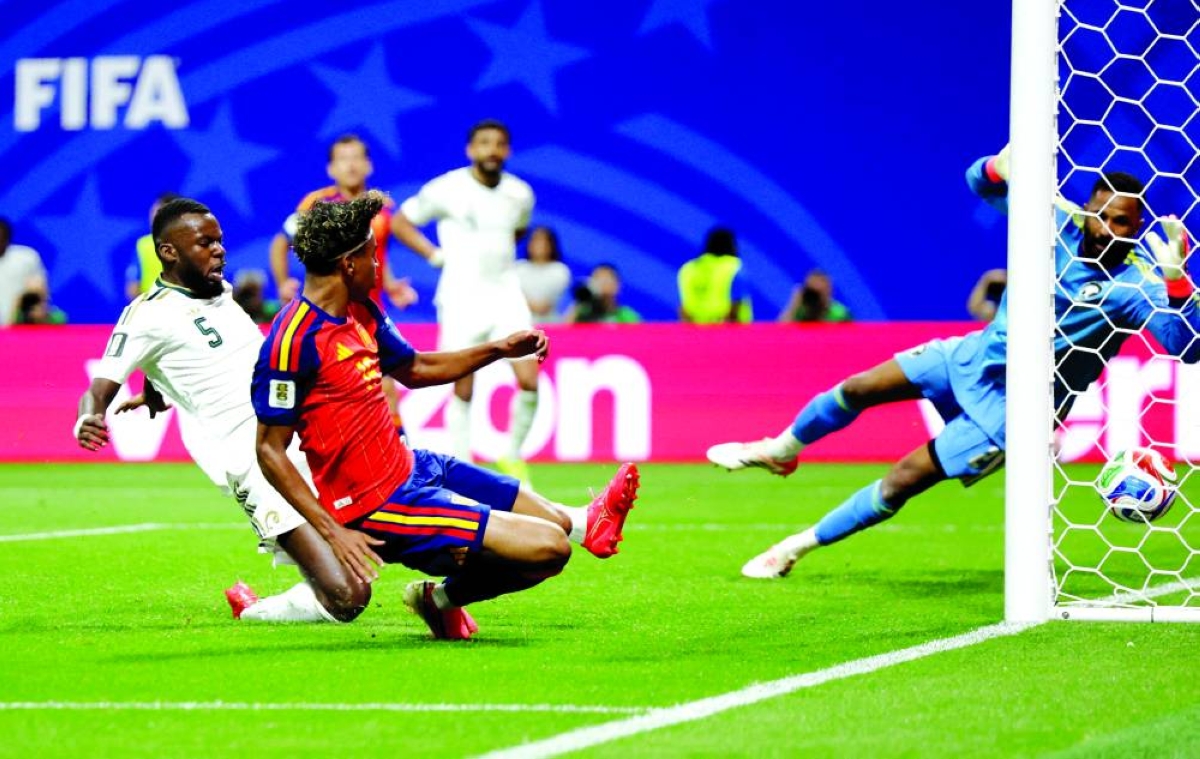
Spain’s Lamine Yamal scores their first goal against Saudi Arabia during the FIFA World Cup Group H match in Atlanta on June 21, 2026. (Reuters) Lamine Yamal's return sparked Spain's World Cup into life as the European champions ran riot to beat Saudi Arabia 4-0 in Atlanta.Making his first start in two months after a hamstring injury, Yamal ended La Roja's long wait for a World Cup goal just 10 minutes in. Mikel Oyarzabal then struck twice to put Luis de la Fuente's men 3-0 up inside 24 minutes.De la Fuente's careful management of Yamal's minutes continued as the Barcelona superstar was replaced at half-time before Hassan al-Tambakti's own goal rounded off the scoring."We had to recover good feelings, correct a few things from the last game, but we need to keep improving if we want to achieve our target of getting to the final on July 19," said De la Fuente.Victory propels Spain to the top of Group H ahead of Uruguay's meeting with Cape Verde later. Billed as one of the pre-tournament favourites, Spain got off to a slow start in a 0-0 draw against debutants Cape Verde.A pedestrian performance despite dominating possession only highlighted the importance of Yamal to their quest to be world champions for a second time. De la Fuente also warned his players had been "stung" by the criticism they faced following their opening result and they responded emphatically.Yamal's return was one of four changes in total with Pedro Porro, Dani Olmo and Alex Baena also coming into the starting line-up. After over 2,500 passes and 50 attempts at goal since their last World Cup goal, Spain finally found the net and fittingly Yamal made the breakthrough.Oyarzabal found space in behind the Saudi defence and his low cross picked out the 18-year-old to slot in at the back post. The Saudis held Uruguay 1-1 in their opening game but there was little evidence that the billions splashed to raise the level of their domestic league has aided the national team.Coach Georgios Donis looked particularly irked that two of Spain's goals came from corners. Oyarzabal pounced on Aymeric Laporte's flick-on to give the 2010 winners the breathing space they craved. Just three minutes later, the Real Sociedad forward volleyed home from Olmo's header for his 14th international goal in his last 13 caps.Oyarzabal was inches away from a first-half hat-trick when his audacious effort with the outside of his foot from a narrow angle came back off the crossbar. But with the job done by half-time, De la Fuente could afford the luxury of replacing Yamal and Oyarzabal at the break."Had we had a different result, he (Yamal) would've played for longer but given the result and that the match was under control, we considered his contribution was enough for us to have him in the next game," added De la Fuente.The changes did not disrupt the waves of Spanish attack towards the Saudi goal, but the fourth also came via a corner. Cucurella was afforded acres of space to shoot and although his effort was repelled by Mohammed al-Owais, the rebound deflected in off the unfortunate Tambakti.To round off an ideal afternoon for De la Fuente on his 65th birthday, Nico Williams and Mikel Merino were afforded valuable minutes off the bench in the second period as they too get up to match speed after lengthy absences due to injury.By contrast, the pressure is now on Donis to deliver in Saudi Arabia's final group game against Cape Verde in Houston. Victory will likely take the Arabian Falcons into the knockout stages for the first time since the World Cup was last in the United States 32 years ago.Spain travel to Guadalajara next for the final group game against two-time winners Uruguay on Friday.  Related Story

Opinion
How Trump’s deal compares to Obama’s

How Trump’s deal compares to Obama’s

President Donald Trump has insisted that the deal he has reached with Iran is superior to the one that Barack Obama sealed in 2015, while Trump’s critics say at this point he has gotten much

News
Explosion rocks Qatar’s Ras Laffan industrial zone

Explosion rocks Qatar’s Ras Laffan industrial zone

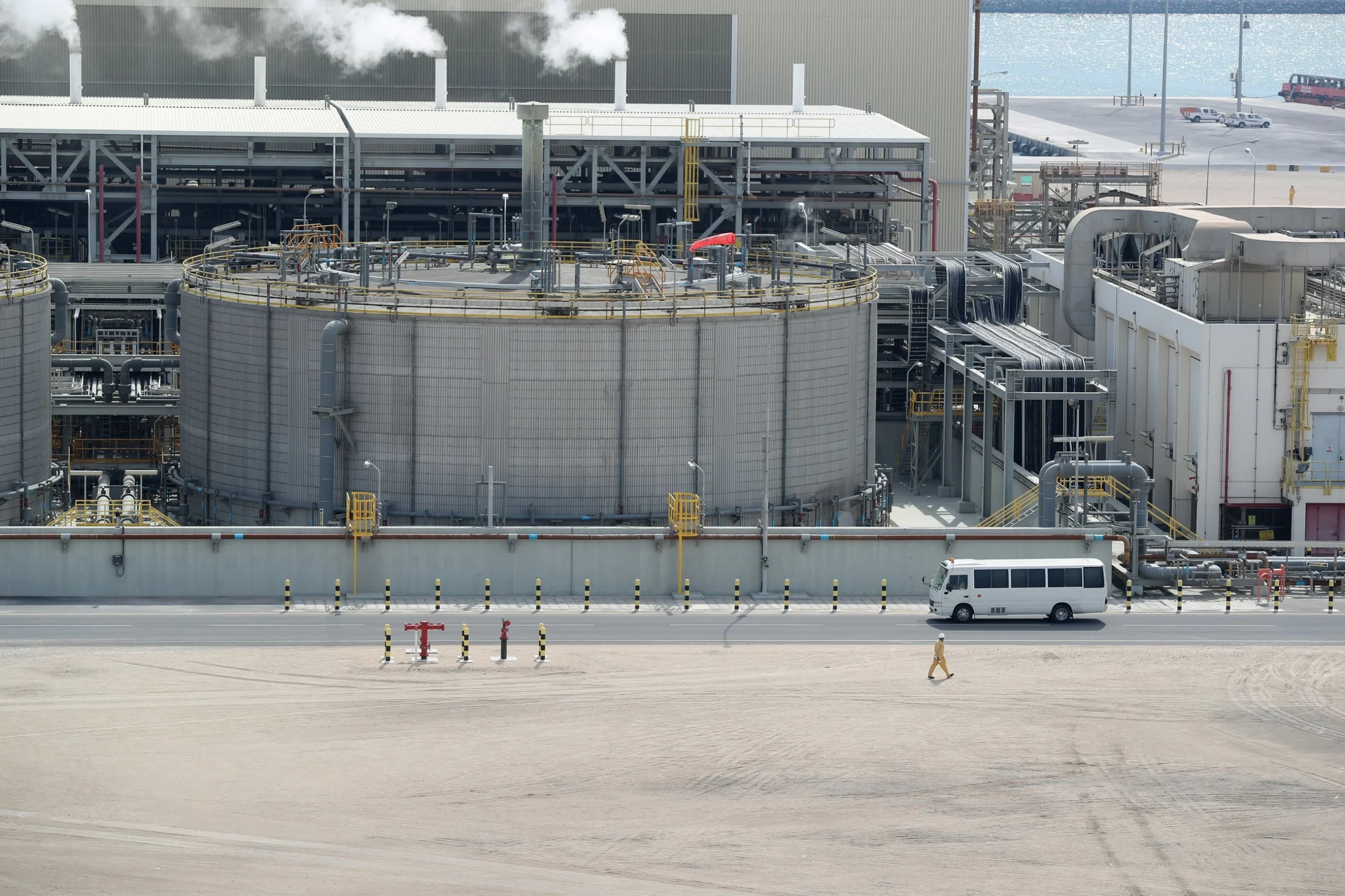
An explosion occurred on Sunday in Qatar's Ras Laffan industrial zone, home to the world's largest liquefied natural gas hub, as the result of a "technical incident", the interior ministry said."An internal explosion occurred in