Opinion
Qatar Radio turns 58: The shining voice of the nation

Qatar Radio turns 58: The shining voice of the nation

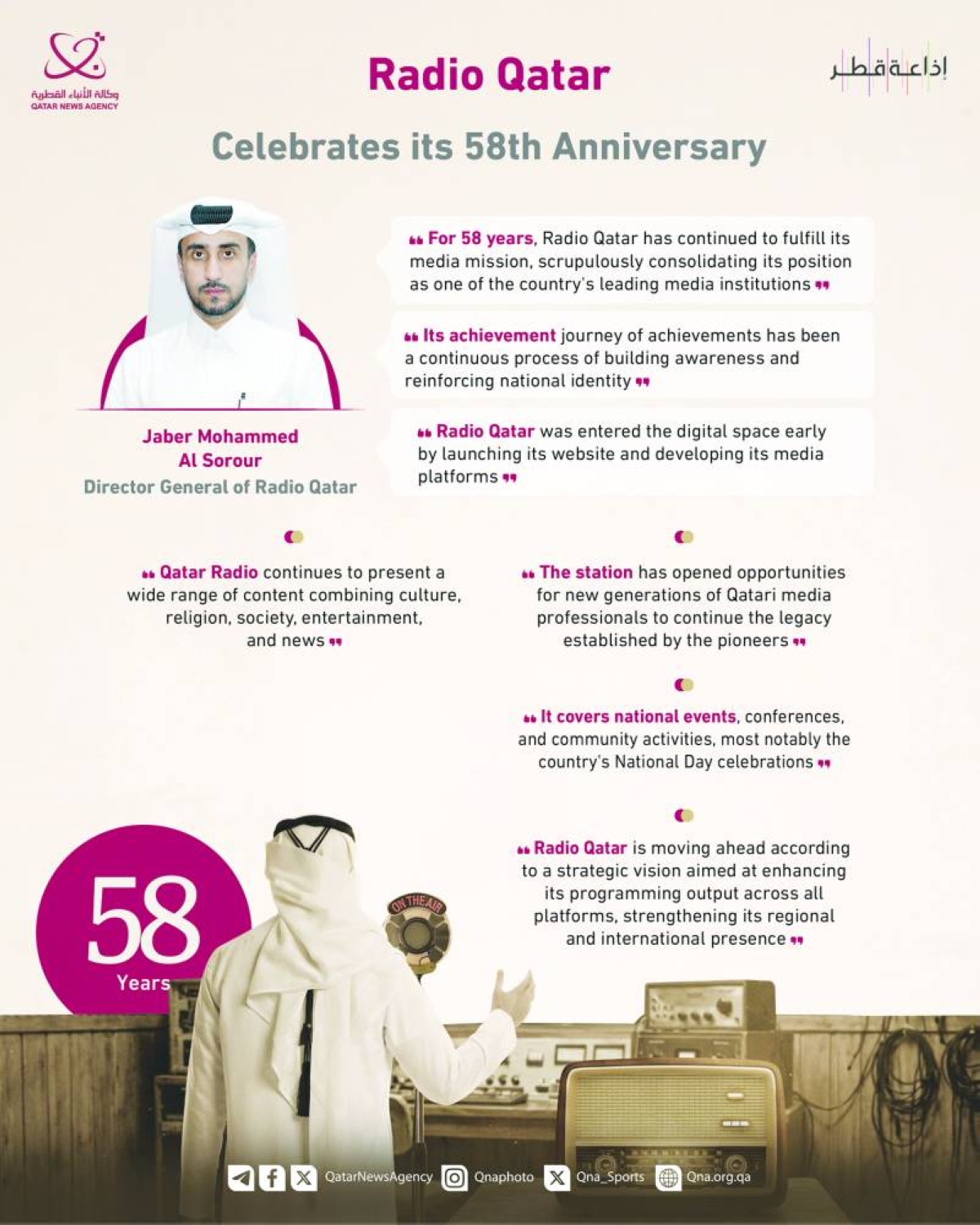
Qatar Radio celebrated its 58th anniversary yesterday. Since its establishment in 1968, broadcasting from the heart of Doha, the long-established Qatar Radio has become a leading media and cultural beacon in the region. Qatar Radio has been a companion to generations, not only in transmitting news and programs, but as a witness to the development and progress made by Qatar, and a mirror reflecting its identity and aspirations. Over the past decades, Qatar Radio has been the voice of Qatar to the world and a media platform that has contributed to consolidating national identity, strengthening belonging, and highlighting the authentic values ​​of Qatari society. From the beginning, through its various programs, it has played a pivotal role in serving the nation, keeping pace with all political, economic, cultural, and sporting events in the country, contributing to enhancing community awareness and solidifying national identity. Qatar Radio kept pace with all the nation’s achievements, events, activities and initiatives in all fields and sectors, both internally and externally, contributing actively to consolidating the civilised image of the State of Qatar in forums regionally and internationally. It was present at every pivotal stage in the history of the state and accompanied the people of Qatar in moments of construction and prosperity, faithful to the message of conscious and committed media. First stepsSince its first broadcast, Qatar Radio remained a beacon illuminating the Gulf and Arab media landscape, carrying the pulse and voice of the nation to every listener. The first broadcast began on June 25, 1968, representing the birth of a new Arab voice, starting from limited hours of transmission and expanding to a 24-hour station over the years. Throughout its rich and fruitful journey, the radio station continues to engage with its listeners and fans, relentlessly pursuing continuous modernisation across all departments and personnel with boundless ambition and unparalleled determination. Qatar Radio, since its launch, has provided diverse content that meets all tastes, from news, cultural and sports programs to entertainment and religious content. It uses classical Arabic, while taking into account the use of the Qatari dialect. Qatar Radio contributed to strengthening belonging among different segments of society, and has played an active role in conveying many messages to citizens, and in raising awareness among members of society by providing awareness programs in the fields of health, education and the environment. Qatar Radio is not limited to Arabic. In 1971, it launched the English program, in 1980 the Urdu program, in 1985 the French program, in addition to the HolyQur’an Radio in 1992. This diversity represents contemporary Qatar, and addresses different segments of society inside and outside the country, includingcitizens, residents, and an Arab and international audience. Qatar Radio presented programs targeting the Arab audience, and contributed to strengthening cultural and intellectual exchange between Arab countries. It also expanded its news content to include various fields, such as politics, economics, sports and culture. Many diverse news programs, such as news bulletins, talk shows and news analysis were also launched. It also collaborated with many Arab and international radio stations to exchange news and programs, participated in many Arab and international media conferences and events, organized many international conferences, and sought to hold joint Arab meetings with the radio stations of fraternal Gulf countries and the Arab world as a whole to discuss many issues. In the field of drama, Qatar Radio presented numerous radio series and plays that were well-received by the public. It also contributed to preserving and reviving folk heritage by recording and broadcasting songs, chants, and folk tales, and played a vital role in supporting Qatari artists and musicians by broadcasting their work and introducing them to the public. Digital spaceWith the advent of the internet and the development of technology, Qatar Radio recognized the importance of having a presence in the digital space. A website was launched, providing listeners with stream services, program archives and content. The most significant step was the launch of Qatar Radio’s mobile applications for smartphones and tablets, which enabled Qatar Radio to reach a wider audience, allowing anyone, anywhere in the world, to listen to its programs online or through these apps. Regarding his vision for Qatar Radio among other Arab radio stations, Director of Qatar Radio Jaber Mohammed al-Sorour told Qatar News Agency (QNA) that Qatar Radio is one of the leading radio stations in the Arab world in terms of its output and technological development. He pointed out that through their programs, which target both Qatari and Arab audiences, they are committed to fostering cultural and intellectual exchange among Arab countries. Qatar Radio has expanded its content to achieve a distinguished international dimension, setting a model for other Arab radio stations. This has been realised through effective partnerships with the Arab States Broadcasting Union (ASBU), where Qatar Radio enjoys a prominent presence. The radio achieved numerous accomplishments and awards in Arab and international competitions for its content and production across diverse fields, including politics, economics, sports, and culture. It has also been entrusted with overseeing several projects, reflecting the trust it enjoys and its distinguished position among Arab radio stations. On this occasion, the Director of Qatar Radio extended his heartfelt greetings and appreciation to the station’s long-standing listeners, and also expressed his gratitude to the new listeners who have accessed Qatar Radio through digital platforms. He stated that Qatar Radio has been and remains a daily companion to Qatari society, conveying the pulse of the nation and preserving its identity and values, while simultaneously keeping pace with rapid technological advancements and digital transformations. He emphasized that media is not confined to a single medium, but rather evolves alongside its audience wherever they may be, affirming his commitment to ensuring that Qatar Radio maintains a strong presence on the airwaves, just as it does on digital platforms and modern communication channels. Technological toolsAl-Sorour called on the youth of Qatar to play a role in creating national media content, and to take advantage of the technological tools to express, create and convey the bright image of their country. Technologies develop and platforms are updated, but the honest and professional media message remains the same. He also stressed that Qatar Radio will remain a radio station that brings generations together, as it understands the needs of the previous and current generations and anticipates the aspirations of future generations. Regarding the latest developments in Qatar Radio’s plans and upcoming programming cycles, al-Sorour pointed out the continuous support they receive from the Qatar Media Corporation, which has contributed to enriching the content with quality additions and developing radio outputs. As usual, the radio maintains the status of live programs within its programming map, as the My Beloved Country ... Good Morning program will continue in a new cycle, keeping pace with the pulse of the nation and the citizen. Family, youth, sports, cultural, and documentary programs will also continue to be present within the programming plan. The program Doha Evening will retain its position in the daily programming schedule, to keep pace with various local events. The weekly live programs will also continue at their usual times. The director pointed out that the station has expanded its provision of local news content, and has presented many Qatari radio dramas, folk songs, and dialogues with figures who lived through important stages of the country’s history. This has contributed to preserving and documenting an important aspect of popular heritage for future generations. Regarding the spread of social media and digital platforms, and the extent to which Qatar Radio has succeeded in maintaining its traditional audience and attracting younger generations through applications and its website, al-Sorour explained that Qatar Radio views AI as an important opportunity to develop media work and enhance the capabilities of its employees, given the tools it provides that contribute to raising the efficiency of media production and developing work methods in various radio specialties. He explained that at the same time, rapid technological development compels media institutions to keep pace with developments and benefit from modern technologies in a way that serves their media mission and maintains their presence and influence. AI and social mediaAl-Sorour added that Qatar Radio considers AI and social media platforms to be important tools for disseminating radio content and reaching wider segments of the audience. Qatar Radio worked on developing and supporting the social media department, in accordance with the directives of the Qatar Media Corporation, in order to ensure optimal benefit from these digital transformations. 
World
US Supreme Court paves way for mass deportation of Haitians, Syrians

US Supreme Court paves way for mass deportation of Haitians, Syrians

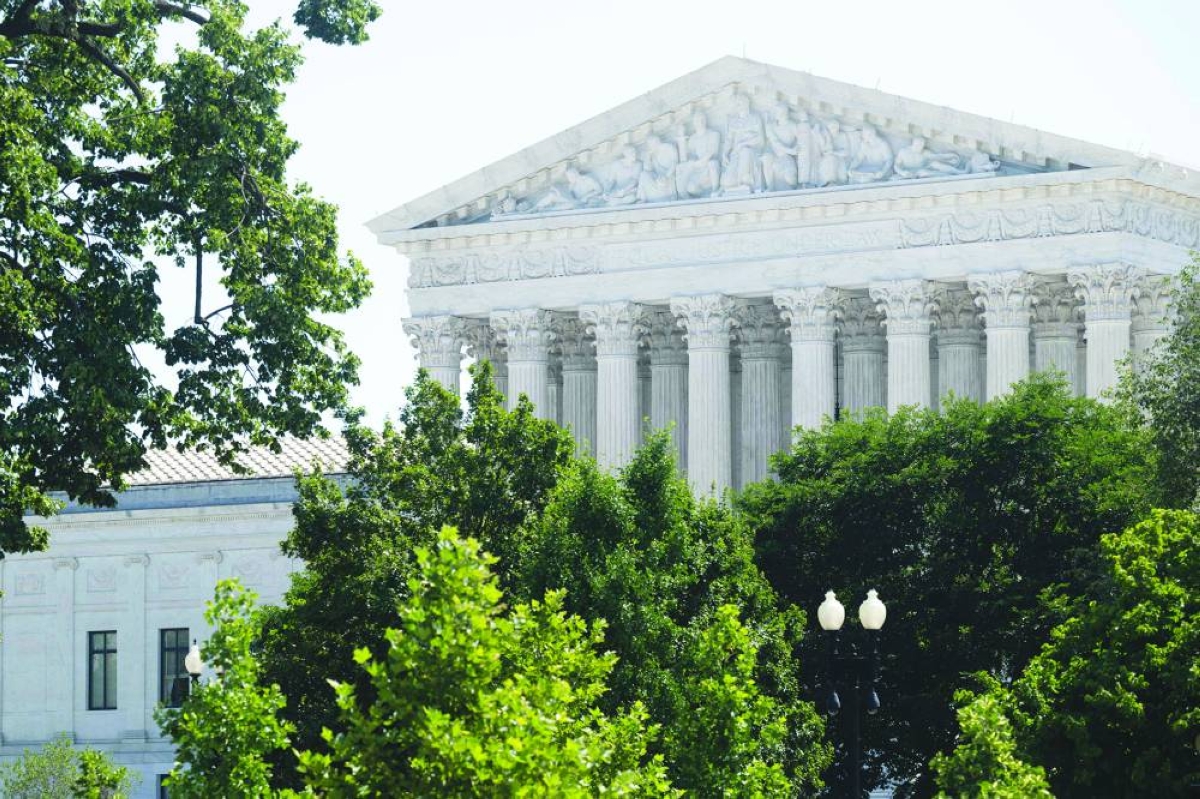
The US Supreme Court Thursday backed a Trump administration move to strip deportation protections from some 350,000 Haitians and 6,000 Syrians living in the US.The conservative-dominated court, in a 6-3 ruling, said the Department of Homeland Security's decision to end Temporary Protected Status (TPS) for Haitian and Syrian immigrants was not subject to judicial review.TPS protects its holders from deportation and is granted to people deemed to be in danger if they return home because of war, natural disaster or other extraordinary circumstances.Lawyers for Haitian and Syrian TPS holders contended during oral arguments before the court in April that conditions in their home countries remained unsafe and the administration's move was motivated at least in part by racial hostility.Justice Samuel Alito, who wrote the majority opinion in which he was joined by the five other conservative justices on the top court, rejected claims that race was a 'motivating factor' in President Donald Trump's decision to strip Haitians of TPS status.'None of the cited statements by either the President or the (Homeland Security) Secretary was overtly racial, and in substance all expressed policy views that could rest on race-neutral justifications,' Alito wrote.Trump campaigned for the White House on a pledge to expel millions of migrants and has pushed to dismantle the TPS programme as part of his broader immigration crackdown. At the height of the 2024 election campaign, Trump stoked fears about Haitian immigrants by falsely claiming they were eating Americans' pets.The Supreme Court ruling in the TPS case could have implications for more than one mn beneficiaries of TPS status from more than a dozen countries.TPS status has been revoked for nationals of Afghanistan, Cameroon, Ethiopia, Honduras, Myanmar, Nepal, Nicaragua, Somalia, South Sudan, Venezuela, Yemen, and others in addition to Haitians and Syrians since Trump took office.Haitians became eligible for TPS in 2010 following a devastating earthquake, and the country continues to suffer from severe poverty, rampant violence from heavily armed gangs and chronic political instability.The State Department advises Americans not to travel to the Caribbean nation 'due to kidnapping, crime, civil unrest and limited health care.'TPS was extended to war-torn Syria in 2012.Justice Sonia Sotomayor, a liberal, questioned during oral arguments whether a 'discriminatory purpose may have played a part' in the Trump administration's decision to strip TPS status from Haitians and referred to statements by the Republican president.'We have a president saying at one point that Haiti is a quote filthy, dirty and disgusting s-hole country — I'm quoting him — and where he complained that the US takes people from such countries instead of people from Norway, Sweden or Denmark,' Sotomayor said.Solicitor General John Sauer replied that the president's comments were being taken out of context and he was referring to 'problems of crime, poverty and welfare dependency.'Sauer said court review of TPS decisions was barred to prevent 'judicial micromanagement' of foreign policy determinations. 

Opinion
Climate change stoking Europe’s extreme heatwave?

Climate change stoking Europe’s extreme heatwave?

Europe struggled to cope with a record-breaking heatwave this week, with at least 94mn people expected to experience temperatures above 35C, most of them in France and Spain. Estimates based on analysis of forecasts from the German weather service and 2025 population projections from Europe’s Joint Research Centre suggest maximum temperatures will surpass 30C for over 350mn people -- more than two-thirds of the continent’s population. The effects of the extreme weather, with temperatures hotter than parts of east and west Africa, have been made worse by buildings and infrastructure not designed to cope with high temperatures, and is being driven by atmospheric patterns trapping hot air. But a scientific study published this week said the current heatwave was “significantly exacerbated by human-induced climate change”, without which the current temperatures would have been 2-4C cooler. The World Health Organization’s head Tedros Adhanom Ghebreyesus warned that the heatwave, which has also increased air pollution, was putting the health of Europeans at risk and urged leaders to invest in making their health services more climate-resilient. The head of the UN’s IPCC climate experts panel, Jim Skea, said the current temperatures were above some scientific projections, and warned that the continent would inevitably face more extremes as the planet warms. Around 44mn of the nearly 67mn people in France are currently under the highest red alert level for heat, according to an AFP estimate. France on Wednesday experienced its hottest day since measurements began in 1947, the national weather agency said, breaking a record set just a day earlier. The national temperature indicator — an average of daytime and nighttime temperatures across 30 stations — reached 30C, Meteo-France said, citing provisional data. Meanwhile, Britain recorded its hottest ever June temperature on Wednesday with the mercury rising to 36.1C in southern England, breaking the previous record of 35.6C set in 1976. Spain also broke its June heat record, according to the Aemet weather agency, with an average temperature of 28.17C on Tuesday. Conditions at many schools, offices and factories across the continent have become unbearable as temperatures rise, forcing early closures and employees to work from home. “I’m practically swimming in my own sweat, which is not pleasant,” 25-year-old decorator Aaron Timothy told AFP in London while cooling off in the shade. In Italy, where 16 cities are under red alert, the advocacy group Greenpeace said it had detected surface temperatures of 80C in the heavily asphalted area around Rome’s Termini railway station. Despite restrictions for outdoor workers, the area was still buzzing with delivery riders, many of whom are self-employed, who said they had to work to survive. “The climate crisis is impacting above all the most vulnerable people in the population — the people who need to work, who have to work,” said Greenpeace campaigner Simona Abbate. Power outages have been reported in France, including in the northwest department of Finistere, where high temperatures knocked out a transformer late on Tuesday, leaving about 68,000 households without electricity. In Britain, electricity grid operator Neso warned that supply could be squeezed due to pressure on the system. Sales of fans and air conditioners have skyrocketed as people try to keep cool. June is a key month for tourism in Europe but popular landmarks, including the Eiffel Tower and Louvre museum in Paris, and the stainless steel Atomium in Brussels, have been shutting early because of the heat.   

Opinion
Alliances in the new world order

Alliances in the new world order

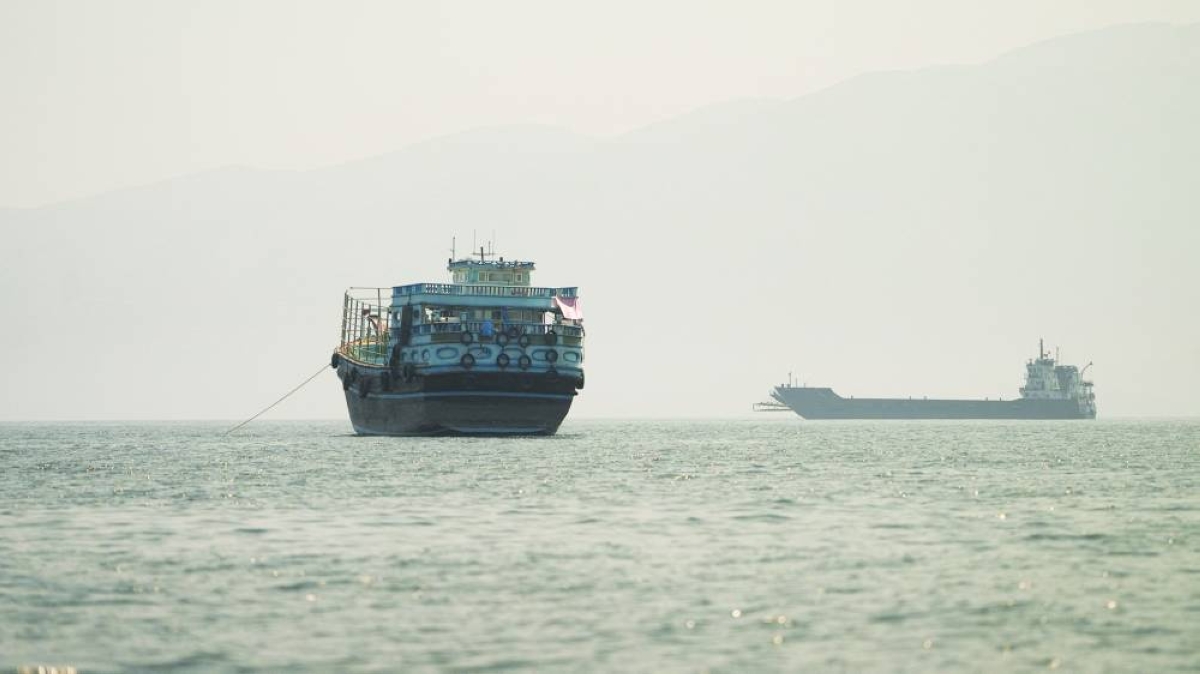
Vessels in the Strait of Hormuz. Traditional thinking about alliances is outdated in a world increasingly defined by multipolarity and great power competition, technological advances and new methods of war fighting. (Reuters/File Photo) It is never wise to generalize about how different states respond to geopolitical insecurity and instability. Even states in the same region have different economic and security priorities and interests, as well as diverging policy preferences. But they also share a common preoccupation with building up their resilience so that they can absorb or bounce back from a range of security shocks including conventional and hybrid attacks. Alliances have long been the main way for regional states to build up this resilience. At the same time, traditional thinking about alliances is outdated in a world increasingly defined by multipolarity and great power competition, technological advances and new methods of war fighting. All these developments have not reduced the importance of alliances for regional states but they have made it even more important for states to make the right alliance choices. Prime Minister Mark Carney of Canada encapsulated this thinking during his high profile speech at the World Economic Forum in Davos in January. The end of the “old order”, Carney eloquently warned, demands “building the coalitions that work, issue by issue, with partners who share enough common ground to act together”. This is especially necessary for smaller actors whether in The Americas, Middle East, Asia, Africa, or Europe. These states rely more than ever on security cooperation to navigate regional disorder. Recognition of this has led to the emergence of new types of security alliances with distinct and often novel characterisitics. They differ from traditional alliances like Nato in that they are informal and place low burdens and obligations on members. They also tend to be temporary frameworks, focused on a specific mission or objective. This means that they can be easily disbanded once the mission is over. Importantly, they almost always include a significant operational role for local actors. This is even the case if the US or another powerful extra-regional actor, such as France in Africa, is involved. Existing examples of such alliances include minilaterals like the Quad in the Indian Ocean, the Alliance of Sahel States in Africa and the Saudi-led Yemen War Coalition in the Middle East. These novel frameworks are attempts by regional actors to increase their security options in an increasingly unpredictable strategic environment where uncertainty, including about US intentions, is the only constant. This evolving reality raises an interesting and important question for the future. In what circumstances will regional actors be willing to invest their financial, political, diplomatic and military capital, not to mention their reputations, in these types of security frameworks? For this to happen, regional middle powers with some standing and influence must take the lead. They will need to have a vision of the security benefits of building such frameworks. They will also need to be willing to pay for the privilege of leading what are expensive, and potentially risky and controversial, endeavours. Then they will have the challenging job of convincing other regional actors that such frameworks are a viable and sustainable alternative to the security status quo. This is a difficult task because the downside of more local autonomy tends to be higher levels of vulnerability. This will engender scepticism among prospective members over whether these frameworks can adapt to changing circumstances and reshape regional security architecture in ways that increase security and stability. Even if there is consensus over the benefits of these frameworks, their future adoption will ultimately depend on how disillusioned regional actors are with the US as their security leader. In recent years, decision-makers in Europe, Asia and the Middle East have found it increasingly difficult to reach and maintain a consensus with Washington on a range of critical security issues. We saw this most recently in April after President Donald Trump called for the formation of an international coalition to secure shipping through the Strait of Hormuz. Long-standing allies including Japan, South Korea, France and the UK, as well as most other US partners, either declined outright or refused to commit to provide any meaningful support. Doubts over whether the US has the political will to deliver security in line with past expectations and commitments is also on the rise. As Carney noted in his Davos speech, the “comfortable assumption... [that].. alliance memberships automatically conferred prosperity and security is no longer valid”. In the same month, Denmark’s prime minister, Mette Frederiksen, spoke with regret that “the old world order is now gone”, and wondered out loud if the US would even remain an ally of Europe. This does not mean that regional actors will look to use new security frameworks like those discussed here to establish themselves as the main suppliers ofsecurity and stability in their home regions. Nor will they opt to achieve security by aligning with other extra-regional big powers like Russia and China at the expense of the US. Most long-time US allies in most regions still believe that the US retains significant advantages over its global competitors in matters of defence and security. For this reason, they still view Washington as the necessary, and in some cases the preferred, ally of last resort. Yet we are witnessing changes in the nature of relations between Washington and its global partners on issues of security. For example, many of its long-time partners are more willing than ever before to challenge Washington over its regional security policies. They are also more open than ever to taking into account, and in some circumstances even supporting, the preferences of Washington’s main competitors on important regional security issues. These moves are all relatively new. They are also the inevitable responses of regional actors who recognize the importance of re-imagining their alliance options in an increasingly complex and dangerous international system. The writer is professor of International Politics and director of the Small States and Energy Studies Programs at Georgetown Univeristy in Qatar @RoryDavidMiller 

Sports
Qatar’s World Cup dream ends with defeat to Bosnia and Herzegovina

Qatar’s World Cup dream ends with defeat to Bosnia and Herzegovina

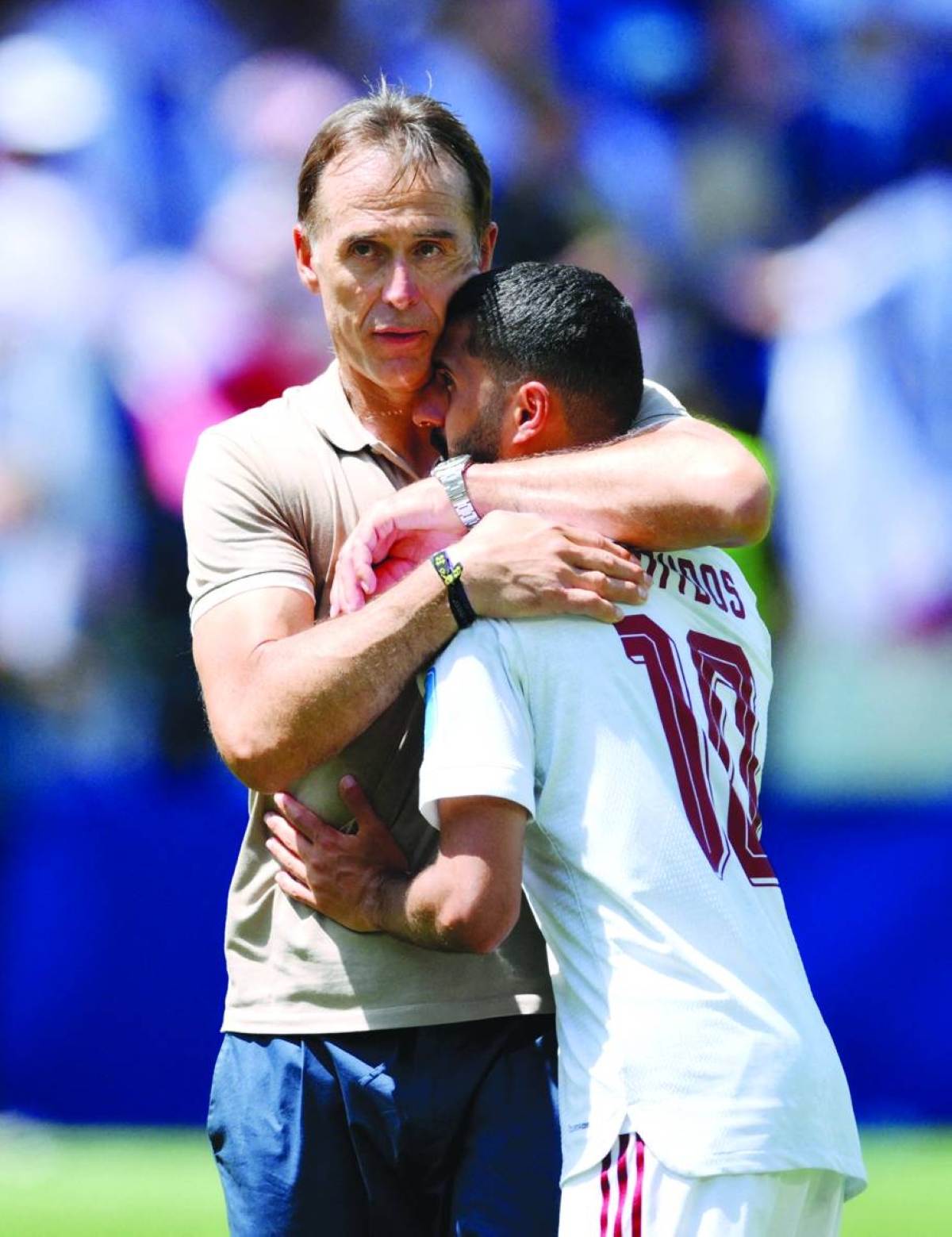
Qatar coach Julen Lopetegui consoles captain Hassan al-haydos after their loss to Bosnia and Herzegovina in Seattle. (Reuters) Twelve days ago, Qatar were celebrating a historic milestone. A dramatic stoppage-time equaliser against Switzerland had secured the Asian champions their first-ever FIFA World Cup point and kept alive hopes of reaching the knockout rounds in what would have been one of the greatest achievements in the nation's football history. That optimism now feels a distant memory. Two defeats later, Qatar's World Cup campaign is over after a humiliating 6-0 loss to co-hosts Canada in Vancouver which was followed by a 3-1 defeat to Bosnia and Herzegovina in Seattle on Wednesday.  From Left: Qatar’s Mohamed Mannai, Issa Laye, Akram Afif, Ayoub Aloui and Abdulaziz Hatem look dejected

Opinion
A memorandum is not a peace deal

A memorandum is not a peace deal

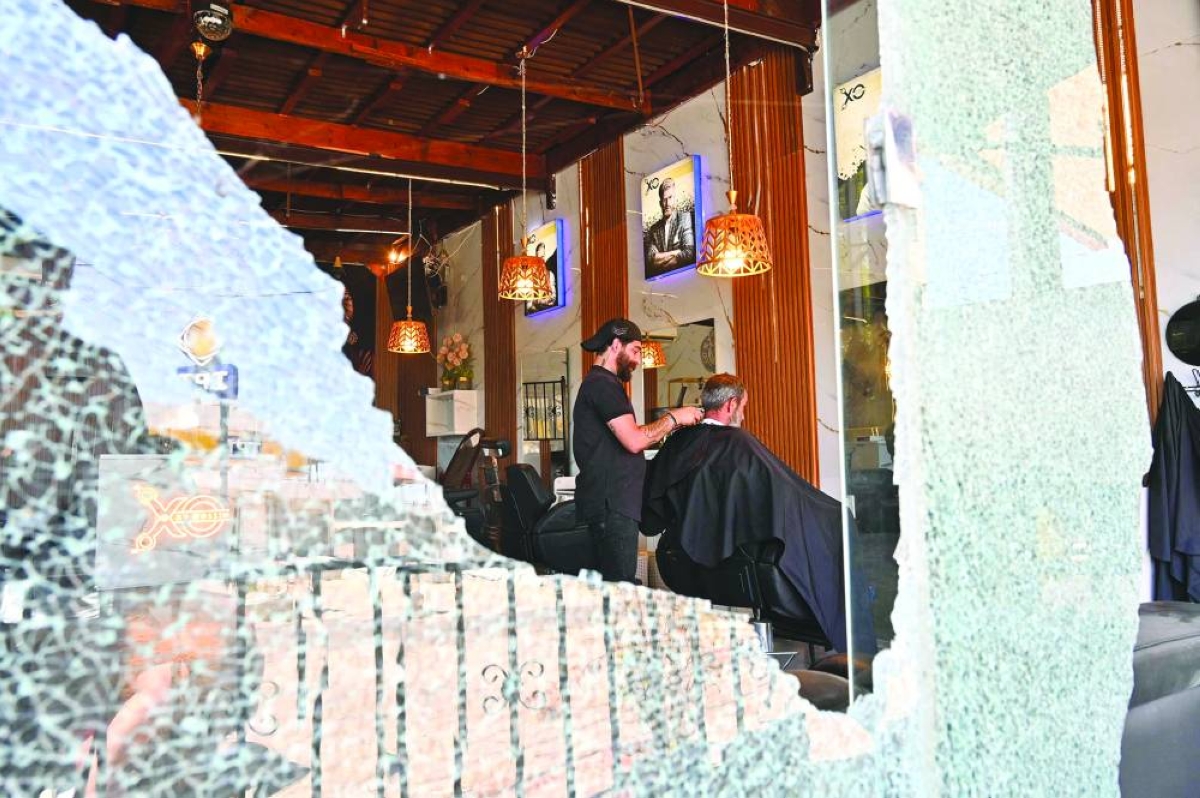
A barber gives a haircut to a client at his saloon, damaged during Israeli military strikes, in the southern Lebanese village of Srifa yesterday. (AFP) The memorandum now agreed between Washington and Tehran is being read in some quarters as an ending. It is nothing of the kind. At best it is a beginning, and a beginning is worth only as much as what is built upon it. No single act delivers peace in the Middle East. Long-term achievement is merely short-term steps piled patiently in the right direction—and the only direction that counts is regional peace for all. A memorandum that cools the quarrel with Iran while the rest of the furnace burns is not a step towards that peace. It is a pause dressed as progress. The temptation in Washington and Jerusalem will be to treat the document as a finish line: bank the de-escalation, declare the danger managed, move on. That instinct mistakes security management for statecraft. A ceasefire stops the shooting; it does not supply a destination. And the absence of a destination is the flaw that has defined the past two years. The obstacle to a durable peace is no longer, principally, Iran. It is a course of conduct inside Israel. A state founded in the shadow of persecution has allowed that memory to curdle into something pathological—a permanent sense of victimhood that has licensed excess in Gaza and Lebanon out of all proportion to any threat. The manner of war has been not merely harsh but, at moments, gloating, and it has gone beyond what military logic can justify. One need not take that on the word of Israel’s critics. Former chiefs of the IDF and the security services have said as much themselves, breaking ranks to warn that the conduct of these campaigns exceeds necessity and corrodes the state that orders them. Israeli society is not simply complicit. It supports the wars in the name of security, yet it has thumped the government down again and again at the same time. There is daylight—wide daylight—between backing a war and backing the men who run it. But that support must be read with a caveat. The public is heavily insulated from what is done in its name. Military censorship has been standard practice for decades, and to it the government has added a hasbara apparatus that systematically dehumanises Palestinians and Lebanese while inflating the existential stakes of every campaign. Consent so managed is not consent informed. It is consent manufactured. The proportions are worth stating plainly, because the propaganda obscures them. For decades the Israeli air force has ruled the skies of every theatre it has entered, unchallenged. Only with the arrival of cheap drones did its adversaries manage to disturb that dominance—to disturb it, not to contest it. The “existential threat” invoked to justify the rubble is, by the cold arithmetic of force, a vast exaggeration. A nation with total command of the air is not fighting for its survival. It is choosing how to fight. Two of the men shaping that choice belong in a different kind of custody than government. Days after the memorandum was struck, with American envoys still enroute to meeting, Israel’s national security minister, Itamar Ben-Gvir, declared that for every tear of an Israeli mother a thousand Lebanese mothers must weep, and that all of Lebanon must burn. His finance minister, Bezalel Smotrich, called for the gates of hell to be opened on Lebanon, as he once did on Gaza. These are not the slogans of street agitators. They are the recorded positions of sitting cabinet ministers, uttered while their own prime minister stood silent. In a healthier polity such words would be disqualifying. That the men who speak them sit in cabinet is not a detail of the pathology. It is the pathology. Above them stands a prime minister it is tempting to read through his own inheritance: the son of an irredentist historian and the brother of a fallen national hero, a man who has governed as though answering ghosts. Whatever the truth of the psychology, the political effect is plain. Mr Netanyahu has built a career on permanent emergency, and permanent emergency is the one condition under which the region cannot heal. Leave that course unchecked and the danger is not stalemate but degeneracy—a slide into fragmentation and serial bloodletting from which no neighbour is insulated. The Palestinian plight is infectious. It travels, it radicalises, it dignifies armed networks that are otherwise merely violent entrepreneurs with flags. Iran built an entire regional doctrine on that wound. The “axis of resistance” was never chiefly about piety; it was about deterrence, reach and survival. But Palestine gave it moral voltage. A memorandum may lower Tehran’s capacity for mischief. It will not silence the grievance Tehran has spent forty years amplifying. Only closing the wound does that. Which is why the memorandum, to be worth anything, must be the first stone in a road that runs through Jerusalem. The materials already exist. Saudi Arabia has for years tied normalisation with Israel to the Arab Peace Initiative —statehood and withdrawal in exchange for recognition — the standing offer of the region’s most consequential Arab power. Jordan has drawn its own red line, its king rejecting annexation and displacement, its ministers warning that forced relocation would spread radicalism and threaten the kingdom itself and beyond. The architecture of a settlement is on the table. What is missing is the will to treat the Iran track and the Palestinian track as one project rather than two. Here the American interest and the world’s converge—and the prize for Mr Trump is larger than he may yet realise. A president who merely manages a ceasefire is forgotten; a president who cuts the Gordian knot of Middle East peace enters the company of statesmen, the rank that outlives administrations. Such a move would rehabilitate not only his own presidency but his country’s standing, restoring to America the moral initiative it has spent two decades squandering and recasting it as the author of order rather than the financier of its absence. Nor would this be a stand against his own people. For the first time since Gallup began asking in 2001, Americans’ sympathies no longer tilt towards Israel, and 57% now favour a Palestinian state. The public appetite for an end is there; the moral case is there; the coalition abroad is there. The memorandum hands him the thread. Whether he pulls it, or lets it lie as another managed pause, will decide whether America regains the initiative it has lost—or watches the region tip, on someone else’s design, into the cauldron. The choice, then, is not idealism against realism. It is between two realisms: one that banks a single step and calls it arrival, and one that keeps laying stones until the road reaches everyone. A memorandum is not a peace. It is permission to begin building one. Jamil K Mroue is Lebanese writer and previous editor of Al Hayat newspaper in London and The Daily Star in Beirut. 

Sports
Switzerland top group with 2-1 victory over Canada

Switzerland top group with 2-1 victory over Canada

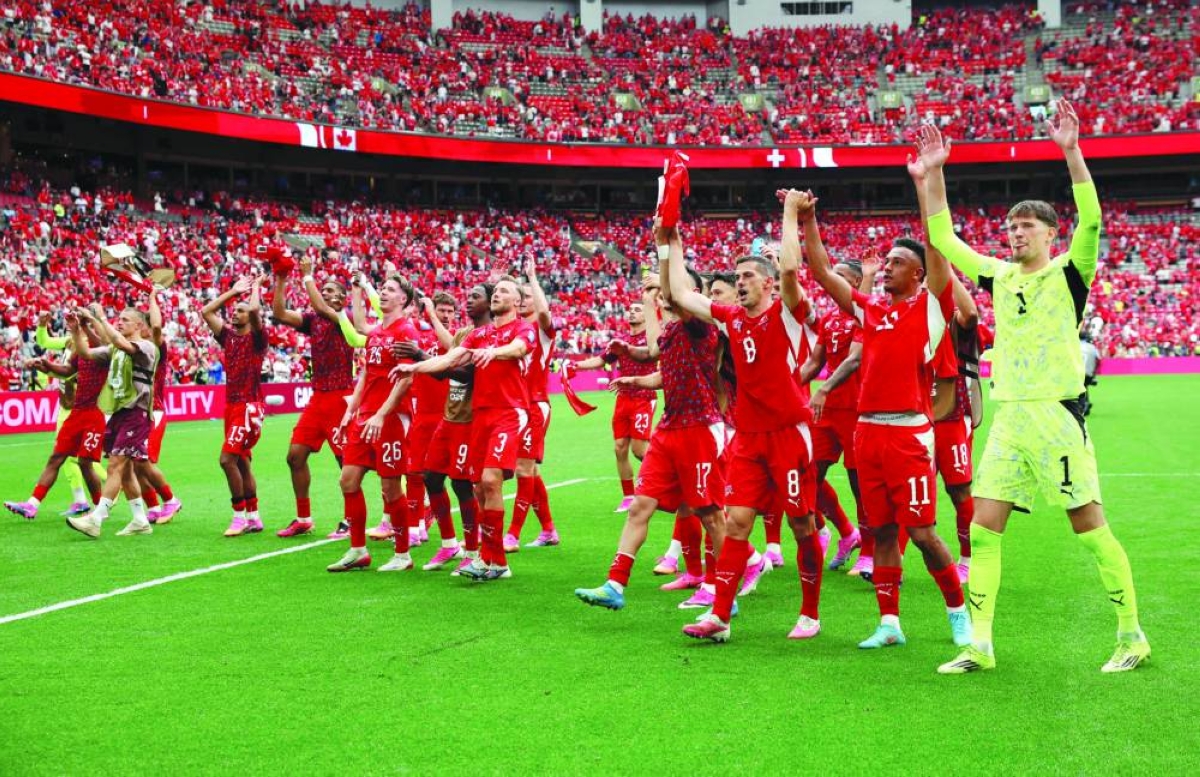
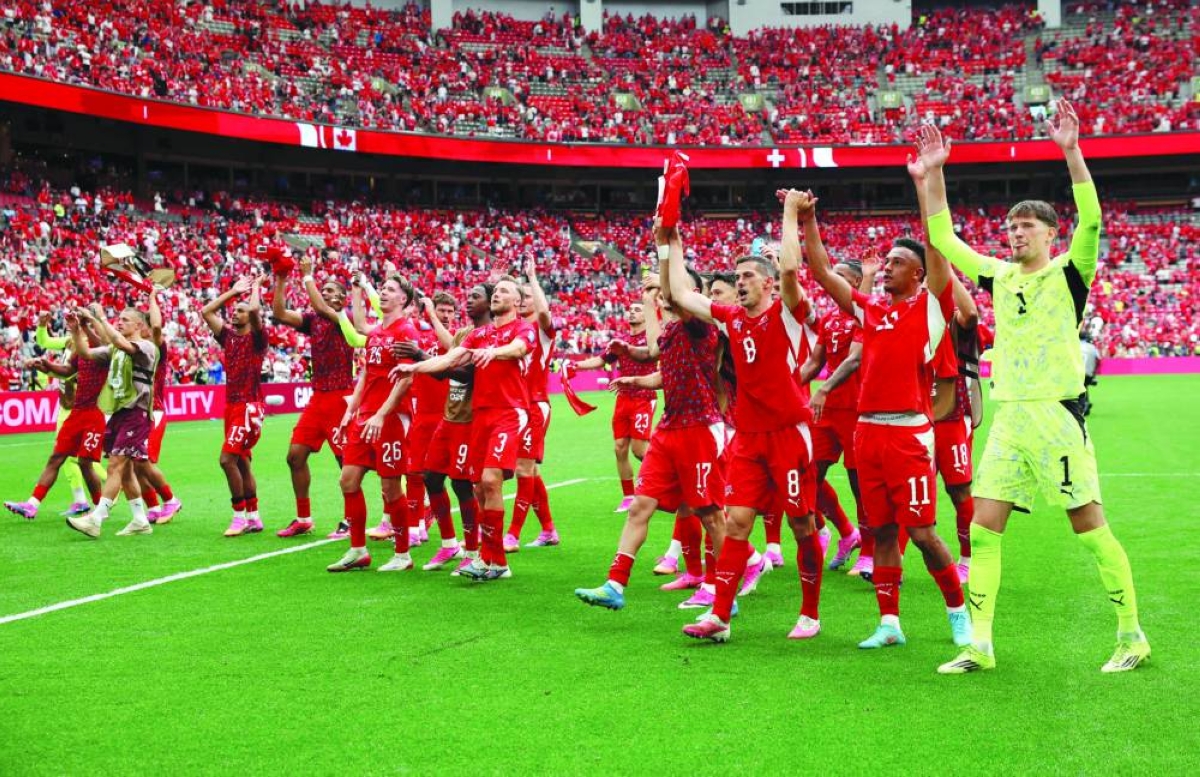
Players of Switzerland applaud fans after their 2-1 victory in the FIFA World Cup Group B match against Canada at BC Place Vancouver Stadium in Vancouver. (AFP) Ruben Vargas ‌and Johan Manzambi scored second-half goals for Switzerland as they beat Canada 2-1 yesterday to qualify for the knockout ‌stage of the World Cup as Group B winners, with the tournament co-hosts also ‌progressing as runners-up. Switzerland, who ⁠finished the group stage ‌on seven points, will remain in Vancouver for ‌their last-32 tie, while Canada, who would have won the group with a draw, ended three points behind ⁠them and will head to Los Angeles for their next game. The two sides managed to create a total of three attempts on goal in an uneventful first half only notable for two yellow cards handed out to Swiss captain Granit Xhaka and Canada striker Cyle Larin after the pair clashed over a quick free kick for Switzerland. In the other Group B match, Bosnia and Herzegovina kept their World Cup dreams alive and ended Qatar’s in a 3-1 victory in Seattle. Although there was ​little quality on display from either side in a subdued first half, the Swiss came out firing after the break. Just a minute into the second period, 20-year-old attacker Manzambi shifted the ball to Vargas, who had plenty of ‌space to set himself before coolly finishing at the near post. Switzerland doubled their lead 11 minutes later. Breel Embolo held the ball up in ​the middle of the penalty area and laid it off for Manzambi who finished emphatically. Canada pulled one back in the 76th minute after coach Jesse Marsch rang the changes. Substitute Promise David latched on to Nathan Saliba’s pass and guided a fine effort into the corner with his first touch after coming on, lifting the roof at BC Place. Canadian fans continued to roar on their team, chanting “Let’s go Canada”, but Swiss goalkeeper Gregor Kobel made a string of saves in a frantic finale. “I am disappointed that we were not able to get a win or a draw today to keep us here,” Marsch said. “I’m so thankful for the energy in the country, and certainly in the ‌stadium here today. But we are going ‌to go to LA. We’re going to go where it’s probably going to be an away crowd, and it’ll be a little bit tougher. But we still want to electrify our country and play really well down there, and go after it still.” The match presented a stern test for Canada, who drew 1-1 with Bosnia and Herzegovina in their opener before thrashing nine-man Qatar 6-0. They faced a well-drilled Swiss side featuring the likes of Xhaka and Manuel Akanji, operating as a cohesive, hard-working unit. “We are very happy because we won, and we fought until the very last minute,” Vargas said. “But I think ​that Canada went right to the wire. We just seized the opportunity, and we just fought very hard until the very last minute. “Obviously, we tried to score earlier, but I am just very happy that I managed to hit the back of the net. During our preparation, the coach told us that we have to be present in the box at all times, and I am just glad that I managed to score.” In a packed BC Place, awash with Canadian red, midfielder Ismael Kone, who suffered a broken leg during the win over Qatar, was present in the dugout to support his team. Fans held up ‌posters bearing his number eight ​in a show of solidarity in the eighth minute. Canadian Prime Minister Mark Carney was also in attendance.

Sports
Vargas, Manzambi strike as Switzerland top group with 2-1 victory over Canada

Vargas, Manzambi strike as Switzerland top group with 2-1 victory over Canada

Players of Switzerland applaud fans after their 2-1 victory in the FIFA World Cup Group B match against Canada at BC Place Vancouver Stadium in Vancouver. (AFP) Ruben Vargas ‌and Johan Manzambi scored second-half goals for Switzerland as they beat Canada 2-1 on Wednesday to qualify for the knockout ‌stage of the World Cup as Group B winners, with the tournament co-hosts also ‌progressing as runners-up.Switzerland, who ⁠finished the group stage ‌on seven points, will remain in Vancouver for ‌their last-32 tie, while Canada, who would have won the group with a draw, ended three points behind ⁠them and will head to Los Angeles for their next game.The two sides managed to create a total of three attempts on goal in an uneventful first half only notable for two yellow cards handed out to Swiss captain Granit Xhaka and Canada striker Cyle Larin after the pair clashed over a quick free kick for Switzerland. In the other Group B match, Bosnia and Herzegovina kept their World Cup dreams alive and ended Qatar's in a 3-1 victory in Seattle.Although there was ​little quality on display from either side in a subdued first half, the Swiss came out firing after the break. Just a minute into the second period, 20-year-old attacker Manzambi shifted the ball to Vargas, who had plenty of ‌space to set himself before coolly finishing ⁠at the near post. EMPHATIC ​FINISHSwitzerland doubled their lead 11 minutes later. Breel Embolo held the ball up in ​the middle of the penalty area and laid it off for Manzambi who finished emphatically.Canada pulled one back in the 76th minute after coach Jesse Marsch rang the changes. Substitute Promise David latched on to Nathan Saliba's pass and guided a fine effort into the corner with his first touch after coming on, lifting the roof at BC Place.Canadian fans continued to roar on their team, chanting "Let's go Canada", but Swiss goalkeeper Gregor Kobel made a string of saves in a frantic finale. "I am disappointed that we were not able to get a win or a draw today to keep us here," Marsch said."I'm so thankful for the energy in the country, and certainly in the ‌stadium here today. But we are going ‌to go to LA. We're going to ⁠go where it's probably going to be an away crowd, and it'll be a little bit tougher. ⁠But we still want to electrify our country ⁠and play really well down there, and go after it still." STERN TESTThe match presented a stern test for Canada, who drew 1-1 with Bosnia and Herzegovina in their opener before thrashing nine-man Qatar 6-0. They faced a well-drilled Swiss side featuring the likes of Xhaka and Manuel Akanji, operating as a cohesive, hard-working unit. "We are very happy because we won, and we fought until the very last minute," Vargas said."But I think ​that Canada went right to the wire. We just seized the opportunity, and we just fought very hard until the very last minute. "Obviously, we tried to score earlier, but I am just very happy that I managed to hit the back of the net. During our preparation, the coach told us that we have to be present in the box at all times, and I am just glad that I managed to score."In a packed BC Place, awash with Canadian red, midfielder Ismael Kone, who suffered a broken leg during the win over Qatar, was present in the dugout to support his team. Fans held up ‌posters bearing his number eight ​in a show of solidarity in the eighth minute.Canadian Prime Minister Mark Carney was also in attendance. 

World
Scientists seek clues to longevity from three Brazilian sisters, each over 100

Scientists seek clues to longevity from three Brazilian sisters, each over 100

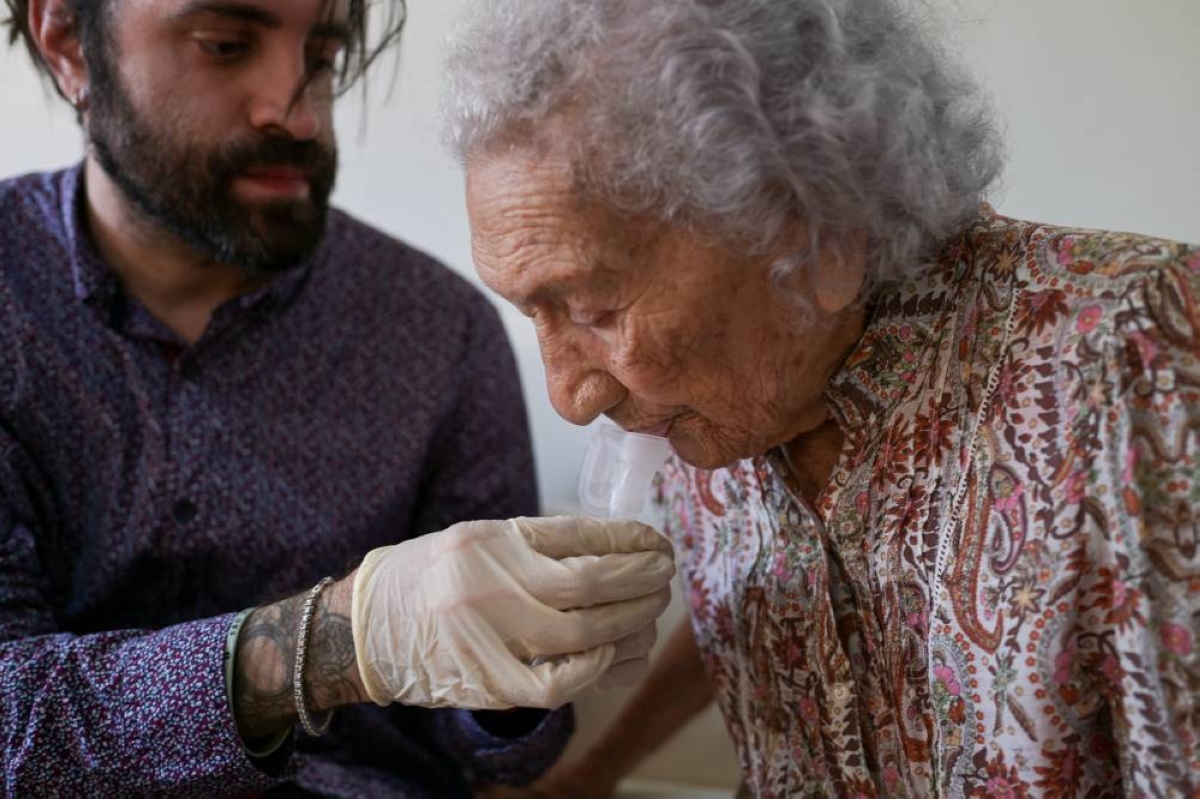
What is the secret to a long life? Three Brazilian sisters with a combined age of 316, who were named by ‌Guinness this month as the oldest living trio of ​siblings in the world, ‌may help researchers find out. The DNA Longevo Project, a ‌study led ⁠by scientist ‌Mayana Zatz from the University of Sao ‌Paulo, aims to investigate the biological factors behind aging. Findings from the ⁠three sisters' case could help scientists better understand why some people remain physically and cognitively resilient at exceptionally advanced ages. Researchers will compare nonagenarians and centenarians with people who have developed frailty, cognitive decline or chronic diseases, seeking traits linked to longevity.  Researcher at the University of Sao Paulo (USP) Joao Paulo Guilherme, geneticist Mayana Zatz, researcher Mateus Vidigal, and nurse Mariana Tavares pose with Zoraide de Deus Mota, Zulina de Deus Nunes and Levita de

Entertainment
Trump Heckler Yells ‘Pedophile’ During Rally, Flips Off President

Trump Heckler Yells ‘Pedophile’ During Rally, Flips Off President

Donald Trump Protestor Shouts 'Pedophile' at POTUS, Flashes Double Birds Published June 24, 2026 12:37 PM PDT Donald Trump's rally in Pennsylvania took an unwanted detour into Epstein-ville ... thanks to a heckler with a