Sports
Resolute Zverev reels in Mensik to return to French Open final

Resolute Zverev reels in Mensik to return to French Open final

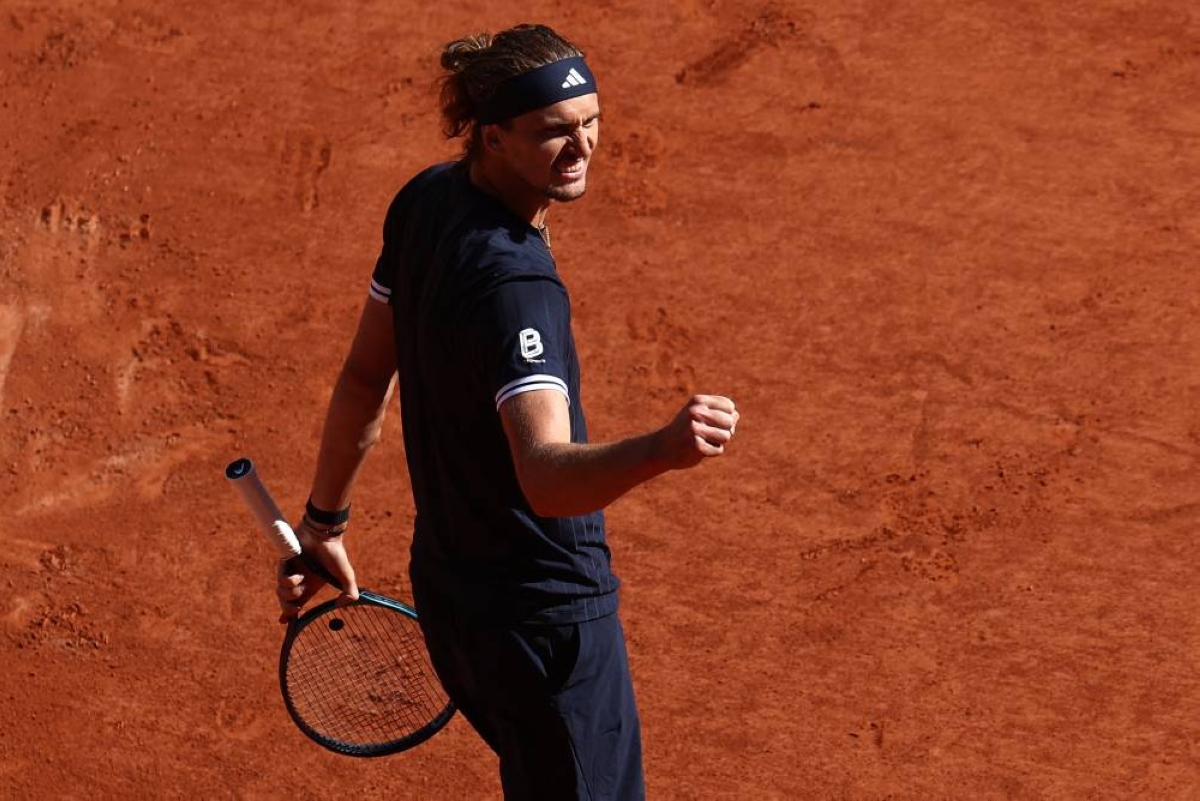
Alexander Zverev moved to within touching distance ​of a long-coveted ‌maiden Grand Slam title, as the German fought past ‌26th seed ⁠Jakub Mensik ‌7-5 6-2 3-6 6-3 on ‌Friday to reach the French Open final again.The 29-year-old, who has ⁠lost three major finals, including one at Roland Garros two years ago, has been sharp throughout in Paris this time and faces the winner of the all-Italian clash between 10th seed Flavio Cobolli and Matteo Arnaldi.'I knew that it would be my toughest challenge. I managed it and I ​won, so I'm happy,' said Zverev, who became only the fifth active player to reach multiple Roland Garros title clashes.'It's amazing the way ‌he (Mensik) played these last ⁠two weeks, he ​beat so many unbelievable players. He started playing amazing ​in the third set, stepping up his level, but this is a Grand Slam with best-of-five-set matches.'Things happen and your opponents will play better. You have to deal with it. I hope to play another great match on Sunday.'A tight opening set on a sun-kissed Court Philippe Chatrier tilted Zverev's way when he struck a backhand crosscourt winner in the 11th game to bring up a break ‌point, and he nudged ‌ahead with a delicate ⁠shot that Mensik sent into the net.The world number three sent ⁠down a powerful ⁠ace to pocket the first set and asserted himself with an early break at the start of the second set, as the 20-year-old Mensik's level briefly dipped in his maiden Grand Slam semi-final.Mensik sat with a towel over his head during a changeover ​and his troubles deepened after the restart, when Zverev took his game up a few notches and sealed a double break, before comfortably doubling his lead in the match.After a long medical timeout for a neck issue, Czech Mensik mixed his booming serve with deft drop shots to break for a 4-2 lead en route to winning the third set, but Zverev ‌powered through the ​next with no drama to prevail. 

Opinion
Global firms exploit India’s IPO boom

Global firms exploit India’s IPO boom

India’s red-hot initial public offering market may look irresistible as foreign firms line up for listings, but the rush is not about raising funds to expand in a fast-growing market; it’s about sending billions of dollars back to ‌headquarters. Just one of six foreign-based companies that listed their Indian units in Mumbai since 2024 raised new funds, with ​all others structured purely as secondary offerings — or ‌offer for sale (OFS), where existing shareholders sell their holdings to the public without raising any new funds, according to data ‌from Prime Database, an Indian market research firm. Foreign-based parents of companies ‌that have long invested in India pocketed nearly $5bn through such secondary-offering ‌IPOs, with Hyundai Motor and LG Electronics accounting for more than 80% of those payouts, the data showed. Simply put, for each dollar raised in these IPOs taken together, more than $59 went out. And the trend is continuing: the planned $1bn IPO of Walmart’s Indian payments arm and Modern Times Group’s $335mn IPO of its local gaming unit will both take the OFS route. This week, Coca-Cola said the planned listing of its Indian bottler will have the American firm sell a portion of its stake. Banking sources said Carlsberg’s planned Indian IPO will also have no new funds raised — it will also be an OFS. The trend, which bankers and economists say is a result of sky-high stock valuations in India in recent years, shows that the prospect of a lucrative partial exit from Indian investments has become more attractive to many ​foreign companies than raising new funds to expand. Global companies are pursuing “India listings as this provides them liquidity as well as a positive impact on the market cap for their parent,” said Prashant Gupta, a partner at law firm Shardul Amarchand, which advised both Hyundai and LG on their OFS-structured IPOs. Modern Times declined to comment, ‌while Carlsberg said it is “exploring different options for increasing shareholder value which may ​potentially include an” Indian IPO. Walmart’s Indian unit, PhonePe, Hyundai, LG and other companies did not respond to Reuters requests ​for comment. The OFS trend comes at a troubling time for the Indian rupee, which has fallen 13% against the US dollar since 2024 and 6% so far this year. That has raised concerns that the IPO-linked repatriations are compounding already heavy foreign capital outflows. In January, MUFG Bank wrote that its analysis “shows one important contributor to Indian rupee weakness has been the strong IPO market in India.” So far this year, foreign portfolio investors have sold more than $23bn of their holdings, surpassing 2025’s record outflows of $18.9bn. IPO-linked capital outflows are “exerting a steady, though not abrupt, depreciation bias on the rupee,” said Tanay Dalal, a senior vice president of business and economics research at Axis Bank. Government officials and regulators have not indicated that they would try to curb the OFS trend, though India’s Chief Economic Advisor V Anantha Nageswaran warned in November that IPOs had “increasingly become exit vehicles for early investors rather than mechanisms for raising long-term capital.” “This undermines the spirit of ‌public markets,” he said. He did not respond to Reuters ‌queries. India was the world’s second-largest IPO market in 2025 after the US, with 367 listings raising $21.8bn, according to LSEG data. Its markets surged to record highs over the last two years before starting to struggle this year due to uncertainties related to the US-Israeli war on Iran. Still, a record $26bn worth of IPOs are awaiting approvals, according to regulatory data. The appeal for using the OFS route is rooted in valuations. Indian-listed units of foreign firms have consistently traded at multiples that dwarf their parents. Add to that a growing group of domestic investors that has resulted in high valuations in India over the past two years, making local listings attractive, lawyers and bankers said. At least six foreign companies that listed their Indian units in recent years trade at a significant premium to their overseas parents, according to LSEG data. Nestle India, which ​listed in 1969, has a price-to-earnings ratio — a measure of stock valuations relative to profit — of nearly 77 times, versus 22 times for Swiss parent Nestle . LG Electronics India, which listed last year, trades at nearly 59 times versus 44 times for its South Korean parent, LG Electronics.  

Opinion
Tiny Guyana poised for big oil gains, growth strains

Tiny Guyana poised for big oil gains, growth strains

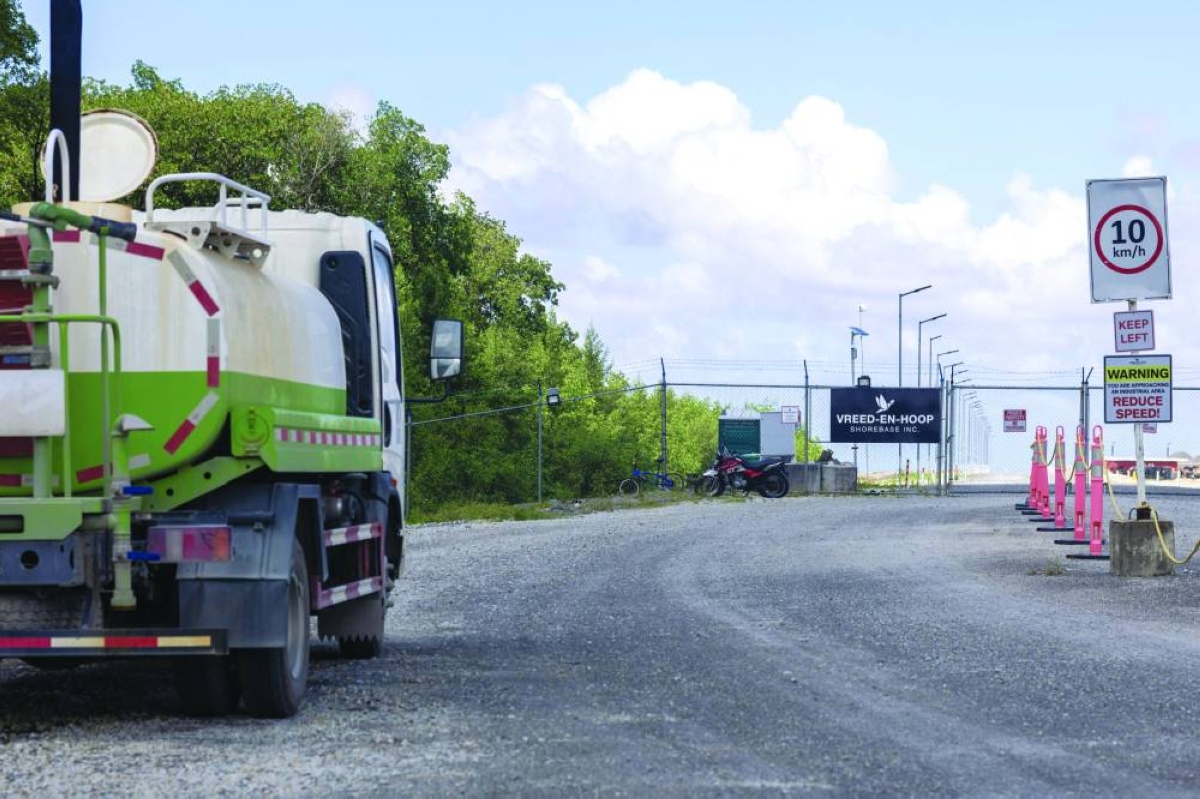
Guyana was already the world’s fastest growing economy before the US-Israeli war on Iran drove up oil prices. Now, the tiny Caribbean nation of nearly 1mn people will reap an even bigger bonanza as the conflict reshapes global energy markets. The war that caused one of the largest energy disruptions in history highlights the growing importance of countries including Guyana that offer political ‌stability and geographically unrestricted access to their estimated 11bn barrels of oil reserves. This growing windfall from crude brings pressure from business owners and locals on the government to ​use its billions of dollars to boost other parts of the ‌economy. “The world has seen too many energy booms that left behind ghost towns, depleted forests and bitter populations. Guyana will not be that story,” President Irfaan Ali ‌said in an address at Rice University’s Baker Institute this month. Rapid development by an Exxon Mobil-led oil consortium, ‌which controls all of Guyana’s oil production, grew output to over 900,000 barrels per ‌day in just seven years, a pace without recent precedent as offshore projects can typically take twice as long just to produce the first drop of oil. Guyana’s GDP more than quadrupled to $27.5bn between the time the taps started flowing in 2019 to 2024, according to World Bank data. Guyana was previously one of the poorest countries in South America and oil-fueled growth can be seen across the capital of Georgetown, where construction is taking place on new modern office buildings, upscale hotels and rows of single-family homes that resemble those that could be found in US suburbs. Exxon billboards and ads for other petroleum companies play on the radio, serving as reminders for the industry that helped enable the growth. MORE MONEY, MORE PROBLEMS?The government’s long-term challenge is to fortify the country against an implicit pitfall — the economic cycle of boom and bust oil prices. Guyana needs to look no further than its neighbor Venezuela for an example of how political dysfunction and overreliance on oil money can cripple an economy despite having one of the largest estimated oil reserves in the world. One of Guyana’s strategies is its 2019 sovereign wealth fund holding all oil revenue which allows the government to draw funds for development ​projects at a steady rate. Crude prices, up 30% since the start of the Iran war in late February, could further swell Guyana’s oil revenue. Assuming an oil price of $100 per barrel through the rest of the year at current production volumes, Guyana’s share of oil revenue could be worth roughly $4.3bn, 67% higher than last year, according to Reuters calculations. More importantly, Guyana is poised to start receiving a significantly larger share of oil production earlier than expected. The ‌Exxon consortium currently takes 75% of the oil to recoup its initial exploration and development costs. And now, the ​consortium could recover the costs this year, Exxon has said. When that happens, the country’s share of the profit oil will climb from 12.5% to 50%. Ali cautioned that ​expectations needed to be managed, as any windfall due to higher oil prices would be offset by higher import costs for nearly all goods including fuel and fertilizer. “This is the complexity of the messaging when people wake up every morning and see the headlines that you’re flush with money, it drives a certain expectation,” he said in his Baker Institute address. Some local infrastructure has not improved at the same pace that the oil industry has developed. Open sewage drains line the streets of Georgetown and electricity outages remain a common occurrence. A ‘CHANGED WORLD’Guyana sits at the centre of a region that includes the established oil and gas economies of Venezuela and Trinidad and Tobago, as well as Suriname, where the sector is emerging. The area benefits from direct, unrestricted access to the Atlantic, without maritime chokepoints vulnerable to blockades like the Strait of Hormuz. Guyana’s low break-even prices in the $25 to $35 per barrel range, and proximity to US markets that are supportive of fossil fuel development, further compound long-term advantages, said Tarron Khemraj, a professor of economics and international studies at the New College of Florida, who has studied Caribbean countries including Guyana. Spot prices for Guyana’s four crude grades — valued for their light to medium sweet quality — have surged over the past three months, with the Liza benchmark reaching a high of $120 per barrel from $68.98 on February 27 before the conflict in the Middle East began. Even if traffic ‌through the Strait of Hormuz resumes soon and oil prices return to pre-war ‌levels, experts say Guyana’s track record as a geopolitically stable source of oil will further solidify. “The war may end next month, but it will be a changed world,” Khemraj said. Still, numbers that look like a boom may belie the full reality of the broader economy. While Guyana has recorded double-digit percentage GDP growth each year since oil production began, most of that expansion has been concentrated in the petroleum sector, rather than broad-based activity. Oil and gas and support services accounted for more than 75% of the country’s GDP last year, according to government data. SHARING THE WEALTHAs part of its effort to make sure more of the oil revenue trickles down, the government is also moving to expand its local content law, originally passed in 2021, that requires oil and gas firms to contract with Guyanese-owned suppliers and vendors in a number of specific areas, such as janitorial, food or transportation. The regulation requires petroleum companies to procure a certain percentage of services from Guyanese businesses, for example, 25% of medical services and 90% of catering services. The government is considering amendments to add more service areas and increase the percentage requirements for some existing ones, Michael Munroe, director of the local content secretariat, said in an interview. Business owners say that expanding the requirements will help ​support more jobs and the development of skilled labour. “We’re able to provide all of the same medical services as an international company,” said Ayesha Wilburg, founder and CEO of a Georgetown-based health clinic. Rising oil activity has also led to a similar explosion in demand for private transportation services in Georgetown, where residents often travel by cab. Nazim Baksh, general manager of Sean’s Transportation Services, said the company expanded from seven employees to about 20 and also upgraded its fleet from sedans to add more SUVs. Challenges remain, however, including complaints from Guyanese business owners about so-called fronting. Panelists at the Guyana Energy Conference in February acknowledged the problem, where foreign companies use local entities but retain actual control of the business. Vanita Ally, medical director and founder of Phoenix Clinicare, a Guyanese-owned medical center, said that receiving a certificate to provide services to oil firms has not resulted in much additional revenue and inflation is also increasing her operating costs. “International companies are benefiting a lot more than local people (from the oil industry),” Ally said. Drivers are now paying more at the pump, like other countries, adding to cost of living concerns. Guyana lacks a refinery and must import gasoline, diesel and other refined products.

Sports
Power meets guile as Andreeva faces fairytale qualifier Chwalinska

Power meets guile as Andreeva faces fairytale qualifier Chwalinska

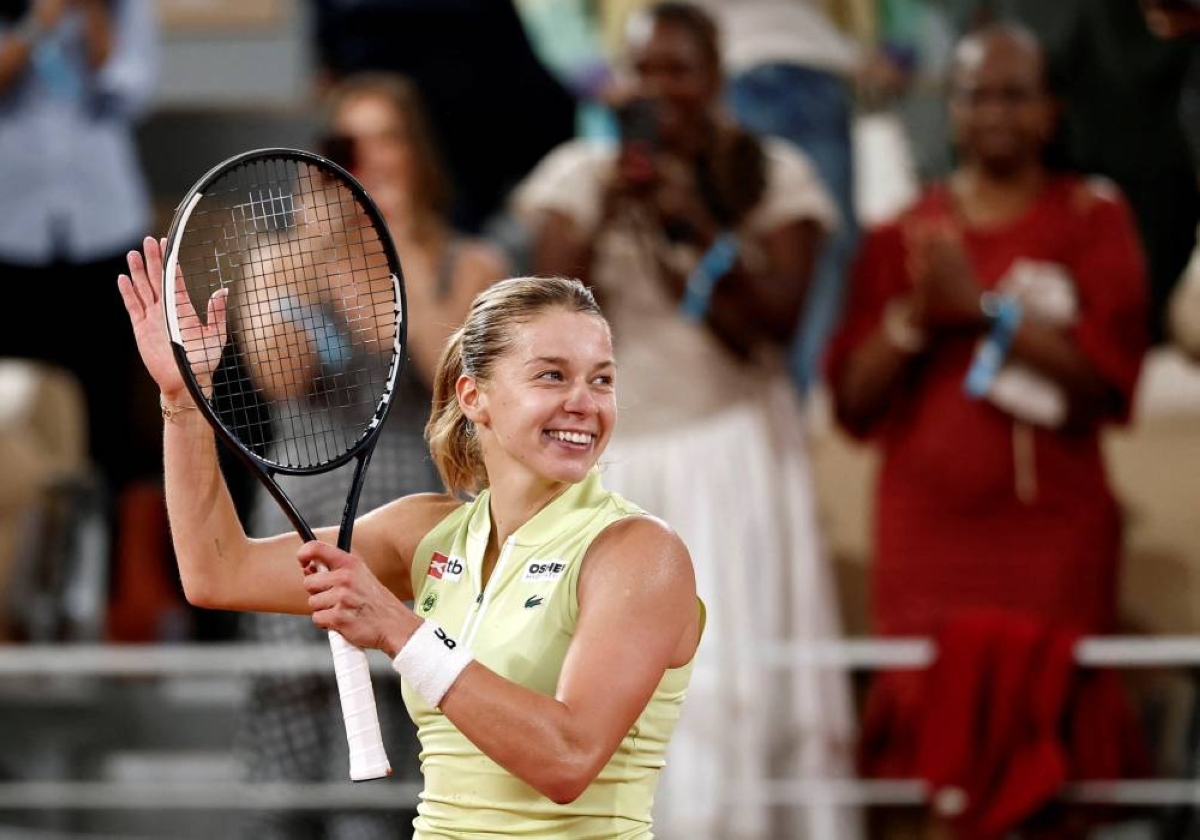
If the French Open women's final appears on paper to be a mismatch between a teenage prodigy and an unheralded qualifier, Poland's Maja Chwalinska has spent the past fortnight proving appearances can be ‌deceiving.Russian eighth seed Mirra Andreeva arrives at Saturday's showpiece as the ​overwhelming favourite after bulldozing her ‌way through the draw, dropping only 12 games in her last three ‌matches and looking ⁠every inch a ‌future Grand Slam champion.Yet across the ‌net will stand a player whose improbable run has become one of the stories ⁠of the tournament.Chwalinska travelled to Paris ranked 114th in the world and had to win three qualifying matches to reach the main draw. Nine victories later, the 24-year-old finds herself one win away from one of the most unlikely Grand Slam titles of the Open Era.Andreeva, who reached the Roland Garros semi-finals as a 17-year-old two years ago, believes her growing maturity has helped transform her from ​a precocious talent into a genuine title contender.'I'm getting closer, I'm getting older, a little bit more mature every match I play, a little bit more experienced,' Andreeva told reporters.'So I ‌think that now I'm able ⁠to approach every match ​differently and try to really focus on the opponent that I'm ​going to play against and the game plan that I'm going to have to use on the court.'The Russian's relentless baseline power and ability to dictate rallies have overwhelmed opponents throughout the tournament and she has looked increasingly comfortable with the expectations that accompany her rapid rise.But Chwalinska offers a completely different challenge. CHWALINSKA CAPTIVATES SPECTATORSIn an era dominated by power hitters, the left-handed Pole has captivated spectators with a game built on variety, touch and tactical intelligence.Against Russian Diana Shnaider in the semi-finals, Chwalinska struck 33 winners while committing only 17 ‌unforced errors in more than two ‌hours on court.She repeatedly disrupted the ⁠rhythm of the match with drop shots, mixed heavy spin with precise angles and ⁠ventured to the net whenever ⁠opportunities arose.Her performances have earned rave reviews from some of the sport's biggest names.'What fascinates me about Chwalinska's game is her creativity, her joy for playing, her feel for the ball,' six-times Grand Slam champion Boris Becker said after her semi-final victory.'Tennis can still be played, not just worked at. Nobody demonstrated that better than Chwalinska today.'The German ​great believes the Pole deserves her place on the biggest stage.'Nothing against Shnaider, who also had a great tournament, but I think the right player is in the final.'Former world number one and three-times French Open champion Mats Wilander has been equally impressed.'She played so intelligently. It's very refreshing to see someone with this style of play,' the Swede said.'Most players rely primarily on power, but Chwalinska uses spin, drop shots and understands the game incredibly well.'Only one qualifier had previously reached a Grand ‌Slam final in the ​Open Era - Emma Raducanu at the 2021 US Open, a tournament the Briton went on to win. 

Sports
Gambhir tells struggling Pant to play natural game in Afghan Test

Gambhir tells struggling Pant to play natural game in Afghan Test

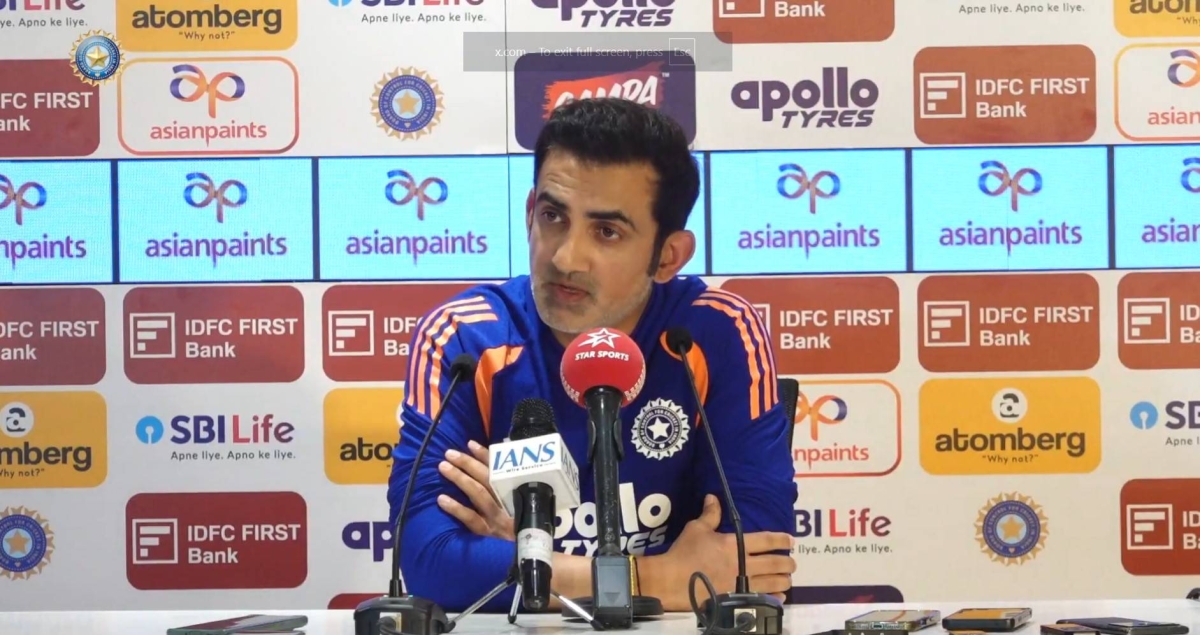
India coach Gautam Gambhir told struggling Rishabh Pant on Friday to stick to his natural attacking game after removing him as vice-captain for the one-off Test against Afghanistan.KL Rahul will be Shubman Gill's deputy for the match starting on Saturday in New Chandigarh in place of Pant.Wicketkeeper-batsman Pant has scored 3,476 runs at an average of 42.91 in 49 Test matches, since his debut in England in August 2018.But the 28-year-old stepped down as captain of Lucknow Super Giants last week, the team having finished last in the IPL.The usually flamboyant Test match star scored just 312 runs from 14 innings in this year's IPL, at a strike rate of 138.05.'The responsibility is to play for India - the rest, everything else, is a by-product,' Gambhir told reporters on the eve of the Test.'When you start playing for India, you don't think about being a vice-captain. You think about doing good for India.'Gambhir said that no player is told to 'play a completely different game than his natural game'.'We will not tell him to 'curb your game', but in international cricket, it is very important to play the situation, to read the situation,' Gambhir added.Gambhir's Test record as India coach is unimpressive with 10 defeats, seven wins and two draws in 19 matches.India suffered a 2-0 defeat to South Africa at home in November in their most recent Test outing.They were also whitewashed in 2024 by New Zealand on home soil. COACH TAKING POSITIVESGambhir is taking positives though from the 2-2 Test series draw in England last year, and performances against the West Indies.India won 2-0 at home in October.'We all know how well this young team played in England, and then we won against West Indies,' he said, admitting that the South Africa series still 'hurts'.'These are young boys,' he said. 'I think we have got enough talent to turn it around, and I am very hopeful that we will give ourselves the best chance to win the World Test Championship.'The match is not part of the World Test Championship cycle, but is a key game for Afghanistan who played their debut five-day game in India in 2018.Afghanistan, led by Hashmatullah Shahidi, have since played 12 Tests and won four.'We're fully focused on this Test match,' coach Richard Pybus said.'Our focus is on, cliche as it sounds, is really our control - it's what we need to do.' 

Sports
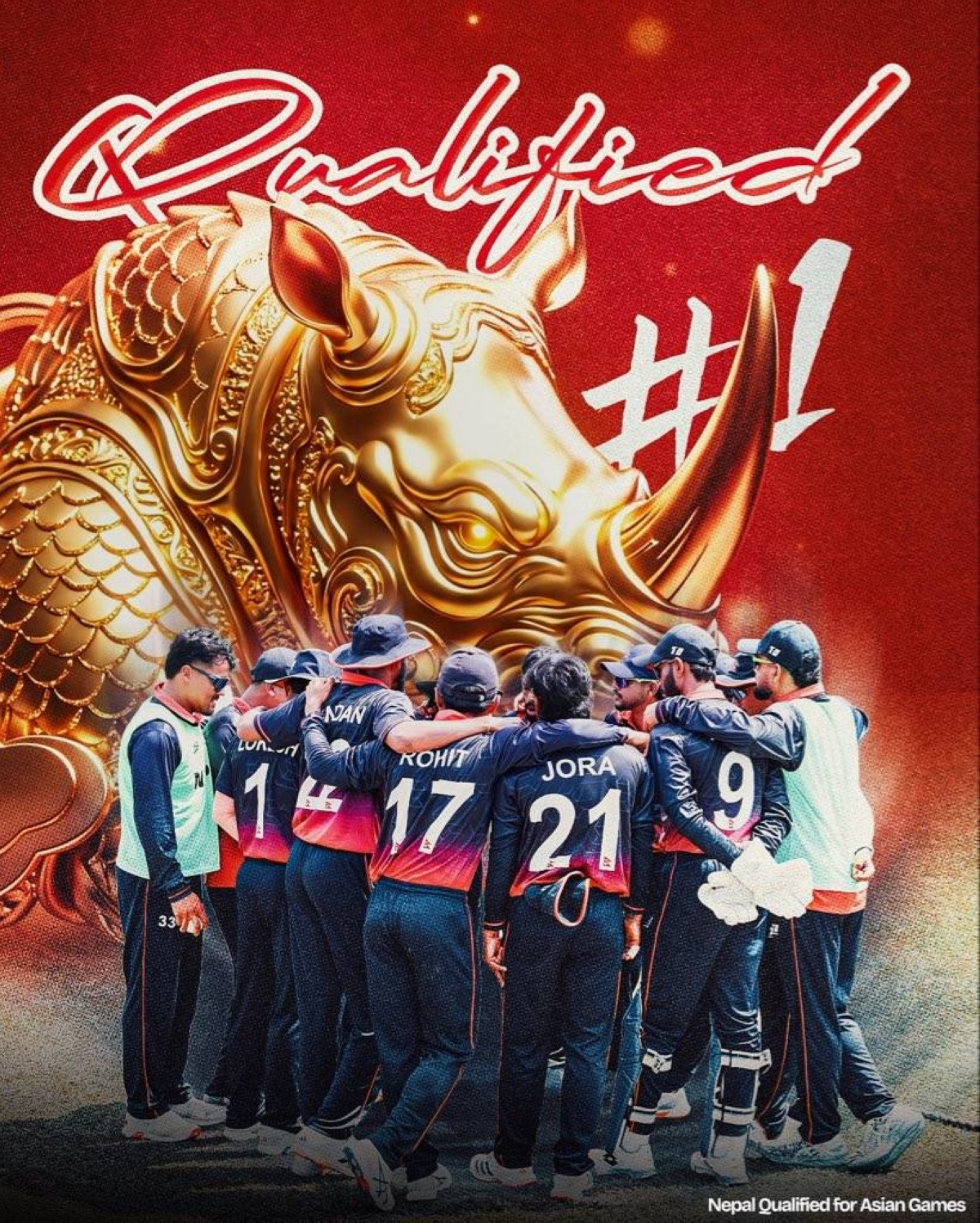
Nepal, Malaysia, Hong Kong and Oman qualify for Asian Games

Nepal, Malaysia, Hong Kong and Oman qualify for Asian Games

Nepal have qualified for the ‌men's cricket competition ​at the ‌2026 Asian Games. Nepal, Malaysia, Hong Kong and Oman have qualified for the ‌men's cricket competition ​at the ‌Asian Games, set to ‌be ⁠held ‌in Japan ‌in September and October.Nepal ⁠and Malaysia finished top of Group A in the qualifying tournament in Singapore, while Hong Kong and Oman led Group ​B.With Qatar withdrawing from Group A before the start of ‌the tournament, ⁠Nepal secured ​top spot after winning ​both their matches, while Malaysia qualified with victory over China in their opening fixture.Hong Kong and Oman remained unbeaten in Group B and will face ‌off to decide ‌the semi-final ⁠matchups, with the winner ⁠taking ⁠on Malaysia and the loser meeting Nepal.They will join Afghanistan, Bangladesh, India, Pakistan and Sri Lanka, who ​qualified automatically as Asia's Full Member nations, along with hosts Japan.The men's competition will begin on September 24, with the final scheduled for October 3.  Related Story

Sports
Younis and al-Hadi shine as Al Shaqab Showjumping League finale begins

Younis and al-Hadi shine as Al Shaqab Showjumping League finale begins

In the Al Shaqab Champions 140cm class, Canada’s Rami Younis claimed victory aboard Mauran S with a faultless round in 72.62 seconds. The Al Shaqab Showjumping League Finals began at the Longines Indoor Arena yesterday, bringing together riders from across the region for the decisive three-day conclusion to the season. In Al Shaqab Champions 140cm class, Canada’s Rami Younis claimed victory aboard Mauran S with a faultless round in 72.62 seconds. Qatar’s Sultan Salem al-Naemi finished second on Gannan de La Luce in 76.09 seconds, while Abdulrahman Mohammed al-Saaq secured third place riding Curt Lele in 77.74 seconds. Saudi Arabia’s Mohammed Alasaker placed fourth aboard Cassiano II with four faults in 68.09 seconds, while Qatar’s Ibrahim Yousef Almahmoud completed the top five on Qataro van het Texelhof with four faults in 73.70 seconds. Ahmed Khaled al-Hemaidi, Legacy and Heritage Specialist at Al Shaqab, presented the awards to the podium winners.  Khalid Sanad al-Nuaimi, Event Director of the Al Shaqab League, awarded the

Sports
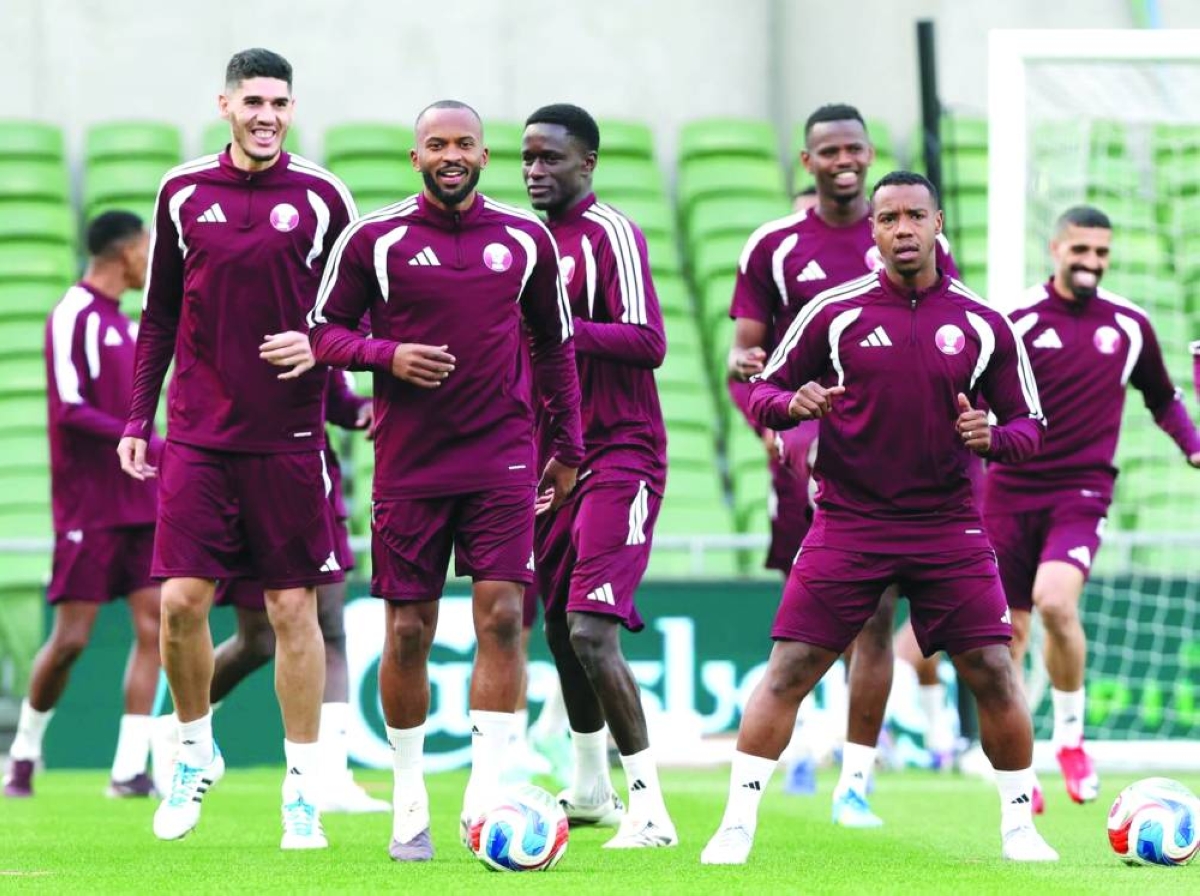
Qatar eye knockout stage berth in balanced group at FIFA World Cup

Qatar eye knockout stage berth in balanced group at FIFA World Cup

Four years ago, Qatar entered the FIFA World Cup carrying the weight of a nation and the expectations that accompanied more than a decade of investment in football. Instead of a fairy-tale home tournament, they endured a harsh reality check, becoming the first host nation in World Cup history to lose all three group-stage matches. The disappointment of 2022 remains a defining chapter in Qatar's football story, but it is no longer the only one. Since then, the Asian champions have quietly rebuilt their credentials. They retained the AFC Asian Cup title in 2024, confirming that their 2019 triumph was no one-off achievement, and secured qualification for the 2026 World Cup on merit rather than through automatic host status. Drawn in Group B alongside Switzerland, Canada and Bosnia & Herzegovina, Qatar find themselves in what many regard as one of the tournament's most balanced sections. There are no overwhelming favourites, but equally no easy matches. Advancement to the knockout rounds would represent a significant milestone for Julen Lopetegui's side. To achieve that, Qatar must overcome three opponents with very different strengths - a Swiss side renowned for consistency, a Canadian team buoyed by home support and growing confidence, and a Bosnian squad blending veteran experience with emerging talent.  After going unbeaten in qualifying, Switzerland have reason to believe 2026 can be their breakthrough World Cup.  Resurgent Swiss seek breakthrough World Cup Switzerland enter the tournament as the highest-ranked and most established side in Group B, carrying a reputation for reliability that has made them one of Europe's most consistent performers over the past decade. The Swiss are appearing at their sixth consecutive World Cup and have become experts at navigating qualification campaigns and group stages. Their challenge has come afterwards. Five times in their last six World Cup appearances they have reached the round of 16 only to fall short, creating a frustrating pattern they are desperate to break. Confidence, however, is high. Murat Yakin's side enjoyed an impressive Euro 2024 campaign and have remained unbeaten in competitive matches since late 2024. Defensively they are among the most difficult teams to break down, conceding only two goals throughout qualifying. Captain Granit Xhaka remains the team's leader and driving force in midfield, while defender Manuel Akanji anchors a disciplined back line. In attack, Breel Embolo, Ruben Vargas, Dan Ndoye and Noah Okafor provide pace and versatility, while emerging talent Johan Manzambi adds youthful excitement. Switzerland will likely view progression from Group B as the minimum expectation. For Qatar, opening their campaign against the Swiss in Santa Clara could prove pivotal. A positive result would immediately alter the complexion of the group, while defeat would place additional pressure on the remaining matches.  Alphonso Davies remains the face of Canadian football, though recurring injuries have created uncertainty around his

World
Putin says Trump ideas could bring peace in Ukraine, calls on Kyiv to compromise

Putin says Trump ideas could bring peace in Ukraine, calls on Kyiv to compromise

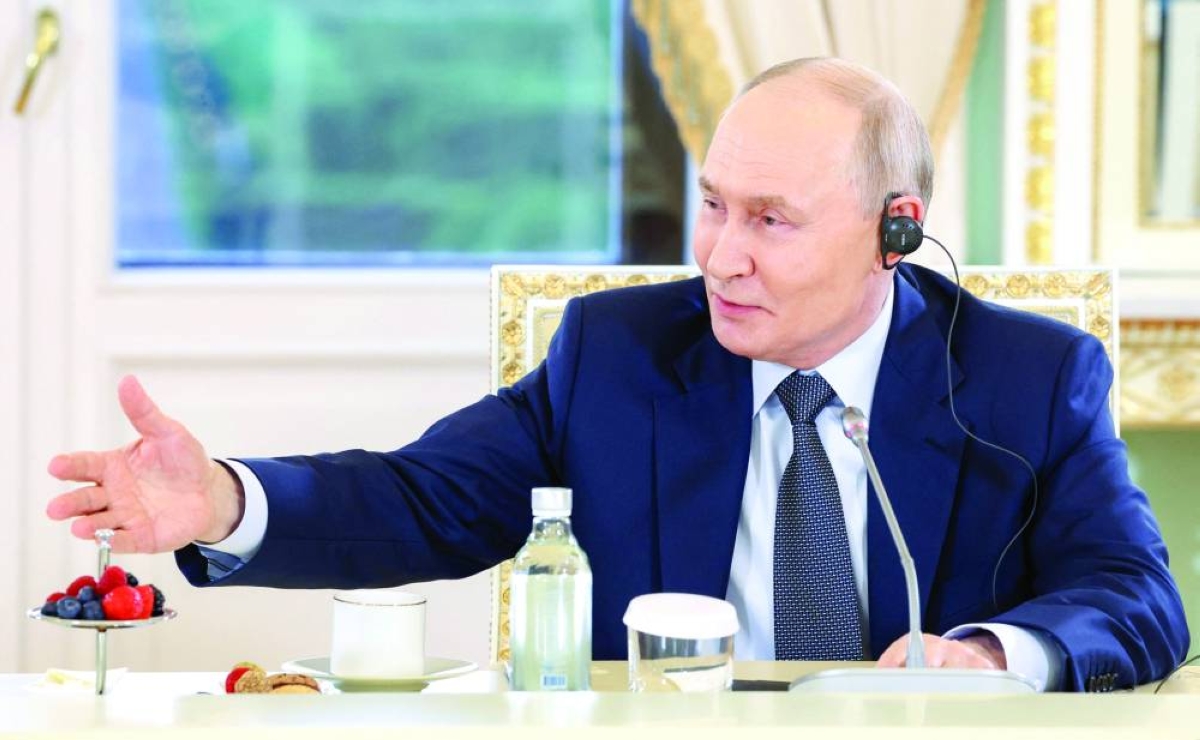
Russia's President Vladimir Putin meets with representatives of international news agencies on the sidelines of the St Petersburg International Economic Forum at the Constantine Palace in Saint Petersburg yesterday. (AFP) President Vladimir Putin said yesterday that US President Donald Trump's proposals for peace in Ukraine could end ​the fighting, but said Kyiv needed ‌to compromise — and that he saw no signs of that, so was ‌ready to fight ⁠on to victory.Speaking ‌to foreign media editors on the ‌sidelines of Russia's annual economic forum in what is the fifth year of Europe's deadliest land ⁠war since World War Two, Putin said Russia would defeat Ukraine on the battlefield if necessary.But he said it was also ready to end the war via diplomacy, and to honour unspecified compromises he said had been agreed with Trump at a summit in Alaska last year.He showed no signs of changing his stance that for the war to end, Ukraine must surrender the rest of its eastern Donbas region — a ​demand that Ukrainian President Volodymyr Zelensky has rejected as akin to capitulation."The offensive is ongoing on a daily basis. At present, the Russian Federation has taken full control of the Luhansk People’s Republic — 100%. ‌And Russia has brought over ⁠85% of the territory ​of the Donetsk People’s Republic under its control," he said, referring to two ​of the four regions in Ukraine which Moscow claimed as its own in 2022 in a move Kyiv and most Western countries rejected as an illegal land grab."We are certainly prepared and willing to reach an agreement with Ukraine through peaceful means. Specifically, on the basis we discussed during our meeting with President Trump in Anchorage. Russia agrees to those compromises we discussed in Anchorage. The Ukrainian side must also agree to these compromises. Then the conflict will quickly come to a natural conclusion," Putin said.Putin said Russia's own resources to wage and win the war were strengthening and ‌that it had weapons which ‌Ukraine simply did not possess. While he ⁠conceded that Moscow needed to do more to protect itself against Ukrainian drones, he made ⁠it clear that he thought time ⁠was on Russia's side and that Ukraine did not have the manpower to prevail."And there is one more thing that is of paramount importance: the patriotism and resolve of the Russian people, which are essential to achieving the objectives and tasks of the special military operation," said Putin, using the phrase Russia uses to describe its war.Putin said that Russia had not yet ​used its Oreshnik hypersonic missile against Ukraine in real combat conditions, but had only test-fired it to observe the results in order to make decisions about its future full-scale use, including against urban targets.The Oreshnik, which Russia first fired against Ukraine in 2024, is a nuclear-capable missile with a range of over 5,000km (3,100 miles). Putin has said before that it is impossible to intercept, though Western experts have questioned that assertion.Putin sidestepped a question about his own political future beyond the end of his current term in 2030, saying his ‌health was in God's hands. 

Sports
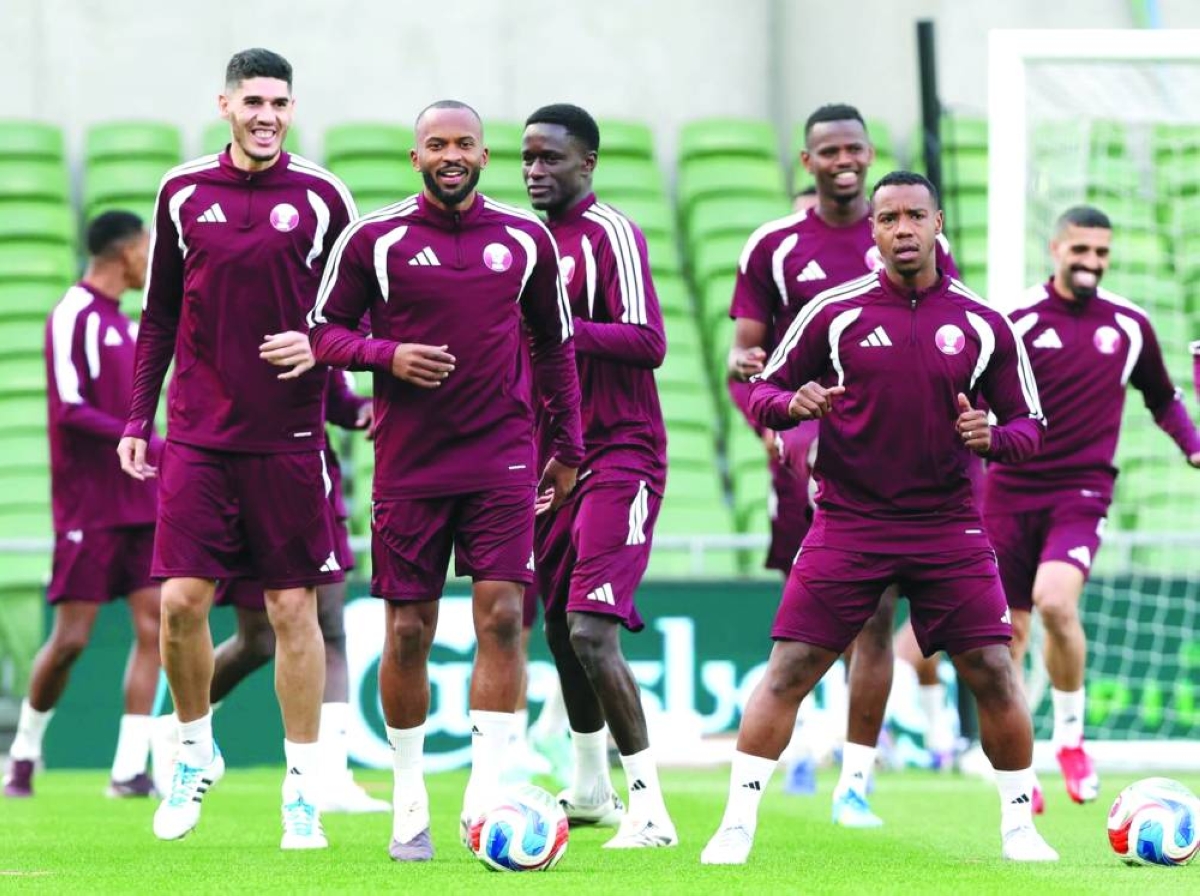
Qatar face challenging but balanced World Cup test

Qatar face challenging but balanced World Cup test

Four years ago, Qatar entered the FIFA World Cup carrying the weight of a nation and the expectations that accompanied more than a decade of investment in football.Instead of a fairy-tale home tournament, they endured a harsh reality check, becoming the first host nation in World Cup history to lose all three group-stage matches.The disappointment of 2022 remains a defining chapter in Qatar's football story, but it is no longer the only one.Since then, the Asian champions have quietly rebuilt their credentials. They retained the AFC Asian Cup title in 2024, confirming that their 2019 triumph was no one-off achievement, and secured qualification for the 2026 World Cup on merit rather than through automatic host status.Drawn in Group B alongside Switzerland, Canada and Bosnia & Herzegovina, Qatar find themselves in what many regard as one of the tournament's most balanced sections. There are no overwhelming favourites, but equally no easy matches. Advancement to the knockout rounds would represent a significant milestone for Julen Lopetegui's side.To achieve that, Qatar must overcome three opponents with very different strengths - a Swiss side renowned for consistency, a Canadian team buoyed by home support and growing confidence, and a Bosnian squad blending veteran experience with emerging talent.  After going unbeaten in qualifying, Switzerland have reason to believe 2026 can be their breakthrough World Cup.  Resurgent Swiss seek breakthrough World CupSwitzerland enter the tournament as the highest-ranked and most established side in Group B, carrying a reputation for reliability that has made them one of Europe's most consistent performers over the past decade.The Swiss are appearing at their sixth consecutive World Cup and have become experts at navigating qualification campaigns and group stages. Their challenge has come afterwards. Five times in their last six World Cup appearances they have reached the round of 16 only to fall short, creating a frustrating pattern they are desperate to break.Confidence, however, is high. Murat Yakin's side enjoyed an impressive Euro 2024 campaign and have remained unbeaten in competitive matches since late 2024. Defensively they are among the most difficult teams to break down, conceding only two goals throughout qualifying.Captain Granit Xhaka remains the team's leader and driving force in midfield, while defender Manuel Akanji anchors a disciplined back line. In attack, Breel Embolo, Ruben Vargas, Dan Ndoye and Noah Okafor provide pace and versatility, while emerging talent Johan Manzambi adds youthful excitement.Switzerland will likely view progression from Group B as the minimum expectation. For Qatar, opening their campaign against the Swiss in Santa Clara could prove pivotal. A positive result would immediately alter the complexion of the group, while defeat would place additional pressure on the remaining matches.  Alphonso Davies remains the face of Canadian football, though recurring injuries have created uncertainty around his