Sports
Mexico see off Ecuador to break 40-year World Cup curse

Mexico see off Ecuador to break 40-year World Cup curse

Mexico’s forward Raul Jimenez celebrates next to teammate Julian Quinones after scoring his team’s second goal during the 2026 World Cup round of 32 match against Ecuador at the Mexico City Stadium in Mexico City

Opinion
Trump tariffs aren’t saving jobs at Whirlpool’s Iowa refrigerator plant

Trump tariffs aren’t saving jobs at Whirlpool’s Iowa refrigerator plant

If any company stood to gain from President Donald Trump’s trade war, it was Whirlpool and the workers assembling its iconic appliances in Iowa. But at its “Big Blue” refrigerator plant, so named because of its robin’s-egg-coloured siding, the company has cut more than half its nearly 2,000-strong workforce in the last year, despite tariffs championed by Trump to support US manufacturing. “Jobs and factories will come roaring back into our country,” ‌he said in April 2025 while announcing the tariffs on his self-proclaimed “Liberation Day.” Whirlpool was among those expected to benefit from the tariffs, which have since been reshaped by legal challenges. The company ​makes about 80% of what it sells in the US from its ‌10 — soon to be 11 — domestic factories, leaving it less exposed to import duties than rivals and in theory better positioned to gain as foreign-made appliances grow more expensive. Yet only ‌one assembly line now runs at the plant, down from five that once turned out nearly a million ‌units a year. Another 288 workers are set to lose their jobs in July. CEO Marc Bitzer last year praised Trump’s trade actions, saying in an investor call that the Michigan-based company was a “net winner” from the policy. But tariffs have not halted the job losses in Iowa or the decline in Whirlpool’s stock, now at its lowest since the 2007-2009 financial crisis. Tariffs have raised Whirlpool’s costs for steel and imported components while demand tied to a weak housing market has softened. Meanwhile, Whirlpool has said tariffs have supported investment in other parts of its US operations. The company has increased sourcing from plants in Mexico and China and moved some speciality models to an updated plant in Ohio. The changes underscore the still-evolving effects of Trump’s tariffs. While some companies say the measures support investment at home, others face higher input costs and shifting supply chains, with uneven consequences for jobs. The layoffs also carry political implications for the Republican Trump administration and may weigh on voters in a close congressional race in the Iowa district where the plant sits in November’s midterm elections. The battle in Iowa’s 1st US. Congressional District is one of only 18 races across the country deemed a “toss-up” by the Cook Political Report. The Republican incumbent, Mariannette Miller-Meeks, defeated Democrat Christina Bohannan by fewer than 1,000 votes in the last elections in 2024. Manufacturing has emerged as a ​hot-button issue as several large producers, not just Whirlpool, have cut jobs and in some cases shifted work abroad. Tractor maker CNH in May closed its factory in Burlington, Iowa, while John Deere has reduced its workforce at several of its factories across the state. Miller-Meeks and fellow Iowa Republican, US. Representative Ashley Hinson, sent Bitzer a letter after a layoff announcement in March. “These layoffs would hollow out a community and undermine the very domestic manufacturing base that American workers have spent decades building,” they wrote. Bohannan also ‌dispatched a letter to Bitzer. The two candidates clash over who’s tougher on Whirlpool. “She didn’t say anything about it until after ​I put out my statement,” Bohannan told Reuters. Bohannan said many supported Trump in 2024 because he talked about bringing back jobs. “But reckless, chaotic tariffs are not the way to do ​it.” Miller-Meeks issued a statement saying, “I remain deeply disappointed by Whirlpool’s decision. From the moment we learned of the layoffs, I engaged directly with Whirlpool leadership and followed immediately with a formal letter.” The Trump administration has said tariffs will revive domestic production by making imports more expensive. “The Trump administration is implementing a nimble and multi-faceted strategy for America’s long-term reindustrialisation,” said White House spokesman Kush Desai, adding that industry leaders, including Whirlpool, have committed to “investing trillions into American manufacturing.” Whirlpool is expanding its US. operations, just not in Iowa so far. In October it said it would spend $300mn on its Marion and Clyde, Ohio, plants, which churn out washers and dryers. And in April, it said it would spend another $60mn on a new Ohio factory to produce plastic parts for its laundry business. Whirlpool says the Iowa factory overhaul reflects its long-term commitment to making refrigerators domestically. “We are one of the last who think we can be competitive making refrigerators in the US,” said Jason Ebert, the company’s vice president of North American manufacturing. He said the company had to cut jobs and assembly lines to make way for the new technology and assembly layouts needed to update the Amana operation. Those new lines are now being designed, he said. The company is also looking to bring more component manufacturing into the factory, a move it is undertaking as it updates other domestic plants. Luke Harms, Whirlpool’s director of government relations, said trade policies have helped narrow the cost advantage as it competes with mostly ‌low-cost importers, including Chinese manufacturers. For instance, the administration extended steel tariffs to derivative products, ‌including appliances, and applied tariffs to the product’s full value. “That’s made us more confident in our modernization plan,” he said. At the same time, tariffs on steel and imported components have driven up costs for Whirlpool. Many of the remaining Whirlpool workers in Amana are despondent. The plant a few years ago churned out more than 900,000 refrigerators a year, according to the International Association of Machinists and Aerospace Workers, the union which represents workers. It now makes fewer than 250,000. Kerry Waddell, who worked at the plant for 36 years and now serves as business agent for the union, said he has watched the plant steadily dwindle as Whirlpool invested heavily in its Mexico refrigeration operations. Reflecting that dour mood, only a handful showed up for the last monthly union meeting held at a local community centre where the layoffs were discussed. Another topic on the agenda: clearing furniture from their old union hall, which the diminished workforce can no longer support. One attendee, Greg Cousins, said, “It’s all going to Mexico. I’ve thought that for the last three years.” Cousins, a 63-year-old forklift driver, said he plans to retire next year and will be glad to be out of the plant. Asked about Whirlpool’s plan to modernise, he said he doesn’t see any evidence of that. “Just stuff going out.” Others are more outspoken. Aaron Southard said he is a Republican and voted for Trump in the ​last election. But he said he is looking to support Democrats in the midterms. “We thought we’d be getting our jobs back,” said the 44-year-old auto press operator. “I feel betrayed - they’re out there stomping and saying Make America Great and bring jobs back.” Many workers, including Southard, have started looking for other jobs, though he said he wanted to stay and fight. One place attracting workers from Whirlpool is Sub-Zero — the super high-end refrigerator maker, which is building a new plant in nearby Cedar Rapids that will be non-union. Building refrigerators in the US is a challenge for any manufacturer. Refrigerators are labour-intensive, many with hundreds of parts and features like through-door ice and water dispensers and multiple doors. By contrast, washing machines or stoves can be built relatively quickly on an automated line. Sweden-based Electrolux announced in April it would stop producing refrigerators at its 1,255-employee plant in South Carolina as it shifts the work to Ciudad Juárez, Mexico. The company, in a statement, said it would retool the US plant to make laundry equipment. The US appliance industry remains under pressure. Trump’s tariff war sparked a flood of imports by appliance makers trying to beat the onset of the taxes, which killed pricing power for everyone amid an already-weak housing market critical to their fortunes. Meanwhile, investors are almost as unhappy as the workers in Amana: The company’s shares have fallen about 70% since Trump returned to the White ‌House 17 months ago and issued a rapid series of tariff ​orders. The company just suspended its dividend, breaking a seven-decade streak of consecutive payouts. Southard, the auto press operator, is peeved about that last move. He has worked at the plant for a decade and accumulated Whirlpool stock as part of his savings. “I used to make $600 a year from it,” he said, referring to the dividends. “Now, that’s gone.” — Reuters     

Opinion
Republic of Korea’s $1.2tn AI bet rides on unparalleled global boom

Republic of Korea’s $1.2tn AI bet rides on unparalleled global boom

The unstoppable run of artificial intelligence — especially since OpenAI’s launch of its hugely successful chatbot, ChatGPT in November 2022 — is bringing about upheavals in the tech world and markets, while becoming a driving force across the global economy. Riding high on the unparalleled global AI boom, Republic of Korea plans to invest nearly $1.2tn - equivalent to more than two-thirds of its GDP — in a new chip-building hub and AI data centres over several years. The enormous cash injection comes as Asia’s fourth-largest economy bets heavily on the technology with Korean memory chipmakers emerging as a crucial cog in the fast-moving industry. “Speed is the only path to survival. We must secure the core elements of artificial intelligence faster than any other nation,” President Lee Jae Myung said in Seoul. Samsung Electronics and SK Hynix will make a record investment of 800tn won (around $520bn) in a new semiconductor fabrication hub in the country’s southwest, the government said. Both companies have seen profits and share prices skyrocket in recent months, as frenzied demand for AI infrastructure squeezes the global supply of memory chips. The government also announced a separate investment of a quadrillion won (around $650bn) in AI data centres over the next 10 years. Samsung Electronics and SK Hynix are also making one of the biggest bets yet on the AI boom with investments worth hundreds of billions of dollars, but the planned capacity buildout is stoking fears of a painful reckoning if AI spending cools. Together, the world’s two biggest memory chipmakers have pledged 3,200tn won ($2.07tn) of investment, encompassing a new 800tn won chip cluster in the country’s southwest as well as previously announced projects. Shares of SK Hynix and Samsung Electronics have gone up 307% and 179%, respectively, so far this year. The announcement comes as customers ranging from AI hyperscalers to electronics makers such as Apple press for more memory chips amid a global shortage. But analysts note that chip plants take years to build and ramp up, meaning much of the new capacity will not arrive until well into the next decade. The memory chip boom also remains reliant on whether AI hyperscalers would keep expanding at the current rate. The soaring profitability of Samsung and SK Hynix’s memory businesses is a relatively recent phenomenon, driven by the global AI boom. Past downturns in chip prices have badly hit the companies, causing SK Hynix to flirt with bankruptcy in 2001 and driving both firms to post big losses in 2023. Still analysts believe the companies would learn from past cycles. “A downturn in the memory industry is clearly a risk to the plan,” CLSA senior analyst Sanjeev Rana said. But “memory producers retain the flexibility to adjust their investment pace if signs of excess capacity emerge.” Global AI adoption continued to rise in the second half of 2025, increasing by 1.2 percentage points compared to the first half of the year, with roughly one in six people worldwide using generative AI tools, according to a Microsoft report. As AI advances, global governance, international collaboration and knowledge-sharing are becoming essential for effective and responsible adoption. Looking forward, these efforts will be critical in addressing the gaps in technology governance, as more countries formalise AI strategies and strengthen their capacity to adopt the technology effectively.     

Opinion
Global Alliance for Human Rights: Notable shift in advancing rights

Global Alliance for Human Rights: Notable shift in advancing rights

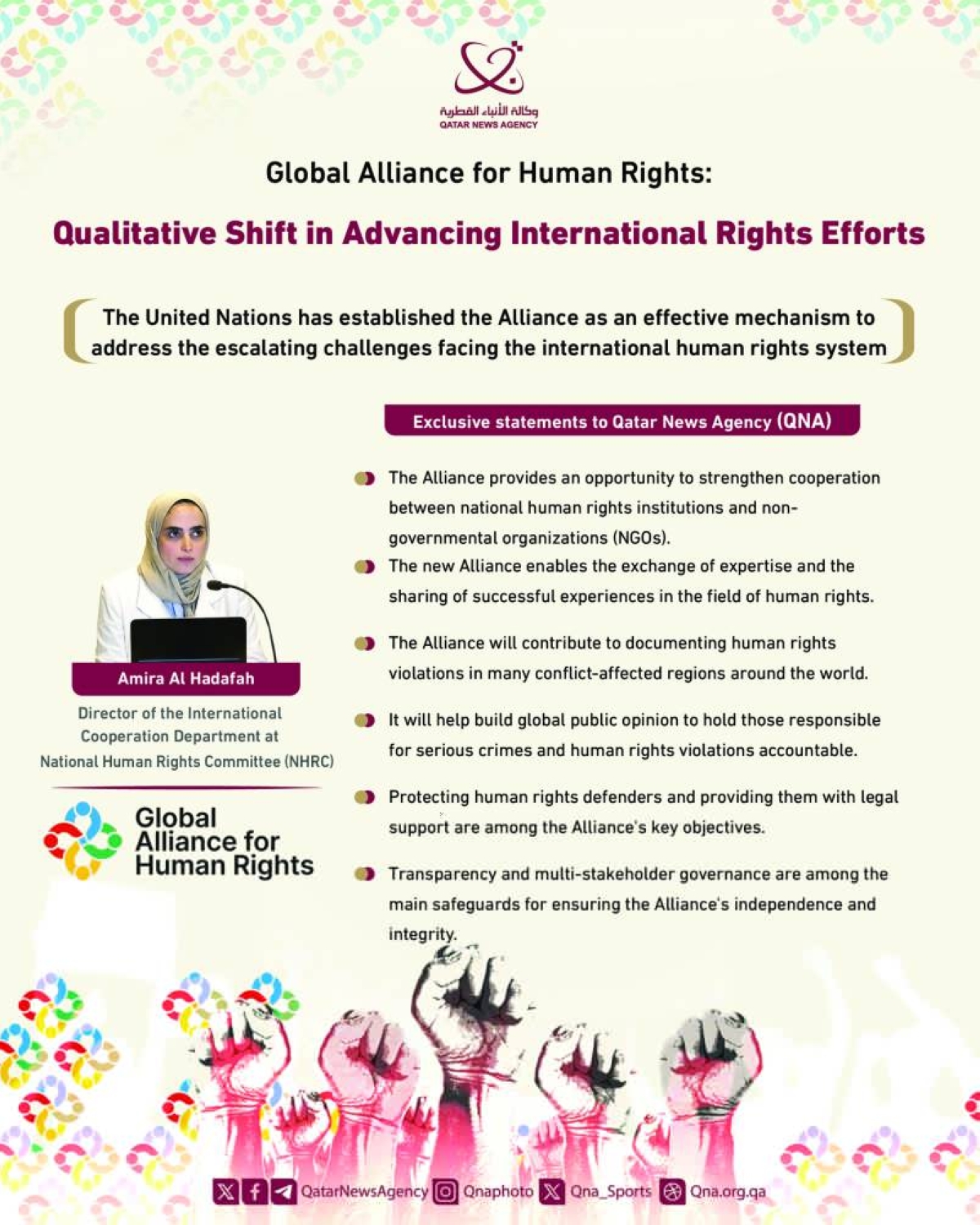
The recent launch of the UN Global Alliance for Human Rights marks a significant step in strengthening international efforts to protect human rights by bringing together stakeholders across regions and sectors to address growing global challenges. The new alliance aims to bring tangible change in human rights through four strategic tracks: promoting human rights at home and at work; cultivating a human rights culture; advancing human rights through innovation and technology; and engaging young people in addressing global challenges. In remarks to Qatar News Agency (QNA), Director of the International Cooperation Department at the National Human Rights Committee (NHRC), Amira al-Hadafah, described the Global Alliance for Human Rights as a significant addition and an important strategic step toward strengthening and protecting human rights internationally. She said the NHRC views the alliance as a unique opportunity to enhance cooperation and coordination among national human rights institutions, non-governmental organizations, experts and other stakeholders through a shared vision aimed at bridging gaps between international human rights standards and policies and their implementation in practice, while reinforcing human dignity and promoting justice and equality worldwide. Al-Hadafah said the alliance offers a platform for sharing expertise, best practices, and successful experiences in the field of human rights, while coordinating efforts to address global challenges that hinder the effective realisation of human rights. Regarding the alliance’s potential contribution at a time of widespread human rights violations in conflict zones and areas affected by crises, she said it could make a meaningful difference by documenting violations, facilitating rapid humanitarian responses, and providing victims and their families with a platform to make their voices heard. Such efforts would help transform human rights solidarity from rhetoric into evidence-based institutional action, while drawing greater international attention to serious and widespread violations committed during conflicts, particularly those targeting women and children, she highlighted. Regarding the alliance’s implementation mechanisms and operational tools for translating its principles into tangible results, particularly amid persistent impunity for perpetrators of atrocities and human rights violations, al-Hadafah said impunity remains one of the greatest challenges facing the international human rights system because it contributes to the recurrence of grave violations, especially in armed conflicts, while denying victims, their families and communities effective remedies. She expressed confidence that the alliance could contribute to strengthening accountability and combating impunity through systematic monitoring and documentation, sustained engagement with victims and affected communities, and providing them with a platform to present their experiences and demands for justice before the international community. She added that these efforts could help build global public support for holding perpetrators of serious crimes accountable, establish international advocacy networks, and strengthen cooperation with international mechanisms and courts by providing evidence related to such crimes. Al-Hadafah stressed that the alliance has the potential to generate wide international support for activating international jurisdiction to address the gravest crimes and human rights violations, stemming from the cost of double standards and continued impunity on international peace and security. On the challenges faced by human rights defenders, including harassment and intimidation, she said protecting human rights defenders is among the alliance’s core priorities. She noted that creating a safe and enabling environment for human rights defenders is essential to upholding the rule of law and strengthening respect for human rights within societies. She emphasised that this alliance will strengthen safeguards for human rights defenders through monitoring, establishing an early warning system, providing legal support and protection, and maintaining ongoing coordination with the UN Special Rapporteur on Human Rights Defenders, treaty bodies, and other relevant human rights mechanisms. It will also work to mobilise international support for the effective implementation of the UN Declaration on Human Rights Defenders, with the aim of creating a safe environment for human rights defenders worldwide. Addressing the alliance’s ability to maintain independence from political pressures and secure sustainable funding, Al-Hadafah said, in her concluding remarks, that transparent, multi-stakeholder governance would be a key safeguard for its independence and integrity. She said such governance would enable the alliance to pursue its vision of building a world in which the rights enshrined in the Universal Declaration of Human Rights and related international instruments are respected, protected and fulfilled, while fostering a strong global civil society capable of monitoring compliance with international human rights obligations and contributing to the advancement of justice. In this context, she added that the alliance is expected to develop a comprehensive strategic plan outlining priorities, strategic partnerships and funding sources, expressing confidence that it is committed to preserving its independence, credibility and freedom from any influence that could compromise its vision, objectives or human rights values.

News
‘We got to see incredible landscapes:’ First Etihad Rail …

‘We got to see incredible landscapes:’ First Etihad Rail …

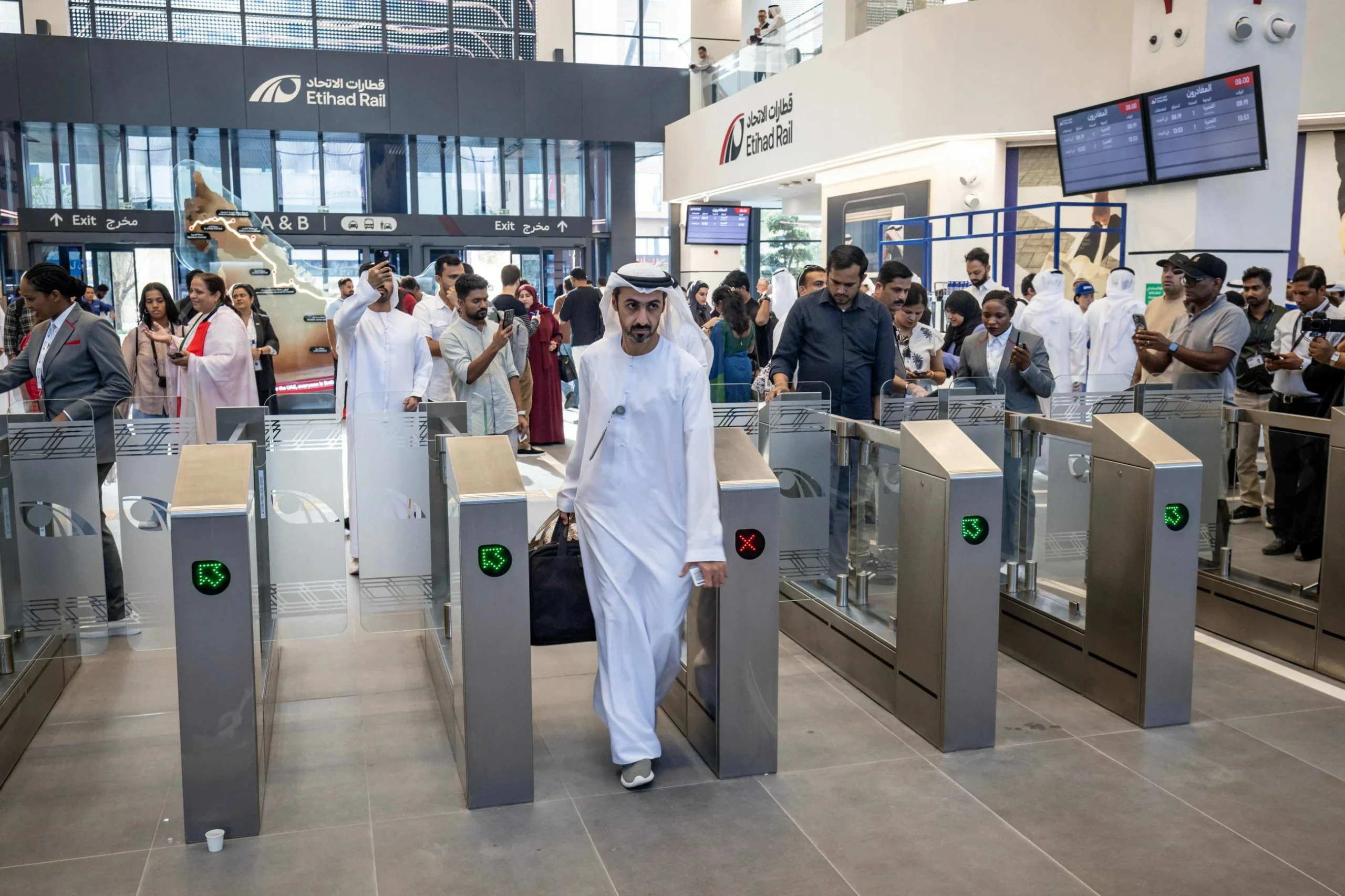
 It's 7.13 am on a sultry June morning and a passenger train pulls into the station in Abu Dhabi, capital of the United Arab Emirates. An unremarkable scene in many cities but here, the first

Entertainment
Tom Hardy Returns To ‘MobLand’ After Alleged Production Clashes

Tom Hardy Returns To ‘MobLand’ After Alleged Production Clashes

Tom Hardy I Won't Leave The Mob Life!!! Published June 30, 2026 1:14 PM PDT Looks like Tom Hardy cut a deal with "MobLand" producers ... TMZ confirmed he's returning to the show for its

Entertainment
Spencer Pratt Says Daveigh Chase Should’ve Been Forced Into Rehab

Spencer Pratt Says Daveigh Chase Should’ve Been Forced Into Rehab

Spencer Pratt on Daveigh Chase Someone Should've Dragged Her to Rehab!!! Published June 30, 2026 12:22 PM PDT Spencer Pratt says Daveigh Chase is dead because "nobody was willing to drag her to rehab against

News
At least 14 children killed after roof of tutoring center…

At least 14 children killed after roof of tutoring center…

A roof collapse at a tutoring center under construction in Pakistan’s eastern city of Lahore on Tuesday killed at least 14 schoolchildren, police and rescue officials said.Eight other children were injured and being treated at

News
Beit Al Khair Society helps patient fight cancer

Beit Al Khair Society helps patient fight cancer

Beit Al Khair Society covered the full cost of a cancer patient’s treatment, amounting to Dhs183,450, including Dhs154,350 for chemotherapy sessions and Dhs29,100 for a subsequent cardiac catheterisation procedure, ensuring the continuity of the treatment

News
Dubai Police warn against fake travel promotions

Dubai Police warn against fake travel promotions

As part of "Fraud Awareness campaign, Dubai Police warned community members against falling victim to electronic fraud related to fake travel and tourism offers, which become significantly active during holiday seasons and summer vacations, exploiting