World
France, Germany abandon joint fighter aircraft project

France, Germany abandon joint fighter aircraft project

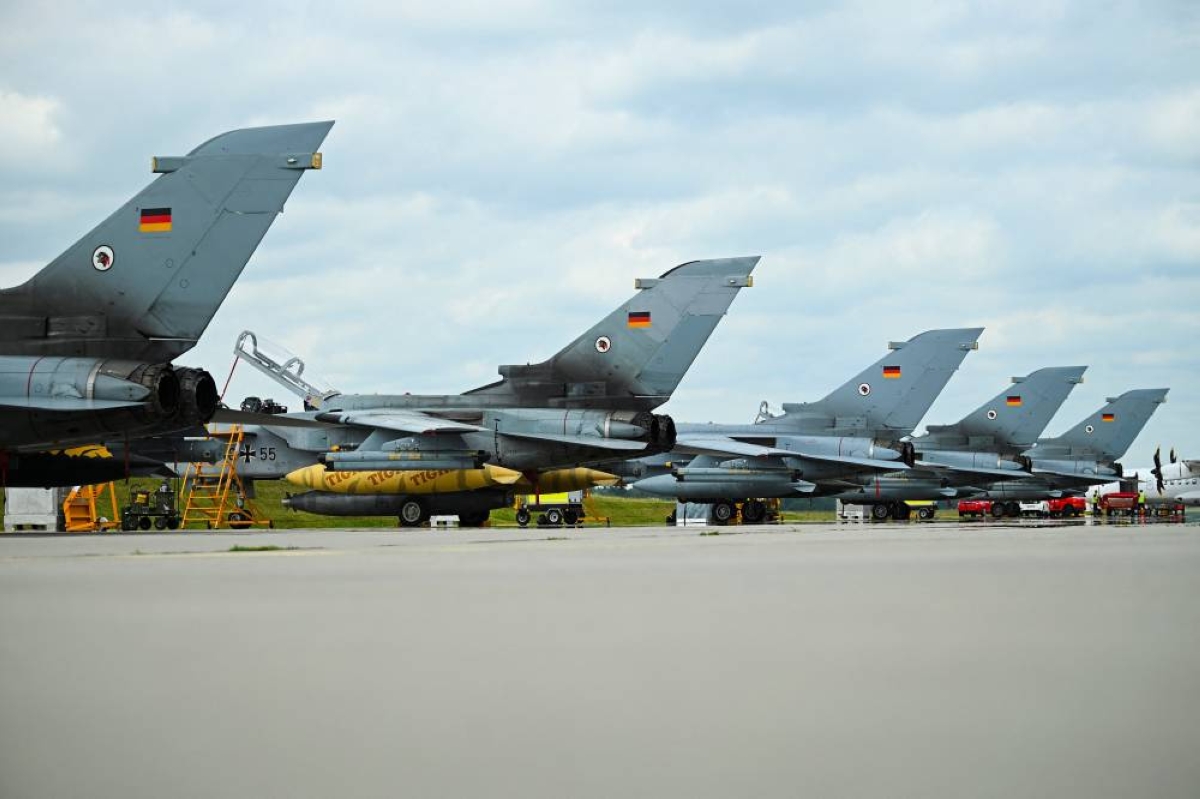
Tornado fighter jets are parked at the Hamburg Airport during a joint exercise between the German Air Force (Bundeswehr Luftwaffe) and the civilian airport operations in Hamburg, Germany, June 8, 2026. REUTERS/Jonas Walzberg France and Germany have agreed to abandon a joint fighter jet programme due to disagreements between the companies involved, Berlin said Monday in a blow to European efforts to boost defence co-operation.The Future Combat Air System (FCAS) programme was launched in 2017 to replace France’s Rafale jets and the Eurofighter planes used by Germany and Spain. The project was seen as a key test of European efforts to work more closely on defence as they seek to present a united front in the face of a hostile Russia at a time of souring ties with the US.But the multi-billion-dollar programme was beset by disagreements between the firms involved — France’s Dassault Aviation and Airbus, which represents Germany and Spain. A German government official told AFP that Chancellor Friedrich Merz and French President Emmanuel Macron had “reached the shared assessment that the companies will not be able to come together on building a joint combat aircraft. “They acknowledge this reality.”The official however said other parts of the wide-ranging project will continue. “The actual core of FCAS is to be continued as a European system,” the official said, describing it as a “nervous system that networks aircraft, drones and other components into an integrated whole”.The French and German defence ministries are set to draw up a plan for defence co-operation “focused on a few realistic and relevant projects” at a forthcoming meeting, the official added. The news comes despite calls for Europe to integrate its fragmented militaries more closely as geopolitical turmoil worsens.Russia’s war against Ukraine is in its fifth year, while European countries are increasingly worried about US security commitments to the continent under President Donald Trump. There had been last-ditch efforts to salvage FCAS. In March two mediators — one from France and one from Germany — were tasked with coming up with proposals to rescue the initiative.But they were unable to do so, while the head of Dassault Aviation continued to insist that the firm could go it alone on the project and was not in favour of it being “co-managed”. The project’s demise comes despite both Merz and Macron insisting publicly they were determined for it to succeed. The German leader had said earlier this year that he would “do everything in my power, and fight until the very last moment, to get joint European projects off the ground here, and above all German-French projects”.Macron — speaking in April after talks with Merz — had denied then the project was dead. 

World
School closures in Japan city as bear roams streets

School closures in Japan city as bear roams streets

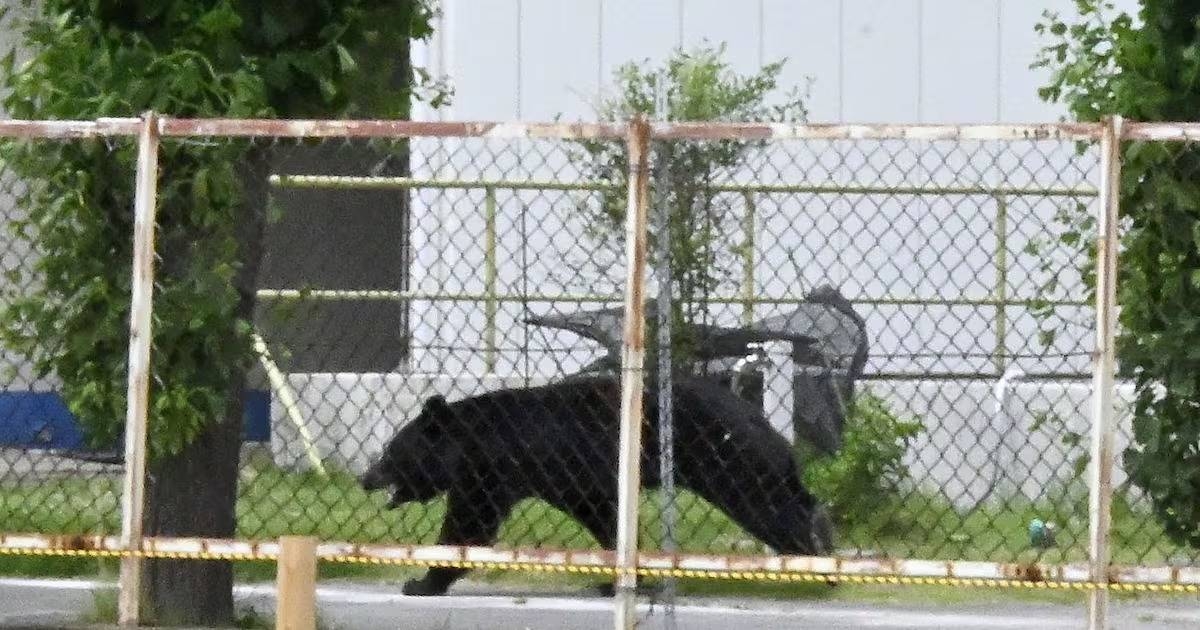
A bear roaming the streets of a Japanese city for three days forced the closure of nearly 100 schools yesterday, as dozens of hunters and officials searched for the animal.The city government of Utsunomiya, north of Tokyo, closed all 94 public primary and junior high schools in the area after receiving more than 10 reports of bear sightings since Saturday — including in a shopping arcade. “We have vehicles out to areas where a bear was seen to make people aware and to urge people to stay indoors or in vehicles,” a city official told AFP, adding that dozens of hunters, police and local officials have been looking for the animal. It was not clear whether there is one bear or more, he said, speaking on the customary condition of anonymity. In recent years, Japan has seen an increasing number of bear sightings and attacks, especially in urban areas. A record 13 people were killed by bears in Japan last year, and there has been a jump in encounters as the animals emerge hungry from hibernation. In the last year to March, bear sightings nationwide topped 50,000 — more than double the previous record set two years earlier, according to official data. In Utsunomiya, a regional capital and home to 510,000 residents, there were just two unconfirmed bear sightings in the previous year. The bear now being hunted was first spotted Saturday morning, north of the city centre, and was described as being around one metre (three feet) long. A series of sightings followed, including in a residential neighbourhood that day, at a shopping arcade on Sunday, and at a park, a high school and a junior school. 

World
India deports 5,000 Bangladeshis – Gulf Times

India deports 5,000 Bangladeshis – Gulf Times

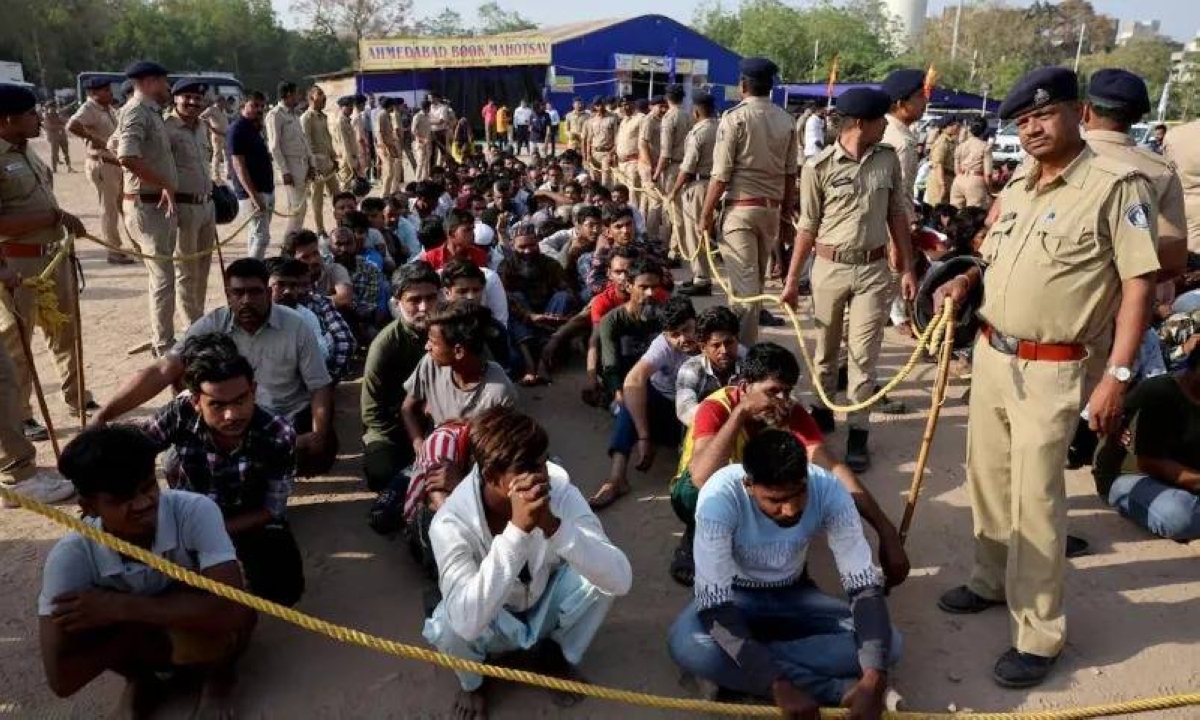
India has deported nearly 5,000 Bangladeshi citizens since Prime Minister Narendra Modi’s Hindu-nationalist party swept to power in West Bengal last month, according to official statistics.Modi’s Bharatiya Janata Party (BJP) won a sweeping victory in elections in the eastern border state of more than 100 million people, promising to “detect, delete and deport” illegal migrants. India shares a long and porous border with Muslim-majority Bangladesh, where migration has historically been driven by economic hardship and longstanding family links. On taking power, the new West Bengal government ordered the establishment of detention centres for undocumented Bangladeshis and Rohingya refugees, a mainly Muslim people who fled persecution in Myanmar.State Chief Minister Suvendu Adhikari, speaking in the capital Kolkata on Sunday, said nearly 5,000 Bangladeshi citizens had been deported across the border. “We have started the work of deporting Bangladeshi infiltrators who do not fall under the purview of the Citizenship Amendment Act,” Adhikari said, saying the government had “established holding centres in all districts of the state” in May. “From these centres, 4,800 Bangladeshi infiltrators have already been deported so far,” he added.“Another 836 people are currently in the holding centres... we are making arrangements to deport the 836 soon,” Adhikari said. The deportation campaign comes against a backdrop of longstanding political tensions over immigration in the border state.Top Indian officials have referred to migrants as “termites” and “infiltrators”. Critics say the BJP’s rhetoric and policies have added to the unease and marginalisation of India’s more than 200 million Muslims, accusing the party of conflating religious identity with illegal migration.Rights groups have previously accused India of also pushing hundreds of Bengali-speaking Muslims into Bangladesh without due process.  

World
Iran, Israel halt strikes for now

Iran, Israel halt strikes for now

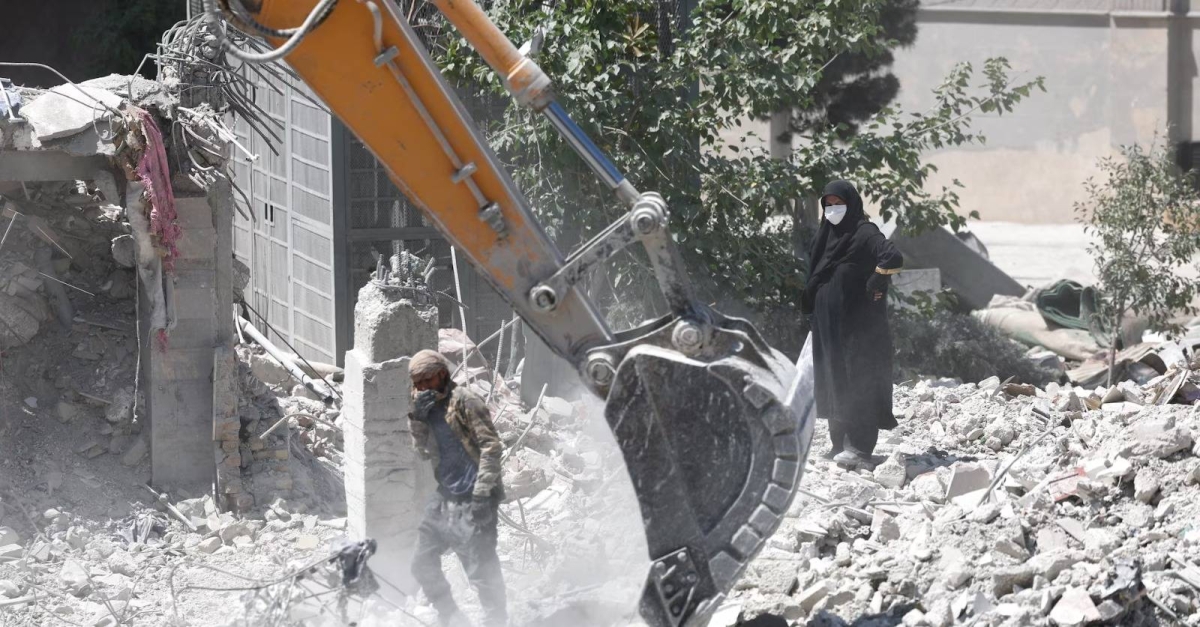
Iran and Israel said yesterday they had halted attacks ‌on each other after an appeal from US President Donald Trump that they immediately “stop ‘shooting’”, though Tehran said it would resume ​strikes if Israel continued to hit Hezbollah in ‌Lebanon. The wave of attacks over 24 hours were the most direct confrontation between Iran and Israel since an April ceasefire, threatening ‌to wreck Washington’s efforts to reach an agreement with Tehran to ‌end their more than three-month-old war. A source briefed on the matter said Israel had also decided to halt its attacks on Iran. Tehran fired missiles towards Israeli territory late on Sunday, calling them retaliation for Israeli attacks on strongholds of the Iranian-backed Hezbollah militia on the outskirts of Beirut. Israel then hit a petrochemical plant in southwest Iran that it said was used to produce ballistic missiles. Iran’s Islamic Revolutionary Guard Corps (IRGC) said it had retaliated with a strike aimed at a similar Israeli plant in the city of Haifa. Iran’s military said it had “delivered a painful response” against Israel for its attacks on Lebanon. “Accordingly, the operations of the armed forces are hereby declared halted; however, ​it is emphasised that if the aggressions and acts of mischief continue — including in southern Lebanon — much more severe and crushing actions than before will follow.” Hours after Iran’s announcement, sirens sounded in the Zar’it area of northern Israel when a projectile was identified as falling in an area of southern Lebanon where Israeli forces are operating. 

World
Xi vows unwavering support for North Korea in rare visit

Xi vows unwavering support for North Korea in rare visit

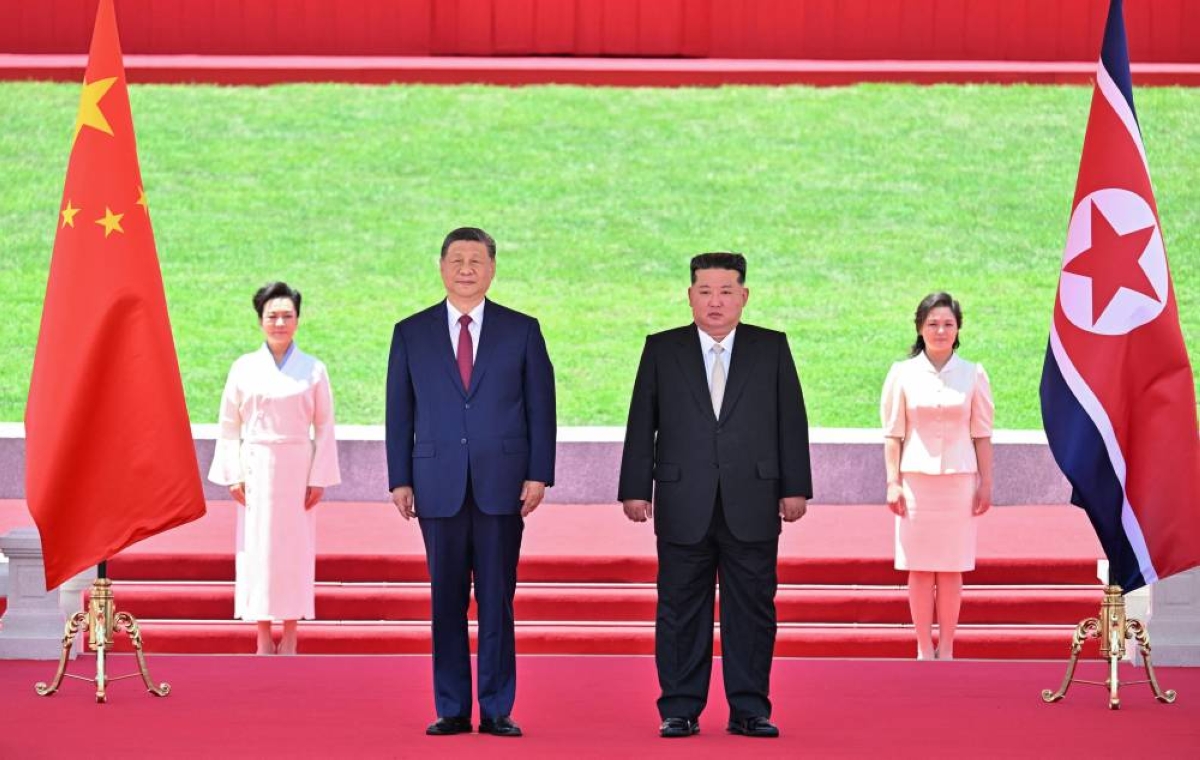
Chinese President Xi Jinping and North Korean leader Kim Jong-un watch a march-past as Kim holds a welcome ceremony for Xi at Kim Il Sung Square in Pyongyang, yesterday. (Reuters) China will not swerve from its commitment to safeguarding common interests ‌with North Korea or waver in its support for Kim Jong-un, President Xi Jinping told Pyongyang’s leader ​yesterday during a rare summit. The ‌neighbours should strengthen strategic ties and firmly protect their sovereignty, security, and development interests, Xi told ‌Kim, an official Chinese summary of the meeting showed, as ‌Beijing looks to draw Pyongyang closer. Xi’s two-day visit, ‌his first in seven years to China’s reclusive neighbour, comes at a time when its economy, strengthened by growing trade and military ties to Russia, could boost Kim’s confidence in talks.“I am deeply pleased and also feel a special sense of closeness,” Xi told Kim on his first international trip this year. No matter how the international situation changed, he reaffirmed to Kim, China would continue to highly value its traditional friendship with North Korea, the summary showed. “The firm support for Comrade General Secretary Kim Jong-un’s leadership of the DPRK socialist cause will not change, and the firm determination to safeguard common interests and good strategic environment... will not change,” Xi added. He was referring to ​the North’s formal name, the Democratic People’s Republic of Korea.The Chinese leader arrived to a red-carpet welcome from Kim and wife Ri Sol Ju, alongside a guard of honour, while children presented bouquets of flowers, video from Chinese state media showed. A 21-gun salute was fired ‌at the capital’s Kim Il Sung Square, a site of military parades ​and state celebrations, as spectators dwarfed by huge portraits of the leaders chanted slogans and released ​balloons, the Xinhua news agency said. Ties were at a “new historical starting point”, Xi said earlier, before urging stronger exchanges in areas from diplomacy, law enforcement and the military to agriculture, trade, technology and construction.Xi had called on Kim to “oppose hegemony, authoritarianism and all attempts and conspiracies to revive militarism that endanger regional security and stability” in remarks published in the North’s state media yesterday. “The Xi-Kim summit is a reminder that Beijing still sees Pyongyang as a strategic asset,” said Craig Singleton, a senior China fellow at the Foundation for Defence of Democracies.The neighbours, along with Russia and Iran, share an interest in blunting US power and straining its alliances, he added. Xi also pledged to work with North Korea to promote fair and orderly multilateralism and inclusive economic globalisation, with long-term regional ‌peace and stability a common pursuit.“His visit ‌is about keeping the tradition alive in very different conditions than his last trip,” John Delury, a senior fellow of the Asia Society, said in a post on X. Flags of both countries lined the main avenues of the North Korean capital in a video issued by Xinhua.Xi is accompanied on the state visit by his wife Peng Liyuan, de facto chief of staff Cai Qi, Foreign Minister Wang Yi, Defence Minister Dong Jun and Commerce Minister Wang Wentao. Both should capitalise on the restored links as “an opportunity to expand people-to-people exchanges,” Xi told Kim during their meeting. 

Opinion
AI debate moves past ability — to who carries the can

AI debate moves past ability — to who carries the can

Earlier this year, a US senator sat down to interview a piece of software. Bernie Sanders put it to Anthropic’s chatbot, Claude, whether it might endorse a moratorium on building the very data centres that give it life — as though consulting a defendant on the wisdom of its own trial. The scene was absurd, and instructive. It distilled, in a single tableau, the confusion now gripping the world’s response to artificial intelligence: we cannot decide whether we are dealing with a tool, a colleague, an oracle, or a rival species — and our policy lurches accordingly. Survey the field and the incoherence is total. At one pole stands Argentina’s Javier Milei, who has pledged to impose no rules whatever on what algorithms may do, and to mint a new legal creature — the “non-human corporation,” a firm run entirely by machines. Peter Thiel, a German-American entrepreneur and venture capitalist — one of the most influential and ideologically distinctive figures in Silicon Valley — has reportedly decamped to Buenos Aires, drawn by the promise of a regulatory blank cheque. Even Donald Trump’s White House, no enemy of the industry, has lately edged towards leashing the most powerful models before they are loosed on the world. At the other pole sits Pope Leo, who welcomes technology that might, in his words, “serve integral human development and the care of our common home.” His warning lands elsewhere. Leo’s insight is the most underrated contribution to the entire debate, precisely because it refuses the terms on which the debate is usually fought. The danger, he argues, lies not only in what these systems are built to achieve, but in the vision behind them and in what we ourselves become along the way — not merely the “what,” but the “why” and the “how.” Machines may one day eclipse us in raw intelligence, yet intelligence is not the same as understanding. An algorithm, the pope observes, does not know “from within what love, work, friendship or responsibility mean”; its learning “does not imply inner growth.” He reserves his sharpest caution for the transhumanist creed that treats human limitation as a defect to be engineered away — when, as he counters, we often flourish not despite our limits but through them. Some sceptics felt the pope pulled his punches. One critic likened calling AI a valuable tool requiring vigilance to recommending that cocaine “be snorted with a pinch of salt.” Yet a papal summons to mass resistance would have misjudged the hour. It is at once too late — the technology has already woven itself through too much wealth, infrastructure and institutional life to be ripped out — and too early, because human beings reform a technology only once its harms turn undeniable. We acted on nuclear weapons after Hiroshima, not before; the revolt against children’s smartphones could not have been conjured in 2010. The honest path for the critic, then, is not to lament the age but to name its specific sins: the student who cheats, the novelist who quietly outsources a chapter, the lonely user who mistakes a chatbot for a beloved. Here the metaphysics meets the spreadsheet. A new study from MIT’s Mert Demirer and colleagues tracked coders before and after they adopted AI, and the numbers tell a humbling story. At the top of the funnel, output exploded — nearly 300% more files written or edited. By the review stage the gain had halved to 150%; by the count of actual software releases it had collapsed to roughly 30%. The dramatic uplift drains away precisely as work passes through the human checkpoints of judgment, review and release. More apps now ship, yet downloads have not budged: a flood of creation, a trickle of value. Even Uber, having torched its annual AI budget in a single quarter, is retreating to cheaper models and rationing the frontier tools. The lesson is not that AI is hollow. It is that value lives in the bottleneck — in the human discernment that decides what is worth shipping at all. As with electricity, whose real productivity boom arrived not when factories swapped a giant steam engine for a giant electric motor, but decades later when engineers rebuilt the workshop around small motors at every bench, the gains will come only when we redesign our institutions around the tool, not merely bolt it on. Today’s modest returns measure the friction between a powerful instrument and structures unfit to wield it. This brings us to the scramble over ownership and blame. President Trump now muses about taking government stakes in the leading AI firms — “It almost becomes a partnership with the American public,” he says — even as Sanders presses a rival vision of a sovereign wealth fund and board seats. Sam Altman, for his part, floats donating a slice of his company to a public fund. The investor David Sacks recoils, warning that “nationalisation of AI will accelerate the corporate-government fusion we’re already sliding toward.” Strip away the ideology and a single anxiety pulses beneath every scheme: the public is gloomy — more than seventy per cent of Americans think the technology is moving too fast — and everyone is groping for a way to locate the proceeds, and the responsibility, somewhere. That word — responsibility — is the thread that stitches these quarrels together. The encyclical, the productivity funnel, the sovereign wealth fund and the senator’s strange interview are all, at bottom, arguments about accountability: who keeps judgment, who carries the can, who answers when the machine produces injury without redress. No society, as both scripture and science fiction agree, will long tolerate harm without someone to hold to account. So the real question is not how clever the machines will become. It is how much of our own judgment we are willing to surrender for the sake of convenience — and how much we insist on keeping, knowing that whatever we hand to the algorithm, the bill, when it falls due, will still be addressed to us. The writer is Deputy Managing Editor, Gulf Times  

Entertainment
Rep. Hakeem Jeffries Says Donald Trump Is Making NBA Finals About Himself

Rep. Hakeem Jeffries Says Donald Trump Is Making NBA Finals About Himself

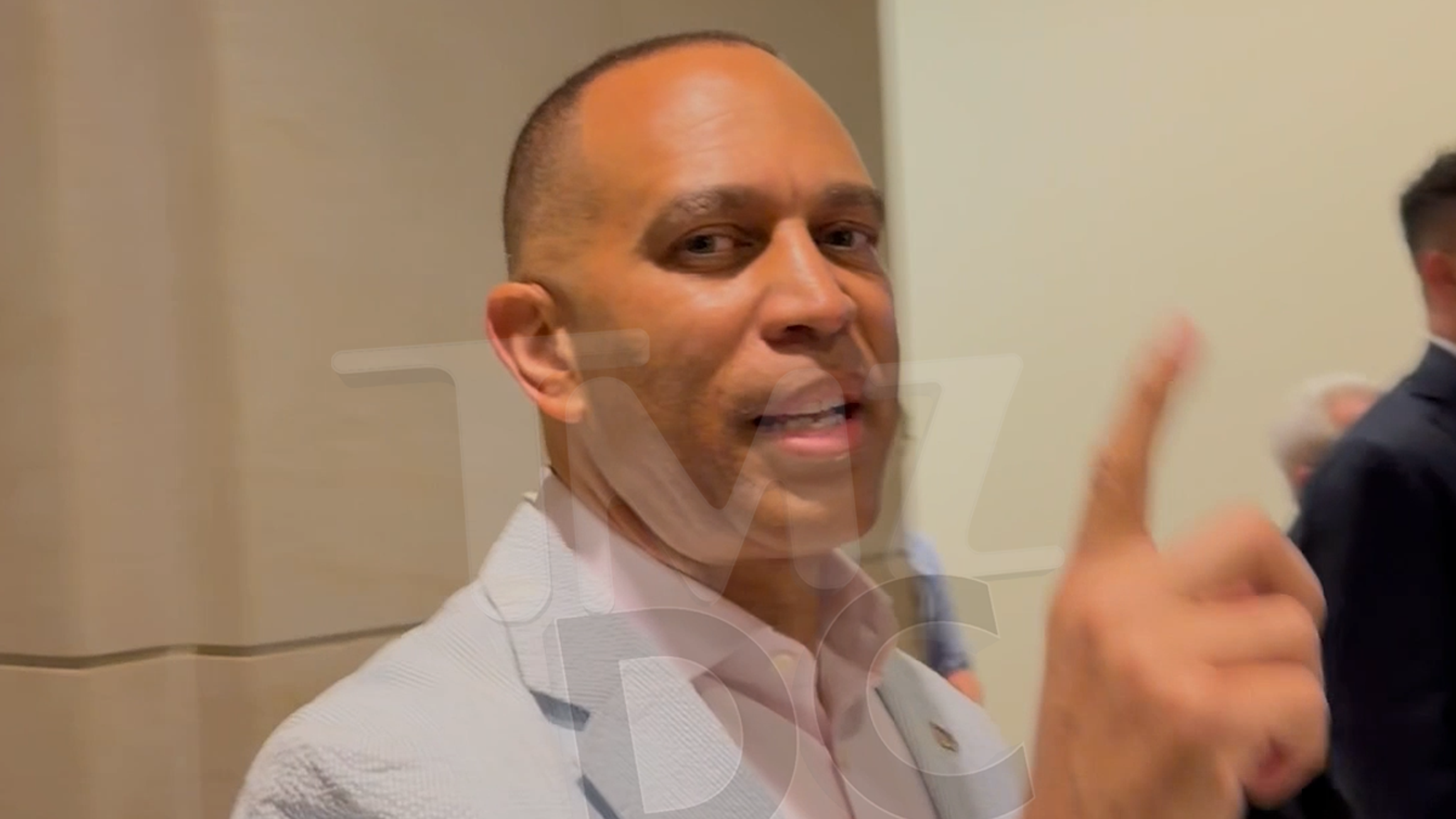
Rep. Hakeem Jeffries Is President Trump Even A Knicks Fan?! Published June 8, 2026 1:56 PM PDT Play video content President Donald Trump's trip to the NBA Finals is getting boxed out by Rep. Hakeem

Sports
Brazil’s Neymar ‘recovering well’ after injury ahead of World Cup opener

Brazil’s Neymar ‘recovering well’ after injury ahead of World Cup opener

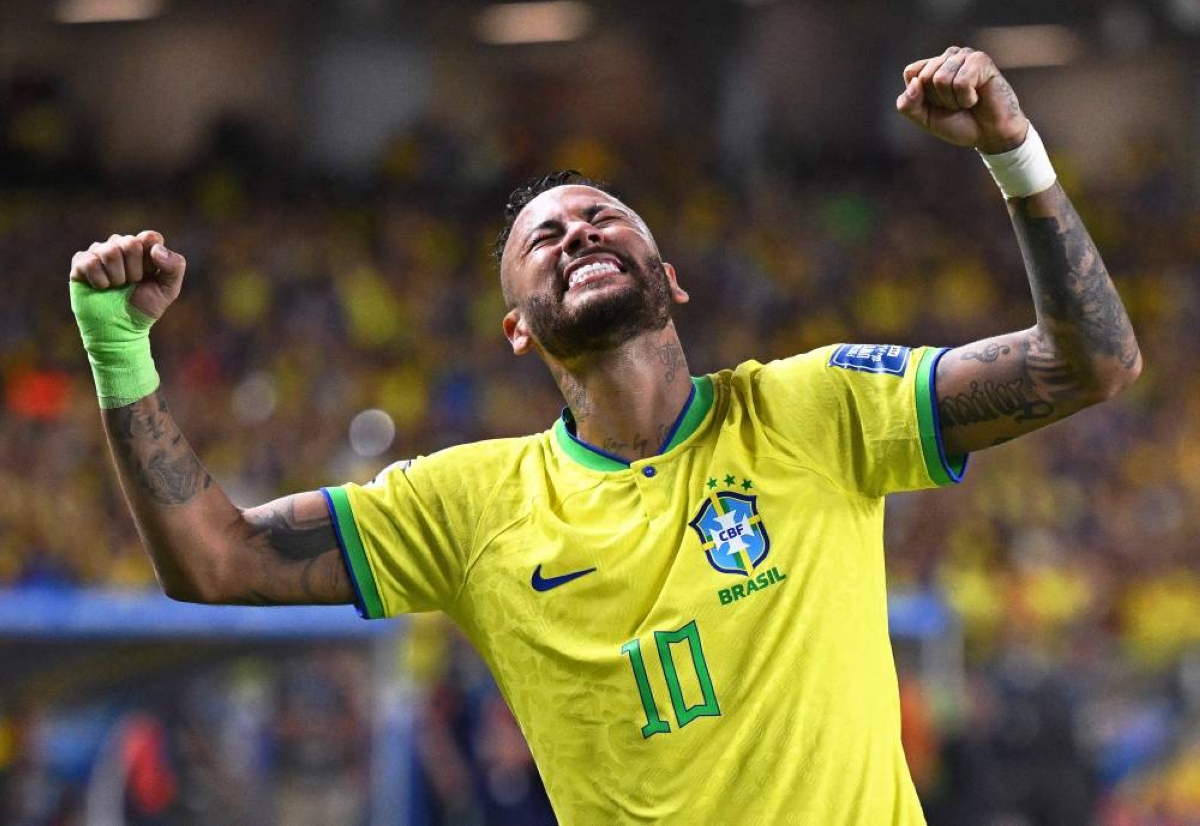
Neymar is "recovering well" from the calf injury that has made him a doubt for the start of Brazil's World Cup campaign, the team said in a statement on Monday. Brazil's all-time record scorer underwent an MRI scan on Monday which showed he is "making good progress in his treatment" amid hopes that he will be able to play a part for Carlo Ancelotti's side in the United States. "He will continue to follow the recovery schedule and fitness programme as planned by the Brazil team medical staff," the Brazilian Football Confederation said. Neymar was diagnosed with a calf injury late last month and has since been in a race to recover fitness for the tournament, with Brazil kicking off their campaign against Morocco in New Jersey on Saturday. Now 34, the former Barcelona and Paris Saint-Germain superstar has been an integral part of Brazil's last three World Cup campaigns but there was some surprise at his inclusion this time as injuries have prevented him from playing for his country at all since 2023. Coach Carlo Ancelotti insisted last week that the player, now with Santos, would be ready for either Brazil's first or second game and added that he was "in no rush" to bring him back.    Related Story

Sports
Give Brazil the respect we deserve, says World Cup star Guimaraes

Give Brazil the respect we deserve, says World Cup star Guimaraes

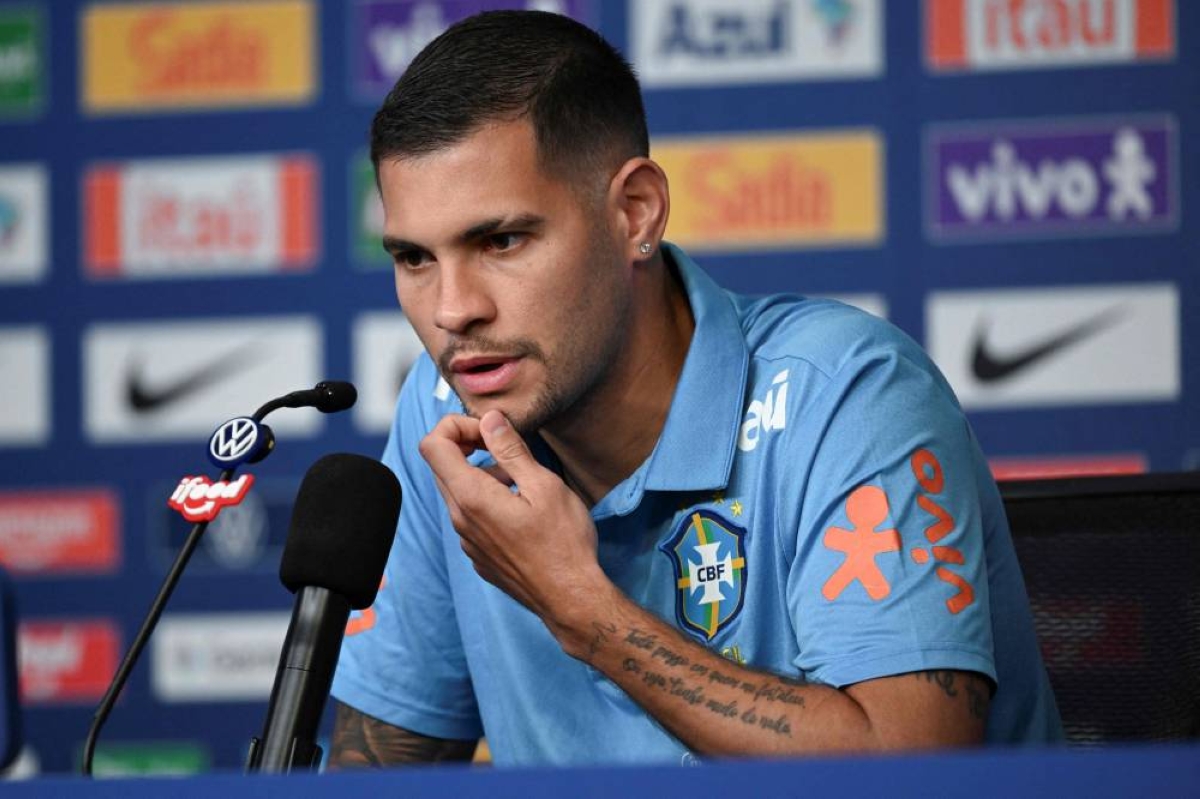
Brazil’s midfielder Bruno Guimaraes smiles during a press conference at the Verizon Basking Ridge Hotel in Basking Ridge, New Jersey, on June 8, 2026. (AFP) Brazil star Bruno Guimaraes insisted Monday his team should get "the respect they deserve" as they get ready to kick off their bid to win a record-extending sixth World Cup.The Selecao won the last of their five titles in 2002 and have gone out in the quarter-finals four times in five World Cups since then.Brazil come into this year's tournament in North America ranked sixth in the world and arguably lacking the kind of superstar names who have stood out in the past."Nobody else has five stars on their chest. We have great players who play for top teams, like Vini and Raphinha. We need to give our players the respect they deserve," Newcastle United midfielder Guimaraes told reporters at the Brazil team's base in New Jersey.Carlo Ancelotti's side, who finished fifth in the 10-team South American qualifying group, 10 points behind first-placed Argentina, begin their World Cup bid against Morocco on Saturday at the MetLife Stadium just outside New York City.They completed preparations for the tournament with back-to-back friendly wins, hammering Panama 6-2 in Rio de Janeiro and then defeating Egypt 2-1 in Cleveland, Ohio on Saturday."We couldn't be feeling better. We won and played well in the two friendly matches. We have another few days to work on things but we feel ready," said Guimaraes, who scored his team's opener against Egypt."Once the World Cup begins, everyone will forget what has happened before. Hopefully we can start with a victory, and that will give us something to build on."Brazil will also play Haiti and Scotland in Group C and are currently waiting to see if Neymar will be able to play any part in their group games.The former Barcelona and Paris Saint-Germain forward, now 34, is currently playing for Santos in his homeland and has not been capped by his country since 2023.Despite that, Ancelotti took a gamble by including Neymar in his squad, and he has since been hit by a calf problem.Brazil have already been forced to make a change to their squad, with Roma full-back Wesley being ruled out of the tournament at the weekend due to a thigh injury.He has been replaced by Ederson, the 26-year-old midfielder with Atalanta in Italy who is expected to join Manchester United after the World Cup."Playing at a World Cup is the apex of our careers as footballers. We hope Wesley recovers quickly," said Guimaraes.   Related Story

Tech
Open source faces CRA awareness gap — Arabian Post

Open source faces CRA awareness gap — Arabian Post

Open-source maintainers and software manufacturers are heading towards the European Union’s first Cyber Resilience Act enforcement milestone with deep gaps in awareness, preparedness and legal clarity, after new OpenSSF research found that about two-thirds of