Opinion
Russia bets on air war as it stumbles on the battlefield

Russia bets on air war as it stumbles on the battlefield

Smoke billowing from a fire during drone and missile attacks in Kyiv on Wednesday. Russian missile and drone barrages rocked parts of Ukraine, killing four and wounding dozens, officials said on June 2, the latest

Opinion
Ukraine pushed Russia back in May for second month running

Ukraine pushed Russia back in May for second month running

Ukraine recaptured more territory than it lost to Russian forces in May for the second straight month, AFP analysis of data from the Institute for the Study of War (ISW) showed. Ukraine’s army gained a net 282 sq km over the month, according to the analysis, as Kyiv hails its improving fortunes on the sprawling battlefield across the south and east of the country. The pace of Russia’s advance has been slowing since late 2025, hobbled by the increasing effectiveness of Ukraine’s frontline and mid-range drone strikes, the ISW said. Moscow had lost control of around 120 sq km in April, the first month in which its forces gave up more ground than they captured for two and a half years. However, Russian soldiers are still infiltrated in most of the areas where Ukraine has retaken territory, the ISW said. The Russian army regularly sends small groups of soldiers to take up positions along parts of the front line and hide there — a tactic designed to pave the way for larger groups of troops to advance later. Ukraine’s gains in April and May — around 403 sq km in total — remain marginal, representing around 0.4% of the total territory held by Russia. But they nevertheless point to a positive trend for Kyiv, which has touted itself as having recently gained the upper hand in the four-year conflict. “Ukraine’s successful mid-range and frontline drone strike campaigns are limiting Russia’s ability to transport personnel to the frontline and to supply and sustain frontline positions,” the ISW reported last week. Most of Ukraine’s gains were in the eastern Donetsk region, which Russia claims as its own and is fighting to capture in full, and in the southern Zaporizhzhia region. The estimates exclude advances claimed by Russia but that the ISW has neither confirmed nor denied. The ISW works with the Critical Threats Project, part of the American Enterprise Institute, another US think tank specialising in conflict analysis. Moscow occupies just over 19% of Ukraine. That includes around seven percent — Crimea and parts of the industrial Donbas region — that was already under Russian or pro-Russian separatist control before the February 2022 invasion. Most of Russia’s advances were made during the first weeks of the conflict. Hundreds of thousands have been killed and millions forced from their homes since Russia invaded in February 2022.  

Opinion
Don’t trade away this chance for peace

Don’t trade away this chance for peace

An excavator clears the rubble of a building as rescuers search for victims after an Israeli airstrike that struck near a hospital in Tyre. (AFP) In the summer of 1982, as Israeli shells fell on a besieged Beirut, a seasoned Lebanese statesman named Saeb Salam offered a thought that has outlived him. A chance for peace, he warned, must never be treated as a commodity — something to be hoarded, haggled over or sold to the highest bidder. Opportunities of that kind do not sit on a shelf, waiting to be bought back later. They appear, and then they are gone. Four decades on, Lebanon and its neighbours are living through an eerie echo of that moment. The cast has changed, and so has the condition of the country, but the test is the same. Once again a window has opened amid the wreckage, and once again the temptation is to trade it away. This time the decision rests in several hands at once: an American president, an Israeli public, the armed movement that calls itself the resistance and its patron in Tehran, and the Lebanese who are angrily demanding a sovereignty their country lost with the Cairo Agreement of 1969. Mr Salam’s warning should be lost on none of them. Consider each in turn, for all are caught in the same crisis — one that deepened the day Binyamin Netanyahu drew the United States into open war with Iran. Begin with Donald Trump. His decision to go to war was poorly weighed, and it has pushed the world towards the edge of a catastrophe that would spare no one. The poorest states — those with weak governments, fragile economies and swelling populations — would suffer first and worst. But the wealthy democracies, already gnawed by self-doubt and a jittery, inward-looking nationalism, would not escape either. And yet a crisis is also a door. Mr Trump has the chance to vault the whole world into a calmer phase, if he grasps the plain arithmetic of cost and benefit and finally addresses the poisoned wound of the Palestinian tragedy. The choice before him is stark. On one side lies a genuine peace between the Islamic world — the 57 member states of the Organisation of Islamic Cooperation, Iran and Saudi Arabia prominent among them — and Israel and America. On the other lies capture by the most extreme faction in Israeli politics: Bezalel Smotrich, Itamar Ben-Gvir and Mr Netanyahu, whose government commands the support of fewer than two Israelis in five, and whose prime minister’s personal approval has sunk below 30%. Mr Trump stands at a fork. Down one path lies a Nobel prize on steroids; down the other, the slow draining of a conflict that delivers neither victory nor peace, and offers no horizon at all. Turn next to the Israeli public, which has backed this war since the Hamas attack of October 7th. The conduct of the campaign since then — in Gaza, the West Bank and Lebanon — has revealed an ugly, unrestrained dehumanisation of Palestinians, and it is all on the record. This is hard for any nation to face. Yet a path back exists, if Israelis can absorb a single truth: that pain and humiliation are not a Jewish monopoly. Palestinians and Lebanese have their own stories of monstrous, indiscriminate revenge, and these too are written down. The bitter irony is that Jews everywhere now feel a hostility that scarcely existed before this cycle of cruelty began. Refuse the opening for peace, and violence itself becomes a commodity — bought and sold, traded back and forth — a danger as real to those who inflict it as to those who endure it. The old restraints of a pre-digital age have snapped; technology now permits, and even invites, unfettered violence in the name of revenge. It is a thoroughly unwanted condition, and a thoroughly avoidable one. Then there is Hizbullah and its sponsor in Iran. Here the war is not without its alibi. The conduct of the Revolutionary Guards’ proxies has been far less honourable than the romance of “resistance” pretends. Over the years they slid into coercive dominance —political assassinations, drug-running, smuggling and money-laundering — and traded a claim to the moral high ground for the manners of a protection racket. In Iraq, Syria and Lebanon they came to rule by fear, suspicion and bloodshed. The genuine sympathy of ordinary people, once freely given, was soiled. And there are the Lebanese themselves, whose simple wish for an ordinary, peaceful life has been bought and sold for half a century. The highest bidder always seized the commanding heights, and the country paid the bill: an economic order broken beyond recognition, a state hollowed out, daily life infested with corruption. The savings of hundreds of thousands were wiped away, leaving those who could not flee to sink into despair, and driving abroad a whole generation of the talented and the brave. The lesson is plain. Reality demolishes the comfortable lie that the end justifies the means, for an end is nothing more than the sum of the means used to reach it. Which returns us to Mr Salam, and to a thought worth absorbing slowly. The Chinese describe a crisis as the meeting of danger and opportunity. The danger has been the long, destructive course of war. The opportunity that comes with it must not be filed away as one more commodity — least of all at the expense of the young, who make up some 60% of a region under the age of 30. None of us should become prisoners of old people’s quarrels, and none of us should bequeath to the societies of the future an inheritance of the wretched. • The Lebanese writer is former editor of Al-Hayat in London and The Daily Star in Beirut.  

Entertainment
Angus Cloud’s Mom Deeply Moved By ‘Euphoria’ Finale Honoring Her Son

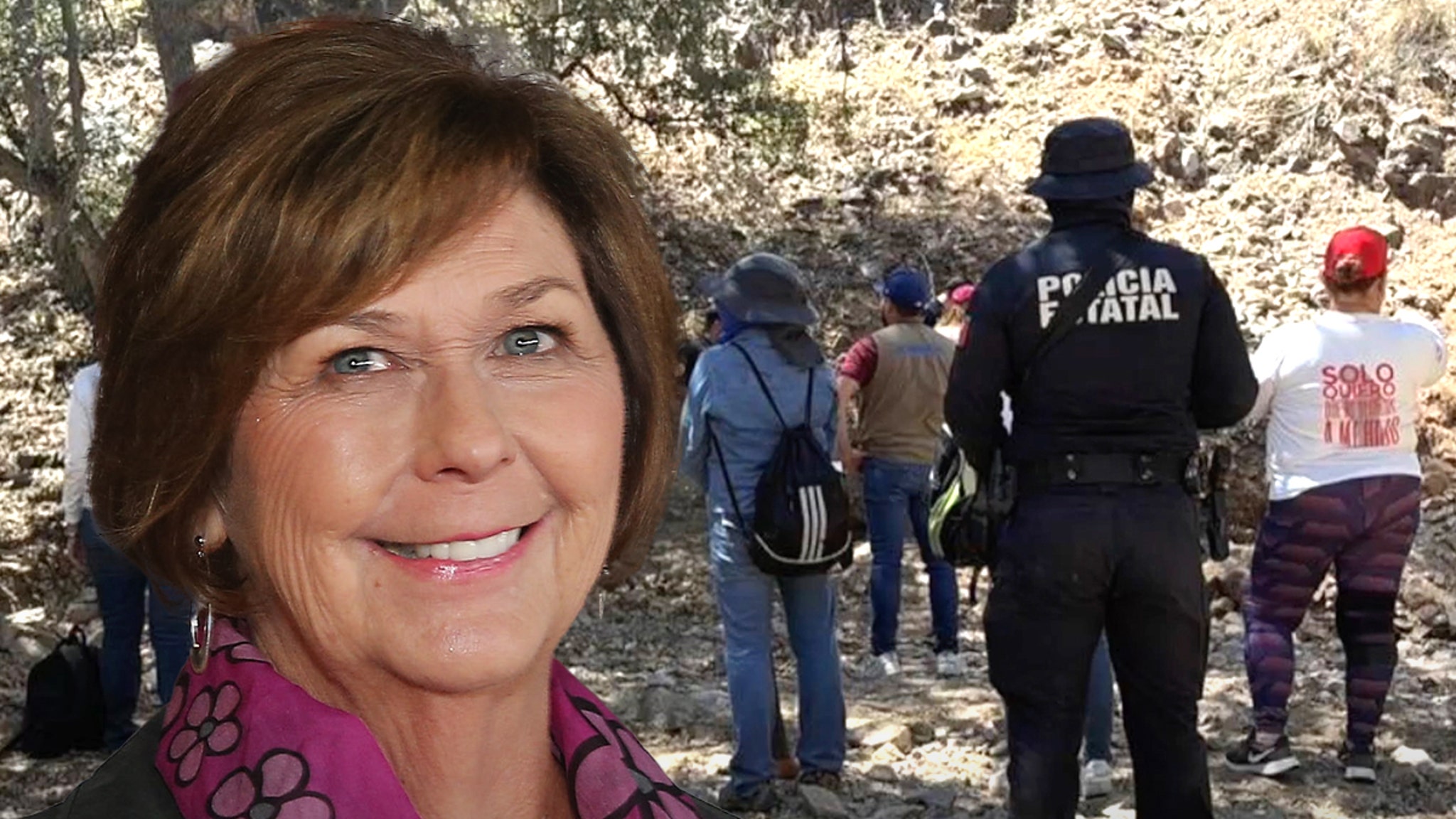
Angus Cloud’s Mom Deeply Moved By ‘Euphoria’ Finale Honoring Her Son

Angus Cloud's Mother Moved by 'Euphoria' Honoring Late Son Published June 3, 2026 1:08 PM PDT "Euphoria" has come to an end ... and the conclusion left fans quite emotional, especially the mother of the

News
Deadly drone strike on Kuwait airport kills one, injures …

Deadly drone strike on Kuwait airport kills one, injures …

An Iranian drone strike on a passenger terminal at Kuwait's international airport killed an Indian citizen and wounded 63 people on Wednesday, as conflict flared between Tehran and US forces in the Gulf.Kuwait's military condemned

News
Italy allocates special quota for over 10,000 Pakistani w…

Italy allocates special quota for over 10,000 Pakistani w…

Italy has allocated a special quota for 10,500 Pakistani workers over the next three years and issued more than 3,200 student visas for the 2025–26 academic year, reflecting growing cooperation between the two countries.Speaking at

Entertainment
Jennifer Aniston’s Handwritten Letter to Matthew Perry Removed From Auction

Jennifer Aniston’s Handwritten Letter to Matthew Perry Removed From Auction

Matthew Perry Jennifer Aniston's Handwritten Letter ... Yanked From Auction Published June 3, 2026 11:57 AM PDT Matthew Perry's personal belongings are up for auction ... but his handwritten letter from Jennifer Aniston is no

News
Emirati influencer uses his platforms to spread agricultu…

Emirati influencer uses his platforms to spread agricultu…

Emirati influencer Khaled Al Khaaldi has succeeded in using his digital presence, which extends to millions of followers, to transform his passion for agriculture into an awareness message that supports sustainability and food security.Al Khaaldi

News
Bahrain-based Indian expat wins Dhs20 million in Big Tick…

Bahrain-based Indian expat wins Dhs20 million in Big Tick…

An Indian expatriate living in Bahrain has become the latest multi-millionaire after winning Dhs20 million in the Big Ticket draw held in Abu Dhabi on Wednesday.Krishna Kumar Syamala Ravindran was revealed as the grand prize

Entertainment
Chix On Netflix … Guess The Hot Mom ‘Too Hot To Handle!’

Chix On Netflix … Guess The Hot Mom ‘Too Hot To Handle!’

Chix On Netflix 🍿 Guess The Hot Mom 'Too Hot To Handle!' Published June 3, 2026 11:00 AM PDT This hot mom bod may be too hot to handle, but based on the hints we're