World
UK PM Starmer set to ban ‘harmful’ social media for under-16s

UK PM Starmer set to ban ‘harmful’ social media for under-16s

Britain's Prime Minister Keir Starmer delivers a speech at London Tech Week in London Monday. (AFP) British Prime Minister Keir Starmer is set to announce a ban on "harmful" online platforms for children under 16 while maintaining ‌access to some safer forms of social ​media, the Times ‌newspaper reported Monday.Starmer, who is due ‌to ⁠make a ‌speech later Monday, ‌is said to have decided to proceed with restrictions ⁠after speaking to bereaved parents and considering evidence from Australia, which brought in a ban for under-16s last December.Asked about the report, a source at Downing Street said: "The prime minister is not afraid about taking on the tech companies ​and their bosses to protect young people."A source close to the matter said a formal ban was ‌unlikely to come this week.Worries over the impact of social media on mental health and online safety prompted Britain to hold a consultation on children's access to social media earlier this year, with curfews, time limits and curbs on addictive design features, all under consideration.France, ‌Denmark and Poland ‌are also considering ⁠tightening rules around social media use for children, while ⁠Greece in April ⁠announced it would ban access to those under the age of 15 from January 2027.Starmer is expected to focus on how the government can ensure technology brings positive change when he speaks later Monday, ​according to a statement released by his office on Sunday.Britain's online safety law already requires social media companies to take measures to protect children from illegal and harmful online content.Experts are divided on how effective a total ban would be, while a group of young people in London recently told Reuters they ‌were opposed ​to restrictions.  Related Story

World
Korea should not give up on North's denuclearisation: president

Korea should not give up on North's denuclearisation: president

Republic of Korea should not give up on North Korea's denuclearisation, President Lee Jae-myung said Monday, as China's President Xi Jinping arrived in Pyongyang for a two-day visit.Lee made the remark at a press conference marking his first year in office, which he took after months of political upheaval triggered by his predecessor's martial law declaration.'We should not give up on the goal of denuclearisation because we cannot pursue nuclear armament ourselves,' he said.Xi makes the trip to the North after hosting US President Donald Trump and Russia's Vladimir Putin separately in Beijing recently and as North Korea's nuclear talks with Washington remain deadlocked.China, Washington's chief geopolitical rival, has been North Korea's main trading partner and a key source of diplomatic and economic support for the country, hit by multiple international sanctions.The White House said last month that Xi and Trump 'confirmed their shared goal to denuclearise North Korea' during their summit in Beijing.However, leader Kim Jong-un's powerful sister said on the eve of Xi's arrival that North Korea's nuclear weapons programme was 'the line of no retreat'.Lee said Seoul should not seek to acquire atomic weapons to counter Pyongyang's nuclear drive because of potential domino effects in the region.'If Republic of Korea were to pursue nuclear armament, do you really think Japan would stand still? Or Taiwan?' he said.'Everyone would end up going nuclear, and the entire region would turn into a nuclear flashpoint.'He said given Republic of Korea's heavy reliance on exports, they could not withstand severe global sanctions for attempting to go nuclear in violation of international rules.'We simply cannot afford to become like North Korea,' he said. 'We cannot survive under such sanctions.'On denuclearisation talks with Pyongyang, Lee said the country should first set 'limited short-term goals', such as securing a moratorium on further production of nuclear materials. 

World
Indonesia’s Prabowo appoints new head of free meals agency

Indonesia’s Prabowo appoints new head of free meals agency

Newly appointed head of the National Nutrition Agency Nanik Deyang attends her inauguration ceremony at the Presidential Palace in Jakarta Monday. (AFP) Indonesian President Prabowo Subianto Monday appointed a new head of the agency responsible for implementing his flagship free meals programme, replacing the ‌previous office holder who was dismissed ​and arrested on graft charges ‌last week. Here are some key details ‌about the ⁠inauguration:At ‌the presidential palace, Prabowo ‌appointed Nanik Sudaryati Deyang as the new head of the ⁠National Nutrition Agency, replacing her predecessor Dadan Hindayana, who was arrested last week on allegations of corruption linked to the free meals programme.Indonesia's Attorney General's Office (AGO) also arrested two of the agency's deputy heads on charges of corruption leading to state losses.The three ​were accused of manipulating the selection of the foundations managing the programme's kitchens, and also artificially marking up the prices of ‌electric motorbikes, shoes, and ⁠televisions procured as ​part of the programme."Our concern is regarding ​budget efficiency so we will not burden the state budget, while at the same time maintaining the targets we have set," Nanik said after her inauguration.The efficiency measures include a moratorium on the establishment of new kitchens, "refocusing" the programme on new recipients and developing kitchens in remote areas through grants or CSR programmes from state firm or ‌private companies, rather than the ‌state budget, Nanik ⁠said.Prabowo also appointed two new deputy heads ⁠of the free meals ⁠agency: Agustina Arumsari, former deputy head of Financial and Development Supervisory Agency, and Major General Trenggono who has resigned from the Military.Prabowo also appointed the head of the Labour Party, Said Iqbal, as his new special adviser ​for manpower and labour welfare affairs.Prabowo's free meals programme, a key part of his election campaign launched in January 2025, has raised investor concerns about overspending and fiscal deficit risks.The programme has also sparked a public outcry about health and safety, with cases of food poisoning affecting at least 33,000 children as of April, ‌according to ​the Network for Education Watch, a non-government organisation.  Related Story

World
US warns Ebola outbreak on scale of largest ‘is possible’

US warns Ebola outbreak on scale of largest ‘is possible’

The US CDC urged strong public health interventions against the current Ebola outbreak, citing their models that show it could otherwise rival the scale of the 2014 West Africa outbreak. That eruption of the virus resulted in more than 28,000 cases and more than 11,000 deaths. “That scale is possible,” said Jason Asher, director of CDC’s Center for Forecasting and Outbreak Analytics, during a press briefing.The US projections from the Centers for Disease Control and Prevention were part of Morbidity and Mortality Weekly Report documents published Friday. The worst outcomes could be avoided if “a larger proportion of patients were identified, isolated, and treated,” the agency said in its reports. But “the public health response to control this outbreak will likely need to be of similar magnitude to the response for the 2014-2016 West Africa Ebola outbreak.” Asher emphasised the models were “not a forecast” but “a planning tool.” “They’re designed to support action, not to generate alarm.” They are based on four possible intervention scenarios ranging from poor (20%) to extremely high (95%) levels of isolation and treatment. If isolation levels are what the CDC would consider poor, with no other interventions there is a 65 percent chance cases will top 20,000 within three months, according to the agency.Satish Pillai, the CDC manager for the Ebola response, said “the total individuals that are infected and requiring isolation remains unclear.” But he said the situation on the ground would indicate levels of isolation are currently on the lower end. Also last week the World Health Organisation and the African Union’s public health agency said $518 million was needed across the next six months to combat the deadly Ebola outbreak in the DR Congo and its neighbors. The outbreak was declared on May 15 in northeastern DR Congo, but the rare Bundibugyo species of the Ebola virus is believed to have spread for some time beforehand. According to the WHO’s latest figures, there are 381 confirmed cases in the DRC, including 64 deaths. The outbreak has hit three provinces, with the epicenter in Ituri, which the Africa CDC says accounts for 90% of confirmed cases and 76% of confirmed deaths. Across the northeastern border in Uganda, there have been 16 confirmed cases, including one death. Seven Ebola patients in the DRC and two in Uganda have recovered. 

World
Pentagon raises threat of Israeli spying to ‘critical’

Pentagon raises threat of Israeli spying to ‘critical’

FILE PHOTO: Aerial view of the United States military headquarters, the Pentagon, September 28, 2008. REUTERS/Jason Reed/File Photo The Pentagon has raised its counterintelligence threat level for Israel to its highest level, US media reported.The Pentagon’s Defence Intelligence Agency (DIA) said Israel’s “ability to conduct human espionage and technical collection is at a ‘critical level’,” NBC News said, citing US officials. The move came after concerns that Israel had been attempting to spy on top US officials to get information on “the Trump administration’s internal deliberations and decision-making on the conflicts in the Middle East,” the American network said. The New York Times cited reports of Israeli efforts to eavesdrop on senior officials, including President Donald Trump’s top negotiator, Steve Witkoff, and the Pentagon’s top policy official, Elbridge Colby.The United States and Israel launched joint strikes on Iran on February 28, triggering the war. Since then, Trump and Israeli Prime Minister Benjamin Netanyahu’s relationship appears to be under strain. Trump unleashed a profanity-laced tirade over the phone at Netanyahu over Israel’s threats to bomb the Lebanese capital Beirut, fearing it would undermine talks with Tehran, the Axios news outlet and ABC News reported last week. 

World
Iran’s World Cup team blast US visa row on arrival in Mexico

Iran’s World Cup team blast US visa row on arrival in Mexico

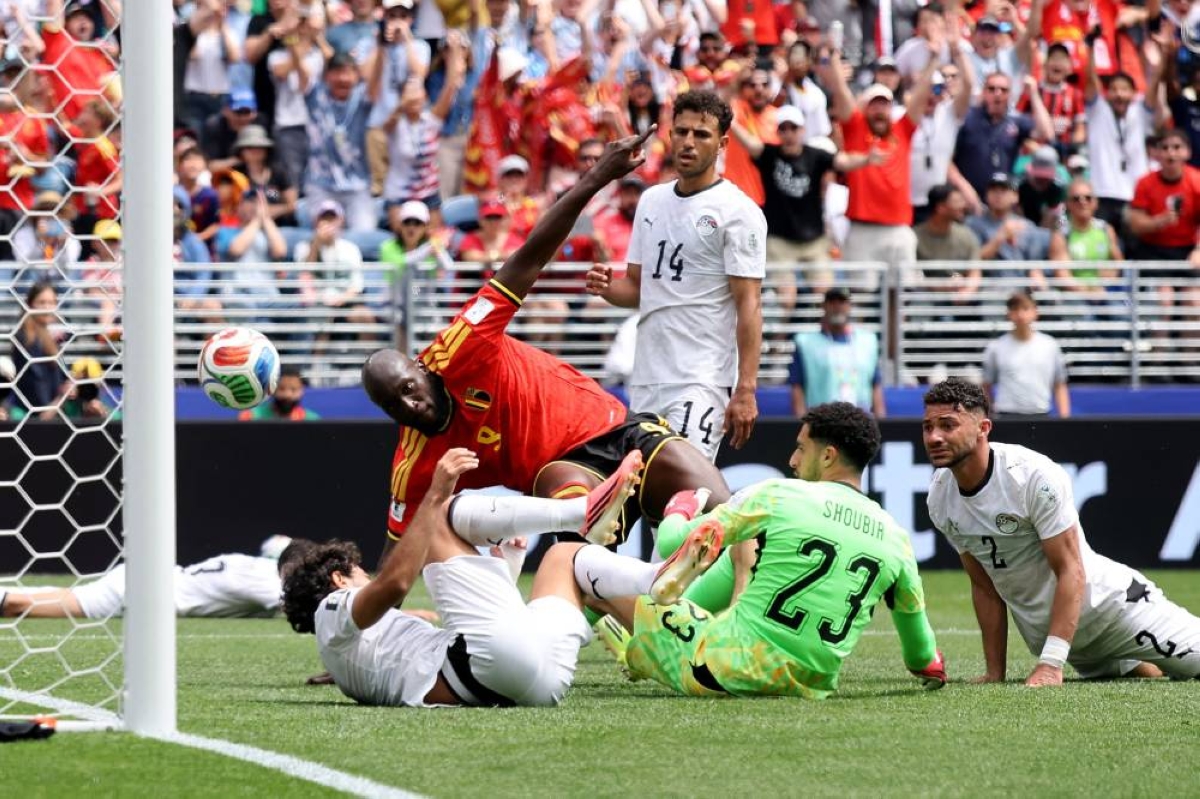
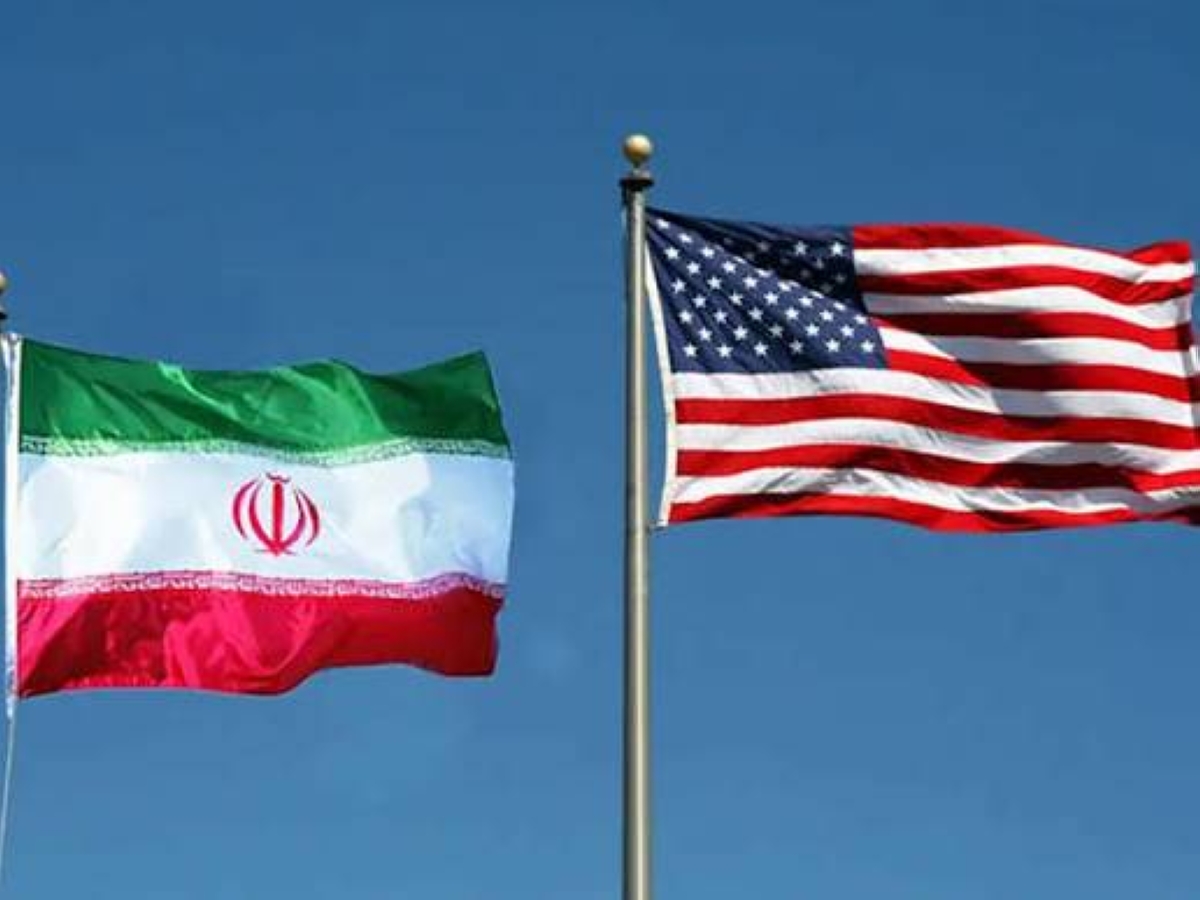
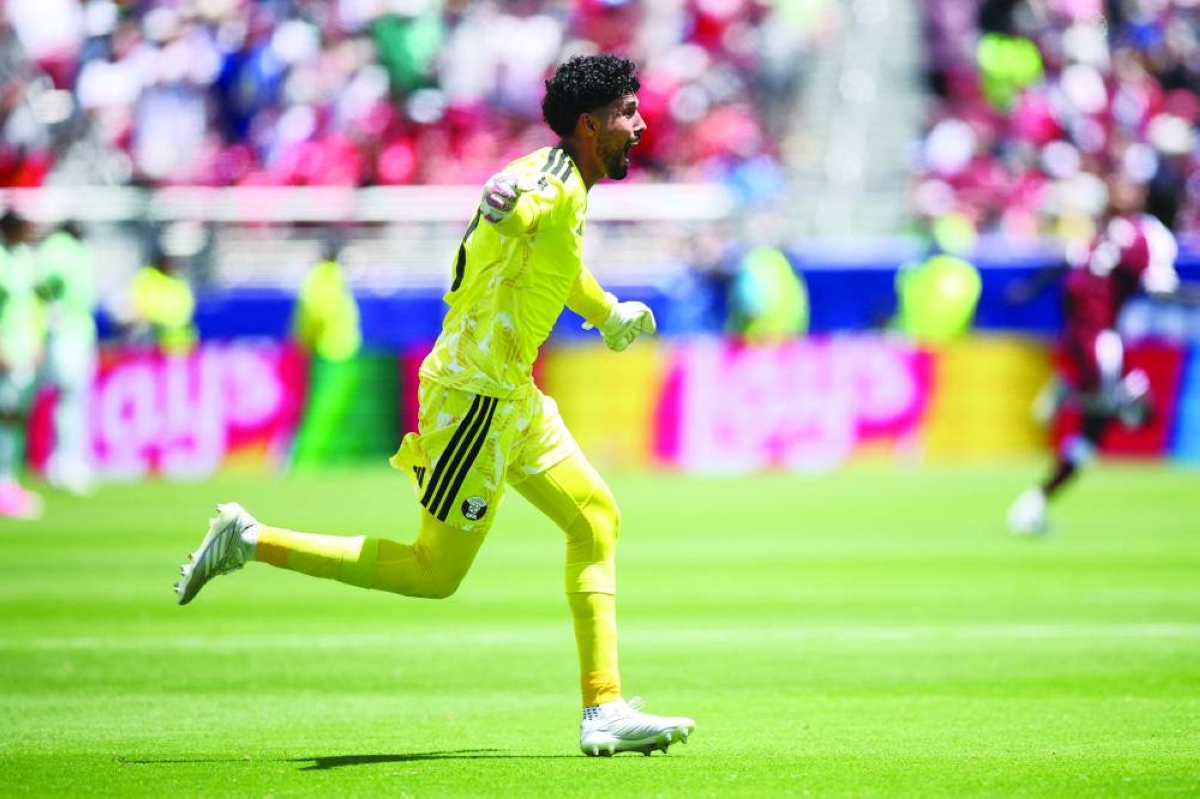
Iran’s World Cup squad landed in Mexico yesterday under the shadow of a bitter diplomatic row, after the US — in open military conflict with Tehran — refused to issue visas for some team support staff.Iran coach Amir Ghalenoei complained on arrival at Tijuana airport that “we should have been here last week because a 12-hour time difference needs two weeks of adjusting.” He added: “Usually in these tournaments, before technical matters, ethical and human considerations must be respected — which I think for us it was not the case.” The dispute erupted just days before Thursday’s kickoff of the 2026 World Cup, which is being jointly hosted by the US, Mexico and Canada.After departing from their training camp in Turkey a day earlier, the Iran team landed yesterday in the Mexican border city of Tijuana. The squad and their coaching staff left their plane amid tight security which included a contingent of Mexican national guard troops. Just a handful of fans waving Iranian flags were present at the airport to welcome them from a distance. The Iranian team will be based in Tijuana throughout the tournament, despite playing their entire group stage in the US — two games in Los Angeles and another in Seattle as they tackle New Zealand, Belgium and Egypt in Group G on June 15, 21 and 26.When they do play in the US, it will be the first World Cup to see a host nation receive the team of a country it is at war with. Ghalenoei thanked FIFA for its efforts to help secure entry, but said “we are upset about this behaviour. It has certainly never happened before.” Team captain Ehsan Hajsafi said he wanted to convey his grievance to FIFA about the delay in getting US visas. “Why so late?” he demanded. Hajsafi stressed the difficult backdrop for the team’s participation, as “in the last year, we experienced two imposed wars in our country.” Iran’s team spent nearly three weeks at the training camp in Turkey, using their time there to apply for visas to travel to Mexico, Canada and the US. On the eve of their departure for Mexico, the players finally received their US visas, Washington’s envoy to Turkey Tom Barrack said on X late Friday. But Iran’s embassy to Turkey said support staff had been denied visas — 15 administrative and management staff are concerned, an Iranian diplomat and state TV said. The embassy slammed what it called “deliberate and discriminatory treatment against Iran’s national football team” and called for FIFA “to hold the US accountable for violations of its rules.” Adding to the tensions, Iran’s ambassador to Mexico said Saturday the squad had been notified that, under their visa conditions, the team must enter and leave US soil on the same day as their matches. “We can enter in the morning and we must leave the same day,” Iran’s envoy Abolfazl Pasandideh told reporters. That appeared to contradict what the team’s spokesman Amir Mahdi Alavi told state TV earlier. 

World
Trump to ask Israel to hold back after Iranian attack

Trump to ask Israel to hold back after Iranian attack

US President Donald Trump said yesterday he will call Israeli Prime Minister Benjamin Netanyahu to urge him not to retaliate against Iranian missile strikes on Israel, news outlet Axios reported.“I am going to call Bibi right now and tell him not to retaliate,” Trump was quoted as saying by Axios journalist Barak Ravid in a phone interview, using the Israeli leader’s nickname. “Each of them had their fun. Israel had its strike and Iran had its strike. We don’t need another one,” Trump said, according to excerpts of which Ravid posted on X.Israeli military chief Lieutenant General Eyal Zamir however vowed that the military would strike Iran “with force” upon receiving orders, after the Islamic republic fired missiles at Israel. Yesterday’s missile barrage was Iran’s first against Israel since an April ceasefire took hold in the Middle East war, and Trump voiced concern it could set back negotiations.“The Iranian strikes didn’t hurt anybody. Hopefully Israel is not going to retaliate. If Bibi strikes them back it’s just gonna keep going like the last 47 years, or the last 3,000 years,” the US president said. “We are very close to a final deal with Iran. It is going to be a good deal. I don’t want it to blow up because of what is happening now,” he added.Iran’s powerful Revolutionary Guards called yesterday’s attack a “warning” after Israel struck Beirut’s southern suburbs earlier in the day, threatening wider strikes in the event of repeated aggression. An April 8 ceasefire had halted major hostilities between Iran, Israel and the United States.But efforts to turn the truce into a settlement have repeatedly stalled, and yesterday’s launches were sure to further dampen hopes for a lasting peace as the war reached its 100th day. In a separate interview with Fox News, Trump said the Iranian strikes were not going to help negotiations, which were “very close” to reaching an agreement.“We’re very close. I would say an agreement would be signed on Monday, Tuesday or Wednesday of this coming week. And now this takes place.” He urged Iran to “get back to the table and make a deal.”Trump also criticised Israel’s strikes on Beirut yesterday, saying he was “not happy about it.” The White House did not immediately respond to an AFP request for comment.Iran’s Islamic Revolutionary Guard Corps (IRGC) says it launched ballistic missiles at Ramat David Air Base, about 20km from the city of Haifa in northern Israel. It said the Israeli air base was the “source of aggressions” launched against southern Lebanon and the southern suburbs of Beirut.Iran has closed the western part of the country’s airspace until further notice, the semi-official news agency Tasnim has reported. To Page 11 Iraq also has temporarily closed its airspace and suspended air navigation, civil aviation officials are saying. Iran also suspended flights at Imam Khomeini Airport until further notice.The Syrian Civil Aviation Authority announced a temporary closure of the southern air corridors and the suspension of operations at Damascus International Airport for 12 hours as well. The IRGC says it accepted a ceasefire with the US on condition that it was “a ceasefire on all fronts”.But it said the US and Israel have failed to meet their commitment by launching attacks in Lebanon and “violating the ceasefire by repeatedly attacking Iranian shores and vessels in the Strait of Hormuz, the Sea of Oman and the Indian Ocean”. “Tonight’s operation was a warning,” the IRGC said in its statement, adding that, “if aggressions are repeated, the responses will be broader”.The Iranian foreign minister said he had spoken with officials from the UK, Turkiye and Pakistan “following Iran’s response to the repeated violations of the ceasefire in Lebanon” by Israel.Araghchi posted on Telegram that he spoke with British Foreign Secretary Yvette Cooper and Turkish Foreign Minister Hakan Fidan.He also said he spoke with Pakistan’s army chief, Field Marshal Asim Munir, who has played a key role in US-Iran mediation efforts. 

World
Missing Malaysian hiker’s rescue hailed a ‘miracle’

Missing Malaysian hiker’s rescue hailed a ‘miracle’

Rescuers assisting Jaslinda Saludin (second left) after she was found in a forested area in central Malaysia's Perak state. (AFP) The rescue of a Malaysian hiker found alive after two weeks missing in the wilderness was hailed as “a miracle” by a friend yesterday, as authorities ended a massive search that gripped the nation. Indigenous Malaysians found a battered Jaslinda Saludin late Saturday in a forested area near the small town of Tapah, in central Malaysia’s Perak state, some way from where she was first reported missing, local papers said. Jaslinda, 49, described as an experienced hiker, was last seen two weeks ago while undertaking the Trans Spencer Chapman trek, an arduous 34-kilometre (21-mile) slog along the treacherous Titiwangsa mountain range. She departed alone from a rest camp for an ascent of Gunung Batu Putih, also known as White Rock Mountain, before being reported missing. Her disappearance made front-page news in the Southeast Asian country and triggered a major search involving helicopters, local indigenous Malaysian communities, and a crack team from Malaysia’s Fire and RescueDepartment. She was discovered on Saturday afternoon by local fishermen, saying she survived by drinking from rivers and eating berries and other forest plants.“When we heard that she had been found safe, it felt like our prayers had been answered. It is truly a miracle,” said her friend, Hishammuddin Ahmad.After her rescue, Jaslinda was taken to hospital. 

World
Trump ‘won’t unfreeze assets before deal’

Trump ‘won’t unfreeze assets before deal’

 US President Donald Trump said in an interview broadcast yesterday that he will not unfreeze Iranian assets before reaching an agreement with Tehran.Asked whether he would be willing, as part of a potential agreement, to unfreeze Iranian assets or lift certain sanctions against Iran, Trump replied: “No.” “(That) comes after. If they behave, if they do a good job, we start talking,” he said in the interview with NBC.Iran has demanded that billions in frozen assets be unblocked. According to a source close to the matter, the US Treasury is considering the possibility that Iran’s assets could be tapped to compensate Gulf states for damages caused by Iranian strikes. Iran’s Deputy Foreign Minister Kazem Gharibabadi said yesterday that regional governments were “not in a position to demand reparations”, responding to reports the US could use Iranian assets to compensate regional allies for war-related damages. Gharibabadi added in a post on X that Iran’s assets were “neither war spoils for Washington nor a payment fund for its allies”. 

World
US lobbying to force Iran to give details on nuclear sites

US lobbying to force Iran to give details on nuclear sites

FILE PHOTO: The IAEA logo is displayed in front of the agency’s headquarters in Vienna, Austria, June 5, 2026. REUTERS/Elisabeth Mandl/File Photo The US ‌is lobbying other countries on the UN nuclear watchdog’s Board of ‌Governors to back a draft resolution ‌demanding that Iran tell the agency ‌what happened to its bombed nuclear sites and the enriched uranium stored there. The US-drafted text, seen by Reuters yesterday and circulated ahead of this week’s quarterly meeting of the 35-nation board, risks complicating talks between Washington and Tehran. Iran has typically retaliated against resolutions against it at the International Atomic Energy Agency (IAEA), escalating its nuclear activities or scaling back co-operation. Previous IAEA board resolutions on Iran, submitted by the US, Britain, France and Germany, have passed by wide margins. One adopted in November demanded that Iran inform the agency “without delay” about the status of its enriched uranium stock and damaged sites — something that has yet to happen. The US ‌draft says Iran must “provide the Agency with precise information on nuclear material accountancy and safeguarded nuclear facilities in Iran” and grant “all access it requires to verify this information.” Both steps are described as “essential and urgent” and must be taken “without delay”. The text stops short of referring Iran to the UN Security Council, a move some diplomats had said was under consideration.That would have followed up on a June 12, 2025 resolutiondeclaring Iran in breach of its non-proliferation obligations. Israel began bombing Iran’s nuclear sites a day later. While circulating a draft does not guarantee it will be formally submitted to ‌the board, which would then ‌vote on it, it signals an intention to do so. Current US-Iran talks aim to extend their ceasefire and pave the way for broader negotiations, including on Iran’s nuclear programme. US President Donald Trump has said his goal is to ensure Iran cannot develop nuclear weapons, something Iran denies seeking. While June’s strikes destroyed or badly damaged uranium-enrichment facilities, much of Iran’s enriched uranium is believed to have survived. Trump has said he wants Iran’s highly enriched uranium removed, particularly what remains of the 440.9 kg (972 lbs) enriched to up to 60% purity — a short step from roughly 90% weapons grade — that the IAEA estimates Iran had when Israel first attacked. That amount would be enough, if further enriched, for 10 nuclear weapons, according to an IAEA yardstick. Russia’s ambassador to the IAEA told reporters on Friday a resolution would only antagonise Iran.“It was exactly the US who undermined this co-operation,” he said, referring to the fact the IAEA had access to Iran’s ‌sites until the bombing started.Russia and China have opposed all recent resolutions against Iran.