Fast-tracked power plants in US fuel AI boom, with little public scrutiny
-
admin
- June 16, 2026
- 4
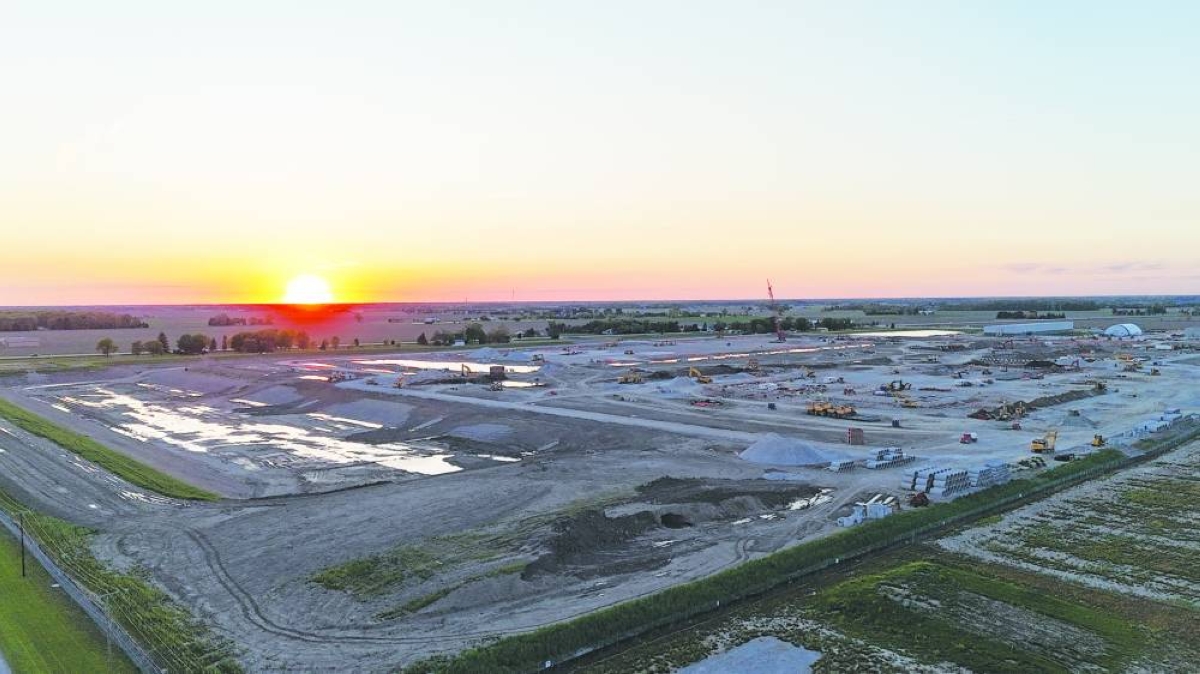
From the front window of her house, Breanne Kidd once watched the sun rise over farmland as she sipped coffee before toddlers arrived at her home daycare. Over the past year, that view has been replaced by cranes, steel and dust as work crews build Meta’s 800-acre Bowling Green data centre. More alarming was the appearance of something Kidd hadn’t been told about: construction of a large natural gas power plant meant to serve the project. “It’s not like we’re two streets away. We’re literally across the street,” Kidd said, pointing toward the Apollo Generating Station site, located in Wood County, about 25 miles (40.2km) south of Toledo. “I’m living next to a threat.” The plant is one of dozens of large, off-grid power projects being approved rapidly and often under a cover of secrecy across the United States to supply the tech industry’s booming demand for powering data centres, according to a Reuters review of regulatory filings and interviews with public officials, residents, researchers and company executives. These plants, built to serve a single data centre, are moving ahead at light speed - sometimes in just weeks or months - without the years of permitting, environmental studies and public hearings typically required for such plants. Developers argue such off-grid plants for private customers are exempt from many of these rules. That’s left residents with little notice about plants affecting their air quality and the climate. Further reducing transparency, some developers have used non-disclosure agreements with local governments or operated through shell companies, while local officials have redacted public documents or fast-tracked permitting processes that would have required public hearings, the reporting shows. The AI industry’s off-the-grid natural-gas generation “is emerging as one of the largest under-examined air-quality risks in the country,” said Michael Cork, a postdoctoral researcher at Harvard University. The Apollo facility, which would generate enough power for 100,000 homes, was approved by the Ohio Power Siting Board on February 3 - less than three months after plans were submitted. The state’s draft air permit wasn’t publicly available until March, after construction started, records show. While the plant will serve only Meta, the paperwork had listed the facility’s client as a subsidiary, Liames LLC. Data provided to Reuters by research firm Cleanview shows there are at least 57 off-grid US power plants proposed or under construction to serve individual data centres in the United States. Their capacity totals 73,000 megawatts, enough for tens of millions of homes. Reuters identified more than a dozen such projects that won approval in under a year, with little or no notice to residents. Two of these plants are already operating, including SpaceX’s xAI facility outside Memphis and another in Ashburn, Virginia serving Vantage Data Centers. The approval speed and scale of such projects, along with the methods being used to fast-track them, have not previously been reported. Most of the facilities are fueled by natural gas, which emits nitrogen oxides and fine-particulate pollution linked to respiratory illness when burned, along with climate-damaging greenhouse gases. Supporters say such projects are essential for rapid artificial-intelligence development, serving tech companies without hiking consumer electricity prices. The Trump Administration, citing China as a competitive rival, wants accelerated permitting for AI-sector infrastructure. Both the US Environmental Protection Agency and states including Ohio, West Virginia, Texas and Utah have proposed or adopted policies to speed approval, according to a Reuters analysis of recent legislation and regulatory changes. The EPA told Reuters it is taking a deliberate, governance-driven approach as it works to make America “the AI Capital of the World,” noting that state and local governments often control permitting. The Data Center Coalition, which represents companies including Meta, Amazon, and Microsoft , said data-centre developers were “committed to being responsible neighbours” while accessing critical power supplies. TOO FAST TO STOPOhio made AI power-project approvals faster with a law last year allowing certain plants to win approval in as little as 45 days without public hearings - helping explain Apollo’s rapid approval. State officials promote data-centre development as an economic opportunity, especially in northwest Ohio, where land, water access and proximity to natural-gas pipelines have drawn tech-company interest. Gary Thompson, executive vice president at northwest Ohio’s Regional Growth Partnership, said officials hope to attract 10 hyperscale data centres to the area. “These companies need certainty, and they need power,” he said. Some residents want moderation. “One gas plant and one data centre may be manageable, but four or more becomes a regional public health event,” said Perrysburg resident Lauren Berlekamp. The Apollo project is being built by Will Power LLC, a subsidiary of pipeline company Williams Cos. The company is developing four similar projects in the state that can be built in 18 to 24 months, Williams spokesperson Kyle Tarpley said, adding the facilities comply with state regulations. He noted the Ohio Environmental Protection Agency held a public hearing on Apollo in April. Meta, Apollo’s financier, said its partners must comply with air-quality regulations. SECRECY AND SCRUTINYOhio lawmakers also recently passed provisions shielding big projects like data centres from public records laws. Officials releasing such information could be criminally charged, according to the measure, which was inserted into an unrelated college athletics bill. The confidentiality provision was added by Republican state Senator Brian Chavez, who did not respond to requests for comment. His top two donors in 2025 were a construction union that supports data centre development and utility NiSource , both of whom contributed $10,000, according to a review of election finance documents. Supporters say such measures protect sensitive business information. Critics say they reduce transparency and limit community input. “It undermines our fundamental concepts of democracy: transparency and accountability,” said Andrew Kear, a Bowling Green State University political scientist. Christine Coultrip, a retired police officer in Perrysburg Township, Ohio, agreed. She said her neighbours have been approached to sell property for a possible data centre, but that local officials won’t provide her any details. “I’m very disturbed that legislators can be charged if they talk about data center economics with their constituents,” she said. Secrecy has drawn backlash in other states. Microsoft said in March it would stop using non-disclosure agreements nationwide after criticism over projects in Wisconsin. Meta said confidentiality agreements are standard in site selection processes and do not prevent partners from engaging with the public. Still, details of the Bowling Green project were obscured for nearly two years under the name “Project Accordion,” filed through Liames LLC. Meta did not comment on why it used that name for the Bowling Green project. Questions about permitting and oversight have also surfaced in Tennessee and Mississippi, where Elon Musk’s xAI has operated gas turbines without permits to power its Colossus data centers, Reuters has reported. The company has said the units are exempt because they are temporary and not connected to the grid. In West Virginia, meanwhile, lawmakers passed legislation last year exempting certain data centre microgrids from local zoning laws, limiting avenues for community opposition. COMMUNITY CONCERNSBrian Rothenberg, a township trustee near Columbus, Ohio, told Reuters his community recently learned of plans for a gas fuel-cell power plant, which would be the biggest of its kind in the US, to serve an Amazon Web Services data center. He said township officials are seeking details about the plant to ensure a nearby elementary school is safe in the case of an emergency, but that utility AEP and state regulators have not provided them. “My biggest concern is health and security,” Rothenberg said. “I don’t want my constituents to be lab rats if something goes wrong.” AEP told Reuters it has provided emergency information about the project directly to local fire departments and first responders.