Entertainment
Kyle Busch’s Car Unloaded at North Carolina Racetrack After Shocking Death, on Video

Kyle Busch’s Car Unloaded at North Carolina Racetrack After Shocking Death, on Video

Kyle Busch Car Unloaded in Silent Garage ... Days After Shocking Death Published May 23, 2026 3:24 PM PDT Play video content Kyle Busch's team has to push on without him ... but, there's certainly

Entertainment
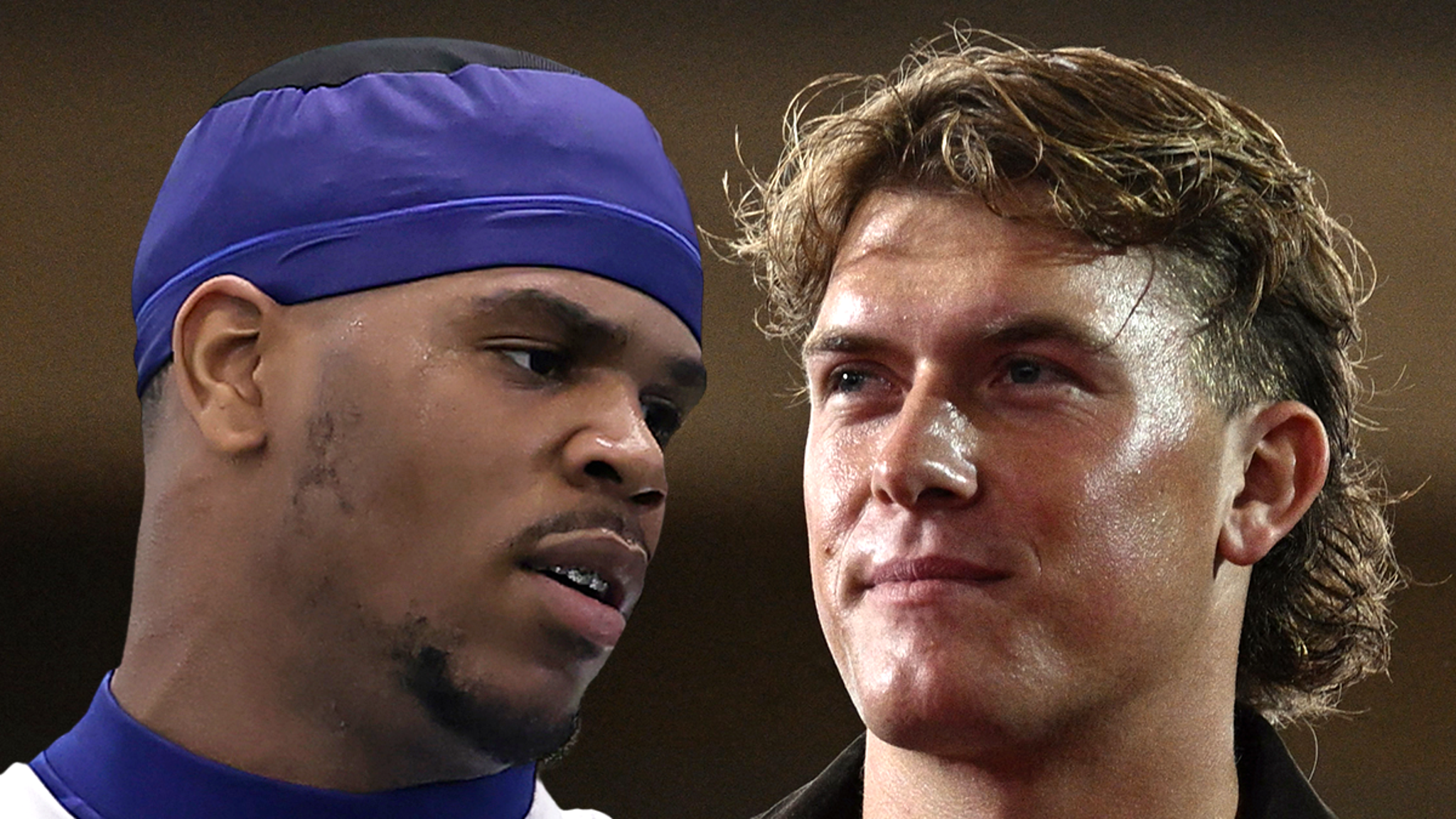
Giants Linebacker Abdul Carter Calls Out Jaxson Dart For Trump Support

Giants Linebacker Abdul Carter Calls Out Jaxson Dart For Trump Support

3:13 PM PT -- Abdul Carter says he and Jaxson Dart talked on the phone, man to man ... and, they're all good. Me & JD6 are good! We spoke earlier as Men. Yall can

Opinion
How America’s folly and Khomeini’s hubris set the Middle East on fire

How America’s folly and Khomeini’s hubris set the Middle East on fire

An Iranian man walks past an image of former and the current Iranian supreme leaders, Ayatollah Ruhollah Khomeini (L), Ali Khamenei, and his son, the current leader Mojtaba Khamenei (R), in Tehran yesterday. (AFP) The Middle East does not convulse in a vacuum. It’s wars, its proxy armies, its assassinations, its coup attempts, its sectarian hatreds, none arose spontaneously from desert sand. They descend, with the terrible logic of cause and consequence, from two foundational acts: a decision made in Washington on a May afternoon in 1948, and a declaration thundered from Tehran in February 1979. Together, they form the twin original sins of the modern Middle East. On May 12, 1948, the Oval Office held a clash of historic proportions. President Harry Truman had assembled his senior advisers to deliberate on the imminent declaration of a Jewish state. General of the Armies George C Marshall, whom Truman himself called “the greatest living American,” the architect of Europe’s postwar resurrection, rose to object. Marshall believed that recognising Israel the moment it was declared would ignite a war across the entire Middle East. Within twenty-four hours of independence, it did. His memo that evening left no ambiguity: “I said bluntly that if the President were to follow Mr Clifford’s advice, and if I were to vote in the next election, I would vote against the President.” For a man who, as a matter of principle, had never cast a ballot in his life, it was the gravest possible rebuke. Marshall’s objections were both strategic and moral. Recognition would alienate the Arab world, threaten American access to oil, and hand Moscow a pretext to penetrate a region that Washington was trying to seal. His Near East experts agreed almost without exception They were right. They have been proved right every decade since. And yet Truman overruled his greatest adviser, not solely for humanitarian reasons, but because an old friend walked into the Oval Office. Harry Truman and Eddie Jacobson had opened a haberdashery together in Kansas City after the First World War. It failed. The friendship did not. By 1948, Jacobson, the eighth-grade-educated son of Lithuanian Jewish immigrants, was the only private Jewish citizen an exasperated president would still receive. On March 13, he slipped past the gatekeepers and made a single, devastating appeal: “Your hero is Andrew Jackson. I have a hero too, Chaim Weizmann. He’s an old man, very sick, and you’re putting him off. This isn’t like you, Harry.” Truman agreed to the meeting. Eleven minutes after Israel declared independence on May 14, 1948, the United States became the first nation on earth to recognise it. America’s UN ambassador walked out of the building rather than witness the announcement. What those eleven minutes also produced, unremarked upon in Washington, was the dispossession of 700,000 Palestinian Arabs who had lived on that land for centuries. They were not in the Oval Office. They were not in Eddie Jacobson’s prayer. In the calculus of 1948, they were invisible: a people erased by the momentum of Zionist diplomacy and the moral arithmetic of post-Holocaust guilt. The Nakba, the Catastrophe, planted a grievance so deep it has never healed, and never will until it is honestly named. Thirty-one years later, a different hubris took hold. On February 11, 1979, as the Shah fled and Ayatollah Khomeini descended from the skies like a figure from scripture, a new ideology seized state power. It was not, its architect immediately declared, a domestic affair. In a 1980 speech, Khomeini was unambiguous: “We should try hard to export our revolution to the world.” The target map was drawn in sectarian ink. Iraq, where Shia constituted 65% of the population but lived under a Sunni Ba’athist boot. Bahrain, 70% Shia, is ruled by a Sunni monarchy. Kuwait, Saudi Arabia’s Eastern Province, and Lebanon, all home to Shia communities that Khomeini considered his constituency, not sovereign citizens of independent nations. The theory was seductive in its simplicity: demographics would do the work of ideology. What Khomeini fatally miscalculated was that Arab Shia were not Iranians. Their grievances were real; their willingness to serve as instruments of Persian theocratic ambition was another matter. The results were a decade of blood: a coup attempt in Bahrain in 1981, bombings in Kuwait in 1983, assassinations across the Gulf, and the birth of Hezbollah in Lebanon under Iranian Revolutionary Guard tutelage. Above all, there was the war: Saddam Hussein, watching Khomeini’s revolutionary export doctrine with the eye of a man who saw both threat and opportunity, invaded Iran in September 1980. Eight years. One million dead. To understand Khomeini’s ferocity, one must travel back to August 1953. Mohammad Mossadegh, Iran’s democratically elected prime minister, nationalised the Anglo-Iranian Oil Company, ending the arrangement by which British shareholders extracted Iranian wealth while Iranians watched. The CIA and MI6 organised Operation Ajax, bribed military officers, hired street thugs, and on August 19, 1953, arrested Mossadegh in his pajamas and restored the Shah to his throne. Washington then funded the Shah’s secret police, SAVAK, for 26 years. David Nalle, who served as Director of the Bi-National Center in Tehran, later said it plainly: “The removal of Mossadegh was, in my estimation, a tragic mistake. We caused, in effect, the Khomeini revolution by doing that.” The three decisions form a chain. Washington’s careless erasure of Palestinian rights in 1948. It’s the criminal overthrow of Iranian democracy in 1953. Tehran’s delusional attempt to ignite a regional revolution in 1979. Each was made by men who believed they were acting rationally. Each sowed a catastrophe that outlasted them. The Middle East of today, its rubble Gaza, its hollowed Lebanon, its proxy-war Yemen, is the direct inheritance of these original sins. The wars are not ancient. The hatreds were manufactured in specific rooms by specific men on specific days. History does not forgive what it does not forget. And the Middle East forgets nothing. The writer is a prominent news anchor, programme presenter and media instructor  

Opinion
Trump tightens his grip, but the reckoning comes after 2028

Trump tightens his grip, but the reckoning comes after 2028

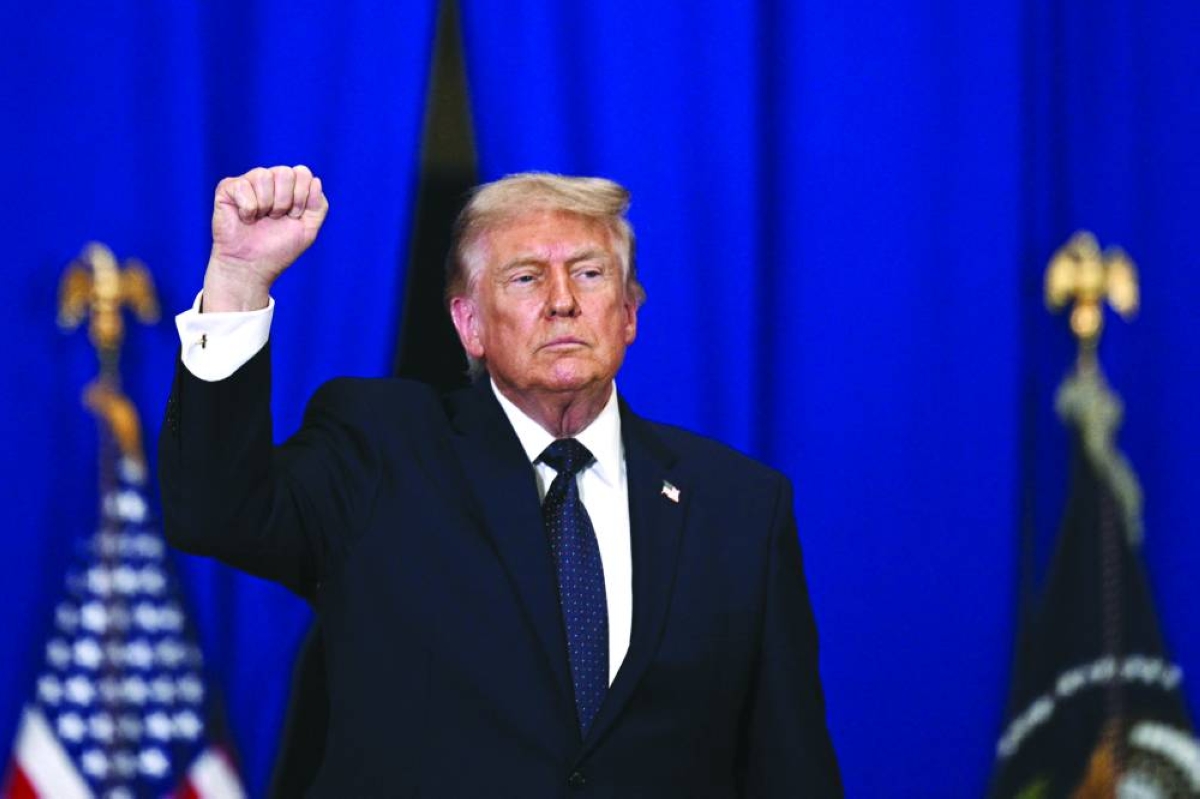
US President Donald Trump raises a fist as he departs after delivering a speech about the economy at Rockland Community College Fieldhouse in Suffern, New York, on Friday. (AFP) Over the last few weeks, US President Donald Trump has been on a revenge tour of sorts as he has backed candidates who have mounted successful primary campaigns against Republican candidates he perceives to have crossed him. On May 5, five of the seven state senators in Indiana who had rejected a redistricting plan were defeated by primary challengers supported by the president. Two weeks later, a Trump-endorsed challenger won the Louisiana primary against Bill Cassidy, one of the seven Republicans who had voted to convict Trump on impeachment charges in 2021. Also on May 19, Kentucky Representative Thomas Massie, a vocal critic of the president’s handling of the Epstein files, was defeated in his primary election by a Trump-picked challenger with little political experience. This pattern of results demonstrates Trump’s continuing grip over the Republican Party, eleven years after he declared his ambition to run for president as a political outsider and proceeded to mount a hostile takeover of the party from its establishment figures. The subsequent four electoral cycles – the 2020 and 2024 presidential elections and the 2018 and 2022 primaries – saw a gradual phasing out of the older guard of Republican politicians. The defeat of the few remaining incumbents who have crossed with Trump is a challenge for the party as it moves into a post-Trump era that will begin to take shape after the midterms. Six and a half months remain in the 119th Congress, which sits until January 2, 2027. Republicans hold majorities of 53-47 in the Senate and 218-212 in the House of Representatives with five seats vacant in the latter. Should the current math hold until the midterm elections on November 3, the Democrats would need a four-seat swing to regain control of each chamber. In the midterm elections at the comparable point of Trump’s first presidency, in 2018, the Democrats made a net gain of 40 seats to win back the House but Republicans were able to increase their majority in the Senate with two additional gains. Years of redistricting have generated an era of comparatively small Congressional majorities in which mere handfuls of races are genuinely competitive and control hinges on a small number of seats changing hands. As recently as 2008, the election which swept Barack Obama into the White House gave Democrats sweeping majorities in both chambers which would be unthinkable less than two decades later. Consequently, the loss of just a few votes in the House or Senate, should members vote against their own party or choose to abstain, could make a difference in determining the outcome of votes between now and November. Already Massie has suggested that he will continue to push back against White House policies in the months he has left in the House. In the Senate, Cassidy and John Cornyn, the four-term incumbent from Texas who faces likely defeat in his primary on May 26 after Trump endorsed his opponent, Ken Paxton, are likely to become more independent in their voting. The pair could be joined by North Carolina Senator Thom Tillis and former Majority Leader Mitch McConnell of Kentucky, who have both become more outspoken and critical of the Trump administration since they announced their impending retirement from active politics. Sharp criticism on May 21 from Tillis and McConnell over Trump’s planned ‘anti-weaponisation’ fund gave Republican leaders in the Senate a sign of the difficulty they may face in maintaining discipline in the months ahead. Their unease, which is reportedly shared by significant numbers of their colleagues who did not go public, caused Senate Majority Leader John Thune to delay votes in the Senate rather than risk defeat. In the House, too, Republican leadership cancelled a scheduled vote on a War Powers Resolution to end the war in Iran after they assessed they did not have enough support to defeat it. Earlier in the week, four Republican Senators, including Cassidy on the day of his primary defeat, had joined Democrats to vote in favor of the war powers resolution against Trump’s wishes. For years, the threat of being ‘primaried’, of facing a challenge from a Trump-backed and funded candidate, was enough to instill an internal discipline in the Republican Party, and the events of recent weeks have shown that the threat to incumbents remains potent. As he prepares to leave office, if not necessarily the political stage he has so dominated for a decade, Trump continues to remake the party but this may come at a longer-term cost. This may be the last election in which Trump remains the centre of attention as by 2028 the focus will be on his successor as Republican nominee. Although he has defied the laws of political gravity that would have felled almost any other figure in public life, time horizons will inexorably begin to shift to beyond 2028 and the transition to a new generation of politicians. The challenge for Republicans is that the defeat of more moderate incumbents by inexperienced and, in some cases, significantly more right-wing challengers in the primaries may weaken the party’s chances in the Congressional elections (of course, the same goes for Democrats and the tussle between centrists and progressives in their primary season). Cornyn had been widely admired and respected by his colleagues in the Senate over his 24 years in the chamber and it is only 18 months since he ran Thune a close second in the bid to succeed McConnell as the party’s leader. His seat in Texas had not been considered one of the competitive races that could see a Democrat flip, but Paxton is rather more controversial with a checkered history and he may find it harder than Cornyn to fight off a significant challenge from James Talarico, a moderate Democrat, in November. The fault-lines between a party base still loyal to Trump and a wider electorate that has other priorities end up defining the midterms and setting the parameters for Trump’s final two years in office. The writer is a leading scholar specialising in Gulf politics and international political economy, and a fellow at the Baker Institute and co-director of the Middle East Energy Roundtable.   

Opinion
India’s job engine strains as Iran war hits remittances, trade

India’s job engine strains as Iran war hits remittances, trade

The war in the Middle East is squeezing two pillars of Indian employment, forcing Gulf-based workers home and crushing demand for the country’s manufactured exports, from leather goods to glassware. For decades, work in the Middle East and global demand for labour-intensive ‌manufacturing in sectors such as footwear and garments gave a generation of Indians stable, and in some cases lucrative, incomes. Now, the foreign conflict ​has dealt a double blow to the economy, with ‌returning migrant workers stuck in India and unable to find similar pay in their home towns, heightening the risk of social unrest ‌as unemployment grows. Until January, Mohammad Qureshi worked at a jewellery shop in Saudi ‌Arabia, earning about 30,000 rupees ($311) a month, saving enough to build a ‌small home and help pay for his sister’s wedding. Now, the 32-year-old earns barely a third of that working at his cousins’ tea stall in the Indian city of Kanpur, after the Iran war disrupted his plans to return to the Middle East. “Life in Saudi was easy and the money was good,” Qureshi said. “Life is difficult here. I pray the war ends soon so we can go back.” India’s economy is still growing at nearly 7% and urban unemployment stands at 6.6%, but economists and recruiters warn of weak hiring, slow wage growth and worsening job quality for the 6-7mn young Indians entering the workforce each year. If unattended, the strain could hurt consumption and fuel unrest like the protests in north India last month, they ​warn. The pressures are visible in industrial hubs such as Kanpur in Uttar Pradesh, India’s most populous state. At Kings International, a leather factory supplying saddlery overseas and sports goods to Decathlon, owner Taj Alam said the Middle East conflict has driven up fuel, gas, logistics and shipping costs, squeezing profits just as demand weakens. Alam said his factory, which can process ‌200 hides a day, and once employed over 500 workers, is now running at about ​half capacity and half its workforce, leaving little incentive to expand or hire. “The outlook will remain bleak until the Strait of Hormuz stabilises,” ​he said. “Why invest when the future looks uncertain?” Kanpur accounts for roughly a quarter of India’s $6bn annual leather exports and directly or indirectly employs about 500,000 people, according to Mukhtarul Amin, vice-chairman of the Council for Leather Exports. He said businesses in the sector remain cautious about hiring and investment, even as they try to retain workers and avoid layoffs. Out of nearly 19mn Indians working overseas, about 9mn are in the Gulf. World Bank estimates show economic growth in the Gulf region slowing to 1.3% in 2026 from 4.4% in 2025, putting jobs at risk. Recruiters say hiring has become more uncertain since the US-Israeli strikes on Iran, with employers delaying recruitment and families hesitant to pay migration costs. At Hayat Placement Services in Kanpur, recruiter Gautam Bhatnagar said opportunities had dried up at home and abroad. “Earlier, we used to place 5-10 candidates every month,” he said. “Now we are lucky if we can place even one or two.” There are no official figures on how many Indian workers have left the Gulf. However, a foreign ministry official ‌told reporters last month that about 1.1mn Indians including passengers, workers ‌and other travellers, had returned from the region between the start of hostilities on February 28 and the end of April. Uncertainty is also rippling through southern Kerala, where Gulf remittances have long shaped the local economy. Thomas Cherian, 50, spent 18 years working for a construction firm in Saudi Arabia before returning home on leave in December. He had been due to return in March, but the company halted its project and laid off about 600 workers, he said. If he cannot return by end-June, his visa will lapse. “There has been no mass return so far,” said Ajith Kolassery, chief executive of NORKA Roots, an agency of the state’s Non-Resident Keralites Affairs Department. “But if the conflict continues, financial stress in Gulf economies could lead to large-scale repatriation, adding pressure to Kerala’s already strained job market.” Remittances from overseas Indians stood at $102.5bn in April-December 2025, up from $92.4bn a year earlier. Data for January-March is yet to be ​released. For Prime Minister Narendra Modi’s government, the risks extend beyond the economy.India has nearly 400mn people aged 15-29, and generating non-farm jobs for them remains one of its biggest challenges despite rapid growth. 

Sports
Pedro says Qatar will target knockout stage as World Cup build-up gathers steam

Pedro says Qatar will target knockout stage as World Cup build-up gathers steam

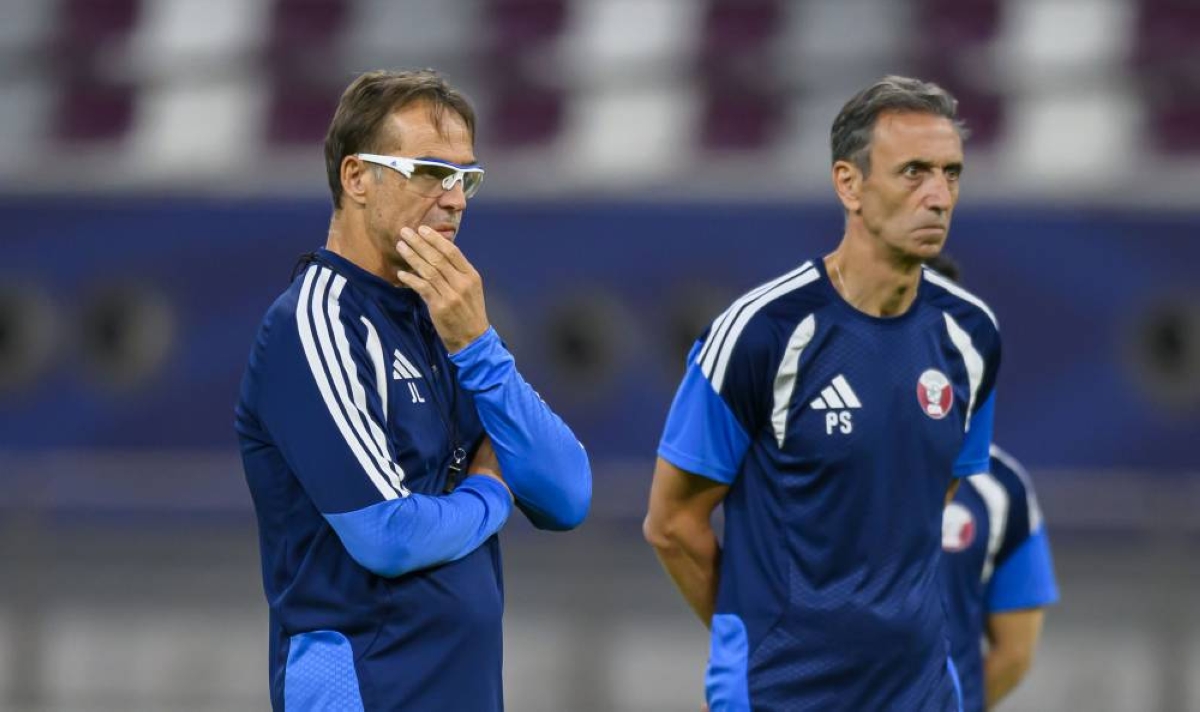
Experienced defender Pedro Miguel on Sunday said Qatar will aim to reach the second round when they arrive in the US for their opening match at the 2026 FIFA World Cup. Two-time Asian champions, Qatar will land in the United States after playing an international friendly against Ireland in Dublin on May 28. Pedro, who plays for Al Sadd in the Qatar Stars League (QSL), was a member of the Qatar side that won the 2019 AFC Asian Cup. The 35-year-old was also in the Qatar squad that defended their Asian Cup title on home soil in Feb 2024.“We learned a lot from our performance at the 2022 World Cup,” Pedro said yesterday while answering a question at the media day activities at the iconic Khalifa International Stadium. “The last four years went very fast. I feel now we are ready for this World Cup,” Pedro said. “We have more experience as a team. We have many players who can make a difference. This is very important. These players are coming with a lot of energy. We are looking forward to the World Cup. Our target is to reach the second round,” he added. Qatar, coached by Julen Lopetegui, will face Switzerland on June 13 and Canada on June 19. The third match will be against Bosnia and Herzegovina on June 24.The 35-member Qatar squad includes Akram Afif, a two-time Asian Player of the Year, and long-serving forward Hasan al-Haydos. Qatar’s strike force also includes forward Al-Moez Ali. Goalkeeper Meshal Barsham is also key to Qatar’s possible shot at the second round. At the FIFA World Cup on home soil in 2022, Qatar lost 2-0 to Ecuador followed by a 3-1 defeat against Senegal. In their last group stage match, the Netherlands beat Qatar 2-0. “There was a lot of pressure in 2022. There was immense pressure to do well in front of our fans. We didn’t play the way our fans expected. But now we are playing another World Cup. We have another chance to show what we can do,” Pedro said before his team’s open training session on the pitch at the air conditioned Khalifa International Stadium. “Now I feel there will be less pressure than the last one because we are playing away from home. We don’t play at home this time,” Pedro said as he smiled.“Our first aim is to arrive in the best shape for the first game against Switzerland. We are working very hard. All the players are giving 100% in the training to be in the best shape in the first game,” Pedro said. “To play in the World Cup - the best tournament in the world – is something we are looking forward to. All the players are very excited to start the tournament. It’s a difficult group. We play against strong national teams. They have good players. But I feel my teammates are ready for this tournament. We will show what we can do. It won’t be like the last World Cup.”Qatar centre back Tarek Salman, 28, said on Sunday: “There’s an eagerness from our players to go out and give their best. This will be our second World Cup appearance. I can safely say our preparations are progressing really well following the end of the football season We are looking forward to playing positively against Ireland and El Salvador (on June 6 in Los Angeles). These two friendly games will give us the chance to fine-tune the technical aspects of our preparations. I say these two matches will be very important for us,” Salman said. Salman echoed Pedro’s sentiments on Sunday, saying: “Most of the players have gained significant experience since our first World Cup appearance in 2022. The experience players have now is of great importance. I think this experience will have a major impact on our performance at the World Cup.” Qatari left back Homam El-Amin said on Sunday: “Qatar has done really well since the 2022 World Cup. We played some tough qualifying matches. We acknowledge we have to face tough teams like Switzerland, Canada and Bosnia & Herzegovina. But we feel ready at this point in time.” 

Sports
All-round Archer powers Rajasthan into IPL play-offs

All-round Archer powers Rajasthan into IPL play-offs

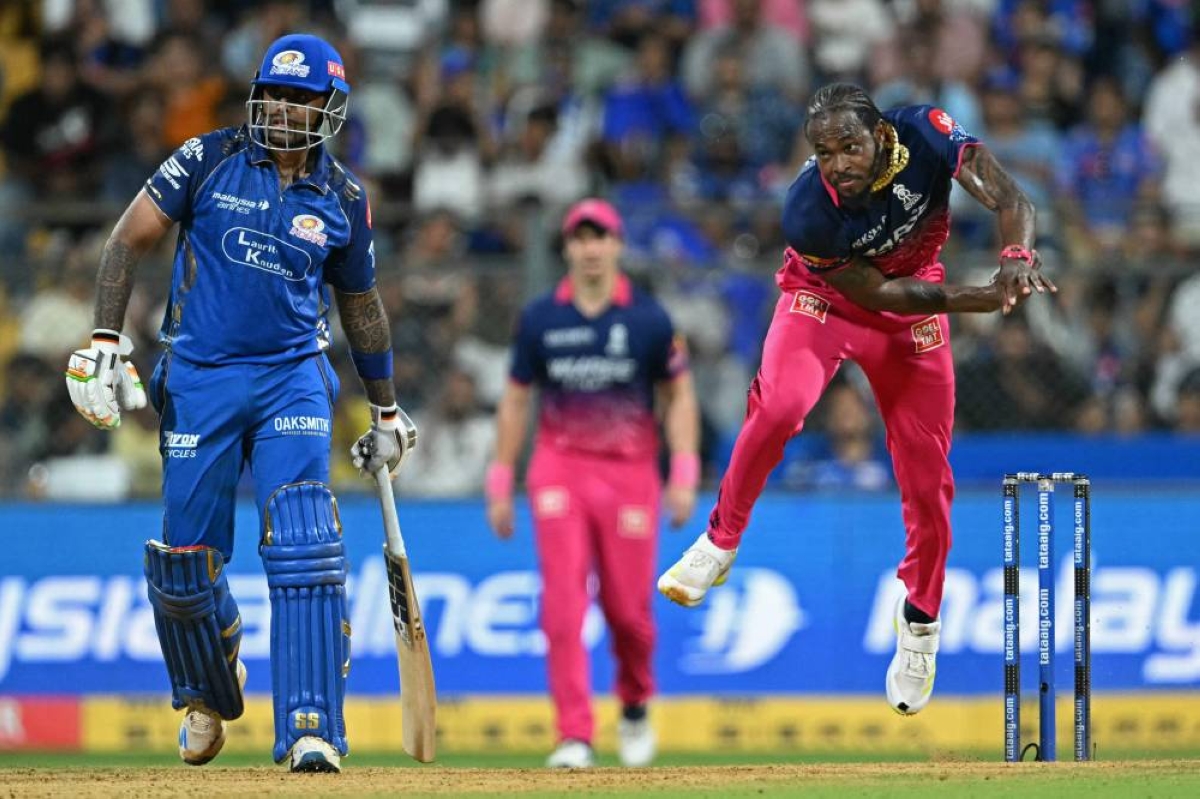
Rajasthan Royals' Jofra Archer struck a 15-ball 32 and took 3-17 against Mumbai Indians at the Wankhede Stadium in Mumbai. (AFP) England's Jofra Archer starred with bat and ball as Rajasthan Royals sealed the last play-off spot in the Indian Premier League with a 30-run win over Mumbai Indians on Sunday.Archer struck a 15-ball 32 after being promoted to number seven in the batting order to lift Rajasthan to 205-8 from a precarious 119-5 at Mumbai's Wankhede Stadium.He then turned up in his primary role as a fast bowler, taking 3-17 as Mumbai finished on 175-9 despite Suryakumar Yadav's 60. Archer has 21 wickets in 14 matches this season and is third on the list of wicket-takers below Gujarat quick Kagiso Rabada and Bengaluru seamer Bhuvneshwar Kumar, who both have 24."I don't think this is my best season," said Archer. "Every time I take the ball, I have to hit good areas. Not always rewarded, happy it came on an important day. I class myself as an all-rounder but folks call me a bowler."Former champions Rajasthan, who have been driven by strong performances including by their 15-year-old batting sensation Vaibhav Sooryavanshi, knocked Punjab Kings from fourth place to complete the play-off line-up with 16 points.Punjab ended the league stage with 14 points and needed Rajasthan to lose the game to prolong their season. The result also ended Kolkata Knight Riders' slim chances.Defending champions Royal Challengers Bengaluru, Gujarat Titans and Sunrisers Hyderabad had already booked their play-off spots. Bengaluru will face Gujarat in the first qualifier on Tuesday. The winner will reach the final to be played in Ahmedabad on May 31. Hyderabad and Rajasthan will clash in the eliminator on Wednesday, with the loser out of the tournament and the winner heading into the second qualifier.Put in to bat first, Rajasthan lost their openers Yashasvi Jaiswal, for 27, and teenage prodigy Sooryavanshi, for four, to England spinner Will Jacks and Indian seamer Deepak Chahar.Wicketkeeper-batter Dhruv Jurel hit 38 and Sri Lanka's Dasun Shanaka struck 29 off 15 balls before Rajasthan were five down in the 13th over. Archer walked in two places above his usual number nine, and counter-attacked with three sixes and a four.He departed in the 18th over but inspired Ravindra Jadeja, who hit an 11-ball 19, and Nandre Burger, who struck 10 off three balls, to help Rajasthan plunder 73 runs from the last five overs. "Last five overs are always difficult. If you can stop one, two boundaries, you can keep teams 12-15 runs short," said Mumbai captain Hardik Pandya. "Conceding 73 in the last five cost us too."An upbeat Archer then rattled Mumbai with the ball as he sent back Rohit Sharma, caught behind for a fourth-ball duck in the first over. He bowled Naman Dhir for six and fellow quick Burger dismissed Ryan Rickelton for 12 as five-time champions Mumbai soon slipped to 38-4.Suryakumar put on key stands including a sixth-wicket partnership of 48 with Pandya, who made 34, to keep Mumbai in the contest. Archer broke the stand with the wicket of Pandya and Suryakumar's exit in the 18th over cleared Rajasthan's path to the play-offs. Brief Scores Rajasthan Royals 205/8 in 20 overs [Jofra Archer 32 (15), Dhruv Jurel 38 (26), Ravindra Jadeja 19* (11); Shardul Thakur 2-41] beat Mumbai Indians 175/9 in 20 overs [Suryakumar Yadav 60, Hardik Pandya 34; Jofra Archer 3-17, Brijesh Sharma 2-26, Yash Raj Punja 2-44] by 30 runs  Related Story

Sports
Kostyuk dedicates opening Roland Garros win to Ukraine

Kostyuk dedicates opening Roland Garros win to Ukraine

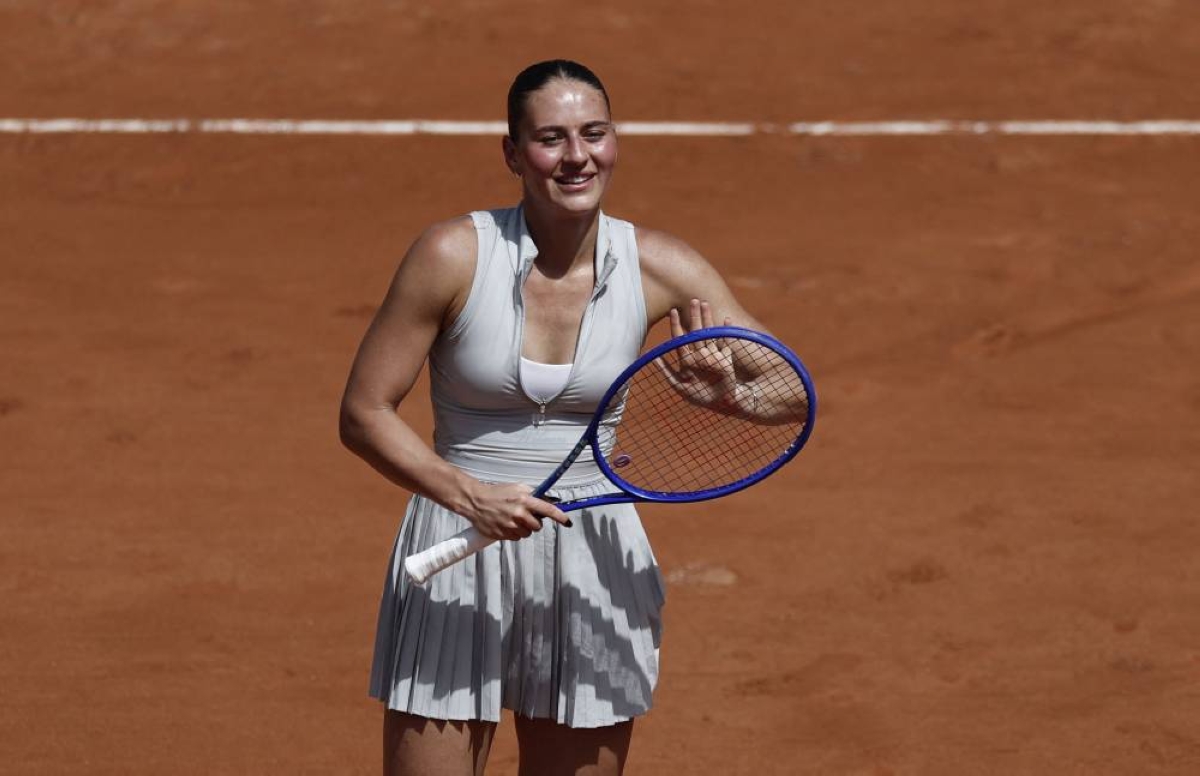
Ukraine's Marta Kostyuk beat Oksana Selekhmeteva, who was born in Russia but obtained Spanish nationality four days ago, 6-2, 6-3 to get her French Open campaign off to a strong start. (Reuters) Marta Kostyuk dedicated her first-round win on Sunday at Roland Garros to her home country of Ukraine, saying the war got "the closest it has ever been to my house" after her family home narrowly avoided being struck by a missile.The Kyiv native beat Oksana Selekhmeteva, who was born in Russia but obtained Spanish nationality four days ago, 6-2, 6-3 to get her campaign in Paris off to a strong start."I'm incredibly proud of myself today, I think it was one of the most difficult matches of my life," 15th seed Kostyuk said on court. "This morning, 100 metres from my parent's house, a missile fell. I'm obviously very happy to be in the second round. All my thoughts and all my heart was to the people of Ukraine today. My biggest example are Ukrainian people today."Kostyuk, 23, told reporters that the missile landed during a massive Russian bombardment of the Ukrainian capital earlier Sunday. "(The) majority of Kyiv suffered from something like this this morning," she said. "It was half of the night, it was happening throughout, like, four hours."(My family) feel okay. Obviously very scary, but, you know, it's not the first very difficult night, not the last, so, you know, they are adapting."Kostyuk said that the start of Russia's invasion of Ukraine in 2022 was the hardest moment because of the "unknownness" of the situation, but admitted Sunday's bombardment had shaken her."Right now, I think it was just the closest that it has ever been to my house, and this what probably makes it the most emotional," she said. "There are better days, worse days, but yeah, this one was, I would say top three worst ones, for sure."Although Kostyuk said she felt "sick" upon hearing the news, she never considered pulling out of the tournament. "Everyone is healthy, alive... So these things, you know, it's difficult, but none of my close friends or people I know is injured or dead," she said."I don't want to think what I would do if something worse happened, but I knew that this is the day to go out and play, and it didn't cross my mind today that I shouldn't go out. There were obviously times in the match when I would go in back to thinking about it, because most of the morning I felt sick just for my thought that see if it was 100 metres closer, I probably wouldn't have a mom and a sister today."Since the outbreak of the war, Kostyuk has not shaken hands with Russian players before or after her matches. The Madrid Open winner said the tour had "forgotten" about Ukraine in recent years."I live it always, and I have also adapted to the fact that the tour forgot about it," she said. "I'm still trying to do things that I can do and to what I can to influence, and I use my platform, I use my speeches or, you know, whenever I have a moment to remind about it, to remind of the horror of, you know, everyday lives of people."People adapt, people forget, people move on. There is a lot of issues in the world, a lot of wars, and things that people want to support or people are thinking about."Kostyuk's next opponent will be Katie Volynets after the American beat France's Clara Burel in straight sets.  Related Story

Sports
Norway’s Dversnes takes surprise win in Giro 15th stage

Norway’s Dversnes takes surprise win in Giro 15th stage

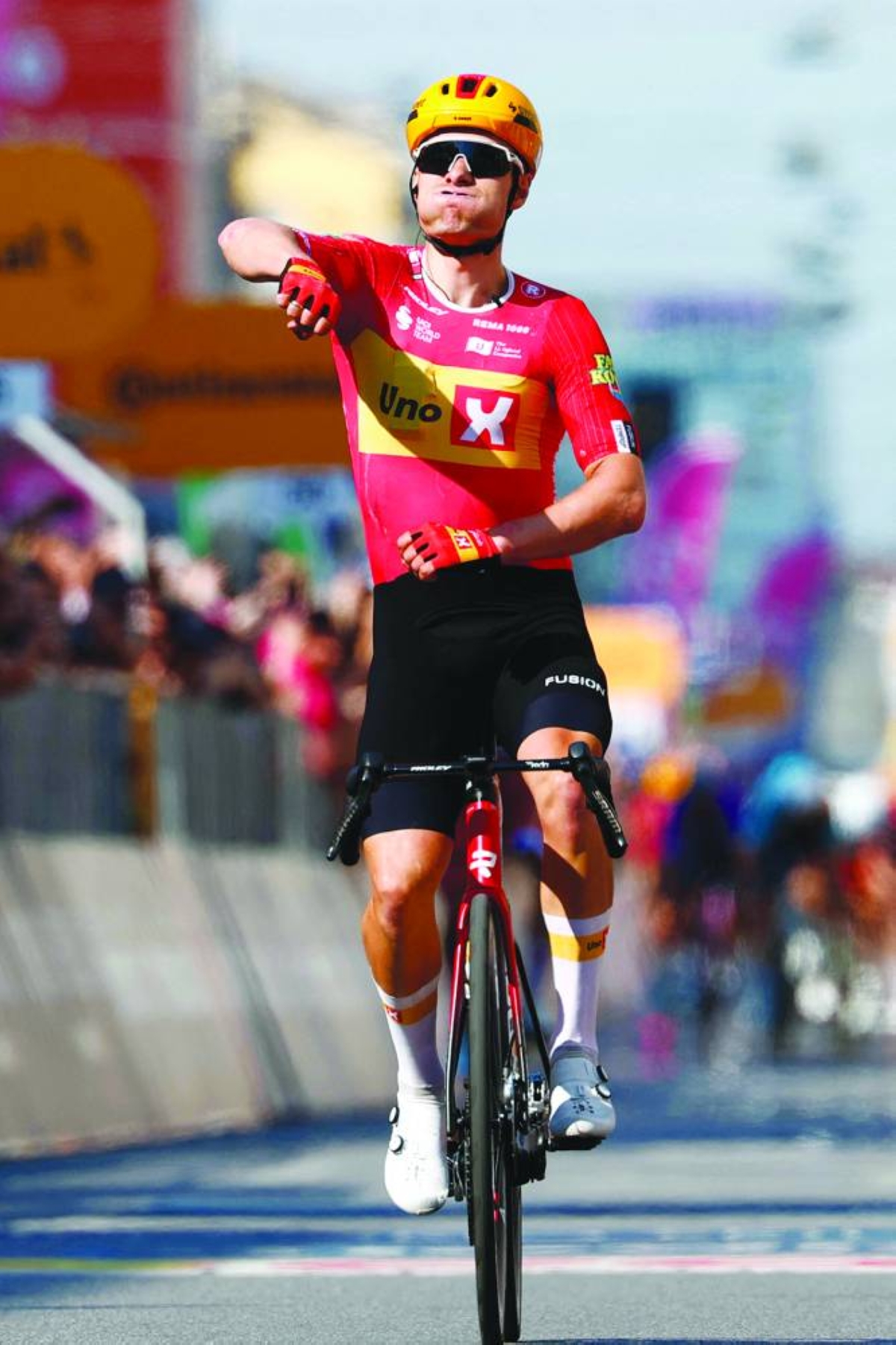
Uno X Mobility Norwegian rider Fredrik Dversnes celebrates as he crosses the finish line to win the 15th stage of the Giro d'Italia 2026 - Tour of Italy cycling race between Voghera and Milan, Italy,

Sports
Emotional Salah proud to put Liverpool ‘back where it belongs’

Emotional Salah proud to put Liverpool ‘back where it belongs’

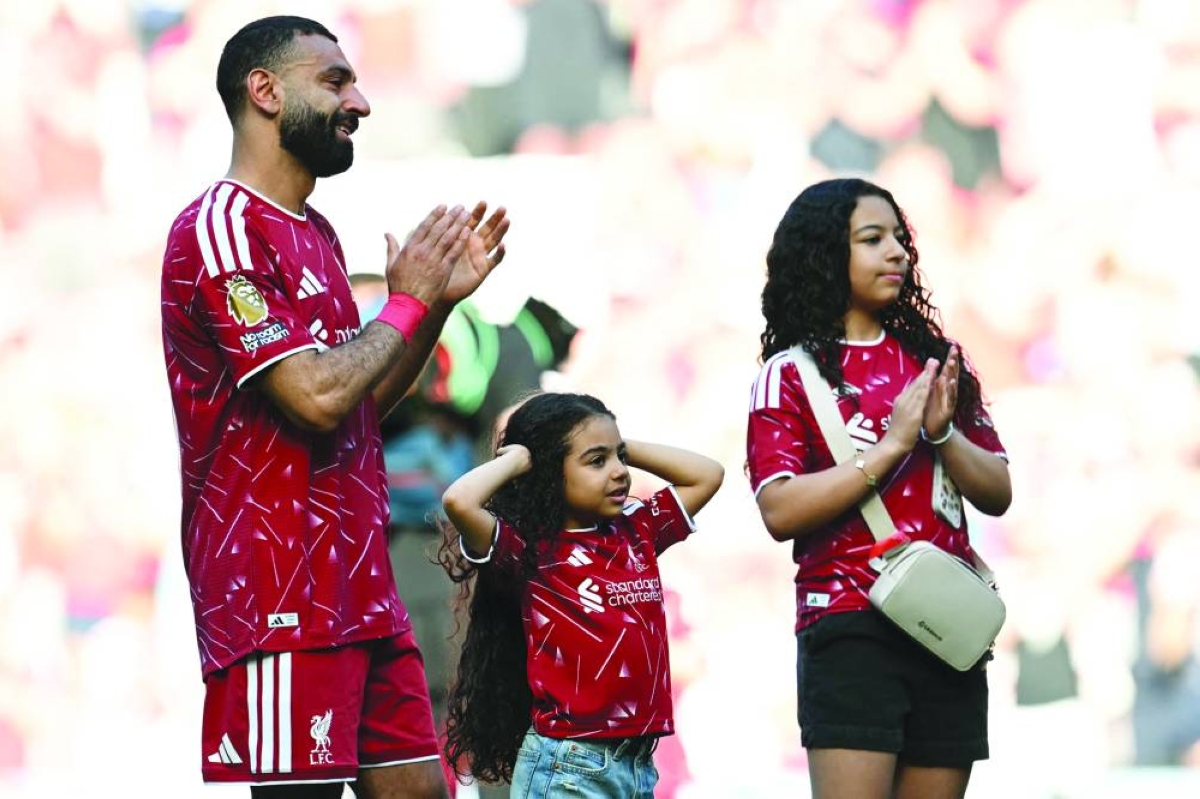
Mohamed Salah with his daughters after playing his final match for Liverpool on Sunday. (AFP) An emotional Mohamed Salah said "we put the club back where it belongs" after playing his final game for Liverpool on Sunday.A 1-1 draw at home to Brentford on the last day of the Premier League season marked the end of the Egyptian forward's nine-year spell at Anfield.Salah, 33, bid farewell alongside Scotland defender Andy Robertson, who also joined in 2017. Salah scored 257 goals for Liverpool, behind only Ian Rush (346) and Roger Hunt (285) in the club's list of leading goalscorers.He has also won multiple trophies at the club including the Champions League and two Premier League titles."I think I cried more than in my whole life," Salah said after the Brentford match. "I'm not really an emotional guy. We lived our youth here, sharing everything from the beginning to the end," said Salah of the time he shared with Robertson at Anfield. "We put this club back where it belongs."Salah's departure was announced in March after he told reporters in December his relationship with Liverpool manager Arne Slot had broken down. And in a social media post following last week's defeat at Aston Villa, Salah said he wanted to see a return to "heavy metal football", referring to the approach under former Liverpool boss Jurgen Klopp.But he still started the match against Brentford, with the names of both Salah and Robertson met with a deafening roar when introduced by the stadium announcer.Banners in the crowd celebrated both players, one saying "Thank you legends". Another said: "We Have Gone From Great To Glory. Salah Is Our King".Salah was the Premier League's top-scorer last season, with 29 goals, as Liverpool won the title, but his form dipped dramatically this term and he managed just seven goals in the league.The draw with Brentford, allied to Bournemouth's defeat by Manchester United, ensured Liverpool secured fifth position in the Premier League, guaranteeing the six-time European champions a place in next season's Champions League."It's tricky to leave Liverpool," said Salah, adding: "It's life. I look back and wonder if I would have wanted more than I achieved. Not really. We won it all. We see the love from the fans and this is the most important thing for me. I will be far away from here. I will be emotional every time. I hope the team stays in the position, fighting for everything."  Related Story