Sports
Sinner ‘hits wall’ as French Open bid collapses in second round

Sinner ‘hits wall’ as French Open bid collapses in second round

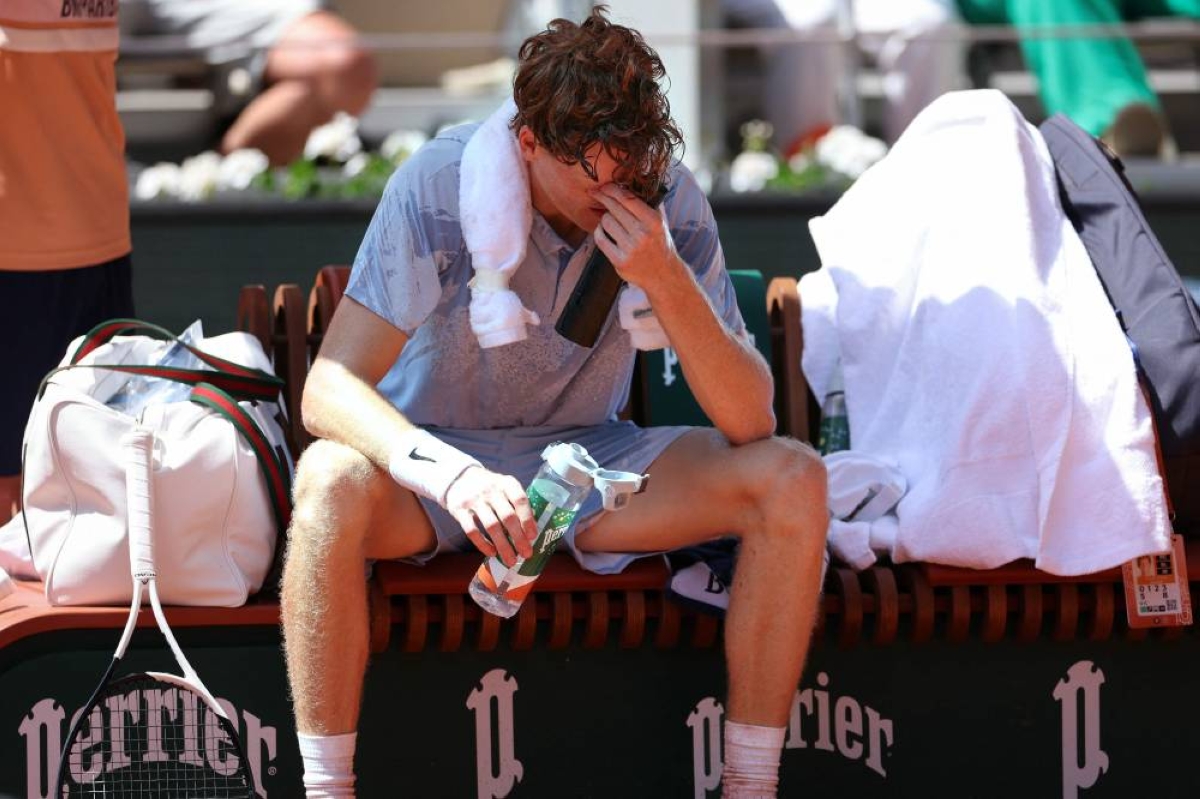
Italy's World number one Jannik Sinner, the red-hot favourite at Roland Garros this year, suffered a dramatic five-set defeat by Argentina's Juan Manuel Cerundolo after a sudden collapse on another sweltering day in Paris. (AFP)

Sports
Djokovic battles past Royer, Starodubtseva stuns Rybakina at French Open

Djokovic battles past Royer, Starodubtseva stuns Rybakina at French Open

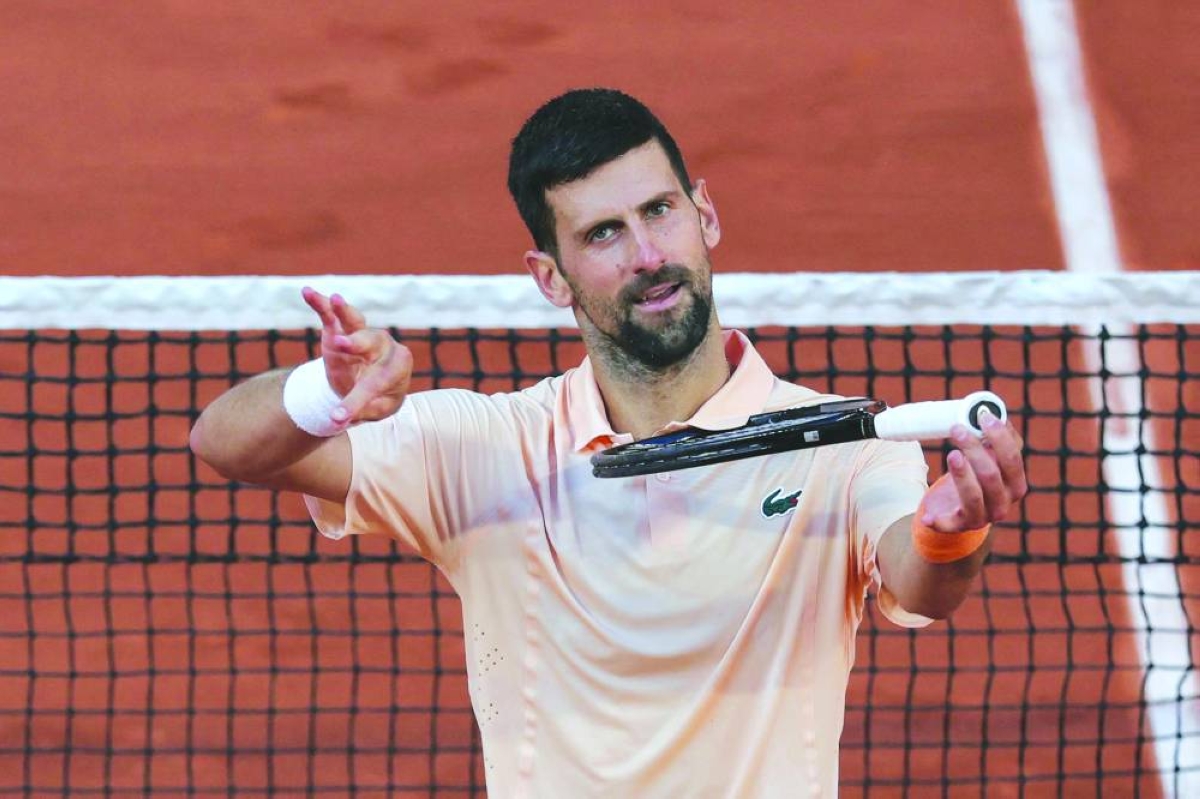
Novak Djokovic extended his latest bid for a record-breaking 25th Grand Slam title with a four-set victory over Valentin Royer in the French Open second round on Wednesday, but women’s second seed Elena Rybakina crashed out of the tournament. Elsewhere, four-time champion Iga Swiatek and Elina Svitolina both eased into the last 32 with straight-sets wins. Djokovic had to come from a set down in his opening match against Giovanni Mpetshi Perricard and was pushed hard again by another Frenchman in Royer, before finally sealing a 6-3, 6-2, 6-7 (7/9), 6-3 win after three and three-quarter hours on Court Philippe Chatrier. “I hope I won’t play any more French players for the rest of the tournament,” said the third seed, who has been tied on 24 Grand Slam titles with Margaret Court since winning the 2023 US Open, with a wry smile. Djokovic, who beat world number one Jannik Sinner in the Australian Open last four earlier this year, cannot meet the red-hot title favourite until the final at Roland Garros. Djokovic powered through the first two sets, although world number 74 Royer, born just 5km from Roland Garros, showed much more resistance in the third before extending the match in a brilliant tie-break. The Serb, who twice failed to consolidate breaks of serve in the third set, made no such mistake in the fourth as he belatedly booked his place in the next round on his fifth match point. Czech Jakub Mensik, the only player other than Djokovic to beat Sinner this year, needed eight match points before eventually downing Mariano Navone 6-3, 2-6, 6-4, 1-6, 7-6 (13/11). Rising Spanish star Rafael Jodar reached the third round of a Grand Slam for the first time, seeing off James Duckworth 6-1, 6-7 (5/7), 6-4, 7-5.  Ukraine’s Yuliia Starodubtseva celebrates after her stunning win over Kazakhstan’s Elena Rybakina at the French Open in Paris. (Reuters)  Australian Open champion Rybakina blew a one-set lead to exit in dramatic fashion, slumping to a 3-6, 6-1, 7-6 (10/4) loss to Ukraine’s Yuliia Starodubtseva. It is Rybakina’s earliest departure from any tour-level tournament since the 2025 Miami Open and first defeat in the opening two rounds of a major since the 2024 Australian Open. “I couldn’t find the balance. I couldn’t find the right shot, and it was clearly just too many mistakes,” said the Kazakh world number two. Starodubtseva will face China’s Wang Xiyu for a place in the last 16. She has already matched her previous best run at a Grand Slam event, when she lost to Jasmine Paolini in the French Open third round as a lucky loser 12 months ago. “Honestly, hard to describe, I’m super happy,” said world number 55 Starodubtseva after beating a top-10 opponent for the first time in her career. “I’m super proud of myself that I was able to do this today. It was a tricky third set but I got it done in the end.” Swiatek, Svitolina through Swiatek, looking to regain the title she last won in 2024, saw off battling Czech youngster Sara Bejlek 6-2, 6-3 on Court Philippe Chatrier. The third-seeded Pole will next face compatriot Magda Linette, who beat former winner Jelena Ostapenko in three sets, as she bids to preserve her record of having always reached the second week at Roland Garros. “Usually the weather is quite different here, but it doesn’t matter,” said Swiatek after spending 93 minutes on court on another boiling hot day in Paris. Swiatek is playing at a first Grand Slam tournament since linking up with Rafael Nadal’s former coach Francisco Roig. Svitolina, who beat Swiatek en route to the Rome title, beat world number 126 Kaitlin Quevedo 6-0, 6-4. The Ukrainian seventh seed ended an eight-year wait for her fifth WTA 1000 trophy at the Italian Open to underline her credentials as a contender in Paris. She struggled through her first-round tie, edging out Hungary’s Anna Bondar in a deciding-set tie-break on Monday, before watching her husband Gael Monfils’ final French Open match in the night session. But Svitolina raced out of the blocks this time, quickly taking control against Quevedo. The Spaniard competed better in the second set until a break in the ninth game helped Svitolina wrap up victory. Svitolina, who reached her fourth career Slam semi-final earlier this year at the Australian Open, will next play Germany’s Tamara Korpatsch. Second round Results (x denotes seeding): Men: Alex de Minaur (AUS x8) bt Alexander Blockx (BEL) - walkover; Jakub Mensik (CZE x26) bt Mariano Navone (ARG) 6-3, 2-6, 6-4, 1-6, 7-6 (13/11); Nuno Borges (POR) bt Miomir Kecmanovic (SRB) 3-6, 6-2, 6-1, 6-2; Andrey Rublev (RUS x11) bt Camilo Ugo Carabelli (ARG) 6-1, 1-6, 6-3, 7-6 (7/5); Novak Djokovic (SRB x3) bt Valentin Royer (FRA) 6-3, 6-2, 6-7 (7/9), 6-3; Rafael Jodar (ESP x27) bt James Duckworth (AUS) 6-1, 6-7 (5/7), 6-4, 7-5; Thiago Agustin Tirante (ARG) bt Alejandro Davidovich Fokina (ESP x21) 4-6, 7-6 (7/4), 6-1, 6-3; Pablo Carreno Busta (ESP) bt Thanasi Kokkinakis (AUS) 7-5, 4-6, 1-0 - retired; Karen Khachanov (RUS x13) bt Marco Trungelliti (ARG) 7-6 (7/5), 5-7, 6-1, 7-6 (7/4); Jesper de Jong (NED) bt Federico Cina (ITA) 6-3, 6-1, 6-3; Quentin Halys (FRA) bt Ugo Humbert (FRA x32) 6-4, 7-6 (7/4), 7-6 (10/8) Women: Elina Svitolina (UKR x7) bt Kaitlin Quevedo (ESP) 6-0, 6-4; Tamara Korpatsch (GER) bt Wang Xinyu (CHN x32) 6-2, 2-6, 6-3; Peyton Stearns (USA) bt Daria Snigur (UKR) 6-4, 6-0; Belinda Bencic (SUI x11) bt Caty McNally (USA) 6-4, 6-0; Marta Kostyuk (UKR x15) bt Katie Volynets (USA) 6-7 (4/7), 6-3, 6-3; Viktorija Golubic (SUI) bt Alycia Parks (USA) 6-2, 6-2; Magda Linette (POL) bt Jelena Ostapenko (LAT x29) 6-2, 2-6, 6-2; Iga Swiatek (POL x3) bt Sara Bejlek (CZE) 6-2, 6-3; Marie Bouzkova (CZE x27) bt Francesca Jones (GBR) 6-0, 7-6 (7/3); Wang Xiyu (CHN) bt Hailey Baptiste (USA x26) 5-4 - retired; Yuliia Starodubtseva (UKR) bt Elena Rybakina (KAZ x2) 3-6, 6-1, 7-6 (10/4)  Related Story

World
Norway will come under France's nuclear umbrella, says PM Stoere

Norway will come under France's nuclear umbrella, says PM Stoere

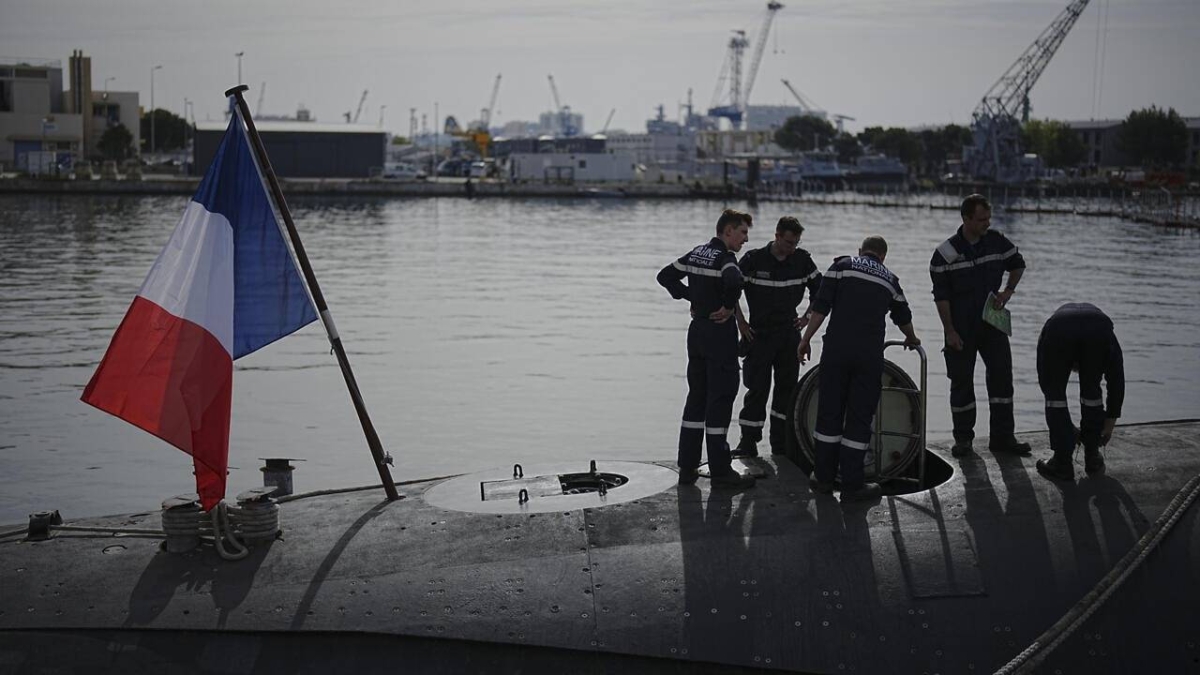
Norway will come under France's nuclear umbrella, Prime Minister ‌Jonas Gahr Stoere told news agency ​NTB yesterday, ‌as concerns grow in Europe ‌over US commitment ⁠to ‌the region's security. The move ‌by Norway is significant as it has ⁠long been a so-called Atlanticist nation, one which believed its security was best achieved via close alignment with Washington.Stoere travelled to Paris yesterday afternoon to meet President Emmanuel Macron and sign a new defence ​agreement with France, which includes Norway joining a French-led nuclear weapons initiative. 'We are doing this in light ‌of the security ⁠policy situation ​in Europe, including Russia's massive rearmament, also ​in the nuclear domain, and that it is waging a full-scale war against another European country,' Stoere told Norwegian news agency NTB. No nuclear weapons will be deployed in Norway in peacetime, he added. The Nordic nation of 5.6 mn inhabitants is a member of Nato, but not of the ‌European Union, and ‌shares a border ⁠with Russia in the Arctic. In March, France offered ⁠to extend ⁠the protection of its nuclear umbrella to other European countries which, in practice, means that an attack on Norway could trigger a French nuclear response. Norway becomes the latest country to receive ​France's nuclear protection, after Poland and Lithuania, which also share borders with Russia. Russia and the US are the world's biggest nuclear powers, with over 5,000 nuclear warheads each. China has about 500, France has 290 and Britain 225, according to the Federation of American Scientists. 

Sports
Depay has to prove fitness before World Cup, says Dutch coach Koeman

Depay has to prove fitness before World Cup, says Dutch coach Koeman

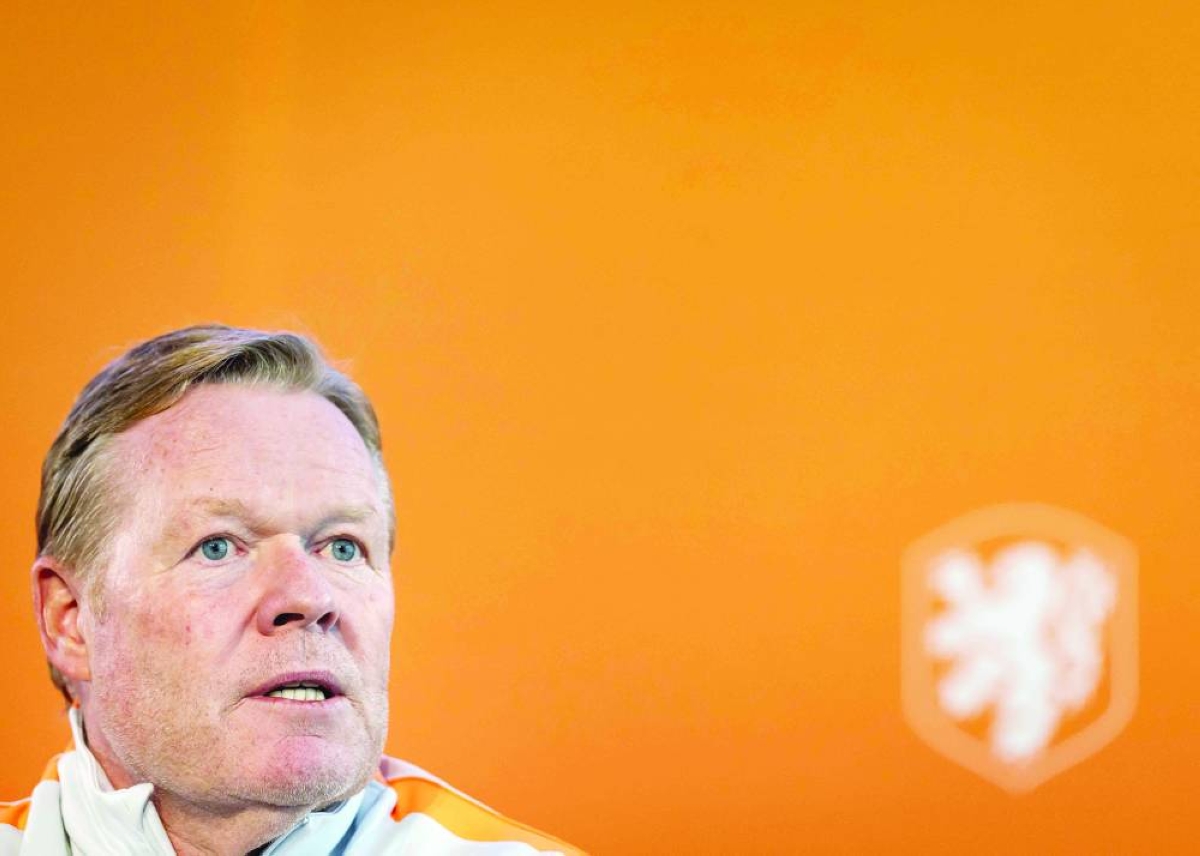
Coach Ronald Koeman announces Dutch team for the FIFA World Cup 2026 during a press conference in Zeist yesterday. (AFP)  Selecting Memphis Depay for the Netherlands’ World Cup squad was always on the cards, but the country’s top scorer must now prove himself over ‌the next few weeks before the tournament kicks ​off, coach Ronald Koeman ‌said. The 32-year-old Depay, whose 55 goals in 108 ‌appearances make him the ‌most successful striker for the ‌Dutch national team, was named by Koeman in the 26-man squad for the finals despite only two substitute appearances for his Brazilian club Corinthians over the past two months. Half of those minutes came for struggling Corinthians over the weekend, but Koeman said Depay had told him he would be starting Copa Libertadores tie at ​home to Platense of Argentina. “I would have preferred him to have played minutes earlier. But in April, I didn’t know when he ‌would be able to play minutes ​again. He can be an asset, just like Jurrien ​Timber,” the Dutch coach told a press conference after his squad was released. “I selected Memphis because of who he still is. I don’t see anyone else in that position who can do it. I believe he can be an asset, but he does have to get through the coming period well,” the coach added. “We have two friendly matches. If he were where I ‌think he needs to be, ‌then he can start. If he is not, then he won’t start. I know he can fill the role of backup as well.” Arsenal defender Timber is ​another who will need game time after a groin injury kept him out since March. “We have Ian Maatsen and Lutsharel Geertruida on the standby list for Timber. The situation with him is that he was supposed to train with Arsenal today, to assess for the weekend. They have the Champions League final on Saturday. It remains to be seen ‌whether he will ​be fit for that match,” Koeman said.  Justin Kluivert has also been given a vote of confidence despite knee surgery in January and only two substitute appearances ‌for Bournemouth since completing his rehabilitation. Kluivert was ​among the first players to report for training at ​the Dutch camp in Zeist on Monday, along with Noa Lang who has recovered from a bizarre finger injury suffered playing in the Champions League for Galatasaray against Liverpool in March and was also picked. West Ham United’s Crysencio Summerville and Sunderland goalkeeper Robin Roefs are both uncapped while there was a surprise return for midfielder Marten de Roon, who won the last of his 42 caps two years ‌ago.But there was no ‌place for veteran centre back Stefan de Vrij, after a thigh injury suffered in Inter Milan’s last game of the Serie A season at Bologna on Saturday, or Liverpool full back Jeremie Frimpong. The Dutch warm up for the World Cup, hosted by Canada, Mexico, and the United States, against Algeria and Uzbekistan before their opening Group F match against Japan in Dallas on June 14. Squad Goalkeepers: Mark Flekken (Bayer Leverkusen), ​Robin Roefs (Sunderland), Bart Verbruggen (Brighton & Hove Albion) Defenders: Nathan Ake (Manchester City), Denzel Dumfries (Inter Milan), Jorrel Hato (Chelsea), Jurrien Timber (Arsenal), Micky van de Ven (Tottenham Hotspur), Virgil van Dijk (Liverpool), Jan Paul van Hecke (Brighton & Hove Albion) Midfielders: Frenkie de Jong (Barcelona), Marten de Roon (Atalanta), Ryan Gravenberch (Liverpool), Justin Kluivert (Bournemouth), Teun Koopmeiners (Juventus), Tijjani Reijnders (Manchester City), Guus Til (PSV Eindhoven), Quinten Timber (Olympique de Marseille), Mats Wieffer (Brighton & Hove Albion) Forwards: Brian Brobbey (Sunderland), Memphis Depay (Corinthians), Cody Gakpo (Liverpool), Noa ‌Lang (Galatasaray), Donyell Malen (AS ​Roma), Crysencio Summerville (West Ham United), Wout Weghorst (Ajax Amsterdam).  Related Story

World
Zelenskiy asks Trump for air defences as Russia escalates strike threats

Zelenskiy asks Trump for air defences as Russia escalates strike threats

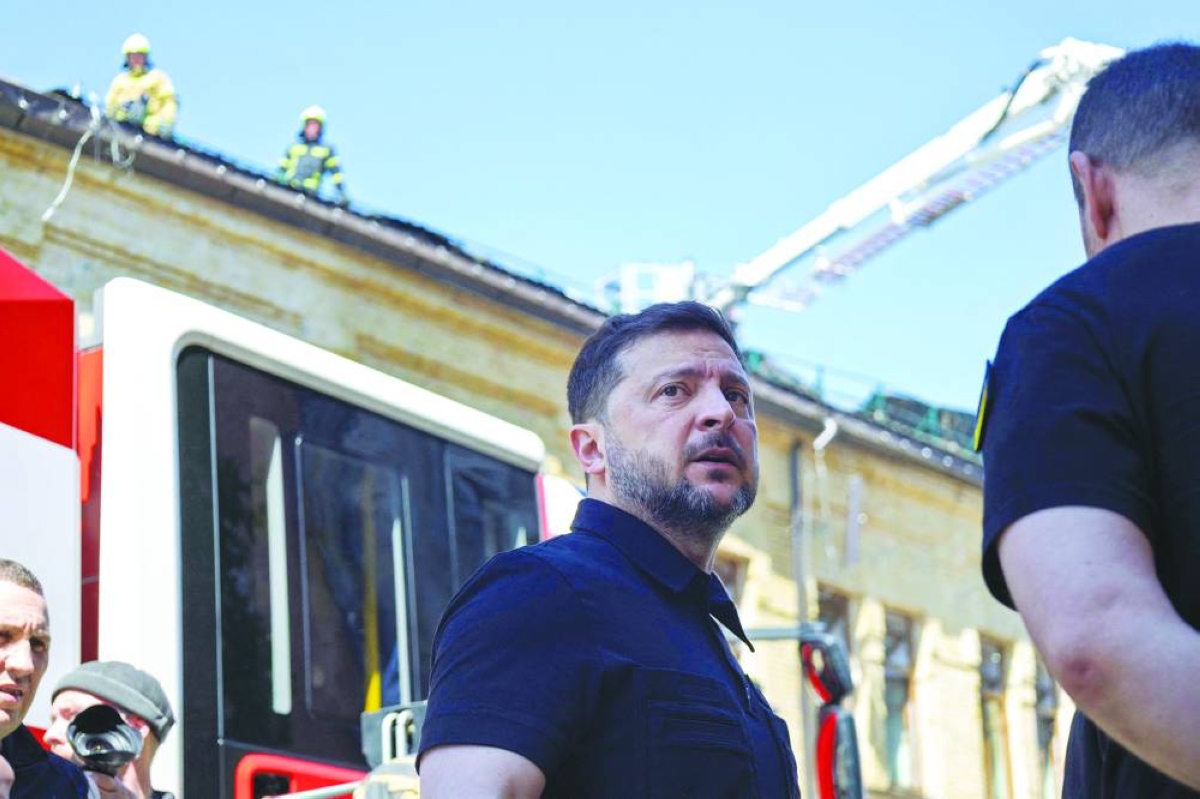
Ukraine's President Volodymyr Zelensky (C) talks to his Minister of Internal Affairs Igor Klymenko (R) as he arrives at the National Chernobyl Museum, heavily damaged by an overnight Russian airstrike, in Kyiv on May 24,

Sports
Young talents shine at Horwitz Bishop Rapid Chess Tournament

Young talents shine at Horwitz Bishop Rapid Chess Tournament

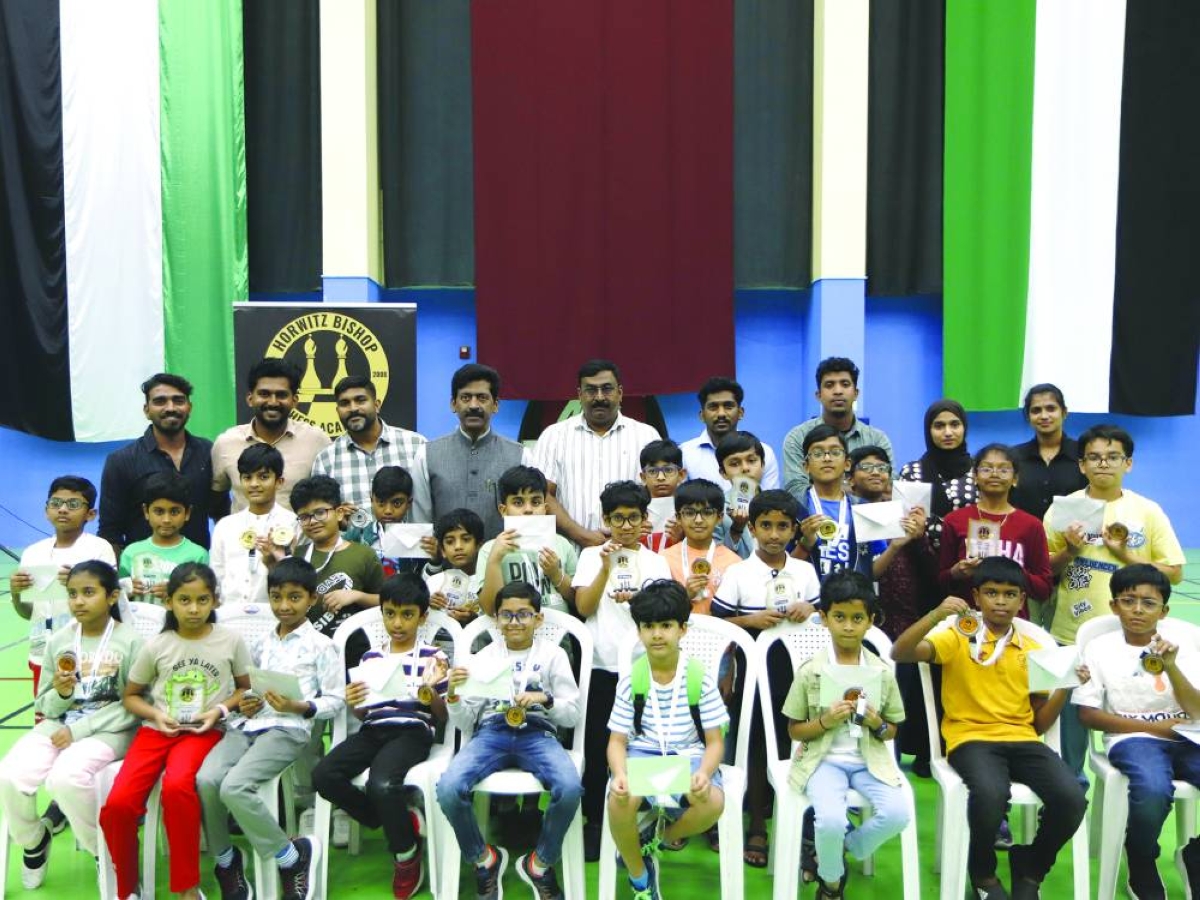
 The Horwitz Bishop Rapid chess tournament was held at Palestinian School in Abu Hamour, with young talents showcasing their skills across multiple age categories. In the Under-8 category, Rithik Lineesh emerged champion ahead of Ayan Biddappa and Hanvika Srithagna, who finished second and third respectively. Shlok Nirav Bavisi and Adinad Anand completed the top five standings. Mohamed Azam clinched the Under-10 title followed by Neavin Raghunathan in second place and Aadhavan Rajasekar in third. Dhrish Jibin and Dakshit Karthikeyan secured fourth and fifth positions respectively. In the Under-12 section, Chidambaram Chockalingam took top honours ahead of Rehaan Kannan and Edwin Idiculla Sanju. Rohan Sai Suresh finished fourth, while Swarit Tejas Mehta claimed fifth place. The tournament was conducted by Horwitz Bishop Chess Academy in a seven-round Swiss-System format under the supervision of Chief Arbiter Jaise Joseph and Deputy Chief Arbiter Rayan Joseph Jaise. The arbiting panel also included Ismath, Sreekanth, Jibin, Tijo, Sanju, Sanika and Vikas. 

Opinion
After the Storm: The Gulf’s moment of reinvention

After the Storm: The Gulf’s moment of reinvention

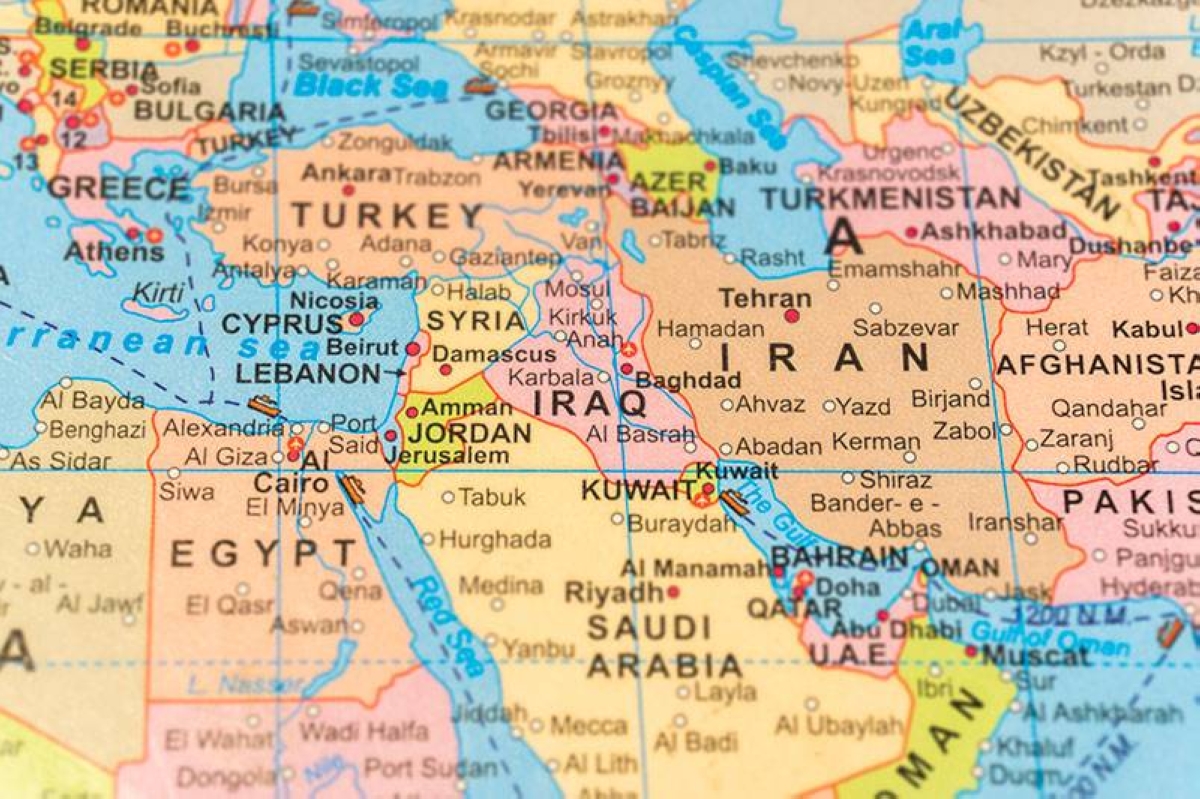
The regional order that served the GCC for half a century is buckling. What comes next depends on choices that can no longer be deferred. There is an old Bedouin saying that the desert teaches patience but punishes hesitation. For the six monarchies of the Gulf Cooperation Council, the present moment demands both at once. Whatever the final shape of the conflict that Netanyahu’s government has imposed on the Middle East, life along the Gulf littoral will continue. The question is not whether the region survives the turbulence, but whether it emerges with the architecture to convert its formidable assets into durable civilisational achievement. For five decades, GCC governance rested on a sturdy if unspoken compact. The first pillar was tribal continuity — hereditary structures providing social cohesion without coercive bureaucracy. The second was petrodollar abundance: oil revenues funding a developmental sprint without precedent. A protective dome completed the structure. The dependence of Western economies on Gulf energy — the region accounts for roughly a quarter of global crude exports and holds nearly a third of proven reserves — secured diplomatic recognition and security guarantees in exchange for supply reliability and petrodollar recycling into Western markets. Within that enclosure, the results were extraordinary. In 1970, per capita income across much of the Arabian Peninsula barely exceeded $1,000 in today’s terms. By 2024, Qatar’s GDP per capita stood at around $75,000 and the UAE’s at around $50,000. Riyadh, Dubai, Doha and Abu Dhabi grew from trading towns into skylines that draw more visitors than many European capitals. Saudi Arabia alone has committed hundreds of billions to infrastructure since 2000. The GCC collectively graduates more than 400,000 university students annually. By its velocity it rivals the Chinese miracle — achieved by a combined population one-thousandth the size. Yet the candid observer must note what the dome obscured. Annual GCC summits, for all their ceremonial weight, gathered leaders pursuing parallel rather than converging agendas. Coordination on defence, industrial policy, water security and education remained largely aspirational. The GCC Secretariat’s archives in Riyadh hold decades of joint proposals — on monetary union, a common electricity grid, unified visa regimes — drafted with diligence and shelved with equal thoroughness. The distances between city-states encouraged individualistic instincts; so did deference to a broader Arab world whose more ancient and populous societies long served as the Gulf’s imported expertise base. The intermediary stage — the final two decades of the twentieth century — showed what disciplined oil wealth could accomplish: functional states emerged where nomadic polities had existed within living memory. But the new century arrived with complications the dome could not absorb. The September 2001 attacks plunged the GCC into a storm not of its making. Western military adventurism in Afghanistan and Iraq destabilised the neighbourhood without producing order. Iran’s ambitions, uncontained by the hollowed-out Arab state system, filled the vacuum. And now Netanyahu, exploiting a rupture in the Palestinian question that he spent three decades engineering, has taken the initiative with American acquiescence and an appetite for reordering that serves Israeli interests far more than Gulf ones. This is the sobering ledger. But pessimism is a luxury the Gulf cannot afford — and the empirical case for optimism is stronger than crisis commentary suggests. The GCC’s sovereign wealth funds alone manage approximately $5tn in assets, around 40% of the global total, making it among the most financially capitalised regions for its size. Saudi Arabia’s median age is under 30 — a demographic dividend that ageing Western economies would pay handsomely to possess. Vision 2030, the UAE’s Net Zero by 2050 commitment and Qatar’s post-tournament diversification strategy show that the will for structural transformation is genuine and has moved well beyond rhetorical aspiration. What, then, must be done? Four imperatives stand out. First, defence consolidation: the GCC must move from parallel procurement toward interoperable architectures, rationalising a collective annual defence spend of around $120 billion into systems that communicate. Individual orders with Western suppliers have created a patchwork that benefits contractors more than coherence. The region’s combined firepower, properly coordinated, would constitute a formidable deterrent. At present it constitutes an expensive catalogue. Second, educational reinvention for the AI era. The coming decade will see AI reshape every knowledge-intensive profession. GCC institutions must be rebuilt around computational literacy, critical reasoning and adaptive learning — not the credentialling models inherited from twentieth-century Egyptian and Lebanese universities. Here Gulf capital, properly directed, can leapfrog the incremental reform that constrains older economies. The window will not stay open indefinitely. Third, a Gulf-led Arab stabilisation fund. The overflow risk from collapsed Arab states — Yemen, Sudan, Lebanon, Syria, Gaza — is existential for Gulf social stability. A coordinated architecture, modelled loosely on the Marshall Plan, would cost a fraction of what military responses would demand. At around $60bn over a decade, it is affordable. What has been missing is political will and institutional design. Fourth, and most foundational: the Arab League must be resurrected as a functioning multilateral body capable of shouldering these burdens. The alternative — each Gulf state managing regional dysfunction bilaterally — is neither efficient nor sustainable. The League was never designed for irrelevance; it has been allowed to drift there by the very states that stand to gain most from its revival. Pooling GCC think-tank capacity to draft a reform agenda would be a sensible first step. The fathers of today’s Gulf leaders made a momentous wager: that disciplined use of transient resource wealth could build permanent civilisational capacity. They were right. The wager for this generation is larger still, and the clock less forgiving. Before the oil age closes and AI reshapes the global economy beyond recognition, they must architect a framework worthy of the societies they have inherited. Climate change will not wait for consensus. AI will not pause for committees. And the Gulf’s young populations deserve leaders who understand that honouring tradition means doing what their fathers did: opening new departures when the old roads run out. The desert teaches patience. It also punishes those who wait for the storm to pass before deciding how to move. The writer is a Lebanese writer and former editor of Al-Hayat in London and The Daily Star in Beirut. 

World
Trump: Still have issues to resolve with Iran

Trump: Still have issues to resolve with Iran

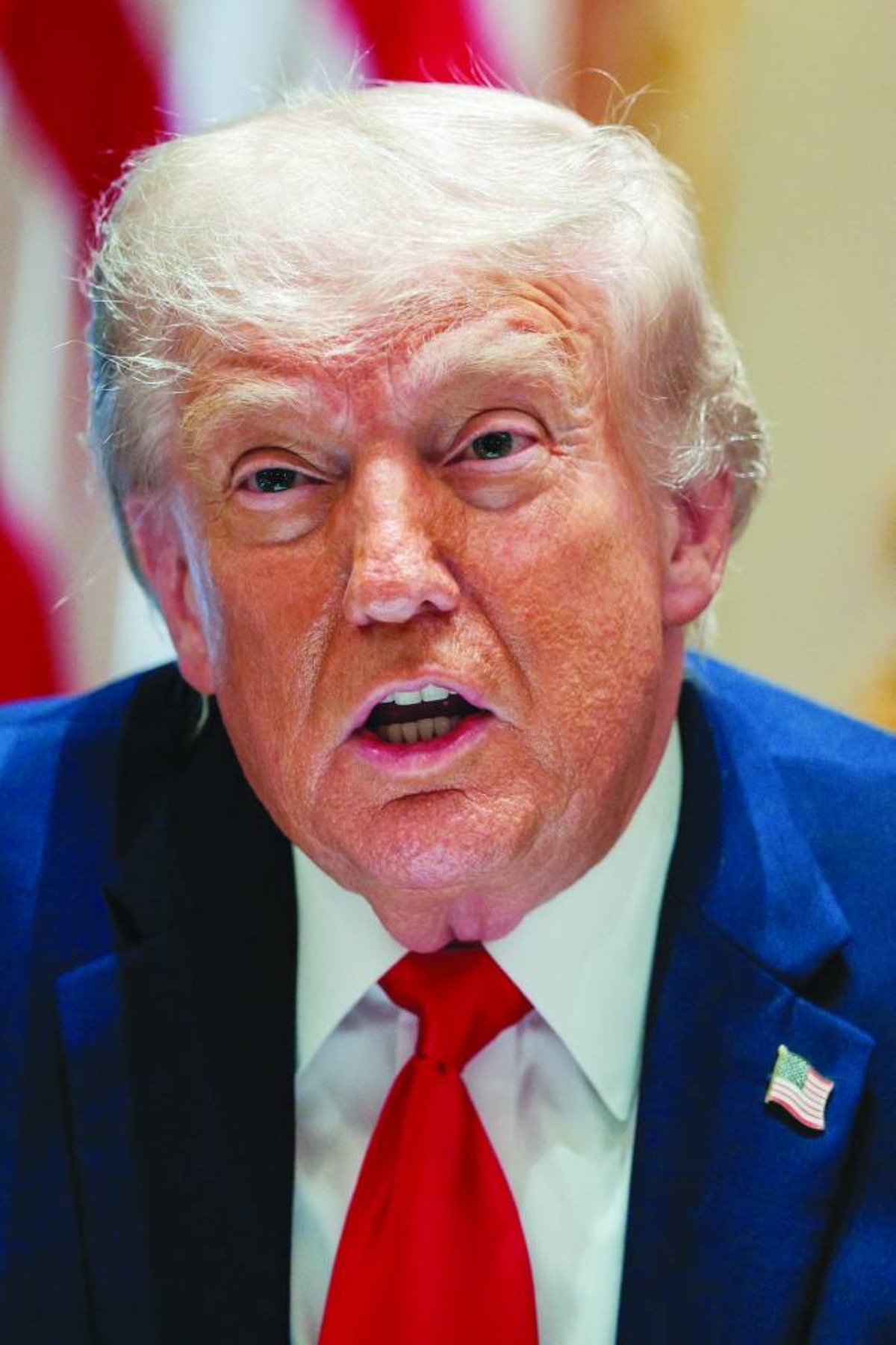
President Donald Trump during the cabinet meeting yesterday. (Reuters) President Donald Trump said yesterday ​the US and Iran still have ‌issues to resolve in peace talks, after Washington dismissed an Iranian state television report of a framework deal ‌to restore shipping through the ⁠Strait of Hormuz within a ‌month and to lift a US naval blockade on Iranian ‌ships.Trump told a cabinet meeting that Iran remained keen to end the war, which has choked global energy supplies through ⁠the strategic waterway, but that the terms did not satisfy Washington."Iran is very much intent, they want very much to make a deal. So far they haven't gotten there ... We're not satisfied with it, but we will be. Either that or we'll have to just finish the job," he said, without elaborating."The deal has got to be perfect," he later added, insisting that the Strait of Hormuz would be open immediately after a deal is reached and that no single country would have control over the waterway. Iranian state TV reported that it had obtained an unofficial draft of a memorandum of understanding under which ​the US would lift its blockade and withdraw its forces from Iran's vicinity. It said the issue of US troops in the region needed further discussion, without elaborating. It did not mention Iran's nuclear programme, which the US wants disbanded. In a statement on social media, the White ‌House dismissed the report as a "complete fabrication", while ⁠Tehran did not comment. Publicly, the ​two sides previously have outlined positions starkly at odds.US Secretary of State Marco Rubio told the cabinet meeting: "There's ​been some progress and some interest, and we'll see over the next few hours and days whether progress could be made.""The bottom line is Iran's never going to have a nuclear weapon," he added.Key sticking points in the talks have included reopening and management of the Strait of Hormuz waterway, through which a fifth of the world's oil and liquefied natural gas flowed before the conflict, and the issue of the dismantling of Iran's nuclear capacity.Trump said that once a deal is struck, the US would monitor shipping there. He also said that Oman, on the southern shores of the strait, would have to play its part in the process as well. The strait is covered by international law that guarantees foreign vessels the right to pass through."We'll watch over it, but nobody's going to control it - that's part of the ‌negotiation that we have...," he said. Oil prices ‌fell more than 5% after the Iranian television report, ⁠before retracing about a fifth of that fall.The US military has some 15,000 troops enforcing a blockade of Iran and has ⁠thousands of additional forces at bases throughout the region, including ⁠in Gulf states.US naval vessels, some with thousands of sailors and Marines aboard, regularly transit the region, stopping in ports including in Oman. The Pentagon did not immediately respond to a request for comment.Iranian sources have said talks on the nuclear issue will come in a second round of negotiations - something that may not be acceptable to some of Trump's closest supporters. Iran says its nuclear programme is for peaceful purposes only.Earlier yesterday, a senior Iranian official told reporters on the sidelines of the first International Security Forum in Moscow that reopening the Strait of Hormuz remained a sticking point."As long as we have not agreed on all issues, we consider that nothing has been agreed,” Iran’s deputy secretary of the Supreme National Security Council, Ali Bagheri Kani, told reporters when asked about a deal on reopening the waterway.Iran's Islamic Revolutionary Guards Navy said yestersday that 23 ships including oil tankers, container ships and other commercial vessels passed through Hormuz with its permission in the previous 24 hours, a fraction of the daily 125 to 140 vessels passing through before the conflict. The war has killed thousands and caused an unprecedented oil supply shock, pushing up the costs of fuel, fertiliser and food.It ‌has also created political problems ​for Trump at home. US polls show the war is deeply unpopular with the public six months before midterm elections.  Related Story

Sports
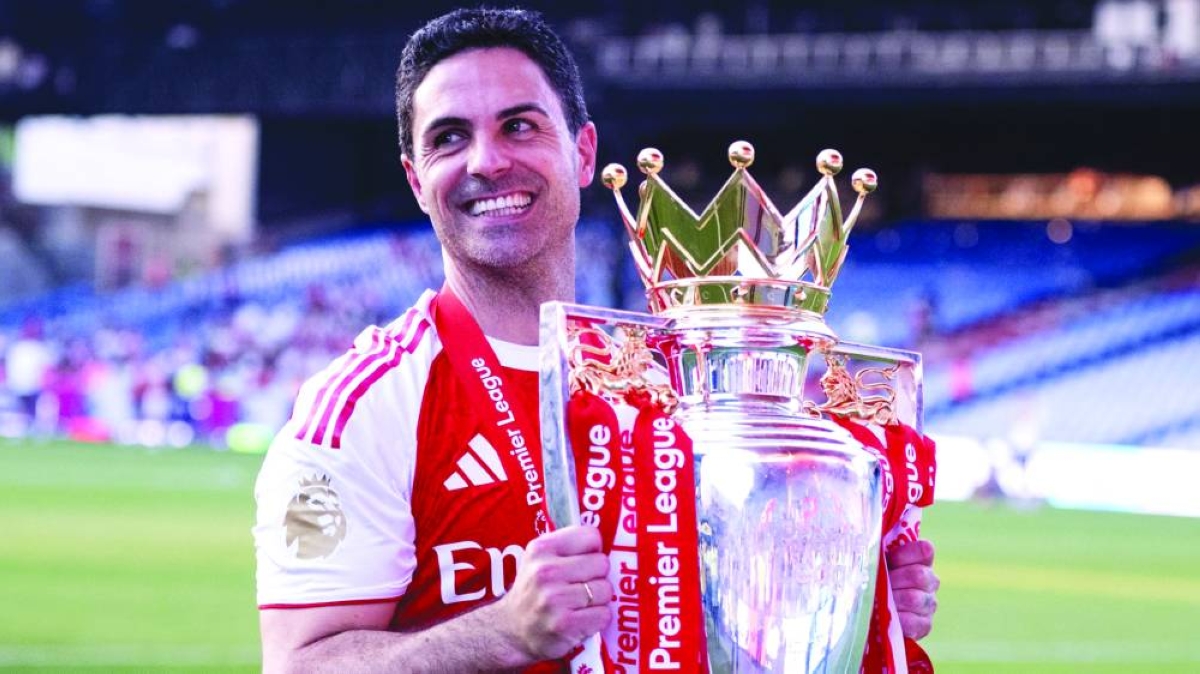
Arteta says English title can inspire Arsenal to Champions League glory

Arteta says English title can inspire Arsenal to Champions League glory

Arsenal manager Mikel Arteta believes the confidence gained by winning the Premier League will inspire the Gunners to upset the odds against Paris Saint-Germain in Saturday’s Champions League final in Budapest.  Mikel Arteta is “fully convinced” Arsenal can be crowned champions of Europe for the first time this weekend after ending their 22-year wait for a Premier League title. The Gunners face reigning European kings Paris Saint-Germain in Saturday’s Champions League final in Budapest after wrapping up their first Premier League title since 2004. A star-studded Paris Saint-Germain, who thrashed Inter Milan 5-0 in last season’s final, are widely regarded as favourites to lift the European Cup once again. But Arsenal manager Arteta believes the confidence gained by winning the Premier League will inspire the Gunners to upset the odds. “You could sense the energy, you can sense the positivity and the confidence in the players and everybody around the club,” he said. “We have an amazing opportunity to write new history in our football club, and we are convinced that we’re going to do it. We will fly to Budapest on Thursday fully convinced that in a few days’ time we can be champions of Europe.” The 44-year-old Spaniard was speaking at the League Managers Association’s annual awards dinner in central London on Tuesday, where he was named Premier League manager of the year. “First of all, thank you so much for giving me this award,” said former Everton and Arsenal midfielder Arteta. “It’s an immense honour. You’re related to some of the great managers and all the colleagues that are in this room. It’s been a fascinating journey for a few years. We’ve been knocking on the door, we’ve been trying, we fell short a few times, and to actually win it made it so special.” Arteta thanked several people upon receiving the award, including Everton boss David Moyes for introducing him to English football when he signed him in 2005. He also praised his “instrumental” coaching team, saying: “They’ve been an inspiration, they’ve been extremely supportive with me. They made me enjoy this profession in a way that probably I could not imagine.” Related Story

Opinion
‘Catastrophic collision’ of Ebola and war in DRC

‘Catastrophic collision’ of Ebola and war in DRC

Conflict in the Democratic Republic of Congo (DRC) is complicating efforts to rein in a deadly Ebola outbreak, the World Health Organization (WHO) chief warned yesterday, while Uganda announced it was shutting its border. The WHO has recorded 10 confirmed and 223 suspected Ebola deaths in the DRC since the outbreak was declared in mid-May, out of more than 1,000 confirmed and suspected cases. Its chief fears insecurity in the eastern DRC, which has been plagued for three decades by conflict involving a litany of armed groups, is making it extremely difficult to contain the outbreak. “Eastern DRC now faces a catastrophic collision of disease and conflict with the Ebola outbreak in Ituri province outpacing the response,” the UN agency’s chief Tedros Adhanom Ghebreyesus said on X. Neighbouring Uganda, which has recorded seven cases of the Bundibugyo strain of Ebola responsible for the outbreak, announced it was shutting its border with the DRC with immediate effect. It also said it was imposing a 21-day quarantine on anyone arriving from the DRC, under the supervision of the Ministry of Health and district surveillance teams. No vaccine or treatment exists for the Bundibugyo strain of Ebola, which is behind the DRC’s 17th recorded outbreak of the disease. The WHO said the case fatality rate was under 25 percent — much lower than in other recent outbreaks. But it has also said the true spread of the virus was probably much wider than confirmed numbers suggest, with the strain likely circulating for some time before it was detected. State services in rural areas of Ituri province have been largely absent for decades. Tedros lamented that clashes were “driving mass displacement, pushing exposed contacts into overcrowded camps and severing critical containment corridors”. “Frontline workers are risking everything, while attacks on health facilities make tracking cases and their contacts nearly impossible,” he warned. “We cannot build community trust or isolate the sick while bombs are falling,” Tedros said, urging “all warring parties to agree to an immediate ceasefire to contain this outbreak”. The United States plans to open a quarantine centre in Kenya, the Wall Street Journal reported on Tuesday, primarily intended for Americans who need to leave the DRC quickly and quarantine.