Opinion
Fears of unfettered hacking spurred by Anthropic’s Mythos AI model overstated

Fears of unfettered hacking spurred by Anthropic’s Mythos AI model overstated

Anthropic logo seen in file photo. Reuters Early fears that Anthropic’s new AI model, Mythos, could dramatically turbocharge hacking are looking overstated a month after its release. The company warned at launch in April ‌that Mythos had uncovered thousands of software vulnerabilities -- including flaws across every major operating system and browser -- and said the fallout from its ​spread could be severe. Governments took notice. Officials in ‌multiple countries huddled with banks to assess risks, and by early May the White House was weighing rules to control how ‌new models are released after safety testing. But inside the cybersecurity world, the ‌reaction has been more measured -- with some saying the broader response ‌has been overblown, and that access to a Mythos-level large language model will not immediately enable hacking operations previously out of reach for bad actors. “I think there’s a really big communication gap between practitioners and policymakers,” said Isaac Evans, founder and CEO of software security firm Semgrep. The model represents “a real technical advance,” he said, but the response “is not substantiated by what we actually know about how those capabilities will translate in the field.” To be sure, experts who have used the model in controlled environments have reported substantial improvement in vulnerability discovery, and banking industry IT staffs are working to fix scores of system weaknesses in large and small bank technology stacks, Reuters reported on May 12. The worry has been heightened further by continued revelations of criminal and state-linked hacking cases involving AI, including Google’s announcement on May 11 that it had detected the first-ever case of a major cybercrime group using AI ​to discover a previously unknown software flaw and planning a mass exploitation event. The gap between the extent of the threat seen by security professionals and that seen by policymakers has fueled a narrative that puts Mythos at the centre of a looming security crisis - even as comparable capabilities have been available for some time. “We’ve been ‌able to use AI to find more bugs than we know what to do with ​for months if not years,” said one person with extensive vulnerability research experience with early access to Mythos. The challenge is ​not finding vulnerabilities, they said, but validating, prioritizing and fixing them without breaking systems. Organisations’ ability to process and validate a flood of newly discovered vulnerabilities is generally not where it needs to be, the person said, and that is the bigger challenge introduced by Mythos-level models, even as they acknowledged that the model is an improvement. “It is capable of finding more with a weaker prompt than the models that came before it,” the person said, referring to the instructions a user provides the model to attempt to achieve a goal. Existing models required more detailed and complicated instructions, the person said, meaning the barrier to entry has been lowered. Anthony Grieco, senior vice-president and chief security and trust officer at Cisco, said one new and helpful aspect of Mythos is its ability not only to identify vulnerabilities, but to scan much faster vast amounts of code for those vulnerabilities and help experienced practitioners lower the rate of false positives. This, he said, allows defenders to focus on the most pressing cyber risks in their contexts. The ‌model also has fewer guardrails than previous models, allowing users ‌to craft more specific instructions that enable activities that previous models would not. Grieco said to fully maximize the power of Mythos, organizations need both proper computing power as well as a rigorous harness, a term used to describe the computer environment within an organization where a large language model runs with specific instructions and limitations. “If you have a Formula One car but you’ve only ever driven a bike, you might be able to get it to go straight,” Grieco said. “But you’re not going to maximize the track time out of the gate.” Even so, Anthropic’s framing - and its decision to invite select firms to test defenses under a program dubbed Project Glasswing - helped push the conversation about the model well beyond typical security circles. The result: an all-hands-on-deck response that amplified both the perceived threat and the company’s stature, even as the Pentagon labeled Anthropic a supply-chain risk while other parts of ​the government clamored for access. The White House is discussing with AI labs more widespread use of their technology, a White House official told Reuters. An Anthropic spokesperson said the company is working “closely with the US government to quickly advance shared priorities,” and working with the government to give more parties access to Mythos. Mythos - and to some extent OpenAI’s GPT-5.5 - has dominated national security discussions about AI. But those debates often gloss over a simpler point: vulnerability-hunting AI is not new. The real problem is what comes next. 
Sports
Australian Arnold hopes resilient Iraq can upset World Cup odds

Australian Arnold hopes resilient Iraq can upset World Cup odds

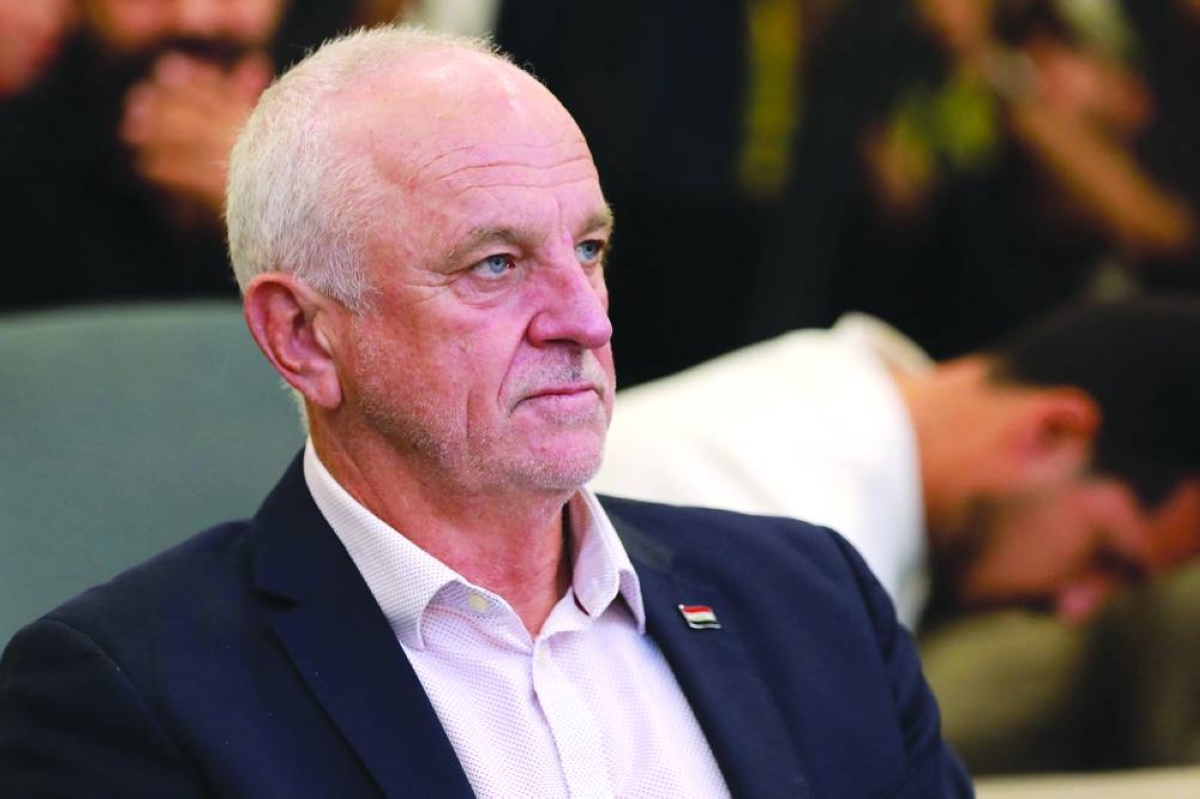
Graham Arnold was appointed as Iraq’s coach in May last year to succeed Spaniard Jesus Casas. (AFP) Iraq’s veteran Australian coach Graham Arnold is hoping his team can pull off a shock on their return to the World Cup stage after a remarkable and gruelling journey to this year’s tournament in North America. “The year I’ve been in charge has been crazy and very, very stressful for the players,” Arnold told by phone from Baghdad, shortly before heading to Spain for a pre-tournament training camp. “Every game basically since I’ve been here has been a game of life and death.” That might sound extreme, but Iraq were not just left battling to secure qualification right up until the latest possible moment – their prospects of reaching the finals were also seriously compromised by the war in neighbouring Iran. Arnold, 62, was appointed in May last year to succeed Spaniard Jesus Casas. At that point, the Lions of Mesopotamia were pushing for direct qualification in Asian Group B behind South Korea and Jordan. But on Arnold’s debut, 10-man Iraq lost to the Koreans. They eventually had to win a two-legged play-off against the United Arab Emirates – courtesy of a decisive Amir al-Ammari penalty in the 17th minute of injury time – to progress to an intercontinental play-off in Mexico in March. However, at that time, the US and Israeli airstrikes on Iran left many Iraqi players and staff stranded and scrambling to make the long trip. Changing mentalities “The airspace was shut down in Iraq. I couldn’t get back into Iraq to get my coaching equipment. The players couldn’t get out of Iraq,” Arnold recalls, detailing the 26-hour bus trip they took from Baghdad to Amman in Jordan. “And they got stuck in Jordan for 28 hours because of bombs going off around them and they shut down the airspace. When the boys actually got there, it took 68 hours. One of the first meetings and discussions I had with the players was, OK, with everything that’s going on in the Middle East, are you going to use that as an excuse or motivation?” Iraq defeated Bolivia 2-1 in Monterrey, securing a first World Cup appearance since 1986 after an interminable 21-match qualifying campaign. “The players went through a hell of a lot of stress and a lot of pressure on their shoulders from 46 million people in Iraq to qualify for a World Cup for the first time in 40 years,” said Arnold. “Every one of those games was heartbreak or we survived.” Arnold, who has been splitting his time between Australia and Iraq, insists his team does not lack ability but that his biggest job has been changing mentalities. “What I’ve felt in my time here, is that Iraq is a very negative country, because of all the shit that’s gone on with the wars over the last 30 years – there’s a bit of a negative mentality here, no one likes us, everyone hates us,” he says, referring to the Gulf Wars of 1991 and 2003. ‘Shock the world’ This may only be Iraq’s second World Cup, but the country has a footballing pedigree – they won the Asian Cup in 2007 and were semi-finalists in 2015. “I’ve never seen a country so obsessed with football. They have public holidays when Barcelona play Real Madrid,” says the coach. Arnold took his native Australia to the 2022 World Cup in Qatar, leading them to the last 16 where they pushed eventual winners Argentina close. Despite the adulation he has received from Iraqis, he says he felt far greater pressure as coach of the Socceroos. “I have the greatest respect for people like Didier Deschamps that has stayed and coached his nation for so long. The pressure of coaching your own nation is crazy because you don’t want to let them down. I feel like I’m more of a football coach now with Iraq than with Australia.” Iraq are in a daunting group at this World Cup, starting against Norway in Boston on June 16 before also playing France and Senegal. So what can they realistically achieve? “We qualified last. If you went through every individual player and every team, and the transfer price of all the players, we would probably be the lowest-ranked at the World Cup,” says Arnold, whose contract expires on July 31. “But it’s a World Cup. Anything can happen. And our boys have a great fighting mentality. It’s 11 versus 11. And if we win our one-versus-one battles, we can shock the world.”  Related Story

Opinion
In China, Lisa Su understated while Nvidia’s Huang more razzmatazz

In China, Lisa Su understated while Nvidia’s Huang more razzmatazz

When ‌AMD CEO Lisa Su arrived in China last week just days after Nvidia’s CEO left, she kept ​a much lower profile than Jensen Huang, who ‌drew crowds in the centre of the capital as he posed for photos and ate local delicacies ‌like Beijing-style soybean paste noodles. Their contrasting approaches show two ‌very different forms of corporate diplomacy around the world’s ‌most politically sensitive artificial intelligence chip market, where their fortunes have also been diverging. Just a year ago at the annual Computex trade show in Taipei, Huang said Nvidia’s market share in China had dropped to 50% from 95% due to US export controls. Since then, that has effectively fallen to zero, he said this year, amid Beijing’s push for self-reliance in advanced AI chips. Huang has previously estimated that China’s AI chip market would be worth $50bn this year. By contrast, AMD commands 4% of China’s AI chip market, according to IDC, a research firm, and it has more routes into the country than AI accelerators, which are Nvidia’s mainstay. AMD can serve Chinese customers with central processing units (CPUs), consumer graphics processing units (GPUs), AI chipsets and programmable ​integrated circuits called FPGAs, said Lian Jye Su, chief analyst at Omdia, a tech research firm. That gives AMD access to more types of system architecture as AI workloads spread beyond training large models into broader enterprise use, he said. With the two US tech CEOs ‌showing up in Taipei before the Computex event, their diverging China playbooks ​appear more pronounced, as both over the past week unveiled big investment plans in Taiwan, home to the ​world’s largest contract chip manufacturing firm, TSMC. Their contrasting approach to China also carries an unusual personal dimension: both hail from Taiwan and have said publicly that they are distant relatives. AMD’s announcement on its Taiwan investment followed a flurry of meetings that Su had in China last week, where she spoke at an AMD developer event and met customers and partners. She also had a publicly announced meeting with Chinese Vice-Premier He Lifeng, who said Beijing welcomes companies including AMD to “seize the opportunities presented by China’s development and deepen mutually beneficial co-operation.” Beijing, however, did not have a comparable senior-level meeting for Huang, who was in Beijing around the summit between China’s Xi Jinping and U.S. President Donald Trump on May 14 and 15. That silence stood out because Huang has been the more vocal of the two executives in arguing that ‌US chip curbs risk handing China’s AI market ‌to domestic rivals like Huawei. An adviser to multinational CEOs with business in China, who declined to be identified so they could discuss specific executives, said Su’s lower-profile approach was better suited to the current geopolitical environment. The adviser added that the politicization of US-China commercial ties and volatility in public sentiment had raised reputational risks for global chip CEOs. Su said last week that China accounts for about 20% of AMD’s revenue and remains important across PCs, gaming and some data-centre segments. “Frankly, you look at the size of the market and the size of our portfolio, and we’ll continue to partner very closely with our Chinese customers,” she said. While Huawei and other domestic chipmakers jump into the void left by Nvidia, AMD’s Shanghai developer event ​on May 19 suggests the Santa Clara, California-based company is also looking to fill the gap. During the event, Su promoted ROCm, AMD’s open-source software stack, to Chinese developers at a time when many AI firms are seeking alternatives to Nvidia’s CUDA ecosystem because the most advanced Nvidia hardware is hard to obtain. However, there are signs that the opening remains limited for now. AMD’s software ecosystem is far less mature than Nvidia’s and US export controls also restrict the US firm from selling its most advanced AI chips to China.    

World
Israel plan to seize more of Gaza means ‘more children will suffer’: UN

Israel plan to seize more of Gaza means ‘more children will suffer’: UN

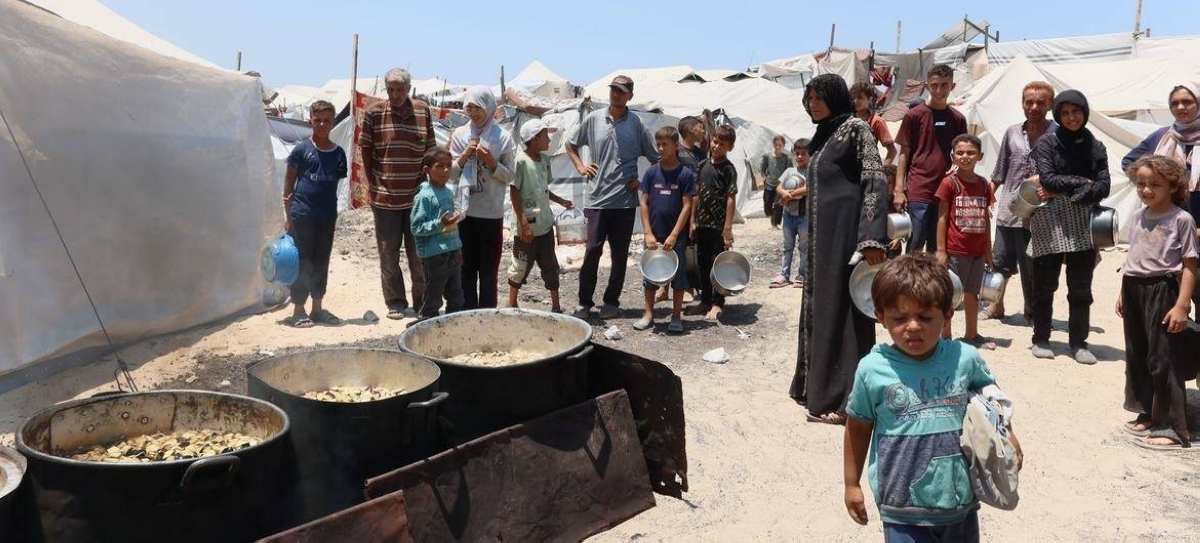
The UN warned on Friday that an Israeli plan to take control of 70 percent of Gaza will increase suffering among children already hit by the impacts of severe overcrowding.Israeli Prime Minister Benjamin Netanyahu has ordered the military to take control of more territory in the Gaza Strip, flouting the terms of a fragile ceasefire that took effect in October.He said the military had controlled 50 percent of the Palestinian territory under the terms of the ceasefire, then advanced to take over 60 percent."My directive is to move to... 70 percent," he said.The United Nations children's agency UNICEF warned that this would deepen the health crisis among children in the war-ravaged territory, suffering from acute lack of food, water and hygiene.Israel controls the flow of aid into the territory along with all entry points into Gaza, which has been under an Israeli blockade since 2007.Even before Hamas's October 7, 2023 attacks inside Israel triggered the war in Gaza, the territory was already very densely populated.Now "people have been crammed into around 40 percent of the space", UNICEF spokesman Salim Oweis told reporters in Geneva, speaking from Gaza.People there were left "sheltering among broken buildings, rubble and mounting solid waste", he said, adding "there is no accessible space left to clear" the waste."The effects of this are now widely apparent: children with respiratory infections, acute watery diarrhoea, and more than half of all households reporting skin diseases."- Rats biting children -"Fleas, lice and scabies are commonplace," Oweis said, also pointing to numerous cases of rats biting young children and even babies.Oweis said a woman named Hind "hasn't slept since her four-year-old daughter, Masa, was bitten by a rat during the night"."Like many families, they sheltered wherever they could, in their case, the second floor of a building block where sewage water leaks through the ceilings, and rodents crawl through the cracks in the building and climb the exposed pipes," he said.Rats are not the only menace.Oweis said he had spoken with another woman named Amani whose seven-year-old daughter had "developed deep lesions and sores on her head, back and legs due to a bacterial infection".He warned that "increasing numbers of children are requiring hospitalisation, all without a single fully functioning hospital across Gaza."The situation was "dire", Oweis said, noting the overcrowding was already "creating more spread of diseases, straining the systems and of course cutting... services".If Israel takes control of even more land, he warned, that "means that we will lose access to some of the service points, but also (to) some hard to reach places (where) children and families are living"."This will just mean that more children will suffer," he saidThe Palestinian foreign ministry slammed Netanyahu's announcement as "a serious violation of the foundations of the ceasefire".Since then, Gaza has been gripped by daily violence, with Israel killing more than 900 people there, according to Gaza's health ministry in the Hamas-run territory, whose figures are considered reliable by the United Nations.They are among the over 72,800 people killed in Gaza since the start of the war, according to the health ministry.The October 7, 2023 attack that sparked the war meanwhile resulted in the deaths of 1,221 people on the Israeli side, according to an AFP tally based on official Israeli figures. 

Sports
Barcelona sign Gordon from Newcastle

Barcelona sign Gordon from Newcastle

Anthony Gordon will sign for "the next five seasons, until June 30, 2031," Barcelona said in a brief statement. (Reuters) Barcelona confirmed the signing of Anthony Gordon from Newcastle United, for a fee that could rise to 80mn euros ($93mn). Gordon will sign for "the next five seasons, until June 30, 2031," Barcelona said in a brief statement.The 25-year-old left winger netted 17 goals for Newcastle this season, 10 of those in the Champions League, and was the club's top scorer. Gordon, part of England's World Cup squad, bolsters a Barcelona attack losing Polish veteran striker Robert Lewandowski at the end of his contract, and possibly Marcus Rashford after his loan spell from Manchester United. La Liga champions Barcelona still hope to strengthen further in the coming weeks, with Atletico Madrid striker Julian Alvarez linked with a switch to Catalonia, while the club have not ruled out a new move to keep Rashford. After three years of reduced expenditure and with their partially rebuilt Camp Nou stadium reopened, Barca have more economic breathing room within La Liga's strict financial fair play rules than previously. Lewandowski departure and the end of Rashford's loan give Barca margin to spend and other players including Roony Bardghji, Ansi Fati and Marc-Andre ter Stegen may also leave. Gordon's transfer is Newcastle's second largest sale in their history after Liverpool paid £125mn ($168mn) for Alexander Isak last summer. The Premier League side may move for Real Betis winger Ez Abde as a replacement, according to reports. Gordon joined Newcastle from Everton for £45mn in 2023, with the Merseyside club set to receive 15 percent of profits from the winger's departure from St James's Park. Related Story

World
Growing fears: Myanmar farmers face fertiliser, fuel dearth

Growing fears: Myanmar farmers face fertiliser, fuel dearth

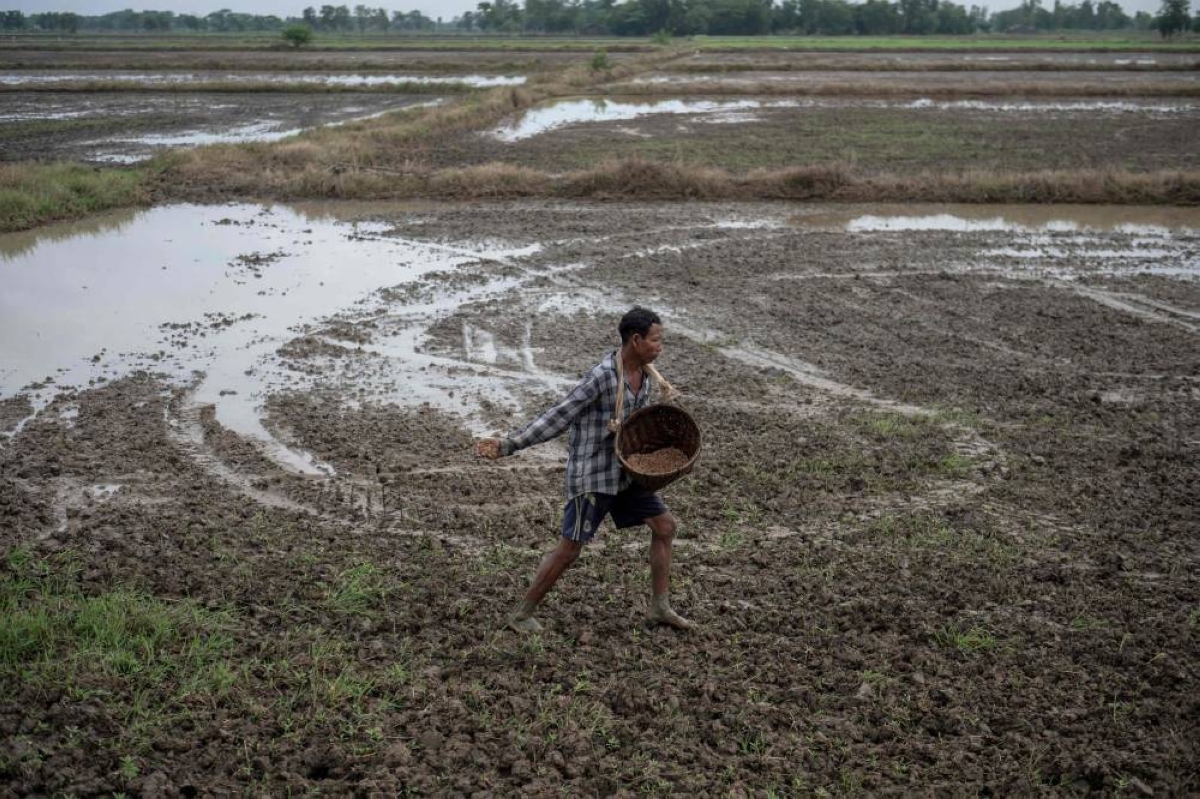
Under monsoon skies leaden with rain, Myanmar rice farmers despondently tend their paddy fields, doubtful the deluge will bring bountiful harvests during a fuel and fertiliser crisis caused by the Iran war."If prices continue to rise, I will be a beggar," says veteran farmer Soe Naing, perched on a sack of rice seed overlooking his 30 acres (12 hectares) of rented land outside the delta town of Kawhmu."I may give up working as a farmer, but growing rice is my calling," the 49-year-old told AFP between thunderous sheets of rain heralding the start of planting season across Myanmar's riverine south.The US-Iran war continues to send supply shocks worldwide, even as a fragile ceasefire holds.Conflict closing the Strait of Hormuz has been particularly damaging to Asia, the destination for 80% of oil transiting the seaway, according to the International Energy Agency.Myanmar, already gripped by a humanitarian crisis amidst its civil war, is vulnerable further still.The Southeast Asian nation imports 90% of its fuel oil, according to official figures.Up to 95% of its chemical fertilisers — produced in abundance in the Gulf where natural gas is burnt to synthesise ammonia — is also imported, according to the UN's World Food Programme (WFP).Spiking prices of both commodities have left Myanmar farmers struggling to fuel rotavators needed to till fields or buy fertiliser to boost their seedlings at a crucial time in the agricultural calendar.The WFP warns a 50% drop in fertiliser use could result in farming output dipping up to 15% in Myanmar, where food insecurity is already widespread."The current situation is the most difficult time we have faced," said Soe Naing. "As for my hope, I have nothing other than my fields."— Barren hope —More than 4,000 kilometres (2,500 miles) from the embattled Strait of Hormuz, Moe Aung's paddy — situated a 15-minute boat ride up a serpentine creek — is beholden to the shock of the global shipping crisis.He sows seed onto the mud but plans to ration half a bag of fertiliser per acre this year — one-sixth of what his crop needs to thrive."I am just doing it because I own fields, but I don't want to do it," says the 53-year-old. "I have no willingness to continue if this situation doesn't end."Prices for a 50-kilogram bag of fertiliser have multiplied up to five times, he estimates, now costing as much as 200,000 kyat ($48).Moe Aung works with his hands in the sucking mud of the humid paddy fields.But much of his profession now entails complex mental arithmetic and accountancy as he struggles to manage a cycle of high-interest debt worsened by the far-off Middle East war.Buying fertiliser on credit and paying the bill after the harvest is common, but this year Moe Aung fears the sums will simply not add up."I don't think the expense and the revenue will be equivalent," he says."Previously, we were comfortable; we could look after our parents, we could go for some social activities, our family was peaceful and happy," he said."That is all disappearing."— 'History full of doubts' —Myanmar was once the world's rice bowl, exporting more of the staple than any other nation in the years before World War II.Decades of post-independence conflict and instability, and now the civil war sparked by a 2021 military coup, have eroded the country's agriculture sector.The coup deposed the elected government of Aung San Suu Kyi, Myanmar's popular democratic leader who remains detained and who once held Kawhmu's parliamentary seat.The resulting war has killed more than 90,000 people on all sides, monitoring group ACLED says, and displaced more than 3.7mn, according to the UN.The UN describes Myanmar as a country mired in a "polycrisis", with the effects of the Middle East conflict another layer of degradation.But there may be yet another problem on the horizon.Forecasters predict this year will see a strong iteration of the El Nino weather phenomenon, which typically brings heatwaves and drought to parts of Southeast Asia.It is due to start as soon as this month — another global shock with the potential to reverberate in fragile Myanmar."If we continue this way, farmers could disappear from this country," laments Myanmar Farmer Union chair Su Su Nway."We do not want future generations to read a history full of doubts, wondering if these farmers truly existed." 

Sports
Arteta urges Arsenal to ‘own’ Champions League final against PSG

Arteta urges Arsenal to ‘own’ Champions League final against PSG

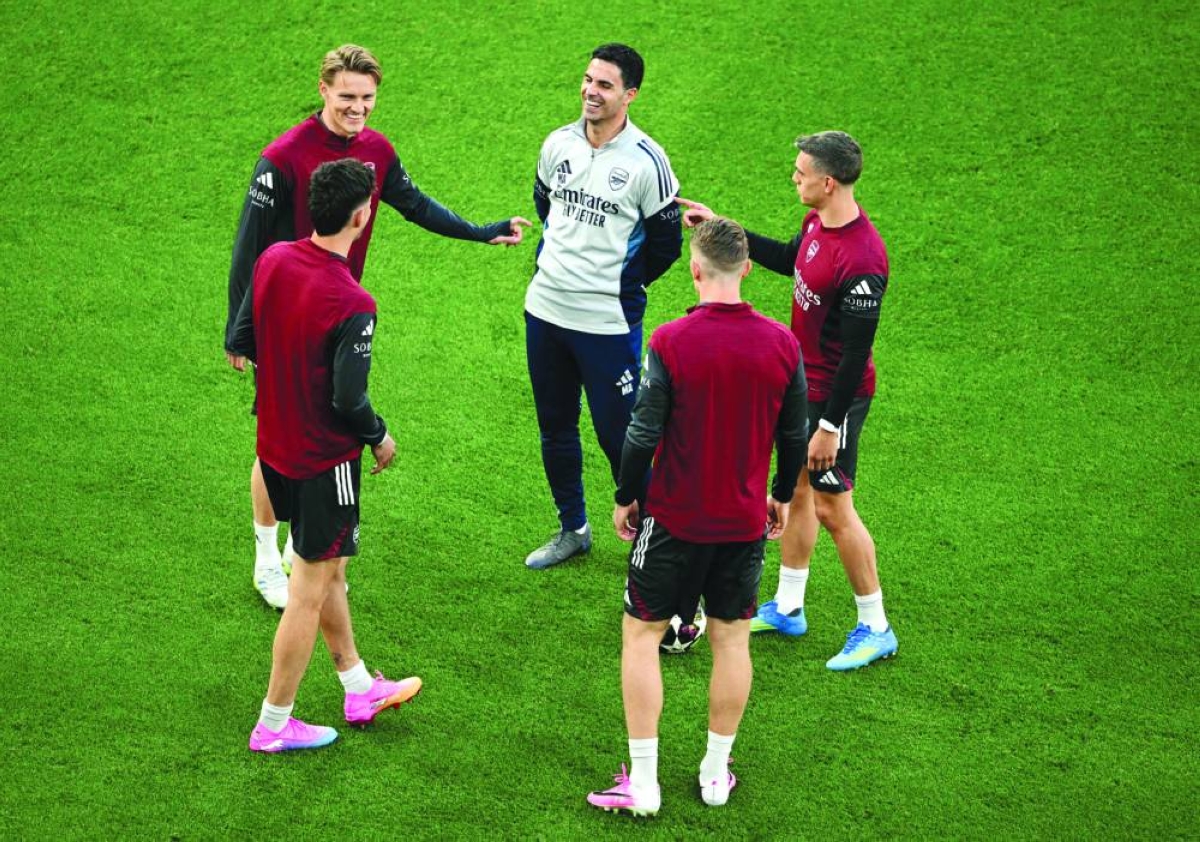
Arsenal's manager Mikel Arteta (centre) is all smiles as speaks with captain Martin Odegaard (left) and other players during a training session at the Puskas Arena in Budapest. (AFP) Arsenal coach Mikel Arteta called on his players to "own the moment" ahead of today's Champions League final clash against holders Paris Saint-Germain.The Gunners have never won the trophy and were beaten in their only other final appearance, against Barcelona 20 years ago. Arteta said he was convinced his team could make history by beating Luis Enrique's side in Budapest."It's the opportunity to own the moment, it's the second time in our history we are here," the Spanish coach told reporters."We have the opportunity tomorrow to write a new chapter in the history of this football club. We have to play tomorrow with such a clarity, a lot of courage and a relentless desire to win. If we have those three aspects, I'm sure we are going to be close to winning."Arteta's side ended a 22-year wait to lift the Premier League by beating out Pep Guardiola's Manchester City. The coach said he was not worried his team would allow that success to be enough in itself, and instead it had to be a springboard for more silverware, starting at the Puskas Arena."(Our) ambition is bigger. We have one (trophy) and we want the second one," explained Arteta. "That's all we have been talking about –that has to be a platform to reach bigger destinations and to aim for more, and the team is capable... I want the players to be so confident that we're gonna go and do it."Arsenal's defensive strength helped them reach the final unbeaten, conceding just six goals en route. Arteta said he had no doubts about his team deserving their place on the biggest stage, but had to prove on Saturday they deserve to be crowned champions."We are here because we've earned the right to be here, in the manner that we have performed in this competition -- tomorrow on that field we have to earn the right to win the trophy," said the coach.Arteta said Jurrien Timber was fit to start the final after a groin problem which has sidelined the right-back since mid-March, and Ben White was the only unavailable member of his squad.England international Bukayo Saka returned from injury a few weeks ago and has returned at his best level after a tricky season individually. The winger, who came through Arsenal's youth academy, said he and his team-mates were raring to go and did not need extra motivation of avenging last season's semi-final defeat by PSG."We have enough fire going into the game tomorrow, we know the history of the club and we know that tomorrow we can write history as players and winning it for the first time," said Saka.Arsenal captain Martin Odegaard said winning the Premier League showed the squad just how satisfying it is to succeed. "It was 22 years since we last won the Premier League and now finally we did it," said the Norwegian. "So we want to make even more history and, you know, when you get the taste of winning and lifting a trophy, you know how nice it feels."  Related Story

Sports
Sooryavanshi’s 96 in vain as Gujarat down Rajasthan to reach final

Sooryavanshi’s 96 in vain as Gujarat down Rajasthan to reach final

Fifteen-year-old Vaibhav Sooryavanshi's 96 was in vain as Gujarat Titans beat Rajasthan Royals by seven wickets on Friday to set up an IPL final against defending champions Royal Challengers Bengaluru.Chasing 215 for victory after Sooryavanshi's second successive 90-plus score in the last play-off, Gujarat skipper Shubman Gill's 104 saw them chase down their target with eight balls to spare in New Chandigarh.Gill put on 167 runs with opening partner Sai Sudharsan, who made 58, as Gujarat, who lost the first play-off to Bengaluru, reached their third final in five seasons since their title-winning debut in 2022.Teenage sensation Sooryavanshi bowed out at the top of this season's batting chart with 776 runs after his 47-ball knock laced with eight fours and seven sixes.Gill - India's Test and ODI captain - is behind the boy wonder with 722 runs but has a chance to move ahead of him in the final in Ahmedabad on Sunday.Gill and the left-handed Sudharsan batted with control in a classical display to ease into the chase against a bowling attack led by Jofra Archer.Sudharsan, who was dropped on 14, fell hit wicket for the second time in two matches as his bat slipped to rattle the stumps after he had guided the ball for a four.Gill reached his first century of this season with a four but soon departed as Archer trapped him lbw before Jos Buttler (9) and Rahul Tewatia, with a winning six in his 17, steered the team home.Earlier Sooryavanshi's partnership with Ravindra Jadeja, who hit an unbeaten 45, stood out in Rajasthan's 214-6.Sooryavanshi, who hit a blistering 29-ball 97 in the eliminator, missed out on his ton for a second straight game after he miscued a shot to deep thirdman off Kagiso Rabada.He went on to raise his fifth half-century of the season in 31 balls -- his slowest IPL fifty, but held the innings together despite the regular fall of wickets.Gujarat quicks peppered the left-handed Sooryavanshi with short balls and the teenager edged one from Rabada on to his helmet, but soon got back to business after a mandatory concussion check.He picked up the pace with a couple of sixes and fours and put life back into the innings with a 58-run stand with Jadeja.Jadeja and Sooryavanshi had put on 73 for the third wicket to hit back after Gujarat pace bowlers Mohammed Siraj and Rabada struck early on.Donovan Ferreira made Rajasthan finish with a flourish in his unbeaten 11-ball 38 but the effort was not enough. BRIEF SCORESGujarat Titans 219 for 3 (Gill 104, Sai Sudharsan 58) beat Rajasthan Royals 214 for 6 (Sooryavanshi 96, Jadeja 45*, Ferreira 38*, Holder 2-27, Rabada 2-35) by seven wickets  Related Story

World
Nepal unveils $13.8bn reform budget after political shift

Nepal unveils $13.8bn reform budget after political shift

Nepal's government unveiled yesterday its first budget since sweeping to power after a youth-led uprising, promising reforms and a push to revive growth following months of political turmoil.Prime Minister Balendra Shah, 36, assumed office in March after a landslide victory for his party in the first elections since the deadly 2025 uprising ousted the previous government.Finance Minister Swarnim Wagle presented a 2.1-trillion-rupee ($13.8-billion) spending plan focused on boosting infrastructure, technology, health and education, while pledging to stabilise the economy.'The nation is standing at a decisive crossroad of comprehensive economic reform,' Wagle said in parliament.'The vicious circle of political instability has come to an end.'The budget seeks to spur domestic demand by doubling the income tax exemption threshold and raising salaries for government employees, while also introducing reforms aimed at improving the business environment and attracting investment.Poor planning and sluggish bureaucracy hampered the country's growth in previous years, with the government routinely failing to spend funds allocated in annual budgets.'This budget... attempts to redefine the state's role not just as a controller and a regulator but an institution that creates opportunities,' Wagle said, promising more jobs and improving living standards.The nationwide demonstrations in September 2025, initially sparked by anger over a brief government ban on social media, were driven by deeper frustration over economic hardship and corruption.Violence during the protests killed at least 76 people.Rameshore Khanal, who served as finance minister in the interim administration that led the country following the uprising, lauded the budget and said it had steered away from populist agendas.'This budget focuses on reforms more than ever before... it will be a turning point if implemented effectively,' Khanal told AFP.Business leaders also welcomed the proposals, particularly measures aimed at easing regulatory burdens.The budget would make 'it easier for investors to navigate the complex legal regime in the country', said Birendra Raj Pandey, president of the Confederation of Nepalese Industries.On Wednesday, the government's economic survey projected growth of 3.85 percent as Nepal grapples with the impact of global economic pressures.In April, the World Bank said better political stability and progress in structural reforms could boost investor confidence in the Himalayan nation of 30 million people.Wagle said that 'the economy is expected to grow by seven percent in the coming financial year as a result of the reform programmes, while the inflation rate will remain at six percent.' 

Sports
Fonseca blasts Djokovic out of French Open after epic comeback

Fonseca blasts Djokovic out of French Open after epic comeback

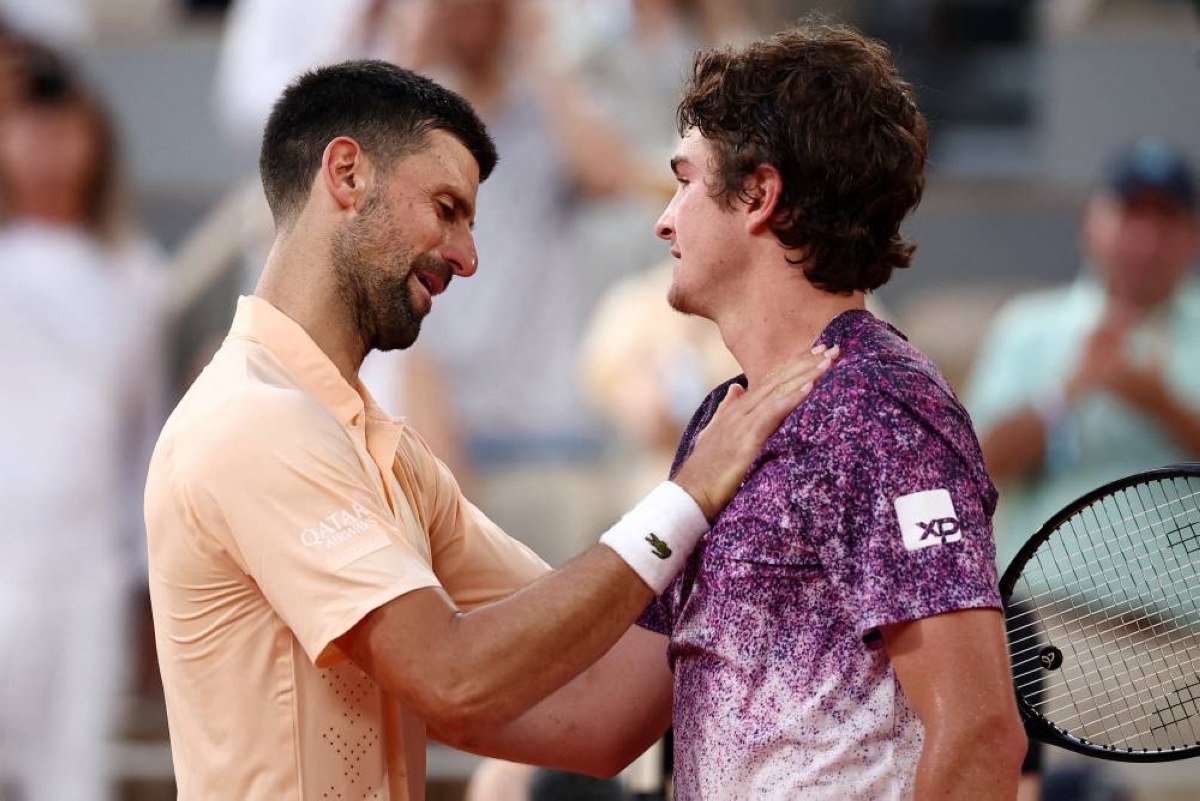
Brazilian teenager Joao Fonseca knocked Novak Djokovic out in the third round of the French Open on Friday to scupper the Serbian great's latest quest for a record 25th Grand Slam. The 19-year-old Fonseca rallied from two sets down for the second straight match to stun Djokovic with a phenomenal display of power-hitting. Fonseca triumphed 4-6, 4-6, 6-3, 7-5, 7-5 after four hours and 53 minutes to make it through to the last 16 of a major for the first time. Asked how he kept believing after falling behind, Fonseca replied: 'I actually didn't. I just kept playing. I just enjoyed being on court. What a pleasure it was stepping on court with him (Djokovic) for the first time. I was trying to hit the ball as fast as I could. Djokovic, he does not miss.' Fonseca will next play two-time Roland Garros runner-up Casper Ruud or American 24th seed Tommy Paul. Djokovic's exit comes a day after the shock elimination of world number one and red-hot title favourite Jannik Sinner. It means there will be a first-time men's Grand Slam champion this year at the French Open, ending a run of nine successive majors won by Sinner or Carlos Alcaraz. 'What an incredible match to be part of,' said Djokovic. 'Huge credit to Joao for really deserving to win the match. Without a doubt he was the better player in crucial moments.' Djokovic has been stuck on 24 majors since the 2023 US Open and may not get a better chance to add to that haul. Two-time defending champion Alcaraz was already absent in Paris due to injury. 'You just have to say well done and congratulate him. He played lights-out tennis,' Djokovic said of Fonseca. 'I don't think I've done much wrong with my game. He was just better.' Alexander Zverev, a three-time Grand Slam finalist, is best placed to capitalise on the wide open draw. The second seed plays Frenchman Quentin Halys in the night session. Swiatek and Andreeva move onIga Swiatek booked her place in the last 16 of the women's draw with a 6-4, 6-4 win over Magda Linette in an all-Polish affair. Four-time women's champion Swiatek dug herself out of an early 2-0 hole against the 35th-ranked Linette, who won their most recent meeting at Miami in March. Swiatek broke three times in the opening set to nose ahead, and then surged into a 4-1 lead in the second set. She overcame a stumble as she tried to close it out, before sealing victory to set up an intriguing match-up with the in-form Marta Kostyuk. 'It was a good match. I played much better than Miami,' said Swiatek, who moved to appoint Francisco Roig, a longtime coach of Rafael Nadal, in the wake of her loss to Linette two months ago. Kostyuk, the 15th seed, continued her fine run with a 6-4, 6-3 win over Switzerland's Viktorija Golubic. She is unbeaten in 15 matches on clay this season following titles in Madrid and Rouen. 'Marta is having a great season. She always had a game to play well,' said Swiatek. 'So good for her. But I'm going to focus on myself, prepare tactically, as before any other match, and we'll see.' Russian teenager Mirra Andreeva swept into the last 16 with a 6-4, 6-2 victory over Czech 27th seed Marie Bouzkova. The eighth-seeded Andreeva goes on to face Swiss world number 170 Jil Teichmann, who knocked out former French Open runner-up Karolina Muchova. Elina Svitolina extended her winning run to nine matches, easing into the second week with a 6-2, 6-3 win over Tamara Korpatsch. Svitolina, who ended an eight-year wait for another WTA 1000 title in Rome, meets Swiss 11th seed Belinda Bencic or American Peyton Stearns for a place in the quarter-finals. Romanian 18th seed Sorana Cirstea demolished Argentina's Solara Sierra 6-0, 6-0.