World
Iran talks ongoing at ‘rapid pace’

Iran talks ongoing at ‘rapid pace’

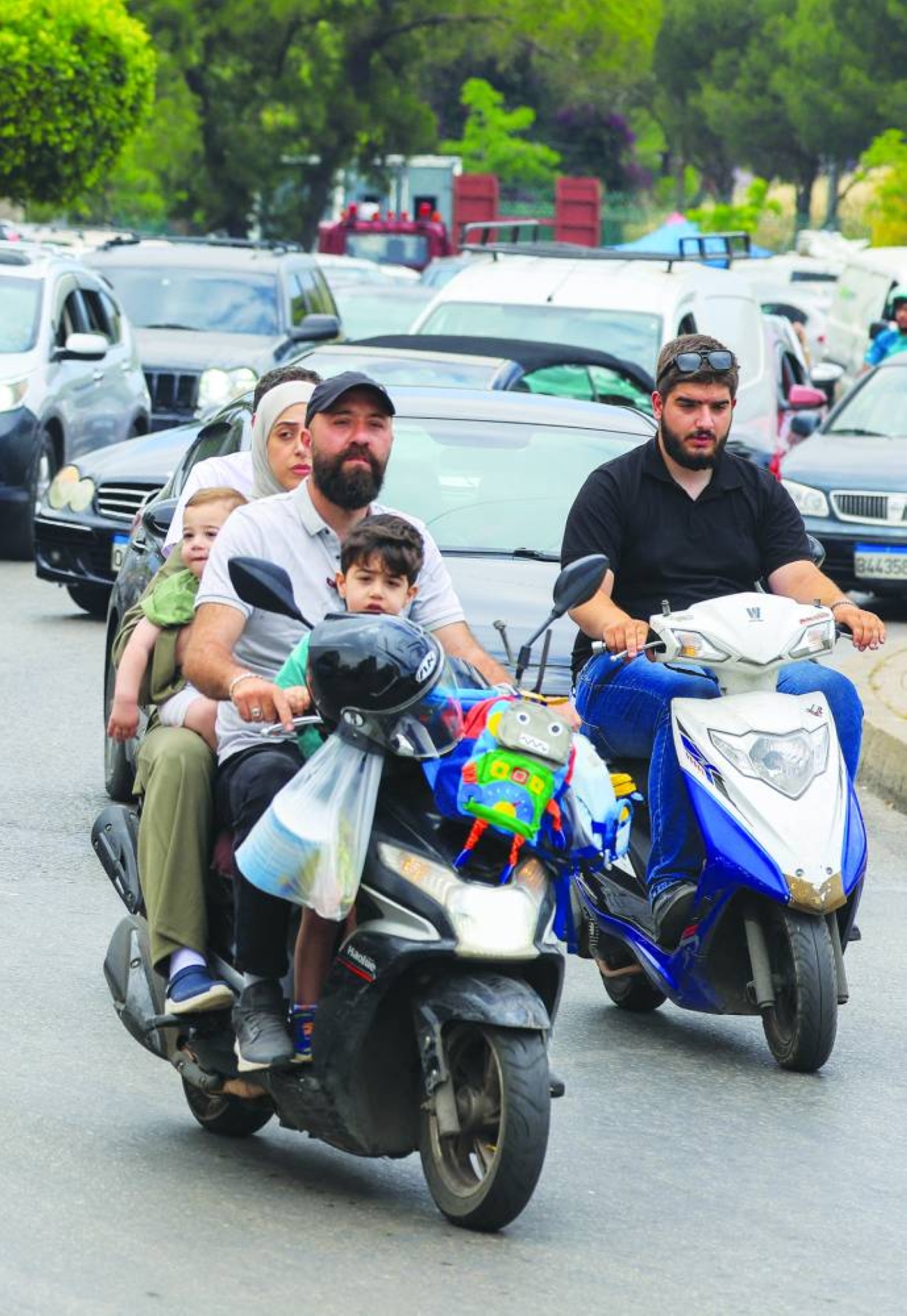
People make their way on scooters as they flee the southern suburbs of Beirut yesterday. (Reuters) US President Donald Trump said Iran talks were moving at a "rapid pace" despite the negotiations to end the Mideast war appearing in deep trouble yesterday, with Iran's Revolutionary Guards warning of new fronts.Iran's Tasnim news agency reported Tehran had suspended dialogue with mediators in protest at Israel's expanding offensive in Lebanon, with Israel saying it would once again target Beirut's southern suburbs."Talks are continuing, at a rapid pace, with the Islamic Republic of Iran," Trump said in a social media post made shortly after another post in which he said he had persuaded Israel and Hezbollah to de-escalate.Weeks of indirect talks between the US and Iran marked by threats and several waves of air strikes have so far failed to bring about an end to the war or the reopening of the Strait of Hormuz, the key shipping channel for Gulf oil and gas.The latest US-Iran exchange of fire overnight coincided with Israel expanding its ground offensive in Lebanon, with Prime Minister Benjamin Netanyahu vowing to push deeper into the country and instructing his military to strike "terror targets" in Beirut's southern suburbs.Israel's Arabic-language spokesman posted on X that residents of the suburbs, or Dahiyeh, should evacuate "to preserve their safety", and AFP images showed huge traffic jams as residents tried to flee.Later yesterday, Trump said he had persuaded Hezbollah and Israel to de-escalate the conflict.Netanyahu ​said ‌yesterday ‌that ⁠he ‌had ‌told Trump that Israel would attack "terror" targets ​in Beirut if Hezbollah did ‌not cease ⁠its ​attacks on ​Israeli cities."At the same time, the IDF will ‌continue to ‌operate ⁠as planned ⁠in southern ⁠Lebanon," Netanyahu said in a ​statement, referring to the Israeli military.Iran again said yesterday it had not engaged in any nuclear negotiations and insisted that Israel must halt its offensive in Lebanon before any wider deal to end the war could be agreed.Ahead of a UN Security Council emergency meeting on Lebanon, the UN Secretary-General Antonio Guterres's spokesman said: "We are deeply alarmed by the escalation in military activities across southern Lebanon and beyond."The US naval blockade on Iran's ports and the escalation in Lebanon were "clear evidence of US non-compliance with the ceasefire", Iran's chief negotiator Mohammad Bagher Ghalibaf posted on X.Late yesterday, Tasnim reported that "the Iranian negotiating team is suspending dialogues and exchange of texts through mediators", blaming Israel's actions in Lebanon.And in a message carried by state TV, the Revolutionary Guards intelligence body said that "Iran considers crossing the red lines in Lebanon and Gaza to mean direct war".It added: "In return, it is determined to carry out defensive operations by taking meaningful actions and opening new fronts, in addition to preserving the Strait of Hormuz equation."Speaking to NBC, Trump said "It doesn't mean we're going to go and start dropping bombs all over there" and insisted Washington would maintain its naval blockade.Tasnim reported that Iran would continue to block the Strait of Hormuz and, with its allies, "activate other fronts, including the Bab al-Mandab Strait" at the entrance of the Red Sea.Tehran's Houthi allies in Yemen have previously attacked shipping in and around the latter strait, the closing of which could disrupt millions more barrels of oil that Saudi Arabia exports daily through its Red Sea port of Yanbu.In a sign of the ongoing danger to shipping in the Gulf, the UKMTO maritime agency reported a "large explosion" on a cargo vessel off the coast of Iraq, "following a hit from an unknown projectile".Speaking at a weekly briefing, Iranian foreign ministry spokesman Esmaeil Baqaei said: "No negotiations have taken place on the details of the nuclear file. At this stage, our priority is ending the war."Trump has insisted that Iran's nuclear programme be part of the deal, saying that Tehran must not get nuclear weapons. Iran has always denied having such ambitions."We insist that a ceasefire in Lebanon is an essential condition for any deal aimed at ending the war," Baqaei said, adding: "The United States is also violating the ceasefire, including this morning."The US military said it had carried out "self-defence strikes" on Iranian radar and drone control sites over the weekend — its third such wave in just over a week — after a US MQ-1 drone was downed.Shortly afterwards, the Revolutionary Guards told state media they had targeted an airbase used by the US military for the attack.They did not identify the country hosting the base, but Kuwait's military said its air defence had intercepted "hostile missile and drone attacks".  Related Story

World
Malaysia bars under-16s from signing up for social media

Malaysia bars under-16s from signing up for social media

Malaysia has begun barring those aged under 16 from registering accounts on ‌social media platforms, its communications ​regulator said yesterday, as it boosts efforts ‌to protect ⁠minors ‌from exposure to ‌harmful content online. The Southeast Asian nation joins ⁠a growing number of countries introducing measures to regulate access to online platforms, amid mounting concerns over the impact of social media on children's health and safety.From yesterday, social media platforms including Meta Platforms' Facebook and Instagram, TikTok, and Alphabet's YouTube, must ‌conduct age verification against ⁠government-issued ​records, the Malaysian Communications and Multimedia ​Commission said.Fines up to 10mn ringgit ($2.5mn) may be levied against social media platforms who fail to comply."The measure is not intended to prohibit child users from the internet or to deny them access ‌to technology," it ‌said, rather it aims ⁠to boost responsibility among social ⁠media platforms, ⁠parents and guardians in protecting minors online.Age verification for existing users will be implemented by social media platforms over a six month-period.Malaysia ​has stepped up scrutiny of social media companies after finding a sharp rise in harmful online content in recent years, and is cracking down on material that deliberately tries to stir racial or religious tensions, or ‌criticises the monarchy. 

World
Philippines, Vietnam renew defence ties to boost maritime security

Philippines, Vietnam renew defence ties to boost maritime security

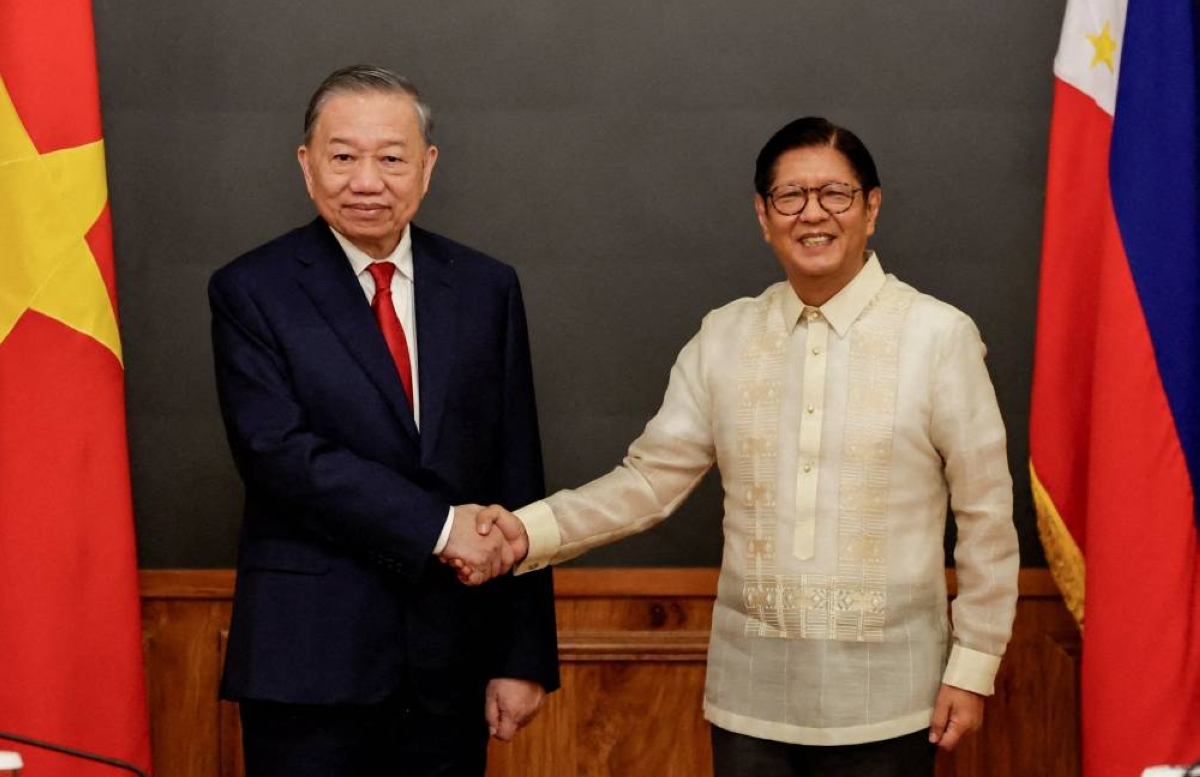
Philippine President Ferdinand "Bongbong" Marcos Jr and Vietnam President To Lam shake hands during a bilateral meeting at Malacanang presidential palace in Manila, yesterday. (Reuters) The Philippines and Vietnam agreed to strengthen defence ties yesterday to help bolster maritime security in the region and maintain peace in the disputed South China Sea.The Southeast Asian countries are among the nations in the region — including China — to lay claims to the Spratly chain, which sits near vital shipping lanes and is reputedly rich in minerals.After a meeting with his Vietnamese counterpart To Lam in Manila, Filipino President Ferdinand Marcos said the partnership has become "increasingly important" as the region navigates uncertainty "marked by geopolitical fragmentation".The nations renewed a 2010 defence agreement, establishing that both would maintain "delegation exchanges for security and defence matters", and step up "information exchange".They also agreed to collaborate on law enforcement to prevent transnational crime, including cyber scams, illegal migration, human trafficking, illegal gambling, among other challenges.Lam said after the meeting that any individual or organisation using the "territory of one country to commit sabotaging acts against the other" would also be prevented.At a joint news conference following the meeting, Marcos said "as fellow claimant states" of the South China Sea both it and Vietnam would also "reaffirm that maintaining peace, stability, and the freedom of navigation and overflight" in the region "remains non-negotiable"."We stand resolute in our commitment to the peaceful resolution of disputes grounded firmly in international law," he said.It comes just days after China's military drove away a Dutch navy vessel it accused of "illegally intruding" into the area around the Paracel Islands in the South China Sea.The Netherlands insisted that its frigate had been in international waters.A day before the move, the US, India, Japan and Australia jointly voiced concern over the South and East China Seas, warning against any assertive moves.Without referring to China by name, the nations' foreign ministers criticised "dangerous manoeuvres by military aircraft" and "ramming and blocking actions in the South China Sea". 

World
India takes down giant Messi statue over safety concerns

India takes down giant Messi statue over safety concerns

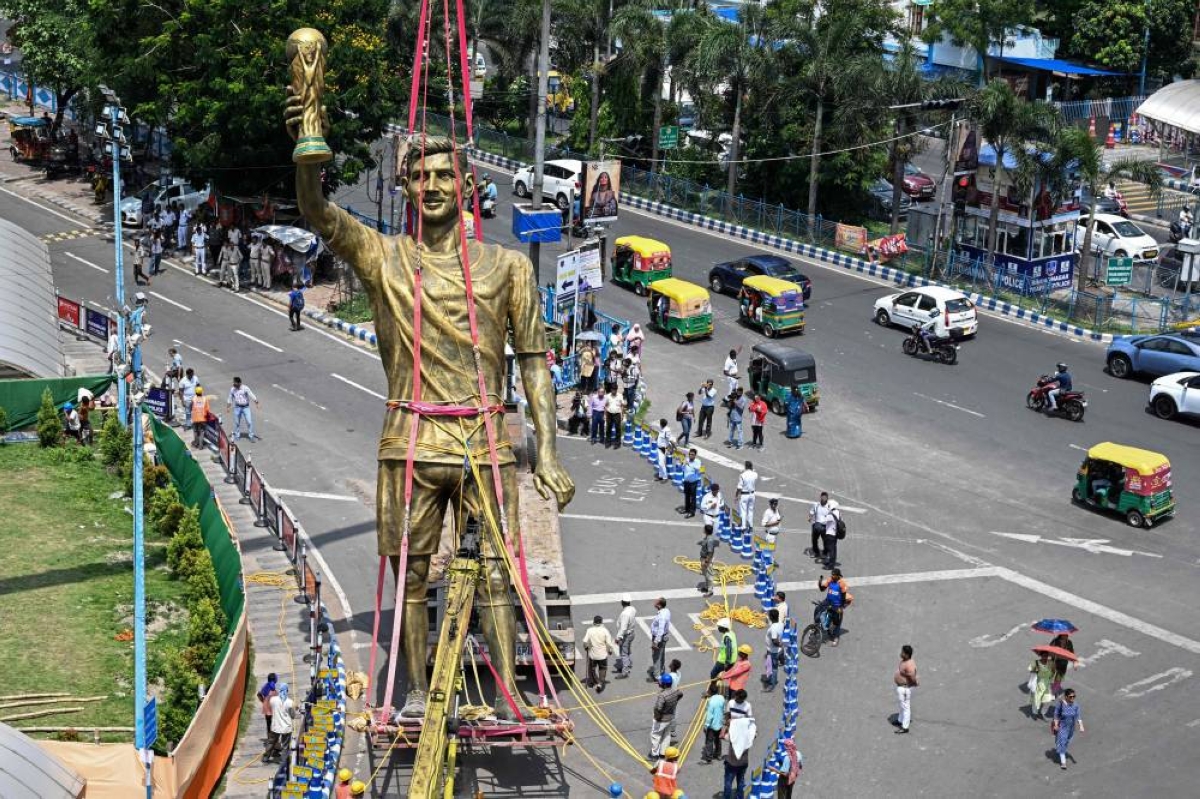
Pedestrians watch as workers remove a statue of Argentine football player Lionel Messi for its re-installation to a safer place in Kolkata yesterday. (AFP) A giant statue of football superstar Lionel Messi was taken down in India yesterday after it was spotted swaying dangerously in the wind, authorities said.Hydraulic cranes and ropes were used to dismantle the 21-metre (70-foot) sculpture in Kolkata, the capital of West Bengal state, before it was taken away on an open-top flatbed truck, AFP journalists saw."The statue was removed on Monday afternoon after locals complained it was swaying in the wind," state lawmaker Sharadwat Mukherjee told AFP.Mukherjee said the statue would be kept in a government warehouse while authorities decide on a new location.The gold-coloured statue, depicting the 38-year-old Argentina and Inter Miami star lifting the World Cup trophy, was unveiled in December during Messi's much-publicised GOAT tour of India.Messi will captain Argentina at the upcoming World Cup, to be co-hosted by the US, Canada and Mexico.The statue drew scrutiny as political power shifted in West Bengal, where Prime Minister Narendra Modi's Hindu nationalist Bharatiya Janata Party swept into office last month after defeating the opposition Trinamool Congress (TMC).The statue was reportedly designed under the patronage of former chief minister and TMC leader Mamata Banerjee, and was criticised by the new BJP sports minister Nisith Pramanik as "unsightly".India, a nation of 1.4bn people, is a cricket powerhouse but has long struggled on the international football stage, and is 142nd in the FIFA rankings.Football, however, is the country's second-favourite sport, according to recent research by data company Nielsen. 

World
Five dead, two injured after blast at Hanwha Aerospace plant in Korea

Five dead, two injured after blast at Hanwha Aerospace plant in Korea

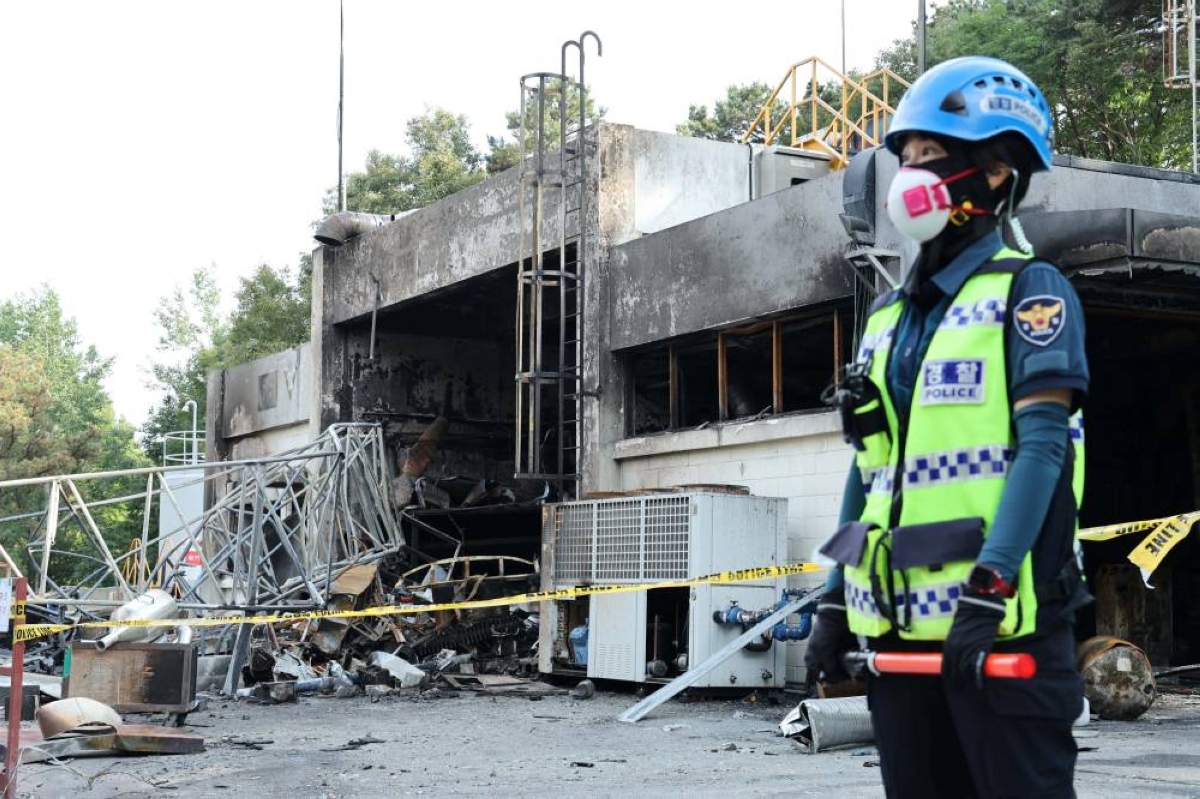
A police officer stands in front of heavily damaged production line for rocket propellant of Hanwha Aerospace's factory after an explosion, in Daejeon, yesterday. (Reuters) Five people have ‌died and two others were injured yesterday after an ⁠explosion and fire on a Republic of Korea production line for rocket propellant at a factory operated by Hanwha Aerospace in the city of Daejeon, officials said.The two survivors, including one who was badly burned, had escaped from the facility themselves, a fire official ​told a briefing."Authorities have yet to identify the victims because their bodies were severely damaged," a health official told the same briefing.A ‌fire official said that ⁠an explosion ​had triggered the blaze, though the cause of ​the blast was still being investigated.Shares in Hanwha Aerospace fell 2.8% in afternoon trade, while the holding company Hanwha Corp saw its shares drop 3.4%.The blast appeared to have occurred while water was being used to clean explosive material from tools making rocket propellant, a Hanwha official told a company briefing."We bow our heads in apology to the ‌victims and their bereaved ‌families," said Chief Executive ⁠Officer Son Jae-il, pledging to co-operate fully with authorities ⁠to determine the cause ⁠of the accident.The five dead included two temporary workers in their 20s and all were employed by Hanwha, the company said.Hanwha is a defence and aerospace company. Its factory in Daejeon produces large propulsion engines and ​handles rocket propellants.Authorities were unable to obtain the factory's layout since it is protected under national security laws, an official said at an earlier briefing.Republic of Korea President Lee Jae-myung called for the mobilisation of all available resources to respond to the accident and for an investigation, his office said in a text message to reporters. 

World
China accuses Japan defence minister of ‘baseless’ claims

China accuses Japan defence minister of ‘baseless’ claims

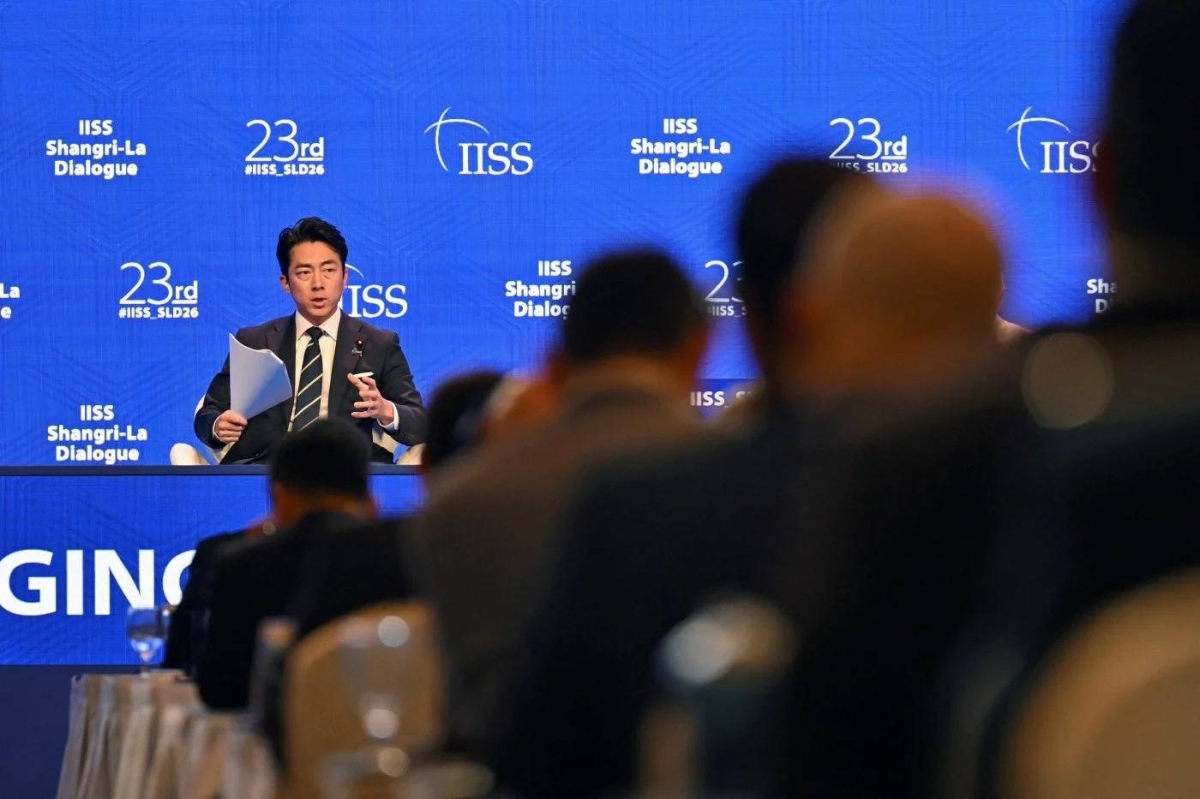
China accused Japan's defence minister yesterday of spreading "baseless" claims and sowing confusion, a day after he took a veiled swipe at Beijing.Defence Minister Shinjiro Koizumi had pledged on Sunday to keep strengthening Japan's military and warned China was expanding its capabilities without sufficient transparency.His comments follow a months-long diplomatic spat between the Asian rivals, which began when Prime Minister Sanae Takaichi suggested in November that Japan could intervene militarily if China attempted to seize Taiwan, the self-ruled island claimed by Beijing.China's foreign ministry said yesterday that Koizumi's comments were "entirely baseless"."They appear pale and feeble in the face of a series of historical and legal facts and figures," ministry spokesman Lin Jian told a news briefing."This Japanese official deliberately... attempts to turn the tables and sow confusion," Lin said."Japan's so-called dialogue is nothing but hypocrisy — a performance put on for appearances, devoid of any genuine sincerity," he added.Under Takaichi, Japan has quickened its pivot towards a more proactive defence policy, further shaking off — with US encouragement — a pacifist outlook, which has been in place since the end of World War II.Koizumi made his comments at the annual IISS Shangri-La Dialogue in Singapore, saying China's expanding military capabilities were "a matter of serious concern for Japan".Tokyo would "steadily build up its defence capabilities and make continuous updates with a high degree of transparency", including in the fields of artificial intelligence, uncrewed systems as well as cyber and space defence, he said.Beijing has frequently rebuked Tokyo for its pivot and said following a reckless policy of "new militarism" that could destabilise the region. 

Opinion
Empty guns: How Iran’s drone arithmetic is rewriting naval strategy

Empty guns: How Iran’s drone arithmetic is rewriting naval strategy

Somewhere in the Persian Gulf, a billion-dollar warship is burning through its ammunition, shooting down drones that cost less than a second-hand car. That quiet arithmetic, a $4mn interceptor missile destroying a $20,000 drone, may be the most consequential military equation of our time, and Washington is only beginning to grapple with its implications. The scenario is not hypothetical. American destroyers operating in contested Gulf waters have been drawn into precisely this kind of exchange in recent months, compelled by doctrine and caution to fire expensive, finite interceptors at cheap, expendable swarms. Each engagement feels like a tactical success. Cumulatively, it is a strategic trap that Tehran has patiently engineered with mathematical precision. Seneca observed that “we suffer more in imagination than in reality.” In the Persian Gulf, the reverse may be true. The real danger is not the drone that the radar catches. It is the cumulative drain that no single engagement reveals. The math is brutally simple. A US Navy Arleigh Burke-class destroyer carries roughly 96 vertical-launch interceptors, its entire defensive magazine. It cannot reload at sea. Sustain enough drone pressure, and a $2bn warship eventually floats defenceless. Iran’s strategists understand this arithmetic intimately. They may not be able to sink an American destroyer in open battle. But they may not need to. The goal is not destruction. It is exhaustion. “You don’t need to beat the United States Navy. You just need to empty its guns.”Compounding the economics is what intelligence officials describe as a deepening electronic shadow over the Gulf. There are credible, if unconfirmed, indications that Russian military satellites are providing Iran with real-time targeting intelligence, while military-grade electronic warfare systems are flooding American combat radars with false signals, which one Pentagon assessment grimly labeled a “digital fog.” When a radar cannot cleanly distinguish a decoy from an incoming cruise missile, commanders default to shooting. Conservative rules of engagement, sensible in isolation, become catastrophically expensive across a sustained swarm campaign. Every misclassification accelerates the drain. Every phantom target costs a real interceptor. Carl Jung once observed that “thinking is difficult, which is precisely why most people judge instead.” The electronic warfare dimension exploits exactly that vulnerability. When sensors lie, commanders stop analysing and start reacting. Tehran is not merely flooding the skies with drones. It is flooding decision cycles with noise, deliberately engineering the conditions under which snap judgment replaces deliberate thought. The geography amplifies everything. The Strait of Hormuz, just 21 miles wide at its narrowest point, carries roughly 20% of the world’s oil supply through waters that Iran can observe from its own coastline. Any serious escalation in those waters would not remain military for long. Energy markets would register the shock within hours. Analysts warn that sustained conflict near the Strait could send fuel prices spiking dramatically, with cascading effects across every economy that runs on imported oil, which is to say, most of them, including American allies whose political stability Washington cannot afford to take for granted. American policymakers face an uncomfortable binary that Tehran has carefully constructed. Maintain presence and fight through the swarms: prestige is preserved, but magazines drain and the risk of escalation climbs with every exchange. Stand off and reposition: the immediate attrition stops, but the image of American ships withdrawing from Iranian pressure carries its own strategic cost, one that adversaries from Beijing to Moscow will measure carefully, and that partners from Riyadh to Tel Aviv will absorb quietly. There is, defence planners argue, a third path. But it requires intellectual honesty to admit that the current posture is broken, and the institutional courage to say so publicly.The answer is not to match Iran drone-for-drone, nor to escalate toward strikes on Iranian territory that would ignite a broader regional war. It is to change the economics of the engagement entirely, to make the swarm tactic expensive for Tehran rather than for the US Navy. That means investing urgently in close-in, high-volume counter-drone defences, optimised weapons systems, proximity-fused naval guns, and directed-energy platforms, so the Navy stops trading four-million-dollar missiles for twenty-thousand-dollar nuisances. It means hardening ship radars against electronic warfare through frequency agility and multi-sensor fusion, restoring the fire discipline that sensor degradation is deliberately eroding. It means restructuring magazine loadouts to blend expensive interceptors with lower-cost area-effect munitions, and integrating off-board shooters, submarines, manned aircraft, and unmanned platforms, so that no single destroyer bears the full burden of its own defense. The famous Rumi wrote that “the quieter you become, the more you can hear.” The lesson applies with uncomfortable precision to American naval posture. The loudest response — interceptor after interceptor lighting up the Gulf sky — is also the most legible, the most predictable, and the most exploitable. Silence, in strategic terms, means denying Iran the feedback loop it depends on: knowing exactly how many missiles remain in an American magazine. That deeper rethinking must extend to theatre architecture altogether — deploying crewless picket vessels and standoff surveillance assets to detect swarms earlier, dispersing their concentration before they reach a single hull, and forcing Iranian commanders to solve new tactical problems rather than optimise against a posture they have already mapped. None of this is fast or cheap. Bureaucracies resist admitting that a regional power with a satellite dish, a drone factory, and a mathematician has outmaneuvered a decades-old playbook. But the alternative, continuing to burn irreplaceable interceptors against a threat engineered specifically to exhaust them, is a strategy that runs out before Iran does. The United States has rarely lost a naval engagement by firepower. It would be a singular historical irony to lose one by arithmetic.  The writer is a prominent news anchor, programme presenter and media instructor. 

Entertainment
Ex-Prince Andrew Under Investigation For Alleged Encounter With Woman At Royal Ascot

Ex-Prince Andrew Under Investigation For Alleged Encounter With Woman At Royal Ascot

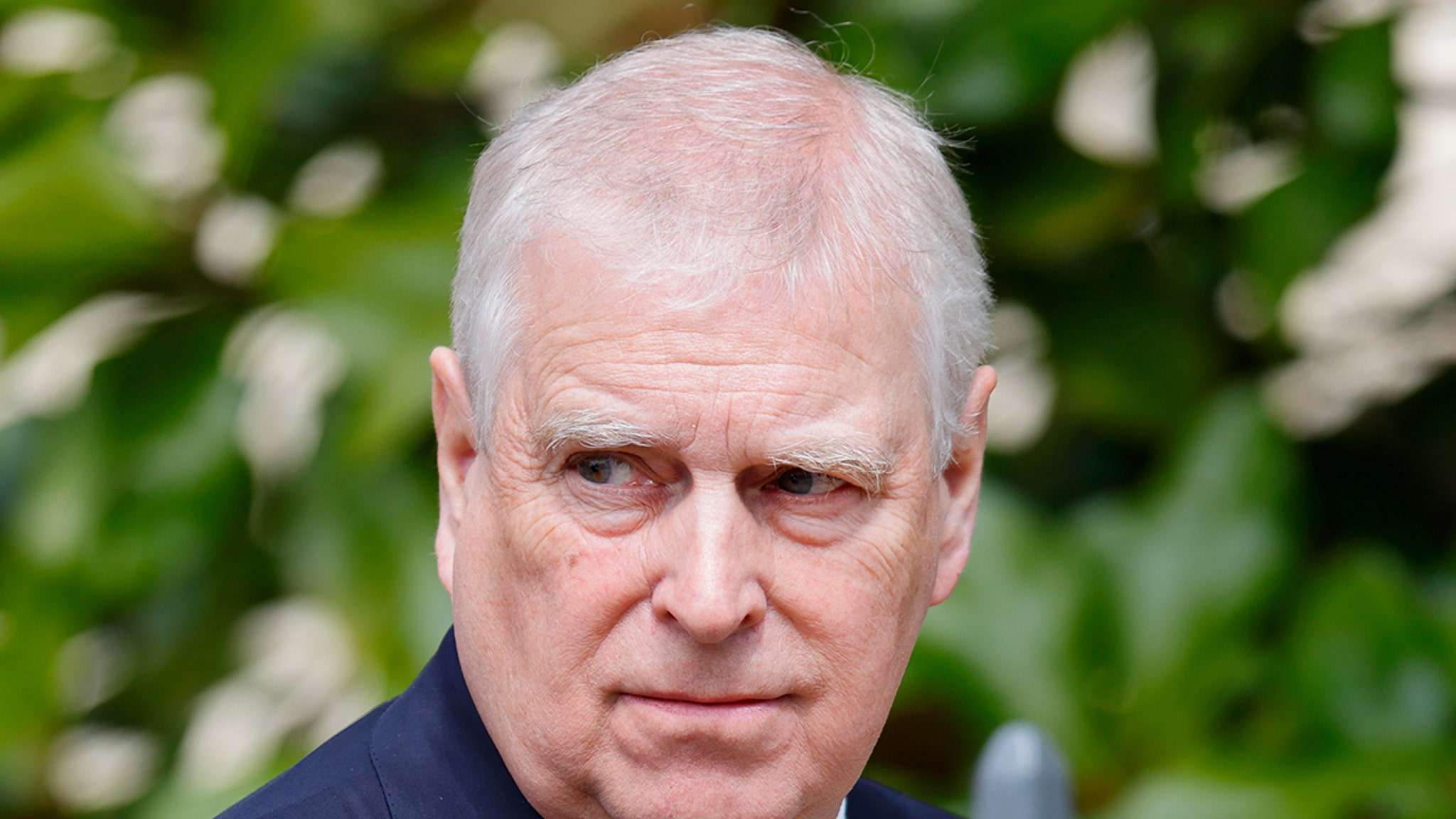
Former prince Andrew Mountbatten-Windsor is back in the crosshairs of police in England ... he's under investigation for an alleged encounter back in the day with a woman at Royal Ascot. Cops across the pond are

Opinion
The Strait truth: Why a Hormuz deal is harder than it looks

The Strait truth: Why a Hormuz deal is harder than it looks

Hopes have risen that US and Iranian officials can agree an extended deal that would see the Strait of Hormuz reopen to unrestricted traffic. Three months of blockage in the Strait has wrought havoc on energy flows and global supply chains and constituted the biggest supply shock in decades, possibly ever. International stereotypes of the Gulf States as producers of oil and gas and little else have been reshaped by the recognition of their centrality in every day commodities from phosphates and aluminum to helium and sulphur. As prewar stocks are drawn down, governments and companies are warning that the delayed impact of the economic disruption is about to hit hard if passage through the Strait is not restored soon. Difficulties on both the US and Iranian sides mean that any agreement will be vulnerable to sudden reversal or bumps along the way. Deep domestic divisions both in Washington, D.C. and within the Iranian leadership mean that internal politics could still get in the way of an agreement that satisfies both parties. Israel remains a wild card that could also undermine a deal especially as Benjamin Netanyahu begins to prepare for the election season. Moreover, the cavalier nature of US decision-making during the two previous rounds of US-Iran negotiation, in May-June 2025 and February 2026, means that there is a deficit of trust on the Iranian side which will not easily be regained absent a lasting and durable settlement. While Iranian officials have mocked President Donald Trump’s habit of ‘negotiating with himself’ over the course of the war which began on February 28, they too face a challenge of acting consistently over the way the Strait of Hormuz eventually reopens to maritime traffic. Just as Trump’s statements have occasionally been contradictory and at odds with each other over the prospects and content of a deal, so too have Iranian pronouncements on Hormuz. This has added to the frustration both sides feel toward the other and has caused confusion to analysts and industry experts who need clarity to be able to plan and develop next steps. For shipping and insurance companies, in the Gulf States and around the world, predictability in security will be essential prerequisites to addressing the surging risk assessments that amounted to the de facto closure of the Strait in the opening days of the war.Much of the focus from industry analysts will be on the detail that structures the resumption of shipping through Hormuz. Iranian negotiators have realised that their early talk of imposing tolls on shipping run contrary to decades of customary international law as laid down by the International Court of Justice in the Corfu Channel Case in 1949. This decision, which remains foundational today, determined the legal regime that governs innocent passage through international straits and affirmed the protection of navigational rights even in politically sensitive contexts. However, there is greater leeway in the imposition of charges and fees, such as the service-related charges imposed by Turkiye on ships that pass through the Bosphorus and Dardanelles straits that connect the Black Sea and the Mediterranean. It is these charges – for issues such as environmental and health factors or search-and-rescue services – which Iranian officials have raised in recent weeks and have suggested might enjoy the support of Oman, the other coastal state bordering Hormuz, as well. It may be that such commentary is an Iranian attempt to spread misinformation or sow discord between Muscat and its Gulf neighbours, but it is the case that any decision by Tehran to impose service-related charges will be harder to challenge than the tolls initially proposed. It is for this reason that the shipping and insurance industries, to say nothing of governments across the world, will watch closely for the terms of the resumption of passage, and for whether any charges are levied unilaterally by Iran alone. The fact that, pre-war, the shipping channels ran through Omani waters in the Strait of Hormuz, and only briefly entered Iranian waters on their way into and out of the Gulf, strengthens Oman’s position considerably. The other key aspect of restoring innocent passage will be the speed with which transits resume and what takes priority. Around 1500 vessels have been stuck in the Gulf for nearly three months on oil tankers, LNG carriers, and container and dry cargo ships, and they will need to clear the Strait and make their way to intended destinations or home ports. Many of the vessels may have suffered damage from the buildup of marine organisms and algae on their hulls during extended periods of inactivity, which will require extensive cleaning and maintenance before they can return to service. As a result, logistical bottlenecks will likely endure for many months even after ‘normal’ flows begin to resume; the same goes for the restarting of oil and gas facilities where production has been shut-in since early March. Finally, insurance companies will monitor the conditions of reopening in practice, rather than just as words on paper, before making any decision on war risk coverage for vessels transiting the Strait. It was the repricing and, in some cases, suspension of war risk premiums and surcharges in early March that was the decisive factor in restricting traffic through Hormuz, rather than any physical blockage by Iran.The ease with which passage was interrupted took analysts by surprise as it upended prior assumptions that Iran would have to physically disrupt shipping by mining activities or attacking vessels, as they had done during the Tanker War phase of the Iran-Iraq War in the 1980s. Back then, the international community belatedly came together in Operation Earnest Will to establish the largest naval convoy operation since the Second World War to protect shipping, and, in so doing, planted the seeds of the permanent US military presence that continues to this day. It would be ironic if the unintended consequences of the US strikes on Iran in 2026 contributed to the unraveling of the regional order set in motion by those earlier events four decades ago.  The writer is a leading scholar specialising in Gulf politics and international political economy, and a fellow at the Baker Institute and co-director of the Middle East Energy Roundtable. 

Entertainment
CIA Officer Busted With Gold Bars Has Ties To Trump’s Deputy Defense Secretary

CIA Officer Busted With Gold Bars Has Ties To Trump’s Deputy Defense Secretary

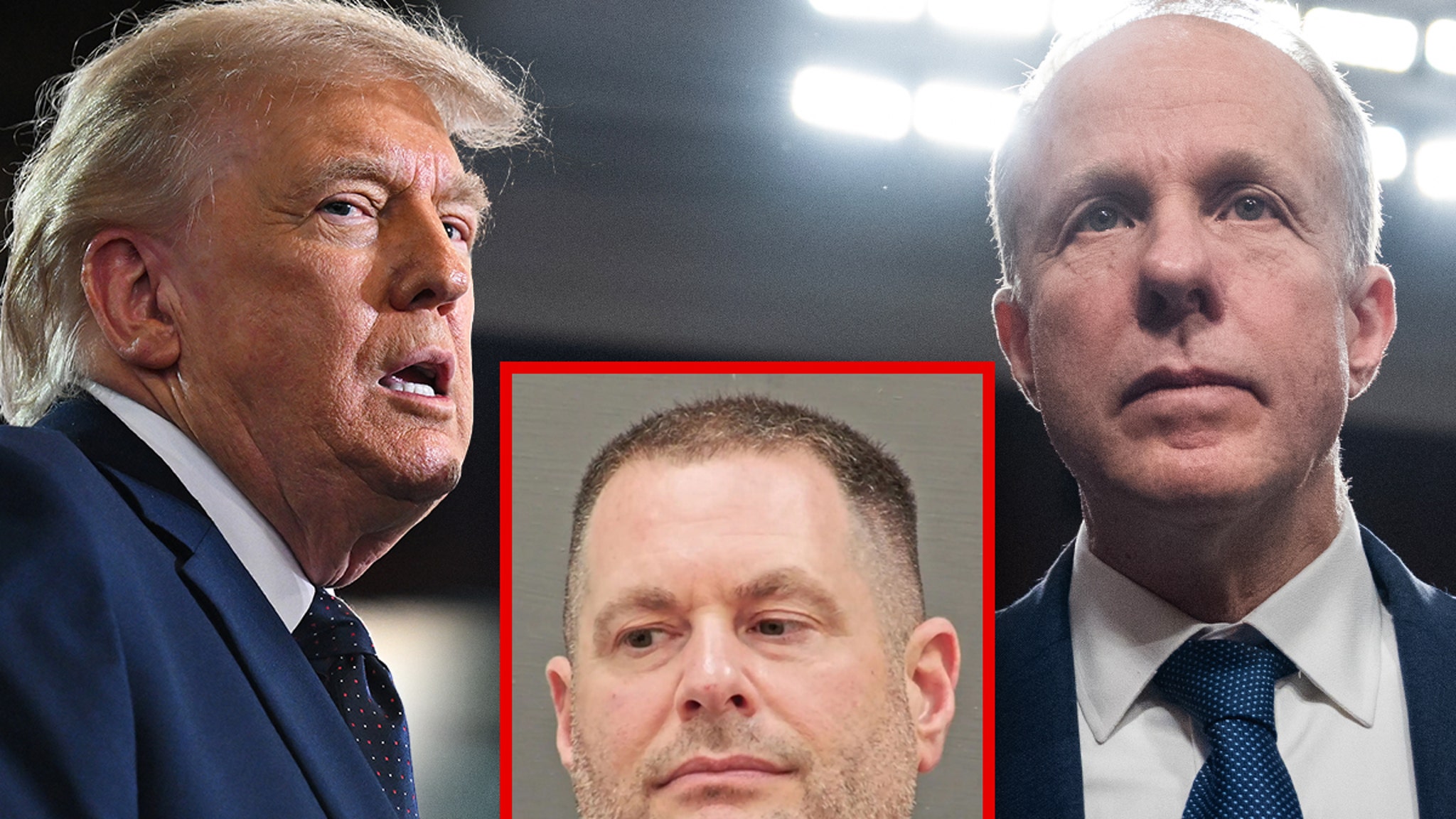
Arrested CIA Officer Busted for Gold Bars ... & Is Reportedly Linked To Trump's No. 2 at Pentagon Published May 31, 2026 1:33 PM PDT David Rush, the longtime CIA officer who was arrested for