Entertainment
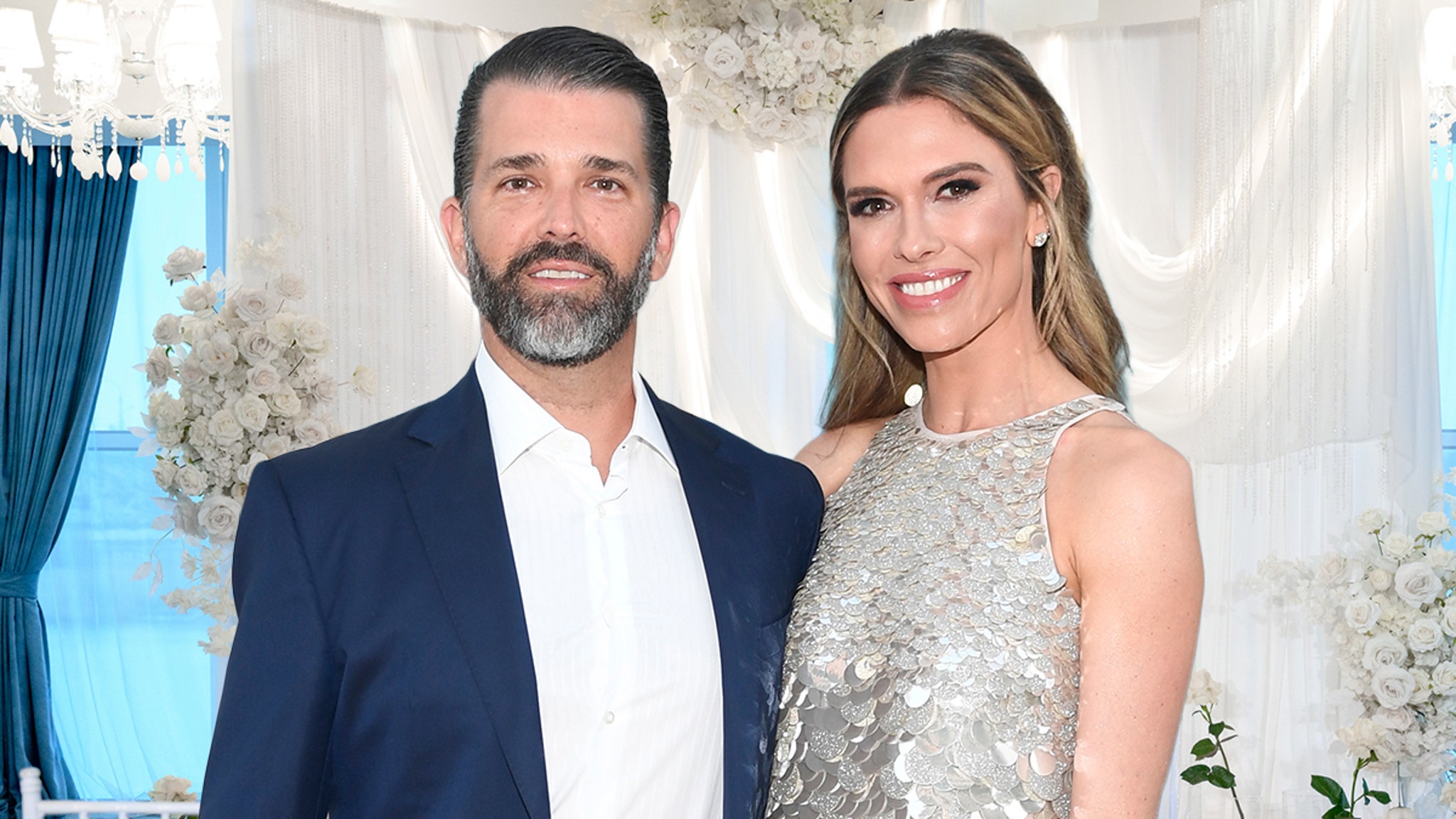
Joe Jonas Performs at WrestleMania After Going IG Official with New GF

Joe Jonas Performs at WrestleMania After Going IG Official with New GF

Joe Jonas kicked off WrestleMania Night Two in Las Vegas by showing off his solo vocals, performing the National Anthem for the 50,000 plus in attendance inside of Allegiant Stadium... but that wasn't the only

Entertainment
Nancy Sinatra Criticizes Donald Trump for Posting Frank Sinatra Performance

Nancy Sinatra Criticizes Donald Trump for Posting Frank Sinatra Performance

Nancy Sinatra is ripping President Donald Trump for blasting her dad’s iconic voice online ... and she’s not holding back. The 85-year-old singer lit up X this weekend after the POTUS dropped a nearly four-minute

Entertainment
The Strokes Go Political at Coachella With War-Themed Visuals

The Strokes Go Political at Coachella With War-Themed Visuals

The Strokes didn’t just rock Coachella -- they lit a political firestorm in the middle of the desert had the crowd doing a double take. The NYC rockers were cruising through their performance on Saturday

Entertainment
Alix Earle Responds to Alex Cooper Drama in Pole Dancing TikTok Video

Alix Earle Responds to Alex Cooper Drama in Pole Dancing TikTok Video

Alix Earle Works the Pole While Dodging Alex Cooper Questions Published April 19, 2026 3:08 PM PDT Alix Earle isn’t spilling the tea just yet ... but her latest TikTok is doing plenty of talking!

Entertainment
Mike Myers Crashes Eddie Murphy’s AFI Ceremony Dressed As Shrek

Mike Myers Crashes Eddie Murphy’s AFI Ceremony Dressed As Shrek

Mike Myers Storms Eddie Murphy's Ceremony In Full Shrek Getup Published April 19, 2026 2:30 PM PDT Forget a black tie ... Mike Myers rolled up in full ogre glam to pay tribute to Eddie

Sports
Wolff says F1 must wield scalpel not baseball bat in making changes

Wolff says F1 must wield scalpel not baseball bat in making changes

FILE PHOTO: Formula One F1 - Chinese Grand Prix - Shanghai International Circuit, Shanghai, China - March 13, 2026 Mercedes team principal Toto Wolff arrives ahead of practice. REUTERS Formula One needs to take a ‌surgical approach to rule changes that might improve racing rather than ​a big hit with a ‌baseball bat, Mercedes team boss Toto Wolff said Monday. ‌Teams, engine makers ⁠and key F1 ‌stakeholders were due to meet later ‌in the day to put forward tweaks to the new rules in time ⁠for the next race in Miami in May."I must really say that the discussions that have been taking place between the group of drivers, the (governing body) FIA, Formula One and the teams have been constructive," Wolff told reporters on a video call."We all share the same objectives. It's how can we improve the product, make it out-and-out racing and look at what ​can improve in terms of safety, but act with a scalpel and not with a baseball bat."I think we're coming to good solutions that we're going to ratify hopefully ‌today in order to evolve, because ⁠it's only three ​races in," added the Austrian. "And in a way, we need to ​learn from the past where sometimes decisions were made in an erratic way and then we overshot and realised it wasn't good."MERCEDES DOMINANT SO FAR IN NEW ERAMercedes have won all three races this season, the first two one-two, with Italian teenager Kimi Antonelli leading teammate George Russell in the standings.Red Bull's four-times world champion Max Verstappen, yet to get close to the podium this season, has said the rules are fundamentally flawed and has hinted he could walk away unless some big changes are ‌made.Wolff said he was "carefully optimistic" ‌that everything would align and ⁠played down concerns that the tweaks might not go far enough to placate ⁠those who wanted to see ⁠drivers go flat out without having to "lift and coast" and be slowed by having to manage the electrical energy.The sport has undergone the biggest chassis and engine change in decades with new power units split roughly 50-50 between electric and combustion power.Drivers have also raised safety concerns about widely divergent speeds between cars using an ​electrical boost and others slowing to recharge.Wolff said everyone involved needed to "understand our responsibility as the guardians of the sport" and work to safeguard competition rather than seek an advantage."We shouldn't bad-mouth in public our own sport," he added. "We've been all falling foul to this in the past because of gamesmanship or because of trying to protect a situation or improve a regulatory situation."But we need to be very careful because the things we say in public, they ‌may not have an ​immediate repercussion on how the fans perceive the sport but that comes with a lag."  Related Story

World
Rat poison found in HiPP baby food jar in Austria, police say

Rat poison found in HiPP baby food jar in Austria, police say

Rat poison ​was found inside a jar ‌of HiPP baby food, Austrian police said late on ‌Saturday after the product was ‌recalled from 1,500 SPAR supermarkets in the ‌country over safety fears. A statement from police in Burgenland said that a sample from one of the 190-gram jars of carrot with potato baby food reported by a customer in the Eisenstadt-Umgebung district had tested positive for rat poison. HiPP had said on Saturday that it could not be ruled out that a dangerous substance was introduced into the product and that its HiPP Vegetable Carrot with Potato ​jars may have been tampered with.Consuming the contents could be life-threatening, HiPP said. The police statement said the affected jars had a sticker with a red circle on ‌the bottom of the jar and a ​lid that had already been opened or damaged or missing ​a safety seal, or had an unusual smell.They said initial lab tests on similar jars seized by police in the Czech Republic and Slovakia showed the presence of a toxic substance. The statement gave no further details. HiPP confirmed to Reuters on Sunday that the jars did contain rat poison and that affected retail partners in both countries immediately removed all HiPP baby food jars from sale as a precautionary measure.The police also said that authorities in ‌Austria were warned about the ‌risk after investigations in Germany. They provided no further details. “Products and distribution channels in Germany or other European countries that are not part of the investigations are not affected,” HiPP said.HiPP said on Saturday: “According to our current knowledge, this critical situation involves an external criminal interference that affects the SPAR Austria distribution channel.” SPAR Austria said on Sunday that it had removed the HiPP products in all countries where it runs businesses, ​including Austria, Slovenia, Hungary, Croatia and Northern Italy. SPAR stores in other countries are not part of SPAR Austria, it added. SPAR and HiPP advised customers not to consume the contents of the jars bought from SPAR Austria. They said customers would receive a full refund on returned products. Police advised customers to wash hands thoroughly if they came into contact with a jar. The Austrian Agency for Health and Food Safety said that ‌medical help must be ​sought immediately if babies consumed the contaminated baby food. 

World
As Iran war strains ties with Trump’s US, UK looks to Europe

As Iran war strains ties with Trump’s US, UK looks to Europe

Britain’s government is set to announce legislation next month to move the country closer to the European Union, as the Iran war sours the UK’s so-called special relationship with the US. President Donald Trump’s unpredictability and stream of insults towards America’s historic ally is adding impetus to Prime Minister Keir Starmer’s bid to deepen ties with the 27-nation bloc, a decade after Britons narrowly voted to leave the EU. “We have a government that is already eager to move closer towards the EU, and the events in Iran provide an opportunity to speed up that process,” Evie Aspinall, director of the British Foreign Policy Group think-tank, told AFP. Starmer’s administration is preparing an EU “reset” bill that will give ministers powers to align UK standards with EU single market rules as they evolve — something called “dynamic alignment”.King Charles III will announce the legislation on May 13 when he reads out Starmer’s legislative plans for the coming months, a government official told AFP on condition of anonymity. Starmer has repeatedly called for a deeper economic and security relationship with Europe since his Labour party won the 2024 general election, ousting the Conservatives, who had implemented the 2016 Brexit referendum. He has upped those calls in recent days, telling Dutch leader Rob Jetten on Tuesday that “he believed the partnership between the UK and the bloc needed to be fit for the challenges we were facing today”. The EU is Britain’s biggest trading partner, while the International Monetary Fund warned this week that the UK will be the advanced economy hardest hit by the Iran conflict.“Certainly Iran has made it (the reset) more prescient,” said the UK official. “We need to build economic resilience across the continent,” they added. Starmer refused to involve Britain in the US and Israel’s initial strikes on February 28, angering Trump, although he has since allowed American forces to use UK bases for a “limited defensive purpose”. Under pressure at home for his disastrous decision to appoint former Jeffrey Epstein associate Peter Mandelson as ambassador to Washington, Starmer has received plaudits for standing up to Trump in the face of repeated taunts from the US president. Days ago, Trump threatened in a phone interview with Sky News to scrap a US-UK trade deal that limited the impact on Britain of his tariffs blitz. “There’s no doubt that there is now momentum in the UK-EU relationship partly as a result of Trump’s unreliable behaviour,” David Henig, an expert on UK’s post-Brexit trade policy, told AFP.“Independent UK trade policy looks much harder, the prospects of working with the EU much brighter.” Starmer’s administration hopes to table the EU legislation in the next few months, meaning it could come around the time of the 10th anniversary of the Brexit referendum, held in June 2016. MPs will get to approve whether to provide the government with a mechanism to adopt EU rules — sometimes without a full parliamentary vote — in areas where it has already signed deals with the bloc. They include a trade agreement designed to ease red tape on food and plant exports and plans for an electricity deal that would integrate the UK into the EU’s internal electricity market. Britain and the EU are also aiming to finalise negotiations on a youth mobility scheme in time for a joint summit in Brussels expected in late June or early July.Starmer has ruled out rejoining the single market or returning to free movement. The Liberal Democrats, Britain’s traditional third party, wants him to cross one of his other red lines by negotiating a customs union with the EU. “We need to be doubling down on relations with reliable partners who share our interests and values,” the Liberal Democrats foreign affairs spokesman Calum Miller told AFP. But Brexit remains a toxic issue and the hard-right Reform UK party, leading opinion polls and headed by Eurosceptic firebrand Nigel Farage, have branded the legislation “a betrayal” of the referendum’s narrow result.Surveys regularly now show, however, that most Britons regret the vote to leave the EU, something Starmer hopes to capitalise on.Rising cost-of-living pressures on family households, which UK finance minister Rachel Reeves has blamed on Trump for starting the war “without a clear exit plan”, could also influence minds.“When the relationship with the US is fracturing, it means there’s reduced opposition to a closer relationship with the EU among the public,” said Aspinall. 

World
Trump says US destroyer hit Iran cargo ship trying to evade blockade

Trump says US destroyer hit Iran cargo ship trying to evade blockade

 US President Donald Trump said yesterday that a US destroyer ship fired on and seized an Iranian-flagged cargo ship in the Gulf of Oman that tried to evade a US naval blockade. Trump posted on Truth Social that after the Iranian vessel, Touska, ignored warnings to stop, the guided missile destroyer USS Spruance “stopped them right in their tracks by blowing a hole in the engine room.”“Right now, US Marines have custody of the vessel,” the US president added, “and are seeing what’s on board!” The incident comes with tensions high in the Strait of Hormuz, a vital conduit for the world’s oil and liquefied natural gas, which has been virtually closed since the start of the US-Israeli war with Iran seven weeks ago. Iran briefly reopened the strait on Friday in recognition of an Israel-Hezbollah ceasefire in Lebanon, but closed it again the following day in response to the US maintaining its blockade on ships travelling to and from Iranian ports. Trump said the Touska is under US Treasury sanctions “because of prior history of illegal activity.” The Touska is listed on the Treasury’s Office of Foreign Assets Control website as an Iranian-flagged container under US sanctions. According to the latest data available from the Marine Traffic website, about six hours before Trump’s announcement the Touska was about 45 kilometres (28 miles) off the southern coast of Iran, near the city of Chabahar. Another ship monitoring site, Tanker Tracker, said the Touska had sailed from Malaysia.  

Opinion
European role in the Strait of Hormuz crisis remains limited: French experts

European role in the Strait of Hormuz crisis remains limited: French experts

At a regional juncture fraught with shifting spheres of influence in the Middle East, the Strait of Hormuz has returned to the forefront of global tensions, not only as a vital energy chokepoint but also as a testing ground for the will of international powers. Recent developments, most notably Iran’s announcement of its intention to re-close the strait, coupled with the ongoing US naval blockade and US President Donald Trump’s renewed threat to resort to military force, have shifted the crisis from a state of containment to the brink of open escalation. The Franco-British summit in Paris, which brought together around 49 countries last week, aimed to accelerate the development of a multinational “peaceful and defensive” mission to secure international navigation in the Strait of Hormuz when conditions permit. UK Prime Minister Keir Starmer announced that more than 12 countries are prepared to contribute military assets, with a planning meeting scheduled to take place in London. French President Emmanuel Macron emphasized the neutral nature of the initiative. Growing tensionNonetheless, these steps reveal a growing tension between the rhetoric of freedom of navigation, mutual deterrence, and Europe’s ambitions for strategic autonomy, and the practical constraints imposed by the escalating US-Iran confrontation. Here, the initiative appears to be more than just a diplomatic maneuvre. It is a test of Europe’s ability to act in one of the world’s most sensitive geopolitical chokepoints. In this context, two French experts explained in statements to Qatar News Agency (QNA) that the European role in the Strait of Hormuz crisis remains limited and marginal, especially in the absence of US support. They also emphasized that Europe’s declining presence in international mediation efforts reveals a decrease in its global geopolitical weight, arguing that regaining the role of honest broker is no longer an option but a fundamental condition for Europe’s repositioning within the international system. In this context, Dr Thierry Coville, a political analyst specialising in Iranian affairs at the French Research Centre for International and Strategic Studies, explained that the European Union already possesses the military capabilities that allow it to intervene on the security level, but the main problem, in his estimation, is related to the absence of political will. He pointed out that the current stage is pivotal, given the escalating tensions between Europe and the United States, which have made the issue of achieving European strategic independence more urgent than ever. He noted that any intervention of this kind could fall within this trend toward independence, which has become a pressing necessity, despite Europe’s continued heavy reliance on the United States for military equipment. Conversely, he noted that Europe is well aware that it cannot ignore the issue of strategic waterways, such as the Strait of Hormuz, but at the same time, it shows no desire to engage in a military confrontation with Iran, especially in a conflict that was not even reported to it by the United States and Israel when it erupted. He indicated that there is a growing European tendency to demonstrate a degree of independence from Washington, without this implying a readiness to engage in a military confrontation with Tehran. This, according to his analysis, explains the argument that any potential security intervention will only come after a ceasefire is reached. Regarding the overall context of relations, Kovel explained that tensions between Europe and Iran are not new, but recent European statements clearly reflect a strong tension with the United States as well. He cited, in this context, Europe’s refusal to participate in a US-led operation aimed at reopening the Strait of Hormuz, along with the various tensions witnessed in recent months, including Donald Trump’s statements on Greenland, tariff issues, and other matters reflecting shifts in the nature of the transatlantic relationship. Critical junctureHe argued that these factors confirm that Europe finds itself at a critical juncture, forcing it to seriously reconsider its strategic independence, especially given the declining role of the United States as a traditional ally on whom Europe has heavily relied. As for the relationship with Iran, he pointed out that despite the existence of genuine tension, Europe, after the recent war that pitted Iran against the United States and Israel, understands that engaging in a military confrontation with Tehran does not serve its interests. He explained that the Europeans’ primary focus is preparing for the post-conflict phase by working to secure navigation in the Strait of Hormuz and perhaps seeking to rebuild better relations with Iran, thus enabling Europe to play a role in the geopolitical balance. He also considered Pakistan’s mediation between Iran and the United States, while Europe remained completely absent from the scene, to be one of the most significant lessons of this crisis. This, in his estimation, reveals a genuine European dilemma concerning the need to regain its role in the geopolitical environment of the Middle East, perhaps by improving its relations with Tehran. In this context, he emphasized that the issue is not so much about assessing the Iranian regime as it is about Europe having gone too far in severing its relations with Iran, which has left it today in the position of a mere spectator on vital issues, including ceasefire negotiations. He noted that the French and European discourse reflects an awareness of these threats and a desire to maintain strong relations with these countries. However, he pointed out that the recent conflict erupted without Europe being inform, despite one of its fundamental roles being the defence of international law and working towards peace. He considered Europe largely absent in criticizing the American and Israeli attacks that disregard international law. He added that Europe, in principle, remains in its natural position when it calls for diplomatic solutions, but reality shows that it is currently unable to play an effective role in peace negotiations or in organizing a ceasefire, due to the deterioration of its relations with both the United States and Iran. He stressed that Europe needs to regain its role as an honest broker. He concluded by noting that the main challenge lies in finding a delicate balance between the need for Europe to assert its power, especially militarily, and to maintain its traditional role as an independent mediator seeking to achieve peace. For his part, Emmanuel Dupuy, President of the Institute for European Perspective and Security Studies, told QNA that the European role in this matter appears extremely weak, almost marginal. He explained that France, as a permanent member of the Security Council, attempted to pass a resolution calling for the peaceful reopening of the Strait of Hormuz and guaranteeing freedom of navigation. However, the use of the veto by both Russia and China demonstrated the limitations of this move. He pointed out that despite the desire of the UK and its Prime Minister, as well as French President Emmanuel Macron, to form a naval force to guarantee freedom of navigation, the European “room for manoeuvre” remains limited, and often merely theoretical, especially given the lack of American support for this approach. He noted that the policies of Trump, particularly the imposition of a blockade on the Strait of Hormuz, have contributed to weakening the Europeans’ ability to act in the same direction, especially since European countries such as France, Britain, Spain, and Italy refused to participate in this blockade or the proposed naval force. He explained that European capabilities in this context remain largely hypothetical, primarily limited to France’s position within the Security Council. He added that European Nato members are hesitant due to fears of US sanctions, given the Trump administration’s view that these countries have not provided sufficient support for the US-Israeli operation. He did not rule out the possibility of countries like France, Spain, and possibly Britain facing sanctions, especially after their refusal to allow the use of their airspace for the operations, while other European countries are adopting positions leaning towards neutrality or reducing their level of involvement. Regarding the nature of the European move, Dupuy clarified that it falls within a purely defensive framework. He pointed out that the initiative, led by France and the UK, with the participation of some 22 countries, aims primarily to ensure respect for international law, particularly freedom of navigation in straits, especially the Strait of Hormuz and the Bab al-Mandeb Strait. He emphasized that this initiative is in no way linked to direct or indirect support for the US or Israeli operation, as none of the participating countries have contributed to strikes against Iran. He added that approximately 5,000 French troops are deployed in the region, including in Lebanon, the Gulf, and the Red Sea, and their mission is to protect forces and interests without engaging in strikes, even preemptively, against Iran. Regarding the balance in the European position, he indicated that it primarily aims to maintain credibility and the ability to participate in negotiations. He explained that possessing military capabilities does not imply their offensive use, but rather serves to strengthen the diplomatic position, with a focus on defence. Clear principlesHe pointed out that the European position is based on clear principles, including multilateralism, respect for international law, and working within alliances with countries through security agreements. He noted that this approach is not limited to the European Union, but also includes what he described as Greater Europe, including Britain, within a kind of coalition of the willing. He added that several European countries are participating militarily in the region, including the Netherlands with frigates in the Red Sea, Italy with its forces in Lebanon, and France with military deployments in Jordan, Syria, and Iraq. He also noted that France deployed the frigate Languedoc and the aircraft carrier Charles de Gaulle to protect its interests, including protecting Cyprus. He pointed out that this move has an implicit purpose, not only to address Iranian threats defensively, but also to maintain stability in the Eastern Mediterranean, prevent missiles from reaching European countries like Cyprus, and prevent the situation in Lebanon from deteriorating further. He concluded by emphasizing that the ability of France and Europe to influence the positions of the United States or Israel remains limited, even marginal, noting that this is evident in France’s exclusion from certain negotiating tracks, such as the Washington conference, where it was not included as a party at the negotiating table.