World
Brazilian researchers remix coffee varieties to confront climate challenge

Brazilian researchers remix coffee varieties to confront climate challenge

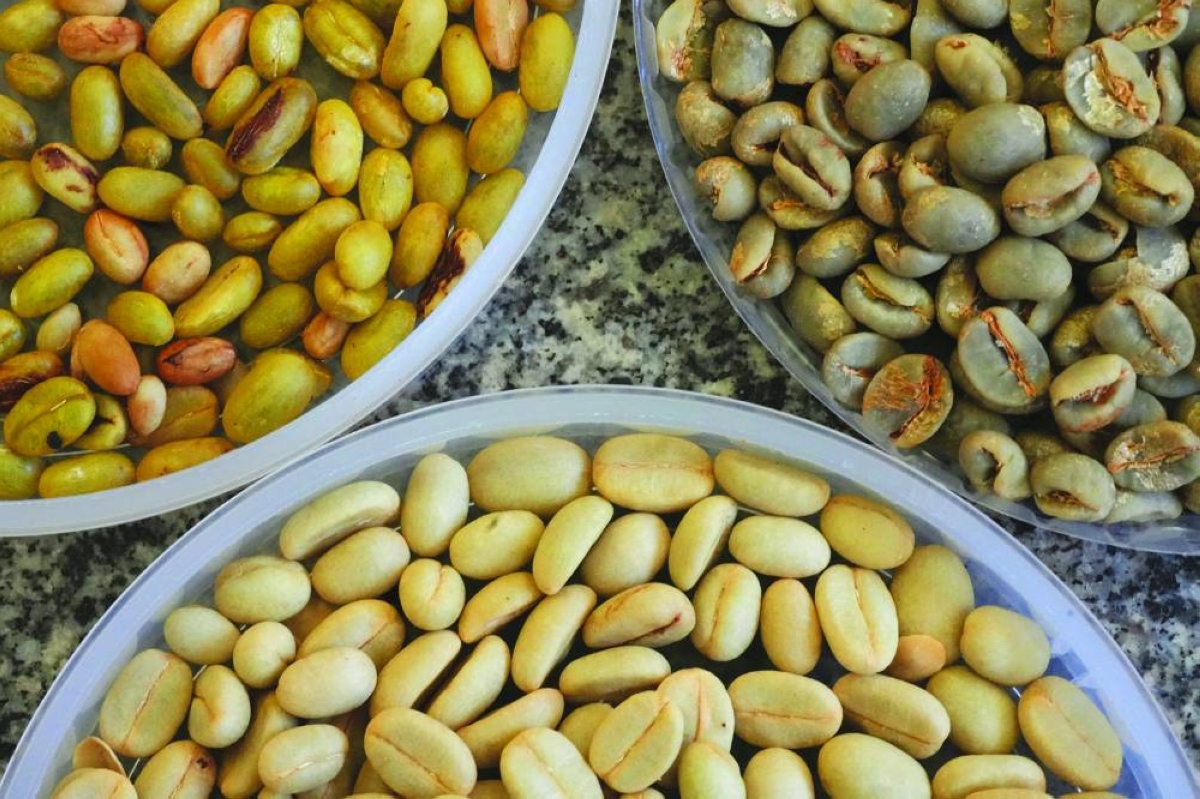
Different varieties of coffee are displayed at the Campinas Agronomy Institute during an interview with Brazilian researchers in Campinas, Brazil. (Reuters) Under a baking sun, agronomist Oliveiro ‌Guerreiro Filho meanders through a hodgepodge of coffee plants at the ​Campinas Agronomy Institute where, unlike the ‌uniform rows on most Brazilian coffee farms, each cluster is ‌different from the ⁠next.This menagerie ‌of coffee species — some squat, others soaring — ‌includes 15 uncommon and non-commercial breeds such as racemosa, liberica and stenophylla, the ⁠genes of which could shore up future supplies of arabica coffee, researchers hope.Scientists warn that crops of arabica — the world's most common coffee bean — will be severely affected by a rapidly changing climate, with output from countries including No 1 grower Brazil expected to decline.Climate change could make 20% of areas now growing arabica globally unsuitable for coffee crops by 2050, a report ​from lender Rabobank said this week.By introducing genetic material from more rustic coffee species into new hybrids, scientists at the research institute in Sao Paulo state aim to create ‌more resistant arabica varieties.For example, liberica's ⁠hardiness in the ​face of hotter and drier conditions has drawn praise from farmers ​in Indonesia and Malaysia planting small plots of the species to see how they hold up against drought."Liberica can tolerate heat and high temperature environments very well, and it is disease-resistant," Jason Liew, the founder of My Liberica, a coffee plantation in Malaysia's Johor state, told Reuters.While farmers prize those qualities among less common species, the Brazilian researchers have specialised in bringing those traits to more productive and popular arabica plants."We've been working at the institute for many years to transfer drought tolerance genes from the ‌racemosa species to arabica," Guerreiro Filho ‌said. "We're trying to create drought-tolerant ⁠arabica varieties."That can take decades of research. Scientists must produce cross-bred saplings and ⁠expose those hybrid varieties to ⁠harsh conditions in order to evaluate and identify the most robust plants, he said, a process that can take 20-30 years.Hybrids are also tested for increased resistance to pests and diseases, as well as improved quality. Arabica crossed with liberica has proven more resistant to coffee rust, a fungal infection, for instance, while ​arabica bred with racemosa does better against larvae of coffee leaf miner moths, Guerreiro Filho noted.That makes research like the studies underway at the institute key to the future of coffee, said Rodolfo Oliveira, head of Brazilian state research agency Embrapa's coffee unit."Working with alternative species of coffee ... is vital because arabica has an extremely narrow genetic base, making it highly vulnerable to pests, diseases, and climate change," Oliveira said, underscoring the value of introducing new, "wild" genetic material from ‌less common species. 

World
Anti-imperialist youth march in Havana

Anti-imperialist youth march in Havana

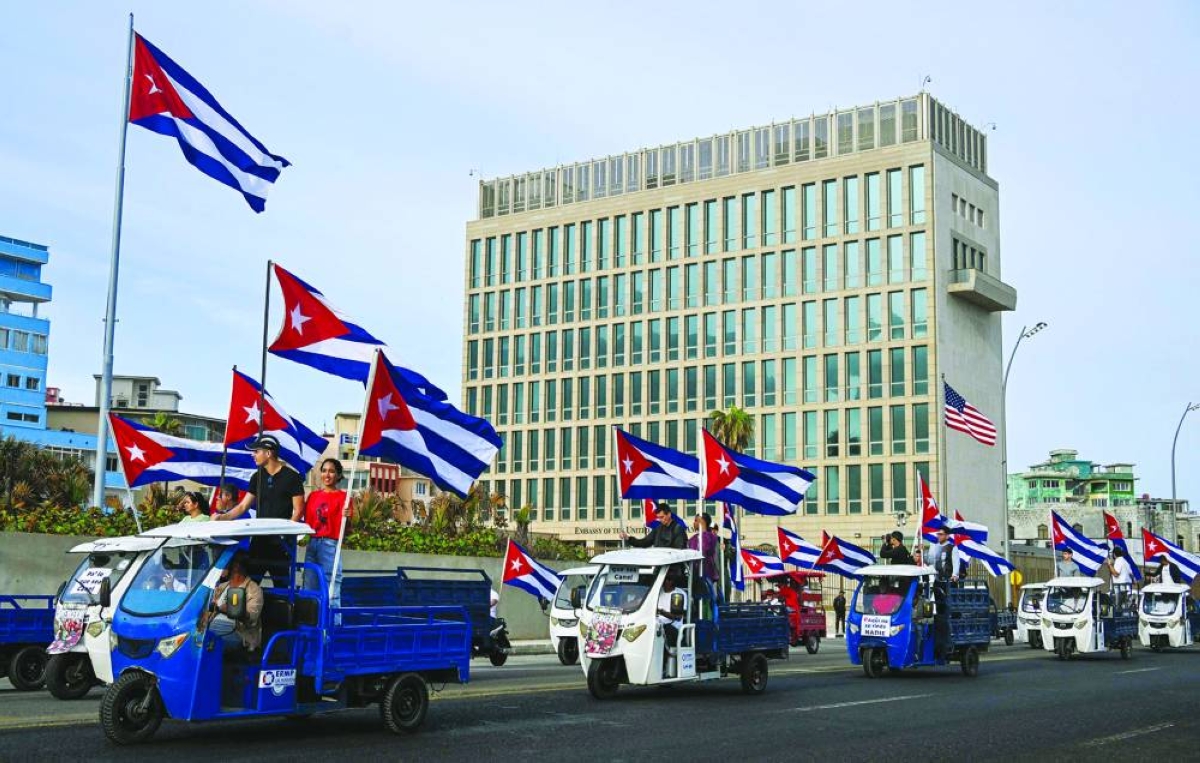
Cubans on electric tricycles decorated with Cuban flags ride past the US embassy during the anti-imperialist youth march in Havana on April 2, 2026. (AFP) Cubans on electric tricycles decorated with Cuban flags ride past the US embassy during the anti-imperialist youth march in Havana Thursday.   Related Story

World
Burkina, Mali troops kill more civilians than religious militants do: HRW

Burkina, Mali troops kill more civilians than religious militants do: HRW

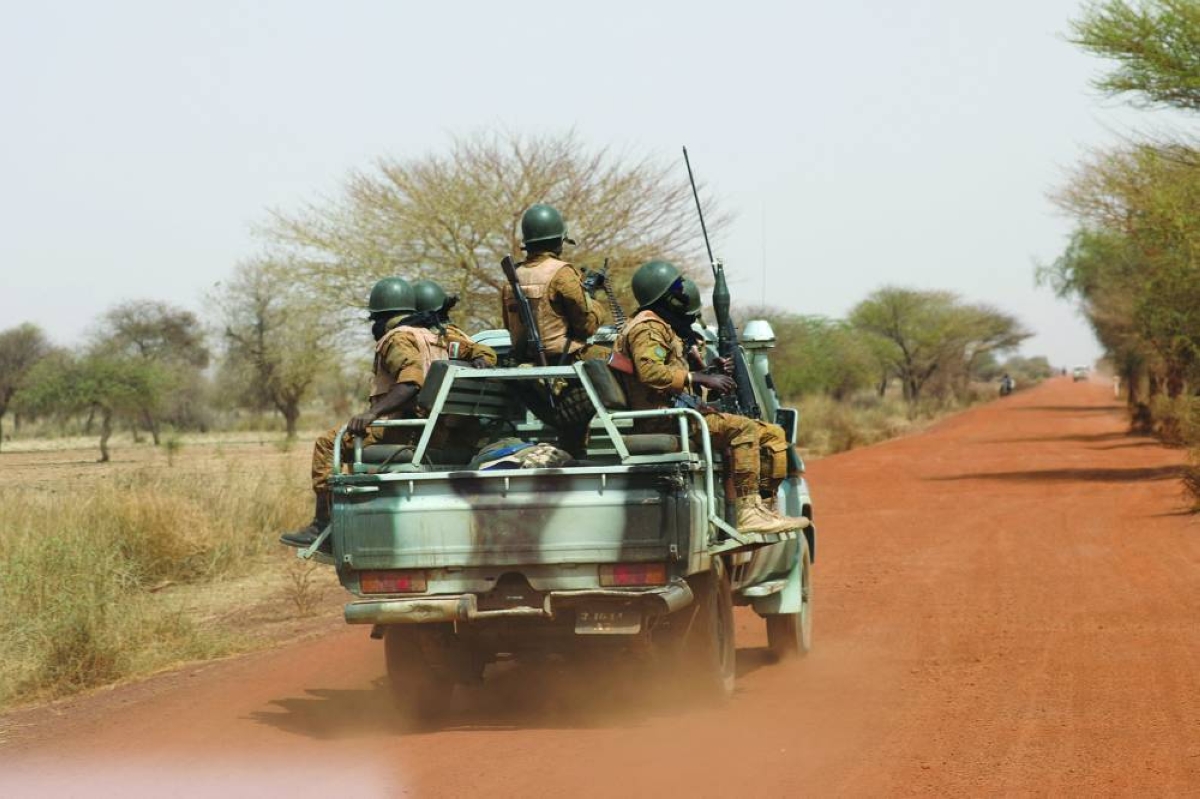
Government and allied forces in Burkina Faso have killed more than twice as many civilians as religious militants have since 2023, according to a tally of incidents documented in a report published Thursday by Human Rights Watch (HRW).The pattern is broadly consistent with data shared with Reuters by Armed Conflict Location & Event Data (ACLED), a conflict monitoring group, and also applies to neighbouring Mali.In that country, which like Burkina Faso is ruled by a military-led government that seized power in a coup, government forces and their partners have been responsible for three to four times as many civilian killings as religious militants over the last two years, according to ACLED's data.Violence involving religious militant groups in Burkina Faso, Mali and Niger has surged since 2021, making the Sahel region a global terrorism hotspot.Widespread deaths of civilians at the hands of government forces could bolster the political legitimacy of militant groups and fuel recruitment, analysts said.They could also complicate steps by the United States to improve relations with Sahel governments, which expelled French and other Western forces after their respective coups.Burkina Faso's security forces and allied militias 'appear to be more brutal and violent' than militant groups like the local Al Qaeda affiliate, Jama'at Nusrat al-Islam wal-Muslimin (JNIM), said Ilaria Allegrozzi, senior Sahel researcher at HRW.The Burkinabe forces' behaviour is part of a regional pattern, raising concerns about military indiscipline and its consequences for counterinsurgency efforts, she said.Spokespeople for the Mali and Burkina Faso governments did not immediately respond to requests for comment from Reuters.The Burkina Faso government and JNIM's Sharia Committee in Burkina Faso did not respond to requests for comment from HRW.Mali and Burkina Faso have previously denied allegations of extrajudicial killings, saying instead that their forces had killed 'terrorists'.Covering the period between January 2023 and August 2025, the HRW report documents 57 incidents in which at least 1,837 civilians were killed.Of those, 33 were committed by government forces and their allies, resulting in 1,255 civilian deaths, according to the report, which details widespread abuses by all parties to the conflict.The ACLED data shows that in 2025 alone, the Burkinabe military and forces from the pro-government Homeland Defence Volunteers militia killed 523 civilians while JNIM and Islamic State Sahel Province (ISSP), another militant group, killed 339.In Mali, the military, together with Russian paramilitary groups Wagner and Africa Corps, killed 918 civilians in 2025, while JNIM and ISSP killed 232, according to ACLED.JNIM could not be reached for comment.Russia's defence ministry, which runs Wagner and Africa Corps, did not immediately respond to a request for comment.ACLED sources its data from social media, press reports and statements from governments, armed groups and non-governmental organisations.It says it provides conservative estimates of fatalities.HRW based its report on 450 interviews and verified social media and satellite imagery.It also says the incidents it has documented are not exhaustive.Because JNIM controls large swathes of territory, security forces are sometimes called on to escort humanitarian or supply convoys in rural areas – but in many cases they kill civilians they encounter along the way, Allegrozzi said.One resident of eastern Burkina Faso, who asked to remain anonymous for fear of reprisals, told Reuters that he was travelling in a civilian convoy under military escort in July 2024, and many of the villages they passed had been abandoned.Then they reached the village of Sakoani, 30km (19 miles) west of the town of Kantchari.'When the army arrived in this village and saw that it was populated, they surrounded the entire village and they exterminated everything – every living being,' he told Reuters. 'People tried to flee, but if you run, they shoot at you.”He estimated that he saw at least 100 dead bodies.In Mali, meanwhile, many civilian killings have been carried out by drone strikes, according to ACLED.Drone warfare there has surged since the government began purchasing Turkish-made drones in 2022.Drone or airstrikes on civilians by Mali's armed forces jumped from four incidents that year to 66 incidents in 2025, resulting in 155 deaths, the ACLED data shows.In July 2024, government drone strikes killed at least 50 civilians at the Inatiyara artisanal gold mining site in northern Mali, according to ACLED.Three eyewitnesses described the attacks to Reuters.'We were surprised by the strikes, we were so scared,' said a 30-year-old gold panner from Niger who worked at Inatiyara and asked not to be identified. 'It was pure panic... I'm still reeling from the shock.'HRW and ACLED also documented grave abuses by JNIM, including the killing of at least 133 civilians in Barsalogho, Burkina Faso, in August 2024 and 19 civilians in Diallassagou, Mali, in May 2024.The group has nonetheless been able to position itself as a defender of marginalised communities like the Fulani, a widely dispersed pastoralist group whose members are often accused of being affiliated with JNIM, analysts have told Reuters.'As state responses increasingly rely on retaliation and collective punishment, more civilians find themselves trapped in areas under religious militant control, where JNIM is consolidating its influence through coercion and strategic engagement with local populations,' said Heni Nsaibia, ACLED's senior analyst for West Africa. 

World
UK foreign minister stresses ‘urgent need’ to reopen Hormuz strait

UK foreign minister stresses ‘urgent need’ to reopen Hormuz strait

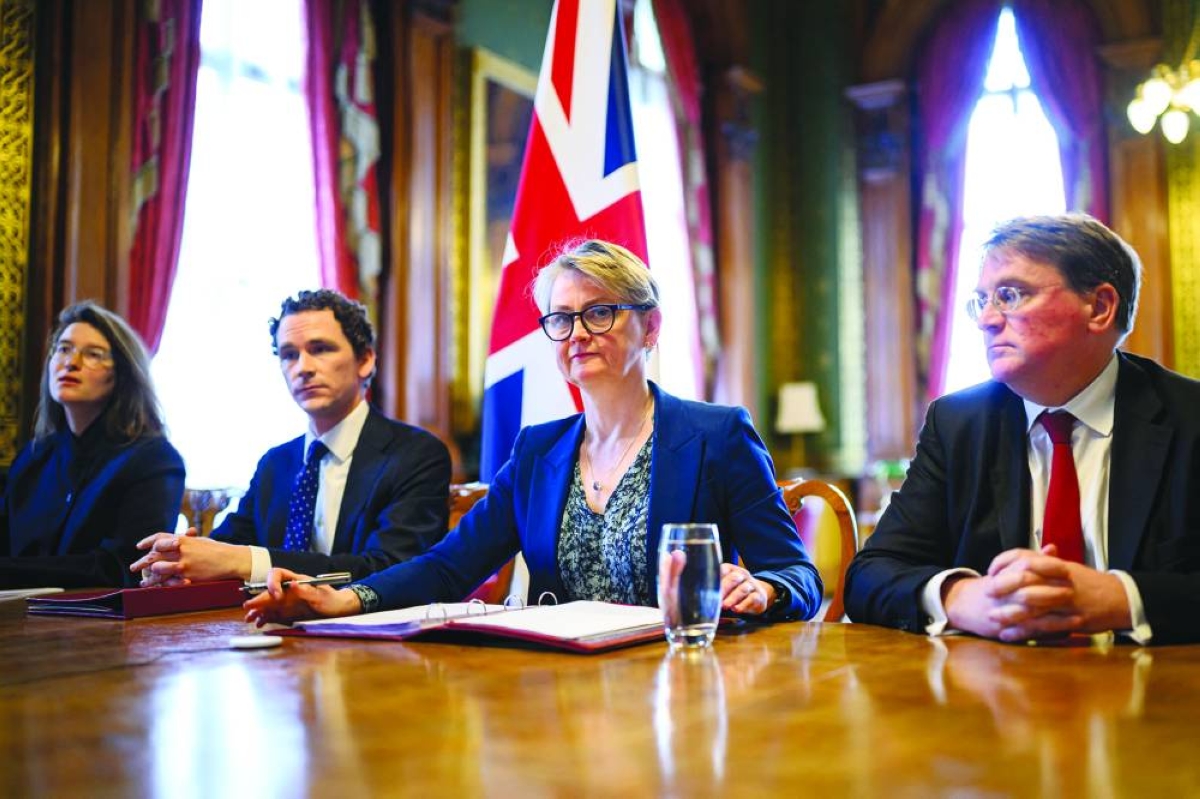
British Foreign Secretary Yvette Cooper prepares to speak during a virtual summit at the Foreign & Commonwealth Office in London, Thursday. (Reuters) British foreign minister Yvette Cooper stressed Thursday the "urgent need" to reopen the Strait of Hormuz and slammed Iran's "recklessness" as she convened a meeting of some 40 countries on the vital shipping route.Cooper said Iran's blockading of the waterway was "hitting our global economic security" as she kicked off the virtual meeting of international allies.The strait has been virtually closed since the US-Israeli war against Iran started on February 28, impacting global supplies of important commodities including oil, liquid natural gas, and fertiliser.That has led to a sharp rise in energy prices.Cooper said foreign ministers and representatives from more than 40 countries had joined the call to discuss "the urgent need to restore freedom of navigation for international shipping, and the strength of our international determination to see the Strait reopen once more".A total of 37 countries have signed a statement, first published last month, expressing "readiness to contribute to appropriate efforts to ensure safe passage through" the shipping lane.Britain, France, Germany, Italy, Japan and the Netherlands are among those to have signed it.The US, China, and most Middle Eastern countries have not, according to a list provided by the UK government."We have seen Iran hijack an international shipping route to hold the global economy hostage," Cooper added in her opening remarks, broadcast before the rest of the meeting took place behind closed doors.Cooper said the discussions would focus on the "collective mobilisation of our full range of diplomatic and economic tools and pressures" to "enable a safe and sustained opening of the Strait".A spokesperson for the French foreign ministry said securing the Strait of Hormuz could "only take place once the intense phase of the bombing is over".French President Emmanuel Macron, speaking on a visit to South Korea, meanwhile, said a military operation to liberate the Strait of Hormuz was "unrealistic", while lamenting Trump's differing daily statements on the Iran war and Nato."There are those who advocate for the liberation of the Strait of Hormuz by force through a military operation, a position sometimes expressed by the US," Macron said."I say sometimes because it has varied, it is never the option we have chosen and we consider it unrealistic," he said.The virtual meeting came after Trump urged oil-importing nations to show "courage" and seize the narrow strait."The countries of the world that... receive oil through the Hormuz Strait must take care of that passage," Trump said in a prime-time address at the White House late Wednesday."Just take it, protect it, use it for yourselves," he added.Trump has said he would consider a ceasefire only when Hormuz is "free and clear".Western officials have insisted any operation to protect seafarers using the strait could only come after a ceasefire."We are also convening military planners to look at how we marshal our collective defensive military capabilities, including looking at issues such as de-mining or reassurance once the conflict eases," Cooper told Thursday's meeting.Around a fifth of the world's oil and liquefied natural gas passes through the strait in peacetime.The channel normally sees around 120 daily transits, according to shipping industry intelligence site Lloyd's List.But since March 1, commodities carriers have made just 225 crossings, according to maritime intelligence firm Kpler, a 94-percent decrease on peacetime.  Related Story

World
Nepal holds its first post-poll parliament session

Nepal holds its first post-poll parliament session

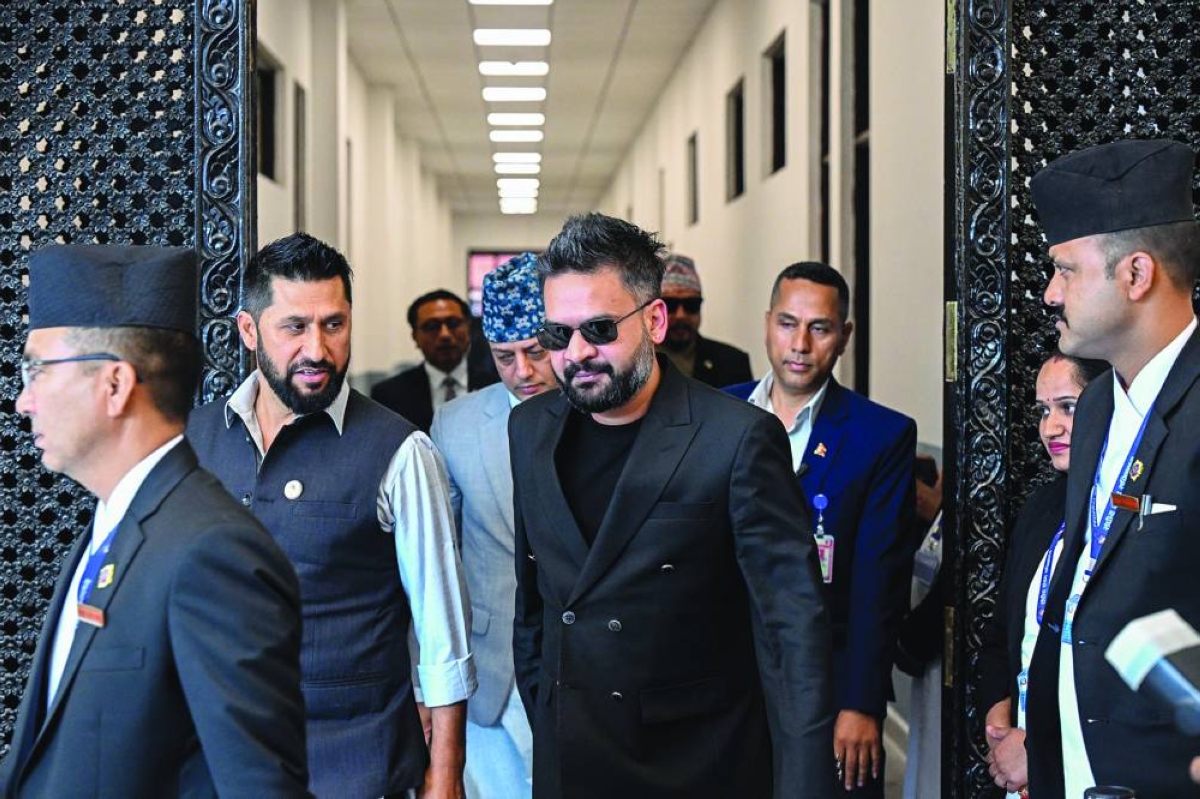
Nepal's Prime Minister Balendra Shah (centre) and Rastriya Swatantra Party President Rabi Lamichhane (second left) arrive to attend the parliament session in Kathmandu Thursday. (AFP) Nepal's newly elected lawmakers met Thursday for the first parliamentary session since deadly anti-corruption protests toppled the government in September 2025 and left the old parliament building in flames.Lawmakers, elected in March, met within the new parliament building, with many of the politicians taking their seats for the first time.That includes the Himalayan nation's new leader, rapper-turned-politician Prime Minister Balendra Shah, who led the Rastriya Swatantra Party (RSP) to sweep the polls, winning 182 of the 275 seats, just short of a two-thirds majority.Shah, 35, was dressed all in black, including his trademark dark sunglasses that he kept on inside the hall.The prime minister has remained silent publicly since his RSP party won the election, beyond taking the oath as leader and the release of a rap song, where he said that the "strength of unity" was his "national power".Rabi Lamichhane, president of the RSP, spoke to lawmakers Thursday."The votes we have received are not just of support, but for change... and I can proudly say we have begun that change," he said."Our work, and the government's work, will speak," he said.Lamichhane asked the opposition to "monitor us 24 hours", and use their experience to point out their mistakes.The new parliament is markedly younger compared to the previous government, with nearly 60 directly elected members under the age of 40.The deadly September demonstrations began over a brief social media ban but tapped into longstanding fury over corruption and economic hardship.At least 76 people were killed over two days of unrest.Three high profile arrests — including four-time ex-prime minister KP Sharma Oli — linked to the unrest have been made so far.An inquiry commission into the violence had recommended that Oli and ex-home minister Ramesh Lekhak, as well as the capital Kathmandu's former chief district officer Chhabilal Rijal, be investigated under laws addressing deaths caused by negligence.Oli, Lekhak and Rijal have denied responsibility for the violence and no charges have been laid.  Related Story

World
Taiwan to strengthen Pratas islands’ defences as China steps up pressure

Taiwan to strengthen Pratas islands’ defences as China steps up pressure

Kuan Bi-ling speaks during a press conference in Taipei, Taiwan, Thursday. (Reuters) Taiwan will strengthen its defences ‌of the Pratas as China steps up its activities ​around the islands which lie ‌at the top end of the South China ‌Sea, the minister in ⁠charge of ‌Taiwan's coastguard said Thursday.Lying roughly ‌between southern Taiwan and Hong Kong, the Pratas are seen by some ⁠security experts as vulnerable to Chinese attack due to their distance - more than 400km (250 miles) - from mainland Taiwan.The Pratas, an atoll which is also a Taiwanese national park, are only lightly defended by Taiwan, and its coastguard has that responsibility rather than the military. China claims the Pratas, and Taiwan, as its own territory.Kuan Bi-ling, head ​of Taiwan's Ocean Affairs Council, said China was gradually expanding the maritime areas in which it carries out "grey zone harassment" - referring to non-combat operations designed to put ‌pressure on Taiwan such ⁠as coastguard patrols.Since last ​year, the number of Chinese government boats, which include the ​coastguard, has increased around the Pratas, whereas previously activity was concentrated around Taiwan itself and the Kinmen islands, which sit close to the Chinese coast, she added."From a political and strategic perspective, we have found that for them, seizing Dongsha would carry considerable strategic significance," Kuan said, using the name both Taiwan and China use for the Pratas.Taiwan has renovated the wharf on the main island and will regularly deploy vessels with greater operational capacity there, she added, ‌in comments to the Taiwan ‌Foreign Correspondents' Club."Dongsha is an ⁠excellent and highly important site for the development of an island defence ⁠system, and we currently ⁠have plans to develop this," Kuan said, without giving details.China's Taiwan Affairs Office did not immediately respond to a request for comment.In January, Taiwan said a Chinese reconnaissance drone briefly flew over the Pratas, in what Taiwan's defence ministry called a "provocative and irresponsible" move.Kuan said China's pressure campaign "lets down people ​on both sides of the Taiwan Strait", given it drains resources from other things such as rescuing mariners in distress.In time of war, Taiwan coastguard ships would be pressed into action, including its new Anping-class corvettes, which are based on the navy's Tuo Chiang-class warships and have space to install anti-ship missiles.Kuan said China was also giving Taiwan an opportunity to learn."As a result, we are accelerating our efforts to strengthen our ‌capabilities and to ​speed up the transition between peacetime and wartime readiness," she said. 

World
Macron-South Korea – Gulf Times

Macron-South Korea – Gulf Times

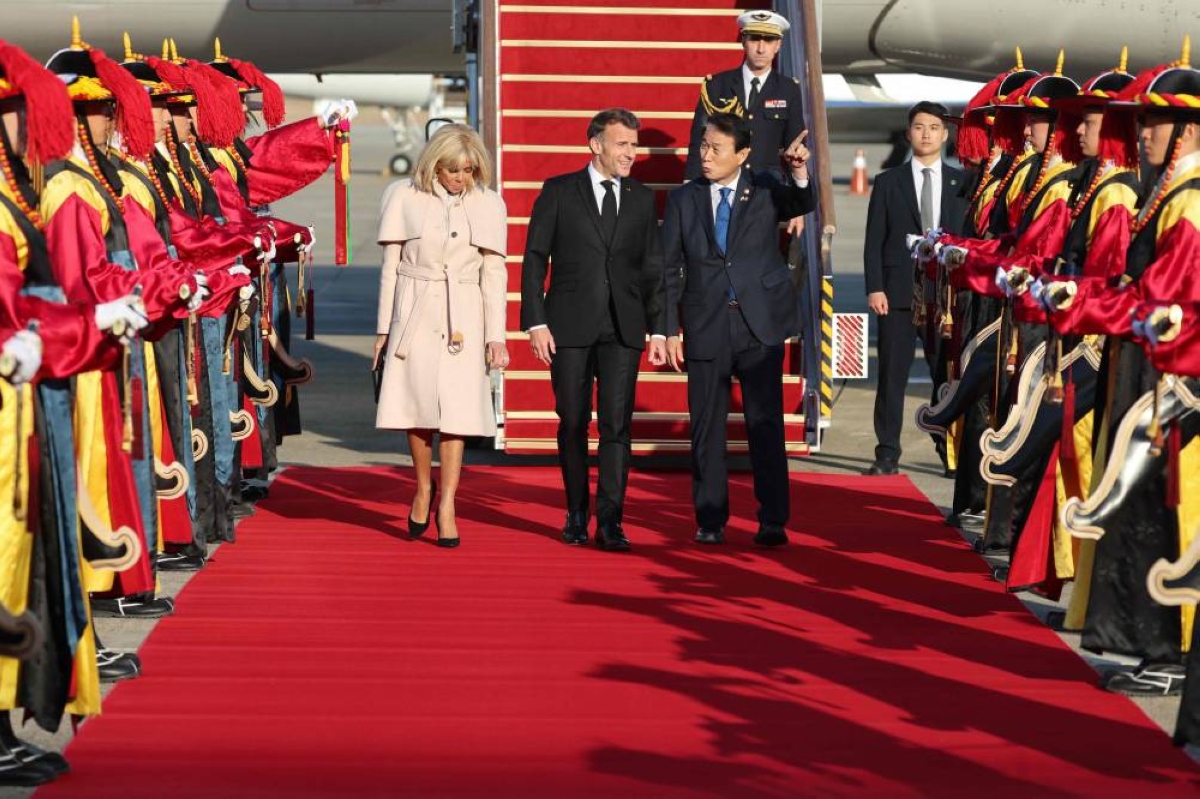
French President Emmanuel Macron (C) and his wife Brigitte Macron (L) are welcomed upon their arrival at Seoul Air Base in Seongnam on April 2, 2026. (AFP) French President Emmanuel Macron (centre) and his wife Brigitte Macron (left) are welcomed upon their arrival at Seoul Air Base in Seongnam Thursday.   Related Story

World
7.4-magnitude quake off Indonesia kills one, tsunami warning lifted

7.4-magnitude quake off Indonesia kills one, tsunami warning lifted

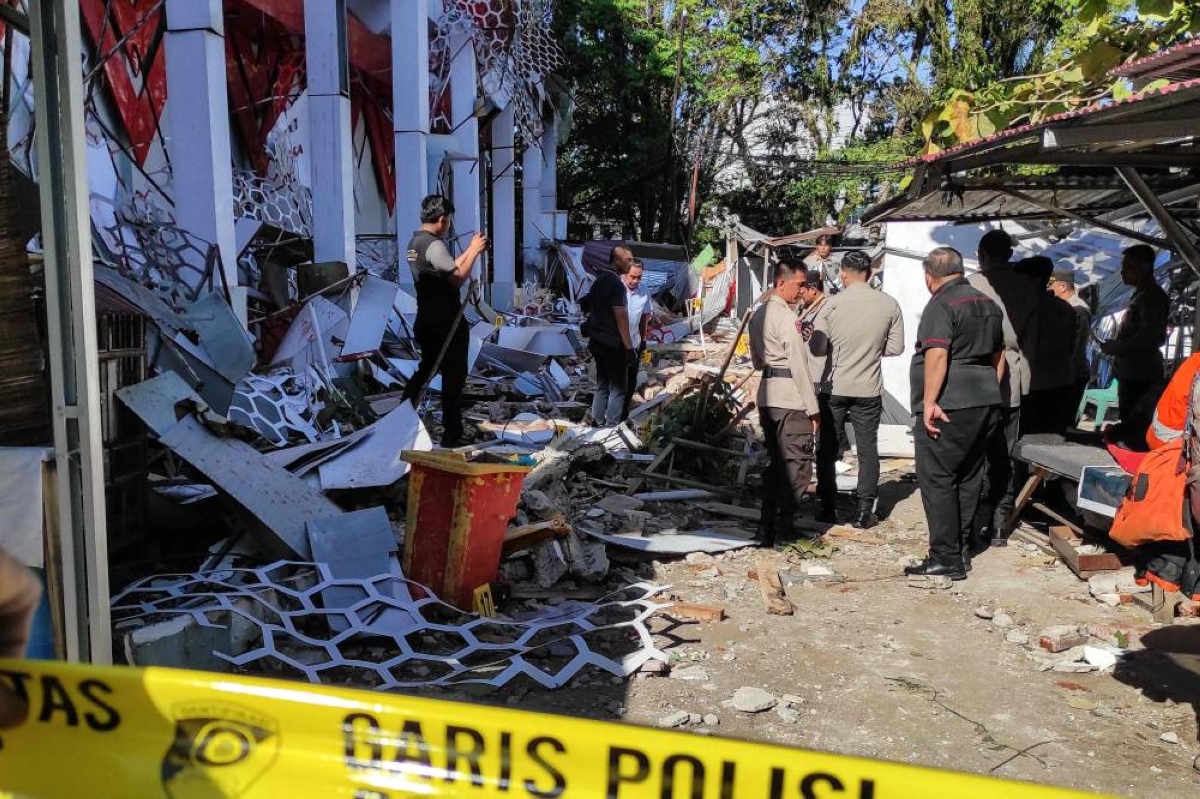
Police officers look at a building of the North Sumatra's National Sports Committee of Indonesia damaged following a severe 7.4-magnitude offshore quake in Manado, North Sulawesi, Thursday. (AFP) A major 7.4-magnitude quake struck off the coast of eastern Indonesia Thursday, killing at least one person, causing waves of up to 75cm (2.5 feet) and triggering a tsunami warning that was subsequently lifted.The US Geological Survey (USGS) said the tremor hit at a shallow depth of 35 kilometres in the Molucca Sea between the Sulawesi and Maluku island groups in the early morning.One person was killed when a building collapsed in the city of Manado in North Sulawesi province, a local search and rescue official told AFP."The quake was felt strongly and around Manado... one person died and one person had a leg injury," George Leo Mercy Randang told AFP by telephone.The victim was "buried under the rubble" of a collapsed building, he said.The Hawaii-based Pacific Tsunami Warning Center (PTWC) initially said hazardous tsunami waves were possible within 1,000km (621 miles) of the epicentre along the coasts of Indonesia, the Philippines and Malaysia.Within half an hour of the quake, waves up to 75cm were recorded in North Minahasa and 20cm in Bitung, both in the north of Sulawesi island, according to Indonesia's BMKG geological agency.Thirty-centimetre waves were also logged in North Maluku province.The PTWC lifted its warning just over two hours after the tremor, saying the tsunami threat "has now passed."Ternate resident Budi Nurgianto, 42, said he was inside his house when the tremor struck, sending people panicking outside."The quake was felt strongly. I heard it first from the walls of the house that shook," he said."When I went outside, there were many people outside. They were panicked. The quake was felt (for) quite long, more than a minute."I even saw some people leaving their house without having finished their shower."BMKG head Teuku Faisal Fathani told journalists in the capital Jakarta there were 11 aftershocks, the biggest with a magnitude of 5.5.An AFP journalist in Manado on Sulawesi, about 300km west of Ternate by sea, said the shaking woke him and others in the city of around 450,000 people."I immediately woke up and left my house. People (were) immediately scrambling outside. There is a school and the pupils rushed outside," he said.The shaking persisted for "quite long" but he did not witness "significant damage", he added.The PTWC had initially warned that tsunami waves of up to one metre were possible for parts of Indonesia, with smaller waves possible for the Philippines, Malaysia, Japan, Taiwan, Guam and Palau."Government agencies responsible for threatened coastal areas should take action to inform and instruct any coastal populations at risk," the agency said.The Japan Meteorological Agency said it expected "slight changes" in the sea level along the Pacific coast from northern Hokkaido to southern Okinawa, but has not issued any warnings.The earthquake centres of the Philippines and Malaysia have also not issued tsunami alerts.Indonesia and neighbouring countries experience frequent earthquakes due to their location in the Pacific "Ring of Fire" — an arc of intense seismic activity where tectonic plates collide that stretches from Japan through Southeast Asia and across the Pacific basin.In 2004, a magnitude 9.1 quake struck Aceh province, causing a tsunami and killing more than 170,000 people in Indonesia.  Related Story

World
PM Starmer calls for closer Europe ties as Iran war strains US relations

PM Starmer calls for closer Europe ties as Iran war strains US relations

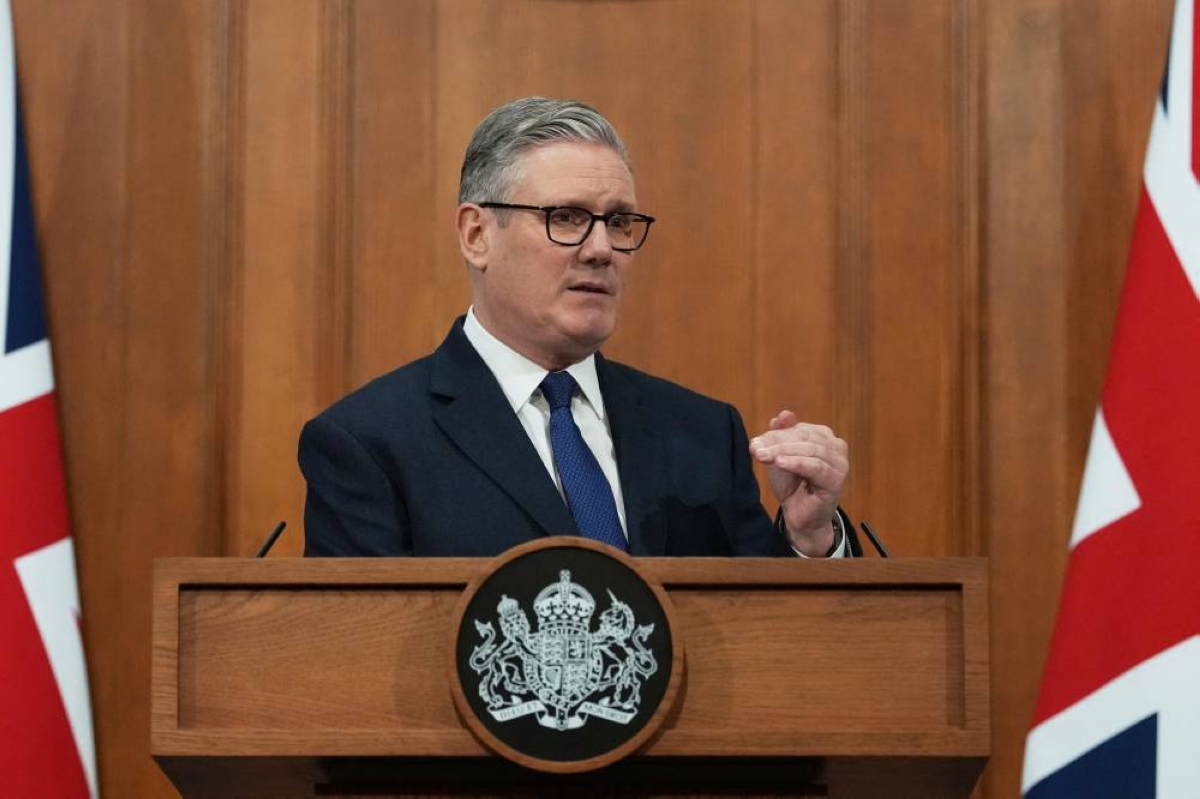
Britain's Prime Minister Keir Starmer speaks during a press conference at Downing Street in London, yesterday. (Reuters) ​Prime Minister Keir Starmer said yesterday that the global instability caused by the Iran war means Britain ‌should pivot to focusing on closer ‌economic and defence ties with Europe, following repeated ‌criticism from US President Donald Trump. Starmer said building stronger relations with Europe would be at the centre of a summit with the European Union in the summer, as he warned the consequences of the Iran war would last for a generation. “It is increasingly clear that as the world continues down this volatile path, our long-term national interest requires closer partnership with our allies in Europe,” Starmer told reporters at a press conference in Downing Street. Trump has repeatedly insulted Starmer, calling him cowardly because of his unwillingness to join the ​US war on Iran, saying he was “No Winston Churchill” and describing Britain’s aircraft carriers as “toys”. In a sign that British foreign policy was shifting away from the US, traditionally its closest ally, Starmer said he ‌saw his country’s future being more aligned with Europe. After Trump was elected as president ​for a second term in 2024, Starmer tried to position himself as a conduit between Europe and the US. But their relationship has publicly deteriorated over the Iran war. Starmer initially denied a request from the US to attack Iran from two British bases, but later agreed to allow what he calls defensive missions aimed at protecting residents of the region, including British citizens.Asked about Trump’s criticism, Starmer said he would not give in to “pressure” from Trump to be dragged into the war. Starmer instead said the government was focused on deepening its relationship with Europe and it was necessary to ‌undo some of the “deep damage” done by ‌Brexit. Although Starmer called for an “ambitious” reset in relations, he ruled out rejoining the EU’s customs union or its single market. The opposition Conservative Party criticised Starmer, saying he was trying to “reopen the old wounds of the Brexit years”, while the populist Reform UK party said he should have announced measures to reduce energy prices. Starmer did not announce any new policies to help households at the press conference. But he did say that Britain would this week host meetings with allies aimed at opening the Strait of Hormuz, the vital energy shipping route that ​has been effectively blocked by Iran since it was attacked by the US and Israel, and 35 countries were now involved in efforts. Foreign Minister Yvette Cooper would host a virtual meeting of the group today to assess diplomatic and political measures to reopen the Strait “after the fighting has stopped”, Starmer said. France, Germany, the Netherlands, Italy, Japan, Australia, South Korea, Canada and the United Arab Emirates are among the countries who will attend the talks, according to a British government statement. A British official said it was expected that any first phase would focus ‌on mine-hunting, followed by ​a second phase to protect tankers crossing the area. 

World
Japan, France agree to step up co-ordination on Hormuz

Japan, France agree to step up co-ordination on Hormuz

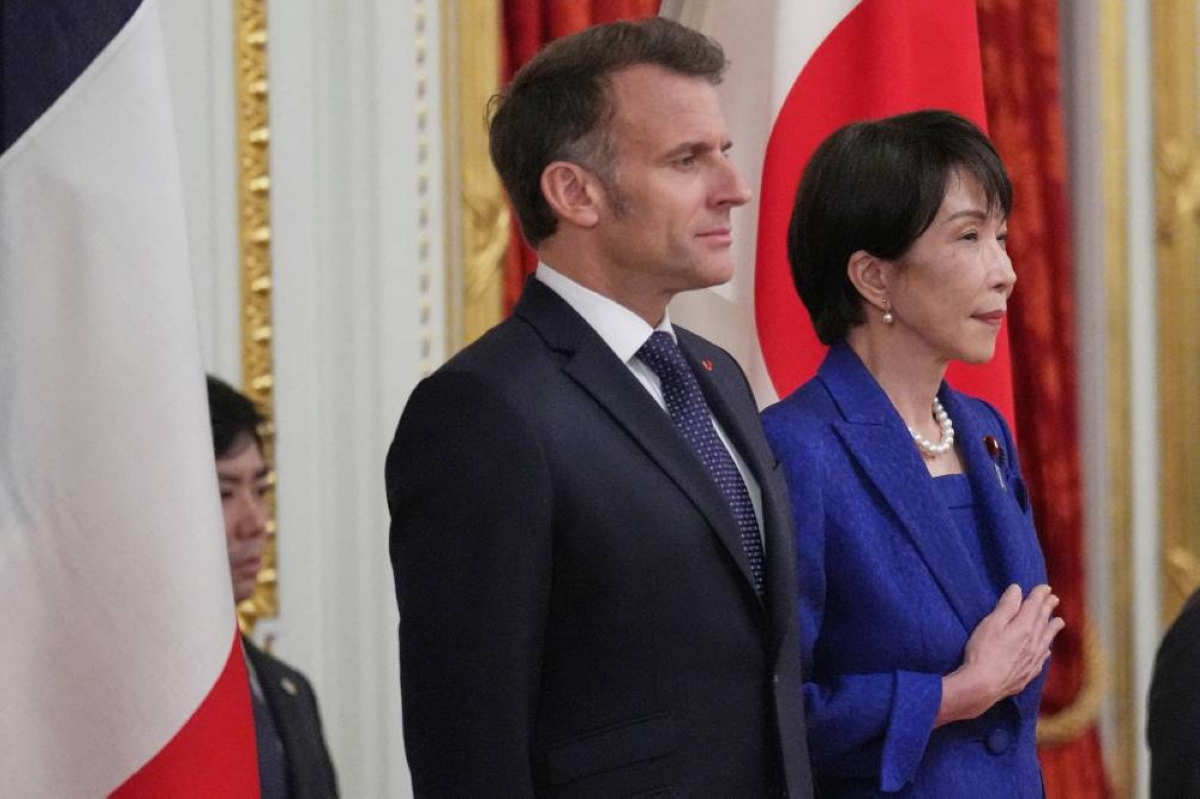
Japan and France agreed yesterday to co-ordinate closely in pushing ‌for an end to the U.S.-Israeli ​war with Iran ‌and the reopening of the Strait ‌of Hormuz to ‌oil and gas tankers, ‌Prime Minister Sanae Takaichi said. “Because the international situation is so challenging, I believe there is great significance in the leaders of Japan and France deepening their personal ties and making our co-operation even stronger,” Takaichi said after talks with French President Emmanuel Macron ​in Tokyo on security ties and industrial co-operation. With the Middle East conflict now in its fifth ‌week, Japan, France and other countries ​are grappling with rising energy costs. Unless ​the conduit for about a fifth of the world’s oil and liquefied natural gas flows reopens, they could face shortages of petroleum products. Japan, which normally gets around 90% of its oil from the Middle East, has begun drawing on its oil reserves to cushion the economic ‌blow.Speaking alongside Takaichi, ‌Macron said he shared her position on the need to restore freedom of navigation in the strait. France has held talks with dozens of countries as it seeks proposals for a mission to reopen the waterway once the conflict ends. Japan has said it ​could consider dispatching minesweepers, though the scope of any role would be constrained by its pacifist constitution. The two leaders also said they would pursue closer security ties in the Indo-Pacific and signed agreements on co-operation in critical mineral supply chains.