World
Mali’s ruling junta in ‘difficult’ situation after rebel attacks

Mali’s ruling junta in ‘difficult’ situation after rebel attacks

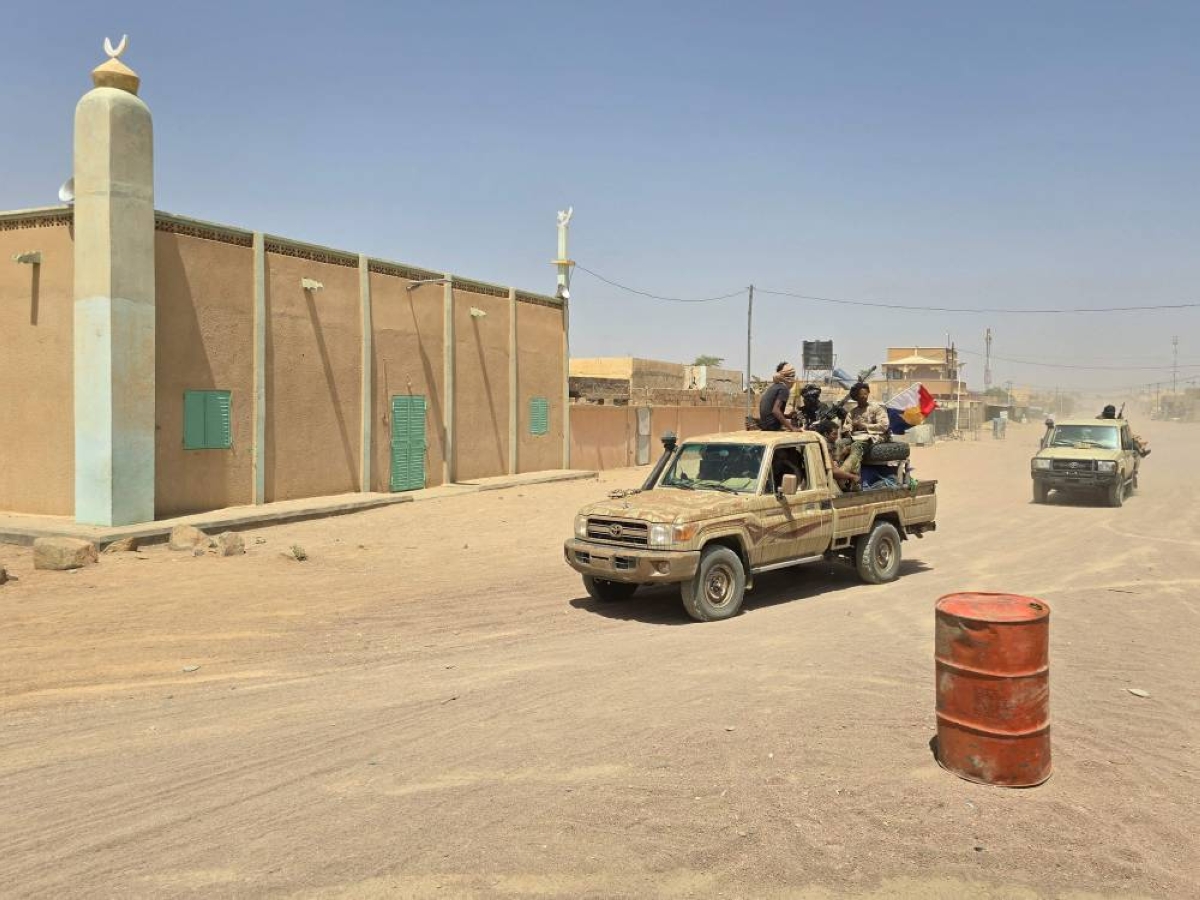
Militants and Tuareg separatists were advancing in northern Mali yesterday, three days after launching unprecedented attacks against the ruling junta, in what the government’s Russian allies said remained a “difficult” situation. The attacks were the largest in nearly 15 years and saw two former foes — insurgents and Tuareg separatists — join forces against the military junta and its Russian paramilitary backers, analysts say. Defence Minister Sadio Camara — seen as the mastermind behind the junta’s pivot to Russia — was killed in two days of fierce fighting between the army and Tuareg rebels of the Azawad Liberation Front (FLA) allied with the Al-Qaeda-linked Group for the Support of Islam and Muslims (JNIM). Russia’s defence ministry said yesterday that the rebels, who have captured a key town in the mostly desert north, were “regrouping” and the situation “remains difficult”.The fighting saw “attempts made to seize key facilities in the capital, Bamako — first and foremost, the presidential palace”, the ministry said. It confirmed that mercenaries from Russia’s Africa Corps, controlled by the government in Moscow and sent to back up the Malian junta, had been forced to withdraw from the northern town of Kidal, now under the armed groups’ control. The Kremlin, separately, said it urgently wanted peace and stability in Mali, which has battled more than a decade of violence and other conflict.Abandoned and withdrawn The large-scale attacks at the weekend raise questions about the junta’s ability to tackle the armed groups, despite its insistence that its strategy, foreign partnerships and increased military efforts have stemmed the threat. The notable absence of Goita, who seized power in 2020 pledging to combat the militants, has prompted uncertainty about the future of the country’s military leaders.A Malian security source told AFP that Goita was not taking any risks for “security reasons”. “The military leadership is currently drawing lessons from the prevailing situation,” an elected official in Bamako said on condition of anonymity.In a sign of the high tensions in the west African nation, the army has abandoned several positions in the northern Gao region, local sources told AFP yesterday. Gao is the army’s second-largest military stronghold after Kati, a garrison town near Bamako which is home to several senior junta officials and was targeted in the weekend attacks.“The military have abandoned their position in Labbezanga, near the Niger border. They have withdrawn to Ansogo,” a local politician told AFP on condition of anonymity. As well as Kati, the simultaneous weekend attacks targeted the towns of Kidal and Gao in the north, and Sevare in the centre.Two loud blasts were heard late on Monday near the airport on the outskirts of Bamako, an AFP journalist said.The cause of the blasts could not immediately be identified. “It wasn’t an exchange of gunfire and the explosions were coming from the area of Base 101 at the airport,” a resident told AFP.Diversion? The attacks near the centres of Malian power have been seen by some analysts as a diversion to seize Kidal.Kidal, a pro-independence stronghold, was controlled by Tuareg rebel groups for years before being retaken in November 2023 in an army offensive, supported by Russian mercenaries from Africa Corps’ predecessor, the Wagner Group. Central Mali, where Mopti is located, was also targeted and the security situation remained unclear yesterday.The attacks are reminiscent of a crisis that rocked Mali in 2012, when Tuareg rebels joined forces with jihadists to capture strategic hubs in the vast, remote north. That offensive was repelled by forces from former colonial ruler France, who have since left the Sahel country.The alliance between the militants and Tuareg rebels eventually unravelled when they turned on each other and the jihadists drove the Tuareg separatists out.The latest attacks are the result of a new alliance forged a year ago.Although the two groups have different goals, according to experts, they are united against a common enemy — the military junta that has ruled since 2020 and its Russian paramilitary backers.A

Sports
Godon wins Romandie prologue, Pogacar fifth

Godon wins Romandie prologue, Pogacar fifth

Villars-sur-Glâne, Switzerland: French champion Dorian Godon took a surprise victory in the Tour de Romandie opening prologue Tuesday as world champion Tadej Pogacar could finish only fifth. Godon’s three previous individual victories this year had all come in sprint finishes but he covered the 3.2km course around Villars-sur-Glane in 3min 35sec to finish six seconds clear of Portugal’s Ivo Oliveira and Swede Jakob Soderqvist in second and third respectively. Pogacar, who two days ago won the 260km-long Liege-Bastogne-Liege one-day race for the fourth time, was a further second back in fifth, just behind Swiss champion Mauro Schmid.It is four-time Tour de France winner Pogacar’s first stage race of the year having previously taken part in just five one-day races - winning four of them. He is the overwhelming favourite to win the Romandie tour in Switzerland this week in what is his first participation at the event. It is one of the few major week-long stage races that he is yet to win in his career, along with June’s Tour de Suisse, which he will take part in for the first time before bidding for a record-equalling fifth Tour de France in July. Pogacar gained time on his main rivals for the overall victory in Romandie as Slovenian compatriot Primoz Roglic, a two-time former winner, was eighth, eight seconds off Godon. Roglic’s Red Bull-Bora Hansgrohe team-mate Florian Lipowitz was 10th, another two seconds further back, with Frenchman Lenny Martinez 25th at 17sec. Today’s first full stage is a 171km ride around Martigny, where the tough 8.9km-long Ovronnaz climb with an average gradient of 9.8 percent in the final 40km will provide Pogacar a first chance to distance his rivals. 

Opinion
Dollar dominance in global trade on the rise amid Mideast conflict

Dollar dominance in global trade on the rise amid Mideast conflict

In times of turmoil, investors often seek the stability of the US dollar because of its reserve currency status and liquidity, as well as the perceived credit strength of the US. The ongoing conflict in the Middle East is solidifying the dollar’s dominant role in global trade, according to one measure of activity in the interbank foreign-exchange markets. The greenback’s portion of international transactions rose to a record 51.1% in March, up from 49.2% a month earlier, according to the latest data compiled by global financial messaging service Swift, or the Society for Worldwide Interbank Financial Telecommunication. That’s the highest share since 2023. Large global banks use Swift to communicate with each other and facilitate interbank currency deals. The world’s primary reserve currency was followed by the euro, which carried about a 21% share via Swift, then the pound, yen, Chinese yuan and Canadian dollar. “Dollar weakness seen last year has not translated into any clear decline in the dollar’s role as a reserve or base currency for capital markets,” a JPMorgan research team led by Joyce Chang said in an April 21 note. In 2025, a gauge of the greenback fell by 8% to its lowest level in four years. Since the start of the war in late February, it has risen about 0.9%. Trading in the currency markets was exceptionally choppy last month following the launch of US and Israeli strikes against Iran, driving a global selloff in risky assets, a surge in oil prices and demand for the haven dollar. Oil across global markets is mostly priced in dollars. Therefore, as energy prices rise, so too can demand to transact via the greenback. A gauge of the greenback’s expected volatility over the next month surged to a 10-month high in March, although gyrations have quieted since as investors focus on the outlook of ceasefire negotiations between the US and Iran. The dollar is now down about 1.4% in April. Investors have a keen eye on the international usage of the greenback — and the appeal of US assets more broadly — since President Donald Trump unveiled a sweeping programme of tariffs early last year. “We see a broader trend toward diversification rather than outright de-dollarisation, and the data fail to demonstrate broad-based de-dollarisation,” JPMorgan’s Chang and team said. Swift’s data doesn’t encompass the entire $9.5tn-per-day currency markets. In 2022, for example, it began excluding several major Russian banks from the service following the invasion of Ukraine. And while it measures trading activity by currency, the figures don’t reveal the underlying direction of the flows between banks. But Deutsche Bank and Wells Fargo & Co say the dollar’s war-driven haven rally is likely over, as the US-Iran ceasefire pushes investors back into riskier assets. Analysts are now arguing it’s time to embrace bets against the greenback, and global investors seem to be doing just that. With the haven aura fading, investors are once again focusing on the headwinds that drove the dollar down 8% last year — its worst performance since 2017 — including the prospect of the Federal Reserve interest-rate cuts. Trump’s attacks on the Fed are seen also fuelling mistrust in American institutions and a flight from US assets and the dollar. Despite warnings about the long-term headwinds for the dollar, here’s the undeniable reality: Dollar is the king, still. The US currency is on one side of almost 90% of foreign-exchange transactions, accounts for two-thirds of international debt, 57% of currency reserves, 54% of export invoicing, and 51% of interbank FX deals, according to data compiled by Bloomberg. To be clear, no one would betting that the dollar’s trajectory will be a straight line as Trump’s tariffs policy continues heighten tensions across the world and the threat of geopolitical risks foster demand for havens.  

Sports
Holders PSG edge Bayern in 9-goal semi-final epic

Holders PSG edge Bayern in 9-goal semi-final epic

Paris Saint-Germain’s Ousmane Dembele celebrates with teammate Desire Doue after scoring his team’s fifth goal during the Champions League semi-final first leg match against Bayern Munich at the Parc des Princes in Paris Tuesday. (AFP)

Opinion
Blocking of Meta’s AI startup buy raises risk for China tech deals

Blocking of Meta’s AI startup buy raises risk for China tech deals

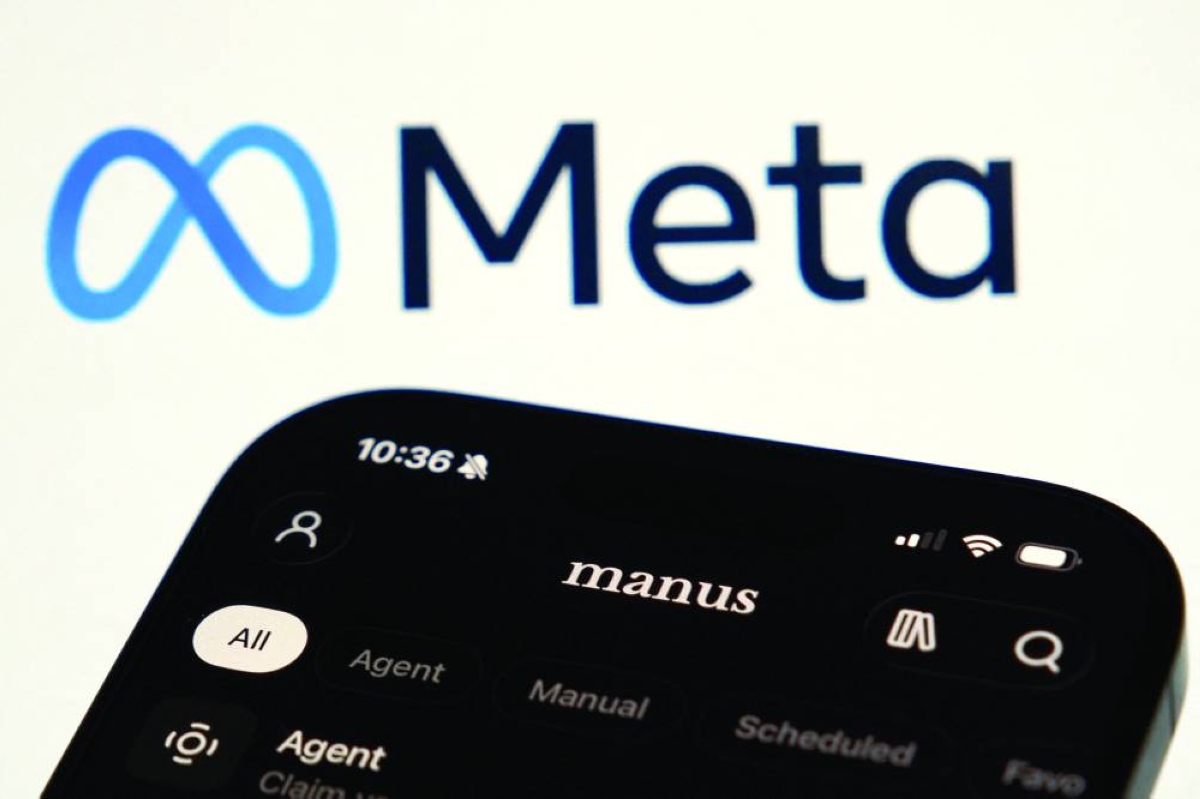
China’s blocking of Meta’s acquisition of AI startup Manus will heighten the risk for global investors looking to invest in advanced tech firms with ties to the country ‌amid Beijing’s expansion of jurisdictional reach to safeguard strategic assets. The National Development and Reform Commission (NDRC), in a rare case, ordered on Monday that the $2-bn-plus acquisition ​by Meta be unwound under Beijing’s national security review ‌mechanism of foreign investments that came into effect in 2021. The powerful state planner’s move to block a China-founded and Singapore-headquartered company’s takeover will ‌discourage stake or asset transfers by homegrown companies to foreign investors without Beijing’s approval, lawyers ‌and analysts said. “Beijing effectively drew a bright red line that Chinese AI talent ‌and technology are not for sale to American companies, full stop,” said Han Shen Lin, Shanghai-based China country director at US consultancy firm The Asia Group. It was not immediately clear how Meta would unwind the completed acquisition of Manus, but the Wall Street Journal said on Tuesday, citing people familiar with the matter that the California-based tech giant was preparing to do so. Meta and the NDRC did not immediately respond to a Reuters request for comment. On the NDRC decision, China’s state-backed ‘Global Times’ said on Tuesday the issue was not the location of Manus’ incorporation or management team but rather “the extent of its connections to China in terms of technology, talent, and data”, as well as whether the transaction could jeopardise China’s industrial security and development interests. The biggest point of contention was that Manus, an AI company built on the work of Chinese engineers and the Chinese infrastructure environment, abruptly “cut ties” with China after receiving US investment, the report added. Manus, an agent tool built atop Western and ​local AI models that can autonomously execute complex tasks, was hailed last year by state media as a paragon of China’s AI innovation alongside large language model-builder DeepSeek. A year after Manus’ launch, its co-founders, CEO Xiao Hong and chief scientist Ji Yichao, have been barred from leaving China after being summoned to Beijing for talks with regulators in March, sources have said. The NDRC move comes ‌weeks before a planned mid-May summit between US President Donald Trump and Chinese President Xi Jinping in ​Beijing. CHINA ROOTSManus could become a cautionary tale for Chinese AI entrepreneurs whose ambitions chafed against the Communist Party’s red lines, and whose business ​ultimately could not survive the shifting faultlines of US-China tech competition. Although Manus did not develop its own artificial intelligence models, Beijing views AI as a sensitive sector critical to national security and has made efforts to control outbound flows of technology, IP and talent. “This is perhaps a warning shot that having a Singapore set-up is not entirely a silver bullet. If the business still has deep China roots, Beijing may treat it as effectively domestic for sensitive transactions,” said Lam Zhen Guang, a lawyer at Clyde & Co. Investors in a China-founded business will demand real operational separation, such as IP assignment, R&D relocation, governance, and clean ownership disclosures, rather than a paper relocation, Lam said. “For founders and VCs, the takeaway is deal certainty risk. Cross-border exits, especially to US buyers, may now carry a higher China regulatory discount unless approvals and China touchpoints are solved early,” Lam added. Meta conducted only a few weeks of due diligence to complete the acquisition in December, while neither Meta nor Manus sought Chinese regulatory approval for the deal or its relocation to Singapore, said five sources with knowledge of the matter. At that time, Meta was in a frantic ‌search globally for AI targets, as it aimed to compete with ‌industry peers which had gone ahead with in-house models, said a former investor in Manus. The Singapore relocation for Manus was necessary, the founders believed, for the company to survive amid heightened US-China geopolitical tensions and increased regulatory scrutiny of tech investments, said a separate person with knowledge of the thinking of Manus. Those moves angered senior Chinese officials, whose subsequent investigation had a chilling effect on other Chinese tech startups and investors, said the sources who declined to be named due to the sensitivity of the matter. After the acquisition was announced in December, Manus became part of Meta and all its previous investors, including US-based Benchmark Capital, China’s HSG, ZhenFund and Tencent Holdings, exited the company, sources said. Tencent declined to comment. The investment firms did not immediately respond to Reuters requests for comment. ‘UNSCRAMBLING THE EGGS’The unwinding of the Manus acquisition will be complex and may involve reversing equity transfers, returning funds and requiring the deletion of transferred code, data and other intellectual property, as well as withdrawing personnel, said Andy Han, a partner at AllBright Law Offices ​in Qingdao. “Fully reversing such transactions is often difficult in reality, particularly in knowledge-intensive sectors, as information already absorbed by engineers or transferred during due diligence cannot easily be undone,” Han said. Meta said on Monday the transaction complied fully with applicable law and that it would anticipate an appropriate resolution to the inquiry. “Unscrambling the eggs is always an issue when a deal is blocked by a regulator, unless the acquirer has kept the target separate, which does not appear to have been the case here,” said Jeremie Jourdan, a Brussels-based partner at European law firm Geradin Partners. “The fact that Manus moved to Singapore will make it harder for the Chinese authority to enforce their ruling, but they may have other means to force Meta to comply by going after their assets in China,” Jourdan said. China’s latest regulatory move comes at a time when global investors were increasing their wagers on Chinese artificial intelligence companies, betting on the next DeepSeek and seeking to diversify their holdings. “Any US technology company considering acquiring a Chinese-founded AI startup must now ‌treat NDRC foreign investment security review as a ​genuine deal risk, regardless of where that company is incorporated,” said Asia Group’s Lin.     

Entertainment
Mike Vrabel Confronted With Dianna Russini Scandal Questions At Airport

Mike Vrabel Confronted With Dianna Russini Scandal Questions At Airport

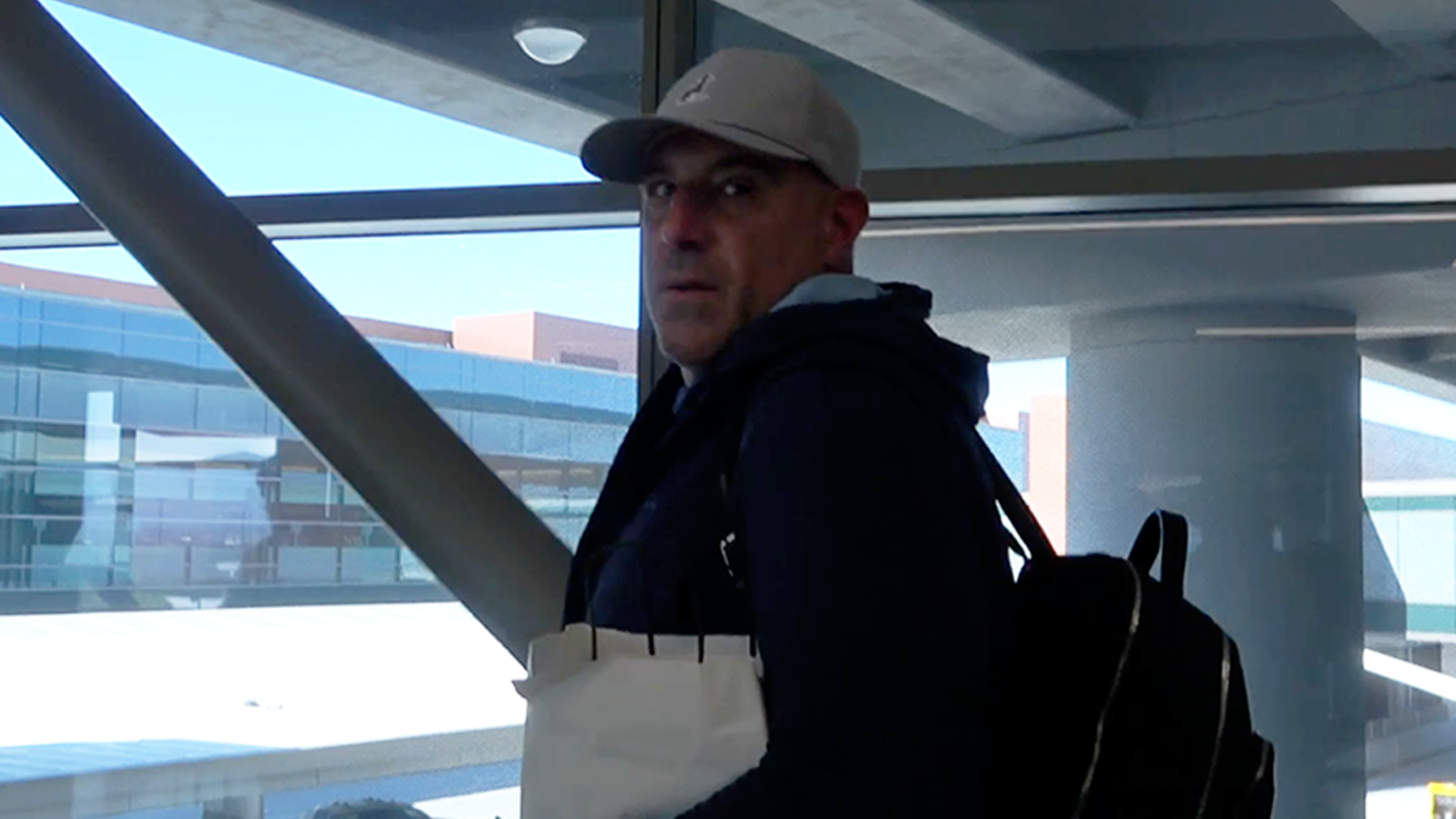
Mike Vrabel Hit With Russini Scandal Questions ... During 'Counseling' Trip Published April 28, 2026 1:02 PM PDT Play video content A change of scenery couldn't help Mike Vrabel escape the Dianna Russini scandal --

Entertainment
Sam Neill Says He’s Cancer-Free Even Though Chemotherapy Stopped Working

Sam Neill Says He’s Cancer-Free Even Though Chemotherapy Stopped Working

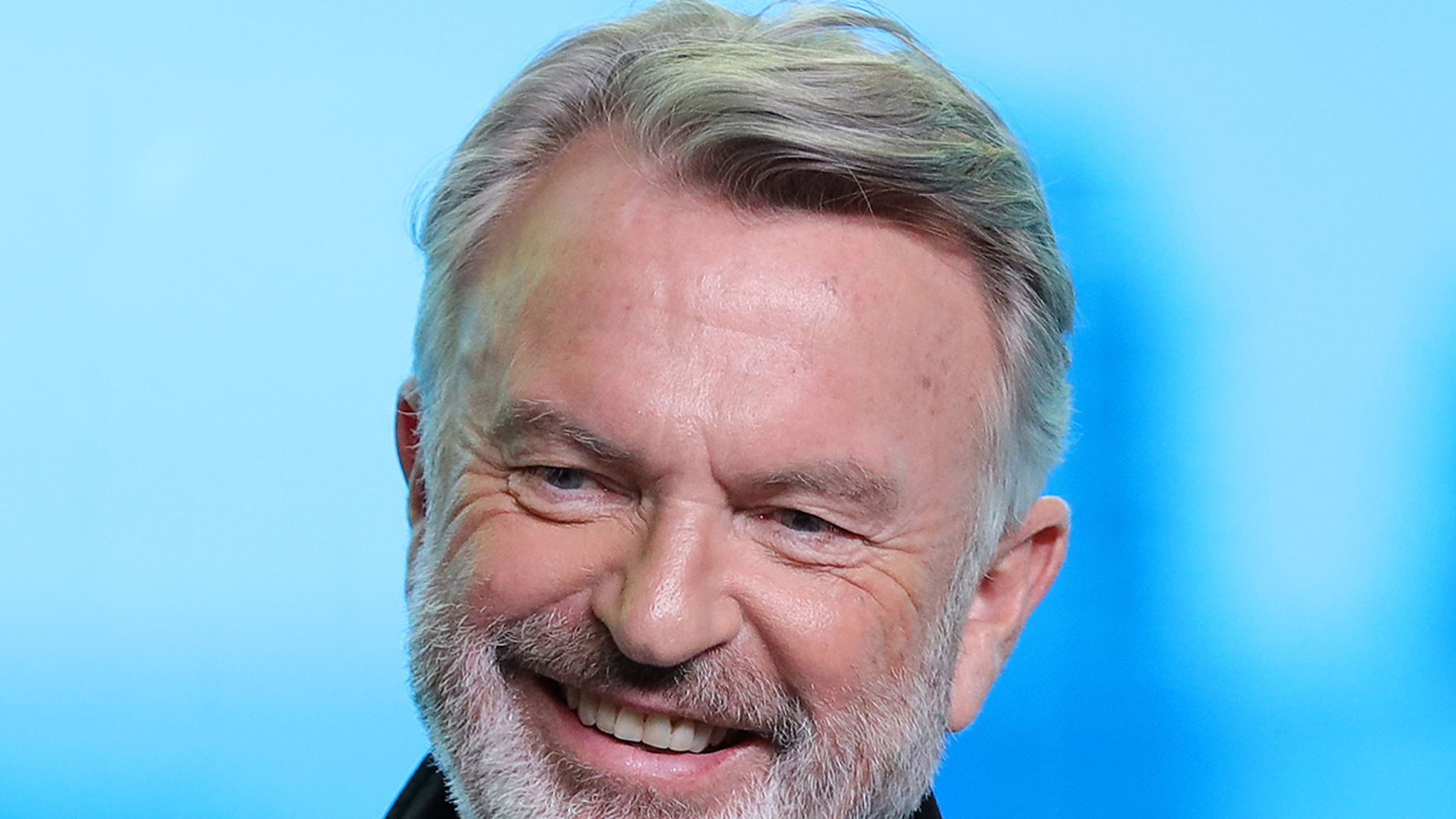
Sam Neill Life Finds A Way ... Cancer-Free After Chemo Stopped Working Published April 28, 2026 12:22 PM PDT Sam Neill says cutting-edge technology has saved his life ... because he's cancer-free now, even though

News
Digital Dubai launches AI Integration Matrix Framework to…

Digital Dubai launches AI Integration Matrix Framework to…

In a milestone that reflects its commitment to institutionalising the use of advanced digital technologies within an integrated and interconnected government ecosystem, Digital Dubai has released a whitepaper introducing the AI Integration Matrix Framework for

Business
UAE plans to produce 5 million barrels of oil per day aft…

UAE plans to produce 5 million barrels of oil per day aft…

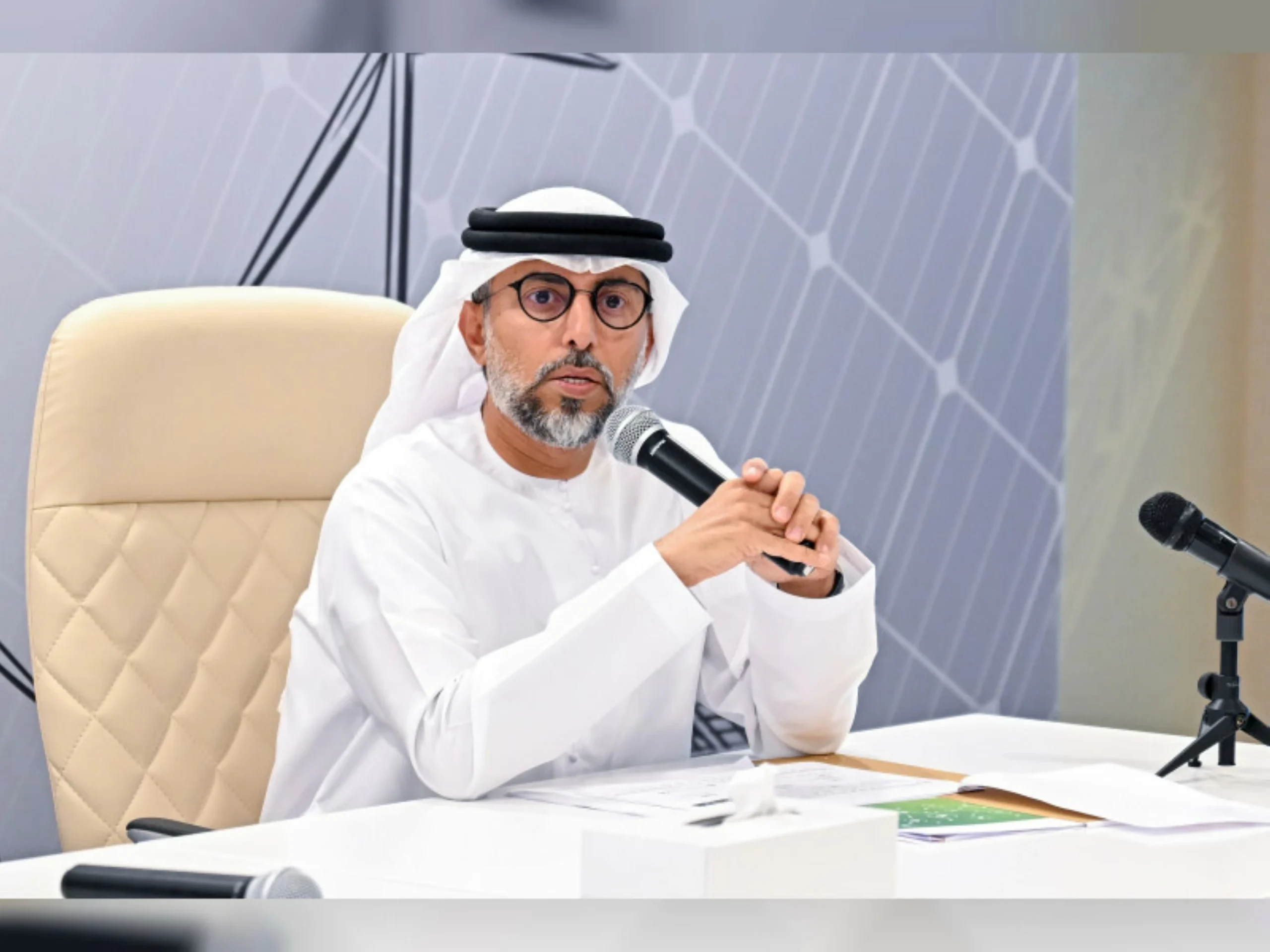
Suhail Al Mazrouei, UAE Minister of Energy and Infrastructure said that UAE plans to produce 5 million barrels of oil per day by 2027.The ministry highlighted that the UAE's decision to withdraw from OPEC and

Entertainment
Digital Underground Rap Star Cleetis Mack Dead

Digital Underground Rap Star Cleetis Mack Dead

Digital Underground Rapper Cleetis Mack Dies Suddenly Published April 28, 2026 11:19 AM PDT Digital Underground member Cleetis Mack has died, TMZ has learned. A rep for the alternative hip-hop group known for kicking off