World
India-flagged LPG tanker crosses Strait of Hormuz

India-flagged LPG tanker crosses Strait of Hormuz

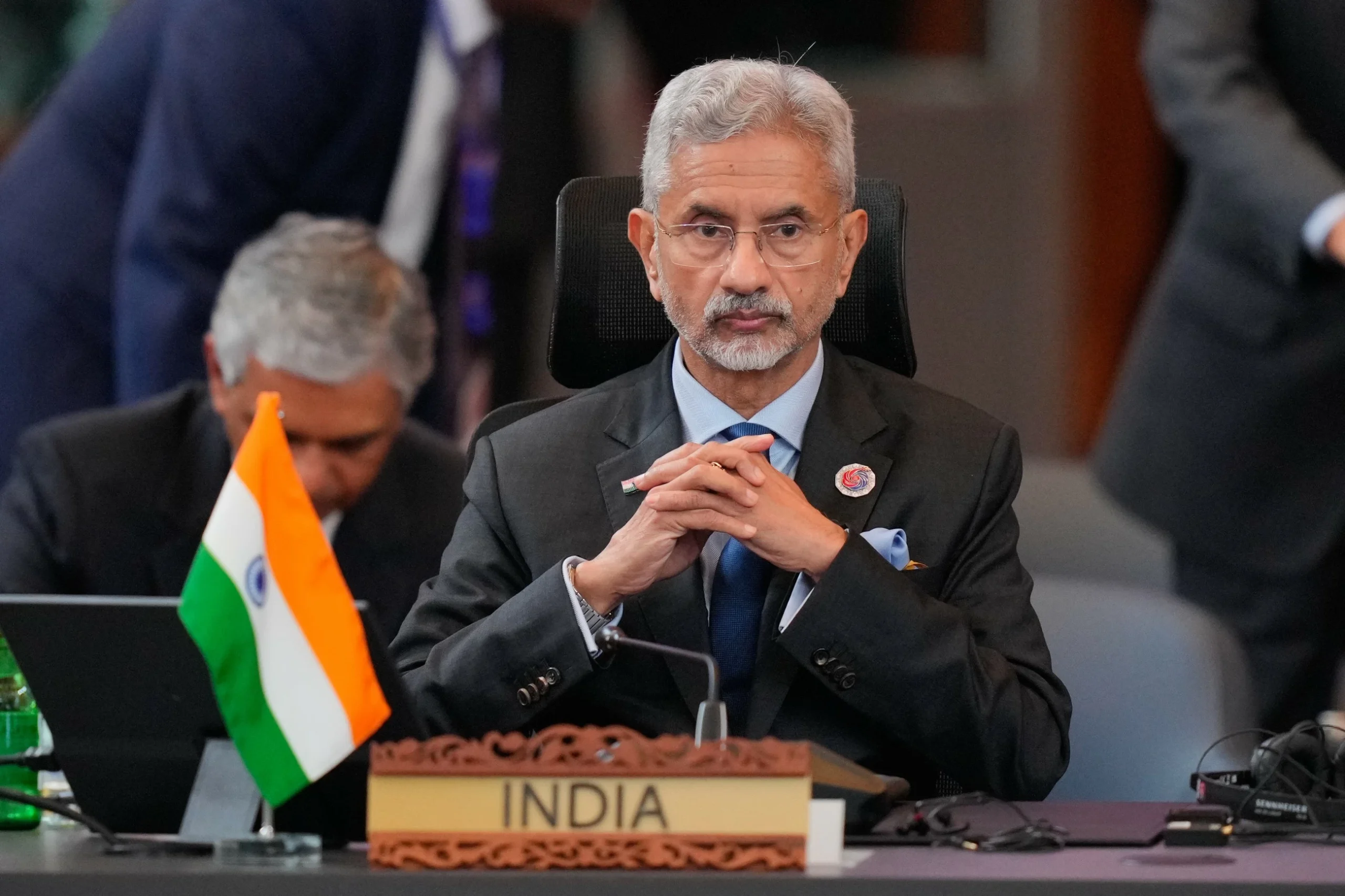
 An Indian-flagged tanker carrying LPG has safely passed through the Strait of Hormuz, India’s government said yesterday.Iran has effectively halted maritime traffic in the waterway, a critical route for global crude oil and gas, since US and Israeli strikes began on February 28. However, New Delhi, the world’s second-largest buyer of liquefied petroleum gas, has managed to secure passage for several Indian-flagged vessels over the past three weeks.The shipping ministry confirmed on Saturday that LPG carrier Green Sanvi had passed through the chokepoint. “Green Sanvi has safely transited the Strait of Hormuz, carrying 46,650 MT of LPG cargo with 25 seafarers on board,” a statement said, without giving further details of its final destination.It said 17 Indian-flagged vessels, carrying 460 Indian crew, “remain in the western Persian Gulf region”. Data from ship tracking company Marine Traffic’s website confirmed that the Green Sanvi was an Indian-flagged tanker.Public broadcaster All India Radio said it was the “seventh India-bound LPG tanker” to cross the Strait of Hormuz since the Middle East war began. India’s petroleum and natural gas ministry also said yesterday that Indian refiners were buying crude oil from Iran and other nations to help deal with the global energy crisis.“Amid Middle East supply disruptions, Indian refiners have secured their crude oil requirements, including from Iran,” it said in a post on X, adding that there was “no payment hurdle for Iranian crude imports”. That comes about two weeks after the US Treasury said it was temporarily lifting sanctions on Iranian oil already loaded onto vessels. The ministry also confirmed that an LPG vessel carrying around “44 TMT Iranian LPG” was berthed and “currently discharging” at the southwestern Indian port of Mangalore. India imports about 60% of its LPG needs and has been grappling with a gas crunch over the past month. The Indian government has imposed tighter controls over natural and cooking gas following import disruptions, prioritising supply towards households and limiting the amount available for industrial use. New Delhi maintains strong relations with Tehran but has steadily expanded cooperation with Israel in defence, agriculture, technology and cybersecurity. 

Sports
Fitzgerald claims Qatar Open Golf Championship

Fitzgerald claims Qatar Open Golf Championship

English golfer Calum Fitzgerald claimed the Qatar Open Golf Championship title after a commanding final round, finishing the tournament with a total of 225 strokes, nine over par at Doha Golf Club yesterday.The victory also secures him a coveted place in the next edition of prestigious Qatar Masters. Fitzgerald, who also won the 2024 edition of the tournament, expressed his delight at returning to the top. “I thank my father, who acted as my coach and was a great help throughout the tournament. The atmosphere was fantastic, and the course is one of the best in the world. I’m delighted to be back and to win the title two years after my 2024 victory,” he said. “I’m looking forward to returning again, this time at the Qatar Masters, where I will strive to reach the later stages of the tournament,” he said. Qatar Golf Association (QGA) President Hamad Abdullah al-Mana crowned the winners while QGA General Secretary Fahad Nasser al-Nuaimi, and Board Member Mohammed Faisal al-Naimi were also present. QGA Technical Expert Mike Shoueiry and Member of QGA’s Organising Committee Walid Saad hosted the presentation ceremony. Qatari golfer Saleh al-Kaabi, the defending champion, finished second with a total of 12 over par after a strong performance throughout the competition. His compatriot, rising star Daniel Sokolov, claimed third place, just one stroke behind. Other notable finishers included Dean Morris of the United Kingdom in fourth with the same score, England’s Andrew Saunders in fifth at 14 over par, and Australia’s Cam Craner in sixth with 24 over par. Scotland’s Gary Bowman was seventh, Sweden’s Claes Beberg ninth, and Bolivian Pablo Hevia completed the top ten in tenth place at 30 over par. Secretary General of the Qatar Golf Association Fahad al-Nuaimi praised the success of the 40th edition of the tournament. “I would like to thank the Qatar Olympic Committee for allowing us to host this prestigious tournament, which is very dear to the Qatar Golf Association. This is especially significant as this is the 40th edition of the championship, which has been running for over 40 years since its inception in 1983 on the sand courses in Mesaieed,” he said. Al-Nuaimi highlighted the participation of international players and noted Fitzgerald’s repeat victory. “The English player succeeded in winning the title, repeating his achievement from two years ago in the 2024 edition, when he also won the title at the Doha Golf Club,” he added while praising the Qatari contingent. “The second-place finish of Qatari national team players Saleh al-Kaabi and Daniel Sokolov demonstrates the excellent level they displayed in this year’s edition alongside their fellow Qatari participants,” al-Nuaimi said. 

World
Trump signs order to regulate college sports

Trump signs order to regulate college sports

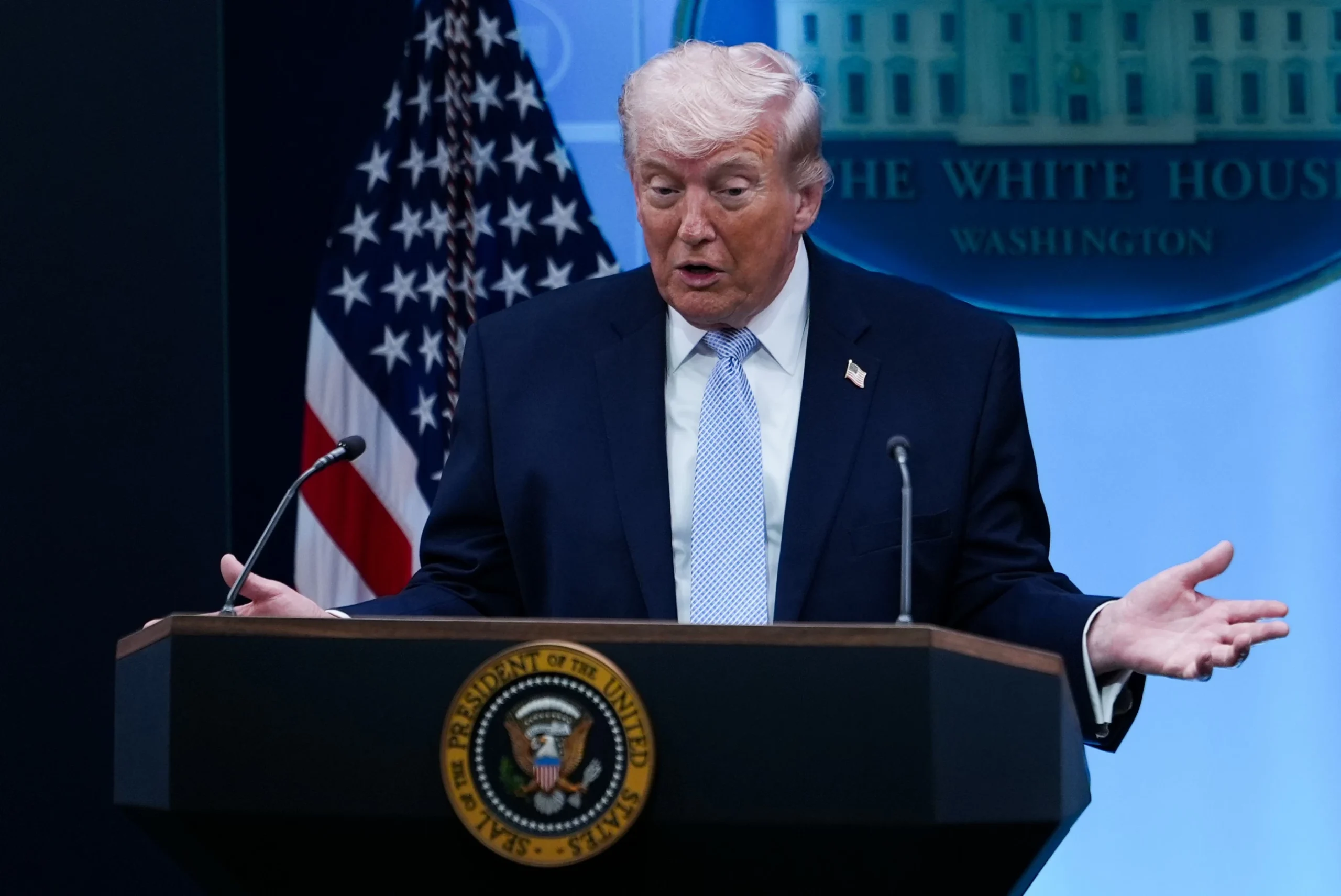
 US President Donald Trump has signed an executive order aimed at regulating US collegiate sports in the wake of rule changes that allow student athletes to be compensated financially. The order, which is the second that Trump has issued on college sports, directs the National Collegiate Athletic Association (NCAA) to create rules that allow college athletes to play for “no more than a five-year period”. He also asked that rules be put in place that would allow them to transfer schools just once before they graduate without having to sit out a season.The changes are scheduled to go into effect on August 1, and institutions who allow athletes who don’t meet the criteria risk losing federal funding. Trump said that the loosening of “consistent rules or limits concerning eligibility, transfers, and pay-for-play schemes has created an out-of-control financial arms race... that is driving universities into debt”.Friday’s order came as the hugely popular NCAA basketball tournament reached its closing stages. The women’s semi-finals took place on Friday and the men’s Final Four semi-finals were scheduled for the weekend. In addition to demanding eligibility and transfer limits, it calls on governing bodies to ban “improper” financial arrangements and urges Congress to pass legislation to address the issues. It follows an order issued by Trump in July that sought to block some recruiting payments by third parties to college athletes in big-money sports like football and men’s basketball in order to preserve funds available for women’s and non-revenue sports. The president said last month that the rising value of name, image and likeness (NIL) contracts for players in high-visibility sports like football has created a burden for colleges that forces some to abandon other sports. Some of those sports – such as athletics, swimming and gymnastics – have long been pipelines for US Olympic teams. The NCAA long prohibited student athletes from accepting any compensation for use of their name, image and likeness, but after a 2021 Supreme Court ruling, the rules were changed so that some collegiate athletes could receive financial compensation. 

World
US satellite imagery firm announces blackout on Middle East war pics

US satellite imagery firm announces blackout on Middle East war pics

 US satellite imagery company Planet Labs said yesterday it will stop publishing high-resolution aerial pictures of the area involved in the Middle East war, following a request from President Donald Trump’s government. The US and Israel have conducted joint strikes against Iran since late February, prompting the Islamic Republic to retaliate with daily missile barrages targeting Israel and several neighbouring countries across the region. Planet said the US government had asked satellite imagery providers to implement an “indefinite withhold of imagery”. “Effective retroactively from March 9, 2026, Planet is moving to a managed access model, extending the publication delay for all new imagery within the designated AOI (area of interest), and releasing imagery on a case-by-case basis and for urgent, mission-critical requirements or in the public interest,” the company said in a message to clients received by AFP. This area was defined in a previous announcement as all of Iran and allied bases in the area, as well as in regional states and existing conflict zones. Planet, founded in 2010 by former Nasa scientists and whose images are widely used by media and researchers, said it expected the new policy to last until the end of the conflict. On March 10 the company said it would impose a two-week delay on access to its images of the Middle East because of the war, extending an initial 96-hour delay.Vantor, formerly Maxar, the other major provider of satellite imagery, had also announced major restrictions. Under normal circumstances, Planet’s images are available to its clients — including AFP — within hours of their satellites passing overhead, providing a valuable resource for businesses, researchers, and journalists, but also potentially for militaries seeking to target enemy military bases or radar sites. US law provides that any company headquartered in the US that commercially operates high-resolution satellite imagery may be subjected to restrictions for reasons of national security or foreign policy. In practice, satellite data providers, which operate under licence, put in place restriction protocols in order to avoid sanctions. 

Opinion
Under global spotlight, Australia plays hardball on social media ban

Under global spotlight, Australia plays hardball on social media ban

Since Australia banned children from using social media in December, lawmakers from Spain to Malaysia have expressed interest in following suit, while ‌US courts have found tech firms negligent toward young users. This global spotlight on the first such ban ​on people under 16 using popular apps appears ‌to have encouraged Prime Minister Anthony Albanese’s government to ramp up enforcement this week of what it was ‌touting as successful co-operation with industry two months ago, tech policy ‌experts say. In getting more aggressive with apps such ‌as Instagram and TikTok, Albanese’s centre-left government is pleased with the overseas interest -- at least eight countries have said they want similar curbs -- but keen to counter the news that many teens are still scrolling on their phones, experts say. ‘WHOLE WORLD’S WATCHING’“The whole world’s watching Australia in this experiment, and therefore it looks like weak government to back down or pretend that the failures in reasonable efforts aren’t happening,” said Jeannie Paterson, co-founder of the Centre for Artificial Intelligence and Digital Ethics, who regularly advises government on tech policy. A spokesperson for Communications Minister Anika Wells said she had not toughened her stance due to global attention, declining to comment further. A month after the ban took effect, the government reported in mid-January that social media platforms had deactivated 4.7mn suspected ​underage accounts, prompting industry participants to expect a grace period of up to a year on enforcement of the ban. The British and Canadian governments and some US lawmakers have sounded out the Australian authorities on the social media ban -- a policy overwhelmingly backed by parents but opposed by the multi-trillion-dollar ‌industry that must comply with it. Those signs of progress, however, have been ​undermined by a series of headlines about minors staying on social media. On Tuesday the government said it ​was investigating Meta’s Instagram and Facebook, TikTok, Alphabet’s YouTube and Snapchat for possible breaches of the law, gathering evidence for possible legal action. The eSafety regulator had previously said it would only take enforcement action in cases of systemic noncompliance. In its first comprehensive compliance report, the regulator said nearly one-third of parents reported their under-16 child still had at least one social media account. Among those, two-thirds said the platform had not asked the child’s age. Angela Flannery, a former general counsel for the government’s Communications Department who now advises the private sector, said, “The government is quite heartened generally by the number of other jurisdictions that are looking at imposing restrictions on the under-16s globally.” But given Tuesday’s “disheartening” report on compliance, Flannery said, “They probably want to be seen to be taking action to keep encouraging other jurisdictions to enforce or to enact similar bans.” Meta and Snap said they were committed to ‌complying with the ban, TikTok declined to comment ‌and Alphabet did not respond to a request for comment on the government action. META, GOOGLE LOSE IN US COURTROOMSThe eSafety report said complaints about cyberbullying and image-based abuse -- problems the government said the ban would fix -- were unchanged, while parents reported being unable to notify platforms that their underage children still had accounts. Minors who failed an age test were being prompted to repeat the test until they passed, the regulator said. The ban requires platforms to take “reasonable steps” to keep under-16s from having an account or face fines of up to A$49.5mn ($34mn). Communications Minister Wells said the problem was not parents or kids failing to comply but Big Tech undermining the government’s policy. Also likely emboldening Australia to go after platforms, say people familiar with the ban’s rollout, were a US trial verdict ​last week ordering Meta to pay $375mn in penalties for safety lapses that allowed child exploitation on Facebook, Instagram and WhatsApp, and another decision finding Meta and Google negligent for designing social media platforms that are harmful to young people. “The court cases in New Mexico and California have helped the court of public opinion,” said Julian Sefton-Green, a professor of new media at Deakin University who is advising the commissioner’s two-year study on the ban’s impact. “They’re jury decisions, that social media is liable for the well-being of young people, so I think the government’s going to take heart from that.” Rob Nicholls, a researcher of regulation at the University of Sydney, said the lawsuits may prompt platform redesigns that comply with the Australian ban by focusing on protecting minors. “The effect of that design change ‌will be to reduce access for ​under-16s,” he said. “If you’ve got to do it to avoid litigation in the States, you may as well do the same thing around the world.” 

Opinion
Hungary’s opposition surfs grassroots wave ahead of key election

Hungary’s opposition surfs grassroots wave ahead of key election

Like many of her fellow volunteers, Hungarian beautician Krisztina Menczel sat idle in the past elections that kept nationalist Prime Minister Viktor Orban in power. But opposition leader Peter Magyar’s hopes of ending the longstanding premier’s 16-year reign in Hungary rest in no small part on first-time campaigners like Menczel. “Canvassing has a big impact,” the 41-year-old told AFP in Jaszfenyszaru, a central Hungarian town long considered a stronghold of Orban’s Fidesz party. “Even those who wouldn’t dare reveal their political preferences come over and chat with us.” Magyar, a former government insider turned critic, is offering voters a radical break from Orban’s self-described “illiberal” system, vowing to crack down on corruption and improve public services. Thanks to his party’s on-the-ground network, Orban’s grip on small towns like Jaszfenyszaru, population 6,000, appears to be weakening ahead of the April 12 vote. Orban, who has criticised neighbouring Ukraine and acted as a spoiler at many European Union summits, has long counted on his media dominance to promote his platform. Instead, Magyar’s TISZA party has had to rely on grassroots word-of-mouth to promote its message. While the ruling party puts up billboards, TISZA has asked its supporters to hang party signs on homes and shopfronts. Menczel said she decided to help the party after Magyar visited the town last August on his nearly non-stop nationwide tour. She now spends up to three hours a day campaigning, on top of managing TISZA’s local social media pages. When he shot into prominence in 2024, Magyar had no party apparatus behind him. But his rise came in the wake of a child abuse pardon scandal which shook Orban’s tight grip on power. With many Hungarians already dissatisfied with the economy, the scandal proved a “tipping point”, when many voters “realised they had enough of Orban’s system”, according to Zoltan Lakner, the editor-in-chief of the ‘Jelen’ weekly newspaper. After tirelessly criss-crossing the country and a prominent social media campaign, Magyar led a previously dormant TISZA to second place behind Fidesz at the 2024 European elections. A month after the vote, he called supporters to set up loosely connected associations to handle on-the-ground organising, dubbed “TISZA islands”, a nod to the party sharing its name with the country’s longest river. According to the party, around 4,000 “islands” have since been established, including in rural areas which the old opposition parties had effectively abandoned. These groups organised local community events, such as charity drives, cookouts and political discussions, before switching to full-time campaigning. Key to these events’ success was the involvement of small and medium-sized businesses, according to Lakner, who describes the movement as a “revolution of entrepreneurs”. “This also affects the islands’ attitude towards politics: They approach it pragmatically instead of ideologically, simply wanting the country to function well,” the analyst explained. Dozens of “islanders” ended up being chosen as party candidates during November’s primaries. Many of them are locally respected professionals, such as doctors, who are completely new to politics. “This lends them credibility, given the widespread disillusionment with professional politicians,” Bulcsu Zsiga, a researcher at the Centre for Fair Political Analysis, told AFP. But their political inexperience carries a “danger” which TISZA is “clearly trying to mitigate”, the expert noted, pointing to the party’s much criticised policy of restricting media access to candidates. Even so, drawing in local figures has helped to break the “spiral of silence” some Fidesz-dominated rural communities, where opposition supporters previously felt isolated or reluctant to express their views, Zsiga added. In the Hungarian countryside, activism often comes at a price, some dearer than others, as campaigners in Jaszfenyszaru can attest. Menczel, the beautician, said that a close relative of the local Fidesz lawmaker stopped frequenting her salon after she posted a picture with TISZA’s candidate on social media. Others have suffered more serious consequences. Forty-eight-year-old retailer Eszter Somfai had her home address shared online, after an internal party database with some 200,000 supporters’ personal details was leaked last November. “But we will not let them deter us, we proudly campaign for Tisza,” Menczel said. “I feel people here are increasingly opening up... If everything is conducted fairly, then we will be victorious.”  

Entertainment
Kate Beckinsale Says Mark Ruffalo is Lucky to Have a Penis After Alleging Agent Dropped Her

Kate Beckinsale Says Mark Ruffalo is Lucky to Have a Penis After Alleging Agent Dropped Her

Mark Ruffalo's little Hulk means he can keep smashing it in Hollywood ... so says Kate Beckinsale. The actress went on a tirade on social media Friday after Ruffalo appeared in a video posted to

Entertainment
Shar Jackson Says She Won’t Write Memoir to Respond to Stories About Her

Shar Jackson Says She Won’t Write Memoir to Respond to Stories About Her

Shar Jackson I Don't Need a Memoir after K-Fed and Britney I Have the Truth on My Side!!! Published April 4, 2026 12:44 PM PDT Play video content TMZ.com Shar Jackson says she's excited to

News
More US-Israeli strikes on Bushehr nuclear plant would en…

More US-Israeli strikes on Bushehr nuclear plant would en…

US-Israeli strikes hit an area near Iran's Bushehr nuclear power plant on Saturday, prompting its foreign minister to warn that the effects of any fallout would be felt most keenly by the country's Gulf neighbours.The

News
US revokes green cards and visas of several Iranian nationals

US revokes green cards and visas of several Iranian nationals

The Trump administration has revoked the green cards or US visas of at least four Iranian nationals connected to the current or former Iranian government, including two who have been detained by immigration authorities and