Entertainment
Pete Davidson Jokes It’s ‘Hard to Watch Porn’ As a Girl Dad But ‘Powered Through’

Pete Davidson Jokes It’s ‘Hard to Watch Porn’ As a Girl Dad But ‘Powered Through’

Pete Davidson Having a Girl Makes It Hard To Watch Porn... I Still Do Though!!! Published April 12, 2026 2:09 PM PDT Play video content Instagram/@JPASC24 Pete Davidson is keeping it VERY real about dad

World
Australia appoints woman to lead its army for the first time

Australia appoints woman to lead its army for the first time

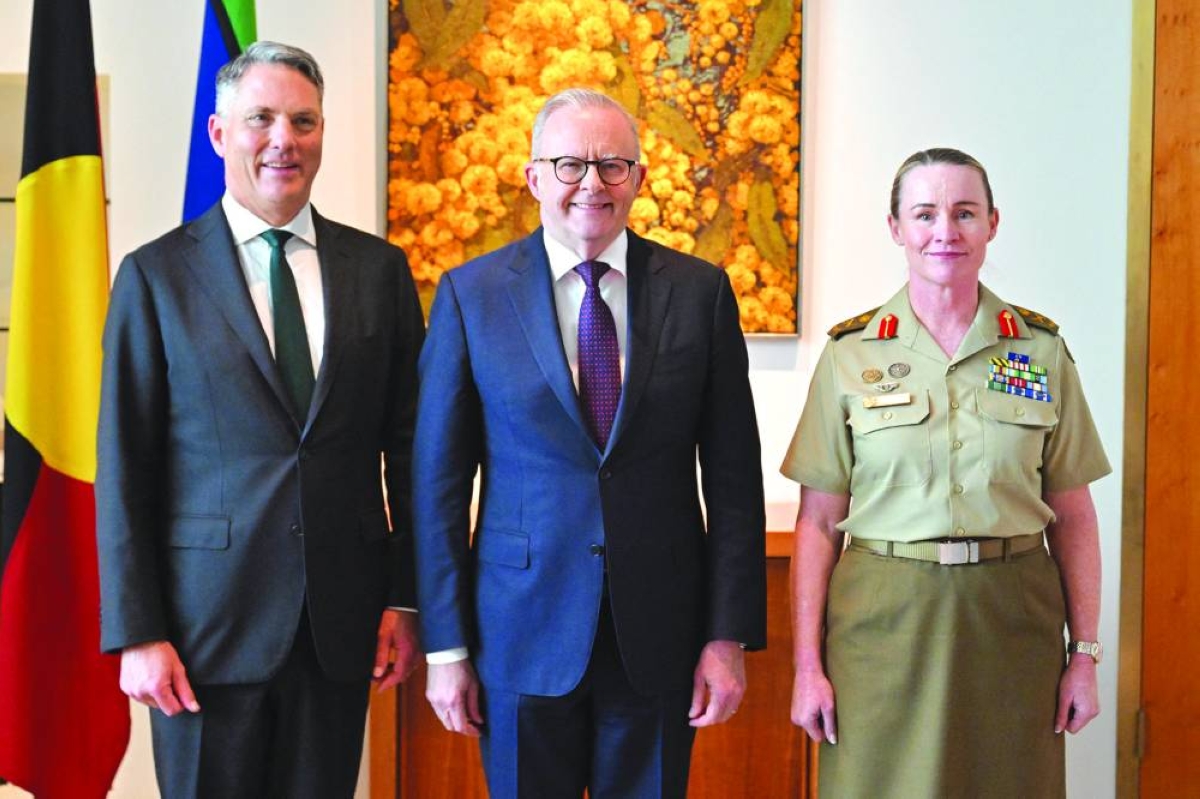
Deputy Prime Minister Richard Marles, Prime Minister Anthony Albanese and newly appointed Chief of Army Lieutenant General Susan Coyle pose for photographers after a press conference at Parliament House in Canberra, Monday. (Reuters) Australia Monday said a woman would lead its army for the first time in history, as part of a ‌reshuffle of the country's defence force leadership.Lieutenant ​General Susan Coyle, ‌the current chief of joint capabilities, will ‌become chief ⁠of ‌army in July, the ‌government said in a statement. She will replace Lieutenant ⁠General Simon Stuart.Coyle's appointment comes as Australia's military seeks to boost the number of female officers in its ranks. It faces a wave of allegations of systematic sexual harassment and discrimination."From July, we will have the first ever female chief of ​army in the Australian Army's 125-year history," Prime Minister Anthony Albanese said in a statement.Defence Minister Richard Marles called Coyle's ‌appointment a "deeply historic ⁠moment.""As Susan said ​to me, you cannot be what ​you cannot see," he said."Susan's achievement will be deeply significant to women who are serving in the Australian Defence Force today and women who are thinking about serving in the Australian Defence Force in the future."Coyle, 55, enlisted in the military in 1987 and has held a number of senior command roles. She will be ‌the first woman to lead ‌any service branch ⁠of the military, Marles said.Women currently make up ⁠around 21% ⁠of the Australian Defence Force (ADF) and 18.5% of senior leadership roles. The ADF has set a target of 25% of overall participation for women by 2030.Last October, a class action lawsuit was filed against the ADF ​alleging it failed to protect thousands of female officers from systematic sexual assault, harassment and discrimination.The government Monday also appointed Vice-Admiral Mark Hammond, the current chief of the navy, as the head of the ADF, succeeding Admiral David Johnston.The current deputy chief of navy, Rear Admiral Matthew Buckley, will ‌replace Hammond ​as head of the branch. 

World
South Korea, Poland vow deeper defence ties on Tusk visit

South Korea, Poland vow deeper defence ties on Tusk visit

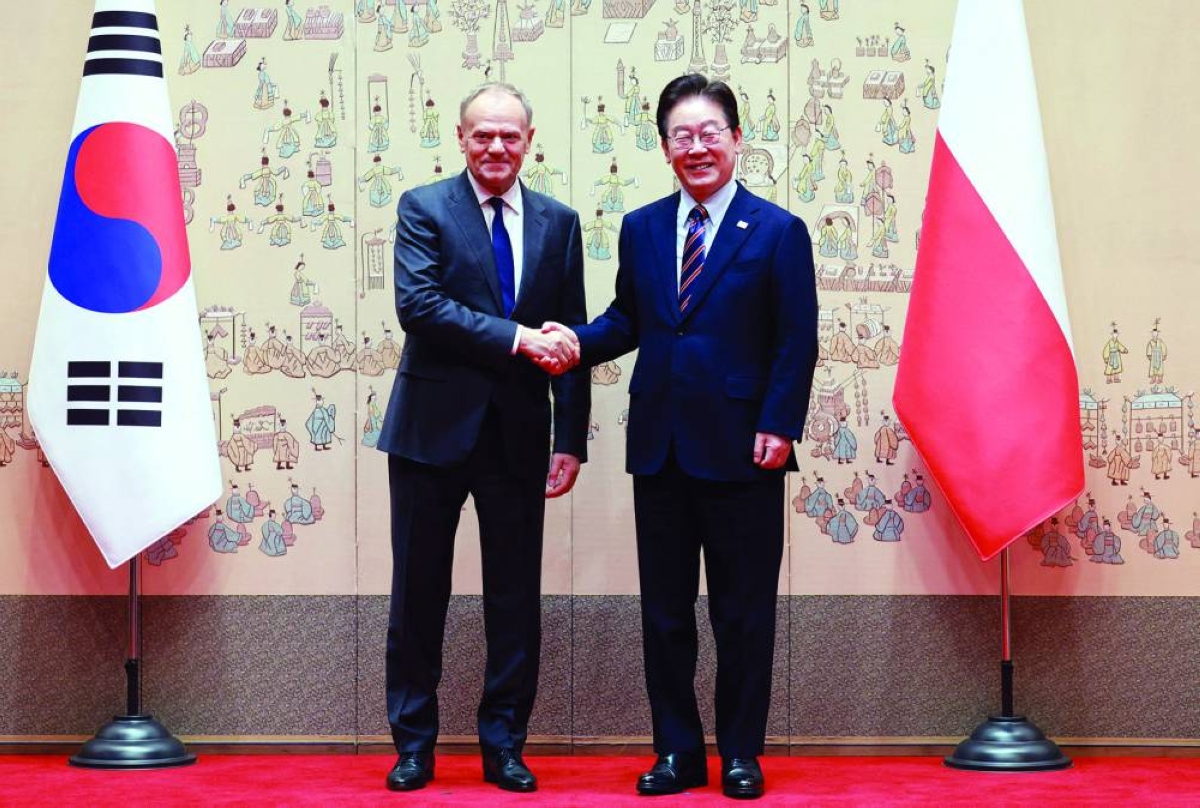
Polish Prime Minister Donald Tusk and South Korean President Lee Jae-myung pose for photographs before their meeting at the Presidential Blue House in Seoul, Monday. (Reuters) South Korea and Poland pledged to deepen their defence partnership Monday, as the European country modernises its military following the Russian invasion of Ukraine.Warsaw has emerged as a key buyer of arms from Seoul, and the countries signed a weapons deal worth over $40 billion in 2022.Polish Prime Minister Donald Tusk is in Seoul for the first such visit in 27 years, and held a summit with South Korean President Lee Jae-myung Monday."Mutually beneficial defence co-operation between the two countries will be further expanded," Lee told a joint press conference afterwards.He stressed the "steady implementation" of the 2022 agreement, calling it "essential for deepening and advancing our defence industry co-operation".Under the deal, Poland has bought South Korean military hardware including tanks, self-propelled howitzers and rocket launchers.Some of those weapons are now "operating proudly across Poland's vast plains, helping to safeguard the country's territory and protect its people", Lee said in his opening remarks before the summit.Seoul and Warsaw would elevate ties to a "comprehensive strategic partnership", he added.Poland, a member of the European Union and the Nato defence bloc, has stood firmly behind neighbouring Ukraine since Russia launched its full-scale invasion in February 2022.South Korea has backed Kyiv, especially since North Korea deployed troops to support Russia, but has stopped short of supplying lethal weapons, citing a domestic ban on militarily aiding countries at war.Tusk described South Korea as "Poland's second-most important ally after the United States", according to a Korean translation of his opening remarks.Defence co-operation "remains the core driving force of bilateral relations", he said, adding that Warsaw would encourage South Korean partner firms to shift production lines to Poland.The two leaders also agreed to expand co-operation in non-defence fields, including energy supply chains and infrastructure.Tusk wraps up his visit on Monday and will then head to Tokyo.  Related Story

World
Spanish premier urges China to take bigger role in multipolar order

Spanish premier urges China to take bigger role in multipolar order

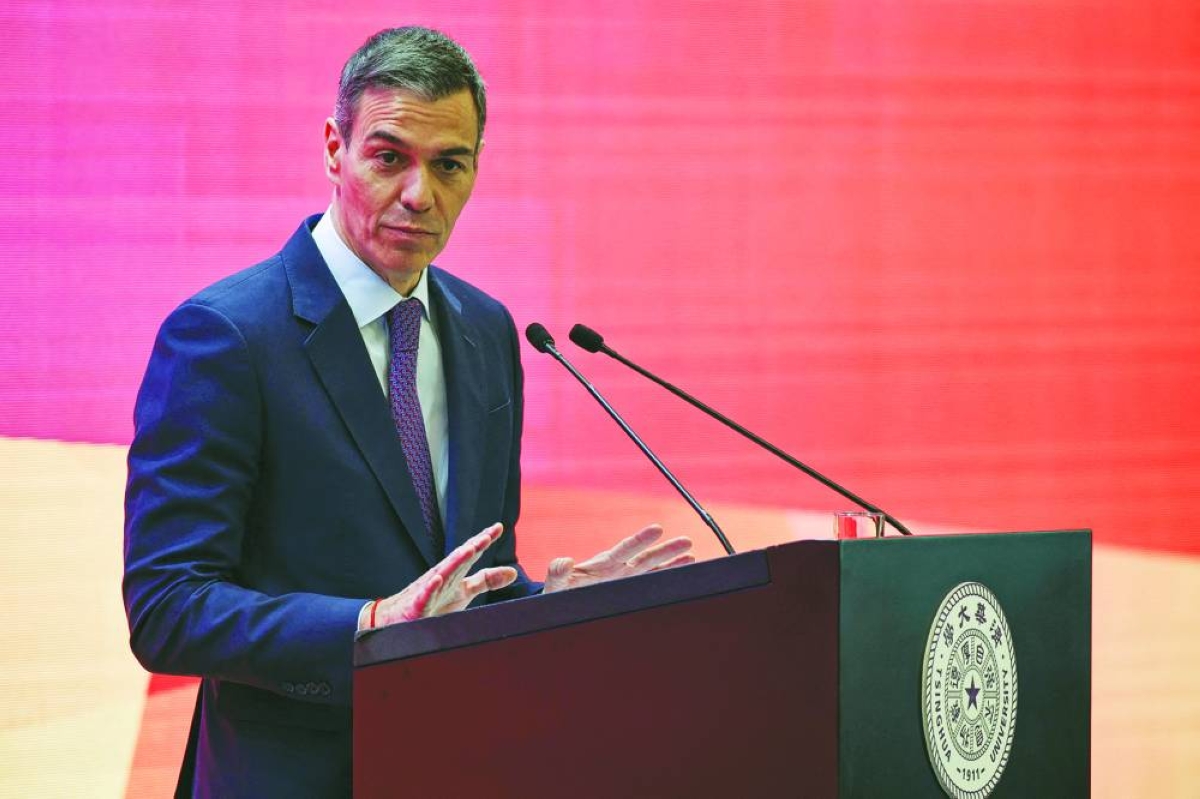
Spanish Prime Minister Pedro Sanchez, offers a speech at Tsinghua University, in Beijing, Monday. (Reuters) Spanish Prime Minister Pedro Sanchez Monday said China should take on a more substantial role with issues including climate change, ‌security, defence and the fight against inequality, adding ​that Europe will also ‌have to redouble its efforts as the ‌US withdraws from ⁠leadership roles ‌on many fronts.Sanchez, who ‌is making his fourth visit to China in four years, ⁠spoke at Beijing's Tsinghua University.His visit comes as many Western governments seek to maintain engagement with Beijing despite lingering security and trade tensions. It follows visits to China earlier this year by the prime ministers of Britain, Ireland, Canada and Finland.Spain has been ​one of Europe's loudest proponents of expanding trade and treating China as a strategic ally rather than an economic and geopolitical ‌rival.Sanchez said China could ⁠do more ​in terms of fighting climate change, promoting global ​health, controlling the development of responsible artificial intelligence as well as nuclear weapons."For example, by demanding as it is doing, that international law be respected and that the conflicts in Lebanon, Iran, Gaza and the West Bank and Ukraine cease," he said."Europe will also have to redouble its efforts, especially now that the US has decided to withdraw from ‌many of these fronts."Sanchez is ‌expected to meet Chinese ⁠President Xi Jinping today where they are expected ⁠to focus on ⁠geopolitics.China accounted for 74% of Spain's total trade deficit, Sanchez said, adding that co-operation was important to build a "balanced, globalised economy that generates shared prosperity."Madrid hopes Sanchez's visit will narrow Spain's trade deficit, which more than doubled ​in four years to nearly $50bn in 2025. It is looking to boost agricultural and manufacturing exports to offset high volumes of China's imports.China's official news agency Xinhua Monday said Sanchez's visit was set to further consolidate bilateral ties and pointed to a broader pathway for steady engagement between China and Europe at a time ‌of growing global ​uncertainty.  Related Story

World
Philippines warns of ‘sabotage’ after cyanide seizure in disputed South China Sea atoll

Philippines warns of ‘sabotage’ after cyanide seizure in disputed South China Sea atoll

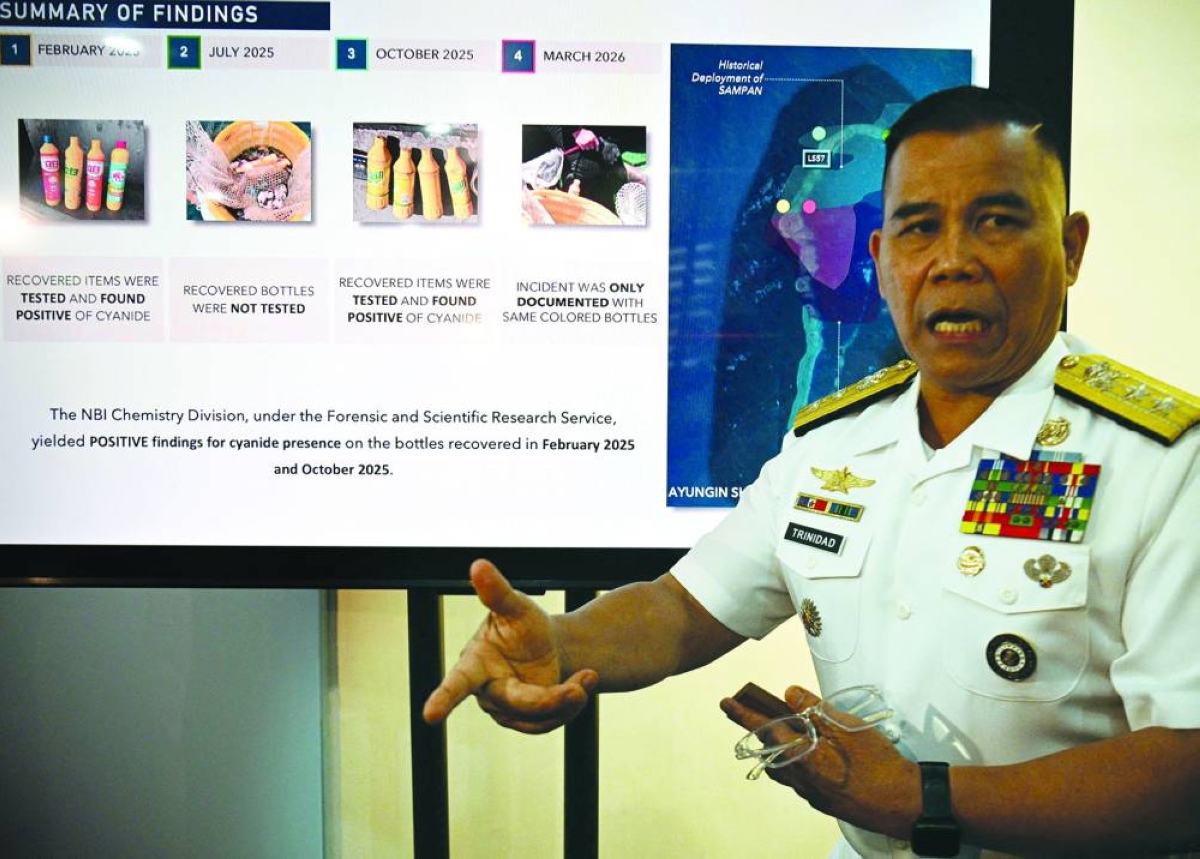
Philippine Navy spokesman Rear Admiral Roy Vincent Trinidad speaks next to a slide presentation of seized yellow bottles suspected to contain cyanide in waters of Second Thomas Shoal in the disputed South China Sea, during

World
Trump slams Pope Leo over criticism of war and suffering

Trump slams Pope Leo over criticism of war and suffering

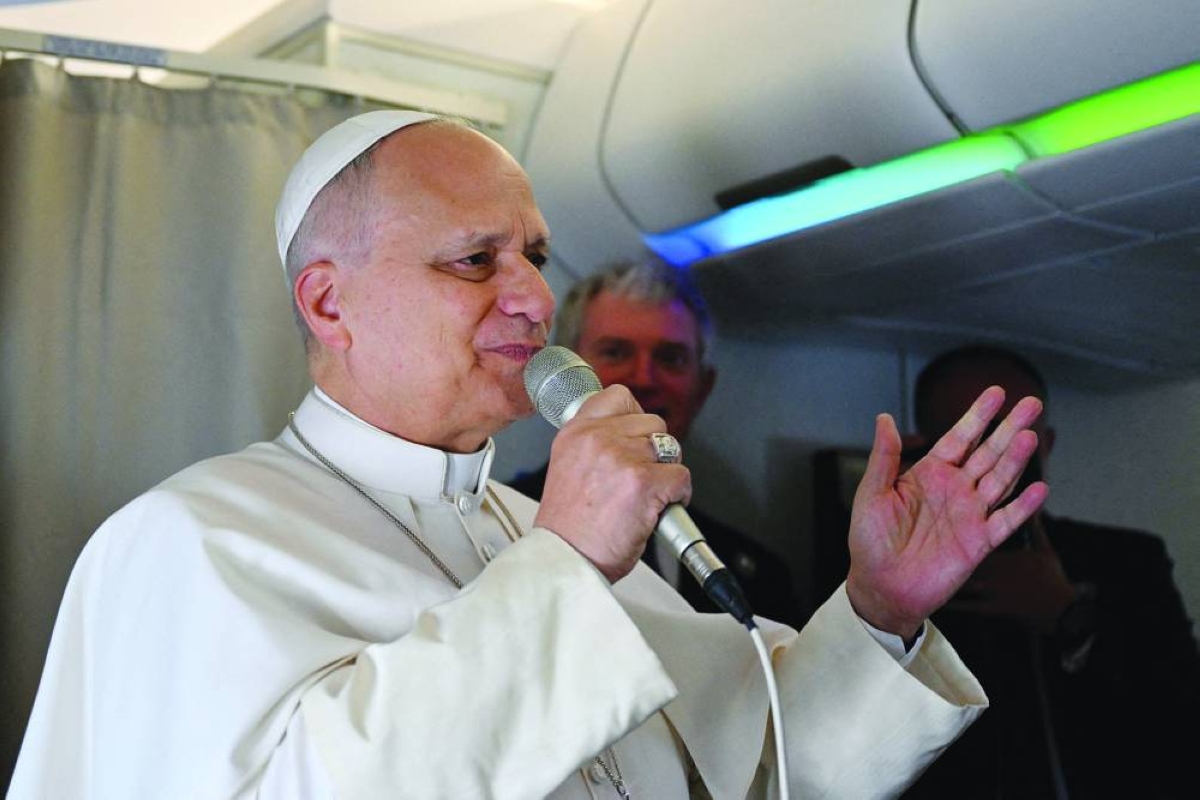
US President Donald Trump has criticised Pope Leo XIV as "terrible" in an unusual, direct attack on the Pontiff, who responded by vowing to continue denouncing war and suffering.The president's comments came after the Pope had spoken out, with growing force, against the US-Israeli war on Iran and the Trump administration's hardline immigration policies."Pope Leo is WEAK on Crime, and terrible for Foreign Policy," Trump wrote in a post on Truth Social late on Sunday.Pope Leo, the first Pontiff from the US, responded Monday by saying that he would continue to denounce war, adding that the Christian message, rooted in the primacy of peace, was being "abused"."I will continue to speak out loudly against war, looking to promote peace, promoting dialogue and multilateral relationships among the states to look for just solutions to problems," he told Reuters aboard a papal flight to Algiers, where he is embarking on a 10-day tour to four African countries."Too many people are suffering in the world today," Leo said. "Too many innocent people are being killed. And I think someone has to stand up and say there's a better way."Catholics on social media lambasted Trump for attacking the leader of the 1.4bn-member Catholic Church."There is no ambiguity about the situation now," Massimo Faggioli, an expert on the papacy, told Reuters.He compared the comments to efforts by the leaders of Germany and Italy during World War II to draw the late Pope Pius XII to support their causes."Not even Hitler or Mussolini attacked the pope so directly and publicly," said Faggioli.Archbishop Paul S Coakley, president of the US Conference of Catholic Bishops, said that he was disheartened by Trump's comments.Italian Prime Minister Giorgia Meloni condemned Trump's criticism of Leo’s comments as "unacceptable", saying that "it is right and normal for (Leo) to call for peace and to condemn all forms of war".Leo, originally from Chicago, is known for choosing his words carefully.He has emerged as an outspoken critic of the conflict with Iran in recent weeks and decried the "madness of war" in a peace appeal on Saturday.Last year, he questioned whether the Trump administration's hardline immigration policies were in line with the church's pro-life teachings, and called for a "deep reflection" about the way migrants are being treated in the United States.Trump wrote in his post on Sunday that "Leo should get his act together as Pope", later telling reporters he was "not a big fan" of the Pontiff.Trump's broadside against Leo also accused him of being "weak on nuclear weapons", several days after the Pope said the US president's threat to destroy Iranian civilisation was "truly unacceptable".In a speech on Palm Sunday last month in St. Peter's Square in the Vatican, the Pope said God rejected the prayers of leaders who start wars and have their "hands full of blood", calling the conflict in Iran "atrocious".Leo has also called on Trump to find an "off-ramp" to end the conflict and "decrease the amount of violence".In his post, Trump suggested that Leo was only elected to lead the Catholic Church last year "because he was an American, and they thought that would be the best way to deal with President Donald J Trump".Leo said Monday that he was not a politician and did not want to be drawn into a debate with Trump.Trump also had a rocky relationship with Leo's predecessor, Pope Francis, who criticised Trump's immigration policy proposals when he first ran for president and suggested Trump was "not a Christian".Trump had called Francis "disgraceful" in early 2016.  Related Story

Opinion
Hungarian election removes Ukraine’s staunchest foe in EU

Hungarian election removes Ukraine’s staunchest foe in EU

Ukraine welcomed with relief the defeat of ‌its harshest EU foe, Hungary’s Prime Minister Viktor Orban, an outcome which paves the way for a 90bn euro ($105​bn) loan that Kyiv urgently needs to fund ‌the war with Russia. But the winner of Hungary’s election, Peter Magyar, is no outspoken ally of Ukraine and ‌some other leaders in the European Union remain sceptical about ‌stronger backing for Kyiv, particularly its efforts to join the ‌EU, analysts said. Magyar’s centre-right Tisza party won a landslide victory on Sunday, ending Orban’s 16-year rule and winning the two-thirds majority it needs to enact constitutional reforms. Orban — a nationalist who maintained warm ties with Russian President Vladimir Putin — systematically opposed Brussels’ efforts to support Ukraine, most recently obstructing the two-year EU loan over accusations that Kyiv had deliberately halted Russian oil flows across its territory via the Druzhba pipeline. President Volodymyr Zelenskiy says Druzhba was damaged by a Russian strike in January and that repairs should be completed in the spring - though he has urged Europe to stop buying Russian oil. “One should not call Magyar pro-Ukrainian - he isn’t - but he is not anti-Ukrainian, unlike Orban, and that’s already great,” said Oleksiy Honcharenko, a Ukrainian lawmaker with the European Solidarity Party. “Putin has lost his main ally ​in Europe.” In his first news conference after the election, Magyar said Ukraine was the victim in the war with Russia and he pledged to diversify Hungary’s energy sources. But he also said Budapest would maintain “pragmatic” ties with Moscow and that repairing relations with Kyiv depended on the restoration of ‌the rights of the Hungarian ethnic minority in western Ukraine - a long-running source of ​tension. Officials and analysts expect Magyar to drop Hungary’s veto on the loan and on ​a 20th round of sanctions against Russia after he takes office, probably in mid-May. Magyar is keen to unlock EU funds earmarked for Hungary that were suspended amid accusations of democratic backsliding by Orban’s government. But the timeframe is tight. Ukraine is reliant on Western financial support, four years into the war. It needs $52bn this year and economists say it could start to run out of money next month. “Hungary’s vetoes on EU financial support for Ukraine will likely cease, improving EU decision-making capacity,” said Zsuzsanna Vegh, analyst at the German Marshall Fund think tank, adding Hungary itself would still not provide funding. “Tisza is unlikely to embrace expansive military support.” In Kyiv, residents greeted Hungary’s election outcome with cautious optimism. “This is very positive because it gives us a chance to improve relations with Hungary,” said Yehor Vasylchencko, a 33-year-old IT specialist. But, noting that Magyar is a former member of Orban’s nationalist Fidesz party, he added: “I ‌have some doubts about whether Magyar will be an ‌improvement. Time will tell.” Ukraine’s Foreign Minister Andrii Sybiha said “meticulous, pragmatic, and calm work” was needed to find common ground with Hungary’s new leadership. Volodymyr Fesenko, director of the Penta think tank, said that, as Ukraine looks to reset relations with Hungary, restarting Druzhba could be an olive branch. After years of anti-Ukraine rhetoric in Hungarian media, however, much of the Hungarian population is wary of closer ties with Kyiv. In Monday’s news conference, Magyar restated his opposition to fast-track EU entry for Ukraine. Elsewhere in central and eastern Europe, Slovak Prime Minister Robert Fico, a critic of EU sanctions on Russia, and Czech Prime Minister Andrej Babis are Ukraine-sceptics. Both publicly backed Orban ahead of Sunday’s vote. In Bulgaria, another proponent of improving relations with Moscow — former President Rumen Radev — leads in polls ahead of a parliamentary election ​next Sunday. But Yehor Cherniev, a lawmaker for Ukraine’s ruling Servant of the People party and deputy chair of the national security, defence and intelligence committee, said any dramatic shift in European support was unlikely. “A miracle isn’t going to happen,” Cherniev said. “Magyar will be obviously less hostile than Orban was,” said Orsolya Raczova, analyst ‌at Eurasia Group. “But, with Magyar as prime ​minister, Hungary will basically join the mainstream opposition to speedy EU accession for Ukraine.”   

Opinion
Australia’s pivot to Asia pays off in uncertain times

Australia’s pivot to Asia pays off in uncertain times

Australia is reinforcing links with its northern neighbours to secure fuel supplies and bolster defence ties as a US administration grows increasingly preoccupied with the conflict in the Middle East.Prime Minister Anthony Albanese and his senior ministers have been hitting the phones and travelling across Asia to ensure key trading partners maintain shipments of diesel and gasoline amid global supply disruptions. Albanese went to Singapore to meet Prime Minister Lawrence Wong last Friday and is expected to travel to Brunei soon.The visit to Singapore was earlier than planned and came after the two leaders spoke in March on ensuring continued energy flows. After the meeting, they announced a new agreement to support the stable supply of essential goods, including energy and food, according to a joint statement, with Wong emphasising that this mutual support would strengthen energy security of both nations.The burst of diplomatic activity not only secured essential energy supplies but also underscored the Albanese government’s reorientation of foreign policy toward its region — both to limit China’s sway and boost Australia’s influence. The shift has gained greater significance during the Trump administration, when US commitment to traditional alliances appears more tenuous.Albanese said trusted ties with Singapore help to “deliver energy security for both of our nations.” He said his government’s efforts to build links with the region meant the country was better placed to deal with shocks, pointing to relations built through repeated meetings with leaders such as Wong.The two sides also discussed deepening defence co-operation, including allowing Australian naval vessels to use Singapore’s port, Albanese said.That linkage of trade and security can be seen elsewhere. Australian Defence Minister Richard Marles travelled to Tokyo this week for last-minute talks on the fallout from the Middle East conflict, regional security challenges and deeper defence co-operation with Japan.Meanwhile, Australian diplomats in Indonesia appear to have convinced Jakarta to guarantee supplies of fertiliser and its component urea, which is critical for farmers planting winter crops, the Australian newspaper reported.“The Albanese government’s foreign policy has been quite smart in prioritising its own neighbourhood,” said Bryce Wakefield, head of the Australian Institute of International Affairs and an expert on Japanese foreign policy. It has also meant Australian officials can pick up the phone and reach an agreement, he added.The focus on Southeast Asia and the broader region is paying off in a series of security deals with Indonesia, Papua New Guinea and others, and in Canberra’s success in ensuring nations continue exporting fuel to Australia despite worsening regional shortages.Albanese pointed to his centre-left government’s record last week, arguing that Australia had cemented ties with North Asia trading partners such as South Korea and Japan, while maintaining links with “traditional partners” the US and the UK.The Marles trip to Tokyo is another example. Australia had already secured Japan’s agreement to keep shipping energy as normal, but the defence minister’s fifth meeting with his counterpart Shinjiro Koizumi underscored the serious security challenges facing the Asia-Pacific.Even with China, which has mostly banned exports of refined fuels, Canberra was able to secure a promise to “increase government-to-government communication so that Australia and China are both working in support of regional energy security,” although it remains to be seen whether that leads to trade resuming.Part of the Albanese government’s success has been linking Singapore and other suppliers’ continued exports to their need for Australian coal and liquefied natural gas.“Australia is a very reliable distributor of LNG,” Assistant Trade Minister Matt Thistlethwaite said last month. “We’ve got that advantage in that we can work with our neighbours in the Asia-Pacific to ensure that they have access to their energy needs and we get access to ours.”Looking ahead, there are other strengths that the government can build on, according to the AIIA’s Wakefield. “Food security is a huge issue in the region, and it’s one where Australia is positioned to be a reliable supplier.” — Bloomberg 

World
Of Asha’s versatility and enduring legacy — a personal recollection

Of Asha’s versatility and enduring legacy — a personal recollection

Playback singer Asha Bhosle passed away Sunday, in Mumbai at the age of 92, after being hospitalised at Breach Candy Hospital. The news, confirmed by her family, brings to a close a career that remained inseparable from the soundscape of Indian cinema for over seven decades.I have written about Asha Bhosle on several occasions over the years — most often around moments of celebration. This time, the context is different. Yet, what returns immediately is not just the scale of her work, but the clarity with which she spoke about music in every interaction I had with her.One of the most prolific and versatile voices in Indian music history, she recorded over 11,000 songs across more than 20 languages, including Hindi, Marathi, Bengali and Gujarati. Her repertoire moved effortlessly between cabaret numbers, classical compositions and ghazals. Songs such as Piya Tu Ab To Aaja, Dum Maro Dum, Chura Liya Hai Tumne, Dil Cheez Kya Hai, Mera Kuch Saamaan and Rangeela Re continue to define multiple eras of film music. Over the years, she received the Dadasaheb Phalke Award, the Padma Vibhushan and several National Film Awards.In Indian households, her music rarely arrived as a discovery — it was already present. I grew up hearing her songs without being able to trace a first memory of them; they existed as part of the everyday, cutting across generations and spaces.Her own relationship with music, as she once recalled in a televised conversation, was shaped early. Speaking about her father, Deenanath Mangeshkar, she described a moment from childhood when he told his children that he could not offer them luxury — only his tanpura — and that it would be their responsibility to carry forward the legacy of music. She would later describe that as the point at which she understood she would live for music.When I met her in Mumbai in 2017, what stood out was her clarity. Asked about the changing soundscape, she acknowledged the role of technology but was firm about its limits. Technology, she said, could assist a singer, but it could not create soul. At the same time, she did not resist change — she spoke about the need for younger artists to engage with new tools, while maintaining rigour.That balance between openness and discipline remained consistent in later conversations.In 2019, when I spoke to her on her birthday while she was in Dubai, she sounded both overwhelmed and quietly amused by the affection she continued to receive. Yet, the conversation quickly returned to practice. Riyaaz, she told me, was not a routine but a way of life — something she continued every morning, carrying her tanpura with her wherever she went. There were no shortcuts.By 2020, during an interaction around her digital debut, there was a noticeable lightness in her tone. Speaking about the many actors she had sung for, she immediately mentioned Helen, laughing about how she would sometimes pause mid-recording just to watch her perform.But even in that moment, the focus returned to craft. She spoke about sharing work with younger musicians and releasing songs she had done with RD Burman, reflecting a willingness to pass things on rather than hold back.What stayed consistent across all these interactions was her relationship with singing itself. Not performance, not applause — but the act of recording. Standing in front of the microphone, she said, remained the purest moment of her life — the point where creation happened. Decades into her career, that experience had not changed.Looking back, there was no single version of Asha Bhosle that defined her. In different moments, I encountered precision, discipline and playfulness — but always anchored in music.Her passing marks the close of an era that shaped the evolution of playback singing in India. Few artists have adapted as seamlessly across decades, composers and styles while retaining a distinct identity.During the pandemic, in a brief exchange, I had mentioned to her how difficult the stillness felt. She responded instantly:“Areh areh! ye kya baat hui beta, mein kitne saare gaane gaye — Piya Tu, Sharara Sharara, Rangeela re... Ghar par baith ke dukhi nahin hona, mere gaane pe dance karo na, dekho kitna achha lagega. Na rona, na dukhi hona, zindagi hai beta, jeena padta hai.”("Oh come on now! What's all this, my dear — I've sung so many songs — Piya Tu, Sharara Sharara, Rangeela Re... Don't sit at home feeling sad, come dance to my songs, you'll see how wonderful it feels. No crying, no sadness — this is life, sweetheart, and life must be lived.")It is a sentiment that, in many ways, reflects the spirit of her music — resilient, expansive, and always moving forward.Asha Bhosle’s legacy lies not only in the scale of her work, but in its range and endurance — a voice that travelled across generations, staying relevant even as it evolved. 

Opinion
Are modern cities killing heritage and values?

Are modern cities killing heritage and values?

More than a decade ago, when I first watched the documentary ‘Schooling the World,’ I realised that the constructs of Western cities are not culturally neutral; rather, they carry values of industrialisation, consumerism, individualism, and