World
Kamala Harris says she might run for President in 2028

Kamala Harris says she might run for President in 2028

Former US Vice President and Democratic Party nominee for the 2020 presidential election, Kamala Harris said on ​Friday that she was considering running for president ‌again in 2028.In remarks, Harris revealed that she was considering a run in the next election, but many observers and analysts have downplayed her chances of winning the Democratic primaries and securing the party's nomination.Harris previously served as a US Senator and Attorney General of California, among other positions, and ran against current US President Donald Trump in the presidential race. 

Entertainment
Who’d You Rather?! Celebs At Coachella Edition!

Who’d You Rather?! Celebs At Coachella Edition!

Another day, another steamy game of Who'd You Rather, except this time we're bringin' the hottest of the hottest, straight out of the desert: Celebs At Coachella! Are you ready for it?! Look no further

World
US advances second oil reserve release amid Middle East conflict

US advances second oil reserve release amid Middle East conflict

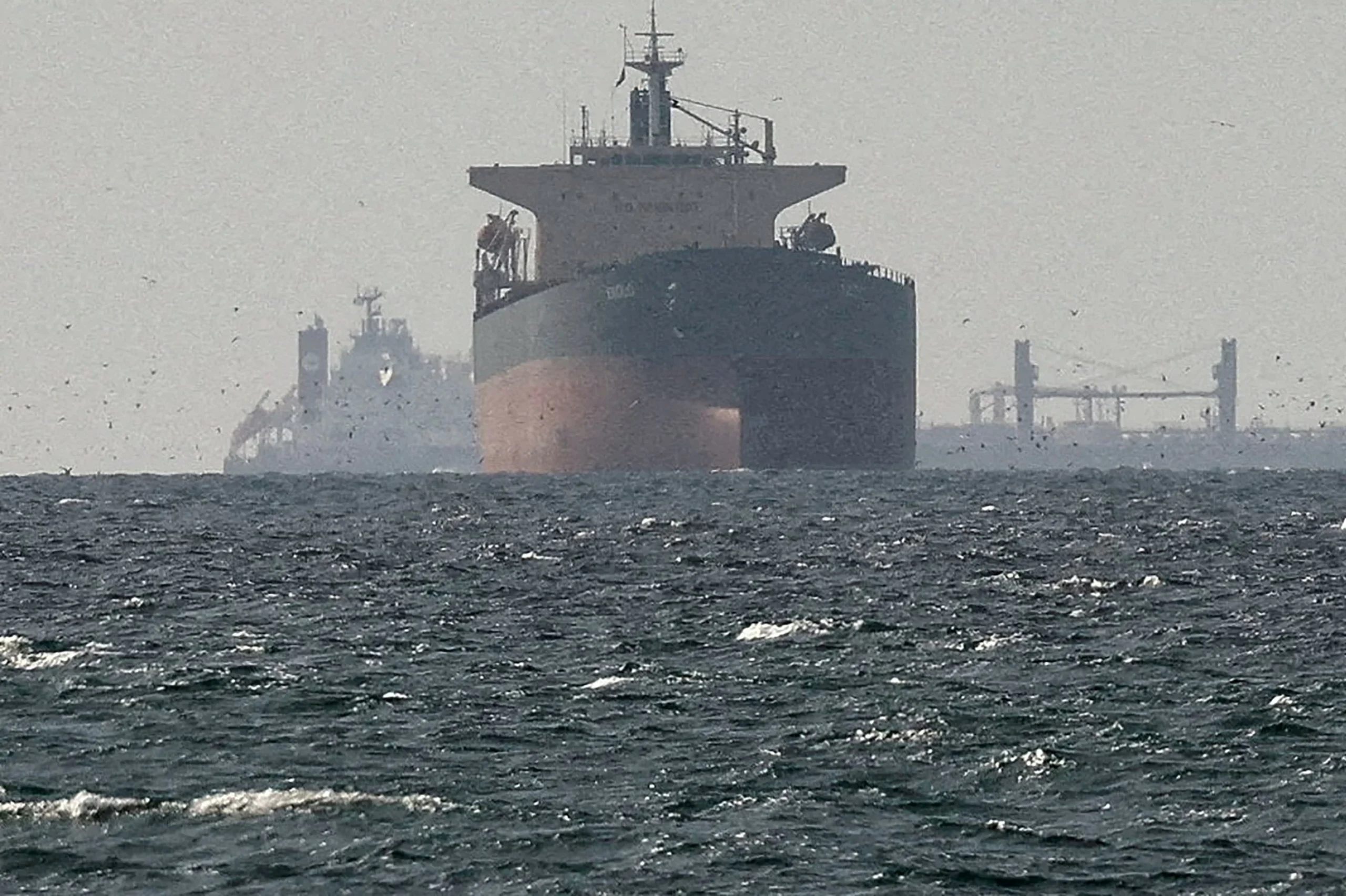
The US Department of Energy said it had loaned 8.48 million barrels of crude oil from the Strategic Petroleum Reserve (SPR) to four companies, as part of a second round of releases aimed at easing fuel prices amid the Middle East conflict.The Department said the recipients were Gunvor USA, Phillips 66, Trafigura Trading and Macquarie Commodities Trading.The move follows an offer a day earlier to sell 30 million barrels of light, sweet crude from the West Hackberry site in Louisiana.The DOE said companies took about 45.2 million barrels in the first round last month, roughly 52% of the volumes offered, indicating weaker-than-expected demand.SPR releases are structured as exchange agreements, requiring companies to return the crude at a later date with additional barrels as a premium, a mechanism the Department said supports supply without cost to taxpayers.Washington had offered on April 1 to loan up to 10 million barrels in the second round, part of a broader plan to release as much as 172 million barrels through 2027.The United States is also acting in coordination with other members of the International Energy Agency, which have agreed to collectively release around 400 million barrels to stabilize markets following supply disruptions linked to the conflict.The SPR currently holds about 413.3 million barrels, its lowest level since the mid-1980s, equivalent to just over four days of global oil demand. 

News
Pakistan hopes Iran, US will ‘engage constructivel…

Pakistan hopes Iran, US will ‘engage constructivel…

Pakistan's foreign minister on Saturday called for the United States and Iran to "engage constructively" at talks in Islamabad aimed at ending the Middle East war, after both delegations arrived in the Pakistani capital.Foreign Minister

Entertainment
Productivity Tools For Work and Study on Amazon

Productivity Tools For Work and Study on Amazon

Work Smarter, Not Harder Locked In 👨🏽‍💻 PRODUCTIVITY TOOLS Published April 11, 2026 12:05 AM PDT TMZ may collect a share of sales or other compensation from links on this page. If you're relying on

Sports
UIM F1H2O World Championship new season to begin in Cagliari in May

UIM F1H2O World Championship new season to begin in Cagliari in May

The city of Cagliari, in the South of Sardinia, Italy will play host to the opening round of the 2026 UIM F1H2O World Championship season, as the year’s racing will commence on the May 29-31

Sports
Pogacar targets maiden Paris-Roubaix victory

Pogacar targets maiden Paris-Roubaix victory

UAE Team Emirates-XRG arrive in Paris with all focus on the cobbled chaos of Paris-Roubaix, a race renowned for pushing riders to their absolute limit.After a spectacular start to the spring classics campaign, with victories

Sports
UAE Committee for Talent and Sports Support selects athle…

UAE Committee for Talent and Sports Support selects athle…

The UAE Committee for Talent and Sports Support (UAETSS) held an event at Dubai Autodrome in Motor City, to announce the inclusion of a group of young promising athletes in its development programmes.The event was

Sports
Sooryavanshi and Jurel propel Rajasthan to easy win over RCB

Sooryavanshi and Jurel propel Rajasthan to easy win over RCB

An opening blitz of 78 off 26 balls by batting sensation Vaibhav Sooryavanshi and a steady knock of 81 off 43 deliveries by wicketkeeper-batter Dhruv Jurel helped Rajasthan Royals beat Royal Challengers Bengaluru (RCB) by

World
Islamabad fights the odds for peace

Islamabad fights the odds for peace

Whatever be the outcome of the Islamabad talks — and undeniably, these remain on highly fragile ground — Pakistan’s rearguard diplomacy to even get the US and Iran to come to the negotiating table cannot be credited enough, especially after US President Donald Trump’s threat to “wipe out a civilisation” that left the world teetering on the edge. When the world’s most powerful nations cannot speak to each other, they have often found a way to whisper — through Pakistan. It is a role Islamabad has quietly perfected over half a century: the trusted go-between, the carrier of messages that dare not travel openly, the host of conversations that officially never happened. Neither fully Western nor wholly Eastern, neither Arab nor Persian, Pakistan occupies a peculiar diplomatic sweet spot — and it has learned, with considerable skill, to make that ambiguity pay. The most celebrated example came in 1971, when General Yahya Khan’s government shepherded Henry Kissinger through Islamabad on a clandestine flight to Beijing, laying the groundwork for Nixon’s historic opening to China. It was a masterstroke of quiet statecraft — Pakistan asking no questions, seeking no credit, content with gratitude and goodwill from two of the world’s great powers simultaneously. That currency proved extraordinarily durable. The pattern repeated across the decades, in different registers and with varying degrees of success. During the Soviet-Afghan War, Pakistan was the indispensable frontline partner in the UN-brokered Geneva talks, coordinating mujahideen pressure and diplomatic suasion in equal measure until Moscow agreed to withdraw. The resulting accords were a genuine achievement. Between 2018 and 2020, Pakistan’s stubborn leverage over the Afghan Taliban made it central to the Doha Agreement, the deal that ended America’s longest war. In the chronic cold war between Riyadh and Tehran, Islamabad has positioned itself with particular care. It declined to join Saudi Arabia’s Yemen coalition in 2015, a decision that caused diplomatic friction but preserved Pakistan’s credibility in Tehran. It then used that credibility to quietly work the phones during successive spikes in Gulf tension offering itself as a de-escalation channel at moments when the alternative was an escalation nobody could afford. These were not headline-grabbing mediations. They were precisely the kind Pakistan does best: discreet and potentially invaluable. What makes Islamabad useful in these situations is that its relationships run in every direction simultaneously — a sometimes-fractious — but currently, close — partnership with Washington, inseparable ties with Tehran, economic dependency on the Gulf states, and an all-weather strategic alliance with Beijing. Where outside observers see a country pulled uncomfortably in competing directions, Islamabad sees leverage. The contradiction is the asset. It is worth noting who augments this diplomacy: the powerful military that sustains Pakistan’s backchannel relationships across administrations, elections, and crises. Now, in 2026, that same tradecraft is being applied to the most combustible dossier on the planet: the long-running stand-off between Washington and Tehran. Islamabad is hosting talks, passing proposals — including a reported 15-point American framework — co-ordinating with Turkiye, Egypt, Saudi Arabia, and China, and presenting itself, with characteristic understatement, as merely honoured to be of service to regional peace. Whether this episode yields a genuine breakthrough or dissolves into the familiar fog of stalled negotiations remains genuinely uncertain. But the instinct endures, and the infrastructure of relationships that makes it possible has never been dismantled. In a world that runs chronically short of honest brokers — of countries trusted, however provisionally, by parties who trust almost nobody else — Pakistan keeps raising its hand. In the right moment, that is no small thing to be.