Entertainment
Justin Fairfax Holds Up ‘Disarm Abusers’ Sign Years Before Murder-Suicide

Justin Fairfax Holds Up ‘Disarm Abusers’ Sign Years Before Murder-Suicide

Former Virginia Lt. Gov. Justin Fairfax rallied around gun regulation -- and even proudly held up a "disarm abusers" sign -- years before he shot his wife, and then himself, in an apparent murder-suicide ... TMZ has

Entertainment
Alan Ritchson Injury Photos Taken by Cops After Street Fight With Neighbor

Alan Ritchson Injury Photos Taken by Cops After Street Fight With Neighbor

Alan Ritchson Injury Photos From Street Bike Fight Published April 16, 2026 4:25 PM PDT Alan Ritchson looks like he didn't take much of a beating in his street fight with a neighbor ... he

Entertainment
Mounted NYPD Cop Pursues Purse Snatcher Down NYC Street, Watch Wild Video

Mounted NYPD Cop Pursues Purse Snatcher Down NYC Street, Watch Wild Video

NYPD Hay, Not So Fast!!! Horse Chase Goes Buck Wild Published April 16, 2026 3:22 PM PDT Play video content NYPD Thieves are always stirrup-ing trouble -- but this one got a full-on hoof chase

Entertainment
Nancy Guthrie Cold Case Gets Revival as FBI Analyzes Key DNA Evidence

Nancy Guthrie Cold Case Gets Revival as FBI Analyzes Key DNA Evidence

Nancy Guthrie FBI Zeros in on DNA to Crack Cold Case Published April 16, 2026 2:11 PM PDT The hunt for Nancy Guthrie in her cold case may have just hit a turning point ... because the

Opinion
How the US could clear mines from the Strait of Hormuz

How the US could clear mines from the Strait of Hormuz

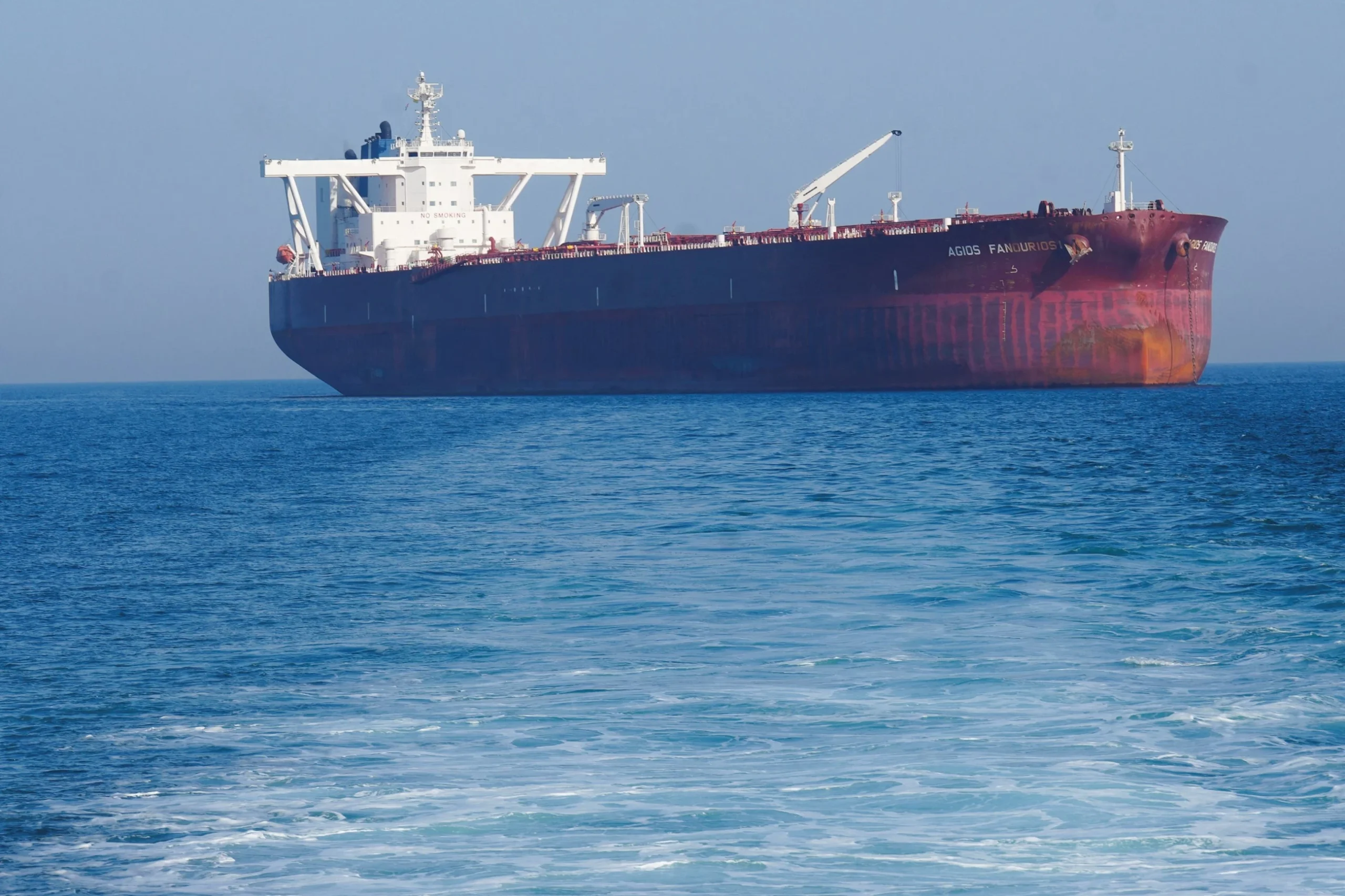
As the United States embarks on clearing mines from the Strait of Hormuz, it could draw on an arsenal of drones, explosive-laden robots and helicopters to reduce risks, though de-mining crews could still be vulnerable to Iranian attacks. The US is ‌trying to secure the strait from mines as part of efforts to end Iran’s disruption of shipping, which has ​severely curbed global energy supplies since the US and ‌Israel launched strikes against Iran at the end of February. But while the US can draw on modernised technology to ‌remotely check for and remove mines, clearing a strategic waterway such as ‌the Strait of Hormuz will still be a slow, multi-step process, ‌former naval officers and industry specialists say. The US military said over the weekend it had started the mine-clearing operation, sending two warships through the strait, but offered few details about the equipment involved. It said that additional forces, including underwater drones, would join the effort in the coming days. Iran had recently deployed about a dozen mines in the Strait of Hormuz, Reuters reported last month, citing sources familiar with the matter. It is not publicly known where mines may have been laid. US President Donald Trump said over the weekend that all of Iran’s minelaying ships had been sunk. But there is a risk Tehran could deploy additional devices, some specialists said. Mine warfare is effective because the devices are cheap, are costly to clear and “even the threat of a minefield is enough to stop ships, especially commercial ships,” said ​Jon Pentreath, a retired British navy rear admiral who is now a consultant. MODERNIZING MINESWEEPINGTraditionally, the US Navy relied on manned minesweeping ships that physically entered minefields, using sonars to locate the devices and mechanical gear dragged behind the vessel to clear explosives, sometimes supported by human divers. Much of that aging fleet has been retired. They ‌are being replaced by lighter vessels known as littoral combat ships, which carry modern ​mine-hunting equipment such as semi-autonomous surface and underwater drones as well as remote-controlled robots that enable crews to distance themselves from ​the minefield. The navy has three of these in deployment. Two of those ships were undergoing maintenance in Singapore, a senior US official told Reuters in late March. At the time, the US minesweeping capacity in the Middle East included unmanned undersea vehicles, four of the traditional Avenger-class vessels, helicopters and divers, according to the official. The US Navy did not respond to a comment request on the mine-clearing capability it currently has in the Middle East. US Central Command declined to provide further details. Tehran is believed to possess several types of maritime mines, former naval officials and other specialists say. These include bottom mines that rest on the seabed and detonate when ships pass above, tethered mines that are anchored but float closer to the surface, drifting mines that move freely on the water, and limpet mines that attach directly to a ship’s hull. The US operation will likely involve searching for mines using unmanned surface and underwater vehicles equipped with sensors. Once a mine-like object ‌is detected, the data is typically transferred to crews ‌operating outside the minefield, who identify the device. They then determine how it should be neutralised. The Navy’s search capability now includes sonar-mounted unmanned surface and undersea vehicles, as well as helicopters that are used to spot mines near the surface, former naval officials say. To destroy mines, the Navy can deploy systems such as the torpedo-shaped Archerfish, a remotely operated device about 2m long that carries an explosive charge and transmits video back to operators via cable, according to its manufacturer, BAE Systems. Designed to be expendable, it costs tens of thousands of dollars. The US could also use unmanned boats towing mine-sweeping sleds that trigger detonations or gather mines, said Bryan Clark, a retired US naval officer and senior fellow at the Hudson Institute. Human divers are also sometimes used, including for intelligence gathering, specialists say. SLOW PROCESSClearing the strait could take two or three weeks, Clark said, and Iranian ​attacks on mine-clearing crews could slow the process and raise risks. As a result, he said, the US military may deploy defensive measures like ships and airborne drones to defend crews and equipment. “Finding and destroying mines is very time consuming,” US Admiral Daryl Caudle, chief of naval operations, said in March. That leaves mine-clearing capability “vulnerable,” he added. New technologies are being developed to speed up mine clearance, particularly through advances in sensors used for detection, specialists say. French technology and defence group Thales says its latest sonar can scan a suspected mine from three different angles in one pass, a process that typically requires multiple sweeps. Advances in artificial intelligence are also enabling more data analysis to be carried out onboard unmanned vessels. Longer term, the ambition is to deploy groups of unmanned systems that can search for, identify and destroy mines, rather than it being a multi-step process. “That doesn’t exist today,” ‌said Mark Bock, a retired US Navy ​captain who is now vice president of business development at Thales’ US Navy business. “But it is what all nations are trying to achieve now.”   

Opinion
Foreign investors flee Thailand as war, energy shock dash hopes

Foreign investors flee Thailand as war, energy shock dash hopes

Foreign investors are selling Thai assets as an energy shock from the US-Israeli war on Iran threatens to snuff out hopes for an economic revival under Prime Minister Anutin Charnvirakul ‌and exposes the policy paralysis that is gripping Bangkok. The conflict has sent global oil prices up to near $100 a barrel, ​sharpening the focus on Asia’s reliance on ‌energy supplies from the Gulf. Thailand is among the most exposed, with the Middle East supplying nearly half of ‌its oil and gas, according to Krungsri Research. With public debt on ‌the brink of eclipsing the government’s self-imposed 70% ceiling and an ‌economy that was already in deflation before the war, Bangkok’s challenge is far more acute than most of its neighbours. The setback came just as the stars seemed to be aligning for Southeast Asia’s second-largest economy, with investors rushing into Thailand again for the first time in years. Foreigners bought $1.7bn worth of Thai stocks in February, LSEG data showed. Prime Minister Anutin Charnvirakul’s resounding victory in February ushered in hopes of political stability and long-awaited economic reforms in a country that had lurched through years of turmoil and uncertainty. But when the Iran war broke out at the end of February, foreign investors pulled back sharply, with an $823mn net selloff in equities in March, while bond outflows hit $705mn, the largest combined outflow since October 2024. A two-week ceasefire this month has spurred hopes of a resolution and led ​to a sharp rally in Thai stocks and the baht, but investors are cautious about the country’s vulnerability if oil prices remain elevated. “The risk remains (that) markets remain complacent about the long-term impact from energy shock and that higher fuel costs hit consumption and disrupt exports and tourism, two key drivers of the Thai ‌economy,” said Daniel Tan, a portfolio manager at Grasshopper Asset Management. Khoi Vu, an ​Asean equity strategist at JPMorgan, said his bank is still cautious on Thai equities, noting that while political stability had ​begun to brighten the outlook before the Middle East conflict, the energy shock is a near-term headwind. “As the energy shock has yet to fully materialise, we believe the market has yet to price in significant growth impact,” he said. With the fragile ceasefire in mind, analysts and investors warn Thailand faces another difficult year. Unlike many of its peers in the region, Thailand’s exposure runs deeper than just fuel costs as over half of annual power output comes from gas, and liquefied natural gas (LNG) imports are accounting for an increasing share of generation. Thailand’s conundrum is that its economy has struggled to gain traction, growing just 2.4% last year and lagging peers, while inflation dropped for 12 straight months, triggering a rate cut from the central bank in February before the war. “There’s a broad consensus among investors that Thailand is in a policy bind,” said Gary Tan, a Singapore-based portfolio manager at Allspring Global Investments. “The ‌central bank has limited room to hike without derailing the ‌recovery, but little urgency or space to ease, which leaves policy restrictive by default,” said Tan, who is underweight on Thailand. Every one baht rise in fuel prices cuts economic growth by 2 basis points, according to state planning agency estimates, underlining why Bangkok is reluctant to increase subsidies. “Higher oil prices could weigh on consumption, the current account and the baht, while also complicating the disinflation path and potentially limiting how much further rates can fall,” said Nattanont Arunyakananda, investment manager of Thai equities at Aberdeen Investments. The war has upended Thailand’s inflation picture, with average inflation projected to rise as much as 3.5% this year depending on how the conflict unfolds, a stark turnaround from a 0.54% contraction in the first quarter. Thailand has limited ammunition to address its economic problems, Finance Minister Ekniti Nitithanprapas said. The currency ​has emerged as the pressure valve, with the Thai baht sliding about 2.8% since the war broke out, though it has clawed back some of the losses since the ceasefire was announced last week.    

World
Trump says Israel barred from bombing Lebanon: ‘Enough is enough’

Trump says Israel barred from bombing Lebanon: ‘Enough is enough’

U.S. President Donald Trump gestures during a roundtable focused on tax cuts in Las Vegas, Nevada, U.S., April 16, 2026. REUTERS/Evan Vucci President Donald Trump said the ‌United States has barred Israel from further bombing in Lebanon, striking an unusually harsh tone ​with the longtime U.S. ally while stressing ‌that any U.S. deal with Iran is not linked to the Lebanon conflict."Israel will not ‌be bombing Lebanon any ⁠longer. They are PROHIBITED from ‌doing so by the U.S.A. Enough is enough!!!" Trump ‌said in a social media post.Israeli Prime Minister Benjamin Netanyahu's office did not immediately respond to Trump’s remarks, ⁠but Netanyahu said in a statement earlier that Israeli forces remained stationed in southern Lebanon to defend against "the near threat.""There are things we plan to do regarding the remaining rocket threat and the drone threat, which I will not detail here," Netanyahu said.A U.S.-backed Israeli-Lebanese ceasefire took effect at 2100 GMT on Thursday, halting fighting that flared on March 2 when Hezbollah fired on northern Israel in support of Iran's fight with the U.S. and Israel, drawing an Israeli offensive that Lebanese authorities say has killed 2,000 people.U.S. NAVAL BLOCKADE ON ​IRAN REMAINS IN PLACEIn a series of social media posts after Iran announced the reopening of the Strait of Hormuz to commercial vessels, Trump emphasized that any deal the United States reaches with Iran "is in no way subject to Lebanon" and said ‌the U.S. will handle the militant group ⁠Hezbollah in an appropriate ​manner."Again! This deal is not tied, in any way, to Lebanon, but we will, MAKE ​LEBANON GREAT AGAIN!" Trump wrote in a later post.Iranian Foreign Minister Abbas Araqchi specified the Strait of Hormuz was open for the remainder of the 10-day truce between Israel and Lebanon.However, Trump later posted: "Iran has agreed to never close the Strait of Hormuz again. It will no longer be used as a weapon against the World!"The U.S.-Israeli conflict with Iran, which started on February 28, had effectively closed the strait, through which a fifth of the world's oil and liquefied natural gas usually transits.After 38 days of fighting, a two-week ceasefire in the Iran war came into effect on April 8. The United States then began enforcing a blockade on vessels entering and departing Iran on Monday."The naval blockade will remain in full force and ‌effect as it pertains to Iran, only, ‌until such time as our transaction with Iran ⁠is 100% complete," Trump wrote in an all capital letters.TRUMP SAYS HE REBUFFED NATO OFFER OF HELPTrump said he ⁠believed a deal to end the Iran ⁠war would come "soon" because most of the points are already negotiated, although the timing remains unclear. Trump reiterated that the U.S. will get nuclear material from Iran, adding: "No money will exchange hands in any way, shape, or form."Trump, who in 2018 pulled the U.S. out of a 2015 nuclear accord curtailing Iran's nuclear work, has said a primary reason for the war was to prevent Iran from getting a nuclear weapon.Iran says its enrichment of uranium - a ​process that produces fuel for power plants and nuclear warheads depending on its duration - is strictly for peaceful civilian use.The U.S. president said on Friday that he had rebuffed an offer from NATO to help and told them to stay away unless they want to load up ships with oil."They were useless when needed, a Paper Tiger!" Trump wrote on Truth Social before turning his attention to thanking Gulf allies Saudi Arabia, the United Arab Emirates and Qatar.NATO allies said on Monday they would not get involved in Trump's plan to blockade Iranian ports, proposing to intervene only once fighting ends.The Israel-Lebanon ceasefire deal does not require Israel to withdraw from south Lebanon. ‌Israeli defense officials say troops are ​holding positions inside Lebanon as part of a "buffer zone" to prevent Hezbollah attacks on Israel. 

World
India drops proposal to mandate national ID app Aadhaar on smartphones after pushback

India drops proposal to mandate national ID app Aadhaar on smartphones after pushback

A villager goes through the process of a fingerprint scanner for the Unique Identification (UID) database system at an enrolment centre at Merta district in the desert Indian state of Rajasthan. (Reuters/File Photo) India's government has decided not to ‌go ahead with a proposal to require Apple, Samsung and others ​to pre-install the country's biometric identification ‌app Aadhaar on phones, a state body said yesterday, a ‌move that had ⁠been opposed by ‌the smartphone giants.Reuters reported last month that ‌UIDAI, the state body that operates Aadhaar, had asked the IT ministry in January to ⁠engage with Apple, Google and other leading smartphone makers to consider mandatory pre-installation of the Aadhaar app. A unique 12-digit identity number tied to an individual's fingerprints and iris scans, Aadhaar is held by nearly 1.34bn residents and is widely used for verification purposes in banking and telecom services, as well as for faster airport entry.India's IT ministry reviewed the proposal and "is not in favour of mandating the pre-installation of ​the Aadhaar App on smartphones," UIDAI said in a statement to Reuters yesterday.It gave no reason for the decision in the statement. India's IT ministry did not respond to Reuters ‌queries.The IT ministry held a "consultation ⁠with stakeholders from the electronics ​industry" before reaching its decision to drop the Aadhaar preloading proposal, ​UIDAI said in its statement.The Aadhaar request was the sixth time in two years the government has sought pre-installation of state apps on phones, according to industry communications reviewed by Reuters earlier this year. All six attempts were opposed by the industry.Smartphone makers flagged concerns about device security and compatibility when they received the Aadhaar preload proposal, and also flagged higher production costs as they would have been required to run separate manufacturing lines for India and export markets, according to documents reviewed by Reuters.Apple and Samsung in particular both had concerns with the proposal ‌due to questions over safety ‌and security, sources told Reuters in March.The ⁠government's decision not to proceed with the proposal shows the constraints on Prime Minister ⁠Narendra Modi's digital push as India ⁠courts firms like Apple to expand its role as a global smartphone hub. In December, India faced criticism over an order mandating smartphone firms to pre-install a telecom security app, forcing a rollback within days.A senior Indian official said yesterday, on condition of anonymity, that the IT ministry is not supportive of any preloading of apps, "unless it is considered ​very essential."While the government maintains Aadhaar is safe and secure, the app has faced persistent criticism from privacy advocates, including for data leaks where personal details of millions of holders surfaced on the dark web.Apar Gupta, founder of the Internet Freedom Foundation, a New Delhi-based digital advocacy group, welcomed the government's decision to drop the Aadhaar pre-installation proposal, and said other such proposals should also be spiked as they lack legislative foundation and have no public policy goal."Hopefully it is a welcome exercise of regulatory restraint that ‌recognises that citizens ​carry their phones as extensions of their autonomy, not as vessels for government order," Gupta said. 

World
China, Russia ties driving N Korean economic recovery: Seoul

China, Russia ties driving N Korean economic recovery: Seoul

North Korea's economy is showing signs of recovery as Pyongyang deepens trade and diplomatic ties with Russia and China, South Korea's unification ministry said in a report sent to AFP yesterday.Rigid socialist planning and high military spending have undermined growth in North Korea for years, as have sweeping international sanctions aimed at scuppering its development of nuclear weapons.China has long been the diplomatically isolated country's main economic backer, though Pyongyang has also drawn closer to Russia since Moscow launched its full-scale invasion of Ukraine in 2022.Those relationships are now driving an improved economic outlook, with the North appearing to have "moved beyond a period of contraction" and "entered a phase of gradual recovery", according to the South Korean ministry.The turnaround has come even as Pyongyang continues its nuclear and missile programmes, which it has vowed not to abandon despite years of international pressure.The report outlined Seoul's basic plan for developing relations with the North through the end of the decade.It said Pyongyang's expanding cooperation with Moscow and improving trade conditions with Beijing were key factors supporting the recovery.Air China resumed direct flights between Beijing and Pyongyang in March after a six-year suspension, and daily passenger rail services between the two capitals have also restarted.China's foreign minister said in a visit to Pyongyang last week that Beijing hoped to further "promote practical co-operation".Analysts say the North is also receiving economic and military technology assistance from Russia in return for sending troops and ammunition to help it fight Ukraine.North Korea does not publish official data on the size of its economy.Its nominal gross domestic product was equivalent to about $30bn in 2024, according to Seoul's official estimate — a tiny fraction of the South Korean economy, one of the most developed in the world.North Korea has long faced shortages. A famine in the mid-1990s killed hundreds of thousands of people, and reports indicate that the Covid-19 pandemic also pushed many into extreme hunger.In February, North Korean leader Kim Jong-un vowed to lift living standards at a landmark congress, saying the country had overcome its "worst difficulties" in the past five years and was entering a stage of "optimism and confidence in the future". 

World
Indonesia helicopter crash kills 8

Indonesia helicopter crash kills 8

Debris at the site of a helicopter crash in Sekadau regency, West Kalimantan province. Two crew members and six passengers were killed when a private helicopter crashed in dense forest on Indonesia's Borneo island, the