Sports
Mercedes can make it three out of three in Suzuka

Mercedes can make it three out of three in Suzuka

Mercedes' British driver George Russell poses for photos in his car during preparations ahead of the Formula One Chinese Grand Prix at the Shanghai International Circuit in Shanghai on March 12, 2026. (AFP) Formula One leaders Mercedes go into Sunday's Japanese Grand Prix chasing a season-opening hat-trick of one-two ‌wins, with Kimi Antonelli fired up after a maiden victory and George Russell seeking ​to cement his status as title ‌favourite.The pair have won one Sunday race each but Russell, winner of the season-opener ‌in Australia and the ⁠Saturday sprint in China, ‌leads his Chinese Grand Prix-winning teammate by ‌four points.Mercedes last kicked off with a hat-trick of wins in 2020, the COVID-19 pandemic-hit season in ⁠which Austria's Red Bull Ring hosted the first two races.The last time they started with three one-two finishes was in 2019.Having made a similarly dominant start to the sport's new era this season, including locking out the front row in every qualifying session, they could tick off both milestones on Sunday."We have made a positive start to the season but it is only that," said Mercedes team boss Toto Wolff. "We know that the moment you think you've got this sport figured out, ​you are usually proven wrong."FERRARI CHASING FIRST WIN AT SUZUKA SINCE 2004Despite Wolff's caution, either Russell or Antonelli should be celebrating a first win at Suzuka, a 5.8-km figure-of-eight layout widely hailed as a drivers' track that hosts ‌the 40th running of the Japanese ⁠round.Ferrari, who last won ​at Suzuka in 2004 and have been second-best to Mercedes in the opening two ​races, will hope to rise to the challenge.Charles Leclerc and Lewis Hamilton, thanks to their fast starts and intra-team duels, have served up plenty of wheel-to-wheel entertainment.Seven-time world champion Hamilton, in particular, has shown plenty of fight and ended his podium drought in China with a third-place finish. A four-time Suzuka winner, the Briton will be hoping that run continues.Circuit owners Honda will be hoping for a happier homecoming as power unit suppliers to Aston Martin after a dismal start to their year.Neither Fernando Alonso nor Lance Stroll have finished the opening two races, with vibrations from the Japanese manufacturer's power unit severely limiting running.Just getting to the chequered flag would be big ‌progress for the Japanese manufacturer that ‌powered Max Verstappen to four successive wins ⁠on the circuit from 2022 to 2025 when they were partners to Red Bull.The four-time world champion, ⁠who now has a Ford-badged Red Bull ⁠power unit in his car, will also be looking to bounce back after retiring in China."Heading into Suzuka, this is one of my favourite tracks to race at with lots of high-speed corners," said Verstappen. "There is a lot of history at this circuit for the team and it is one I always look forward to coming back to."McLaren will be hoping for a strong showing after reigning champion Lando Norris and ​Oscar Piastri were unable to start in China.Australian Piastri will be especially keen to get a full race distance under his belt, having only completed the China sprint so far after also crashing out on a reconnaissance lap ahead of his home race in Melbourne.Haas could provide some cheer for the Japanese fans.The U.S.-owned team have Toyota's motorsports division as their title sponsors and are led by Japanese team principal Ayao Komatsu.The team, running a special Godzilla-themed livery from this weekend, are an impressive fourth in the constructors' standings with the team's British racer Oliver Bearman fifth in the drivers' battle.The Japanese Grand ‌Prix will be the last ​race until the Miami Grand Prix on May 3 with April's Bahrain and Saudi Arabian rounds cancelled due to the ongoing conflict in the Middle East.  Related
Opinion
Qatar’s education response in current situation shows value of preparedness

Qatar’s education response in current situation shows value of preparedness

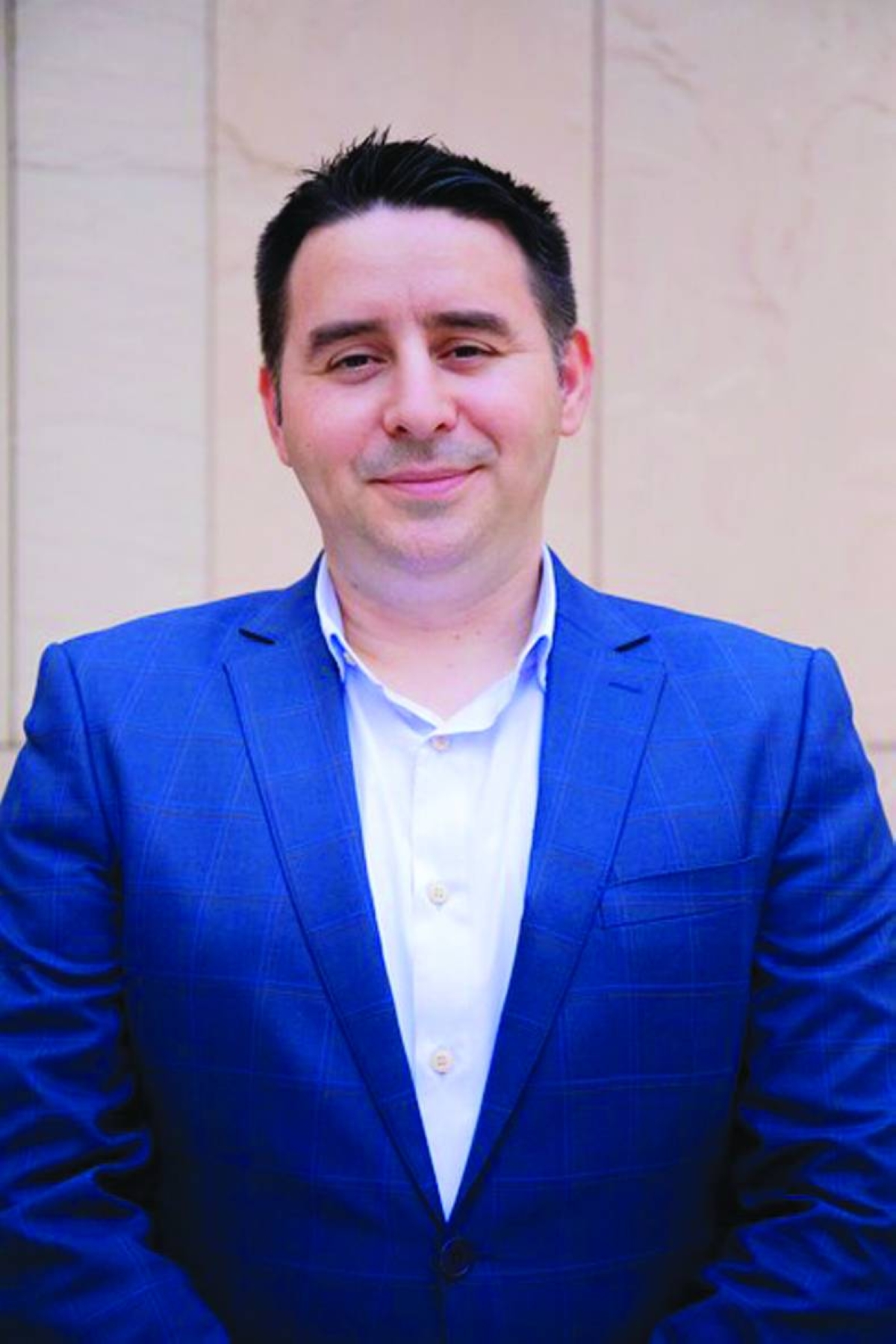
At a time when the region is witnessing rapidly evolving developments requiring precautionary measures across several sectors, the State of Qatar has once again demonstrated the strength of its institutions and the clarity of its national vision through a carefully coordinated approach to safeguarding the continuity of education. Recent decisions by the Ministry of Education and Higher Education to temporarily shift to distance learning, followed by the announcement of a phased and well-structured return to in-person classes, reflect a governance model built on preparedness, adaptability, and a consistent focus on the well-being of students and society.Across the education sector, the speed and organization with which the measures were introduced have been widely noted. Official announcements delivered through national media and government platforms provided clear guidance for students, parents, and educators, ensuring that the learning process continued without disruption. The gradual resumption of in-person classes, preceded by the return of administrative and teaching staff to ensure readiness, highlighted a disciplined and methodical approach aligned with internationally recognised best practices in education management and crisis response.Education specialists observe that the effectiveness of the current response is closely linked to the experience Qatar gained during previous global challenges, most notably the Covid-19 pandemic. During that period, the country moved swiftly to advanced digital learning environments, maintaining academic standards while ensuring strong communication between institutions and families. The lessons learned during those years helped establish a resilient framework that continues to guide decision-making today, allowing the education system to adapt quickly while preserving stability and quality.The latest developments have also underscored the high level of coordination across national institutions. The Ministry of Education and Higher Education worked in close cooperation with universities, schools, and training centres, while the Ministry of Interior continued to provide public guidance through awareness campaigns, official messages, and media briefings that emphasised preparedness, safety, and shared responsibility. The consistency of communication across official channels reinforced public confidence and reflected a governance culture in which institutions operate in harmony to protect society while ensuring that essential sectors remain fully functional.Universities across the country, including institutions within Education City as well as public and private providers, responded with notable efficiency by activating digital learning platforms, adjusting academic schedules, and maintaining full student support services. Academic advising, tutoring, counselling, and virtual engagement initiatives remained available throughout the precautionary period, ensuring that students continued to receive both academic guidance and personal support. This level of readiness reflects years of sustained investment in education, research, and innovation that have positioned Qatar among the region’s leading knowledge-based societies.Alongside academic continuity, strong emphasis has been placed on student well-being. Educational authorities and institutions provided tutorials, recorded lessons, digital resources, and technical guidance to support students during temporary changes in learning formats. Schools and universities also shared structured learning materials, online tools, and continuous updates for students and parents, ensuring that the transition remained organised and productive. The availability of counselling services, academic support sessions, and direct communication channels further reflected a holistic approach that places the student at the centre of the education system.These practices form part of a broader national vision in which education is viewed as a pillar of stability, development, and long-term prosperity. Over the past two decades, Qatar has built one of the most comprehensive education ecosystems in the region, combining strong public education, internationally recognised universities, advanced digital infrastructure, and close cooperation between government ministries and academic institutions. This long-term investment has created a system capable of responding to uncertainty with confidence, balancing precaution with progress while maintaining high standards of quality.From the perspective of the academic community, the adaptability demonstrated in recent weeks reflects a deeply rooted culture of planning and preparedness. Precautionary measures were introduced early, learning continued through well-organised digital platforms, and the return to in-person education was carried out gradually and responsibly. Such an approach reflects internationally recognised best practices, where flexibility, clear communication, and institutional coordination are essential to maintaining stability during challenging circumstances.As founder of Campus & Student Life in Qatar (@students_qatar), the country’s largest student platform with more than 145,000 members, Dr Vahid Suljic said the recent developments once again confirm Qatar’s position as a regional and international reference in managing education during periods of uncertainty. He noted that the consistency of policy, the professionalism of national institutions, and the close cooperation between ministries, universities, and security authorities demonstrate a system that places the safety, well-being, and future of students at the centre of national priorities.Dr Suljic expressed appreciation for the leadership of the State of Qatar and for the continued efforts of the Ministry of Education and Higher Education, the Ministry of Interior, Qatar Foundation, and all educational institutions whose coordinated work ensures stability even in complex circumstances. He emphasised that the ability to respond with calm, confidence, and adaptability reflects a leadership approach that values knowledge, invests in people, and recognises education as a foundation of national resilience.He added that Qatar’s experience continues to stand as a model for the region, demonstrating how strong institutions, forward-looking policies, and a human-centred vision can transform challenges into opportunities for further development. The confidence expressed by students,parents, and educators today reflects years of consistent planning, responsible governance, and sustained commitment to maintaining high standards in education under all circumstances.In this context, the measures taken in March 2026 reaffirm Qatar’s standing as a country capable of maintaining stability while continuing to advance. Through adaptability, adherence to best practices, and close coordination among its institutions, Qatar continues to demonstrate that safeguarding education is inseparable from safeguarding the future. The country’s leadership, policies, and institutions provide a compelling example of how thoughtful governance and long-term investment in knowledge can ensure resilience, confidence, and progress even in times of regional uncertainty.Dr Vahid Suljic is Founder of Campus & Student Life in Qatar (@students_qatar)  Related Story

World
‘Hero’ Australian dog who saved 100 koalas retires

‘Hero’ Australian dog who saved 100 koalas retires

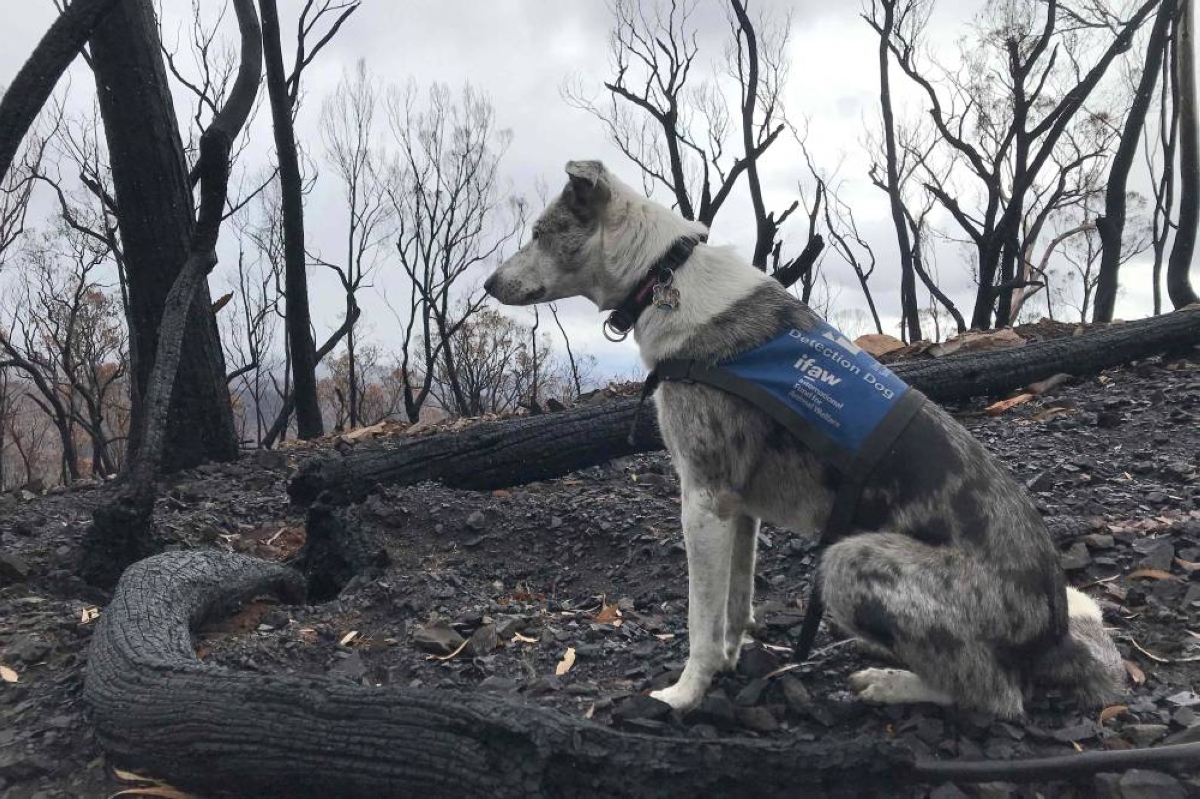
File photo: Bear, an Australian koolie, scanning the Two Thumbs Wildlife Trust Sanctuary for koalas in the Numeralla, Peak View and Nerriga areas of New South Wales. (AFP) An Australian dog credited with saving over 100 koalas from bushfires is retiring after a decade of service.Bear, an 11-year-old Australian Koolie, was one of the first dogs in the country to be trained on the scent of koala fur.The International Fund for Animal Welfare called using dogs to detect koalas a "novel" approach."No one knew if it could be done," IFAW head of programmes Josey Sharrad wrote in a statement about Bear on Monday.As a pup, the four-legged hero's boundless energy made it tough to stay indoors, but he found his true potential in the bush."He literally went from chewing the walls of a Gold Coast apartment to roaming through the Aussie bush on a mission to save our most iconic species," Sharrad said.Bear's skills saved over 100 koalas as the Black Summer bushfires raged across Australia's eastern seaboard from late 2019 to early 2020, razing millions of hectares, destroying thousands of homes and blanketing cities in noxious smoke.The tail-wagging detective with a "joyful and goofy" personality retires with an extensive list of accolades — including an Animal of the Year award and Puppy Tales Photos Australian Dog of the Year award.He also features in a "dogumentary" called "Bear: Koala Hero", and in a book, "Bear to the Rescue".Bear will embark on a slower-paced chapter on the Sunshine Coast with one of his former handlers, getting belly rubs and playing his favourite game, fetch.One of his former handlers, Romane Cristescu, said Bear had been a "tireless ambassador for koalas for a decade"."He melted hearts all around the world, and opened many doors so we could have critical and difficult conversations about climate change and its impacts on the threatened koalas, as well as so many other species." 

World
N Korea’s Kim welcomes fellow Putin ally Lukashenko with fanfare

N Korea’s Kim welcomes fellow Putin ally Lukashenko with fanfare

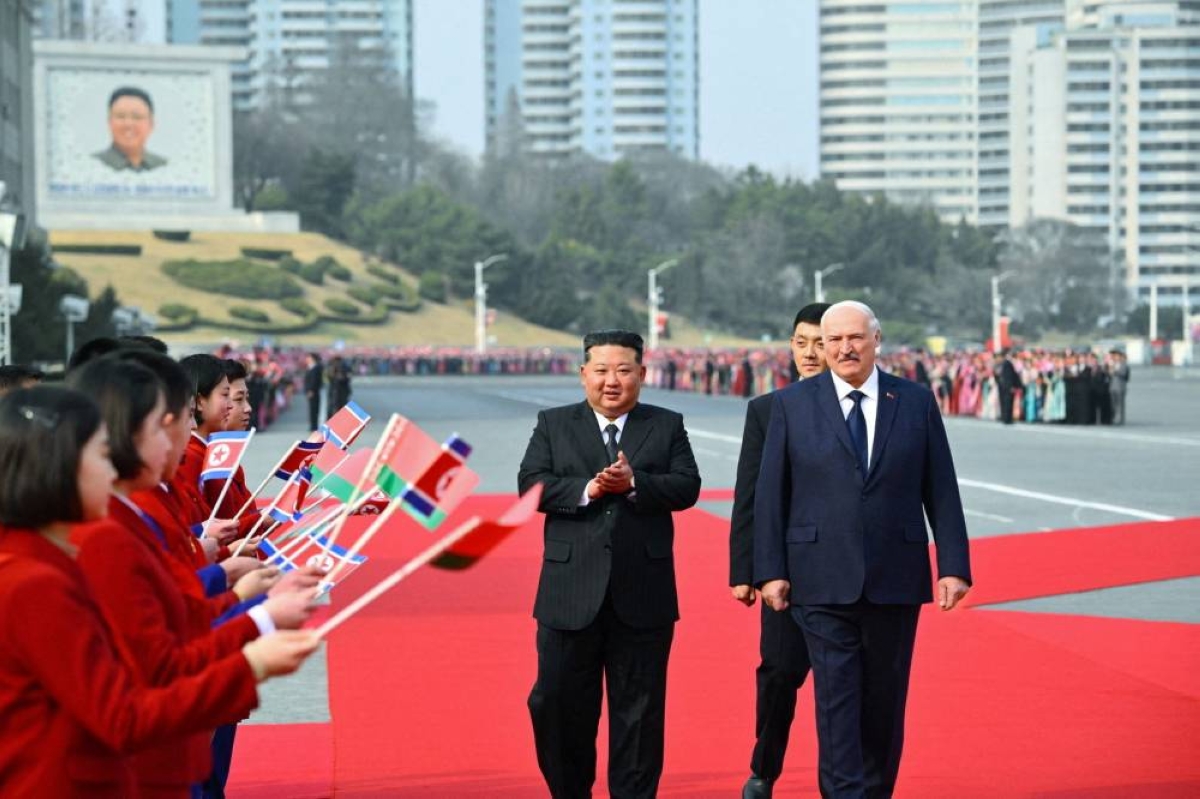
Belarusian President Alexander Lukashenko and North Korean leader Kim Jong-unn attend a welcome ceremony at Kim Il Sung Square in Pyongyang, North Korea, Wednesday. (Reuters) North Korean leader Kim Jong-un met Belarusian President Alexander ​Lukashenko in Pyongyang Wednesday ‌with a white-horse cavalry and 21-gun salute, cementing ties between two ‌close allies of ⁠Russia's Vladimir Putin. Kim has ‌provided Moscow with millions of ‌rounds of ammunition for its war in Ukraine and sent troops to help Russia ⁠expel Ukrainian forces who invaded its western Kursk region. Lukashenko allowed Belarus to be used as a launchpad for Russia's invasion in February 2022, and subsequently agreed to host Russian tactical nuclear missiles on its territory, which borders three Nato alliance countries.Kim greeted Lukashenko with an embrace and laid on a lavish welcome ceremony with ranks of soldiers, cavalry and the gun salute after flag-waving children ​had cheered his arrival at the airport.Lukashenko's foreign minister, Maxim Ryzhenkov, told Belarusian state media that the two sides would sign a friendship and cooperation treaty during the two-day visit. Current ‌trade was "modest" but there was ⁠potential to boost ​it in sectors including food and pharmaceuticals, he said.Valery Tsepkalo, a prominent ​exiled opponent of Lukashenko, said there was no substance to the summit beyond a display of solidarity. "There will be no benefit to Belarus from this visit. The same for North Korea. They are just demonstrating that they're not isolated and they can have a meeting. They don't have any normal trade," he told Reuters.North Korea and Belarus have withstood years of external economic pressure: the former is under UN sanctions because of its nuclear and ballistic missile programmes and the latter ‌is subject to Western sanctions over ‌its human rights record and backing ⁠for Putin in Ukraine."The current situation is simply pushing us into each other's arms. ⁠We're looking for friends. Friends ⁠may be far away, but they are very loyal, reliable, and respectful," Belarusian minister Ryzhenkov was quoted as saying.Despite the isolation of both countries, US President Donald Trump has engaged with their leaders. Trump met Kim three times in 2018 and 2019, during his first term in the White House, but their encounters failed to yield substantive ​results. Trump said last year he would "love another meeting", which Kim said could happen if the US dropped its "absurd obsession" with getting North Korea to give up nuclear weapons.Trump last year re-established direct contact with Lukashenko, who had been treated as a pariah by his predecessor Joe Biden. In recent months, the US has begun to ease sanctions on Belarus in return for releases of political prisoners. Lukashenko's trip to North Korea comes six days after he met Trump's envoy John Coale ‌and announced the freeing ​of 250 more detainees. The US side has said Lukashenko may soon visit the White House.  Related Story

World
Islamabad ‘ready’ to host talks to end Mideast war: PM

Islamabad ‘ready’ to host talks to end Mideast war: PM

 Pakistan’s Prime Minister Shehbaz Sharif said yesterday that Islamabad is prepared to host negotiations to stop the US-Israeli war with Iran, after mounting speculation that it could act as a mediator. “Pakistan welcomes and fully supports ongoing efforts to pursue dialogue to end the WAR in Middle East, in the interest of peace and stability in (the) region and beyond,” he wrote on X. “Subject to concurrence by the US and Iran, Pakistan stands ready and honoured to be the host to facilitate meaningful and conclusive talks for a comprehensive settlement of the ongoing conflict.” Tehran’s foreign ministry suggested on Monday that messages had been received from “some friendly countries indicating a US request for negotiations at ending the war”, according to the official IRNA news agency.Sharif then said he had spoken with Iran’s President Masoud Pezeshkian, promising his government’s help in bringing peace to the region. Pakistan’s Foreign Minister and Deputy Prime Minister Ishaq Dar also said that he had been in touch with his Iranian counterpart, Abbas Araghchi. Foreign ministry spokesman Tahir Hussain Andrabi told AFP earlier yesterday that Pakistan is “always willing to host talks” and had “consistently advocated for dialogue and diplomacy to promote peace and stability in the region”. Pakistan’s former ambassador to Oman, Imran Ali Chaudhry, told 92 News late on Monday that Pakistan’s army chief recently held talks with US negotiators in the Gulf. “Around two to two-and-a-half weeks ago, Field Marshal Asim Munir went to Oman on a trip that was not disclosed and he held a four-hour meeting with (Steve) Witkoff and (Jared) Kushner,” he said.Iran is a long-standing ally of Pakistan and Islamabad has condemned the killing of supreme leader Ayatollah Ali Khamenei. It also sent congratulations to his son and successor, Mojtaba. The US and Israel launched strikes on Iran on February 28 after saying that they had failed to make enough headway in talks aimed at ending Iran’s nuclear programme, although mediator Oman said significant progress had been made. Since then, Iran has attacked countries that host US bases, struck Gulf energy infrastructure and effectively closed the Strait of Hormuz, conduit for a fifth of the world’s oil and liquefied natural gas, creating the worst energy supply shock in history. A Pakistani government source said that discussions on a meeting were at an advanced stage and that if it did happen, “a big ‘if’”, it would take place within a week. The war is already taking a toll on major economies around the world, according to business surveys yesterday which showed how a surge in energy prices and rising uncertainty were dampening activity and pushing inflation expectations higher. 

World
US prepares to send elite troops amid new strikes

US prepares to send elite troops amid new strikes

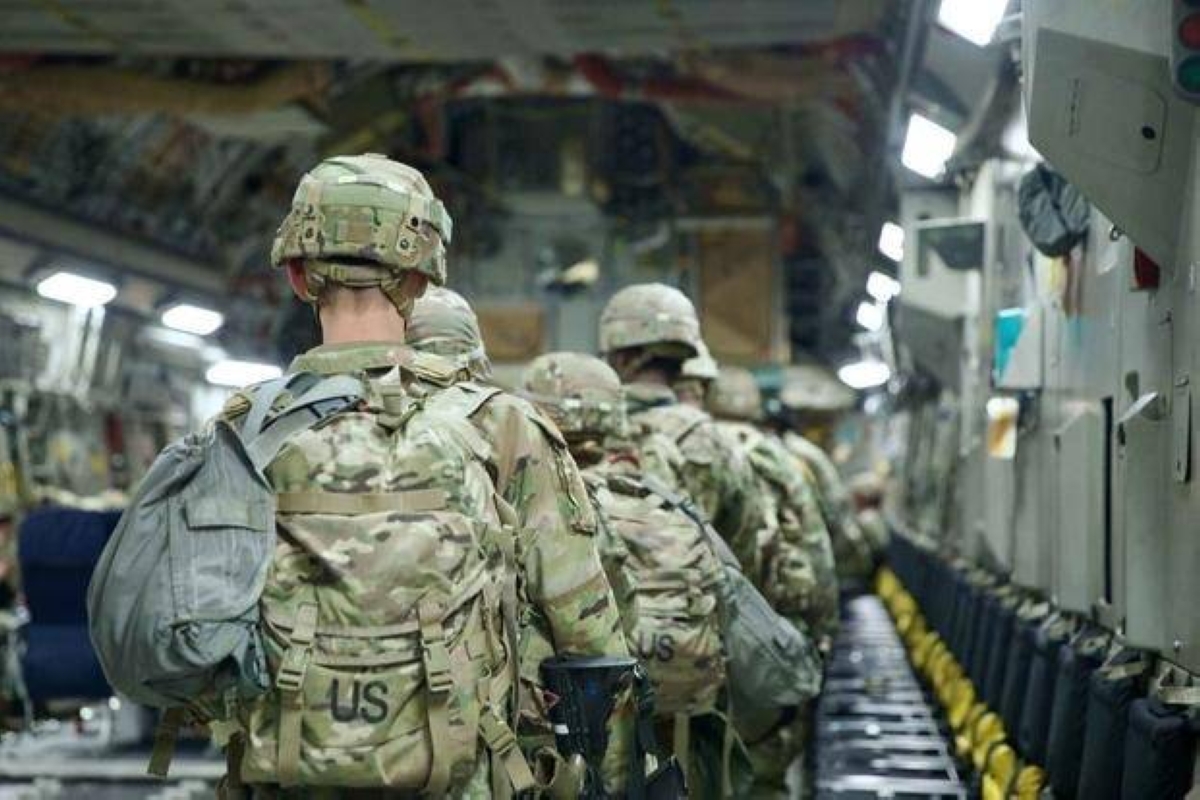
Trump reposts Pakistan talks tweet Iran and Israel traded fresh strikes yesterday even as a fragile diplomatic push gathered pace, with Pakistan emerging as a potential host for talks between Tehran and Washington — and the Pentagon preparing to send thousands of elite American troops to the region. Iran’s atomic energy organisation also accused the US and Israel yesterday of attacking its Bushehr nuclear power plant, saying a projectile had landed within its compound but caused no damage.“The American-Zionist enemy has attacked the Bushehr nuclear power plant site again,” the organisation said in a statement, adding that “a projectile hit inside the enclosure of the Bushehr power plant”. Meanwhile, the US military is expected to deploy soldiers from the 82nd Airborne Division, currently stationed at Fort Bragg, North Carolina, to an unspecified location in the Middle East. The move follows last week’s deployment of thousands of Marines and sailors aboard the amphibious assault ship USS Boxer. Officials, speaking anonymously, stressed that no decision had been taken to send troops into Iran itself, but that the build-up was intended to expand capacity for potential future operations. The three-week-old war, triggered by US-Israeli strikes that killed Iran’s supreme leader, has convulsed global energy markets and destabilised the wider region. — AFP, Reuters To Page 11Israel conducted a “large wave” of air strikes across Iran, including the central city of Isfahan, while Iranian missile fire wounded four people in Tel Aviv, leaving one three-storey building in ruins. Bahrain, Kuwait, the United Arab Emirates and Saudi Arabia all reported intercepting renewed Iranian drone and missile attacks. Against this backdrop, diplomatic efforts intensified. President Donald Trump said on Monday that his administration had held “productive” talks with an unidentified senior Iranian figure — a claim swiftly denied by Tehran. Iran’s parliamentary speaker Mohammad Bagher Ghalibaf insisted that “no negotiations” were under way, accusing Trump of seeking to manipulate oil markets.Iran’s foreign ministry, however, acknowledged that messages had been relayed by “friendly countries” conveying a US request for negotiations. Pakistan’s Prime Minister Shehbaz Sharif moved swiftly to position Islamabad as a peacemaker. After speaking with Iranian President Masoud Pezeshkian, Sharif announced that Pakistan stood “ready and honoured to host meaningful and conclusive talks for a comprehensive settlement of the conflict,” subject to agreement by both Washington and Tehran. Sharif’s tweet was later reposted by Trump. A Pakistani government source said discussions on a meeting were at an advanced stage and if it did happen, “a big ‘if’”, it would take place within a week. Pakistan has long-standing ties to neighbouring Iran and has built a steady relationship with Trump. The US outlet Axios reported that American negotiators Steve Witkoff and Jared Kushner could meet an Iranian delegation in Pakistan as early as this week, with Vice-President J D Vance potentially joining.Oil prices, which had dipped on Trump’s initial diplomatic signals, rebounded with Brent crude back above $100 a barrel. Analysts remain deeply cautious. “Trust has been completely destroyed and the positions of the warring parties are further apart than ever,” said David Khalfa of the Jean-Jaurès Foundation in Paris. “The margin for manoeuvre on both sides is very limited.” 

World
Gas shortages push India’s poor back to wood and coal

Gas shortages push India’s poor back to wood and coal

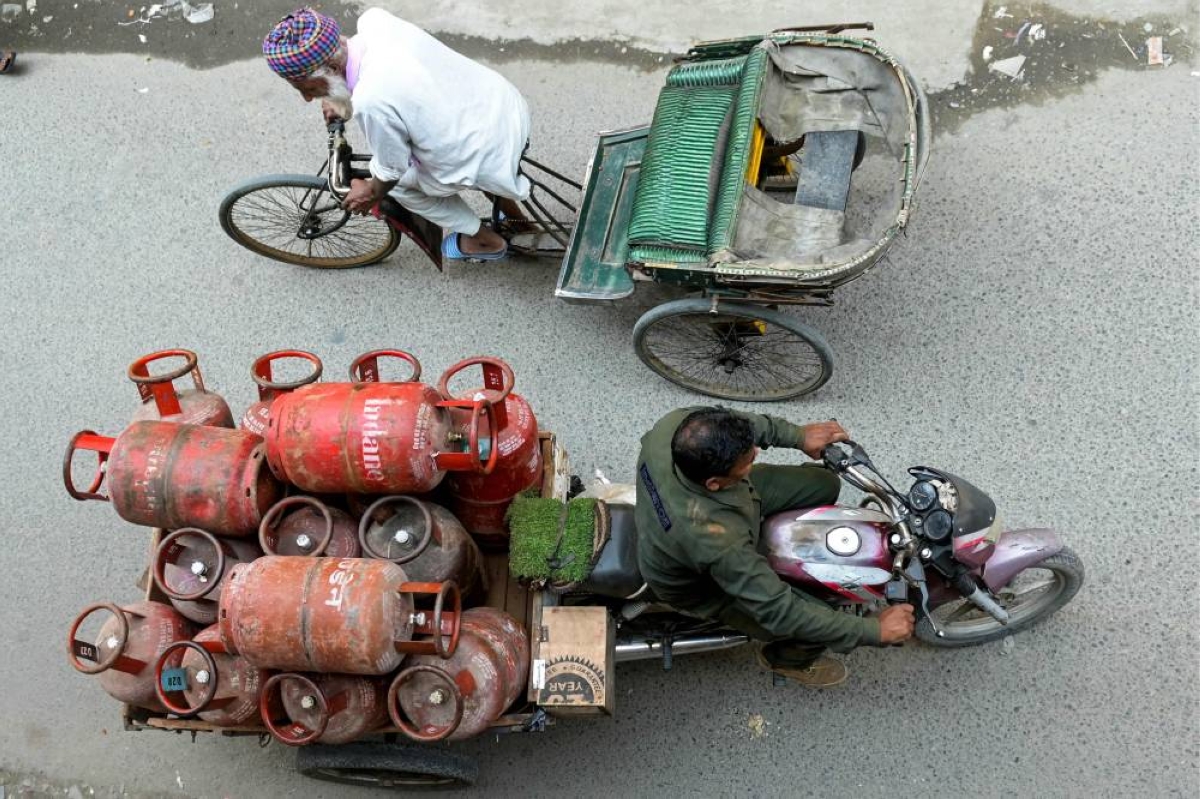
A delivery man transports liquid petroleum gas (LPG) cylinders in Amritsar yesterday. (AFP)  Soaring black-market prices of cooking gas in India’s capital are pushing poorer families back to wood and coal, raising health risks and worsening air quality in the highly polluted megacity.India is the world’s second-largest buyer of liquefied petroleum gas (LPG), which is used for cooking and predominantly sourced from the Middle East — and supplies have been strangled by the ongoing war. India’s Prime Minister Narendra Modi has urged states to curb black marketing and avoid panic, stressing that India’s energy supplies remain stable. In the low-income Madanpur Khadar neighbourhood, 36-year-old domestic helper Sheela Kumari says she has been forced to abandon LPG cooking gas cylinders for cooking after prices more than doubled. “We used to buy cylinders for 1,800-2,000 rupees ($19-$21), but now on the black market it has gone up to 5,000 ($53),” she told AFP, nearly as much as she entire monthly salary of 6,000 rupees. “It is unimaginable for us,” she said. “The next best option for us was going back to wood and coal.”Kumari said a 14 kilogramme cylinder lasts only 15-20 days for her family of six, even when they stretch its use out. But she says a 10 kilogramme bundle of firewood, lasting several days, costs 30 rupees ($0.30).“There are health repercussions, and my children cough,” she said. “But tell me a way out?” Her neighbour, 45-year-old Munni Bai, who has asthma, had switched to using an electric cooker as well as biogas from cow dung, to help her breathing. But now she said she was being forced to resume use of alternative fuels. “Gas is too expensive,” she said. “We cannot depend on it — we moved from coal and wood, due to my health issue, but now it is difficult to sustain.” But activists say the problem is more about access.Many migrant workers lack documentation needed for subsidised LPG and rely on informal markets, where hoarding has pushed up prices. “There is no major shortage yet, but hoarding has increased,” said Deepak, who uses only one name, from the Centre for Advocacy and Research (CFAR). “Many migrants depend on black-market cylinders, and prices have gone up two to three times”. New Delhi, and its wider sprawling metropolitan region of 30mn residents, is regularly ranked among the world’s most polluted capitals, due to a deadly mix of emissions from power plants, heavy traffic, as well as the burning of rubbish and crops. For the past decades, India’s government has pushed its “Ujjwala” or “light” clean-energy scheme, to provide over 100mn LPG connections to poor households. Burning wood, coal and biomass indoors exposes families to high levels of smoke and toxic particles, increasing the risk of respiratory illnesses.Women and children, who spend more time near cooking areas, are especially vulnerable. 

Sports
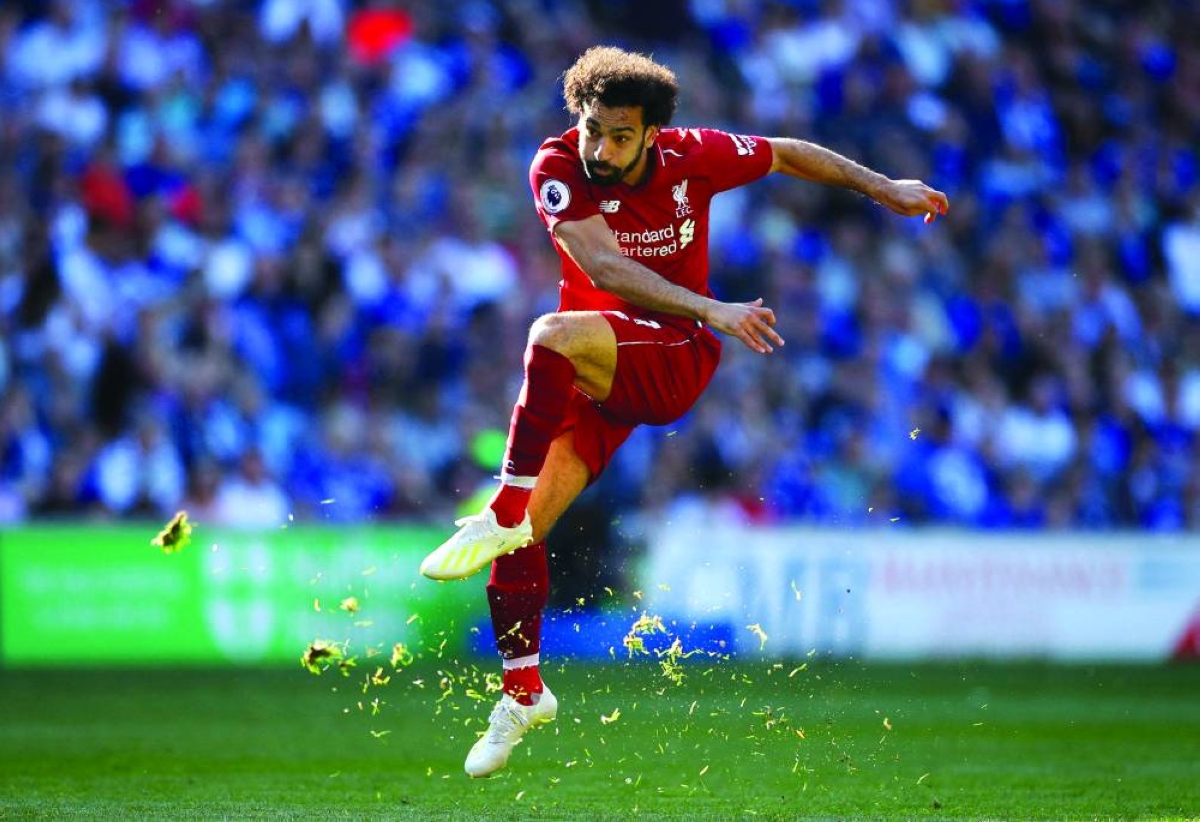
‘Illustrious’ Salah to leave Liverpool at the end of the season

‘Illustrious’ Salah to leave Liverpool at the end of the season

Soccer Football - Premier League - Cardiff City v Liverpool - Cardiff City Stadium, Cardiff, Britain - April 21, 2019 Liverpool's Mohamed Salah shoots at goal. Reuters Mohamed Salah will leave Premier League champions Liverpool at the end of the season, the Egypt forward announced as he started a farewell to what the club said were nine "illustrious" years at Anfield.The 33-year-old arrived at Anfield from Roma in 2017 before making 435 appearances for Liverpool, scoring 255 goals to leave him third on the Reds' all-time leading goalscorers chart. He has also won the Premier League Golden Boot award on four occasions while starring for Liverpool in both their 2019/20 and 2024/25 title triumphs as well as lifting the 2019 Champions League trophy.His Liverpool honours also include a Club World Cup, UEFA Super Cup, FA Cup and two League Cups. But the currently injured Salah has scored just five Premier League goals so far this this season, compared with 29 in last term's title-winning campaign.And his Anfield future became the subject of intense speculation after a dramatic bust-up with Liverpool manager Arne Slot in December. He accused Liverpool of throwing him "under the bus" after he was benched for three games in a row and said he had no relationship with the Dutch boss.Salah, in a video on social media featuring highlights of his time with Liverpool, said: "Hello everyone. Unfortunately, the day has come. This is the first part of my farewell. I will be leaving Liverpool at the end of the season. I wanted to start by saying that I never imagined how deeply this club, this city, these people would become part of my life. Liverpool is not just a football club. It's a passion, it's a history, it's a spirit. I can't explain in words to anyone not of this club."Salah, a free agent at the end of the season, added: "We celebrated victory, we won the most important trophies and we fought together through the hardest time in our life. I want to thank everyone who was part of this club throughout my time here, especially the team-mates past and present."And to the fans, I don't have enough words. The support you showed me through the best time of my career, and you stood by me in the toughest times. It's something I will never forget and something I will take with me always. Leaving is never easy. You gave me the best time of my life. I will be always one of you. This club will always be my home, to me and to my family. Thank you for everything. Because of all of you, I will never walk alone," insisted Salah in a reference to the Liverpool fans' chant.Liverpool said on their website: "Mohamed Salah is to bring the curtain down on his illustrious career with Liverpool at the end of the 2025-26 season. The forward has reached an agreement with the Reds that will see him close a remarkable nine-year chapter at Anfield. With plenty still left to play for this season, Salah is firmly focused on trying to achieve the best possible finish to the campaign for Liverpool and, therefore, the time to fully celebrate his legacy and achievements will follow later in the year when he bids farewell to Anfield," they added.Salah was forced off at Anfield last week after scoring in Liverpool's 4-0 victory against Galatasary, which sealed their place in the Champions League quarter-finals. In-form Salah had scored in three of his past four starts after an uncharacteristic lean spell but missed last weekend's 2-1 loss at Brighton, a blow to fifth-placed Liverpool's hopes of qualifying for next season's Champions League.  Related Story

Opinion
The power of sport in a fractured world

The power of sport in a fractured world

At moments of geopolitical tension, sport can feel peripheral. When headlines are dominated by conflict and economic uncertainty, stadiums and competitions can seem far removed from the serious business of international affairs. But sport has always operated on a different timeline from politics. Major tournaments, leagues and sporting infrastructure are planned years in advance. Decisions taken today will shape the sporting landscape long after the current moment of instability has passed. The region is steadily positioning itself as a centre for global sport, not only by hosting major events but by building the infrastructure and ecosystems that sustain them. That long horizon is precisely what makes sport valuable in turbulent times. Sport is one of the few global systems that continues to function even when politics fractures. It creates spaces where countries can still meet, compete and collaborate even when political relationships are strained. The playing field has often provided one of the rare arenas where rivalry can coexist with shared rules and mutual respect. Across the Middle East, that long-term perspective is becoming increasingly visible. The region is steadily positioning itself as a centre for global sport, not only by hosting major events but by building the infrastructure and ecosystems that sustain them. Qatar’s experience over the past decade illustrates how deliberate that approach can be. Investments in stadiums, training facilities and youth development ahead of the FIFA World Cup 2022 created not only a tournament but a lasting sporting platform that continues to attract international competitions and regional events. The calendar for 2026 alone illustrates the scale of that ambition. In May, Doha will host the Gulf Co-operation Council Games, bringing together athletes from across the region. In January, Saudi Arabia staged the AFC Under-23 Asian Cup, which showcased the next generation of football talent from across the continent. Later in the year Riyadh will welcome competitors for the Asian Indoor and Martial Arts Games, while Dubai’s long-established Dubai World Cup will once again draw global attention to the emirate. These events are not isolated moments. They form part of a broader strategic arc. Stadiums, training facilities, youth academies and broadcast partnerships are all part of an ecosystem designed to support sport not just as entertainment, but as an industry and a cultural platform. In that sense, sport sits at the intersection of diplomacy, identity and economic development. Investors working at the intersection of technology, infrastructure and sport are increasingly coming to see sport as one of the most underdeveloped sectors of the global economy. The real opportunity is not simply in events or media rights. It lies in the systems that support them: leagues, talent pathways, facilities, technology and new forms of fan engagement. One of the most significant shifts in global sport over the past decade has been the rise of women’s competitions. Audiences are expanding rapidly, commercial partners are paying closer attention and new leagues are emerging across multiple disciplines. For investors and sporting institutions alike, this creates a rare opportunity to build a more balanced ecosystem from the outset. The infrastructure built today will determine how professional sport evolves over the coming decades. The Middle East is well placed to play an important role in that evolution. Countries across the region have demonstrated their ability to host world-class sporting events and build the facilities required to sustain them. In places like Qatar, where sport has been integrated into broader national development strategies, the emphasis has increasingly shifted from hosting individual tournaments to building a durable sporting ecosystem that supports athletes, fans and communities over the long term. This is where the long cycles of sport matter most. Even as the world moves through a period of political uncertainty, the sporting calendar continues to advance. Athletes are training, leagues are expanding and new generations of fans are emerging. The events planned for the coming years will shape how sport is experienced by millions. In that sense, investing in sport during difficult times is not a distraction from global challenges. It is a way of preparing for what comes next. When the current turbulence eventually passes, the arenas, competitions and institutions being built today will still be there. And in those spaces, nations that may disagree politically will still meet on the same field, governed by the same rules. In a divided world, that may be one of sport’s most enduring contributions.Nicole Junkermann is an international investor focused on technology, sports and media. She leads NJF Holdings, a global investment group, and its sports platform Gameday by NJF Holdings, which invests in sports leagues, media rights and technology-driven fan engagement. Her work in the sector focuses on building long-term sports infrastructure and expanding the commercial and global reach of professional leagues.  Related Story

Sports
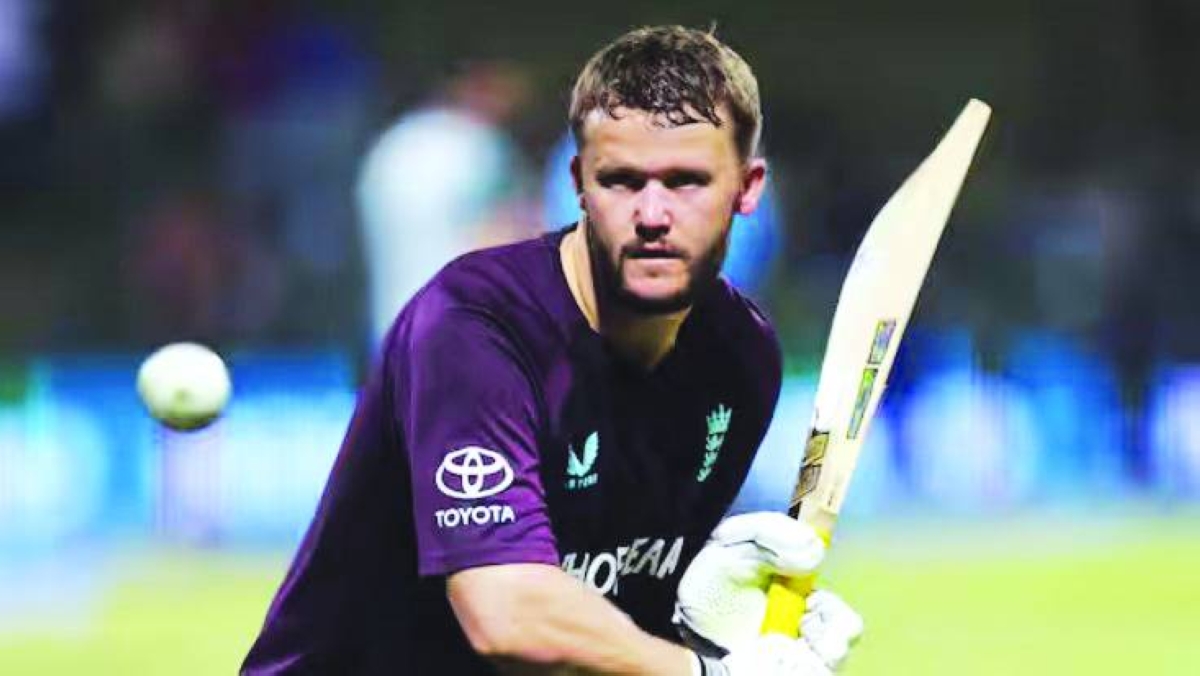
Duckett pulls out of IPL to focus on England career, risks two-season ban

Duckett pulls out of IPL to focus on England career, risks two-season ban

England opener Ben Duckett has withdrawn from the Indian Premier League (IPL) four days before the start of the ‌tournament to focus on his international ​career, a decision ‌that could leave him facing a ‌two-season ban from ‌the league. The 31-year-old, who ‌scored 202 runs at an average of 20.20 during the Ashes, was bought by Delhi Capitals for Rs20mn ($213,167) at the auction. Under IPL rules, any player who registers for the auction, is picked by a franchise and makes himself unavailable before the ​start of the season can be barred from participating in the tournament and the player auction ‌for two seasons. “I have made the ​extremely difficult decision to withdraw from ​the IPL. I have given this a lot of thought and it has not been an easy choice,” Duckett wrote on Instagram. “Representing England is something I have dreamed of since I was a child, and I want to give everything I can to English cricket. To do ‌that, I need ‌to ensure I am in the best possible place physically and mentally ahead of the summer. “I would like to sincerely apologise to everyone at Delhi. I was genuinely very excited about the opportunity to represent the franchise, and I fully appreciate the time and ​planning that goes into building a squad. “I am sorry for any disruption my decision may cause. I would also like to apologise to all the fans, as I know how much the team means to everyone in Delhi.” The IPL runs from March 28 to ‌May 31.