World
At least 80 insurgents killed as Nigerian troops repel base assault: military

At least 80 insurgents killed as Nigerian troops repel base assault: military

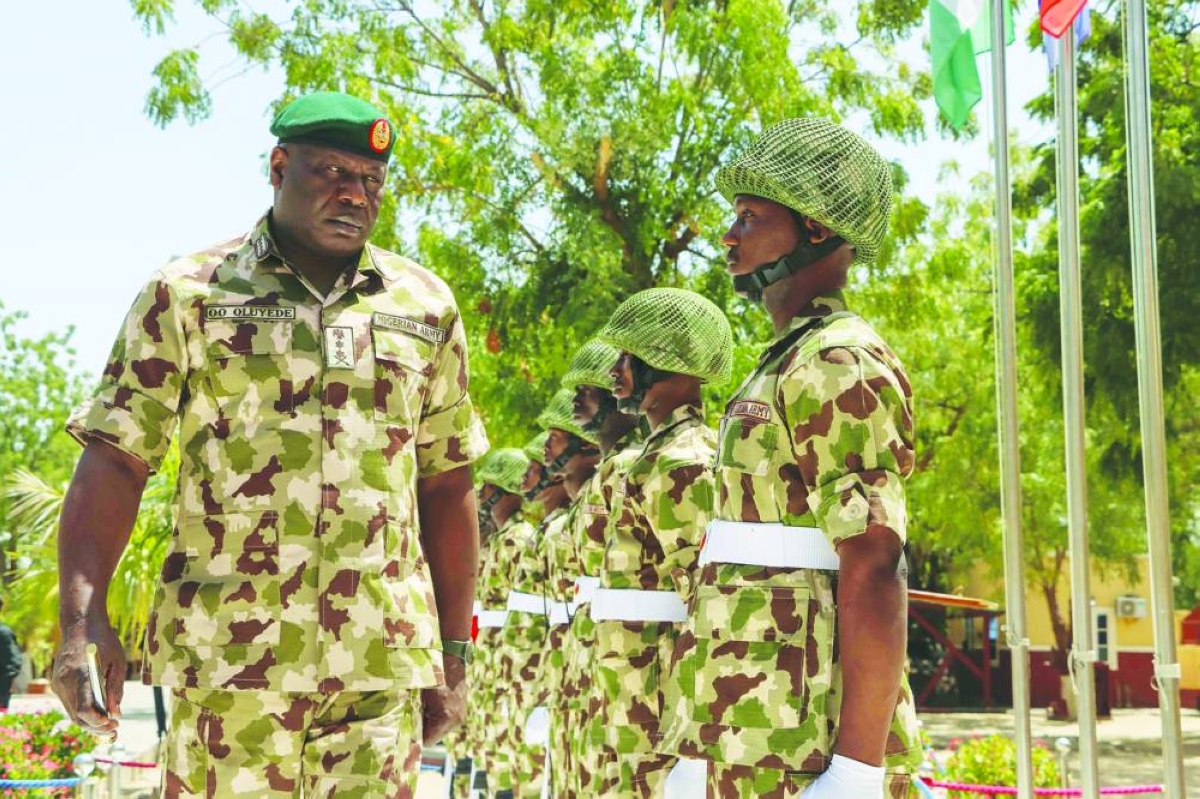
Nigeria's Chief of Defence Staff General Olufemi Oluyede (left) inspects the guard of honour at the Headquarters Theatre Command Joint Task Force in Maiduguri, Wednesday during his visit after one of the deadliest attacks in

World
Nigeria ride‑hailing drivers protest pricing as fuel costs rise

Nigeria ride‑hailing drivers protest pricing as fuel costs rise

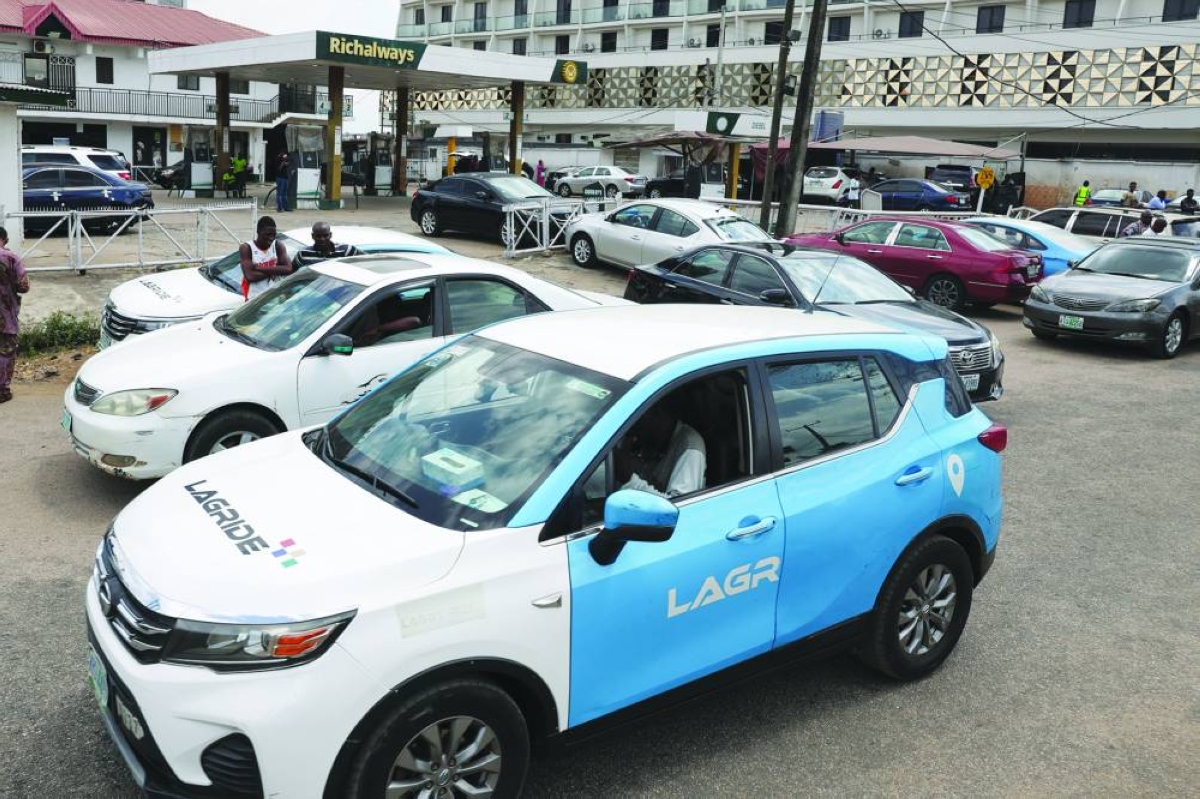
Hundreds of Nigerian drivers who are signed up with ride-hailing services Uber, Bolt and inDrive protested Wednesday in Lagos over low ​fares and high commissions ‌while calling on the Lagos ‌State ⁠Assembly to intervene ‌and mandate higher ‌pricing.Nigeria is one of Africa's largest markets ⁠for app-based drivers, with roughly half operating in the commercial capital Lagos, a city of more than 20mn people, according to drivers' unions and transport regulators. People hold signs as Nigerian ride-hailing drivers working with Uber, Bolt and inDrive protest in Lagos over low fares, urging the Lagos State Assembly to mandate higher rates amid surging petrol prices linked to

World
Sudanese artists cling to their craft in a displacement shelter

Sudanese artists cling to their craft in a displacement shelter

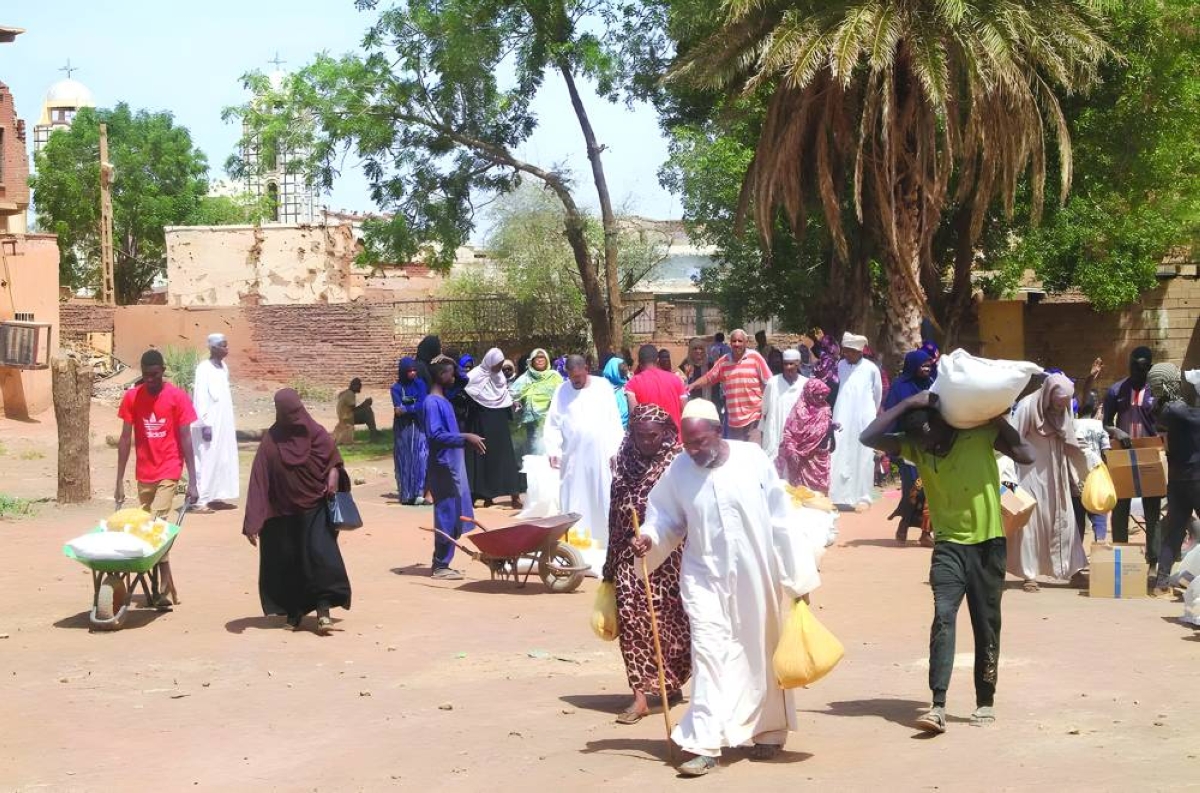
Residents receive aid from World Food Program (WFP) at Al-Omada neighborhood of Omdurman, the twin city of Khartoum on March 11, 2026. (AFP) At a school-turned-shelter in Port Sudan, rehearsal is a modest affair, but three years of war and the humble surroundings do little to dampen the sweet tunes rising from the two musicians.With piles of bedding pushed to the side, the lone singer croons along to the melodies of a keyboardist — part of a group of some 120 Sudanese artists who fled the brutal fighting between the army and the Rapid Support Forces.In the courtyard downstairs, actors, screenwriters, painters and directors work in the sunshine, before retreating to their dormitories at night."It's like our own little cultural centre," says visual artist Mohira Fathi, who fled the central state of Al-Jazira with her husband and son.But the El-Rabat centre is a far cry from the countless other shelters in the army's wartime capital of Port Sudan, where disease outbreaks and unrelenting hunger stalk tens of thousands.Across the country, over 9mn people are internally displaced and a record 33.7mn are in need of aid.Like everyone else, these artists came to the army's wartime capital of Port Sudan on the Red Sea exhausted, traumatised and destitute."When I arrived, there weren't even any fans to help with the sweltering heat. People were sleeping on mats on the floor, with no access to water," musical troupe director Hossam al-Din al-Taher told AFP.Slowly, as the war dragged on, word spread of a makeshift artists' commune forming, and people started flocking to the school in the hopes that being around fellow artists would help keep their careers alive."We didn't have instruments or costumes," Taher remembers, and artists had to take on odd jobs to earn a living, pooling their money together to buy a guitar here, a set of paints there.Now, Taher conducts a small orchestra between piles of luggage.For filmmaker Mohamed Ali Ibrahim, "it's a blessing that all of these artists found each other in the same place."They share everything: food, money, mid-rehearsal coffees, living quarters separated only by fabric sheets, and every gig that comes their way.Three years of war have destroyed Sudan's cultural scene. Theatres, studios and museums have been shut down or looted, while many of Sudan's top artists have fled across borders.But El-Rabat's artists make do. They've put on shows for the neighbourhood, held local photography exhibitions and, this Ramadan, had some of their actors return to the airwaves in a modest radio drama."We've learned there is no giving up," musician Assem Abdel Aziz told AFP after rehearsal."We have dreams here, that yard outside is full of dreams, full of energy," he says, flanked by a drum kit to his left and a mosquito net-covered cot to his right.  Related Story

World
Trump nominee for Homeland Security chief grilled at fiery Senate hearing

Trump nominee for Homeland Security chief grilled at fiery Senate hearing

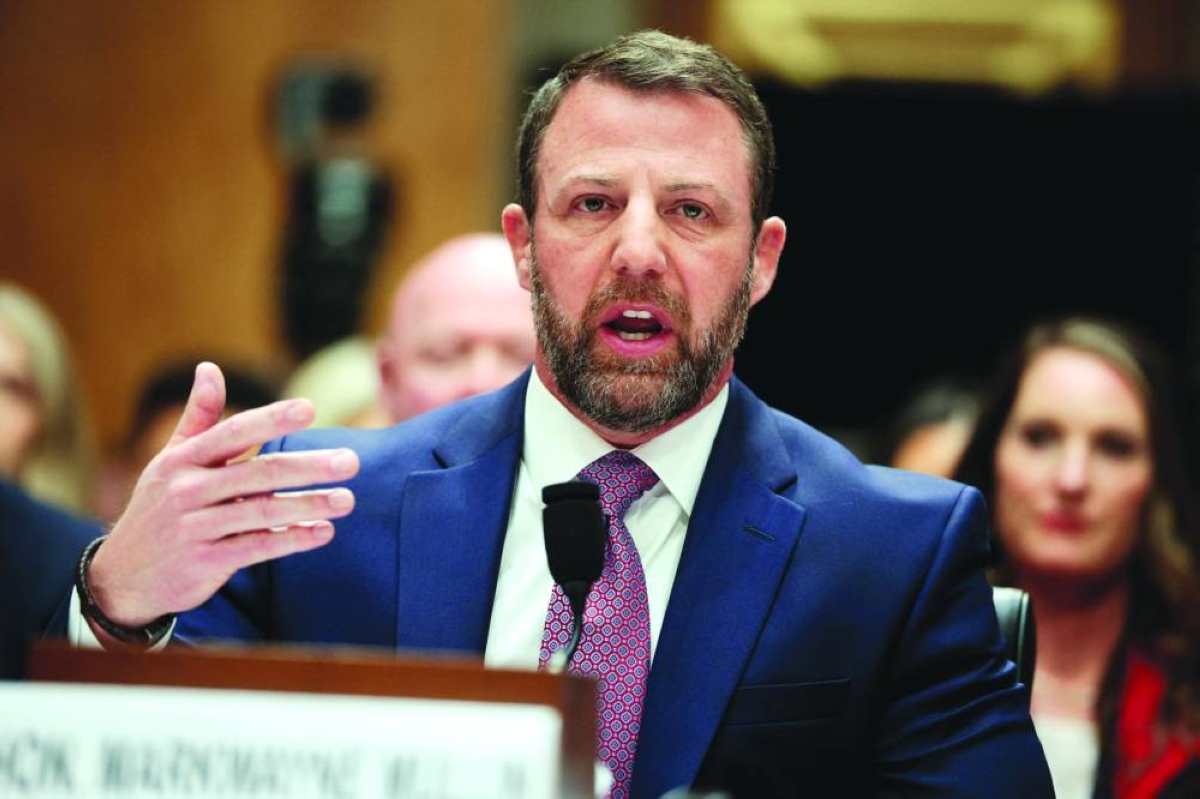
US Senator Markwayne Mullin, President Donald Trump's nominee to be Homeland Security secretary, testifies before a Senate Homeland Security and Governmental Affairs Committee confirmation hearing on Capitol Hill in Washington, DC, Wednesday. (Reuters) Markwayne Mullin, US President Donald Trump's pick for Homeland Security chief, distanced himself from his fired predecessor Kristi Noem as he was grilled over immigration policy at a contentious Senate confirmation hearing Wednesday.Mullin, a senator from Oklahoma, clashed repeatedly during his appearance before the Senate Homeland Security Committee with Senator Rand Paul, the committee chairman and a fellow Republican.Paul, who has had acrimonious relations with Mullin for years, told reporters after the three-hour hearing that he would vote against his nomination to head the Department of Homeland Security, the agency charged with carrying out Trump's immigration crackdown.Republicans hold an 8-7 majority on the Senate panel and a simple majority is needed to advance Mullin's nomination to the full Senate for a confirmation vote.A Democratic senator on the committee, John Fetterman, who has indicated he might vote for Mullin's confirmation, said during Wednesday's hearing that he had an "open mind."The committee vote on Mullin's nomination is expected to be held today.Noem was fired by Trump this month in part for her handling of the recent large-scale operation against undocumented migrants in Minnesota, during which federal immigration agents shot dead two protesters who were US citizens.Mullin said one of his goals if confirmed would be to steer DHS and its flashpoint Immigration and Customs Enforcement (ICE) agency away from the spotlight."My goal in six months is that we're not the lead story every single day," Mullin said."I want to protect the homeland," Mullin said. "I want to bring peace of mind. I want to bring confidence back to the agency."He said he would "love to see ICE become a transport" in deporting migrants rather than the "front line" in rounding them up in cities and towns around the country.He said federal immigration agents would be required to have judicial warrants before entering homes or businesses unless they were pursuing a known felon.Mullin also retracted remarks he made at the time in which he called one of the two Americans killed in Minneapolis a "deranged individual." "I shouldn't have said that," he said.He also said the Federal Emergency Management Agency, which falls under DHS, should be "restructured" but not eliminated, as some in the Trump administration have proposed.The hearing got off to a fiery start as Paul confronted Mullin about past comments the senator from Oklahoma had made about the senator from Kentucky.Mullin, a burly 48-year-old former wrestler and mixed martial arts fighter, once called Paul a "freaking snake" and said he "understood" why he had been assaulted by a neighbour in 2017."Tell me to my face why you think I deserved it," Paul asked Mullin."And while you're at it, explain to the American public why they should trust a man with anger issues to set the proper example for ICE and border patrol agents," he continued."I just wonder if someone who applauds violence against their political opponents is the right person to lead an agency that has struggled to accept limits to the proper use of force," Paul said.Mullin declined to apologise to Paul for his past comments and, referring to the assault by his neighbour, said "I don't think anybody should be hit by surprise.""I did not say I supported it," he said. "I said I understood it. There's a difference."Mullin, a staunch Trump supporter, was elected to the Senate from Oklahoma in 2022 after serving 10 years in the US House of Representatives.  Related

World
Trump administration takes steps to curb energy cost hikes

Trump administration takes steps to curb energy cost hikes

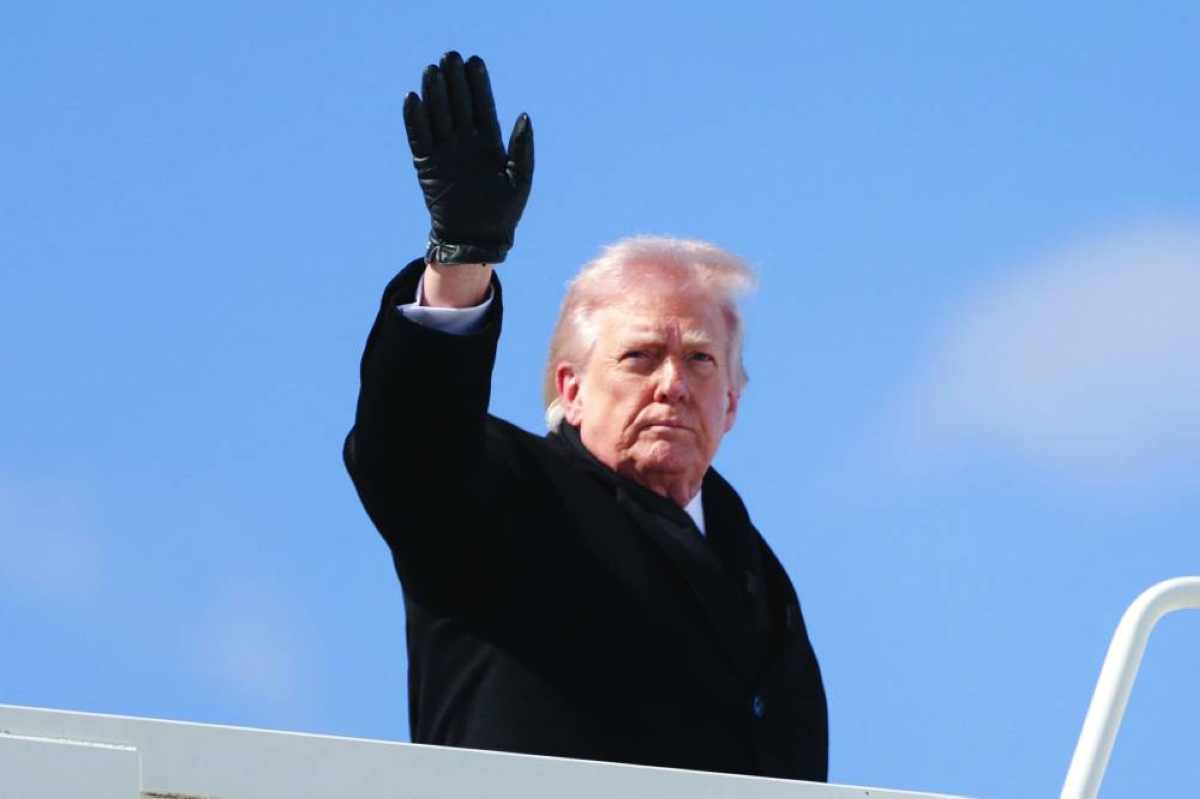
US President Donald Trump waves as he boards Air Force One at Dover Air Force Base Wednesday in Dover, Delaware. (AFP) US President Donald Trump's administration scrambled Wednesday to rein in surging energy costs from war in the Middle East, temporarily waiving a century-old shipping law and easing Venezuela sanctions.The moves came after oil prices rocketed following US-Israeli strikes on Iran on February 28. Tehran's retaliation brought commercial shipping through the Strait of Hormuz to a virtual halt, snarling energy supply chains.Around a fifth of global crude oil and liquefied natural gas pass through the critical waterway during peacetime.The disruptions have caused average US gasoline prices to jump by more than 27% since the start of the war, according to data from the AAA motor club.This strains American household budgets further — with consumers already grappling with high costs of living — piling pressure on the Trump administration as key midterm elections approach.For now, Trump's announcement of a 60-day Jones Act waiver would lift a ban on foreign-flagged vessels transporting cargo between US ports over this period.The 1920 law was aimed at promoting American shipbuilding, but critics argue that it hampers free trade and has raised costs for consumers.The move is "just another step to mitigate the short-term disruptions to the oil market as the US military continues meeting the objectives of Operation Epic Fury," said White House Press Secretary Karoline Leavitt in a statement, referring to the US campaign against Iran."This action will allow vital resources like oil, natural gas, fertiliser and coal to flow freely to US ports for 60 days," she added.She vowed that the Trump administration "remains committed to continuing to strengthen our critical supply chains."The US Treasury Department separately issued a license Wednesday to authorise certain transactions between established US entities and Venezuela's state-owned oil company PDVSA."This license will benefit both the US and Venezuela, while supporting the global energy market by increasing the supply of available oil," said a Treasury spokesperson.Easing bottlenecksThe Jones Act requires that cargo transported by water within the US be moved on vessels that are US-built, US-owned and registered under the US flag.Just a fraction of the world's tankers comply with the Jones Act, said Colin Grabow, an associate director at the libertarian Cato Institute."So this is a dramatic expansion in the number of ships that are able to be used" in transporting goods within the world's biggest economy, he told AFP, referring to Trump's temporary waiver.He said it is nearly five times as expensive to build a medium-range tanker in the US than in Asia, which could explain why there are not many such vessels globally.Grabow believes the measure will bolster US supply chains, but warned that effects on prices could be limited if the war rages on."It can help mitigate some of the disruptions," he said. But moving forward, it could be less about reducing costs than "slowing the rate of increase" from disruptions.Josh Lipsky of the Atlantic Council told AFP that the shipping law waiver "is unlikely to have a significant impact on global energy markets and gas prices.""It's too small a move to sway the larger forces at play in the Gulf," he cautioned, even though it could help cool costs in the northeast or southwest."The 60-day decision as opposed to the 30 we expected may signal a longer conflict however," Lipsky added.S&P Global analysts estimate that Jones Act deliveries can cost billions of dollars more than employing a foreign vessel.  Related Story

World
Samsung Electronics union votes for May strike

Samsung Electronics union votes for May strike

The logo of Samsung Electronics is seen at the company's store in Seoul, South Korea. Reuters Tens of thousands of Samsung Electronics workers said Wednesday they will strike in May over a wage dispute, raising concerns over chip production.The firm is one of two South Korean chipmakers, along with SK hynix, now crucial suppliers of advanced memory chips for booming AI infrastructure demand.The announcement is a blow to South Korea's bid to join the United States and China as one of the world's top three AI powers.Samsung announced last month that it had begun mass production of next-generation high-bandwidth memory chips, HBM4s, seen as a key component for scaling up the vast data centres driving the rise of artificial intelligence.More than 66,000 of nearly 90,000 unionised workers took part in a vote on whether to strike, the association of three unions said in a press release."Of those who voted, 93.1 percent voted in favour," it said."This result makes clear that the vast majority of Samsung Electronics workers reject the company's current proposal as failing to uphold the management principle of 'People First'," it said.The unions' demands include a seven-percent wage hike, the removal of a cap on bonuses and a more transparent performance-based bonus system.The will of the workers was a "strong warning to the leadership", it added.Samsung told AFP it remained "committed to reaching a smooth agreement" with the unions.Long staunchly anti-union, founder Lee Byung-chul once vowed never to allow unions "until I have dirt over my eyes". He died in 1987.Samsung Electronics' first labour union was formed in the late 2010s.  Related Story

World
Chinese tourists ditch Japan for third month running

Chinese tourists ditch Japan for third month running

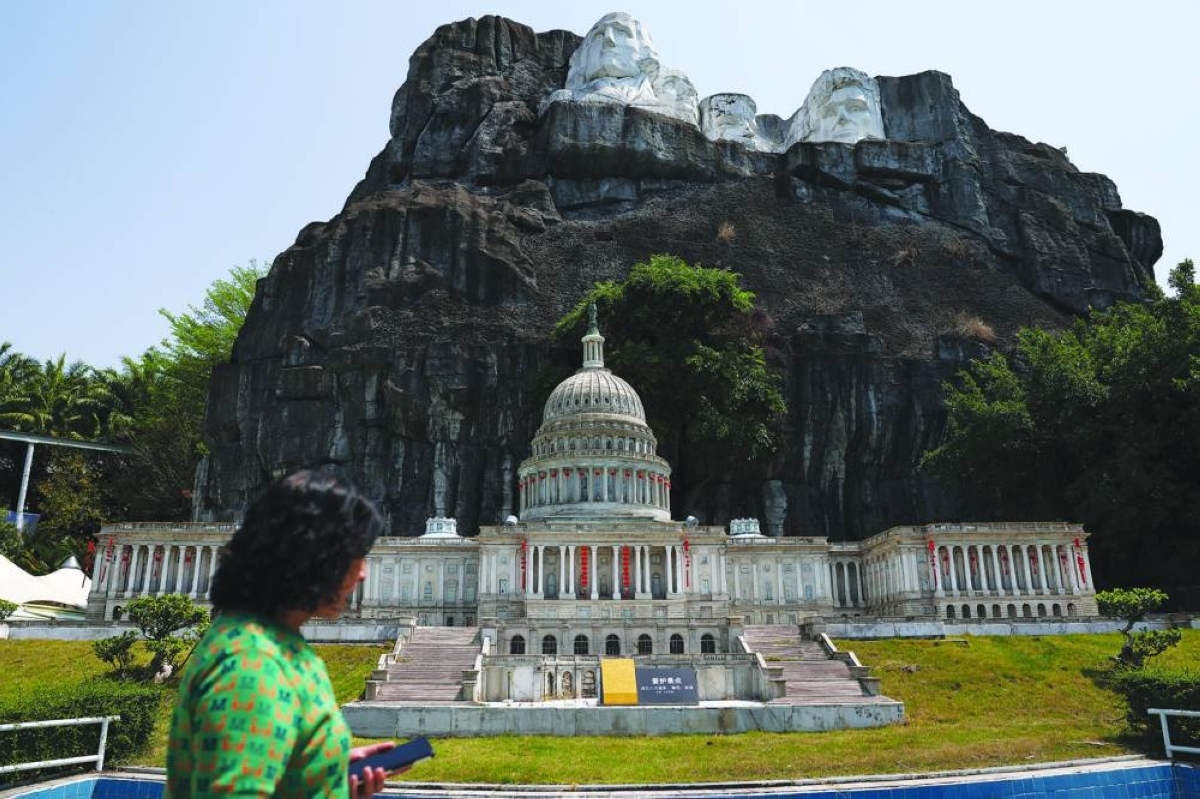
A visitor walks past scaled replicas of the US Capitol and Mount Rushmore, at the theme park Window of the World, in Shenzhen, Guangdong province, China, Wednesday. (Reuters) Chinese visitors to Japan tumbled 45.2% in February from a year earlier, official data showed Wednesday, as the fallout from the countries' diplomatic spat bit for the third month running.Previously, Chinese travellers were the biggest source of tourists to Japan, contributing to a boom in the land of cherry blossoms and Mount Fuji that was fuelled by a weak yen, making shopping cheap.But in January, South Korea overtook China as the largest contingent, a trend that continued in February, with visitors from the country jumping 28.2% to 1.1mn.That compared with 396,400 visitors from mainland China last month, the Japan National Tourism Organisation said.By comparison, 18 countries and regions set new records for the number of their nationals who visited Japan in February — including South Korea, Taiwan and the US, data showed.The number of visitors from Hong Kong also shot up by 19.6% compared to last year.While February is typically the low season for travel to Japan, this year, due to the timing of Lunar New Year, the number of visitors shot up, the tourism group said, noting a particular uptick from East Asia.Japan-China ties have deteriorated since Prime Minister Sanae Takaichi suggested in November that Japan might intervene militarily in any Chinese attempt to take Taiwan.China, which regards the democratic island as part of its territory and has not ruled out force to annex it, was furious over the comments.It summoned Tokyo's ambassador and warned Chinese citizens against visiting Japan.The number of Chinese visitors to Japan already tumbled 45% in December and nose-dived 60.7% in January.Instead, other countries, including South Korea, received an increase in the number of Chinese visitors.In January, 418,703 visited South Korea, up from 364,460 the same month last year, according to the Korea Tourism Organisation.The number of Chinese visitors to Thailand edged up 4.24% on average during the January-February period compared to the same period last year.Japan's cherry blossom season will be in full swing in late March and early April, but some local media reports suggest the decline in the number of Chinese visitors will continue.Contacted by AFP, one hotel in the Tokyo Bay area said the number of Chinese guests "had halved since November" and that will likely continue in March and April, although a handful of other hotels said they have seen no significant impact from the souring ties between Tokyo and Beijing.  Related Story

World
Philippines' Marcos puts brakes on transport fare hike

Philippines' Marcos puts brakes on transport fare hike

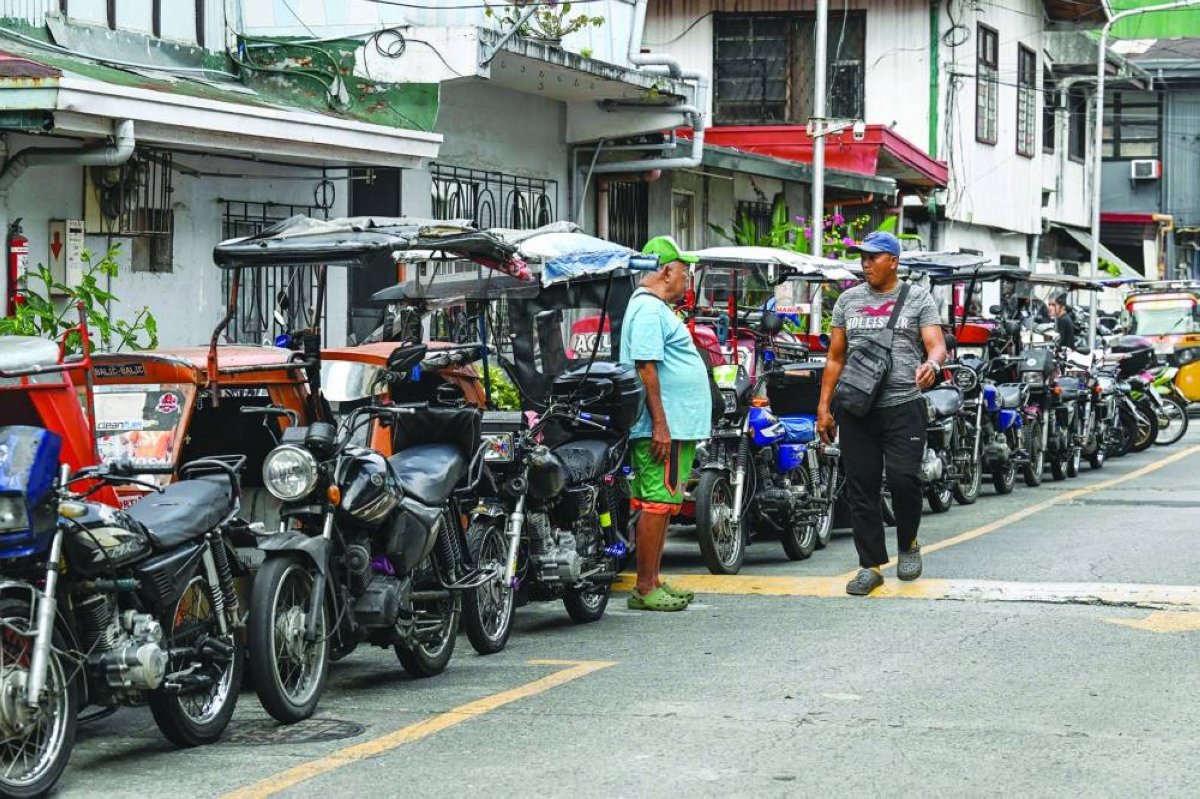
Philippine President Ferdinand Marcos Wednesday put the brakes on a public transportation fare hike announced just a day earlier, promising the country's commuters free rides instead.The archipelago nation, which imports nearly all of its crude oil from the Middle East, has been scrambling to deal with eye-watering price increases triggered by the US-Israeli war with Iran.Since hostilities erupted, the Philippines has instituted a four-day workweek for civil servants, distributed cash handouts to tricycle drivers, and seen its sole refinery open discussions to buy Russian oil.On Tuesday, the country's transportation regulator announced fare hikes across an array of public transport, with rides in jeepneys, used by millions of Filipinos every day, set to jump about eight percent.'In my opinion... now is probably not the time to raise fares for the people,' Marcos said Wednesday in walking back the increase, citing the ongoing Middle East war.Instead, Marcos said he had ordered the country's transportation department 'to launch free rides all over the Philippines' along with discounts on light rail systems and toll roads.Marcos did not specify which forms of public transport would be made free.In a statement that followed shortly, the transportation department said it would suspend the fare hikes in line with the president's request while 'preparing' programmes, including free rides.Mody Floranda, president of a local jeepney drivers' union, told AFP that his group was unhappy with the decision.'We are dismayed that the president of our country had ruthlessly recalled what his government has granted to us,' he said. 

Opinion
Tapping oil reserves seen not a lasting solution to price volatility

Tapping oil reserves seen not a lasting solution to price volatility

Global oil prices remain above $100 a barrel, having surged as a result of the US-Israeli war on Iran with shipping through the vital Strait of Hormuz coming to a near-halt. The International Energy Agency’s member countries could release more oil into the market from strategic stockpiles “as and if needed” after they have agreed the largest-ever reserves release to offset shortages and a spike in prices, its executive director Fatih Birol said on Monday. The IEA has described the crisis as the biggest supply disruption in the history of the oil market. As conflict chokes off oil exports from the Arabian Gulf, governments around the world are activating a critical line of defence against price shocks: emergency crude stockpiles. To ease surging prices, member nations of the International Energy Agency have agreed to release 400mn barrels from such reserves, which would be the group’s largest discharge ever. Among the stockpiles that will be tapped are the US Strategic Petroleum Reserve (SPR) created in the 1970s as a safety net against energy crises. Earlier, US President Donald Trump had expressed reluctance to release oil from the US reserve, characterising high energy prices as temporary. According to the IEA, the 38 mostly wealthy members of the Organisation for Economic Cooperation and Development (OECD) collectively have at least 1.2bn barrels of oil put aside in emergency public stores. The Paris-based energy group, which coordinates stockpile discharges for OECD countries, has helped implement five such interventions in the past: in the buildup to the 1991 Gulf War, after hurricanes Rita and Katrina in 2005, following the outbreak of civil war in Libya in 2011, and twice in 2022 in response to disruptions connected to the war in Ukraine. Among IEA members, the US has the largest buffer, which is made up of four heavily-guarded sites along the Gulf of Mexico. These deep and massive underground caverns have the capacity to hold more than 700mn barrels of oil. According to Energy Department data, they currently hold about 415mn barrels, so are just 60% full. The Trump administration plans to release 172mn barrels as part of the IEA’s coordinated effort. China — the world’s biggest oil importer — has in recent years built up what appears to be an even larger reserve capacity. The country has about 1.4bn barrels of crude in strategic storage, according to estimates from Columbia University’s Center on Global Energy Policy. As part of the IEA’s coordinated plan, countries in Asia committed to release well over 100mn barrels, with a similar amount in Europe and over 170mn barrels in the Americas, on top of “over 20mn barrels from increased production.” Analysts have questioned if the release will be sufficient to overcome the disruptions, and stressed that the pace of the release is also crucial. Birol has said further releases of stocks could only constitute a “buffer” against the current choking off of supplies, which has forced Gulf producers to slash production. Further releases from strategic reserves are “not a lasting solution.” Oil traders have expressed doubts about the extent of reserves making up for the oil that’s being choked off by the war. Even if the US SPR’s maximum drawdown rate is coupled with flows from other IEA members, it might cover just a portion of the millions of barrels of supply from the Gulf that’s being curtailed daily. It will take about 120 days to fully deliver the amount the US plans to release, according to the Energy Department. For sure, oil reserves can help alleviate market shortages, but they are generally viewed as a short-term emergency measure rather than a permanent solution. The historic 400mn barrel release is estimated to account for only about three–four days of global production, or roughly two weeks of the typical flow through the Strait of Hormuz.     

Entertainment
Huda Mustafa Says Claims Are ‘Not True’ After BF’s Baby Mom Restraining Order

Huda Mustafa Says Claims Are ‘Not True’ After BF’s Baby Mom Restraining Order

Huda Mustafa Claps Back After BF's Baby Mom Filed Restraining Order Published March 17, 2026 1:23 PM PDT "Love Island USA" star Huda Mustafa is firing back to a recent restraining order her boyfriend's baby