Sports
Messi scores 900th career goal, joins Ronaldo in elite club

Messi scores 900th career goal, joins Ronaldo in elite club

Inter Miami’s Lionel Messi celebrates after scoring during the CONCACAF Champions Cup round of 16 match against SC in Fort Lauderdale, Florida. (AFP) Argentine superstar Lionel Messi bagged the 900th goal of his glittering career on Wednesday but could not prevent Inter Miami from crashing out of the CONCACAF Champions Cup on away goals after a 1-1 draw with Nashville. Messi, 38, scored his milestone goal after just seven minutes to put Miami 1-0 up in the second leg of their last-16 clash in the regional club competition. But Nashville’s Cristian Espinoza lashed in a 74th-minute equalizer to make it 1-1 on aggregate, and after holding Miami at bay for the remainder of the game, the visitors from Tennessee advanced to the quarter-finals on the away goals rule. Miami’s exit was a bittersweet ending to what had promised to be a night of celebration after Messi’s early opener in what was the club’s final game at their Chase Stadium home in Fort Lauderdale. Messi’s strike took the Argentine’s tally to 81 goals for the MLS champions following his move to Florida in 2023. The eight-time Ballon D’Or winner previously scored 672 goals for Spanish giants Barcelona, 32 for France’s Paris Saint-Germain, and a further 115 international goals for Argentina. Goal number 900 came some 21 years after Messi’s first goal in senior football, when he scored for Barcelona in a 2-0 win over Albacete in 2005 as a fresh-faced 17-year-old. Messi, widely regarded as the greatest player in football history, still has some way to go before he catches his great rival Cristiano Ronaldo, the 41-year-old Portuguese superstar who is on 965 career goals. Speaking ahead of Messi’s 900th goal, Miami manager and former Argentina and Barcelona team-mate Javier Mascherano described the star’s goals total as “insane.” “I’ve been lucky enough to see most, or many, of the goals he’s scored, much closer than you all, and that’s a privilege,” Mascherano said. “The number we’re talking about (900) is insane, and that’s why Leo is a one of a kind.” Wednesday’s match carried added significance for Inter Miami, marking a farewell to the team’s Chase Stadium. The venue has served as Inter Miami’s home since the club entered Major League Soccer in 2020. The team will move into a new purpose-built 26,700-seat facility next month. Messi is strongly expected to play in his sixth World Cup later this year, when Argentina defend their title in the 48-team tournament being staged in the United States, Canada and Mexico. The Argentine star has already extended his Inter Miami contract through to the end of the 2028 season. Messi’s prolific goalscoring has been a hallmark of his career. His 672 goals for Barcelona came in just 778 games -- an average of 0.86 per game -- helping the Catalan club win 35 trophies before departure to Paris Saint-Germain in 2021. In France, he scored 32 goals in 75 matches, winning three trophies including two league titles. In Miami, his 81 goals have come in just 96 appearances, helping the team win the 2023 Leagues Cup and the 2025 MLS Cup. His 115 international goals have come in 196 matches, including two in the 2022 World Cup final victory over France. Messi’s goals tally leaves him second only to Ronaldo according to most recognised statistical records. Brazilian legend Pele is often said to have scored more than 1,000 goals but those numbers have been the subject to debate. Most statisticians put Pele’s total for Brazil, Santos and New York Cosmos at 762.  Related Story

World
China-ruled Macau approves national security law allowing closed-door trials

China-ruled Macau approves national security law allowing closed-door trials

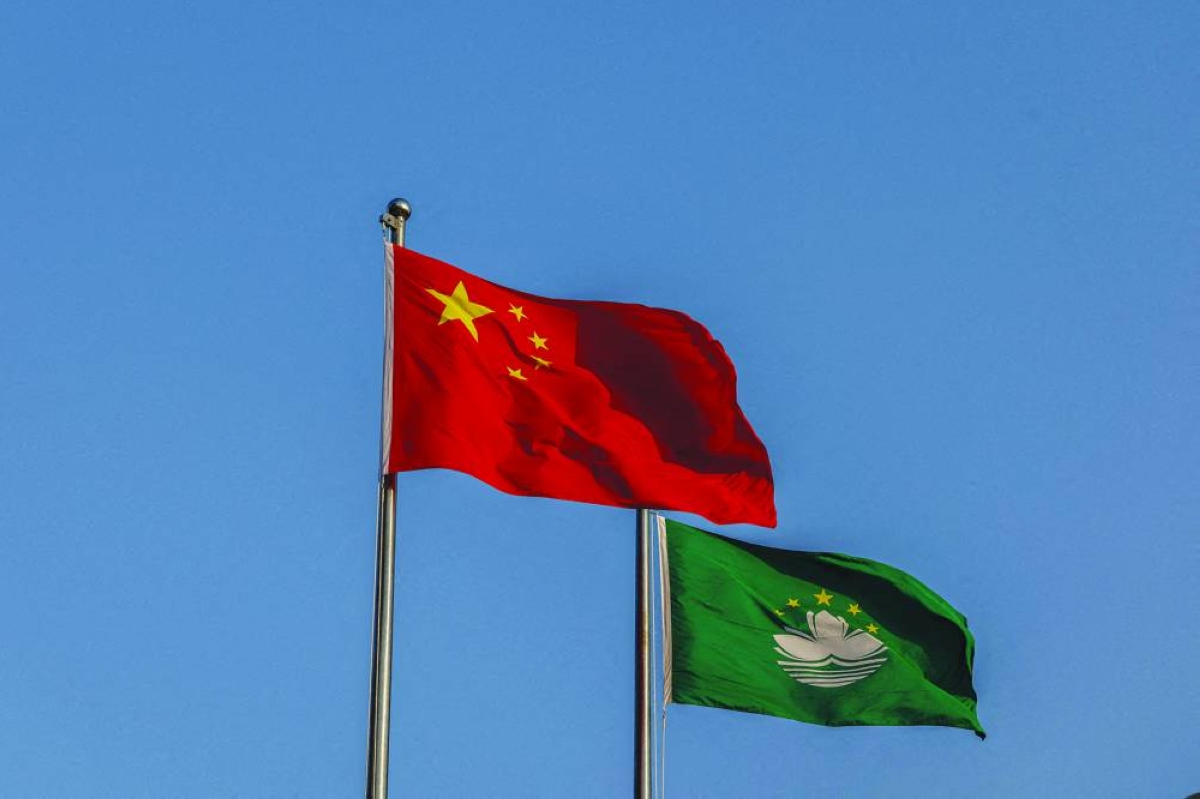
Chinese and Macau flags flutter at the Golden Lotus Square in Macau, China. (Reuters/File Photo) Lawmakers in Macau, a city under Chinese rule, unanimously approved a ‌bill Thursday that allows court ​proceedings to be ‌held behind closed doors when deemed ‌necessary ⁠to ‌protect national security ‌interests. The city enacted its first national security ⁠law in 2009 and tightened it with amendments in 2023. Last July, leading democrat Au Kam San was arrested for alleged collusion with foreign forces to endanger national security, the first ​known arrest under that law.The new legislation stipulates that judges must refer cases to the ‌city's Committee for ⁠Safeguarding National ​Security if they believe national security ​may be at risk during a public hearing.The committee has the ultimate authority to decide whether the matter pertains to national security and order that hearings be held behind closed doors. Its decisions are final, not subject to appeal or judicial review.The ‌law will ‌take effect a ⁠day after its publication in Macau’s official ⁠gazette.The ⁠Macau government said the approval had demonstrated the successful implementation of the principle of "patriots governing Macau".Unlike in Hong Kong, which saw big social movements challenge Chinese Communist Party ​rule in 2014 and 2019, the democratic opposition in the former Portuguese colony has always existed on the fringes amid tight Chinese control.After Au's arrest last year, rights groups have called for his unconditional release and urged authorities not ‌to suppress peaceful ​criticism. 

Sports
Europe’s super elite teach English clubs a lesson

Europe’s super elite teach English clubs a lesson

Barcelona players celebrate after a 7-2 thrashing of Newcastle in the UEFA Champions League round of 16 second leg at Camp Nou in Barcelona. (Reuters) Four teams out of six eliminated, with a total of 28 goals conceded over the two legs – it has been a chastening week for most of England’s representatives in the Champions League knockout phase. Only Arsenal, the Premier League leaders, and Liverpool – the English team with the richest history in Europe – reached the quarter-finals. Manchester City, Chelsea, Newcastle United and Tottenham Hotspur were sent packing. But does this really merit calling into question the standard of the Premier League? England’s top flight is easily the richest in Europe, with domestic and international broadcasting rights revenues dwarfing the rest. A report last month by UEFA showed television revenue for English top-flight clubs increased by 1.5bn euros ($1.77bn) from 2014-2024 – the combined figure for the rest of Europe was almost the same. Fifteen of the 30 richest clubs in analysts Deloitte’s latest Football Money League are English. However, three of the four English teams eliminated in the last 16 this week lost to clubs with larger revenues. The exception was Tottenham, but they are having a dreadful season and so losing 7-5 on aggregate to Atletico Madrid was no surprise. City, champions in 2023, lost 5-1 on aggregate to Real Madrid, the record 15-time European Cup winners and the only club with revenue over one billion euros in Deloitte’s latest table. Chelsea were crushed 8-2 on aggregate by reigning champions Paris Saint-Germain, while Newcastle lost 8-3 overall against Barcelona. There have only been three occasions since 1955 in which an English team has conceded at least eight goals on aggregate in a European tie, two of them this week. England’s strength in depth is unrivalled, and shown by the presence of an unprecedented six sides in the last 16. But this level is also the territory of a small band of giant continental clubs perhaps not subject to the same levels of competitiveness in their domestic leagues. The four clubs with the highest revenue in Europe last year were Real, Barcelona, Bayern Munich and PSG – they generate more money than anyone in England, and enjoy huge financial advantages over domestic rivals. Nineteen of the last 21 Spanish titles have been won by Madrid or Barcelona. Over the same period the duo have won a combined 10 Champions Leagues. Qatar-owned PSG have won 11 of the last 13 French championships and won their first Champions League last year after one final appearance and two semi-finals in the preceding five seasons. Bayern, who hammered Atalanta 10-2 on aggregate this week, are set for a 13th Bundesliga title in 14 years. They are also now almost always in the Champions League quarter-finals, and next face Real in a mouthwatering tie. For all the Premier League’s pulling power, few match-ups have the same appeal as that impending confrontation. “Both clubs are giant,” said Bayern coach Vincent Kompany. Bayern have been helped by a strategy of signing a big Premier League name in each of the last three seasons: Harry Kane, Michael Olise and Luis Diaz. Kane’s status as England’s leading player is maybe threatened only by Jude Bellingham, who was joined last year at Real by Trent Alexander-Arnold, lured from Liverpool. PSG boast Ballon d’Or winner Ousmane Dembele, and in Khvicha Kvaratskhelia they have a player who has terrorised English defences over the last year. “In the Premier League, we don’t have Dembele, (Desire) Doue, (Bradley) Barcola and Kvaratskhelia,” said Chelsea boss Liam Rosenior. “They’re an outstanding team.” They are also youthful like Barcelona, who are once more leaning heavily on their academy, La Masia – their average age against Newcastle was barely 25, and in 18-year-old Lamine Yamal they have the emerging global footballing superstar. “La Masia did a fantastic job there,” purred Barca coach Hansi Flick. Those clubs may be best equipped to dominate in Europe, while Liverpool and Arsenal fly the flag for England which has provided only three of the last 13 continental champions. But the Premier League will be there en masse again next year – i t is on course to have five qualifying spots via the league and may again have a sixth if Aston Villa or Nottingham Forest win the Europa League.  Related Story

Opinion
Iran war energy shock sparks global push to reduce fossil fuel dependence

Iran war energy shock sparks global push to reduce fossil fuel dependence

The energy shock from the Iran war has policymakers around the globe rethinking ways to reduce long-term dependence on oil and gas imports, with proposals to expand nuclear energy and renewables, grow strategic stockpiles and domestic production, and diversify foreign sources of supply. Iran’s closure of the vital Strait of Hormuz shipping lane, after the US and Israel attacked on February 28, marks ‌the third time this decade that an international energy shock has forced governments to reckon with the risks of a world dependent on the free flow of vast quantities of petroleum to fuel its economic ​engine. It has also stoked the view that the fossil fuel age must ‌end, after pushback in recent years to ongoing efforts to mitigate climate change. “The issue of energy security has never been as acute as now. Until a few weeks ago, markets took ‌Gulf resources for granted. That will not be the case going forward,” said Geoffrey Pyatt, who was assistant secretary of ‌state for energy resources under Joe Biden and is now a senior managing director at US consultancy McLarty ‌Associates. The world’s biggest energy consumer nations are now back at the drawing board: Europe last week unveiled new financial guarantees for atomic power after decades of closing nuclear plants. Other major importers are planning to source fuel from a broader array of suppliers to hedge their risk. In a timely article about a potential blockage to Hormuz, a department within China’s state planner, which shapes the country’s economic strategy, said on the first day of the war that the country should accelerate its renewable energy transition, as well as expand its emergency reserves and source more energy from alternative suppliers. “Not only China, but around the world,” governments “will reconsider their energy supply lines and production systems and perhaps pay more attention to nuclear and clean energy,” Wang Jin, senior fellow at the Beijing Club for International Dialogue, a think tank under the purview of the foreign ministry, told Reuters. China is already the world’s leading source of clean energy technologies. In the shorter-term, big consumer nations have opted for a record-sized coordinated release of emergency stocks, along with requests by governments - particularly in Asia - for consumers to conserve energy. Around 20% of world oil and liquefied natural gas supply has been blocked after Tehran effectively locked down Hormuz - the main artery for Middle East fossil fuels headed to world markets. The International Energy Agency has called it the worst disruption to global energy supplies in history. Global crude oil prices have surged to above $100 ​a barrel. The crisis follows two previous major energy upsets of the 2020s: Russia’s 2022 invasion of Ukraine led Europe to slash its dependence on Russian imports; and the 2020 Covid-19 pandemic that triggered a sudden, massive decline in world demand for fossil fuels followed by a rebound that world’s top producers were ill-prepared to meet. Both shocks contributed to a sustained rise in inflation. ASIAN DEPENDENCEAsia sources the vast majority of its oil and LNG imports from the Middle East, making it the region most affected by both higher prices and ‌physical supply disruption caused by the Iran conflict. Cuts to oil and gas shipments have led refineries in Singapore and Malaysia to reduce ​output and petrochemicals firms in Japan and Taiwan to cut supply to customers. The issue has revived support in some corners for nuclear energy as a way to reduce regional reliance on power ​fueled by natural gas and other fossil fuels. In Taiwan, economy minister Kung Ming-hsin said on March 11 the island is considering restarting its last nuclear station, which closed in May, after the main opposition party lambasted the government following the start of the Iran conflict for phasing out nuclear power. Around one-third of Taiwan’s LNG supply comes from Qatar, whose production has been cut by the fighting. Tokyo had already been discussing the restart of reactors idling since the 2011 Fukushima disaster, as Japan looks to reduce the country’s large dependence on energy imports. But politicians have called on Prime Minister Sanae Takaichi to do more to boost the industry since the start of the Iran war. Taiwan’s economy ministry said the use of nuclear power must be premised on ensuring nuclear safety. Taiwan will continue the expansion of renewable energy and natural gas storage facilities to increase safety reserves, it said. Japan’s industry ministry did not reply to a request for comment. In China, the world’s top buyer of Iranian oil, refiner Sinopec has cut processing runs at its refineries in the country by 10%. Beijing has also banned fuel exports to help avert domestic shortages. China has, however, been relatively insulated from the crisis due to its ample emergency oil reserves and high rate of electrification, with EVs representing more than half of its domestic new car sales and its grid more than 50% powered by renewable energy sources. In the US, by comparison, EVs are less than 10% of the market, while renewable power is around a quarter of the nation’s electricity generation. Jin, of the Beijing Club think tank, said China saw the Iran crisis as ‌an opportunity to create new avenues for co-operation, and that Beijing sought friendly, stable energy ‌relations with all producers. China’s foreign ministry declined comment and the National Development and Reform Commission did not respond to a request for comment. Government officials and company executives in Japan, Taiwan, Bangladesh and Pakistan have said they also plan to diversify their import sources and buy LNG on the spot market, instead of relying on long-term contracts from the Middle East. “A STRATEGIC MISTAKE”The cost of the EU’s fossil fuel imports, meanwhile, has risen by 6bn euros since the start of the war, putting massive upward pressure on the continent’s power prices. Being “completely dependent on expensive and volatile imports” of fossil fuels puts Europe at a structural disadvantage to other regions, European Commission President Ursula von der Leyen said in a March 10 speech, while putting forward a new program to offer a 200mn euro guarantee for private investments in innovative nuclear technologies. Reducing the share of nuclear in the overall mix of power supplies in Europe over the past 25 years “was a strategic mistake,” von der Leyen said. EU member states led by Germany had shut down nuclear plants in recent decades amid worries about accidents and radioactive waste, reducing generation to a 15% share of the trade bloc’s total from about a third in 1990. To shield residents and businesses from spiking power costs, the European Union is drafting changes to its carbon market to try to curb CO2 prices, alongside state aid measures like subsidies and tax breaks. RUSSIAN PERKSThe United States is less concerned about domestic ​supply shortfalls, given it is the world’s largest oil and gas producer and sources only a small amount of its imports from the Middle East. But its government is focused heavily on ways to tame global energy prices while conducting the war. Consumer price inflation is a key vulnerability for President Donald Trump and his Republicans leading into November’s midterm elections. As part of efforts to do that, the Trump administration has eased sanctions on Russia to allow other countries to purchase more Russian oil, marking a partial reversal of Washington’s previous efforts to curb Moscow’s oil revenues to fund the war in Ukraine. The Iran crisis may also prompt a reassessment of western sanctions on Russian LNG, according to analysts, as the EU and Asian importers struggle from the loss of supply since the onset of the conflict. LNG makes up 45% of the EU’s total gas imports, up from 20% in 2021, before the 2022 Ukraine war led European nations to replace Russian pipeline gas. “EU politicians are back on the backfoot,” said a gas trader at Vitol, a commodity trading house. “This looks like 2022 all over again.” The EU’s ambitious plans for green energy could eventually limit its exposure to disruptions like the one triggered by the Iran war. But it also risks building a new dependency on China, said Bart Groothuis, a member of the European Parliament and vice-chair for the delegation for relations with Iran. “We will not be subjugated to the will of Vladimir Putin and his ‌gas anymore, or geopolitical instability in the Middle East,” Groothuis said. “We’re ​building new dependencies and new problems inside our energy infrastructure by building dependencies, total dependencies, on Chinese hard and software.”  

World
Philippine jeepney drivers protest as rising fuel prices cut their pay

Philippine jeepney drivers protest as rising fuel prices cut their pay

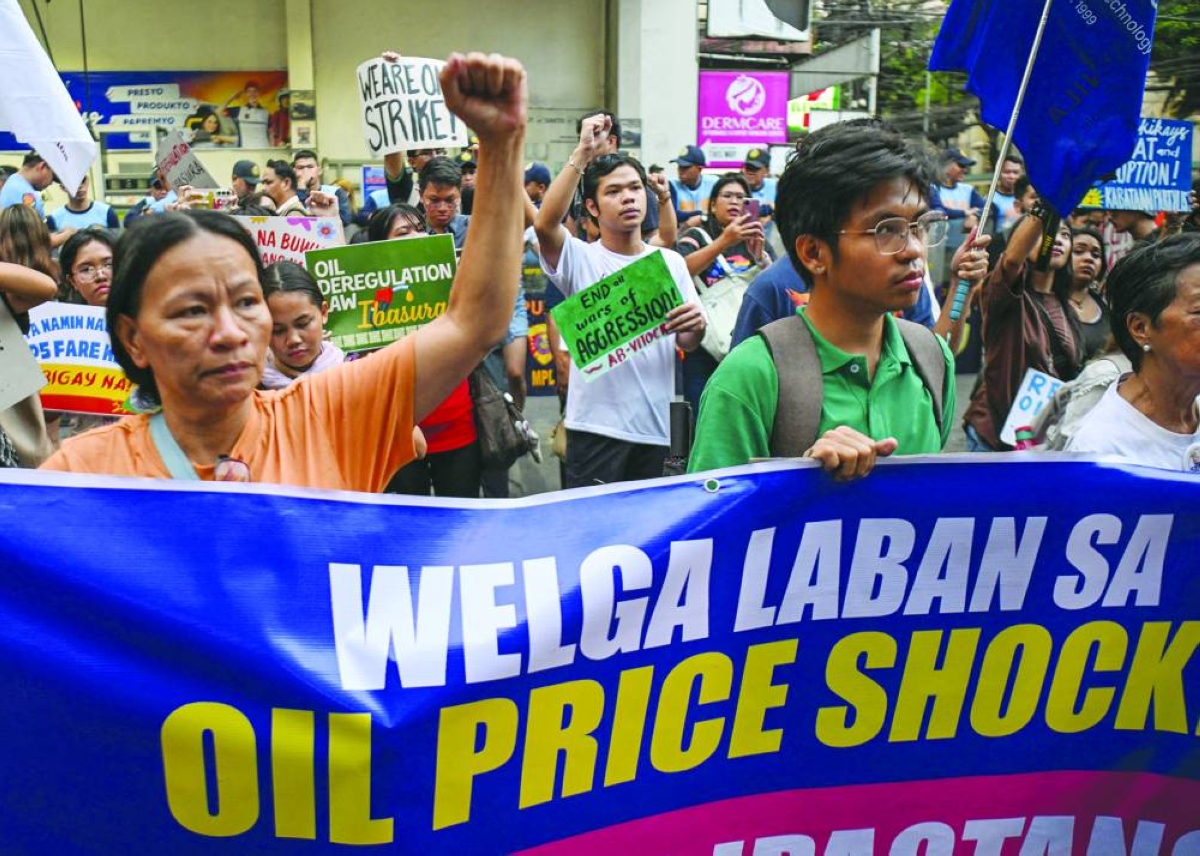
Jeepney drivers and activists display placards during a protest in support of a jeepney drivers' strike in Manila Thursday. (AFP) The ripple effects of the war in the Middle East are hitting home hard for Philippine jeepney driver Toni Prado, ‌whose daily earnings have been gutted by soaring ​fuel prices. He was ‌one of thousands of jeepney drivers who ‌took to ⁠the streets ‌across the country on Thursday ‌to protest a more than doubling of local diesel ⁠prices after global oil prices surged because of the U.S.-Israel war on Iran."We are losing our income. What we earn just goes to paying for diesel," said Prado."Before I could earn at least 1,000 pesos ($16.65) for three trips, now I only take home ​200 pesos," said the father of four. "How can I support my children? How can I send my daughter to school? ‌How do I pay ⁠for electricity, ​water, and food?"The Philippines relies heavily on ​Middle Eastern oil, and the surge in fuel prices is threatening to stoke inflation in the consumption-driven economy. Like many of its Southeast Asian neighbours, Manila has taken steps such as shortening the work week and providing fuel subsidies to counter the impact of rising costs. This week, Congress granted the president emergency powers to suspend or reduce fuel taxes.Mody Floranda, ‌who heads the ‌transport group leading the national ⁠strike, said those measures were not enough, and ⁠called for the repeal ⁠of a law that stripped the government of its authority to control fuel prices.Drivers said the pain of surging diesel prices was compounded by the suspension of a fare hike that could have provided some relief.Jeepneys, which were ​originally created from abandoned U.S. military jeeps after World War Two, are a vital mode of public transport across the Philippines.Reggie Manlapit, who has been a jeepney driver for two decades, said he needs to work longer hours but still gets less pay."Because of what's happening, we work longer hours and we're lucky if we ‌can take home ​200 pesos," he said.  Related Story

Sports
Senegal to appeal CAF Africa Cup of Nations decision

Senegal to appeal CAF Africa Cup of Nations decision

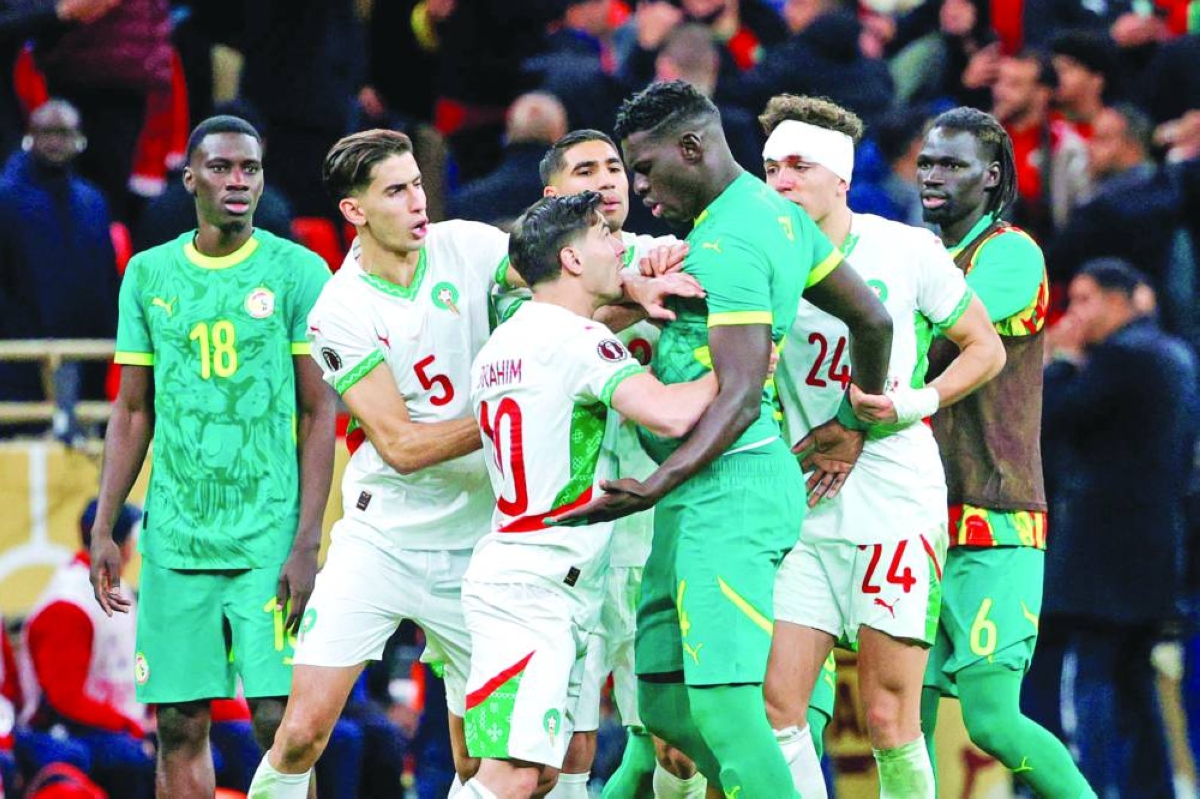
Senegal and Morocco players clash during the Africa Cup of Nations final in Rabat on January 18, 2026. (AFP) The Senegalese Football Federation announced Thursday it has instructed its lawyers to lodge an appeal to the Court of Arbitration for Sport (CAS) after the national team were stripped of its Africa Cup of Nations title.The Confederation of African Football (CAF) reversed Senegal's win Tuesday, awarding the title to Morocco two months after the final. "Senegal will remain standing and will legitimately defend this victory on the field which we acquired on the field with the talent of our players", the federation's president Abdoulaye Fall told a press conference. "We have given our lawyers a mandate to pursue this procedure at the level of the Court of Arbitration for Sport", he added.The contintent's showpiece football final, in Rabat on January 18, descended into chaos when several Senegalese players walked off the pitch in protest after the hosts were awarded a penalty late in second-half stoppage time. Senegal's players were coaxed back onto the pitch by captain Sadio Mane, but Morocco missed the penalty. Pape Gueye went on to score the goal in extra time that gave Senegal a 1-0 victory.CAF said that having studied an appeal by Morocco, "the Senegal national team is declared to have forfeited the match" and the result was "officially recorded as 3-0" in favour of Morocco. Asked what would happen to the trophy in the meantime, Fall told reporters the team would "comply with the statutory and regulatory provisions of CAF".The revocation of the win elicited a strong response from fans in Senegal, where authorities called for an "independent international investigation" into corruption. In a resolution issued by the federation's executive committee and read at the press conference, the federation said it would "use all possible legal, institutional and jurisdictional means to assert its rights and restore sporting fairness".Senegalese President Bassirou Diomaye Faye appeared in his office in front of the Africa Cup of Nations trophy in a social media post Wednesday, expressing his "outrage" at CAF's decision. The Moroccan Football Federation (FRMF), meanwhile has said the decision "upholds the rules and ensures the stability necessary for the smooth running of international competitions."New Morocco coach praises 'well-deserved' Cup of Nations decisionMeanwhile, Morocco's new head coach Mohamed Ouahbi congratulated his country on CAF's "well-deserved" decision to strip Senegal of the 2025 Africa Cup of Nations title in favour of his new side."First of all, I would like to congratulate all Moroccans, the staff, the players and the federation on the good news we got two days ago, which is well-deserved," said Ouahbi during the presentation of his first squad list for Morocco's next two friendly matches against Ecuador and Paraguay.This decision "pleases everyone", added the 49-year-old who replaced Walid Regragui earlier this month, partly because of the former manager's failure to win the Africa Cup of Nations. "But it's important to focus on the present and the future. My goal is to make the team competitive for the World Cup."Morocco, under Regragui, reached the semi-finals of the 2022 World Cup and will line up in Group C at this year's edition alongside Brazil, Scotland and Haiti.  Related Story

Opinion
How does the Iran war affect fertiliser supplies, prices and food security?

How does the Iran war affect fertiliser supplies, prices and food security?

 As the US-Israel war with Iran enters its third week, analysts warn it is severely disrupting fertiliser markets and endangering food security for developing countries in the near term.Here is how the conflict is affecting fertiliser costs, trade flows and output: Fertiliser production is energy-intensive, relying heavily on natural gas as ​a feedstock, with energy making up ‌as much as 70% of production costs.As a result, much of the world’s fertiliser is ‌made in the Middle East, with one-third of ‌global trade in it passing through the Strait of ‌Hormuz, a narrow shipping route along Iran’s coast that has largely been shut since the conflict began.Some 20% of the world’s oil and liquefied natural gas also transits the Strait, and its near closure, combined with missile and drone strikes across the Gulf, have forced regional energy facilities to halt output. That has, in turn, shut fertiliser plants in the Gulf and beyond, just as farmers across the Northern Hemisphere prepare for spring planting, leaving little margin for delays.About half the world’s food is grown using fertiliser, so prolonged supply disruptions would have major implications for food availability, according to Argus analyst Marina Simonova. In ​some countries, fertilisers account for up to 50% of the cost of grain production, and the UN’s food agency has warned that many low income countries were already suffering from food insecurity prior to the war.The most important fertilisers near term ‌are nitrogen-based products like urea because, by and large, if a ​farmer doesn’t apply them for one season, yields will likely be hit. This is less so ​the case with other key products, like those based on phosphate and potassium. The global market for urea was already struggling with tight supplies prior to the current conflict, with Europe forced to cut output due to the loss of cheap Russian gas and China restricting fertiliser exports including urea in order to ensure domestic supplies.QatarEnergy has halted output at the world’s largest urea plant after shutting down gas output following attacks on its LNG facilities. In India, a massive global urea market, three urea plants have cut output as LNG supplies from Qatar have plummeted. India, home to nearly a fifth of the world’s population, buys more than 40% of its urea and phosphatic fertilisers from the Middle ‌East, and recently agreed to buy ‌1.3mn tonnes of urea, some of which might not arrive on time.Bangladesh has shut four of its five fertiliser factories, while Australia’s Wesfarmers has warned of possible shipment delays, including for urea. Brazil is almost 100% reliant on urea imports, nearly half of which transits the Strait of Hormuz. In the US, farmers are reporting empty shop shelves, with the country about 25% short of fertiliser supplies for this time of year.Globally, urea exports are set to fall to about 1.5mn metric tonnes in ​March, compared to 3.5mn without China’s supplies, or 4.5 to 5mn with China, according to Scotiabank.Urea export prices in the Middle East have jumped about 40% to just above $700 per metric tonne last Friday from just under $500 before the war, according to Argus. In the US, fertiliser prices have surged as much as 32% since the conflict began. Analysts say prices for nitrogen-based fertilisers like urea could roughly double if the war drags on.Given the Middle East’s dominant market share, no producer can quickly make up for the lost supply, according to Chris Lawson, analyst at CRU. Russia, the world’s largest fertiliser exporter, is facing supply disruptions ‌due to Ukraine drone ​strikes, while China, despite ample capacity, is restricting exports, he said. —Reuters 

World
Thai PM Anutin wins landmark re-election in parliament vote

Thai PM Anutin wins landmark re-election in parliament vote

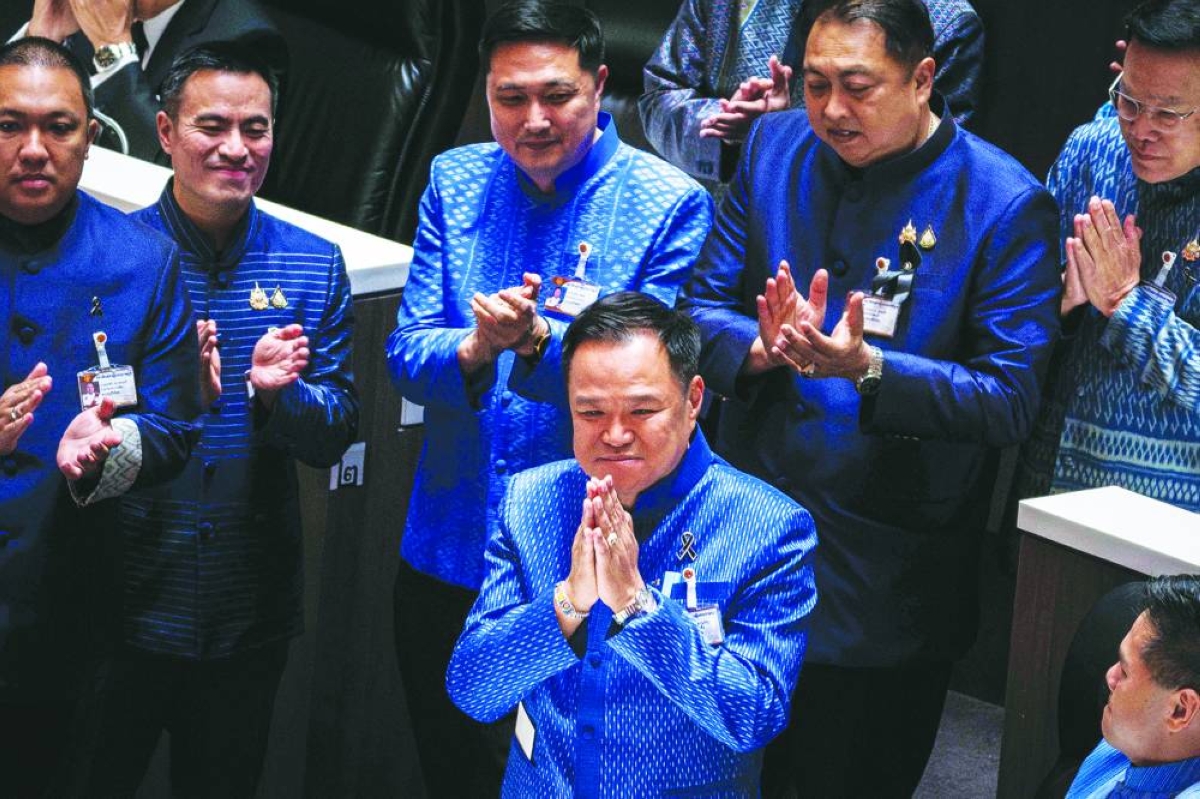
Thailand's caretaker Prime Minister and Bhumjaithai Party leader Anutin Charnvirakul (centre) is applauded by fellow party members after the new parliament elected Anutin as prime minister Thursday. (AFP) Thailand's Anutin Charnvirakul sailed through a parliamentary vote Thursday to become the first re-elected ‌prime minister in two decades, a fresh mandate that could bring rare stability for ‌the turbulent politics of ⁠the southeast Asian nation.The ‌Bhumjaithai Party's Anutin led from the start ‌in rout of his biggest rival, Natthaphong Ruengpanyawut, leader of the progressive People's Party and the surprise ⁠runner-up last month in an election it had been widely expected to win.Anutin won the backing of 293 of parliament's 499 members Thursday, more than twice the 119 votes Natthaphong secured.He offered no immediate comment on his victory, but headed into a meeting on energy security."Thailand has no issues and is able to still buy oil," Anutin said after the meeting. "We will ensure public confidence."Earlier, dressed in Thai traditional attire in his party's hue of blue, a beaming Anutin ​had greeted a succession of allies in parliament, shaking hands and posing for photographs.In a stunning turnaround for a party that had struggled to make its mark in Thai politics, Bhumjaithai decisively won last month's election, riding ‌on a wave of nationalism unleashed ⁠by military clashes with ​neighbouring Cambodia last year.Much of Anutin's success comes from his opportunism in seizing on ​the decline of the once dominant Pheu Thai party, first by abandoning its coalition government and then manoeuvring swiftly to form his own after a court sacked a second prime minister in the space of just over a year.Bhumjaithai's coalition pact with the politically bruised Pheu Thai and a crew of small parties stood firm in Thursday's vote, as Anutin comfortably reached the necessary threshold of 51%.Earlier, Anutin, 59, had pledged to immediately start forming a cabinet and resolving Thailand's problems."Your voices are equally heard," he told lawmakers from outside his alliance. "I'm ready to accept suggestions ... We all have the same goals — the wellbeing of the people."Staunch royalist Anutin weathered two ‌decades of upheaval in tumultuous Thai politics ‌by strategically positioning his party between elites ⁠warring in an intractable power struggle to ensure its role in successive coalition governments.He now ⁠has his first clear mandate to ⁠lead a country with a long-stuttering economy shackled by massive household debt and facing headwinds from trade uncertainty and the fallout of the US-Israeli war on Iran.A political veteran and son of a former cabinet minister who once ran his family's construction firm, Anutin is a former deputy premier, interior minister and health minister who served as Thailand's Covid-19 tsar.Although seen as a conservative, Anutin gained notoriety for leading a successful campaign ​to legalise cannabis, which led to an unregulated surge of thousands of marijuana retailers.His survival instincts and ability to straddle political divides could prove his biggest asset, some analysts say, as Bhumjaithai escaped the wrath of Thailand's powerful military and judiciary, the engineers of the downfall of multiple governments and parties.Prospects for medium-term stability were good, with Bhumjaithai holding sway in both houses of parliament and Thailand's axes of institutional power appearing to be behind Anutin, said political scientist Napon Jatusripitak."It's the first time in a long while that the referee and the players are on the same side," added Napon, of ‌the ISEAS-Yusof Ishak Institute in ​Singapore."There's control," he said. "And we have a highly fragmented opposition."  Related Story

Sports
Record-setter Hodgkinson hopes ‘fourth time lucky’ at world indoors

Record-setter Hodgkinson hopes ‘fourth time lucky’ at world indoors

Great Britain's Keely Hodgkinson reacts after competing in the women's 800m heats during the World Athletics Championships in Tokyo Thursday. (AFP) Olympic champion Keely Hodgkinson will take to the track in Torun, Poland, this weekend aiming to nab an elusive world indoor 800m title off the back of a new world record. Untimely injuries have prevented the 24-year-old from taking part in the past three editions of the world indoors.But the Briton, who earned Tokyo Olympic silver and Paris Olympic gold and who has two world outdoor silver medals and a bronze, now appears to be in perfect shape. Hodgkinson smashed the indoor 800m world record by almost a second last month and said Thursday she would have been "quite happy" had the outdoor season already kicked off. That would raise the mouth-watering possibility of her going after the oldest world record in athletics - the 1min 53.28sec for the outdoor 800m set by Jarmila Kratochvilova of the then-Czechoslovakia in 1983. There was no such talk of that in Torun, but Hodgkinson seemed in confident mood."I did think it was very much possible," she said of her indoor world record. "When I started my preparations for this indoor season, I didn't really actually set any goals or anything. I just wanted to enjoy the process of getting fit and seeing how far we could go in training. And the closer we got to the day, I was like, 'Yeah, this is on, I can do this'."'Chill time'Months on the sidelines in rehab for knee and hamstring injuries had allowed Hodgkinson to learn a lot about herself, she said."I had time off the track to just enjoy my life and just have some chill time, and I think it's made me a better athlete."It made competing for me that much more fun and exciting. So yeah, frustrating at the time, but I wouldn't change anything."Turning to the world indoor title, Hodgkinson said: "It's the one medal I don't have. So that would be really great to box that one off."Until I've crossed the finish line, I'm not going to jinx anything. But yeah, I'm excited to be here, excited to compete."Fast times are obviously really great, but championships are just completely different, and having three rounds in three days is another thing. That's really tough. I've done it before, but I'd quite like to have a day off!"Competition looks great, and we'll see what happens."Hodgkinson added that she was "very happy with where I am"."I'm looking forward to it, and this last month, it's been great. I couldn't ask to be in a better position, to be honest." 

Sports
Pogacar targets elusive Milan-San Remo as Van der Poel defends crown

Pogacar targets elusive Milan-San Remo as Van der Poel defends crown

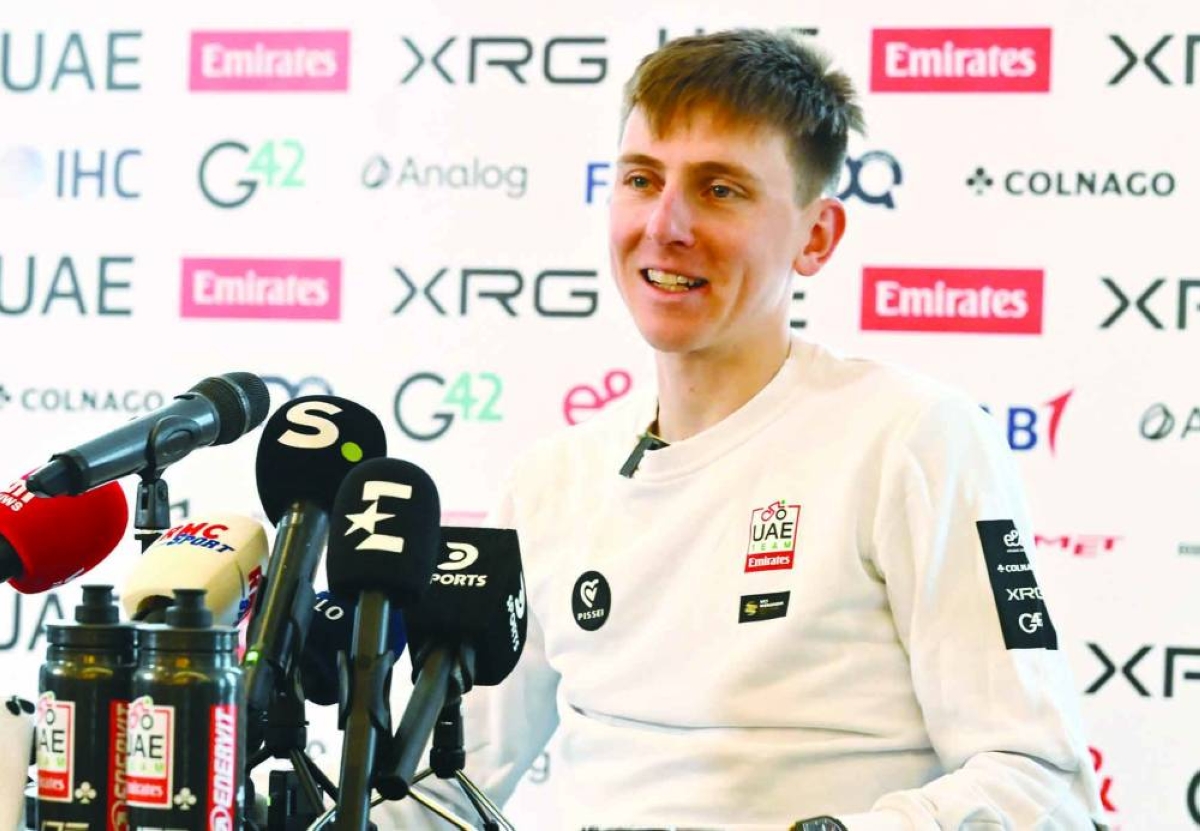
UAE Team Emirate - XRG team's Slovenian rider Tadej Pogacar gives a press conference after a training in Benidorm, eastern Spain, on December 13, 2025. (AFP) Tadej Pogacar and Mathieu van der Poel are set to face off for the first time this season Saturday as cycling's pre-eminent one-day riders vie for glory at the 298km long Milan-San Remo.The first "Monument" race of the year homes into view with both world champion Pogacar and last year's winner Van der Poel already showing hot form in Italy.Pogacar claimed his fourth victory, and third in as many years, at Strade Bianche earlier this month, while Van der Poel won two stages in the Tirreno-Adriatico last week.The 27-year-old sat out both Paris-Nice and Tirreno-Adriatico in preparation for Milan-San Remo, a rare race in which he can't just blow away the competition with long-range attacks.Milan-San Remo and Paris-Roubaix are the two Monuments still missing from Pogacar's stellar list of career achievements which includes winning the Tour De France and the world championship the last two years."It's no secret that Milan-San Remo is a race I would love to win," said Pogacar after his UAE team named the seven-man line up for Saturday."I think it suits me well but also suits a lot of the other top guys. I see that as a good challenge."And Pogacar is in the mood, recently clocking a time on Strava of eight minutes and 51 seconds up the Cipressa climb, six seconds faster than his own official record for the key ascent.The Cipressa is the penultimate climb 22 kilometres from the finish, which will come after hours of largely flat riding from Pavia and just before the final push up Poggio di San Remo.'Matter of time'Pogacar is almost certain to attack on the Cipressa as he did last year when he tried to shake off Van der Poel and home hope Filippo Ganna, only to finish third behind both in the final charge for the line on Via Roma."You need to be there for the Cipressa. Not at 100 percent but at 110 percent. It's all about positioning. Then you need to do it all again for a second time on the Poggio and be even better," Pogacar said."The climbs are super fast. We go up the climbs at like 40kph... One important thing for Milan-San Remo is that it's not just about going uphill on the Poggio, there's the descent too. After it there's not far to go to the finish line."It's a really particular race. In a way it's a really beautiful race, very interesting to race."Van der Poel is probably the man to beat."I feel good and have had good preparation. I am satisfied with my legs and the feeling this week; that is all I needed," Van der Poel told Sporza on Saturday.The Flying Dutchman, an eight-time Monument winner and cross-discipline world champion, is convinced that Pogacar will eventually crack the race which hasn't been decided by a bunch sprint since Arnaud Demare's victory in 2016."Last year he was already very close. If I'm one percent off, Tadej will be gone on the Cipressa," added Van der Poel."It's only a matter of time before he wins it."  Related Story