admin
admin 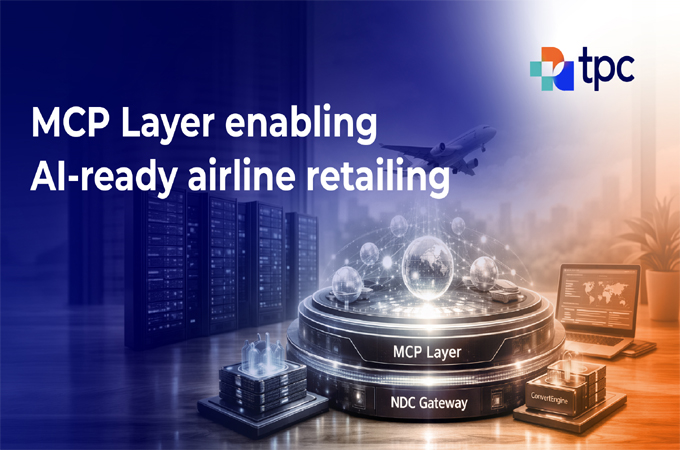
TPConnects Technologies has introduced a Model Context Protocol integration within its Astra NDC platform, positioning the Dubai-based firm at the forefront of efforts to standardise how artificial intelligence systems interact with airline retailing infrastructure. The move signals a shift in how carriers and travel sellers deploy AI-driven tools, with the company describing the MCP layer as a step towards more interoperable and context-aware digital commerce in aviation.
The integration enables AI agents to communicate with airline retail systems through a unified protocol, allowing them to access contextual data such as pricing, availability, ancillaries and traveller preferences in real time. Industry executives say the approach could streamline how airlines distribute offers across channels while reducing friction in the booking process, particularly as generative AI becomes embedded in travel search and customer service interfaces.
TPConnects’ Astra NDC platform is already used by airlines and travel sellers to manage New Distribution Capability content, a standard developed by the International Air Transport Association to modernise airline distribution. By embedding MCP, the company aims to bridge the gap between structured airline data and increasingly autonomous AI tools, which require consistent frameworks to interpret and act on information.
Executives at TPConnects indicated that the MCP layer is designed to support use cases ranging from conversational booking assistants to automated corporate travel management systems. AI agents built on the protocol can interpret traveller intent, compare fare bundles and dynamically assemble offers, potentially improving conversion rates and customer satisfaction. The system also supports bidirectional communication, allowing AI tools not only to retrieve data but also to execute transactions within airline systems.
The development comes as airlines and travel technology providers accelerate investment in AI capabilities. Major carriers have been experimenting with generative AI for customer engagement, while global distribution systems and online travel agencies are expanding their own AI-driven platforms. However, a lack of standardisation has emerged as a constraint, with different systems using incompatible data formats and integration methods.
Analysts say MCP could address this fragmentation by providing a common language for AI interactions. The protocol is designed to encapsulate context, meaning AI systems can maintain awareness of user preferences, previous interactions and transaction history across sessions. This is particularly relevant in travel, where booking decisions often involve multiple steps and stakeholders, including airlines, agents and ancillary service providers.
TPConnects’ announcement also reflects a broader industry push towards retailing transformation. Airlines are increasingly shifting from static fare distribution to dynamic offer creation, bundling services such as baggage, seat selection and onboard amenities into personalised packages. AI is seen as a critical enabler of this transition, allowing carriers to tailor offers in real time based on customer data and behavioural insights.
The MCP layer could enhance this capability by enabling AI agents to operate more autonomously within airline systems. For example, a corporate travel assistant could negotiate fare options based on company policy, while a consumer-facing chatbot could recommend itineraries aligned with a traveller’s past preferences. Such applications rely on seamless data exchange and contextual understanding, areas where traditional APIs have shown limitations.
Despite the potential benefits, the adoption of MCP and similar protocols may face challenges. Integration with legacy systems remains a significant hurdle for many airlines, particularly those operating older reservation platforms. Data governance and security are also key concerns, as AI systems handling sensitive traveller information must comply with regulatory requirements across multiple jurisdictions.
Industry observers note that standardisation efforts often require collaboration among competing stakeholders, including airlines, technology providers and industry bodies. While TPConnects has positioned MCP as an open and extensible framework, widespread adoption will depend on whether other players align with the protocol or develop alternative approaches.
The timing of the launch coincides with growing scrutiny of AI deployment in commercial sectors. Regulators in Europe, North America and parts of Asia are examining how AI systems handle data, make decisions and interact with consumers. In the travel sector, where transactions involve personal and financial information, ensuring transparency and accountability in AI-driven processes is likely to remain a priority.
TPConnects has emphasised that its MCP integration is built with security and compliance considerations in mind, incorporating safeguards for data access and transaction execution. The company also highlighted the potential for the protocol to support auditing and monitoring of AI actions, which could help address regulatory concerns.