admin
admin 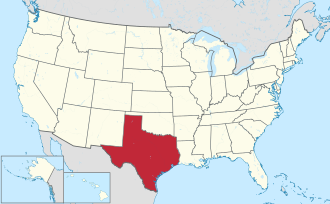
Elon Musk has unveiled a plan to integrate Tesla, SpaceX and xAI into a new semiconductor initiative in Texas, marking a deeper push into controlling the hardware underpinning artificial intelligence systems. The project, described internally as “Terafab”, aims to develop advanced chips tailored for AI training, robotics and space applications.
The initiative reflects a broader shift among technology companies seeking to reduce dependence on external suppliers such as Nvidia and Taiwan Semiconductor Manufacturing Company, whose dominance in AI chips has tightened supply and raised costs. Musk’s plan centres on creating vertically integrated capabilities, linking chip design, fabrication and deployment across his businesses.
People familiar with the matter indicate that the Texas facility is expected to support Tesla’s autonomous driving ambitions, SpaceX’s satellite and communications systems, and xAI’s growing compute requirements for large-scale models. By aligning these needs, Musk is attempting to pool demand across companies that have traditionally operated independently, creating economies of scale in an increasingly competitive AI infrastructure market.
Tesla has already expanded its in-house chip design capabilities, notably through its Full Self-Driving processors, while xAI has been investing heavily in compute clusters to train its models. SpaceX, through its Starlink network, relies on high-performance hardware to manage global data traffic and satellite operations. The Terafab project seeks to unify these parallel efforts under a single manufacturing and design framework.
Analysts say the move mirrors strategies adopted by major technology groups such as Apple and Google, both of which have increasingly designed custom silicon to optimise performance and reduce reliance on third-party chipmakers. However, Musk’s approach differs in its attempt to combine automotive, aerospace and AI workloads into one integrated chip ecosystem.
Texas has emerged as a focal point for semiconductor investment, supported by incentives and proximity to existing Tesla and SpaceX operations. The state has also benefited from policy support tied to efforts to strengthen domestic chip manufacturing capacity, particularly as geopolitical tensions highlight vulnerabilities in global supply chains.
The Terafab concept comes at a time when demand for AI chips has surged, driven by rapid advances in generative models and machine learning applications. Companies across sectors are competing for limited supplies of high-performance graphics processing units, leading to bottlenecks that have slowed deployment of AI services. By building its own fabrication capabilities, Musk aims to bypass these constraints and secure long-term access to critical hardware.
Industry observers caution that entering semiconductor manufacturing presents significant challenges. Building and operating advanced fabrication facilities requires billions of dollars in investment, as well as access to specialised equipment dominated by a small number of suppliers. Even established players face difficulties scaling production and maintaining yields, raising questions about the timeline and feasibility of Musk’s plans.
There are also strategic risks tied to integrating three distinct businesses with different operational priorities. Tesla’s focus on consumer vehicles, SpaceX’s government and commercial contracts, and xAI’s research-driven model development may create competing demands on resources. Ensuring that chip designs meet the diverse requirements of each unit could complicate development cycles.
Supporters of the initiative argue that Musk’s track record of pursuing ambitious engineering projects lends credibility to the effort. His companies have previously achieved breakthroughs in electric vehicles, reusable rockets and satellite internet, often by challenging established industry norms. The Terafab project, they suggest, could extend that approach into semiconductor manufacturing.
The move also reflects intensifying competition in AI, where control over computing infrastructure is becoming a key differentiator. Companies with proprietary chips can tailor performance to their specific workloads, improve energy efficiency and reduce operating costs. For xAI, which is positioning itself against rivals developing large language models, access to dedicated hardware could prove critical.