admin
admin 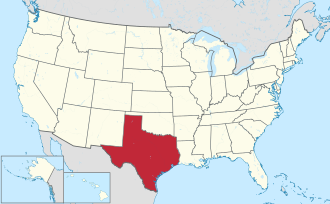
Duos Edge AI has expanded its footprint in Texas with the launch of a second edge data centre in Amarillo, signalling a push to localise artificial intelligence infrastructure and reduce latency for enterprise users in underserved regions.
The new facility, announced this week, is designed to support high-performance computing workloads that require rapid data processing at the network’s edge, including real-time analytics, computer vision and industrial automation. By situating infrastructure closer to end users, the company aims to address persistent bottlenecks associated with centralised cloud computing, where data must travel long distances to core data centres.
Executives at Duos Edge AI said the Amarillo deployment reflects growing demand from industries that cannot tolerate delays in data transmission. Sectors such as energy, logistics, healthcare and public safety increasingly rely on AI models that process data instantaneously, particularly in geographically dispersed locations where connectivity to major cloud hubs is limited or inconsistent.
The Texas expansion forms part of a broader industry shift towards decentralised computing. Edge data centres, typically smaller and distributed across regional markets, are emerging as a complement to hyperscale facilities operated by major cloud providers. Analysts note that while hyperscalers continue to dominate large-scale AI training, edge infrastructure is becoming critical for inference tasks, where speed and proximity are essential.
Amarillo’s location offers strategic advantages. Positioned within a region known for energy production and transport corridors, the site provides access to industrial clients seeking to deploy AI-driven monitoring systems and predictive maintenance tools. It also benefits from relatively lower land and energy costs compared with established data centre hubs, factors that have drawn increasing investment into secondary markets across the United States.
Duos Edge AI has focused its strategy on these smaller cities, arguing that they represent an untapped segment of the digital economy. While metropolitan areas such as Dallas, Northern Virginia and Silicon Valley have long dominated data centre investment, companies are now looking beyond these saturated markets to meet rising demand for compute capacity.
Industry observers point to a confluence of factors driving this trend. The rapid adoption of generative AI and machine learning applications has led to an exponential increase in data processing requirements. At the same time, enterprises are under pressure to improve response times and maintain operational resilience, particularly in mission-critical environments. Edge computing addresses both challenges by enabling localised data processing and reducing dependence on centralised infrastructure.
The Amarillo facility is expected to support modular expansion, allowing capacity to scale in line with demand. This approach reflects a broader move within the data centre sector towards flexible, prefabricated designs that can be deployed quickly and adjusted as requirements evolve. Such models are seen as essential in a market characterised by fast-changing technology cycles and unpredictable workload patterns.
Competition in the edge computing space is intensifying. Telecommunications providers, cloud operators and specialised infrastructure firms are all vying to establish networks of distributed data centres. Partnerships between these players have become increasingly common, with telecom networks offering connectivity and infrastructure providers supplying compute resources.
Duos Edge AI’s expansion also highlights the role of regional connectivity in shaping the future of AI deployment. As applications such as autonomous systems, smart grids and advanced surveillance become more widespread, the need for low-latency processing is expected to grow. This has prompted investment not only in data centres but also in fibre networks and 5G infrastructure to support seamless data transmission.
Economic development agencies in smaller cities have welcomed such investments, viewing them as a catalyst for local growth. Data centres can generate jobs during construction and operation, while also attracting technology-driven businesses to the region. However, concerns remain over energy consumption and environmental impact, particularly as AI workloads become more resource-intensive.
Duos Edge AI has indicated that energy efficiency and sustainability are key considerations in its deployments. The company is exploring ways to optimise power usage and integrate renewable energy sources where feasible, aligning with broader industry efforts to address the environmental footprint of data centres.