admin
admin 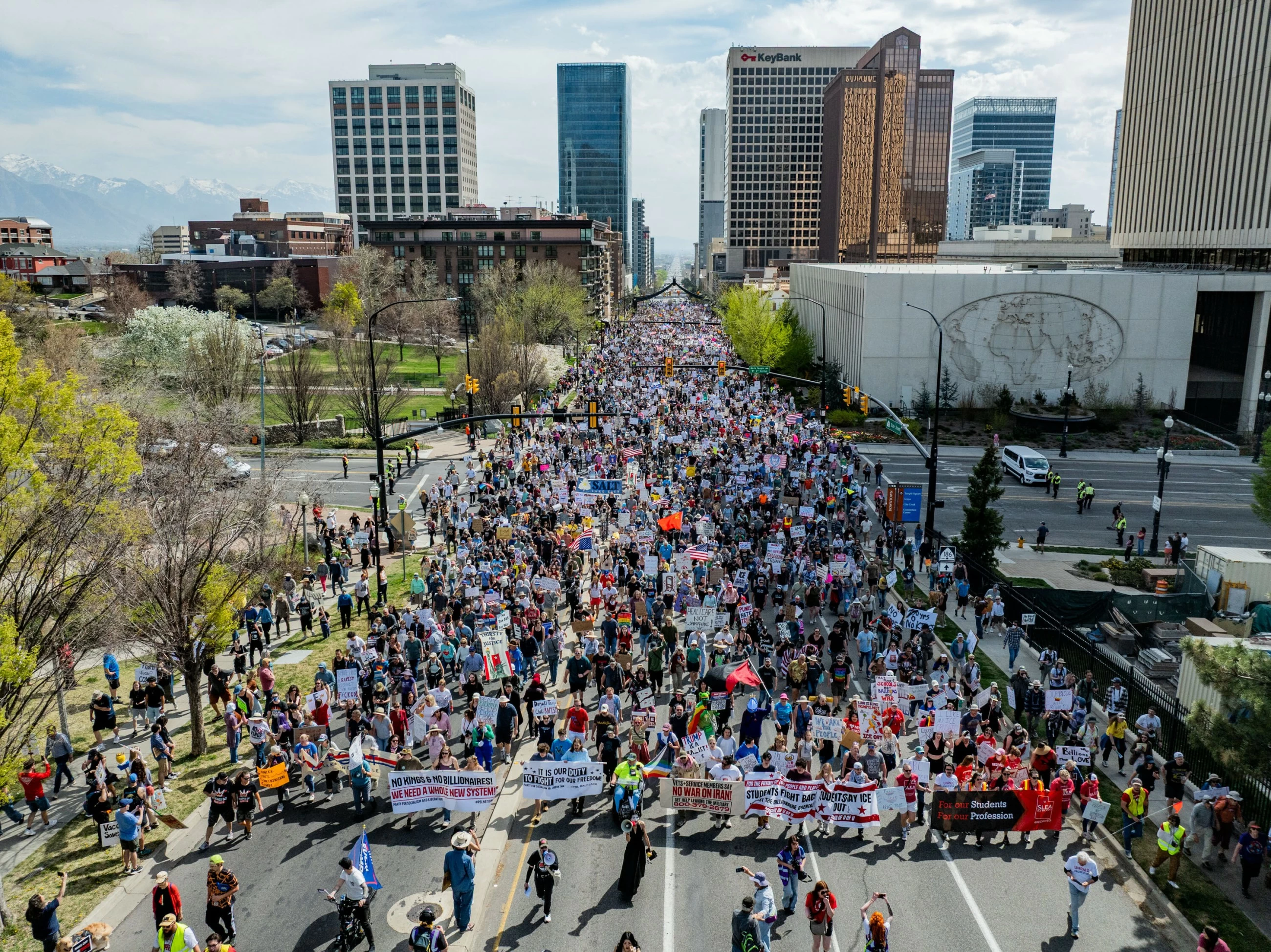
WASHINGTON: Although he proclaimed himself to be a peace president, Donald Trump failed to win the Nobel Peace Prize and became a war president by teaming up with Israel’s Binyamin Netanyahu to wage a war on Iran. They claimed this war would be won in three-to-four days, but four weeks have passed and there is no sign that the US won and Iran is not ready to surrender. Trump announced a 10-day pause in attacks on Iran’s energy facilities followed warnings from Gulf states that the war was growing increasingly dangerous. Concerns were expressed that that Trump had under-estimated Tehran’s readiness to continue the war. Since it is estimated that Iran retains two-thirds of its missiles Iran has retaliated against US-Israeli attacks and the war has morphed into a regional conflict before going global. The war became global because Iran closed the strategic Strait of Hormuz connecting the Persian Gulf to the world via the Gulf of Oman by threatening vessels delivering oil, liquified gas, and petroleum derivatives to customers in India, Pakistan, Bangladesh, Italy and other countries. After a Thai ship was struck and ran aground, 2,000 ships waiting near Hormuz did not try to leave or enter the strait until permission was obtained from the Iranian authorities. Only ships without links to the US, its allies, and Israel are allowed and some are asked to pay $2 million for right of passage. Fewer than 100 have sailed through Hormuz since February 28th when the US and Israel began their war on Iran. Traffic has fallen by 95 per cent.
A frustrated Trump initially threatened to bomb Iran’s energy infrastructure by Monday March 23rd if Hormuz did not open to all traffic but postponed military action until April 6th if Iran does not ceasefire and accept the May 2025 15-point peace plan which has been outdated for many months. Iran has rejected the plan.
This is the first time Hormuz has been closed in its millennial history of serving as a sea passage and there is serious risk that Iran’s ally Yemen could block Bab al-Mandeb (“the Gate of Tears”). It is a narrow passage between Yemen on the Arabian Peninsula and Djibouti and Eritrea in the Horn of Africa connecting the Red Sea to the Gulf of Aden and the Indian Ocean. If both straits were blocked, shipping through two of the world’s three crucial maritime chokepoints would be disrupted at the same time. It is unlikely that the third, the Suez Canal, which was blocked for six days in 2021, will close. However, if Yemen were to block the entry of most ships into the Red Sea, the Suez Canal would have little business, rendering the third chokepoint inoperative.
It is misleading to refer to Hormuz as an energy passage although oil and liquified gas account for 60 per cent of its normal traffic. The remaining 40 per cent includes chemicals for fertilizers, manufactured and construction items and semiconductors. Consequently, food and goods production as well at high-tech industries could be seriously impacted.
So far, the war has cost the US about $30-40bn and Israel $300m a day. Stymied by Iran’s refusal to accept the outdated US plan, Trump has upped pressure by ordering the deployment of an additional 10,000 US troops to augment the 50,000 already in pace in the region and ventured to suggest they could be used for a combined ground and air campaign. The initial target of choice would be Kharg island which hosts infrastructure and staff for the export of 90 per cent of Iran’s oil. As Iran has recently fortified Kharg and increased its military presence there, resistance is to be expected to a US seaborne assault complemented by troops parachuted onto Kharg. In the run-up to November’s mid-term legislative elections, Trump cannot afford to have US soldiers returning home wounded, crippled or in body bags from a “war of choice” most US voters criticize and reject.
At home, Trump faces unprecedented domestic and global protests. On Saturday, there was a third round of mass rallies in all 50 states and 16 countries against his authoritarian rule and unilateral policies. Among the high-profile US figures who support the protests are actress Jane Fonda, folk songstress Joan Baez, musician Brice Springsteen, and independent Senator Bernie Sanders. The latest simultaneous demonstrations, mounted by an estimated nine million, are said to be the largest in US history and have been motivated by opposition to the rising cost of petrol, Trump’s war on Iran which fuelled this spike, and his mass deportations of “illegal aliens” which have impacted lives in entire communities across the US. These protests coincided with polls showing that Trump’s approval rating has fallen to 36 per cent, the lowest ever. All too clearly his fall from grace has not impressed Trump who has an egotistic penchant for ignoring bad news, claiming ownership of sites in the news, and briefly dubbed the Strait of Hormuz the “Strait of Trump” before dropping the characterization.