admin
admin 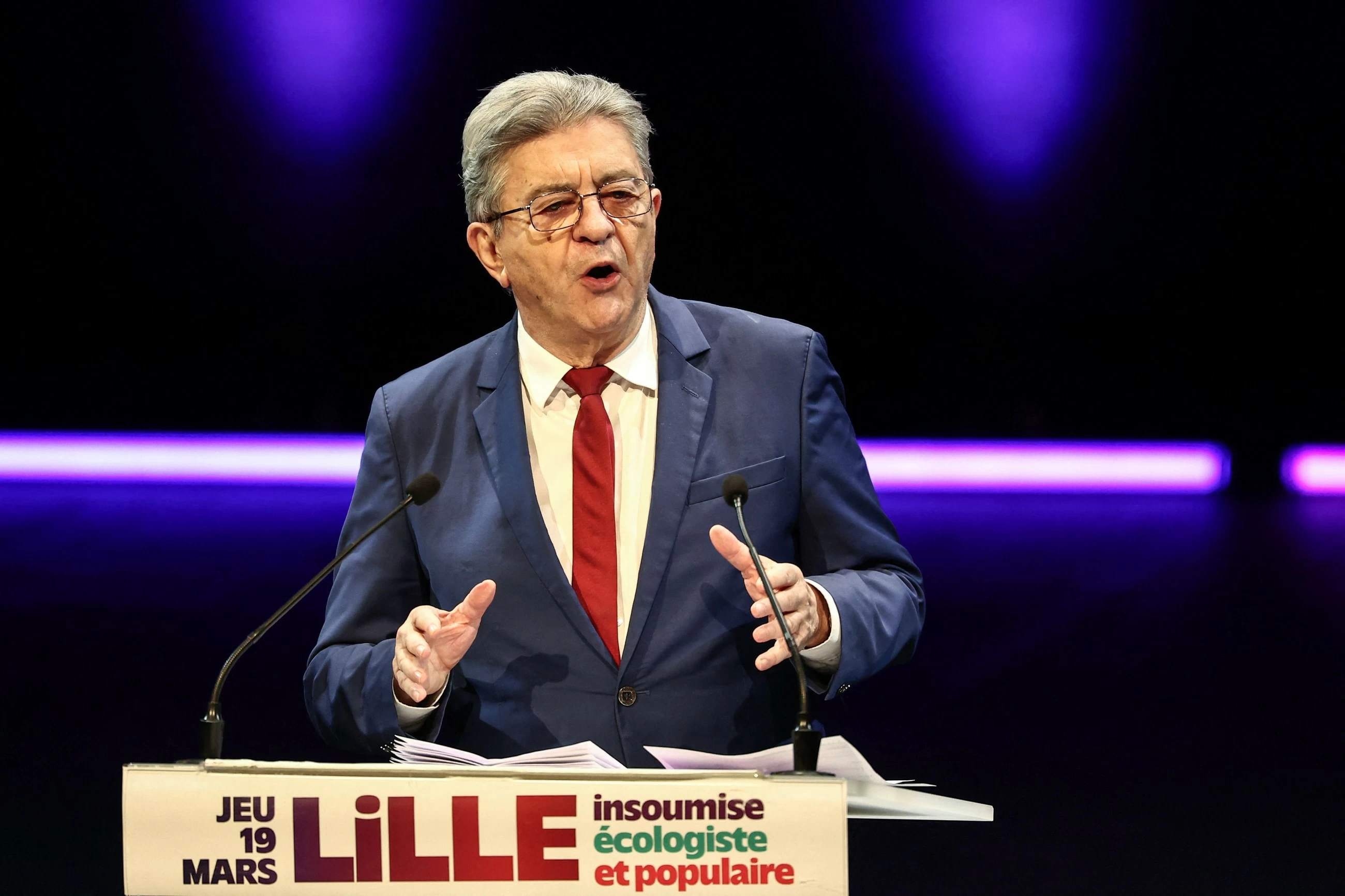
Anna Smolchenko, Agence France-Presse
France’s local elections show the appeal of political extremes is growing in France, but Marine Le Pen’s far-right party is not necessarily poised to win the presidency next year when Emmanuel Macron must step down, analysts said on Monday. Leftists held onto France’s biggest cities in Sunday’s polls, including Paris and Marseille, boosting hopes that the next leader of the European Union’s second biggest economy, and sole nuclear power, will come from a mainstream party. The right notched wins in several other big cities, while the far right and hard left established a stronger local footprint.
But limited gains of the far-right National Rally party and divisions on the left suggest the 2027 race is open, despite opinion polls favouring Le Pen and her allies, experts said.
“French town hall elections yielded no big breakthrough for the far right and no clear trend nationwide,” Mujtaba Rahman, Europe director at risk analysis firm Eurasia Group, said. He said the election results suggested that next year’s presidential election was “more open” than pollsters have suggested. The RN secured wins in small and mid-sized towns, but failed to take any major urban centre. “It’s a catastrophe (for them) in large cities,” said Nonna Mayer, a political scientist at Sciences Po university and research centre CNRS. RN party leader Bardella, 30, failed to secure support from the traditional right in run-off votes.
After a far-right ally won Nice, he claimed France’s fifth largest city as a win for his own party. “There is a real glass ceiling in large cities,” added Blanche Leridon, director of French studies at the Paris-based Institut Montaigne. The hard-left France Unbowed (LFI) of firebrand Jean-Luc Melenchon also scored some wins, taking the economically depressed town of Roubaix on the Belgian border and the working-class Paris suburb of Saint Denis.
The mainstream left has sought to distance themselves from LFI, over claims of antisemitism and the fatal beating of a far-right activist last month blamed on the hard left. While a number of left-wing candidates allied with the hard left to strengthen their chances in the runoffs, the tactic did not pay off. In Toulouse, Europe’s aerospace hub and France’s fourth-largest city, it resulted instead in a win for the right. Analysts said that the question of strategy for both the left and right remained unresolved in the run-up to the 2027 presidential polls.
“The right is divided on what needs to be done,” said Mayer.
On the left, said Leridon, the rift between those who champion a broad united front and those who advocate for a left without France Unbowed was only going to widen.
“While the Socialist Party can afford to bypass LFI at the municipal level, it will be a completely different story on a national scale,” she said. Analysts say Melenchon, 74, hopes to capitalise on his party’s performance to launch a strong new run for the presidency.
Eric Maurice, an analyst at the Brussels-based European Policy Centre, said the left needs to craft a viable strategy for next year’s vote that includes LFI voters.
The challenge, he said, is finding an arrangement that attracts LFI supporters without letting the hard left dominate such an alliance.
“That’s the main dilemma for the left, because Melenchon won’t back down,” he told AFP. “The left cannot go divided into the first round if they want to be in the second round next year,” he added.
“But who can be the candidate? If it’s Melenchon, they will probably lose,” he said, adding too many people find him unpalatable.
Former centrist prime minister Edouard Philippe, 55, kept his seat as mayor of the northern city of Le Havre, boosting his presidential run.
“On the right, Philippe could emerge as the potential single candidate,” said Maurice, adding Macron’s former prime minister could reach a second-round run-off and ultimately win.