admin
admin 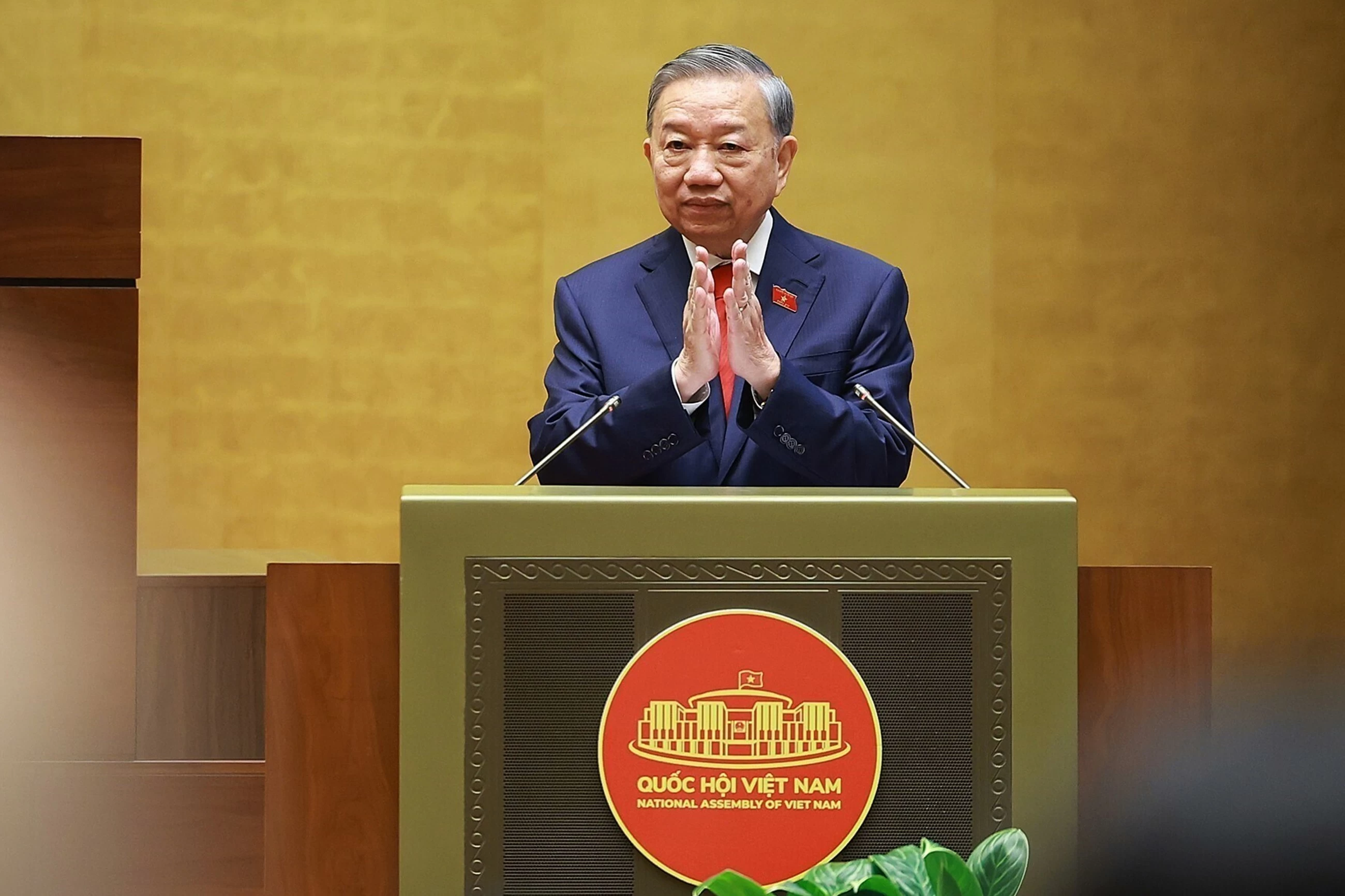
Francesco Guarascio, Reuters
Vietnam is increasingly edging closer to China’s model of governance, tightening state control while embracing Chinese technology and regulation as its most powerful leader in decades heads to Beijing this week, according to internal documents, public policy plans and sources. The two Communist neighbours have swung between conflict and cooperation over centuries. Now, Vietnam is leaning more openly toward Beijing, as China-friendly security figures rise in Hanoi under party chief To Lam, a former public security boss. Lam will meet China’s leader Xi Jinping on Wednesday on his first overseas trip since becoming state president on April 7, a move that formally unites two of Vietnam’s most powerful roles, echoing Xi’s own concentration of authority and breaking from Vietnam’s traditional emphasis on collective leadership.
“Vietnam-China relations have entered a new stage, marked by higher political trust, more substantive defence and security cooperation, deeper and more practical cooperation across sectors,” Lam said in a joint statement with Xi after they last met in April 2025. This week’s visit is expected to yield dozens of cooperation agreements, people briefed on the plans said. While such documents are often non-binding, the relationship is becoming more tangible: China’s exports to Vietnam are at record highs, and Chinese investment in manufacturing south of the border is booming.
The people spoke on condition of anonymity due to the sensitive nature of the topic. Vietnam is still hedging geopolitically, analysts say, keeping doors open to Washington and others. But at home, it is moving closer to China’s governance model — particularly control-driven regulation despite Western misgivings, underscoring how China’s influence is deepening as Lam reshapes the state.
Vietnam has “a dual approach of actively learning from the Chinese model while selectively resisting its influence,” said Nguyen Khac Giang, a visiting fellow at Singapore’s ISEAS Yusof Ishak Institute. Alexander Vuving of the Asia-Pacific Center for Security Studies in the US, said that closer ties with China without adequate guardrails “will have a negative impact not only on Vietnam’s security, prosperity, and autonomy, but also on its relations with the US and the West.” Vietnam’s foreign ministry did not immediately respond to a request for comment.
Technology has emerged as one of the clearest markers of warming ties.
Vietnam has dropped earlier concerns about the use of Chinese equipment in its 5G network, while the country’s largest internet provider FPT announced investments in an undersea cable to be built by a Chinese vendor that the US considers linked to sanctioned telecom giant Huawei. A telecom company under Vietnam’s public security ministry is in talks with Chinese companies for additional 5G deals. Chinese firms are simultaneously exploring investments in Vietnamese data centres, a strategic asset, according to people familiar with the discussions.
“Chinese interest in Vietnam’s data-centre market has increased noticeably over the past 18-24 months,” said Mickael Driol, head of investment advisory firm Mekong Partners. He said much of that is driven by manufacturers who moved operations to Vietnam from China. Hanoi is prioritising state control in data regulation, similar to China. Western tech companies and the US government have repeatedly raised concerns over data protection rules drafted by Vietnam’s security ministry that limit cross-border data transfers.
Draft documents seen by Reuters show Vietnam plans to establish state-run data-trading exchanges overseen by the public security ministry – mirroring China’s centralised data model and expanding the state’s ability to deploy information for surveillance and strategic goals. In Western markets, such platforms are typically privately run.
Vietnam is also expanding a national electronic identification system, enabling authorities to identify individuals through AI camera networks that are being rolled out nationwide – another parallel with China’s surveillance architecture.
“The police’s rising power (in Vietnam) may partly explain a growing interest in Chinese-style social control tactics,” said Giang.
Unencumbered by public opinion that has grown less critical of China, the Vietnamese Communist Party is also advancing a more China-style economic model centred on subsidies, public investment and large infrastructure projects, sometimes in direct cooperation with Beijing on sensitive projects including high-speed rail links.
The shift has been reinforced by TikTok’s popularity in Vietnam, where positive narratives about China often dominate, and by Hanoi’s increasingly muted criticism of Beijing’s actions in the disputed South China Sea.
Vietnam remains more open than China to foreign investors and still depends heavily on external capital. But China’s share of total investments is rising, and Chinese brands are gaining popularity at home.
China’s influence is also visible in finance. Vietnam relies on unconventional monetary policy tools such as lending mandates to banks reminiscent of China’s policy, maintains tight foreign ownership caps in key sectors, and is grappling with a property bubble that echoes China’s experience.
Now Hanoi is considering deeper intervention in equity markets. Proposed measures include a government-backed stabilisation fund to buy stocks during downturns – an idea explicitly modelled on China. “China created one and succeeded in reassuring investors,” said an internal security ministry document reviewed by Reuters.