admin
admin 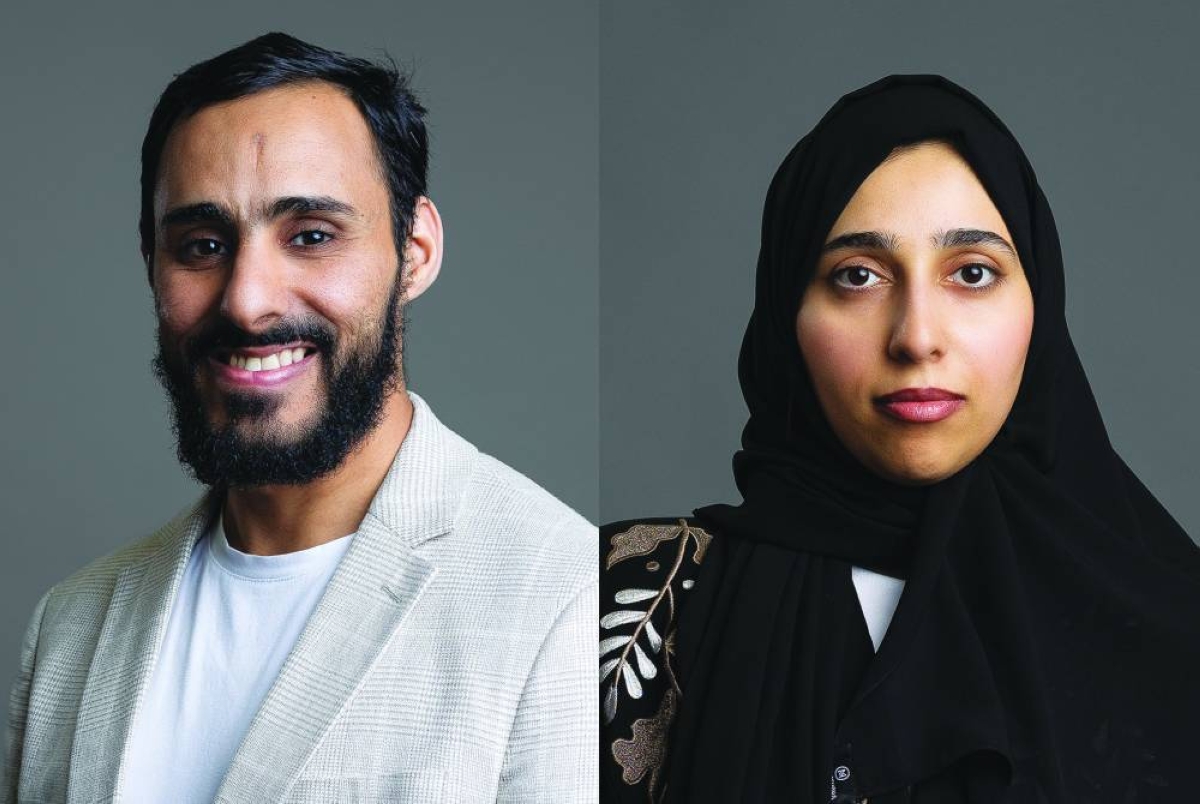
More than a decade ago, when I first watched the documentary ‘Schooling the World,’ I realised that the constructs of Western cities are not culturally neutral; rather, they carry values of industrialisation, consumerism, individualism, and economic growth that often conflict with local ways of life.
This notion also reminded me of how comfort and excessive consumption can erode freedom, individuality, art, religion, and genuine human relationships. I quickly realised that cities are not just bricks and mortar; they have souls, personalities, indigenous tendencies, and rooted heritage that shape their character. Cities are also composed of people, their habits, lifestyles and traditions.
In Islamic societies, the architecture and planning of cities take into consideration core values such as privacy, family centrality, and adab, thus creating central spaces in traditional dwellings. Organised around a central courtyard that serves as the core of family life, these spaces provide free and passive cooling, privacy, and opportunities for social interaction. Even the simplest elements of traditional Qatari homes, such as strings of cowrie shells, embodied an indigenous intelligence, protecting domestic space through sound and movement long before security systems or smart sensors were ever conceived.
Moving from the scale of the home to that of the city, the same ethical and social logic governed traditional architecture and urban planning.
The Khan, equivalent to a hotel, was traditionally not isolated in a commercial downtown area but was embedded within the heart of the city. Its central location allowed it to be an active part of urban life, engaging both travellers and locals in a vibrant social and cultural experience, fostering interaction, hospitality, and a sense of community rather than functioning as a detached, purely commercial space.
Economic Growth, Displacement, and Loss of Belonging
While some people produce spaces, others consume them, creating a fissure between areas inhabited by the rich and poor.
I lived in Toronto for 15 years and formed deep bonds with its places, from the small pizza store beside our high school to the Tim Hortons at the University of Toronto. Every time I return, I revisit these spaces, reminiscing about these lived memories and sensing the positive energy embedded in places that once structured my everyday life. Yet the soulless evolution of the city eventually made it unaffordable to remain, forcing my family to relocate. Eventually, the high school was demolished, and a new subdivision of expensive homes was constructed on its site.
This type of internal displacement raises a valid question: how do we measure growth, success, progress, and development in modern cities?
Currently, progress is measured exclusively through capitalist lenses. If a lot is in a strategic downtown location, the calculation is simply to build a high-rise and evict the inhabitants, as the return on investment will be high.
Similarly, historical sites are being destroyed and demolished in the name of urbanisation and social transformation. It is disheartening to see that many Islamic and Asian countries have largely ceded to Western models of urban planning, driven solely by economic growth and accumulation.
Heritage, Home, Communal Ways of Living
Brave exceptions of homes that resisted the trend of rapid urbanisation nevertheless exist, including the residence of Sheikh Suhaim bin Hamad al-Thani in Msheireb Downtown Doha. The same principle is illustrated by Carl in the movie Up, who refused to sell his home even when the price was doubled. This is because architectural space is not merely linear; it is multidimensional and interconnected, embedding memory, meaning, and social value.
In the case of Carl, this was a home he literally built with his own hands alongside his late wife, emphasising the importance of collaborative construction over prefabricated, ready-made homes, with each brick and phase carrying a special memory. This care for preserving homes and memories resonates beyond my own experience. When Carl attached balloons to his house in order to fly, it resembled a unique phenomenon I also witnessed in Quebec, where francophone Canadians literally move their homes. Rather than demolishing buildings, families buy and relocate entire houses to new plots, preserving the structure and memories within, reducing waste, and practicing a form of sustainable urban adaptation.
Modern Urbanism, Alienation, and Disconnection from Nature
In Up, the house flying amidst towering high-rises carries a powerful message: modern cities confine not only our bodies but our imagination. Cities are becoming physical barriers to nature and virtual walls imprisoning people’s imagination and creative potential. Whereas our elders once lived a more collaborative and communal lifestyle, modern architecture now emphasises excessive branding, fleeting social media trends, and a life consumed by worry, rather than fostering a minimalist and decluttered environment that nourishes the mind and spirit.
The streets once served as an extension of the home and were the living embodiment of the proverb ‘It takes a village to raise a child.’ Modern architecture has stripped away that communal safety, turning streets into hazardous ‘no-go’ zones. These new urban forms, encompassing noise, light, air, and water pollution, are reshaping daily habits and influencing behaviour. Life in such cities fosters distraction, clutter, anxiety, and a reduction in empathy and focus, with a crucial consequence: a growing disconnection from nature.
Modern architecture favours extremely small condominium units with what is called “an American kitchen,” a layout that limits hosts’ ability to receive guests properly and serve traditional, homemade meals. This encourages reliance on fast food, embedding a culture of instant gratification that undermines patience and the enjoyment of the process. Consequently, individuals become easily agitated and distracted, struggling to maintain focus and discipline.
Thanks in part to international hotels, modern architecture has also made cities appear superficially luxurious and glamorous, yet empty at their core. Societal behaviour mirrors this phenomenon: in the age of influencers, anyone with a large social media following attains influence, even if they are inwardly hollow, individualistic, or disconnected. They rise to prominence by perfecting a flashy, glamorous lifestyle rather than cultivating depth or substance.
As a result of the architecture of modern cities, our brains are in a constant state of high alert. We subconsciously navigate traffic, avoid crowds, and filter out the relentless hum of industry. Nature breaks this cycle of “cognitive fatigue.” As the gray buildings shrink in the distance, the brain stops scanning for threats and begins to absorb the horizon. The “noise” of modern worry is replaced by the “soft fascination” of rustling leaves or shifting clouds – stimuli that invite the mind to contemplate and reflect rather than react.
* Dr Azzam Abu-Rayash is an Assistant Professor in the Division of Sustainable Development, and Aisha al-Naama is a PhD candidate in the Sustainable Environment programme, both at HBKU’s College of Science and Engineering.
(This piece has been submitted by HBKU’s Communications Directorate on behalf of its authors. The thoughts and views expressed are the authors’ own and do not necessarily reflect an official University stance).
HBKU: Innovating Today, Shaping Tomorrow
Hamad Bin Khalifa University (HBKU), a member of Qatar Foundation for Education, Science, and Community Development (QF), is a leading, innovation-centric university committed to advancing education and research to address critical challenges facing Qatar and beyond. HBKU develops multidisciplinary academic programs and national research capabilities that drive collaboration with leading global institutions. The university is dedicated to equipping future leaders with an entrepreneurial mindset and advancing innovative solutions that create a positive global impact.