admin
admin Peace talks to end the six-week-old war in the Middle East have commenced in Islamabad, CBS reporter Jennifer Jacobs said in an X post, citing sources.
Earlier, US and Iranian delegations met with mediators in Pakistan ahead of talks aimed at shoring up a shaky ceasefire and paving the way for a permanent end to the fighting.
It marks the first such meeting since the war began more than a month ago.
The ceasefire brokered by Pakistan still faces hurdles in the talks beginning on Saturday, as Israel and Hizbollah have been trading fire along the border of southern Lebanon and Iran has set conditions before negotiations can begin.
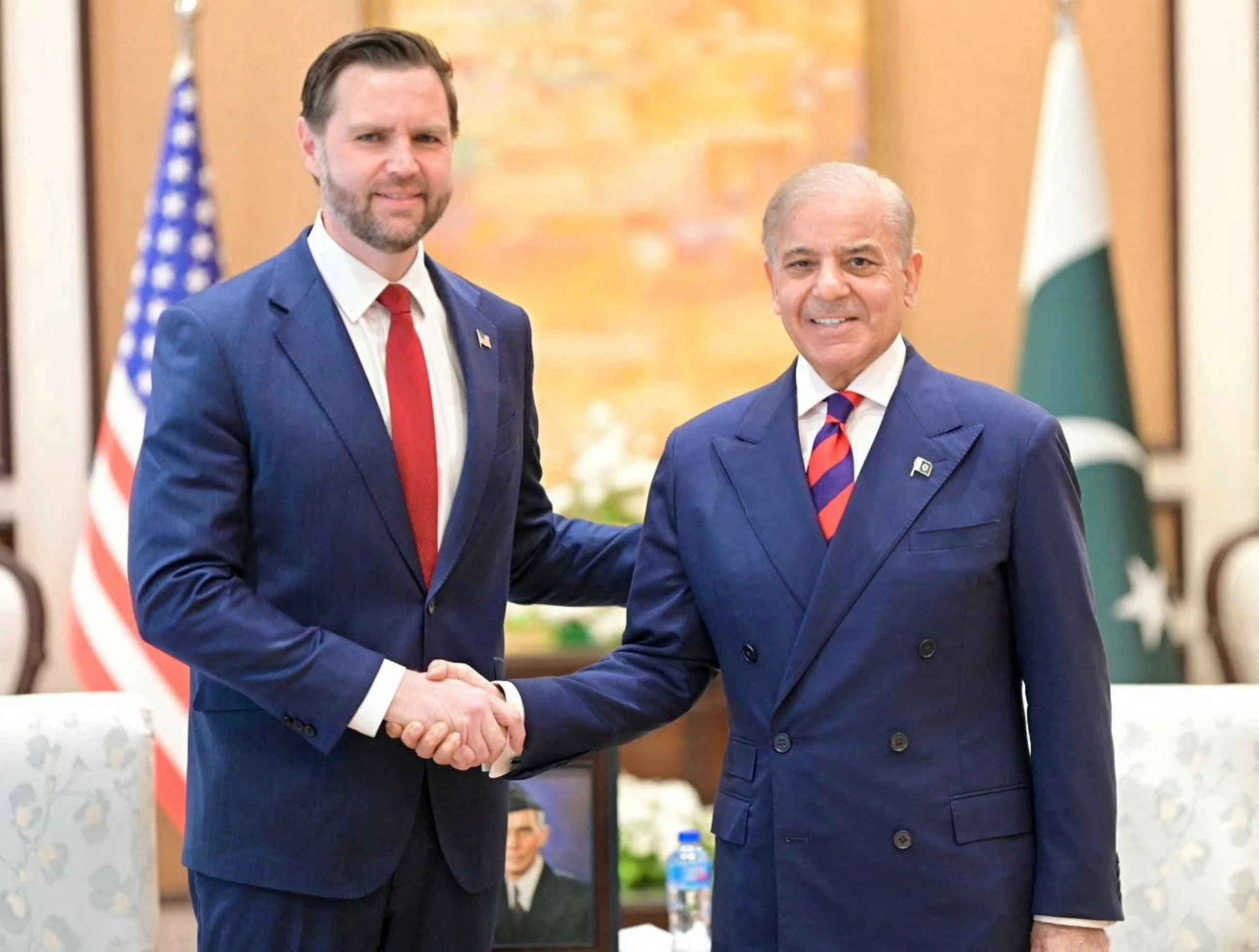
Shahbaz Sharif shakes hands with JD Vance during their meeting in Islamabad. Reuters
The arrival of the US delegation led by Vice President JD Vance followed that of Iranian negotiators headed by Parliament Speaker Mohammad Bagher Qalibaf, who said on X that discussions will only take place if there is an Israeli ceasefire in Lebanon the release of blocked Iranian assets.
Hours earlier, President Donald Trump wished Vance good luck. “We’ll find out what’s going on. They’re militarily defeated.”
In Islamabad, the streets of a normally bustling capital were deserted on Saturday as security forces sealed roads ahead of the talks.
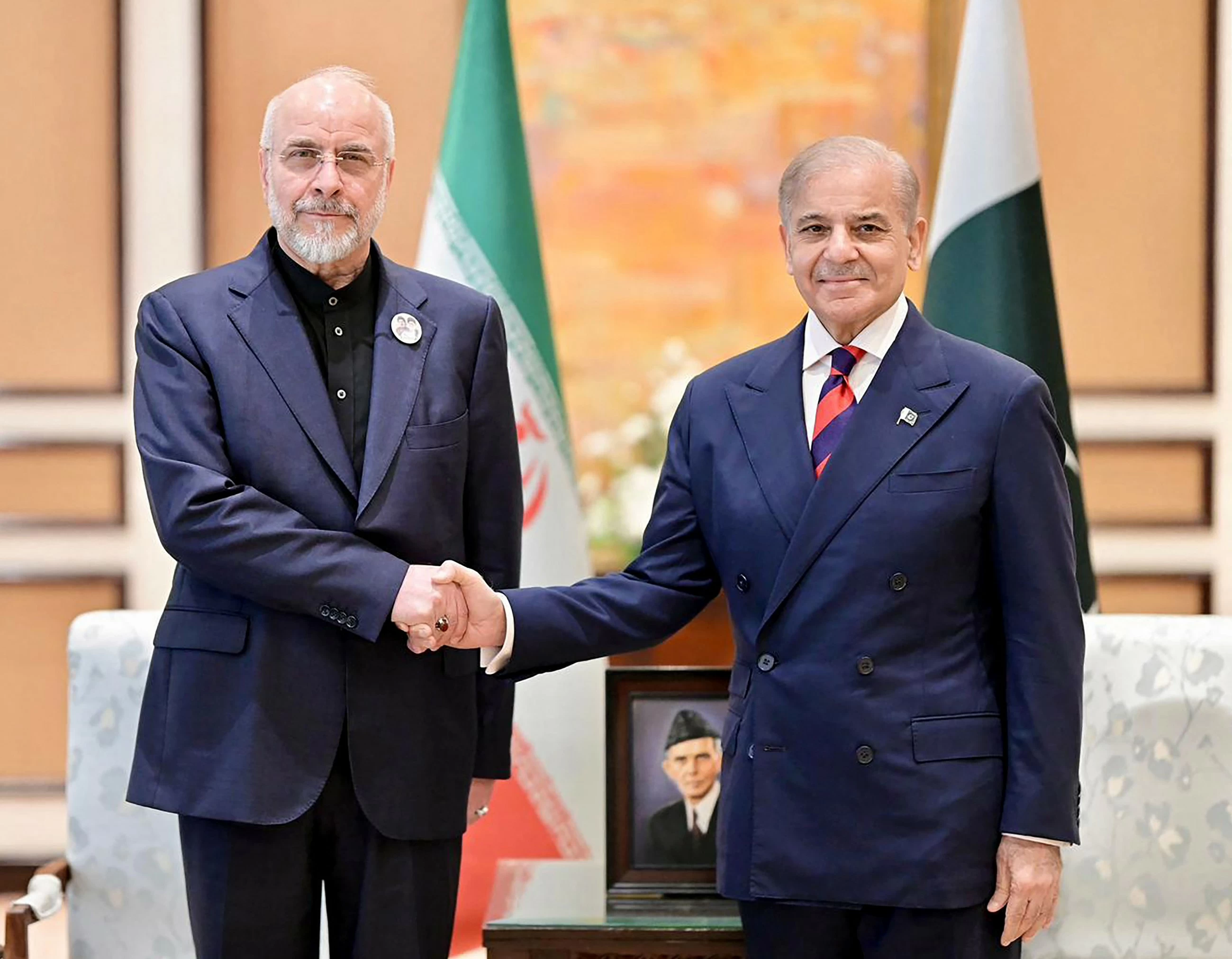
PM Shahbaz Sharif (R) greets Mohammad Bagher Ghalibaf during their meeting prior to the US-Iran peace talks in Islamabad. AFP
Trump said in a social media on Saturday that oil tankers “are heading, right now, to the United States to load up with the best and ‘sweetest’ oil (and gas!) anywhere in the World.”
The Iran war has led to Iranians effectively shuttering the Strait of Hormuz through which 20% of the world’s oil supplies gets shipped.
That has pushed up energy prices and given Iran a key point of leverage in negotiations with the US But Trump argues that the US can serve as an alternative source of oil and natural gas, though increased demand for American energy products could further push up prices for consumers unless there is more domestic production.
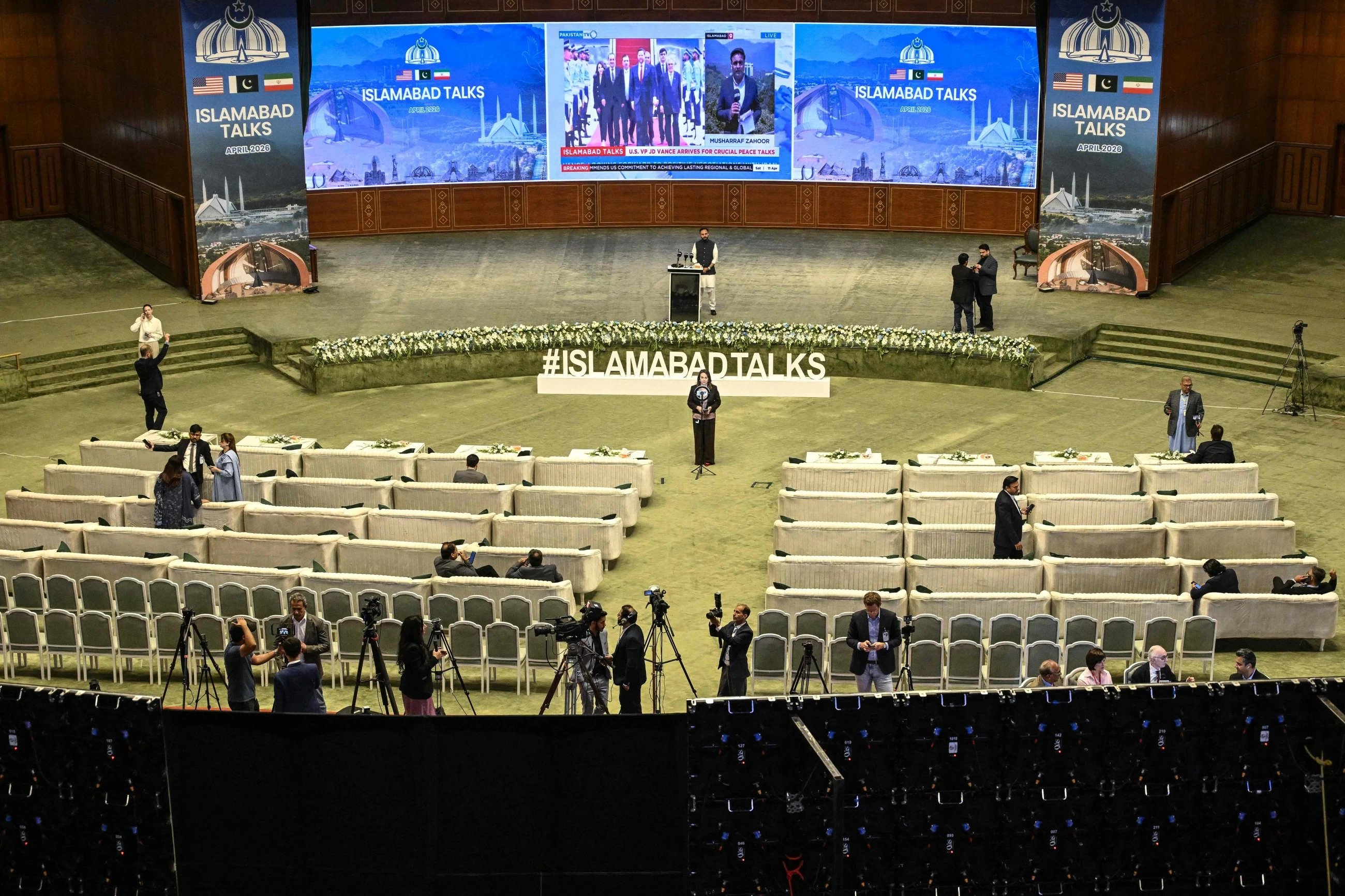
Journalists work at a media facilitation centre ahead of US-Iran peace talks in Islamabad. AFP
Iranian negotiators submitted their terms for the talks with the US in their meeting with Pakistan’s Prime Minister Shahbaz Sharif, according to Iran’s state-run television.
Negotiators disclosed Iran’s “redlines” that included compensation for damage caused by the American-Israeli strikes and releasing Iran’s frozen assets.
They also include a mechanism to the opening of the Strait of Hormuz, and a “tangible and lasting ceasefire” in Iran and other areas – an apparent reference to Iran’s allies in the region.
Agencies