admin
admin 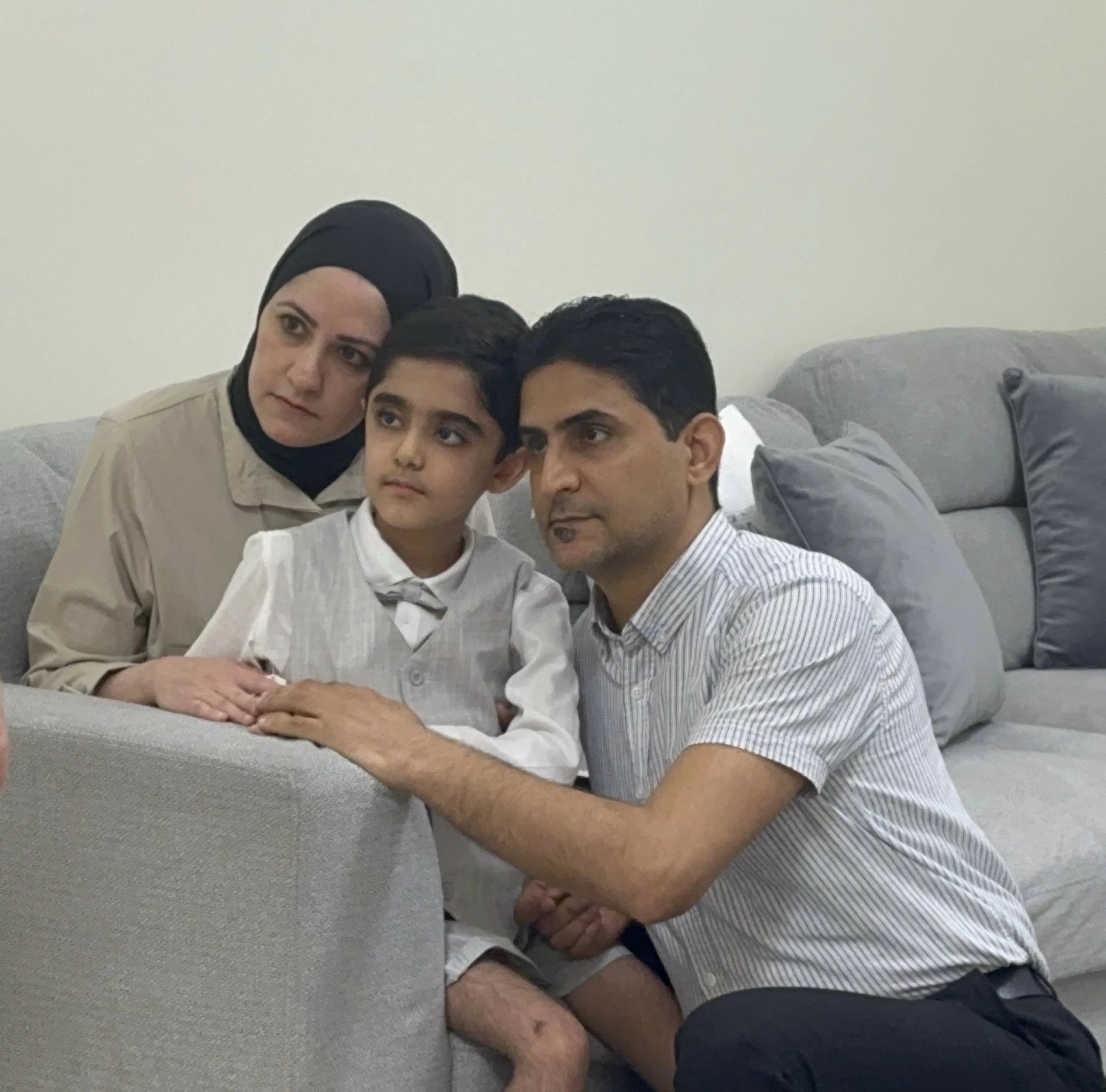
The story of the 10-year-old Iraqi child, Youssef Haidar, whom the UAE rescued from his suffering, turned into a tale of an entire nation that mobilised to save him, after the details of his condition touched the hearts of thousands, who, through their actions, wrote an exceptional scene of generosity.
In a race against time, between a treatment considered among the most expensive globally and a hope which grows with every donation, Youssef today stands on the threshold of a new chance at life.
Youssef’s story was not just a passing piece of news published by Al Khaleej newspaper, but rather transformed into a humanitarian case which touched the hearts of readers, after it was revealed that he needed an advanced gene therapy given in a single dose, known as “Elevidys,” administered intravenously, which helps strengthen muscles and slow the progression of the disease. If left untreated, he would be forced to use a wheelchair at an early age.
The treatment is considered among the most expensive globally, with a cost amounting to Dhs10,654,000, an amount far exceeding the capabilities of any family, which turned his journey with the disease into a race against time, between hope and challenge.
Since Al Khaleej published Youssef’s story, readers have reacted remarkably to his condition in a humanitarian scene reflecting the depth of community solidarity, as many did not hesitate to extend a helping hand, believing that saving a child who deserves life is a shared responsibility.
The appeal launched by Youssef’s mother to save her son turned into a rare story of human loyalty. Today, the mother appears again but not to ask for help, but to thank the Emirati people, who rushed from all directions, donating Dhs10,600,000, in a scene which embodies the highest meanings of giving.
The mother, who will sleep peacefully for the first time after months of anticipation and pain, affirmed to Al Khaleej that her joy is indescribable and priceless, especially since the cost of the treatment has become available, and ultimately, the matter remains in the hands of Allah Almighty.
As for Youssef, his smile returned, and his simple words were enough to summarise everything. He said, “I love the UAE,” a sincere message from the heart of a child exhausted by illness, but whose feelings of gratitude never faded.
In a touching scene, the family expressed their profound gratitude and appreciation to everyone who contributed to supporting Youssef, while his father stood speechless, content with looks full of tears and joy, and great thanks to everyone who helped provide treatment for his son, and to the benevolent persons who gave the family hope and wrote a new chapter in a story titled: “Unending Goodness”.
Dar Al Ber Society had made diligent efforts to complete the needed amount, amidst continuous interaction reflecting the pulse of a community that does not hesitate to do good, with the support and follow-up of the society’s CEO Abdullah Al Falasi.
Al Falasi praised the success of the campaign launched to collect Dhs10,600,000 for Youssef, emphasising that this interaction embodies the UAE’s deeply rooted humanitarian approach in extending a helping hand to those in need around the world.
Al Falasi pointed out that this widespread community solidarity reflects the deep values of solidarity and compassion rooted in Emirati society, and translates the vision of the wise leadership in establishing humanitarian work as a constant approach, making giving a sustainable priority, and people a main focus of all development plans.
“The speed of response witnessed by the campaign, and the large interaction from individuals and institutions, reflect the level of community awareness of the importance of charitable work, and the vital role it plays in saving lives and alleviating the suffering of patients,” Al Falasi explained, noting that such initiatives enhance confidence in institutional humanitarian work and open wider horizons for solidarity.
Al Falasi also affirmed that Emirati charitable work is a model to be followed in terms of speed of response, effectiveness of partnerships, and sustainability of impact, pointing out that this success would not have been achieved without the integration of roles between charitable organisations, official institutions, and media, in addition to the great support from the community.
This humanitarian interaction reflects an authentic legacy of solidarity and compassion, and a firm belief that protecting people, citizens or residents, is a shared responsibility which requires concerted efforts, Al Falasi added, emphasising that the UAE will continue its journey in supporting humanitarian initiatives and consolidating its position as a global centre for charitable and humanitarian work.