admin
admin 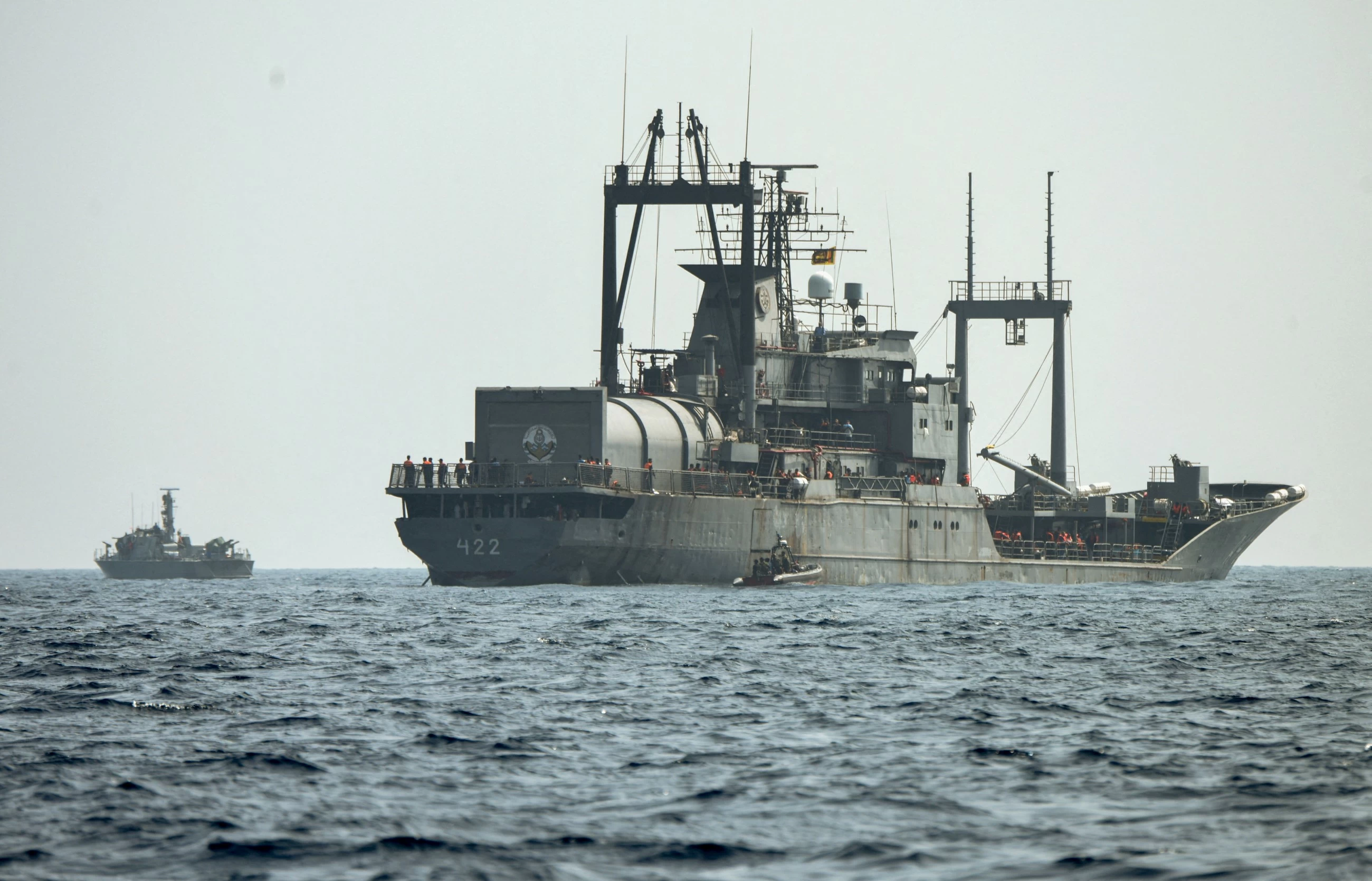
Sri Lanka refused permission to the United States to station two of its warplanes at a civilian airport in the island’s south in early March, President Anura Kumara Dissanayake said on Friday.
Washington wanted to relocate two of its missile-armed aircraft from a base in Djibouti to Sri Lanka’s civilian Mattala International Airport, Dissanayake told parliament.
The request, made on Feb.26, was turned down to maintain Colombo’s neutrality and ensure its territory was not used for any military purpose that could help or hinder either side, he said.
The Indian Ocean nation was drawn into the consequences of the war when a US submarine torpedoed an Iranian frigate, IRIS Dena, just off its coast in March.
“They wanted to bring two warplanes armed with eight anti-ship missiles to Mattala International Airport from March 4 to 8, and we said ‘no,'” Dissanayake said.
He did not say whether the US request was to use Sri Lanka as a base for the aircraft to carry out any offensive action against Iran.
Sri Lankan military sources told reporters that Sri Lanka would not have allowed its airspace to be used to launch aggression against any other nation, in line with the island’s foreign policy.
Dissanayake said Iran too had made a request for a port call by three of its warships, returning from India after a naval exercise, on the same day the US requested permission to station their two aircraft.
“We were still considering the Iranian request to bring the three ships to Colombo from March 9 to 13. Had we said ‘yes’ to Iran, we would have had to say ‘yes’ to the US too,” he said. “But we didn’t. We are steadfastly maintaining our position of neutrality,” he added, drawing applause from the 225-member legislature. “We will not succumb to pressure from anyone.”
The US attack on IRIS Dena on March 4 killed at least 84 sailors whose remains have since been repatriated to Iran.
Dissanayake said Sri Lanka’s navy and the airforce swung into action to rescue 32 sailors from the sunken frigate and recovered the remains of 84.
A second Iranian ship, IRIS Bushehr, was allowed to enter Sri Lankan waters the following day amid fears for the safety of its 219 crew, who have since taken shelter in Colombo. “It was a humanitarian gesture to shelter the sailors,” Dissanayake said. “We were saving lives.”
The third vessel, IRIS Lavan, made it to the south Indian port of Kochi and some of its sailors have returned home, according to Indian officials.
Dissanayake said his government had also demonstrated its neutrality by abstaining on a UN Security Council resolution last week condemning Iran’s attacks.
“We did not support that resolution because it was a half-truth. It did not reflect the full story,” Dissanayake said. “We stand for justice and fairness.”
Meanwhile, President Donald Trump drew a parallel between US strikes on Iran and Japan’s 1941 attack on Pearl Harbor, as he defended the war he launched against Tehran while meeting Japanese Prime Minister Sanae Takaichi in Washington.
“We wanted surprise. Who knows better about surprise than Japan? Why didn’t you tell me about Pearl Harbor?” Trump replied when a journalist asked why he had not told allies about his war plans. “You believe in surprise, I think much more so than us.”
Takaichi’s eyes widened and she shifted in her chair as Trump, seated beside her in the Oval Office, evoked the moment that drew the US into World War Two.
The Japanese attack on the US naval base in Pearl Harbor, Hawaii, on Dec.7, 1941, killed 2,390 Americans. The US declared war on Japan the next day, with President Franklin D. Roosevelt calling it “a date which will live in infamy.”
The US defeated Japan in August 1945, days after US atomic bomb attacks on Hiroshima and Nagasaki killed hundreds of thousands of civilians.
Trump’s remarks received a mixed reaction on the streets of Tokyo on Friday.
Agencies