admin
admin In Pakistan’s southwestern mountains, pickup trucks loaded with plastic cans of fuel smuggled from Iran line dusty roads as youngsters unload the containers, fill smaller cans and strap them onto motorbikes to supply nearby markets.
The illicit trade has long thrived in the region but is feeling the knock-on effects of the war which has engulfed the Middle East following US-Israeli strikes on Iran.
Supplies coming across the 900km border between Pakistan and Iran have dropped by nearly half and driven up prices.
“Before the war, the rate was good,” Hakeem Ullah, a 35-year-old driver, told AFP. “We used to get petrol for Rs150 ($0.54). But now, after the war, we are getting petrol for Rs190 per litre.”
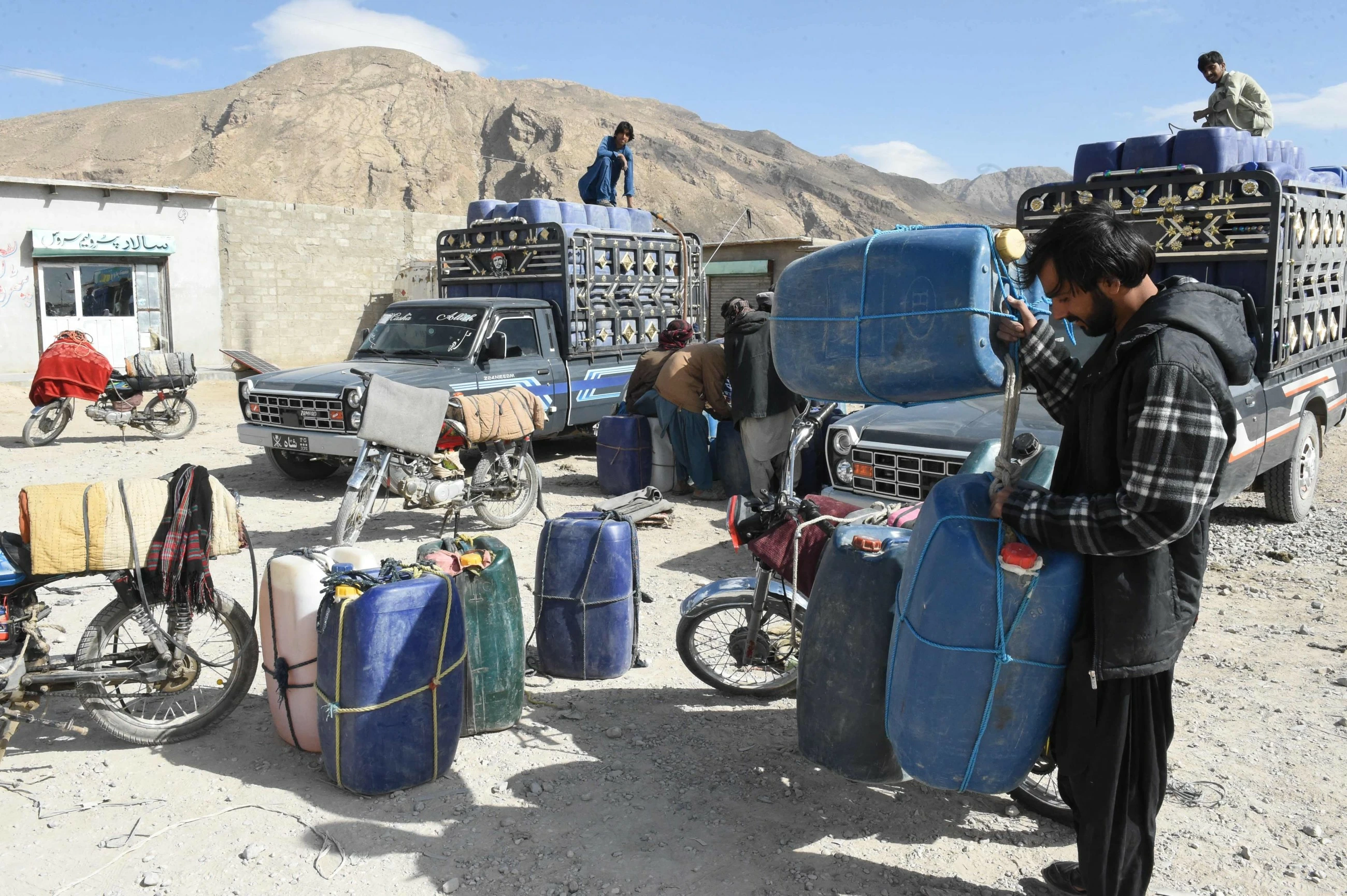
Vendors prepare to fill their jerrycans with smuggled Iranian petrol on the outskirts of Quetta. AFP
Hakeem is one of dozens of young men in the border towns of Balochistan province who transport fuel across the frontier every day in blue Iranian-made Zamyad trucks. A single trip that once earned him a steady profit has now seen his margin cut by half due to the spike in cost and disrupted supplies.
“We would make a profit of approximately Rs40 to 50,000 per vehicle, and buyers would also be found quickly,” said Hakeem in Mastung, around 50 kilometres south of the provincial capital Quetta. “We have been standing here for the last five days but we are not getting a fair price at which we can sell it.”
POVERTY
Pakistan is reliant on oil and gas from the Gulf. Since war broke out, prices have increased at the pump and the government has introduced curbs to limit fuel consumption. Measures include cutting the working week for government workers to four days and shutting public schools.
On Tuesday, Prime Minister Shahbaz Sharif announced that there would be no military parades and flypasts at next Monday’s Pakistan Day public holiday because of the crisis. Ministers say they are trying to prevent having to impose any further fuel price increases, which would hit the country’s poorest, including in Balochistan.
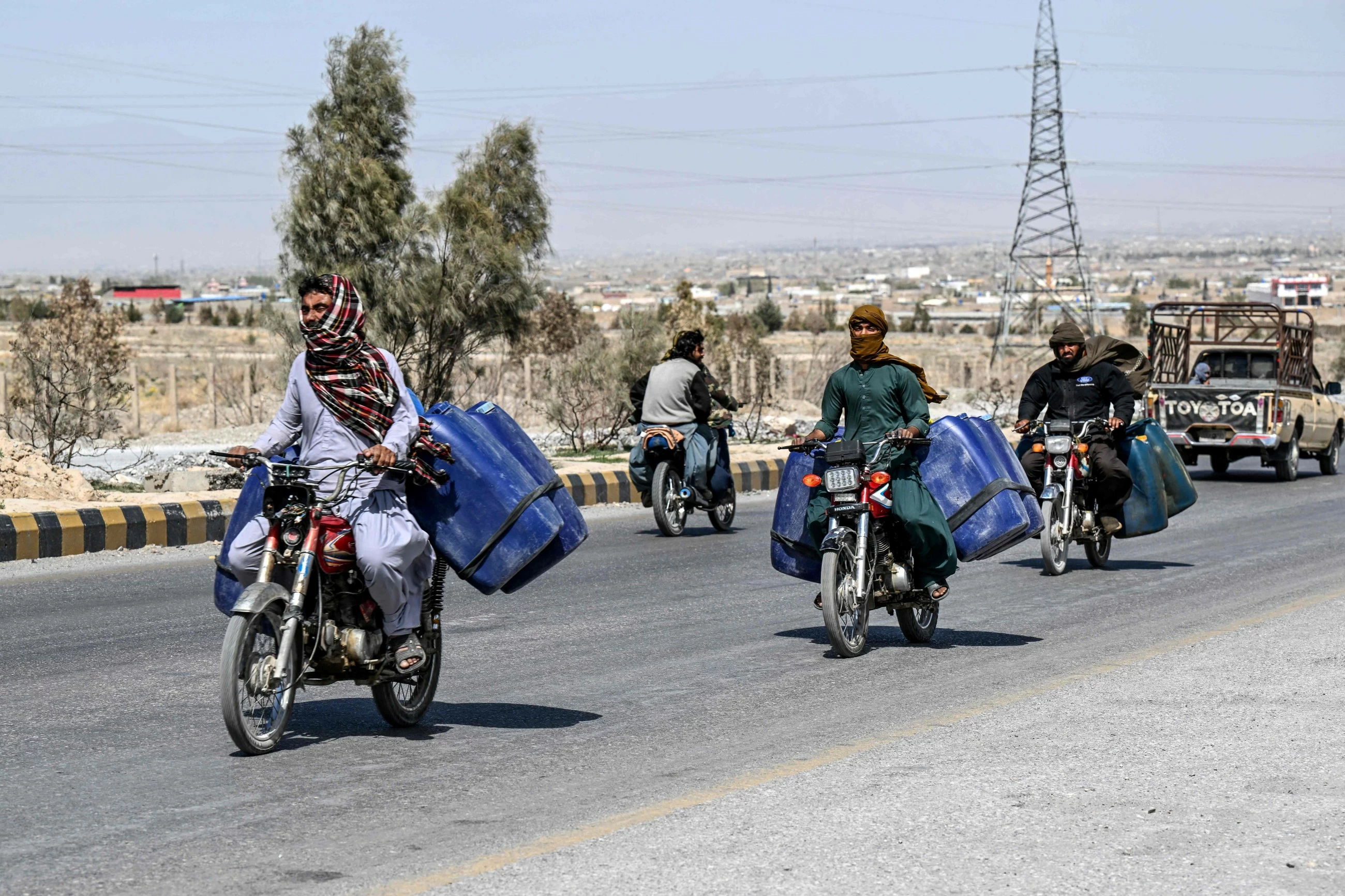
Vendors transport jerrycans filled with smuggled Iranian petrol on their motorcycles on the outskirts of Quetta. AFP
Ordinarily, petrol price increases on the conventional market would force people to turn to the smuggllers, who typically use unpaved desert tracks and mountain paths along the border linking Iranian frontier towns with Pakistani districts such as Panjgur, Turbat and Gwadar, on the coast.
The fuel is then transported hundreds of kilometres to Mastung district, where it is offloaded and transferred onto motorbikes in jerrycans for local distribution.
Drivers said they were concerned about the squeeze on supplies and price increases — plus the impact on their livelihoods. “There is no industrial sector in Balochistan and government jobs are limited,” said Fazal Muhammad, 28, as he and dozens of others embarked on a perilous journey transporting fuel by motorbike to markets in Quetta. “We were forced to join this profession, where at least we take Rs2,000 to Rs3,000 in the evening,” he added.
Agence rance-Presse