admin
admin 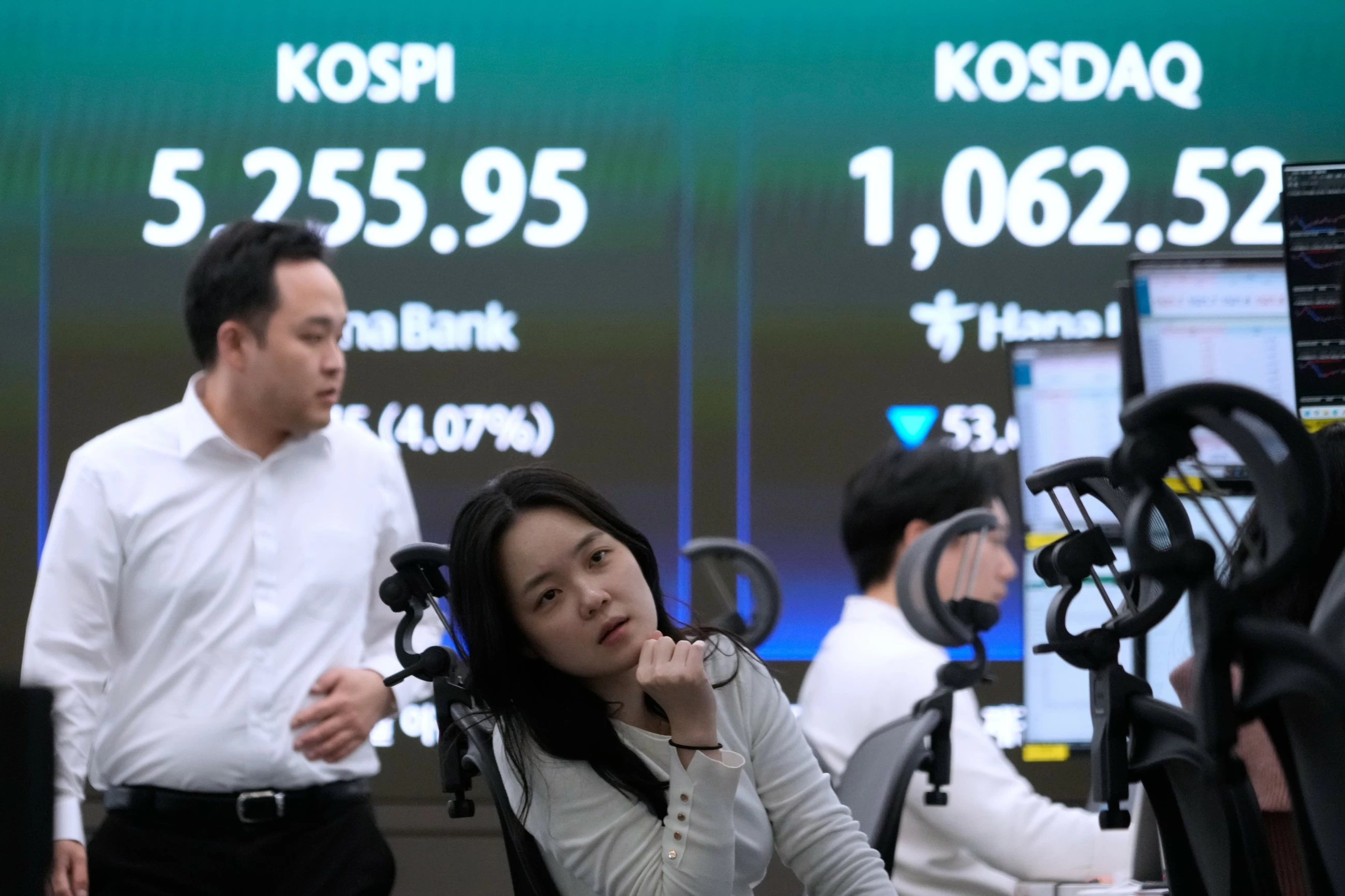
South Korean equities led emerging Asian stocks higher on Friday, with muted trading volumes across major markets due to public holidays, while investors kept a close eye on developments in the Middle East conflict. The MSCI gauge of EM Asia equities rose about 0.7%, though heading for a fifth straight week of declines.
South Korea’s KOSPI index jumped nearly 3% on Friday, recovering partly from the more than 4% drop in the previous session. Markets had a nervous week, rattled further on Wednesday when US President Donald Trump threatened more attacks on Iran and offered no hint of when the conflict might end. On Thursday, he reiterated his threats against Iran’s infrastructure, although markets took some relief overnight on news Iran was drafting a protocol with Oman to allow ships through the Strait of Hormuz.
About a fifth of the world’s oil trade normally passes through the narrow channel. “I think that provides some sparky sentiment to the market, especially for the markets that’s still open today,” said Poon Panichpibool, a market strategist at Krung Thai Bank.
Further lifting spirits, Britain held talks with dozens of countries to explore ways to reopen the strait although the meeting ended without any firm agreement, according to one official. Back in Asia, shares in Malaysia added 0.1%, but eyed a second successive week in red. Meanwhile, Thailand’s SET Index reversed early gains to dip 0.3% and the baht appreciated 0.2%. Late on Thursday, the country’s central bank chief said that no major policy shake-up was needed for now, even as rising oil prices stoke inflation fears.
In February, the Bank of Thailand unexpectedly cut interest rates to 1.00%, the lowest in more than three years, to support Southeast Asia’s second-largest economy. Against a steady US dollar index, the ringgit firmed to 4.032, while the South Korean won kept its four-day rally alive, poised for a 0.2% weekly rise – its first since late February.
Under their base case oil price assumption – for crude oil to rise further this month before easing in May and June – the won, baht, Philippine peso and ringgit are likely to depreciate further and see higher volatility in April, MUFG analysts said in a note. The currencies could partially recover in the remainder of Q2 as oil prices decline, the note said. They added that the ringgit was likely to be an outperformer in Asia in the medium term, however, benefiting from strong investment momentum, resilient domestic demand, and the AI-driven tech upcycle once global risks ease.
The Malaysian ringgit has been the standout in Southeast Asia, quietly building a 0.6% gain this year while its regional peers have struggled. Financial markets in Indonesia, Singapore, the Philippines and India were closed for the Good Friday holiday. Taiwan markets were closed for Children’s Day.
Japan’s Nikkei share average rallied on Friday, trimming its losses for the week, following global efforts to restore Gulf oil shipments interrupted by the war in Iran.
Artificial intelligence (AI)-related stocks led the Nikkei higher, with the gauge rising 1.26% to close at 53,123.49, ending the week down 0.47%. The broader Topix climbed 0.93% to 3,645.19.
Overnight, dozens of countries sought ways to restart vital energy shipments through the Strait of Hormuz after US President Donald Trump vowed more aggressive attacks on Iran.
Since commencing with a joint U.S.-Israeli aerial assault on Iran on February 28, the conflict has continued to spread chaos across the Middle East, driving prices for petroleum products sharply higher. Japan’s economy remains exposed to spikes in crude oil prices due to its reliance on imported energy.
“Growing expectations for the reopening of the Strait of Hormuz have led to a drop in crude prices in Tokyo, which appears to be supporting the Japanese stock market,” said Wataru Akiyama, a strategist at Nomura Securities.
“As uncertainty surrounding the Middle East situation has somewhat subsided, and against the backdrop of AI advancements, expectations are growing that earnings reports, which will begin in earnest around the middle of this month, will confirm strong performance,” he added.
There were 182 advancers on the Nikkei index against 41 decliners. AI industry suppliers Furukawa Electric and Fujikura jumped 10.4% and 7.5%, respectively.
Sakura Internet jumped 20.2%, hitting its daily limit, after Microsoft said it would partner with the firm on a 1.6 trillion yen ($10.02 billion) investment in AI in Japan.
The largest losers on the Nikkei were home furnishings retailer Nitori Holdings, which fell 5.1%, followed by Chugai Pharmaceutical, which lost 4.6%.
China stocks slipped on Friday, declining for the third straight week, as uncertainties in the Middle East reinforced a risk-averse mood ahead of a local holiday. Hong Kong market was closed for the Easter holiday.
For onshore shares, external volatility is being transmitted largely through sentiment, while China’s still-low inflation and expectations of a pick-up in nominal prices this year could support domestic demand, the analysts said.
China’s services activity growth slowed in March from a 33-month high in February, as softer demand and a decline in overseas orders weighed on momentum, a private-sector survey showed on Friday.
Agencies