1. Home
  2. Author Blogs

Author: admin

admin

Entertainment
Celebs Wiggin’ Out For International Wig Day!

Celebs Wiggin’ Out For International Wig Day!

Sometimes celebs just want a shortcut to a killer hairdo -- and they’re not afraid to throw on a wig to make it happen -- which is exactly why we’re celebrating International Wig Day! Stars

Entertainment
Woman Charged With Attempted Murder in Connection to Shooting at Rihanna’s Home

Woman Charged With Attempted Murder in Connection to Shooting at Rihanna’s Home

5:39 PM -- Prosecutors claim there were 9 people on Rihanna's property when Ivanna Lisette Ortiz allegedly opened fire ... which appears to be why she is charged with 9 counts of assault with a

Entertainment
Britney Spears’ Mug Shot Won’t be Released

Britney Spears’ Mug Shot Won’t be Released

Britney Spears Feeling 'Stronger' Cuz DUI Mug Shot Won't Be Released Published March 10, 2026 3:33 PM PDT Britney Spears' mug shot will not be added to the collection of famous faces busted over the

Entertainment
Nicole Curtis Attempts to Explain N-Word Controversy on ‘Breakfast Club’

Nicole Curtis Attempts to Explain N-Word Controversy on ‘Breakfast Club’

Nicole Curtis 'Breakfast Club' Slams HGTV Star for N-Word Scandal in Unhinged Interview Published March 10, 2026 2:30 PM PDT Play video content The Breakfast Club After losing her job at HGTV for saying the

World
Japan markets Fukushima in S.Korea for first time since 2011

Japan markets Fukushima in S.Korea for first time since 2011

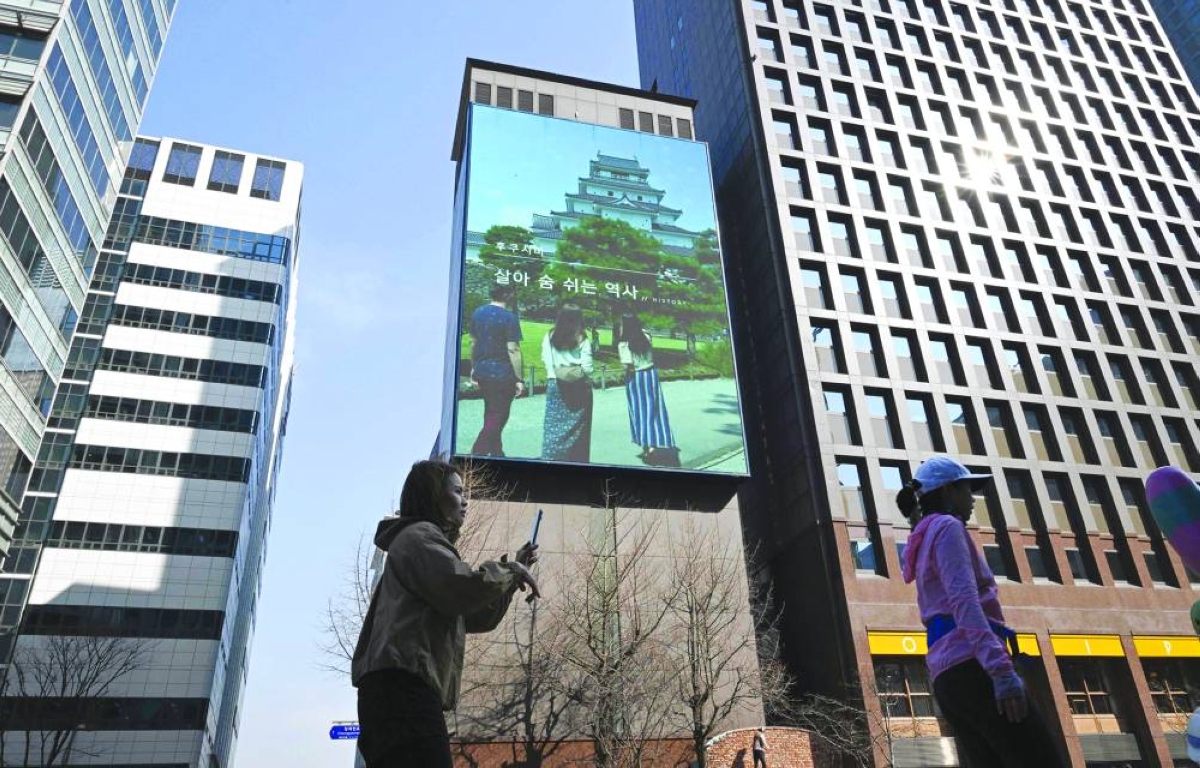
Pedestrians walk past a billboard showing a promotional video for tourism in Japan's Fukushima region, in downtown Seoul Wednesday. (AFP) A tourism video promoting Japan's tsunami-hit Fukushima region is airing on billboards across Seoul, in what a Japanese official called a first since the 2011 nuclear accident.The 30-second clip was produced by Japan's Reconstruction Agency, a government body that deals with the aftermath of the 2011 disaster.It featured several well-known sites and carried captions reading: "Now time to visit Fukushima with 15 years of recovery."The Fukushima catastrophe unfolded in March 11, 2011 when a powerful earthquake and tsunami that killed thousands of people triggered one of the world's worst nuclear accidents."As we reach the turning point marking the 15th anniversary of the earthquake, we hope this will showcase Fukushima's recovery and the appeal of its food and tourism," a representative of the Japanese embassy in Seoul told AFP Wednesday, adding it will run through to Sunday.More than 9.4mn South Koreans visited Japan in last year, making them the largest group among all foreign visitors to the country, according to official Japanese data.But overnight stays by South Koreans in Fukushima are still only about one-tenth of pre-tsunami levels, according to Japan's broadcaster NHK.Since 2013, South Korea has maintained a ban on seafood imports from eight Japanese prefectures, including Fukushima, due to concerns about radiation contamination.China banned imports of Japanese seafood in 2023 after Japan started releasing treated wastewater from the crippled Fukushima plant into the sea.Beijing later resumed some imports but then reportedly reversed course in November as part of an ongoing diplomatic rift with Tokyo. 

World
Ramadan’s 21st night in Surabaya

Ramadan’s 21st night in Surabaya

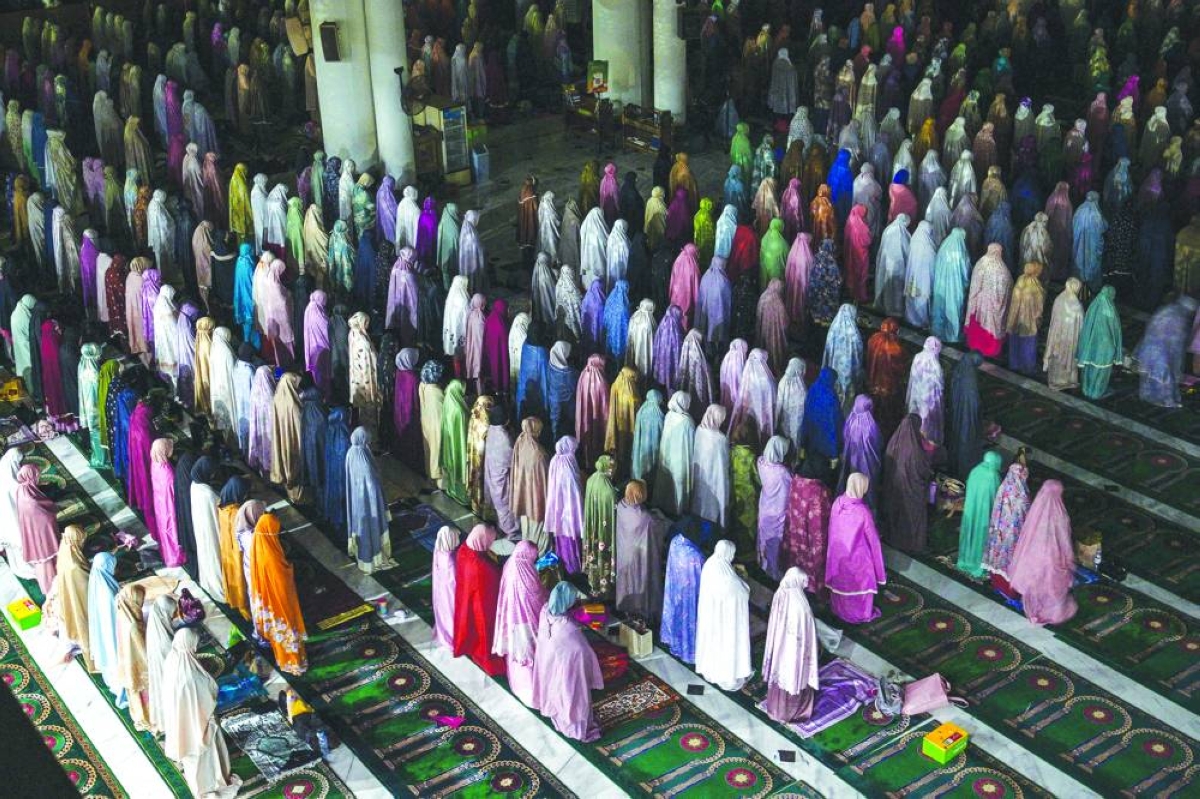
Indonesian women offer late night Taraweeh prayers on the 21st night of the holy month of Ramadan at the Al Akbar mosque in Surabaya early Wednesday.  

Sports
Sabalenka powers past Osaka, sets Indian Wells QF clash with Mboko

Sabalenka powers past Osaka, sets Indian Wells QF clash with Mboko

INDIAN WELLS, CALIFORNIA - MARCH 10: Aryna Sabalenka returns a shot to Naomi Osaka of Japan during Day 7 of the BNP Paribas Open at the Indian Wells Tennis Garden on March 10, 2026 in

Opinion
US consumer inflation unchanged but price shocks from Iran war loom

US consumer inflation unchanged but price shocks from Iran war loom

Consumer inflation in the United States remained stable at 2.4 percent in February, official data showed Wednesday, with price shocks from the US-Israel war on Iran yet to be reflected in the data. US President Donald Trump has made lowering prices a key part of his agenda, with the world’s largest economy still battling years of higher-than-usual inflation after the Covid pandemic. The consumer price index (CPI) rose 2.4 percent year-on-year, the same increase as reported a month prior. The index rose 0.3 percent month-on-month, with both figures in line with market expectations. Energy prices jumped 0.6 percent between January and February, following a 1.5-percent fall the previous month. The White House was quick to laud the new data, saying it expected price shocks from the war to be “temporary.” “The American economy is strong and once we are past temporary disruptions from Operation Epic Fury, we will see even greater economic progress,” said White House spokesperson Kush Desai. But price shocks to global oil markets from the US-Israel war on Iran were not reflected in Wednesday’s data, as the strikes began the last day of the month. Markets will be buoyed by the steadiness in February’s figure, but investors are likely to treat it as more of a baseline to compare expected future price increases against. “February CPI readings as expected were subdued but given the disruption to energy supplies from the Iranian conflict the focus is on the extent and duration of the boost to inflation in the coming months,” said Kathy Bostjancic, chief economist at Nationwide. She said that Nationwide expected inflation to rise to more than four percent (year-on-year) “in the coming few months, before easing back in the following months.” Wednesday’s data released by the Labor Department showed price increases in medical care, education, apparel, airline fares and household furnishings. Prices for used vehicles and vehicle insurance, communications and personal care were down. Core CPI, which excludes volatile energy and food prices, rose 2.5 percent over last year in February. February’s year-on-year inflation figure was near its lowest levels over the past 12 months, but consumers in the United States continue to grapple with prices that have remained stubbornly high post-pandemic. US inflation hit a high of 9.1 percent in June 2022, and while it has dropped from those levels, years of elevated prices have battered households across the country. The Federal Reserve, which has a dual mandate to address inflation and unemployment, raised interest rates to control flaring prices and while it is now in a rate-cutting phase, they remain at elevated levels. The new CPI figure will be a factor in the Fed’s discussion at a meeting to set rates next week. The Fed’s preferred inflation gauge, the Personal Consumption Expenditures (PCE) price index, will be released later this week. The central bank has a long-term goal of two percent for US inflation, but is also battling weakness in the labor market. The United States unexpectedly lost jobs in February while unemployment edged up, government data showed last week, piling pressure on Trump’s economic agenda as crucial midterm elections approach. Affordability has been a key issue, and the weaker jobs numbers have turned up the heat on criticism of Trump’s economic policies. The US-Israel war on Iran has roiled global oil markets, with traffic through the key Strait of Hormuz almost at a standstill and strikes hitting oil facilities across the region. That pressure is showing at US pumps, with the national average price for a gallon of gasoline on Wednesday up by 22 percent compared to last month, according to motor club AAA. Still, analysts looked at February’s CPI figure as encouraging in the long term, saying it firmed the view that headline inflation was trending downwards, outside of geopolitical shocks. “This pre-war inflation reading isn’t entirely stale, as it shows that key pillars of disinflation are in place,” said Bernard Yaros, lead US economist at Oxford Economics.  

World
Italy’s Meloni criticises US war on Iran as part of dangerous trend

Italy’s Meloni criticises US war on Iran as part of dangerous trend

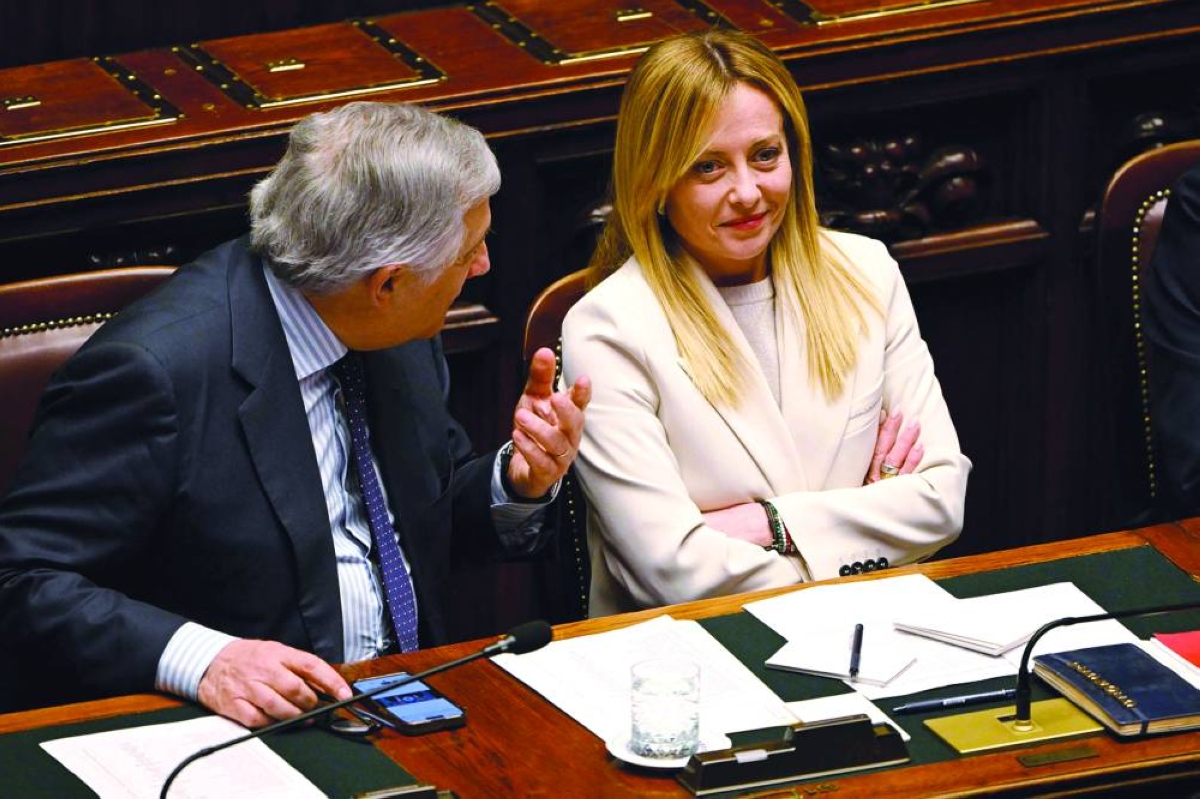
Italy's Prime Minister Giorgia Meloni Wednesday delivered ⁠her strongest ‌criticism yet of the US-Israeli ‌war on Iran, describing it as part of a growing ⁠and dangerous trend of interventions 'outside the scope of international law'.Her remarks to parliament came after repeated accusations from the opposition that her right-wing government had been too soft toward its allies. Most other European nations, with the notable exception of Spain, have withheld direct critique ​of the US and Israeli attacks, largely calling for restraint.Meloni - who has close ties with US President Donald Trump - also said ‌Iran must not be ⁠allowed to ​develop nuclear weapons, as that would end the ​international non-proliferation framework with 'dramatic repercussions for global security', leaving Italy and Europe exposed to a potential nuclear threat from Tehran.The US and Israel traded air strikes with Iran across the Middle East as the war stretched into its 12th day, a conflict that has halted the flow of one-fifth of the world's oil and gas supplies.Addressing parliament on the crisis, Meloni ‌drew parallels between the Middle ‌East conflict and Russia's ⁠2022 invasion of Ukraine, which she said triggered a ⁠broader global destabilisation.'It is ⁠in this context of structural crisis in the international system, in which threats are becoming increasingly frightening and unilateral interventions outside the scope of international law are multiplying, that we must also place the American and Israeli intervention against the ​Iranian regime,' she told the Senate.Meloni said Rome was providing air-defence assets to Gulf countries hit by strikes from Tehran.'This is not only because these are friendly nations and strategic partners of Italy, but also because there are tens of thousands of Italian citizens in that area whom we must protect, not to mention the fact that there ‌are about ​2,000 Italian soldiers stationed in the Gulf.' 

World
Seoul says can deter threats from North if US weapons shifted to Mideast

Seoul says can deter threats from North if US weapons shifted to Mideast

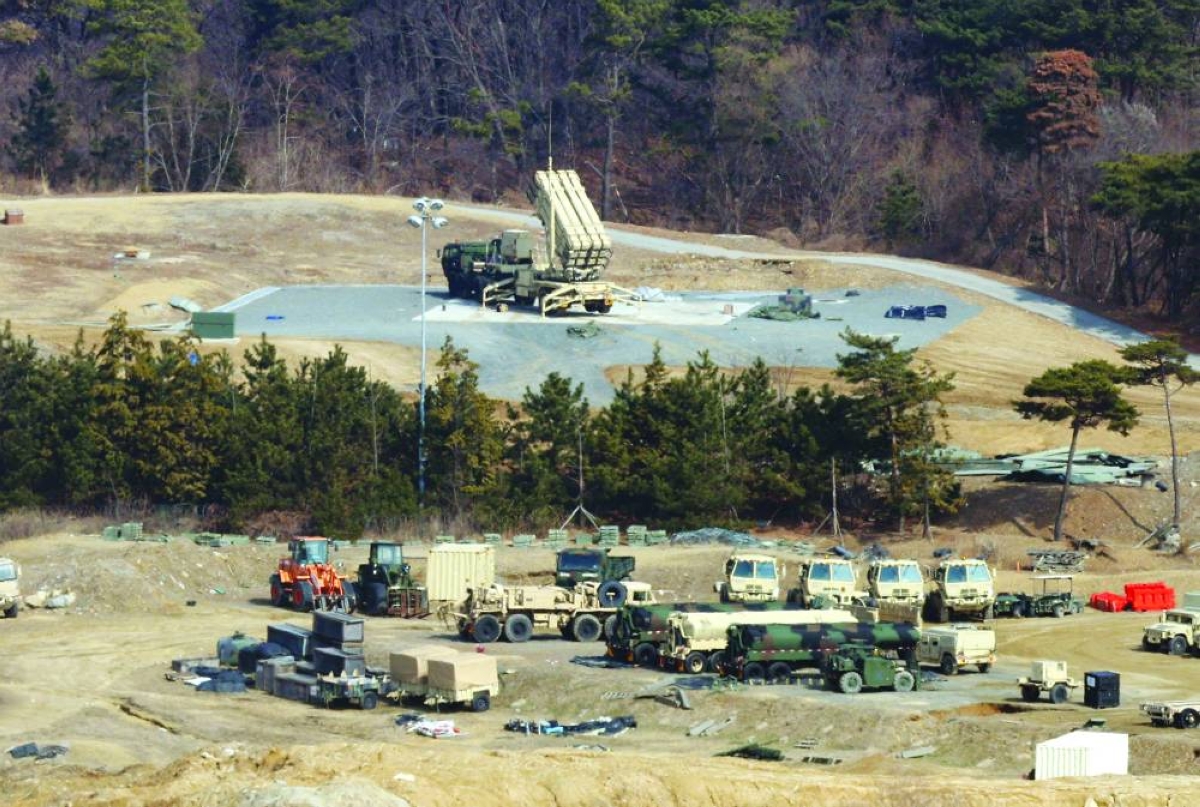
A launch vehicle of the THAAD system at a US military base in Seongju last week. (AFP) South Korea said Wednesday it could deter threats from the North even if the US relocated some of its military assets to the Middle East amid the war in Iran.Washington, Seoul's key security ally, stations about 28,500 troops and a range of air and missile defence systems in the South to help deter aggression from the nuclear-armed North.The Washington Post reported this week that the US was moving parts of its Terminal High Altitude Area Defence (THAAD) system from South Korea to the Middle East, citing unnamed officials."Regardless of whether certain USFK assets are deployed overseas, there is no issue whatsoever with our deterrence posture against North Korea, given the level of our military capabilities," the defence ministry said in a statement to AFP Wednesday, referring to the US Forces Korea command.It declined to confirm the report.The THAAD missile defence system is designed to intercept short, medium and intermediate-range ballistic missiles using hit-to-kill technology.It was installed in South Korea in 2017, a move that sparked strong protests from China.President Lee Jae Myung has said his government is unhappy with the reported asset move but acknowledged there was little it could do about it."The government is opposing the USFK's withdrawal of some air defence weapons for its own military needs," he said on Tuesday."But the stark reality is that we are unable to fully implement our opinions."A photo taken by Yonhap news agency last week and released on Tuesday appeared to show parts of the THAAD battery being dismantled in Seongju County, about 220 kilometres (136 miles) south of Seoul.A presidential official told AFP it was "inappropriate" to comment on questions regarding any military asset redeployment and cautioned against media speculation."Speculative reports on militarily sensitive matters are undesirable in light of our security interests... and our relations with key Middle Eastern countries," he said.  Related Story