admin
admin 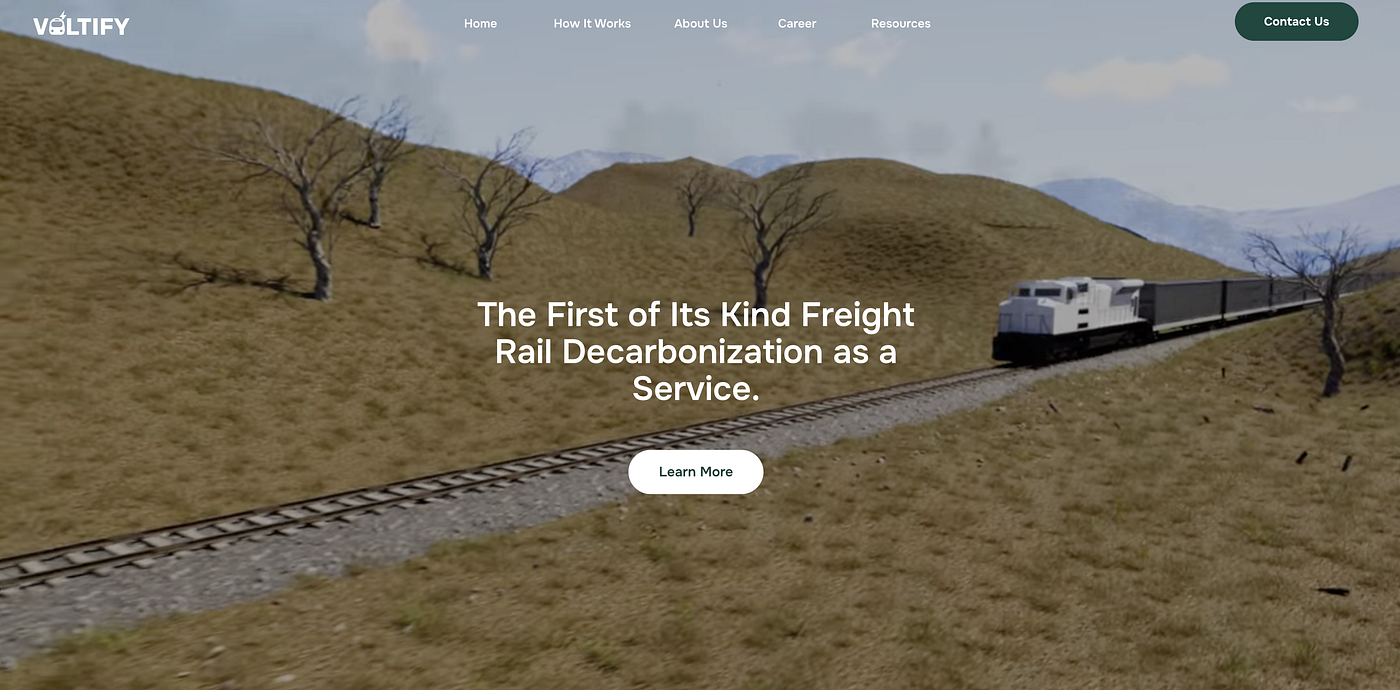
Voltify has raised $30 million in seed funding to push an ambitious plan to electrify freight rail without the cost and disruption of stringing overhead wires across vast rail networks, positioning the startup at the intersection of climate technology, industrial infrastructure and freight logistics. The company said the round was co-led by venture capital firm Aleph and Fortescue, with backing from Menomadin, J-Impact, The Dock and other investors, as it seeks to turn a concept that has drawn attention in energy circles into a commercial platform for rail operators.
Founded by Daphna Langer and Alon Kesse, Voltify is pitching a system built around battery-powered locomotives, dynamic fast-charging and renewable-powered microgrids placed along rail corridors. The argument behind that model is straightforward: freight rail still depends heavily on diesel in many markets, yet full conventional electrification demands capital spending on a scale many operators are unwilling or unable to undertake. Voltify says its approach can cut energy costs by about 20% while sharply lowering emissions, though those savings and emissions targets remain projections that will need to be proven in deployment.
The funding lands at a moment when rail is under fresh pressure to decarbonise without losing the cost advantages that make it more efficient than road freight. The International Energy Agency says direct carbon dioxide emissions from diesel rail operations have risen modestly over the past two decades and that deeper cuts will require electrification of diesel operations wherever viable, alongside efficiency measures and cleaner fuels. That makes rail one of the more interesting battlegrounds in the broader transport transition: it is already more energy-efficient than trucking, but a significant slice of the sector still runs on diesel, leaving a large opening for technologies that can lower fuel use without undermining reliability.
Voltify is trying to exploit that gap by framing electrification not as a pure climate expense but as an operating-cost decision. In the United States alone, the company says the six largest rail operators spend around $11 billion a year on diesel. It also argues that installing overhead catenary infrastructure at scale would run beyond $1 trillion, a figure meant to underline why rail companies have often preferred incremental efficiency gains over wholesale power-system change. That economic framing is central to Voltify’s appeal to investors: a climate proposition tied to lower fuel bills and less exposure to fossil-fuel price swings is easier to sell than one based only on carbon reduction.
There is logic behind the thesis, but also a long list of operational questions. Freight rail networks are conservative for good reason. Operators care about uptime, axle loads, route flexibility, maintenance cycles and dispatching complexity more than startup rhetoric. Retrofitting locomotives with batteries and pairing them with in-motion charging infrastructure could be less disruptive than rebuilding entire corridors for overhead electrification, yet it introduces new technical dependencies around charging consistency, battery durability and the resilience of corridor-based power systems. Whether microgrids can supply energy at the scale and cadence demanded by heavy freight in varied terrain and weather conditions will be watched closely by rail operators, regulators and financiers alike.
The company’s message is also arriving in a market where rail electrification is uneven across regions. Data from the International Union of Railways show global rail electrification remains far from universal, with only around 35% of railway lines electrified in 2022. Europe and Asia-Pacific have moved further ahead than many other regions, while large freight-heavy systems in the Americas still rely extensively on diesel. That mismatch helps explain why startups and industrial technology groups see an opening for alternatives to traditional catenary networks, particularly on long-haul freight routes where the economics of full electrification are hardest to justify.
Fortescue’s presence in the round adds another layer to the story. The mining group has been pushing deeper into energy transition technologies as it looks beyond iron ore and toward green industrial systems. Its involvement gives Voltify more than capital; it offers industrial credibility and a link to the kinds of heavy-haul logistics environments where energy cost, resilience and decarbonisation increasingly overlap. For Aleph, the bet reflects venture capital’s growing interest in hard-tech companies building physical infrastructure rather than software alone.