admin
admin 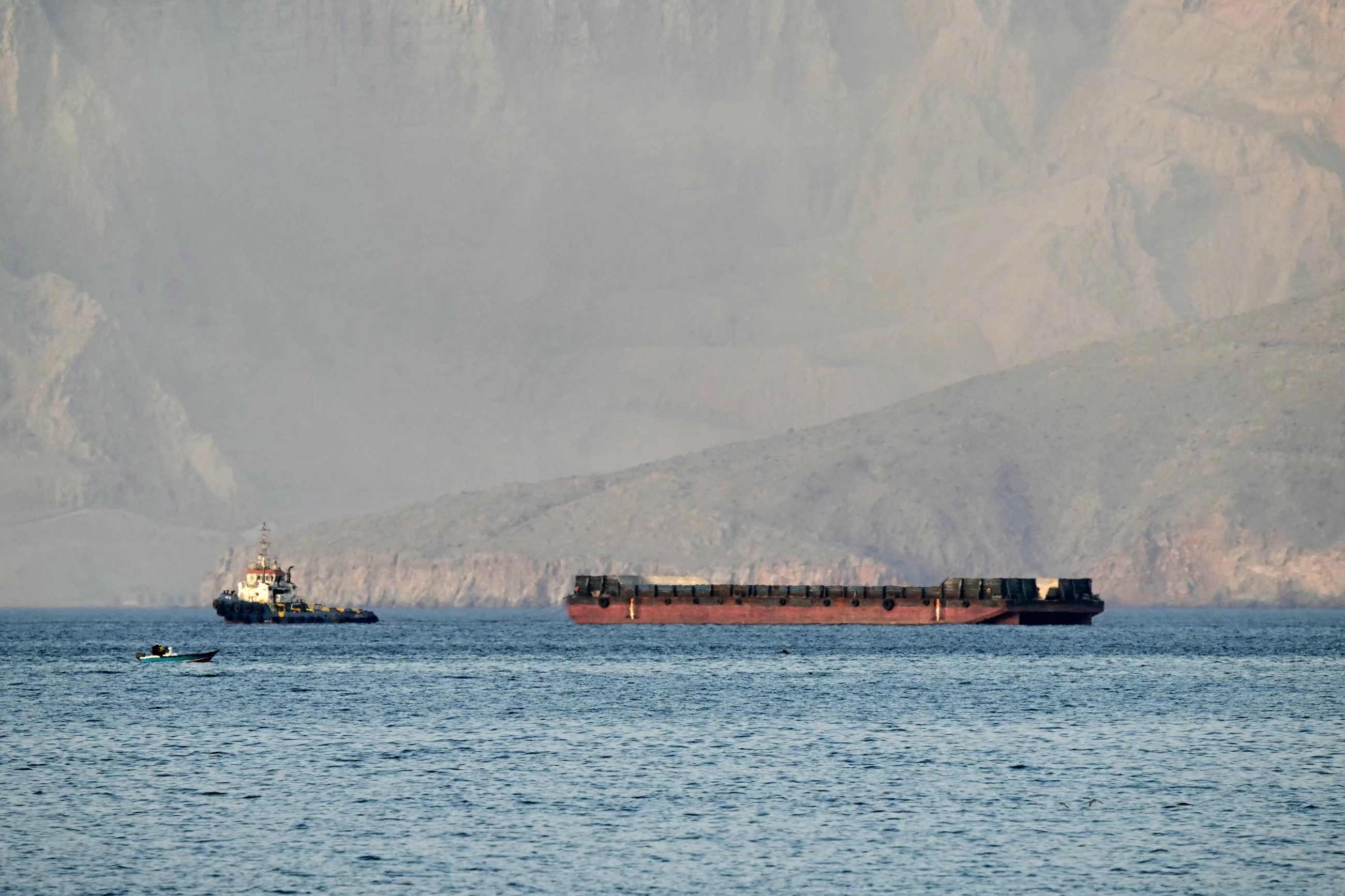
It took less than a month for the US-Israel war on Iran to erupt into a crisis of staggering magnitude — one now threatening to destabilize entire economies and push the most vulnerable nations toward the brink of starvation. What began as a contained confrontation has rapidly metastasized into a global fault line, sending shockwaves far beyond the region. The Gulf has borne the immediate cost of Iran’s response: illegal, indiscriminate, and wholly detached from the diplomatic restraint these countries had consistently championed. Those who argued most forcefully for de-escalation now find themselves directly in the line of escalation.
Iran maintains it did not ignite the war — but that assertion neither confers innocence nor absolves responsibility. Conflict does not emerge in isolation; it is forged through accumulated miscalculations, squandered opportunities, and hardened positions that narrow the field of choice until force becomes inevitable. Tehran’s refusal to engage meaningfully in nuclear negotiations with the United States did not preserve leverage — it extinguished it. In doing so, it confined itself to a strategic corner of its own making. A government’s endurance is not measured by defiance, but by its ability to navigate complexity, preserve stability, and protect its people. By that measure, Iran has failed — regionally and domestically alike.
Confronted with the consequences of that failure, Iran has chosen escalation over recalibration. In a world governed by balance, restraint is not weakness — it is power in its most disciplined form. Yet Iran has inverted this principle, widening the scope of confrontation and directing its aggression not only at declared adversaries, but at Gulf states that had actively advocated for diplomacy. Its actions in and around the Strait of Hormuz — arguably the most critical artery of global commerce — have transformed the conflict from a regional crisis into a direct threat to global economic stability. This is no longer a war contained by geography; it is a pressure point on the international system itself. Iran has moved beyond being a participant in conflict — it has become a generator of systemic risk.
This trajectory is neither accidental nor surprising. As Stephen M. Walt’s theory of alliance formation makes clear, states respond not merely to power, but to perceived intent. Even modest actors can trigger balancing coalitions when their behaviour signals aggression. For a state of Iran’s scale, the consequences are amplified. Aggression in this context does not project strength — it accelerates isolation.
The Gulf has borne the immediate cost of Iran’s response: illegal, indiscriminate, and wholly detached from the diplomatic restraint these countries had consistently championed. Those who argued most forcefully for de-escalation now find themselves directly in the line of escalation
And isolation is precisely what has followed. In the span of weeks, Iran has eroded years of diplomatic capital, severed fragile lines of engagement, and catalyzed a realignment of alliances against it. In its attempt to assert control, it has instead constrained its own strategic horizon. What is unfolding is not calculated statecraft, but reactive escalation — an approach that risks devolving into strategic exhaustion while exposing the state to broader and more dangerous confrontations.
Yet the true significance of war lies not only in its destruction, but in its revelations. War strips away diplomatic theatre and exposes the underlying architecture of alliances — their strength, their limits, and their sincerity. For the Gulf, this moment of crisis is also a moment of recalibration. It presents not only a threat to be managed, but an opportunity to redefine strategic relationships within a rapidly shifting order. Alliances are not permanent — they are tested, reshaped, and redefined in moments such as these. The ultimate victor will not be the one who prevails militarily, but the one who reads the transformation most clearly and acts with precision.
Beyond the geopolitical arena, this war has laid bare deeper fractures within the Arab world itself. Long-standing narratives have resurfaced, most notably the reductive logic of “the enemy of my enemy is my friend.” In practice, this has translated into hesitation — an unwillingness among some to unequivocally condemn Iran’s aggression against the Gulf on the basis of its hostility toward Israel. It is a dangerously simplistic lens, one that substitutes clarity with convenience and principle with expediency.
Reality is neither binary nor forgiving. Two truths can — and must — coexist. Multiple actors can be held accountable simultaneously. The refusal to do so is not neutrality; it is a failure of political judgment. It is within this failure that the Arab League’s hesitation becomes consequential. Its delayed response has not gone unnoticed, raising fundamental questions about its credibility and relevance at a moment that demands decisiveness, not ambiguity.
The Gulf has long stood as a pillar of Arab economic and diplomatic influence. Its stability is not peripheral — it is foundational. Yet the League’s reluctance echoes a familiar pattern: its division during Iraq’s invasion of Kuwait in 1990. Then, as now, competing loyalties diluted collective action, allowing ambiguity to prevail at a moment that demanded clarity. The parallel is not incidental — it is instructive.
History, in this instance, is not merely repeating itself; it is issuing a test. Whether its lessons have been absorbed remains to be seen. What is clear, however, is that the Gulf is far less willing to accept hesitation as an acceptable response. The demand now is not symbolic alignment, but substantive clarity rooted in principle.
In the end, war is the great revealer. It tears through the fabric of diplomacy, exposing what lies beneath — intentions, loyalties, and the true limits of power. It does not merely redraw maps; it reshapes meaning. This conflict will not be remembered only for what it destroyed, but for what it unveiled. And when the noise fades, it will not be the loudest who endure, but those who understood when to act, when to restrain, and when to transform crisis into consequence.