admin
admin 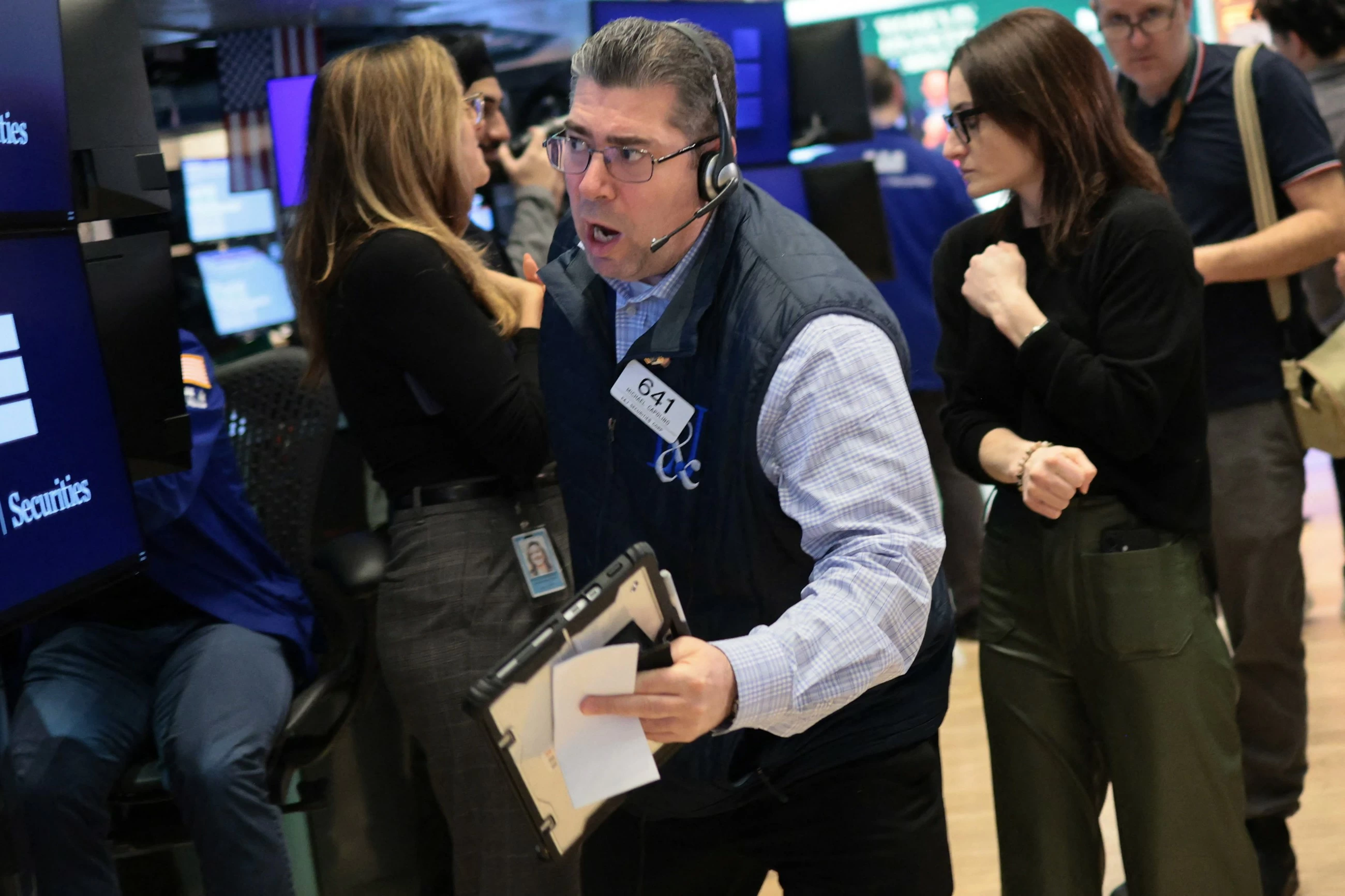
Oil prices rose as the Middle East crisis escalated with the entry of Houthi rebels into the war and as US President Donald Trump threatened to destroy Iran’s main export terminal.
However European and US stocks rose as markets focused on Trump’s comments on negotiations to end the fighting.
Trump expressed confidence that a negotiated settlement would soon be reached but warned that if it was not — or if Iran continued to block the Strait of Hormuz to most sea traffic — US forces would “blow up” Kharg Island and all of Iran’s oil wells and electricity generation.
Brent North Sea crude, the international benchmark, jumped more than three percent at one point to reach almost $117 per barrel in Asian trading.
It stood up 2.4 per cent at $107.86 per barrel as Wall Street stocks trading got underway.
Wall Street’s main equities indices rose, with the Dow adding 0.9 percent.
Briefing.com analyst Patrick O’Hare compared the situation in the global economy and on markets to an intersection where the traffic light is flashing all colours at once.
Equity investors “are taking their cue this morning from the green light” of “Trump indicating serious discussions are taking place with a new and more reasonable regime to end the military operations in Iran”, he said.
Oil markets, on the other hand, took their cue from the red light of Trump’s threats to destroy Iran’s oil fields and export terminal, as well as reports the United States is readying ground troops, plus the Houthis getting involved in the war by firing missiles at Israel, he added.
European stocks were higher in afternoon trading, with Frankfurt rising 0.5 percent despite data showing German inflation in March jumped to its highest level since January 2024, hitting 2.7 percent on the back of rocketing energy prices due to the Middle East war.
Aluminium prices climbed as much as around six percent on the London Metal Exchange after Iran attacked two major aluminium plants in the Gulf, raising concerns over supply disruptions, but then pulled back and fell.
Asia’s leading stock markets closed lower. The Japanese yen jumped on talk that the Bank of Japan could intervene on markets to shore up the country’s currency.
The yen’s gains weighed heavily on Japanese exporters, with the Tokyo stock market closing down almost three percent.
India’s rupee fell to a record low of more than 95 to the dollar on Monday, before recovering, despite recent efforts by the central bank to stem its fall.
The world’s most populous nation is one of the “most vulnerable economies within Asia to an energy price shock”, analysts at Nomura wrote in a note.
As the conflict moved into its fifth week, the spectre of a widening conflict grew as Houthi rebels on Saturday said they had fired “a barrage of cruise missiles and drones” at strategic sites in Israel.
Aluminium prices surged to four-year highs on Monday as Iranian airstrikes on two major Middle East producers over the weekend raised the risk of a prolonged supply shock.
Benchmark aluminium on the London Metal Exchange traded 3.9% higher at $3,424.5 a metric ton in official rings. Prices of the metal used in the transport, construction and packaging industries touched $3,492 earlier in the session. The U.S.-Israeli war on Iran and resulting closure of the Strait of Hormuz has already restricted shipments of aluminium to export markets in the United States and Europe.
Aluminium Bahrain, which runs the world’s largest single-site smelter, said it was assessing the damage from the Iranian strikes. Emirates Global Aluminium, meanwhile, said its plant sustained “significant damage”. Alba said this month that it was shutting smelting lines representing 19% of its capacity.
“Iran’s strikes on Middle Eastern aluminium plants are threatening to send a fragile market into crisis, raising the prospect of record prices,” Britannia Global Markets said.
“The conflict’s impact is being amplified because constraints on production elsewhere have eroded global inventories, leaving the market with little buffer against shocks.”
Aluminium prices hit a record $4,073.50 a ton in March 2022 after the invasion of Ukraine by Russia, a top producer of the metal.
Stocks of aluminium in LME-approved warehouses have dropped more than 60% since last May to 418,675 tons.
Concerns about severe shortages have pushed the premium for cash metal over the three-month contract to more than $60 a ton, its highest since 2007 .
Industrial metals overall were supported by signs of stronger demand in top consumer China.
Analysts expect Chinese factory activity to have expanded in March, ending a two-month contraction, though supply chain shocks from the Iran war cloud the outlook.
Copper was up 0.2% at $12,220 a ton, zinc gained 1.4% to $3,158, lead firmed 0.7% to $1,910.5 and tin climbed 2.2% to $46,800 while nickel advanced 0.4% to $17,260.
Agencies