admin
admin 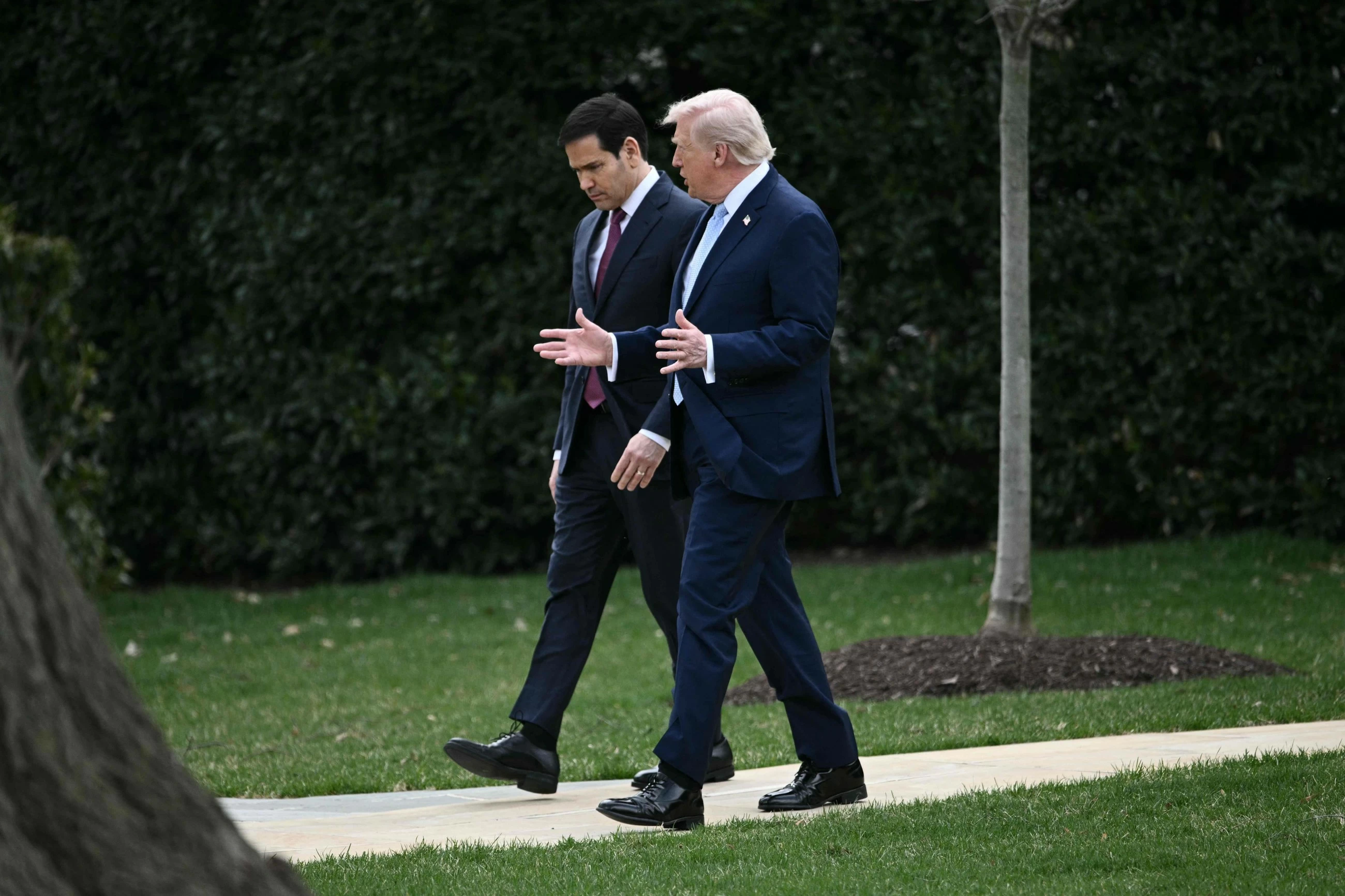
Washington: Donald Trump has sent mixed messages about Washington’s commitment to the war on Iran. While he is considering “winding down” the conflict, he has rejected a ceasefire and has stepped up offensive actions. Trump has dispatched 5,000 US ground troops to the region to augment the 50,000 already in place and has continued attacks on Iranian sites. Iran replied by firing missiles at the joint US-UK military base on the Indian Ocean island of Diego Garcia, 4,000 kilometres from the theatre of war. Iranian Foreign Minister Abbas Araghchi had said Iran will “exercise its right to self-defence” and had warned that British lives were put at risk since its bases have been used to launch strikes on Iranian targets.
Trump not only faces confusing choices but also serious challenges over the prosecution of the war he and Israeli Prime Minister Binyamin Netanyahu are waging on Iran. Trump and his partner have diverging agendas. Trump’s objectives are destroying Iran’s ballistic missile programme, sinking its navy, neutralising its regional allies and guaranteeing it can’t obtain a nuclear weapon, a US official told the Washington Post.
Netanyahu wants regime change and is using air power to achieve this end. He has assassinated Iran’s supreme leader Ali Khamenei, National Security Council head Ali Larijani and Basij paramilitary force commander Gholamreza Soleimani and attacked security agencies that protect the government. The regime remains firmly in place and functioning. After an Israeli strike on Nantaz which hosts a devastated nuclear facility, Iran replied with missiles which struck near Israel’s nuclear plant at Dimona.
Trump is under popular pressure to end the war. Trita Parsi, Executive Vice President of the Quincy Institute said, “Trump risks losing significant support of his base if he deploys ground troops [and by extending the war] pushes up gas (petrol) prices.” A poll conducted from March 12-14 by the Quincy Institute and the American Conservative showed that 79 per cent would prefer Trump to declare victory and halt hostilities. By contrast, Netanyahu retains the backing of 93 per cent of Israelis for continuing the war, a conflict he has dreamed of waging for four decades.
He declared, Iran “is weaker than ever” while Israel is a regional power “and some would say a world power.” He said Israel has opened the way for the Iranian people to effect regime change but neither Netanyahu nor Trump are prepared to deploy boots-on-the-ground to back them. Iran’s Republican Guard Corps remains united and loyal and there is no serious opposition in the country which could assume governance.
Trump and Netanyahu miscalculated when they launched their war on Iran on January 28th. They believed the war would last four or five days with Iran’s defeat. Instead, the conflict has continued for nearly two months. Trump has repeatedly declared “Operation Epic Fury” a stunning success, but he has given no commitment on the war’s end.
US intelligence experts argue Trump is further than ever from victory. As Iran’s regime has not surrendered, Tehran can count survival as victory. Iran planned for just such a war by appointing replacements for assassinated top figures, but their survivors are more hard-line and less ready to negotiate a ceasefire and an end to the war. Meanwhile, Iran has used geography as a weapon of war by blocking most traffic through the Strait of Hormuz which accounts for 20 per cent of global oil and liquified gas consumption. The price of oil has hovered between $100-$120 a barrel, a 40 per cent surge since the war began.
As long as the war lasts protection will have to be provided for ships trapped in the Persian Gulf and ships outside seeking to enter to load oil and gas and off-load food and goods. Saudi Arabia accounts for 37.2 per cent of oil transit through Hormuz, Iraq 23 per cent, the Emirates 13 per cent, Iran 10.6 per cent, Kuwait 10.1 per cent, Qatar 4.4 per cent and others 1.9 per cent. Since they are not prepared to provide armed naval escorts, the US could be compelled to assume this role. Japan, France, the Netherlands, Germany and Italy have said they would take part once there is a ceasefire.
Having failed to consult with their leaders before launching the war, Trump has used abusive language against Europe for refusing to join in the protection effort. Sharply critical of the US and Israel over the war, Europe is reluctant to become involved for the practical reason that only four per cent of oil it consumes transits Hormuz. Its beneficiaries, Beijing and New Delhi, have agreed to join a protection mission although Hormuz handles 40 per cent of China’s seaborne oil imports and 40-60 per cent of India’s imports.
Before the war, about 138 ships passed through the strait each day, according to the Joint Maritime Information Centre, but only 99 have transited since the war began, one-third of them Iranian flagged. These ships have sailed along the coast rather than through the shipping channel which may be seeded with mines. US military planners have told the Financial Times that the time is not ripe for US ships with thin hulls to attempt to transit Hormuz. They would not face mines but also aerial drones and missiles. Once naval commanders believe the risk is tolerable, the US could deploy destroyers to accompany each convoy of two to four oil tankers as well as minesweepers to prepare for their voyages. Since the US closed down its units of minesweepers in 2006, Washington would have to rely on a hesitant Europe or NATO to assume this responsibility.