admin
admin 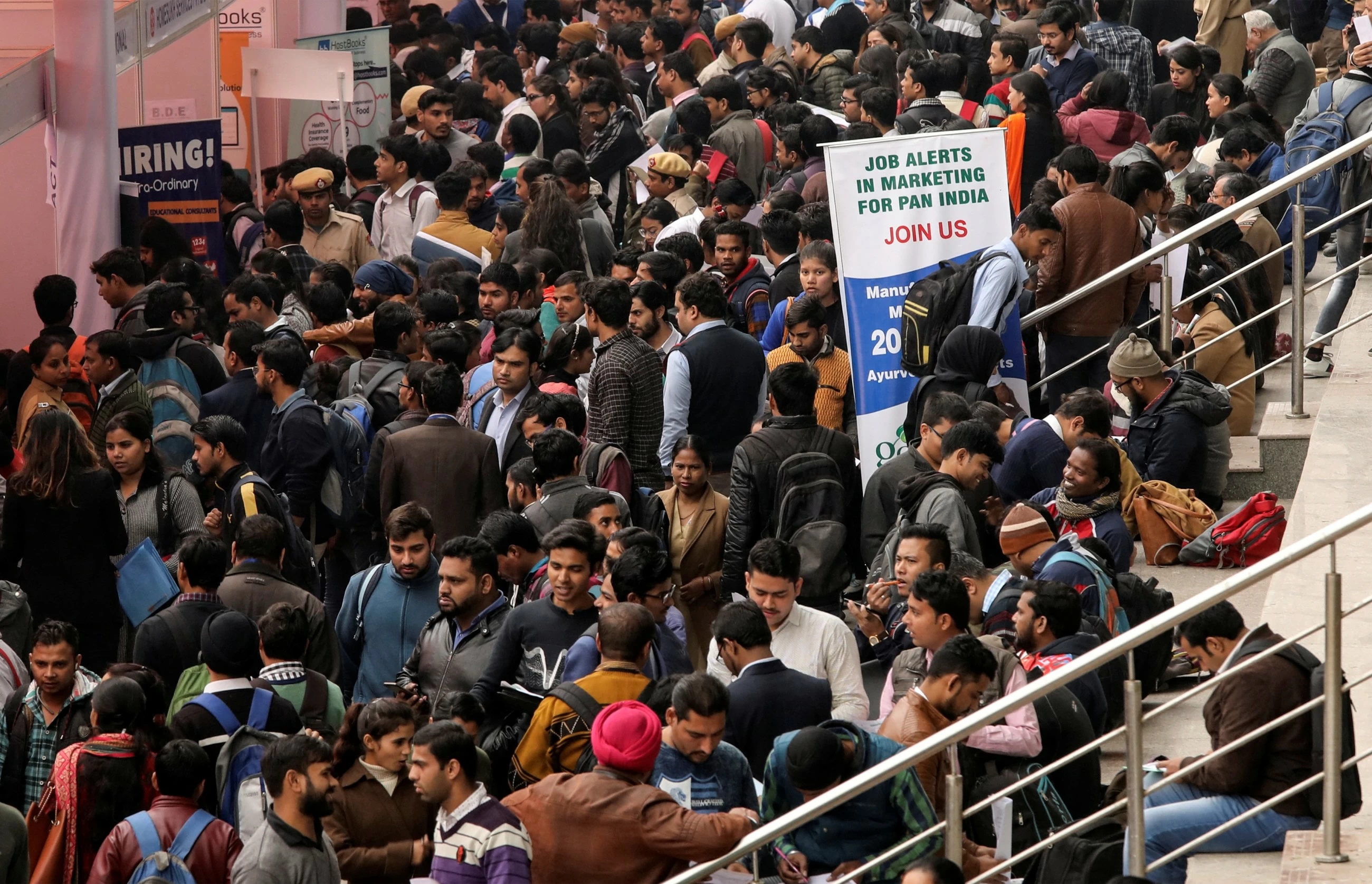
The decline in India’s unemployment rate to 4.9 per cent in February reflects an encouraging shift in the rhythm of hiring.
Employment creation is no longer locked within a handful of urban hubs or select industries.
February’s gains were spread across manufacturing, construction, retail, logistics, and agriculture – a sign that recovery is broad based and reaching both rural and urban India, according to an article in India Narrative.
The government’s capital expenditure on big infrastructure projects, and the rebounding business confidence appear to be translating into tangible job opportunities.
The manufacturing push under the “Make in India” and “Atmanirbhar Bharat” programmes seems to be showing results.
PLI (Production-Linked Incentive) schemes are attracting global investments in sectors such as electronics, automobiles, and renewable energy.
These industries not only create direct factory jobs but also spawn ancillary employment in logistics, component manufacturing, and services.
The growing trend of global companies choosing India as a production base has made job creation increasingly resilient to seasonal slowdowns, the article states.
It also highlights that youth employment, often seen as India’s biggest challenge, is also witnessing green shoots. The technology and digital services industries continue to thrive, employing millions in software, data analytics, and cloud solutions.
More recently, India’s robust startup ecosystem – from fintech and e-commerce to green energy – has become a magnet for young talent.
The government’s continued focus on skilling through programs like PM Kaushal Vikas Yojana ensures that a generation of youth is better prepared for the changing job landscape.
The pickup in rural jobs indicates that the benefits of growth are filtering down to smaller towns and villages. This expansion helps stabilise household incomes and strengthens rural demand, creating a virtuous cycle of economic activity, the article further states.
While much of the recent improvement stems from cyclical recovery, deeper structural trends are also playing out.
India’s labour force participation rate, particularly among women, has begun moving upward after years of stagnation.
More women entering the workforce – in healthcare, education, micro entrepreneurship, and digital services – indicates a gradual but meaningful transformation in the nature of India’s employment base.
As digital connectivity expands, new flexible models of work, including remote and part time opportunities, are unlocking economic potential for millions who were previously excluded, the article added.
Meanwhile it is said that India is rapidly climbing the global economic ladder and will likely overtake Germany to become the world’s third‑largest economy by the end of the decade but sustaining that rise will require a sharper focus on manufacturing, job creation and artificial intelligence, a new report has said. The Boston Consulting Group (BCG) said in the report that India will soon overtake Japan in nominal gross domestic product to become the world’s fourth‑largest economy, adding that the country must solve some structural challenges to sustain growth.
The consultancy highlighted the decline of manufacturing as a key concern, noting the sector’s share in GDP fell from 17 per cent to 13 per cent over the past decade.
The firm pointed out that each new manufacturing job from a company generates more than two additional jobs across the economy, while service‑sector hiring has a much smaller multiplier effect of usually one additional job. By targeting manufacturing growth in sectors that combine job potential and manageable automation risk such as precision equipment, specialty chemicals, pharma intermediates, electronics assembly and textiles, India can create expansion with less capital compared to peers, the report noted.
The report also highlighted distribution inefficiencies in the agriculture sector where farmers capture only 25 per cent of what consumers pay for their produce, limiting rural income growth despite India’s overall economic expansion.
“Success will require partnership and a coordinated approach between companies and governments. Companies that embed AI into their operating models, and demonstrate returns, will define the next phase of competitive advantage,” the report noted.
The report called for Indian companies to treat AI deployment beyond experimentation but as a strategic imperative, stressing that the country has the technical talent to drive the shift.
“India’s goal to become a high-income economy requires making cities more liveable by investing in urban infrastructure, affordable housing, and mass transit that serves the entire population,” the report further said.
Indo-Asian News Service