admin
admin 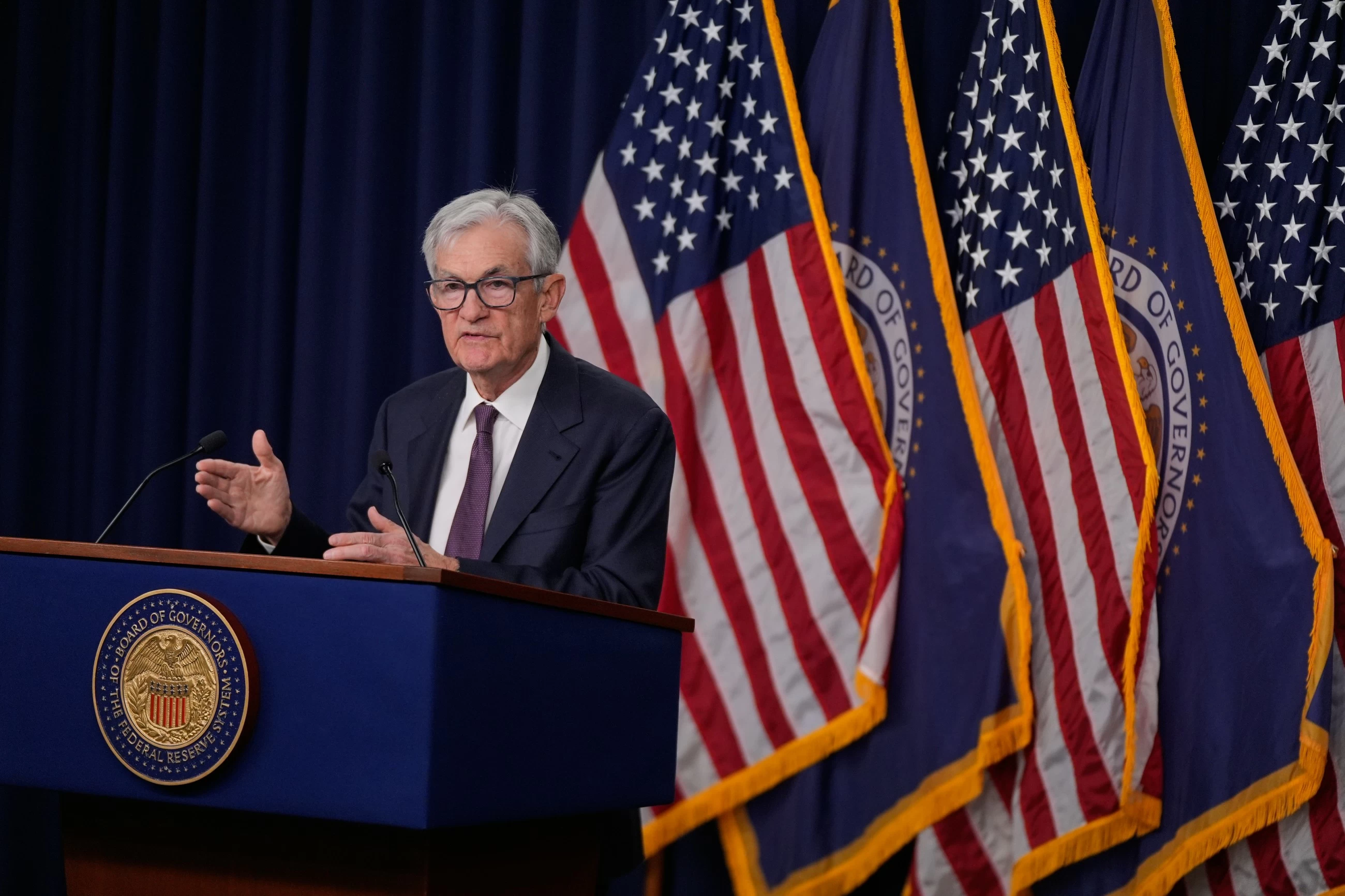
The US central bank held interest rates steady and projected higher inflation, steady unemployment and a single reduction in borrowing costs this year, a path that Federal Reserve Chair Jerome Powell said was subject to unusually high uncertainty as policymakers take stock of the impact of the US and Israeli war with Iran.
The Central Bank of the UAE (CBUAE) has decided to maintain the Base Rate applicable to the Overnight Deposit Facility (ODF) at 3.65%.
This decision was taken following the US Federal Reserve’s announcement to keep the Interest Rate on Reserve Balances (IORB) unchanged.
The CBUAE has also decided to maintain the interest rate applicable to borrowing short-term liquidity from the CBUAE at 50 basis points above the Base Rate for all standing credit facilities.
The Base Rate, which is anchored to the US Federal Reserve’s IORB, signals the general stance of monetary policy and provides an effective floor for overnight money market interest rates in the UAE.
“In the near term, higher energy prices will push up overall inflation, but it is too soon to know the scope and duration of the potential effects on the economy,” Powell said in a press conference following the Fed’s 11-1 decision to maintain its benchmark overnight interest rate in the 3.50%-3.75% range. “The thing I really want to emphasize is that nobody knows: the economic effects could be bigger, they could be smaller; they could be much smaller or much bigger; we just don’t know.” New projections showed Fed policymakers as a group expect to cut the policy rate by a quarter of a percentage point by the end of this year, a view that on the surface was unchanged from their last set of projections in December.
Powell noted, however, that individual projections show a “meaningful” number of policymakers are penciling in less easing this year than they did three months ago.
And the possibility that the Fed’s next move “might be an increase did come up at the meeting as it did at the last meeting,” Powell said, though he added that the “vast majority” of the officials don’t have that outcome as their base case.
Monetary policy, he repeated, is “well positioned to determine the extent and timing of additional adjustments to our policy rate based on the incoming data, evolving outlook, and the balance of risks.” Powell’s remarks prompted traders to pile into bets that the Fed will wait until next year to cut rates. US stocks slumped, with the S&P 500 index falling about 1.4% to its lowest close in nearly four months. The dollar jumped against a basket of currencies while US Treasury yields rose. The Fed is in the difficult position of needing to balance the risk of higher inflation amid a fresh shock and downside risks to the labour market, said Powell, whose term as Fed chief ends in May.
“I wouldn’t say that it’s clear at all that one is more at risk than the other.” ONE FED Fed policymakers now expect inflation, as measured by the central bank’s preferred gauge, to end the year at 2.7%, not far below the current rate and higher than the 2.4% projected in December, reflecting fallout from the spike in global oil prices that followed the start of the bombing campaign against Iran. But the higher inflation projections also are due to stickier tariff-driven inflation slowing progress towards the Fed’s 2% inflation goal, Powell said.
“The thing that’s really important that we see this year is progress on inflation through a reduction in goods inflation,” he said.
The new rate and economic projections showed the Fed, for now, largely looking through the oil shock, with policymakers still expecting to lower rates this year and anticipating inflation to be 2.2% by the end of 2027.
Notably, no policymakers saw rates needing to move higher by the end of this year, though one official anticipated a rate hike in 2027.
Economic growth was upgraded slightly, to 2.4% for 2026 versus 2.3% in December, and the projected unemployment rate was unchanged at 4.4%.
Fed Governor Stephen Miran continued his string of dissents, voting against the policy decision in favor of a rate cut.
The decision to hold the policy rate steady was widely expected in financial markets, but the projections provide fresh information about how the US central bank is assessing the economic impact of a war that has disrupted global oil markets. Oil prices have jumped from below $80 a barrel to $108 ahead of the Fed’s policy decision, with US gasoline prices also spiking and new inflation data showing wholesale prices rising faster than expected even before the conflict began.
Other than the reference to the war, the Fed’s new statement was little changed from the one issued at the end of its January 27-28 meeting.
Overall, the developments underscore a cautious global monetary outlook as central banks balance inflation risks against growth concerns. With uncertainty surrounding geopolitical tensions and energy markets, policymakers are likely to remain data-dependent in the months ahead.
WAM/Agencies