admin
admin 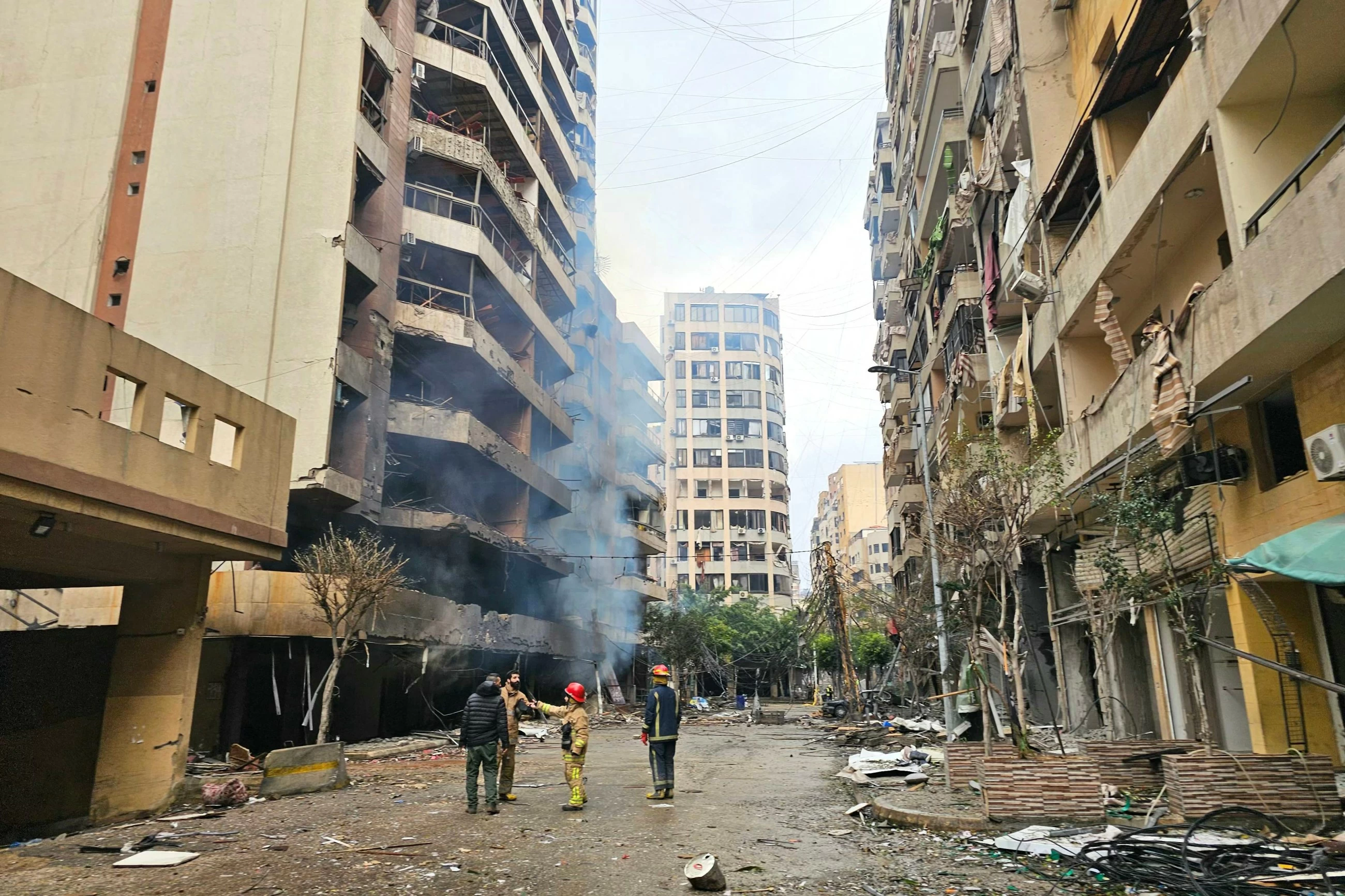
Beirut: While partnering the US in its expanding war on Iran, Israel has unilaterally opened a second front against Hizbollah in Lebanon. Israel has ordered the evacuation of east Beirut and expanded ground operations with the aim of seizing the region south of the Zahrani River. Tens of thousands of Lebanese have fled east Beirut, a Hizbollah stronghold. Israel’s operation in the south could be the most serious offensive since 2006 and enable Israel to permanently occupy the area. A Lebanese source said this would give Israel potable water from Mount Herman (Jebal Shaikh), onshore and offshore oil resources, and rich agricultural land where fruit and vegetables for local consumption and export are grown.
After the February 28th launch of the war on Iran, the Israeli army deployed three armoured and infantry divisions along the Lebanese border, enabling ground forces to conduct multiple incursions. Last Friday, Israel announced it is dispatching additional units to the border and mobilizing additional reserves to provide for the expanded ground operation. “The goal is to take over territory, push Hezbollah’s forces north and away from the border, and dismantle its military positions and weapons depots in the [southern] villages,” an Israeli official said.
Around 14 per cent of Lebanon’s territory is now under evacuation orders, covering more than 1,300 square kilometres. People from nearly 200 villages and towns were forced to evacuate in under two weeks. The Israeli military called on Lebanese living south of the Zahrani River, about 40 km from the Lebanon-Israel border, to move north due to “Hizbollah activity in the area.” Israel intends to exact a high price by targeting Lebanon’s national infrastructure and seizing territory used by Hizbollah militants until the government delivers on its commitment to disarm the group. Beirut had accepted the end of 2025 as the deadline for completing this task but failed. Hizbollah refused to disarm, is better armed than the regular army, and enjoys the support of many in the Shia community, Lebanon’s largest.
UN humanitarian coordinator in Lebanon Imran Riza, said Lebanon faces a “perfect storm of unpredictable challenges” due to the convergence of conflict, mass displacement and dwindling humanitarian resources. Fatalities stand at lesst 826 with women accounting for 21 per cent and children 20 per cent. He stated that more than 832,000 people have been uprooted and about 120,000 displaced people are staying in emergency shelters, most of them in public schools, denying children access to education. “Women are the ones holding the families together,” Riza said as they are organising evacuations and dealing with traumatised children.
The humanitarian response is becoming increasingly difficult as funding cuts, notably by the Trump administration, have reduced resources. Regional assistance that helped during the previous crisis has been reduced as these countries cope with Iranian attacks on military bases hosting US forces which Tehran claims are targeting Iran. To these objectives, Iran has added US banks, commercial establishments and other facilities.
Médecins San Frontiers (MSF) reported, “We have witnessed people fleeing areas that fall below Zahrani River towards the north and are closely monitoring the impact of these new evacuation orders. This time though, more people have decided not to evacuate, often because shelters are full, routes are unsafe, they have no means to move again, or they simply have nowhere else to go – which likely contributes to higher civilian exposure and rising casualties.
“At the same time, families are carrying the financial and psychological toll of repeated displacement: the loss of homes and livelihoods, mounting debt, exhaustion, trauma, and a lack of access to care, are all making it harder to cope.”
Lebanon is caught between the rock of Israel and the hard place of Iran, the sponsor of Hizbollah. Regional hegemon Israel enjoys the support of the US, the global superpower which rarely restrains Israel. It has a longstanding grudge against Hizbollah, which was founded in 1982 after Israel invaded and occupied Lebanon from the border to Beirut with the aim of driving from Lebanon the Beirut-based Palestine Liberation Organisation (PLO). It had been mounting pinprick raids across the Lebanese border into northern Israel. Shias in south Lebanon initially welcomed the PLO withdrawal, but Israeli interference and oppression led to the formation of Hizbollah which expelled Israeli forces in May 2000.
Hizbollah was celebrated in Lebanon and throughout the Arab world as the first Arab force to vanquish Israel. The day after Israeli forces pulled out, I toured the villages of south Lebanon from Naqoura to Merjayoun where children were handing out sweets and thousands of Lebanese from elsewhere thronged to the region, creating traffic jams. Hizbollah’s celebrity status faded as soon as tensions returned along the Lebanese- Israeli border, an unpredictable, longstanding regional flashpoint. History has not been kind to Lebanon.
In 1948, Lebanon’s small army joined Arab forces which fought and lost the war Israel waged for its establishment in 78 per cent of Palestine. During this war 750,000 Palestinians were expelled, tens of thousands into Lebanon where refugee camps housed them. Nevertheless, the border remained peaceful until in 1965 Fatah began guerrilla operations into Israel.
In June 1967, Israel attacked Egypt, Syria, and Lebanon, and occupied the remaining 22 per cent of Palestine as well as Egypt’s Sinai Peninsula and Syria’s Golan Heights. In 1978, Israel invaded Lebanon and advanced to the Litani River to halt raids by Palestinian fighters, In 1982. Israel again invaded Lebanon, marched to Beirut, and forced Palestinian fighters to relocate to Tunis. This war ed to the creation of Hizbollah which with Iran’s backing mounted operations against northern Israel. While Israel withdrew from most of Lebanon in 1985, it retained a security zone along the border, eliciting attacks from Hizbollah which forced Israel to pull its forces out of Lebanon. In July 2006 war erupted again and lasted 34 days. The border remained relatively quiet until October 2023, after Iran-supported Hamas attacked Israel, killed 1,200 and abducted 250, and Hizbollah attacked Israel across Lebanon’s border. Although a ceasefire was agreed in 2024, Israel has repeatedly violated it, killing 330 people, 127 of whom were civilians.