admin
admin 
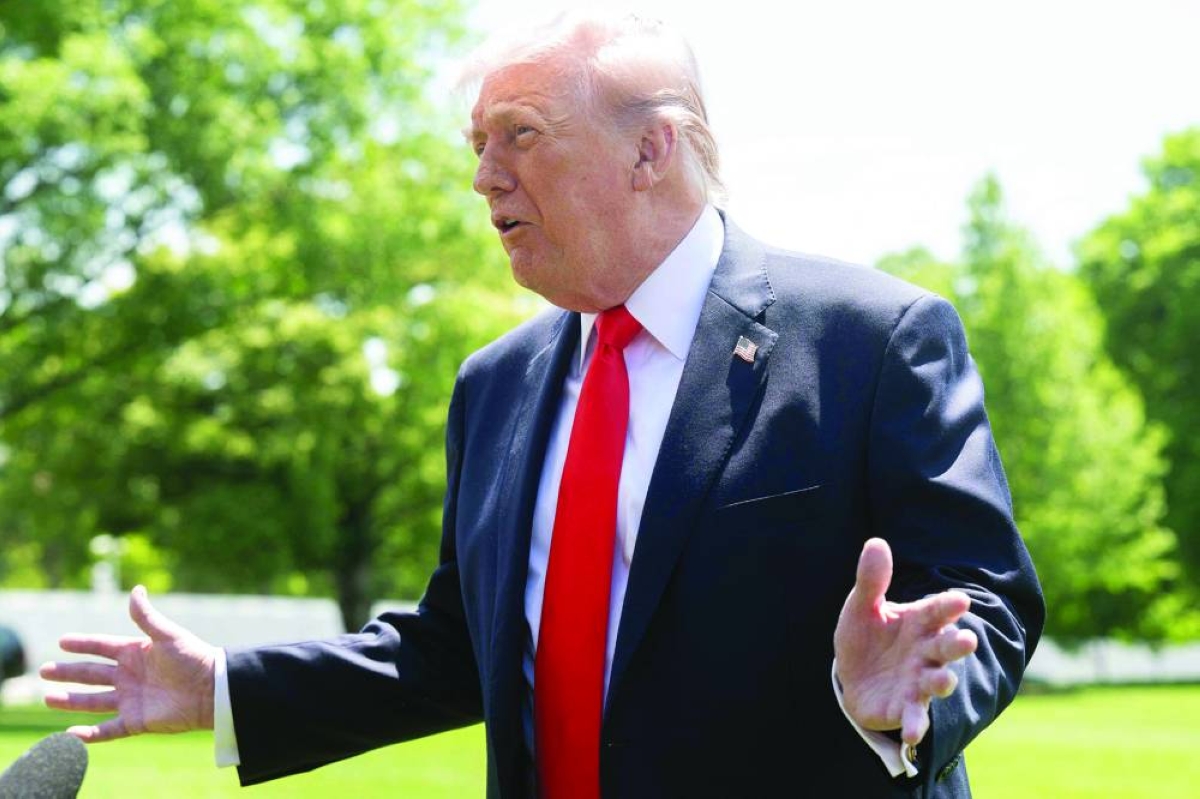
Most Gulf stock markets ended higher on Tuesday, mostly led by financial shares, after President Donald Trump said the US-Israeli war on Iran could end soon even as mutual threats persisted.
Dubai’s main share index jumped 2%, led by an 8.3% surge in top lender Emirates NBD (ENBD) – its biggest intraday gain since December 2024. Among other gainers, Dubai Financial Market, which operates the emirate’s stock exchange, jumped 8.2%. However, the gains were limited by a 4.1% slide in blue-chip developer Emaar Properties and a 3.2% decrease in budget airliner Air Arabia amid ongoing caution over the Middle East conflict.
In Abu Dhabi, the index gained 1.4%, helped by a 5.8% rise in Abu Dhabi Islamic Bank and an 8.7% surge in Abu Dhabi Commercial Bank . In steps aimed at stabilizing markets, the UAE Securities and Commodities Authority said last week that Abu Dhabi’s ADX and Dubai’s DFM exchanges suspended trading on March 2 and 3, while the two exchanges said they would temporarily set a 5% floor on securities declines.
The Qatari index advanced 2.5%, with the Gulf’s biggest lender Qatar National Bank gaining 4.3% and petrochemical maker Industries Qatar up 4.6%. Expectations of a near-term resolution could improve sentiment, which has recently turned risk-off. While regional markets may remain sensitive to ongoing frictions, firmer sentiment could help establish a floor and support a sustained rebound, said Joseph Dahrieh, Managing Director at Tickmill.
The cost of insuring against default on sovereign debt issued by several countries in the region fell on Tuesday, with five-year CDS spreads tightening after rising sharply on Monday. Bahrain’s five-year CDS tightened 21 basis points (bps) to 249 bps, Saudi Arabia’s fell 6 bps to 82 bps, while Egypt’s and Dubai’s both narrowed 11 bps, to 357 bps and 61 bps respectively, S&P Global Market Intelligence data showed.
Saudi Arabia’s benchmark index gained 0.9%, with Al Rajhi Bank rising 2%. Investors have been adjusting their portfolios away from the UAE market as they reassess its relatively low risk premium, especially after the strong rally seen earlier this year before the conflict, said Chiro Ghosh, head of research at SICO bank.
At the same time, Saudi Arabia is viewed as less exposed than other Gulf markets to risks linked to the Strait of Hormuz, with investors also considering the possibility that parts of the supply chain could be rerouted through the Red Sea to reduce disruption.
Saudi stocks also appear relatively attractive on valuation grounds. The index posted its weakest annual performance in a decade last year and has only made a modest start this year, prompting some investors to see room for recovery.
Oil major Saudi Aramco retreated 0.8% after reporting a 12% drop in annual profit mainly due to lower crude prices.
Oil prices fell on Tuesday after hitting a more than three-year high in the previous session, following Trump’s comment. Kuwait’s was up 1.4%, while Bahrain’s slipped 0.4%.
Eksehwere, Oman’s index eased 0.2%.
Outside the Gulf, Egypt’s blue-chip index climbed 2.9%.
Global stocks rose and oil prices fell on Tuesday after US President Donald Trump declared the Middle East war could be “over soon,” although defiant comments from Iran’s military cast some doubt over the prospects of a swift resolution. Europe’s STOXX 600 index pared some earlier gains but was last still up 1.5% on Tuesday after declining for three consecutive trading days. MSCI’s broadest index of Asia-Pacific shares outside Japan rose around 3.2%. Brent oil futures fell as much as 11% to below $88.05 per barrel at one point, before trimming their decline to about 5.6%. Trump’s remarks on Monday injected optimism that contrasted with events in Iran, where hardliners rallied behind new Supreme Leader Mojtaba Khamenei and the Revolutionary Guards said a blockade of oil exports would continue until US and Israeli attacks end. Trump said the US would hit Iran much harder if it blocked exports.
The strong reaction to Trump’s remarks “really does highlight how the markets are literally hanging on every word he says,” Fiona Cincotta, senior market analyst at City Index, said.
However, uncertainty persists and further volatility could lie ahead, she said.
“The markets remain volatile because they’re still being very much headline driven. And that obviously means that any comments can send the market sort of one way or the other,” Cincotta said.
On Tuesday, Trump told Fox News it was possible he would talk with Iran, while US Defense Secretary Pete Hegseth said Tuesday would be the most intense day of strikes against Iran in the campaign so far.
Steadier investor sentiment triggered a share rebound in Europe and Asia on Tuesday, while government bond yields dipped and interest rate expectations shifted again.
European indexes followed Asia higher to start the day before retracing some gains as the day progressed, with Germany’s DAX last up 1.8% and France’s CAC 40 adding around 1.2%. Money markets cut the chances of a European Central Bank rate hike this year, after this was more than fully priced in late on Monday, while the benchmark German 10-year bond fell around one basis point to 2.8542%. Rate-sensitive two-year yields fell more sharply, with Germany’s down 5 bps. Britain’s dropped 6.5 bps to 3.92% after hitting 4.23% on Monday at the height of market worries that surging oil prices would reignite inflation and prompt central banks in Europe to tighten policy later this year.
“Market pricing suggests weeks of disruptions, not days or months,” analysts at BlackRock Investment Institute wrote.
“There’s a risk of a stagflationary shock but it’s not a given, as market pricing indicates.” The yield on the US 10-year Treasury note was last down less than one basis point at 4.126%, having eased more sharply earlier in the day. Traders pushed out bets on the timing of the Federal Reserve’s next rate cut, with the first reduction now not seen until July, according to the CME Group’s FedWatch tool.
Agencies