admin
admin The UAE was recognised as one of the safest countries globally in the 2026 risk ranking released by SOS International, a company that focuses on medical services, travel risk management, and security.
This ranking is attributed to the country’s stable security conditions and minimal health risks. The report also highlighted that artificial intelligence has emerged as an essential tool in risk management. However, it also presents growing challenges concerning misinformation and fake content.
The organisation’s classification system evaluates security and health risks in each country through an interactive map that uses various indicators related to these areas, as well as the capacity of local systems to handle and mitigate these risks.
The report placed the UAE in the “medium security risk” category, highlighting that the nation benefits from a stable security environment, effective security and emergency services, and advanced infrastructure that supports responses to new challenges.
The report highlighted that the UAE has been given a “low health risk” classification, noting the presence of excellent medical services nationwide. It pointed out the broad access to specialized care, emergency services, dental care, and high-quality prescription medications.
The document noted that the likelihood of contracting gastrointestinal infections is minimal due to the comprehensive sanitation infrastructure and safe drinking water. It also mentioned that travelers to the UAE are most likely to need medical referrals, language and cultural assistance, and help with payment arrangements. However, medical evacuations are infrequent.
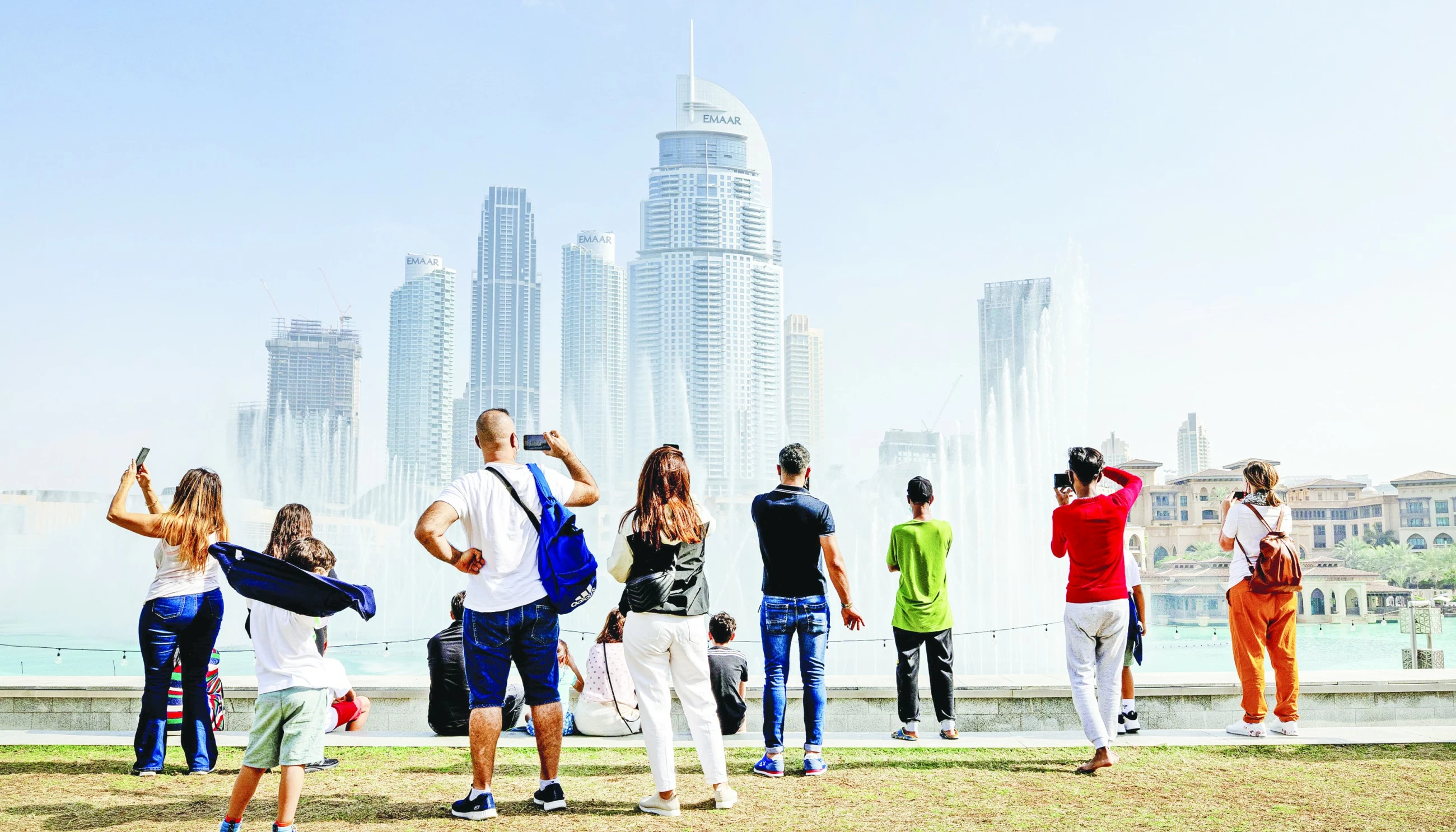
Tourists watch the water fountain display near the Burj Khalifa skyscraper in Dubai.
The “Risk Outlook Pulse 2026” report by the organisation highlighted that institutions are seeing artificial intelligence as an essential tool for validating risk-related information, especially with the rapid growth of AI technologies in both the public and private sectors in the UAE.
According to the report, about 60% of respondents see the primary advantage of AI in its capacity to verify and cross-check information from various sources. However, it also warned of the increasing risks associated with misinformation and artificially generated content.
The report highlighted that challenges have become increasingly significant in the UAE, as cybersecurity specialists caution that AI-driven disinformation campaigns and deepfake technologies represent an escalating threat capable of eroding trust and disrupting institutional functions.
Sveti Koniska, the organisation’s Global Security Director, indicated that although AI offers considerable power in quickly gathering, analysing, and prioritizing information, human judgment remains essential for verification, particularly when decisions affect people’s health, safety, and security.
She further mentioned that depending too heavily on AI tools at this point could increase misinformation risks and slow down crucial decision-making instead of enhancing it. She emphasised that the most secure approach involves embedding AI within a human-controlled risk management framework.