admin
admin Polls opened on Monday in parts of Pakistan-administered Kashmir where voting for the local legislature will take place in three rounds with heavy security following protests demanding electoral reforms.
With concerns growing over stretched security personnel during the demonstrations, the electoral commission announced less than a week before polls that voting would be split into three phases for the first time.
Witnesses said turnout in Mirpur district, the first area to vote, appeared low in the summer heat on Monday afternoon.
Some candidates complained internet restrictions imposed during the protests and ensuing deadly clashes had hampered their campaigns.
“The internet shutdown has created serious difficulties… for political candidates and the electoral process itself, reaching voters has become much harder,” independent candidate Malik Alauddin told AFP in the lead up to the vote, which had sent him on long journeys to remote towns in the mountainous region to reach voters.
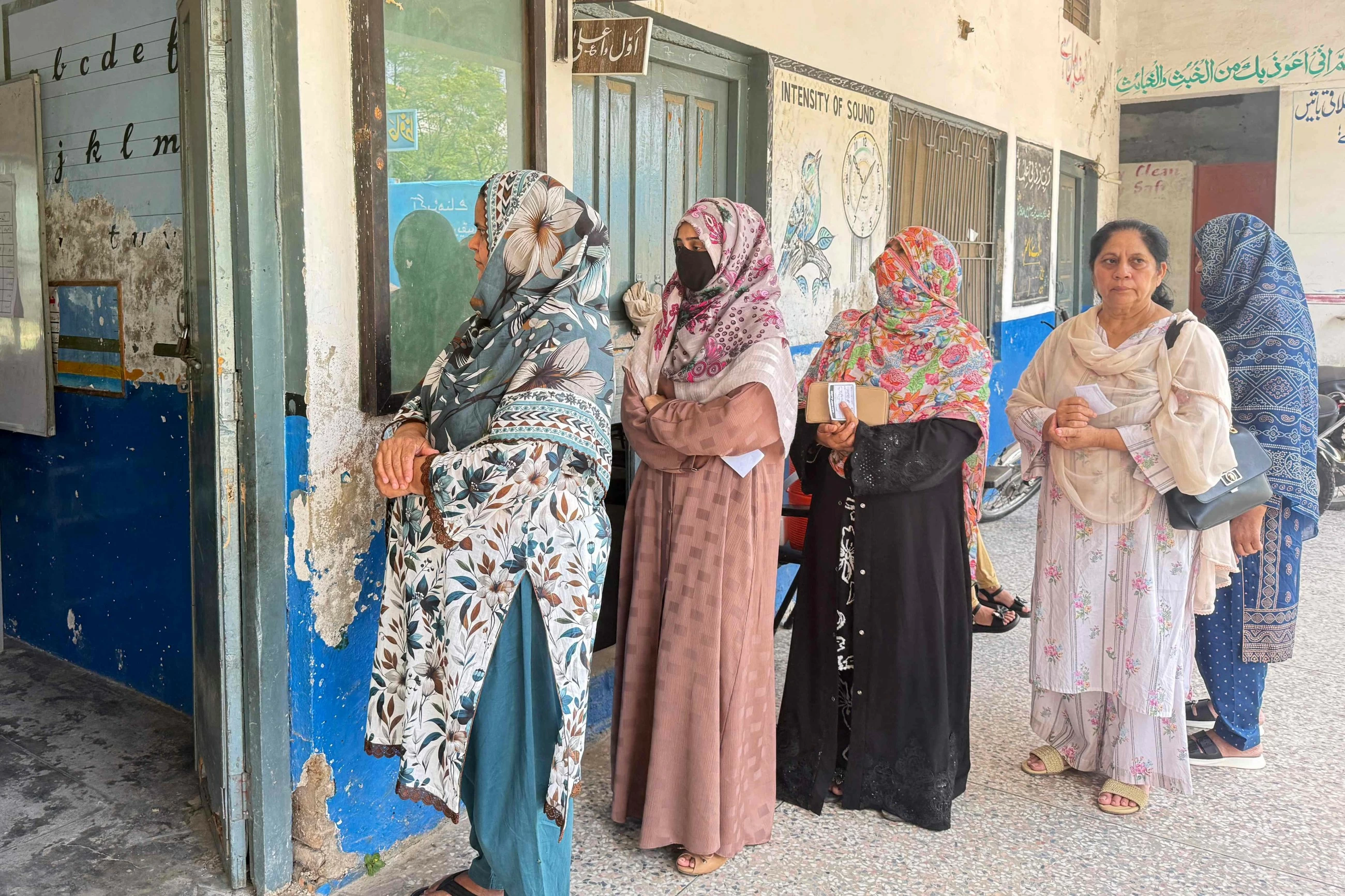
Women stand in a queue to cast their ballots at a polling station during the first phase of regional elections in Mirpur. AFP
Around 3.8 million residents in the Pakistan-administered portion of the disputed Himalayan region were eligible to vote in an election seen as a test of security after weeks of clashes between police and protesters.
The Joint Awami Action Committee (JAAC) protest movement has demanded the abolishment of 12 seats in the local legislature reserved for those who left what is now the India-administered portion of Kashmir.
JAAC supporters have called on residents to boycott the vote and say the seats are used by major Pakistani political parties to tip the composition of the local parliament in their favour with those who mostly reside outside the region.
The local government banned JAAC under anti-terrorism laws in June, sparking a new wave of demonstrations and clashes that killed dozens with hundreds arrested.
Digital monitor Netblocks and residents have reported widespread internet restrictions.
Alauddin told AFP he had adopted a campaign style favoured by pre-internet generations, focusing on gatherings in remote villages and going door to door to potential voters’ homes. “This is a vast mountainous constituency. If the internet were available, a single social media post could reach thousands of voters, but now we have to travel to every small village ourselves,” he said.
The government has not confirmed the scale of the internet outage and said some connections have been restored.
Voting will wrap up on Aug.10 in Poonch district, the epicentre of the protests.
POLITICAL TEST
The vote will also be watched closely as an indicator of the performance of Pakistan’s major political parties around halfway through the ruling Pakistan Muslim League-Nawaz (PMLN) party’s five-year term.
Former prime minister Nawaz Sharif, brother of the sitting premier, visited the regional capital Muzaffarabad last week to campaign for PMLN, trading jabs with rival Pakistan Peoples Party (PPP) Chairman Bilawal Bhutto Zardari.
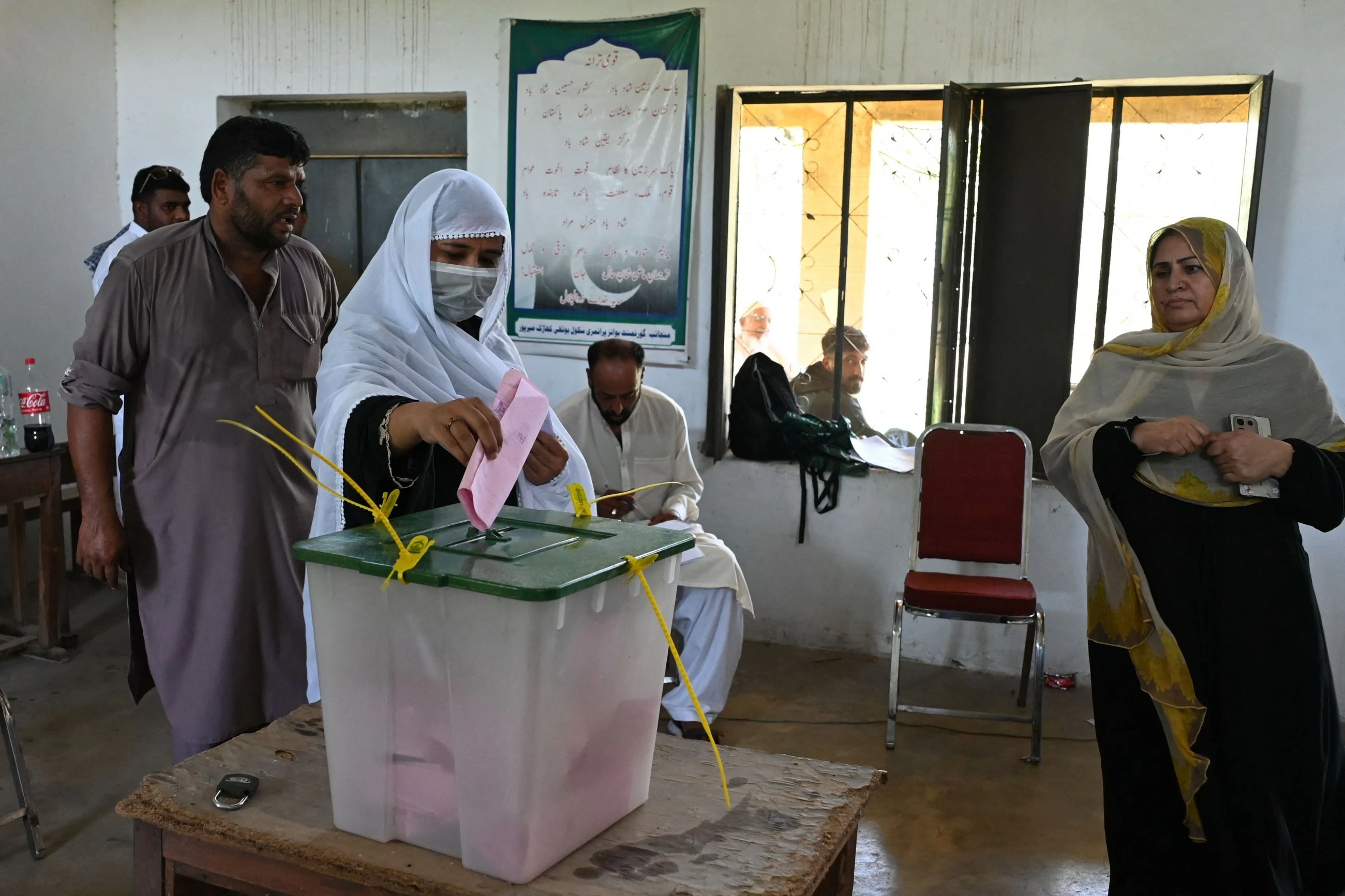
A woman casts her ballot at a polling station in Mirpur on Monday. AFP
The former foreign minister and son of assassinated premier Benazir Bhutto has called for internet services to be restored, saying the blackout has severely disrupted his party’s campaign.
The Pakistan Tehrik-e-Insaf (PTI) party of popular jailed former prime minister Imran Khan, meanwhile, is also boycotting the election.
“With protests continuing, arrests, police raids, criminal cases against political workers and a weeks-long internet shutdown, this is not an environment in which political parties should be asking people for votes,” said Khawaja Farooq Ahmed, a senior PTI leader.
Agence France-Presse