admin
admin 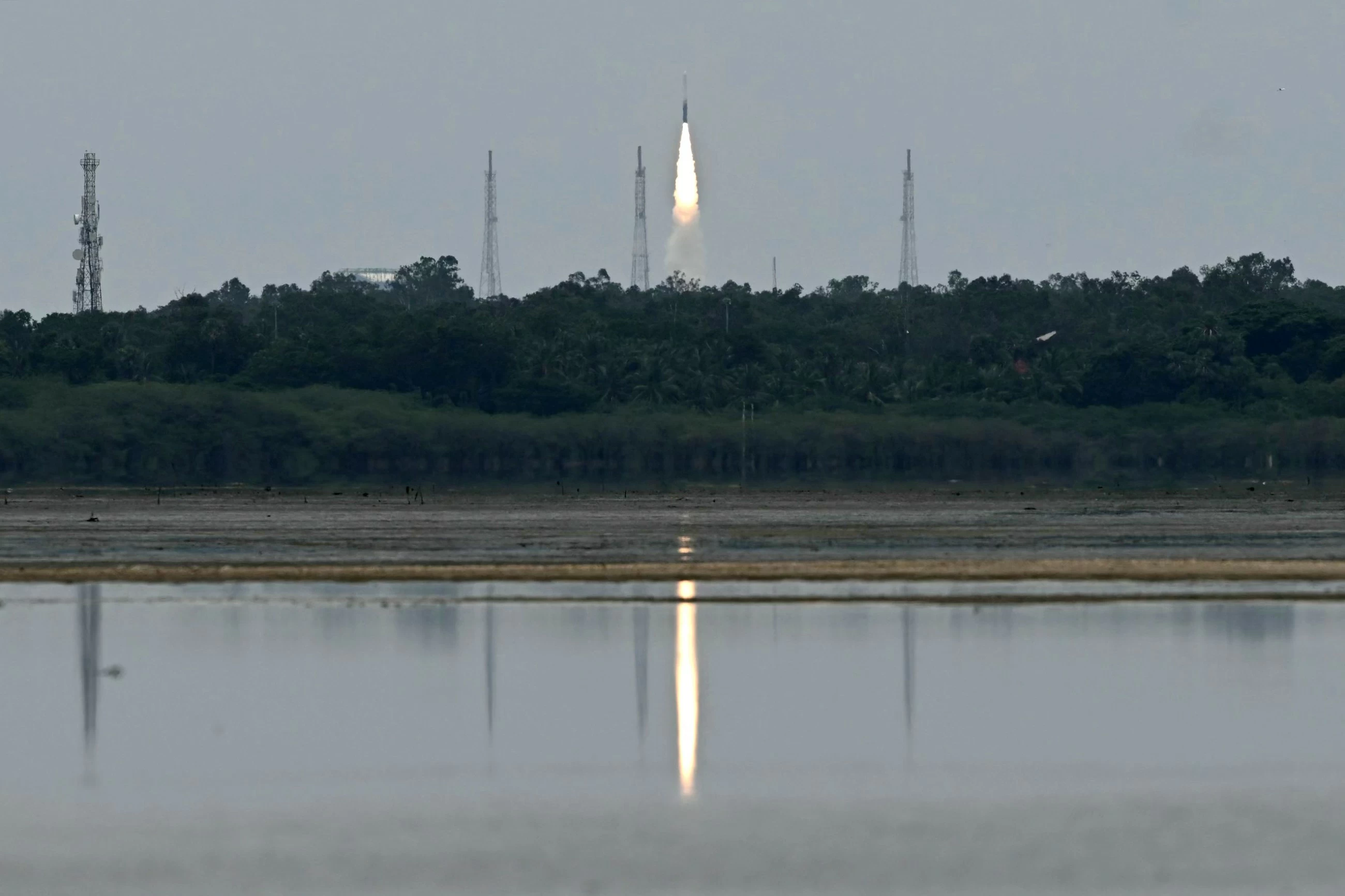
India’s first privately built orbital rocket took its maiden flight on Saturday, its company said, marking a significant step for the South Asian giant as it eyes a bigger slice of the global space economy.
The Vikram-1 rocket, built by Skyroot Aerospace and designed to carry small satellites into low-Earth orbit, took off from the Satish Dhawan Space Centre in Sriharikota amid loud cheers.
“Hello space, we have arrived!” Skyroot Aerospace said in a post on X. “Vikram-1’s Test Flight-1 has completed its mission. The first ever Indian private sector launch has been successfully completed.”
Vikram-1 is about as tall as a seven-storey building and capable of carrying payloads weighing up to 350 kilogrammes (771 pounds).
Pawan Goenka, chairman of the government’s Indian National Space Promotion and Authorisation Centre, said the achievement went “way beyond expectation for the very first orbital launch ever taken by an Indian private company”.
Prime Minister Narendra Modi hailed the endeavour as “a defining moment in India’s space journey”.
“The growing participation of our private sector is opening new frontiers and accelerating innovation,” Modi said.
“This achievement will encourage countless youngsters to dream bigger and innovate fearlessly.”
The rocket is carrying a diverse range of payloads, including a lab-grown diamond and robotic arms capable of removing space debris.
A miniature 18-carat gold rocket that has mini sculptures of Indian physicists Vikram Sarabhai, CV Raman and former Indian president and noted aerospace engineer APJ Abdul Kalam is also aboard the vehicle.
India’s space ambitions, built on decades of investment by the Indian Space Research Organisation (ISRO), have gathered pace in recent years.
The country’s space economy – valued at around $8.4 billion – has rapidly expanded since the sector opened up to private players in 2020, and is now home to more than 400 space startups.
‘New heights’
“India’s space ambitions soar to new heights!” Foreign Minister S. Jaishankar said after the successful launch.
In August 2023, India became only the fourth country to successfully land an unmanned spacecraft on the Moon, after Russia, the United States and China.
Former ISRO chairman K. Sivan hailed the work done by space startups, adding that the country was witnessing the “fruits of the seeds sown” when it opened up the sector to private players.
“With Skyroot especially, the rocket is one of the most challenging and complex technologies in the space system… It is going to motivate many people,” he told AFP.
Sivan added that “there is no doubt” the launch will have a global impact.
“If an Indian startup can make one of the most challenging things in the space industry, then it gives a huge boost to India’s reputation globally.”
Agence France-Presse