admin
admin 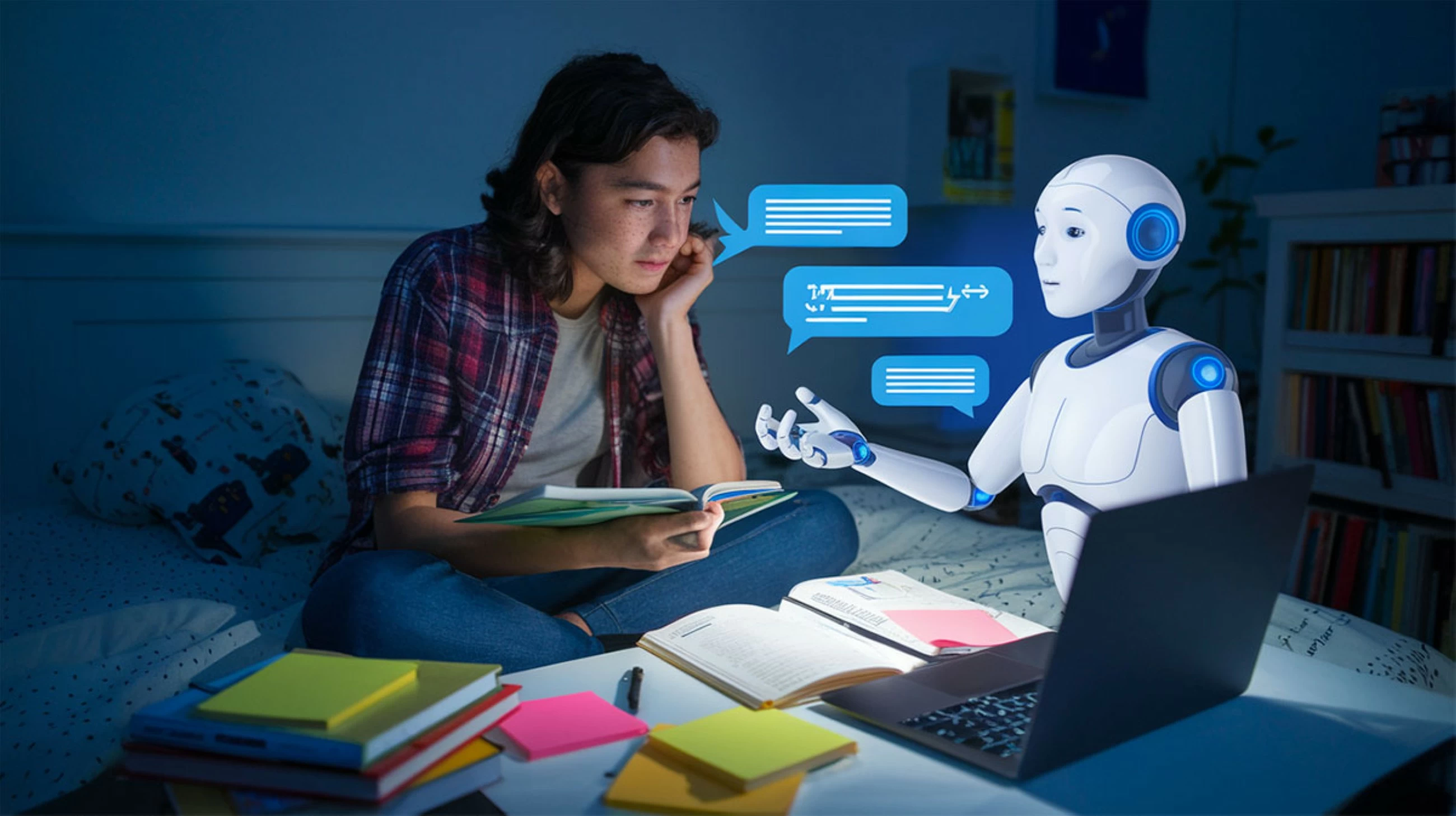
Imagine an AI tutor that gently corrects your child’s English, patiently answers her questions at midnight, and never runs out of energy. Now imagine that same tutor quietly telling her, in a hundred small ways, that the way she speaks at home isn’t quite right. That switching between Arabic and English isn’t a skill but a mistake to be fixed. That the story she wanted to tell doesn’t fit the template it was built on. Would you notice? Would she?
In my previous articles, I wrote about what it takes to build classrooms where every student sees their culture and story reflected at them. Artificial intelligence is now becoming part of that classroom, whether we’ve prepared for it or not. And it raises a question we haven’t asked loudly enough: when the tool teaching our children was trained mostly on one language and one worldview, whose classroom is it really designed for?
The UAE is home to over 200 nationalities, according to the Ministry of Foreign Affairs, and our classrooms are among the most linguistically rich anywhere in the world. Schools here are moving quickly to bring AI into daily learning, and that ambition is a good thing. But most AI tools, including the ones already in our schools, were built using data that leans heavily towards Western narratives. Most of these systems were trained overwhelmingly on English and a handful of major world languages. Arabic, along with many of the languages our students speak at home, remains underrepresented, and dialect is often left out of the picture entirely.
So before we hand our children over to these tools, I want to share a few questions worth asking, whether you’re a teacher choosing a classroom app, a parent evaluating a tutoring platform, or a school leader signing a procurement contract.
1. Ask whose language it was built for
Every AI tool carries the fingerprint of the data it learned from. Before adopting one, ask simple questions: does it recognize Arabic dialects, not just Modern Standard Arabic? Does it handle a child moving between two or three languages in the same sentence, or does it flag that as an error? If nobody at the company can answer these questions, that itself is an answer.
2. Look for tools that treat multilingualism as a strength
A child who moves fluidly between English, Arabic, and Hindi in a single conversation is not confused. She/he is demonstrating a skill many adults never develop. The best AI tools are beginning to recognize this, offering language toggles and accepting mixed-language input rather than correcting it away. The rest still treat every home language other than English as noise to be cleaned up.
3. Keep the human relationship at the center
An AI tutor can personalize a worksheet. It cannot notice that a student went quiet after a difficult morning at home or celebrate the pride on a child’s face when she finally reads a story in her grandmother’s dialect. However far AI advances, it should support the relationship between teacher and student, not replace it.
4. Ask who is auditing for bias, and how often
Just as we wouldn’t adopt a textbook without reviewing its content, we shouldn’t adopt an AI tool without asking who checks it for cultural and linguistic bias, and how often. A tool that hasn’t been audited hasn’t been tested for the classroom it’s about to enter.
While researching these questions as part of my current research on AI and inclusive education, I found myself returning to a word every reader here will know well: Ihsan. In our Arab and Islamis tradition, it means doing what is right and excellent, even when no one is checking your work. I have built that spirit into a simple framework I call IHSAN, five commitments any school or parent can hold an AI tool to: does it protect a learner’s Identity? Does it treat them with Humanity? Does it keep them Safe from bias? Does it give them genuine Access? And does it embrace the Nuance of who they are?
None of this means slowing down. The UAE has shown, again and again, that it can lead the world on AI policy. That same appetite for leadership can be turned toward a quieter goal: making sure the AI in our children’s classrooms sees them, in all their languages and all their stories, rather than asking them to sound like someone else.
Start small. Before the next tool comes home in your child’s backpack, ask the only question that really matters: does this see my child, in their language and their identity, or does it expect them to disappear into someone else’s template? That single question, asked early and asked often, is what turns AI in our classrooms from something that happens to our children into something we shape on their behalf.