admin
admin NATO allies will invest more than $40 billion in the next five years in their capabilities to defend against drones, Secretary General Mark Rutte said on Tuesday.
NATO allies are committed to work together to acquire, store, transport and manage stockpiles of critical defence materials, NATO Secretary General Mark Rutte said on Tuesday.
At a defence industry forum in Ankara, Rutte said the initiative involves Belgium, Canada, Denmark, Finland, Greece, Italy, Luxembourg, the Netherlands, Norway, Spain, Sweden and Turkey.
Meanwhile, NATO allies showcased surging defence spending with new arms contracts worth billions at a summit in Turkey on Tuesday as they sought to placate US President Donald Trump’s fury over Europe’s response to the war with Iran.
The two-day gathering at Ankara’s sprawling presidential palace comes a year after NATO members pledged to ramp up security-related spending to five percent of GDP under pressure from the US leader.
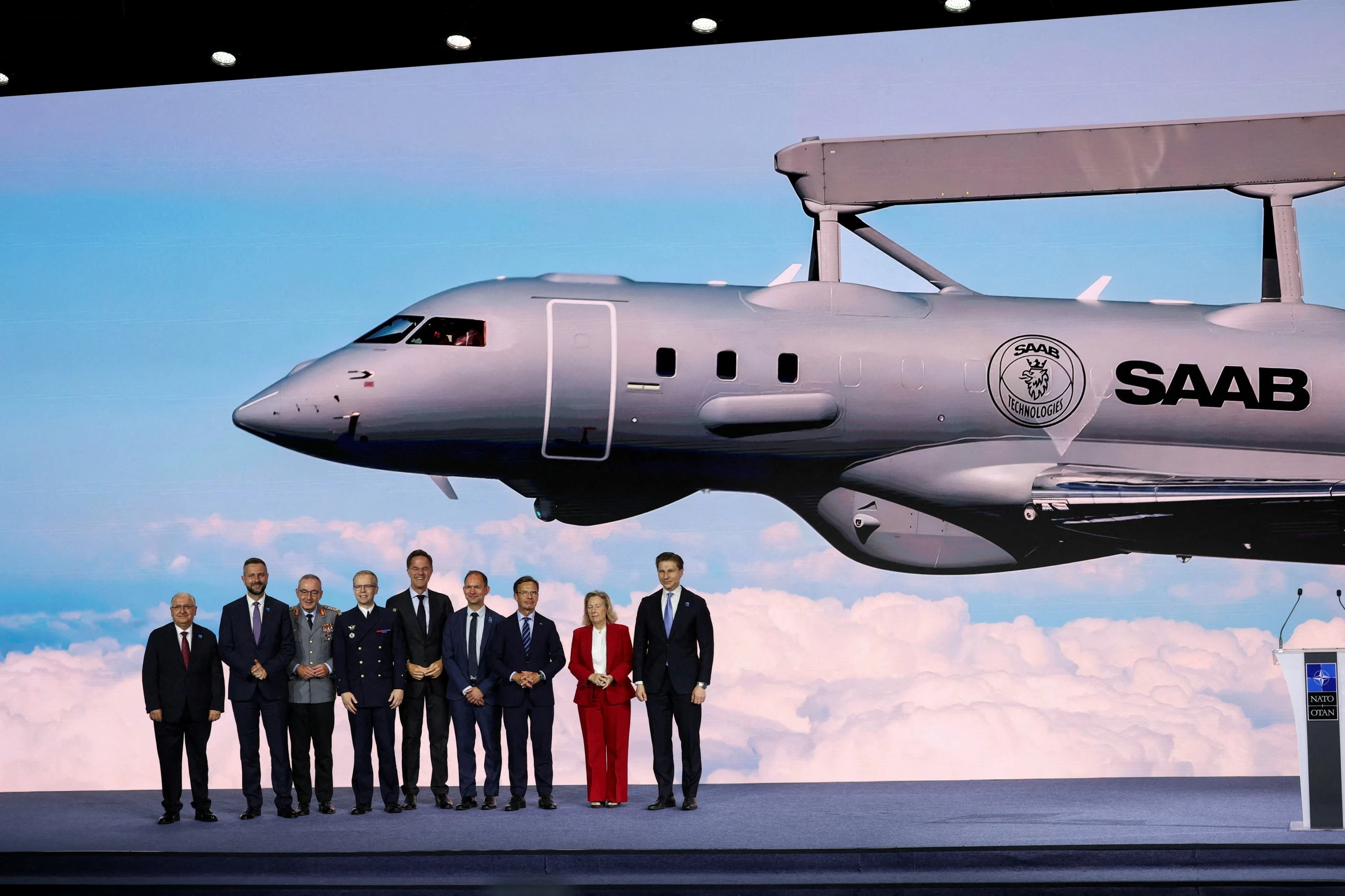
Sweden’s Prime Minister Ulf Kristersson and NATO Secretary General Mark Rutte pose for a group photo during the High Level Defence announcements at the NATO Summit Defence Industry Forum, on the sidelines of the NATO leaders’ Summit, in Ankara, Turkey, on Tuesday. Reuters
NATO chief Mark Rutte has insisted European countries are “delivering” by bolstering military budgets and moving to take more responsibility for the defence of their continent in the face of Russia.
In bid to impress Trump before he touched down in Ankara, NATO kicked off with a string of arms announcements at a glitzy defence industry forum ahead of the main summit.
“Allies and industry from both sides of the Atlantic will reveal new major projects and sign contracts worth literally billions of dollars,” Rutte said.
“These are billions that are invested in our security, boosting our economies and supporting hundreds of thousands of new jobs.”
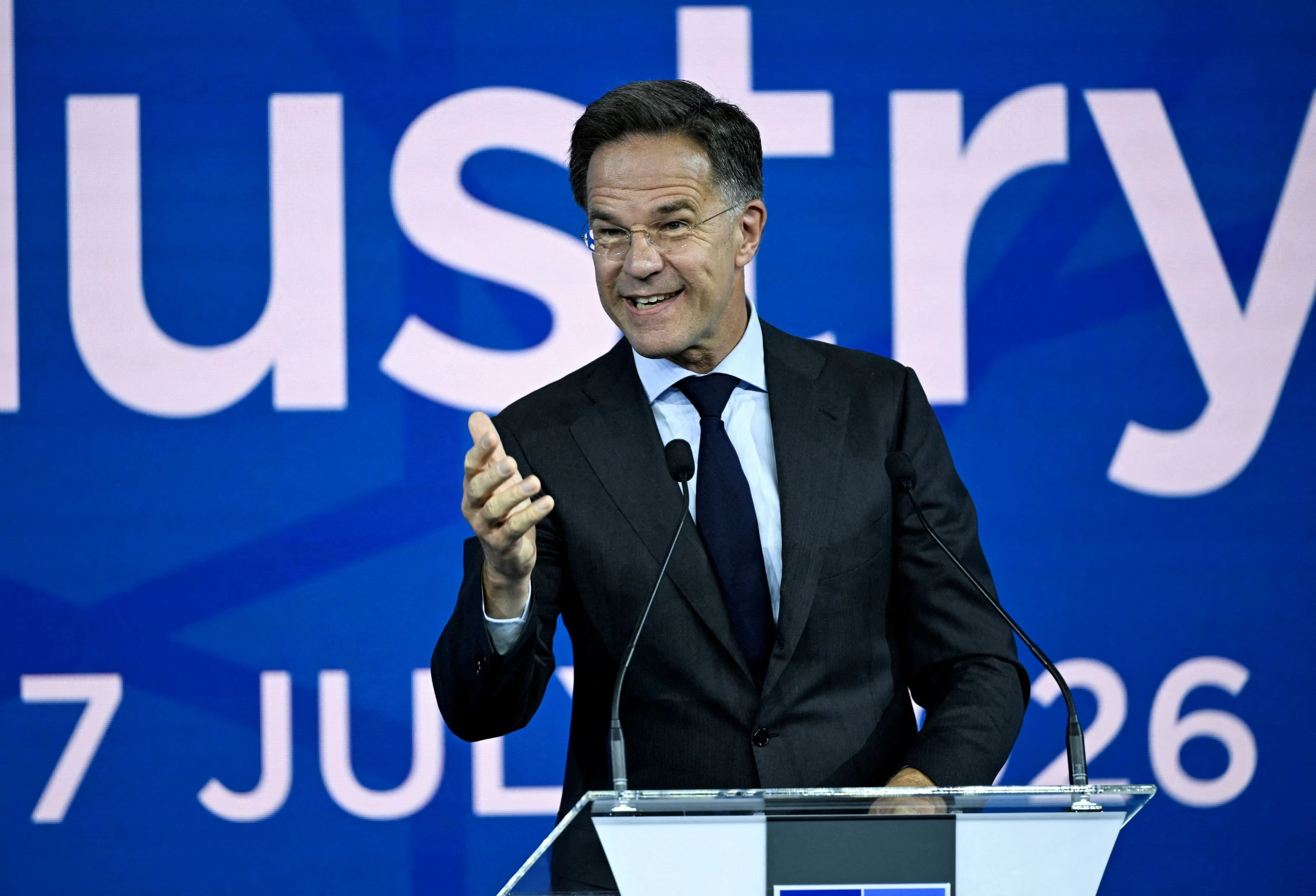
NATO Secretary General Mark Rutte speaks during the NATO Summit Defence Industry Forum in Ankara, Turkey, on Tuesday. Reuters
Among the initial deals announced were contracts for new drones, refuelling, and surveillance aircraft designed to bolster Europe’s ability to protect itself.
But Trump — still smarting after European countries restricted US forces from using bases to attack Iran — has spent the run-up to the summit slamming allies for not moving fast enough for his liking.
“Ridiculous for the USA to continue along this one-sided path when the relationship is not reciprocal. They were not there for us!!!” Trump wrote on Truth Social last week.
‘Real shift’
European leaders are aiming at least to avoid a bust-up with the mercurial US leader that could deal a further blow to NATO’s credibility after Trump repeatedly cast doubt on Washington’s commitment to protecting its allies.
Diplomats are banking on Trump’s good relationship with Turkish leader Recep Tayyip Erdogan, and an unstinting charm offensive by NATO chief Rutte, to keep his mood in check.
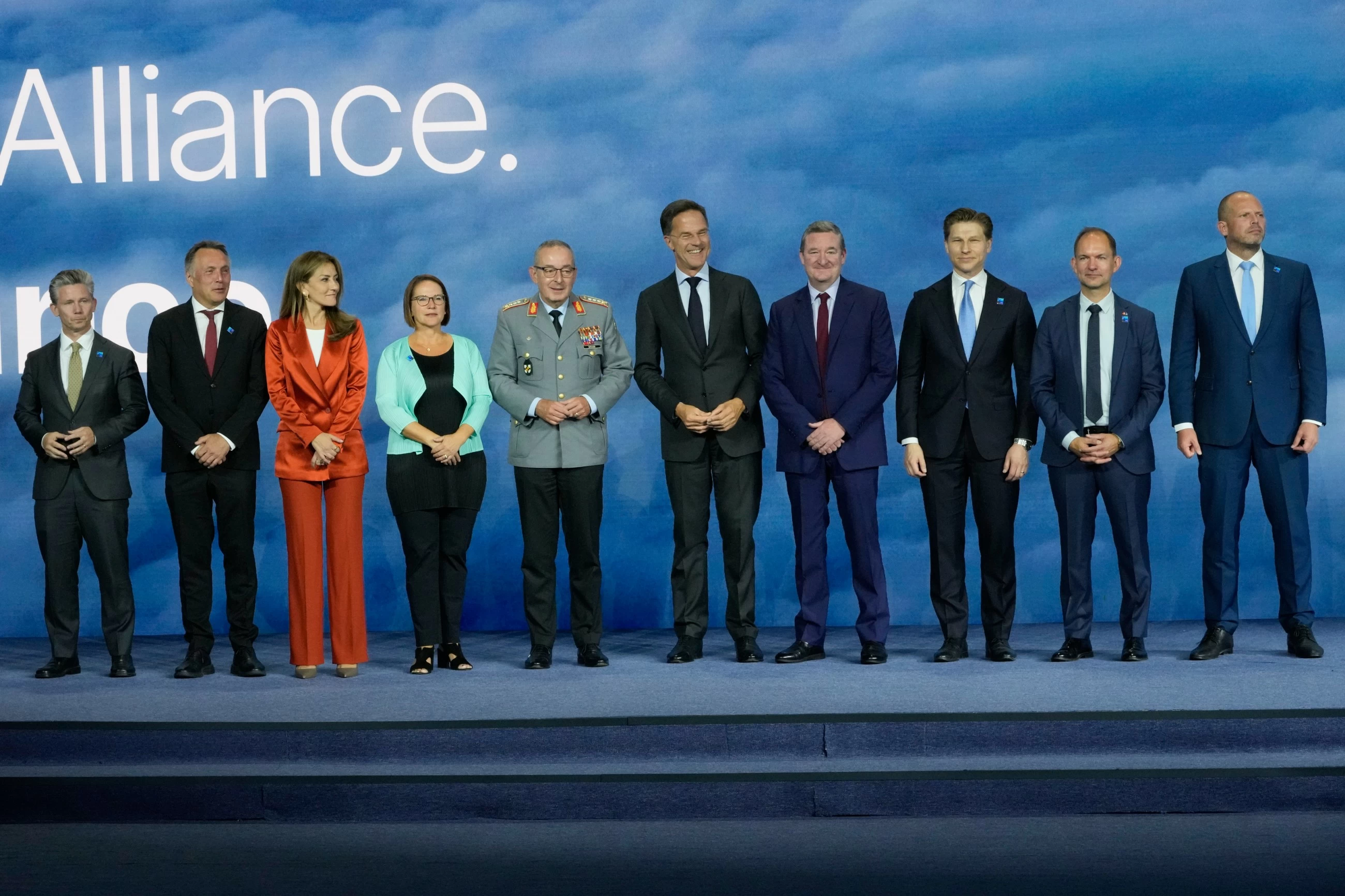
NATO Secretary General Mark Rutte (centre) poses with Sweden’s Defense Minister Pal Jonson, left, Norway’s Defense Minister Tore Sandvik, second left, Belgium’s Defense Minister Theo Francken, right, and other NATO defence ministers and industry representatives during the NATO Defense Industry Forum at the NATO summit in Ankara, Turkey, on Tuesday. AP
But with Trump having had fallings out with a string of other leaders — most recently Italy’s Giorgia Meloni — there are plenty of irritants that could ignite his anger.
Seeking to show willingness on Iran, European allies spearheaded by France and Britain have put together a potential naval mission to help in the Strait of Hormuz and countries have shifted vessels closer to the region to be ready.
But the situation remains volatile and the Europeans want clarity on how a fragile US deal with Iran is panning out before sending in their navies.
While they will be hoping that Trump strikes a conciliatory tone, European leaders have begun to come to terms with the reality that the US is inexorably pulling back from their alliance.
Washington has been clear it wants its allies to take the lead on the conventional defence of the continent and recently announced it was cutting back the assets it makes available to NATO commanders.
European nations will look to prove they’re ready to play a greater role while also trying to keep Trump, and the vast might of the US military, as engaged as possible.
“All of this is evidence of a real shift in mindset,” Rutte said. “This is NATO 3.0. A stronger Europe in a stronger NATO.”
‘Strong decisions’
Beyond taking greater responsibility for their own defence, European countries have also taken over the support of Ukraine almost entirely as Trump has wound back US aid.
President Volodymyr Zelensky — who will attend the leaders dinner on Tuesday — will score a commitment from his European backers at NATO to keep at least 70 billion euros ($80 billion) of military aid flowing to Kyiv each year in both 2026 and 2027.
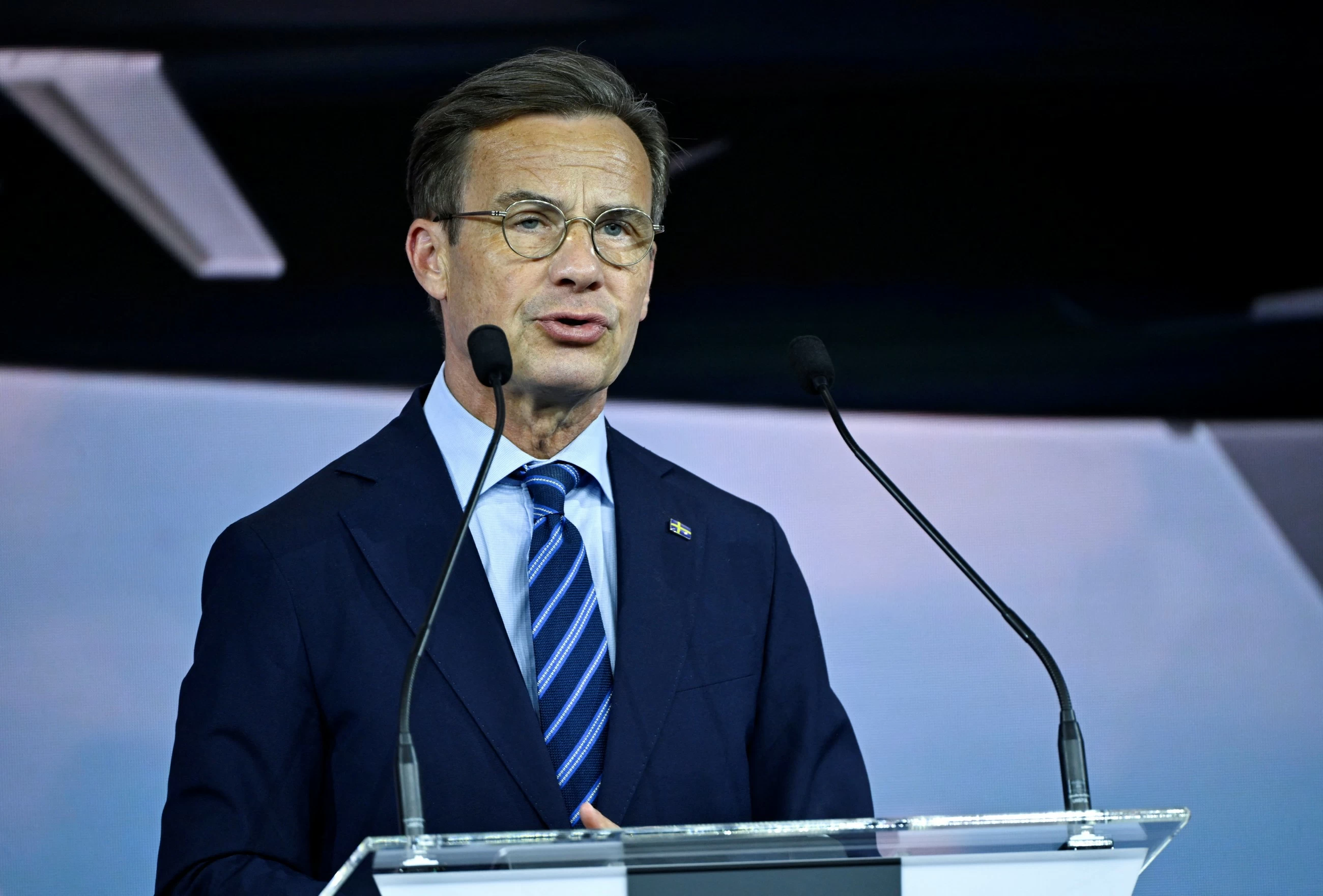
Sweden’s Prime Minister Ulf Kristersson speaks at the Defence Industry Forum during the NATO Summit in Ankara, Turkey. Reuters
Zelensky — who is set to hold talks with Trump at the summit — urged the alliance to take “strong decisions” on boosting Ukraine’s air defences after a devastating Russian bombardment killed nearly 30 people.
The Ukrainian leader will look to convince Trump — who held a phone call with Russia’s Vladimir Putin ahead of the gathering — that Kyiv is turning the tide in the war and that he should pressure Moscow back into serious peace negotiations.
Agence France-Presse