admin
admin 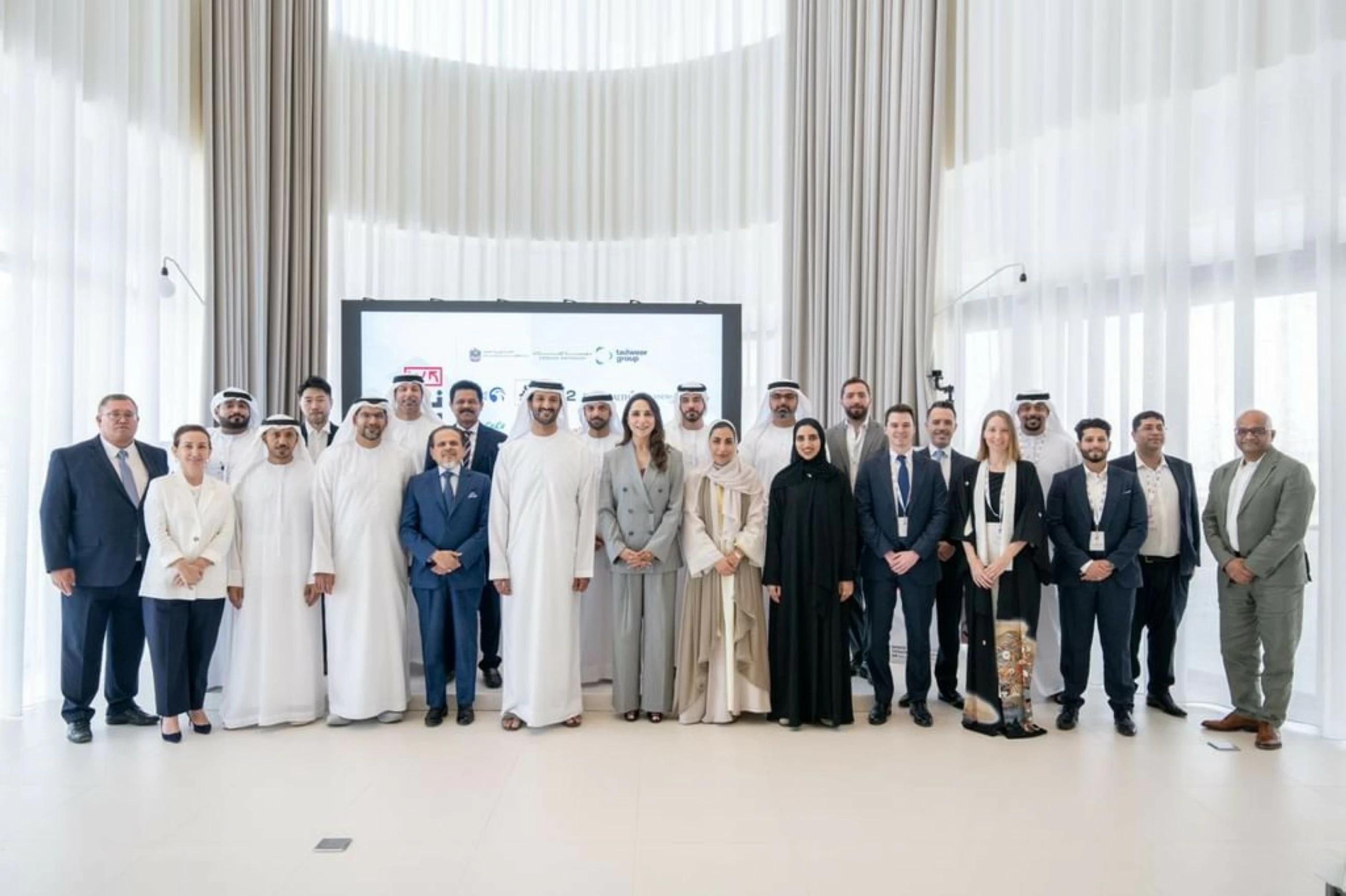
Naseej has signed 14 strategic Memorandums of Understanding (MoUs) to further strengthen its growing partnership ecosystem, which today includes more than 35 organisations and institutions across multiple sectors.
These partnerships reinforce Naseej’s role in leading the transition towards textile circularity in the UAE and support the development of programmes that advance an integrated national pathway for textile circularity.
The announcement follows the official launch of the initiative, established under the directives of the UAE’s leadership, as well as the success of The Fabric of Possibility community activation held at Yas Mall in Abu Dhabi from 5th to 7th June 2026, with the support and oversight of the National Projects Office and in collaboration with the Ministry of Economy and Tourism, Emirates Foundation, and Tadweer Group.
This milestone marks a new phase in Naseej’s journey as it moves from establishing its national framework to implementing programmes and coordinated action across sectors.
The strategic MoUs were signed at the Emirates Foundation headquarters in Abu Dhabi, in the presence of Abdulla Bin Touq Al Marri, Minister of Economy and Tourism, bringing together 14 strategic partners to reaffirm their commitment to advancing textile circularity across the UAE.
The agreements mark a significant step towards establishing a comprehensive national ecosystem that spans the entire textile value chain, from collection and sorting through to reuse, recycling, and innovation.
The strategic partners include ADNOC Distribution, Aldar, PureHealth, M42, Landmark Group, LuLu Group, Deliveroo, Talabat, Re-Up, Rebound, Miniwiz, Fabricaid, Thrift for Good and Kiswa.
These partnerships form the foundation of a broader ecosystem that today includes more than 35 organisations and institutions from the public and private sectors, alongside civil society organisations, academic institutions and innovation-focused entities. Naseej also plans to further expand this ecosystem through additional partnership phases and future MoU signings.
Collaboration under these partnerships focuses on four areas: developing textile collection and recovery systems, advancing research, innovation, and data sharing, promoting public awareness and behavioural change, and supporting policy development and industry engagement.
Together, these pillars reflect the full spectrum of transformation required to build a circular textile sector, from infrastructure and market development to regulation and consumer behaviour.
Ahmed Talib Al Shamsi, Chief Executive Officer of Emirates Foundation, said, “The strategic partnerships established through Naseej represent an important step towards building an integrated national ecosystem that supports the transition to a circular textile economy in the UAE. At Emirates Foundation, we firmly believe that the success of national initiatives with lasting impact depends on collaboration across sectors and the alignment of efforts around shared goals that create long-term economic, social and environmental value.” Etienne Petit, Chief Executive Officer of Tadweer Group, said, “Textile waste is one of the most challenging recycling streams, but it is also a valuable source of recoverable materials that would otherwise be lost. For Tadweer Group, Naseej connects directly to Abu Dhabi’s target of diverting 80 per cent of waste away from landfills by 2031 and supports a more structured approach to textile waste.
“In collaboration with Naseej’s partners, we aim to develop more effective mechanisms for textile collection, reuse and recycling, while raising community awareness around the role everyone can play in reducing waste and preserving resources.” As a national platform that brings together stakeholders from across the ecosystem, Naseej’s role is to design, enable and coordinate collective action. Its programmes follow a phased approach that begins with pilot projects developed alongside selected partners, testing and refining solutions before progressively scaling them at a national level. This approach supports the development of integrated capabilities for textile circularity and the transformation of textile waste into valuable resources within the UAE.
Several pilot projects are already underway in collaboration with partners, including retail textile take-back schemes, school uniform recycling programmes and residential textile collection initiatives. These projects are helping develop operational models, test efficiency, and build the knowledge base required for future expansion.
National circular uniform programmes are also being developed across sectors with high textile usage, including hospitality, aviation, logistics and healthcare, helping embed circular economy principles into procurement practices and sustainable end-of-life textile management.
The Fabric of Possibility community activation represents the first chapter of a long-term national public awareness programme, with future activations planned across the UAE.
On the policy and enabling front, Naseej is working closely with relevant stakeholders to develop the regulatory frameworks, incentives and standards required to accelerate the sector’s transition. The initiative is also conducting behavioural studies and market research to better understand consumption patterns and emerging opportunities, while supporting startups and SMEs developing innovative solutions in circular design, recycling technologies and reuse models.
WAM